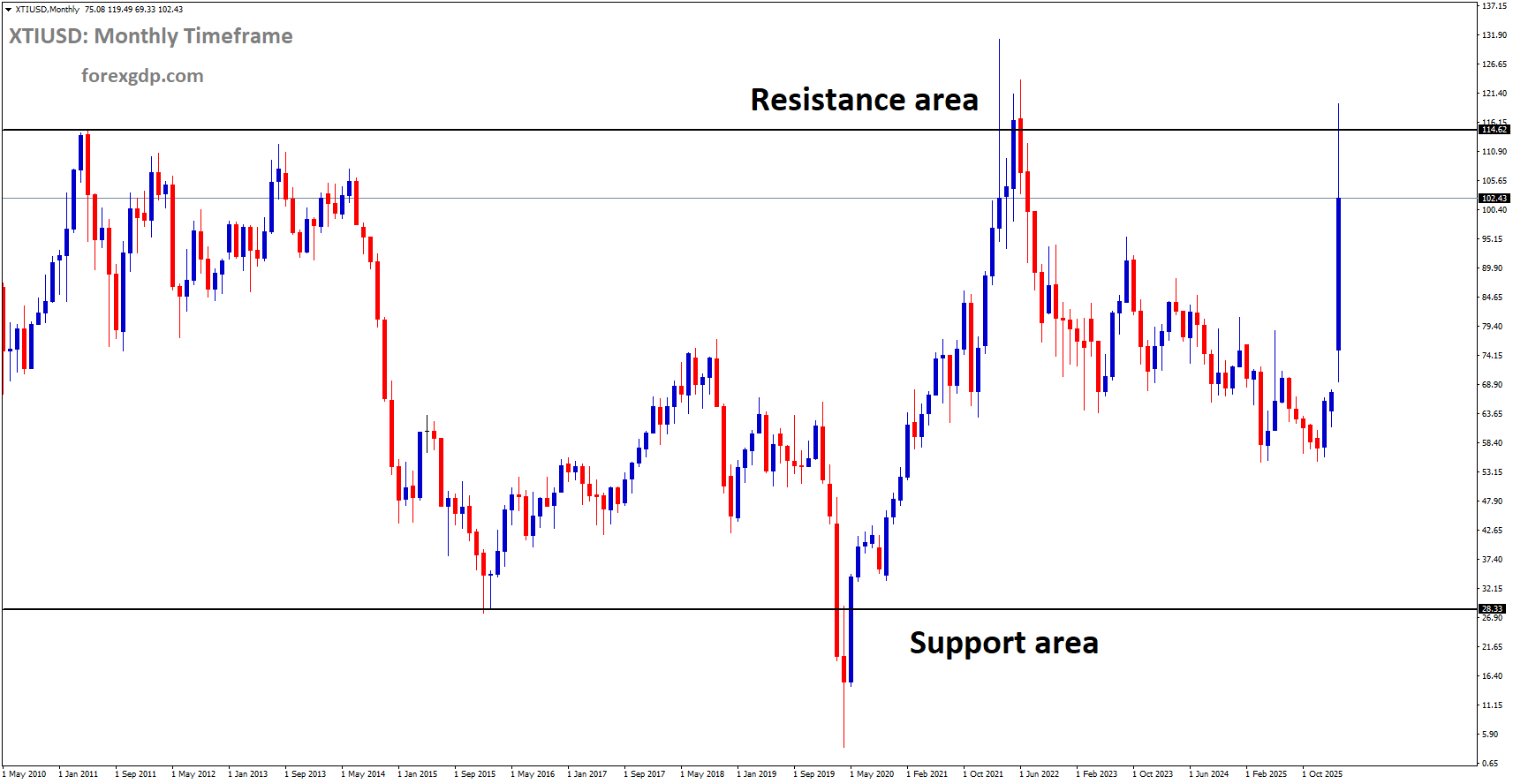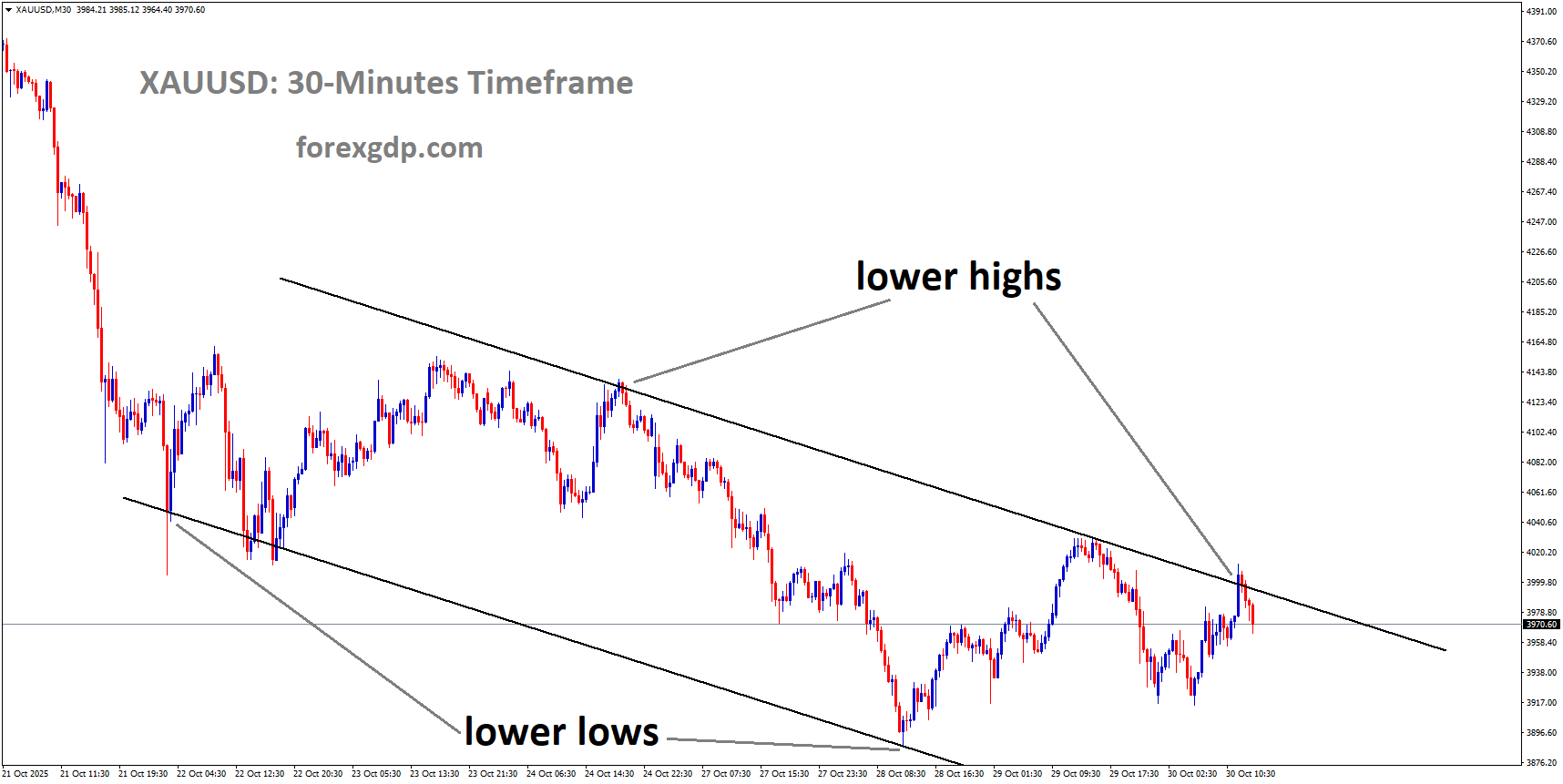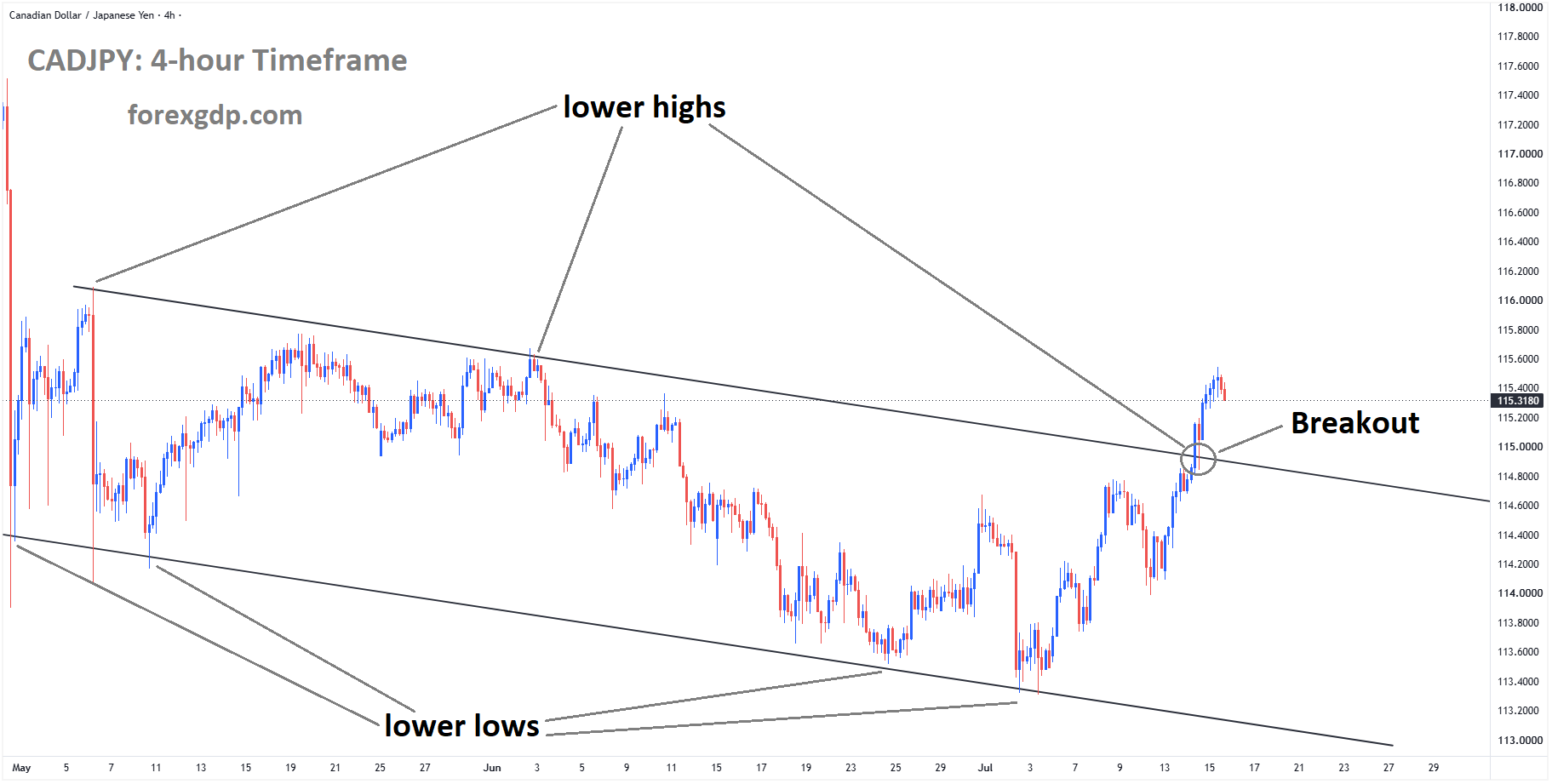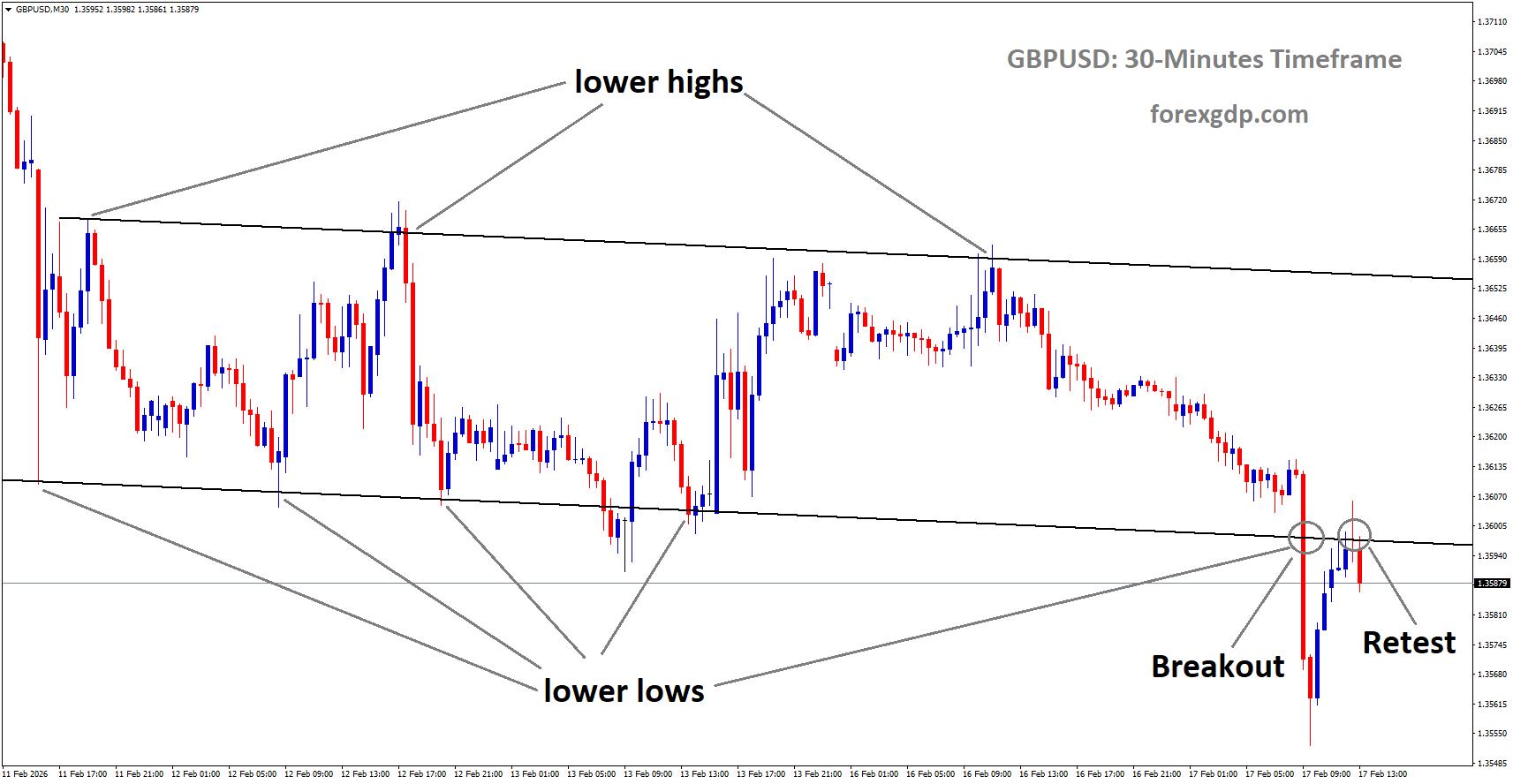
GBPUSD reached the retest area of the broken downtrend channel
GBPUSD Drops Further as Rising UK Unemployment Weighs on Sterling
The British Pound came under strong pressure against the US Dollar after the latest employment data from the United Kingdom showed signs of weakness in the labor market. The GBP/USD pair dropped sharply, sliding below the 1.3600 level and touching fresh 10-day lows near 1.3570.
This decline followed the release of new figures that revealed a rise in unemployment and slower wage growth. These developments have increased expectations that the Bank of England (BoE) could move toward lowering interest rates in the coming months. As a result, the Pound struggled as investors reacted to the growing uncertainty around the UK economy.
UK Unemployment Rate Climbs to Five-Year High
One of the most concerning points in the latest report was the unexpected increase in the UK’s unemployment rate. According to official data, the ILO Unemployment Rate rose to 5.2% in the three months leading up to December. This marks the highest level seen in nearly five years.
Economists had expected the rate to remain steady at 5.1%, so the surprise increase added to worries about the strength of the job market. A rising unemployment rate usually signals that businesses are hiring less or even cutting jobs, which can point to slower economic activity.
The higher unemployment figure suggests that companies may be facing challenges such as lower demand, rising costs, or uncertainty about the future. When businesses become cautious, they often reduce hiring plans. This can create a cycle where weaker employment leads to slower spending, which then affects overall economic growth.
Sharp Jump in Claimant Count Adds to Concerns
The Claimant Count Rate, which measures the number of people claiming unemployment-related benefits, also showed a notable rise. In January, the number increased by 28,600 people. This is a sharp jump compared to the modest 2,700 increase recorded in December.
Such a large rise in benefit claims indicates that more people are struggling to find work or have recently lost their jobs. It also highlights growing pressure in the labor market.
At the same time, the employment change figure showed that fewer new jobs were created. Employment increased by 52,000, down from 82,000 in the previous month. While job growth is still positive, the slowdown suggests that hiring momentum is fading.
Together, these figures paint a picture of a cooling labor market. Investors often pay close attention to employment data because it reflects the health of the broader economy. When job growth slows and unemployment rises, confidence in the currency can weaken.
Wage Growth Slows, Easing Inflation Pressure
Another key part of the report was wage growth. Average Earnings Including Bonuses rose by 4.2% compared to the same period a year earlier. This is slower than the previous reading, which was between 4% and 6%, and also below the expected 4.6%.
Wage growth is closely linked to inflation. When wages rise quickly, people have more money to spend. This can push prices higher, especially if demand increases faster than supply. Central banks monitor wage trends carefully because strong wage growth can keep inflation elevated.
However, the latest data shows that wage pressures are easing. Slower wage growth may reduce inflation risks, but it also suggests that workers have less bargaining power and that companies are less willing to offer higher pay.
For the Bank of England, this shift could be important. Lower wage growth may give policymakers more room to cut interest rates without worrying that inflation will surge again. As a result, expectations are growing that the BoE could consider easing monetary policy at its next meeting.
Weak GDP Data Adds to Economic Worries

The disappointing employment figures come shortly after a weak Gross Domestic Product (GDP) report. The recent GDP data showed that economic growth in the UK has been struggling.
When weak labor market data follows soft GDP numbers, it increases concern that the economy is losing momentum. Slower growth, rising unemployment, and cooling wages together create a challenging environment.
Investors often react quickly to such signals. In this case, the Pound fell as traders adjusted their expectations about future interest rate decisions. If the Bank of England lowers borrowing costs, it could make the Pound less attractive compared to other currencies, including the US Dollar.
Why the US Dollar Is Benefiting
While the UK faces economic challenges, the US Dollar has remained relatively strong. The Dollar often benefits during times of uncertainty because it is seen as a safe and stable currency.
When economic data from other countries disappoints, investors may shift their money into the US Dollar. This demand can push the Dollar higher against other currencies, including the Pound.
The combination of a weaker UK outlook and steady demand for the US Dollar has added to the downward pressure on GBP/USD. As a result, the currency pair reached its lowest levels in the past 10 days.
What This Means for the Bank of England
The latest data has strengthened the case for further monetary easing by the Bank of England. Policymakers are scheduled to meet again in March, and many market participants now expect discussions around lowering interest rates.
The BoE’s main goal is to keep inflation under control while supporting economic growth. If the economy slows too much, cutting rates can help by making borrowing cheaper. Lower borrowing costs can encourage spending and investment.
However, the central bank must balance this carefully. Cutting rates too quickly could create other risks, especially if inflation remains above target. Still, with unemployment rising and wage growth slowing, the pressure to act is increasing.
Investors will closely monitor upcoming economic reports, including inflation data and business activity surveys, to better understand how the situation is developing.
Outlook for the British Pound
The near-term outlook for the Pound appears uncertain. With signs of weakness in both the labor market and overall economic growth, the currency may continue to face challenges.
Much will depend on future economic releases and the tone of the Bank of England. If policymakers signal that rate cuts are likely, the Pound could remain under pressure against its major counterparts.
At the same time, global factors, including developments in the US economy and broader financial markets, will also influence the GBP/USD pair.
Currency markets are highly sensitive to economic data and central bank decisions. Even small changes in expectations can lead to noticeable moves.
Final Summary
The British Pound has dropped to a fresh 10-day low against the US Dollar after weaker-than-expected UK employment data. The unemployment rate climbed to its highest level in nearly five years, the number of people claiming benefits rose sharply, and wage growth slowed more than anticipated.
These developments, combined with recent weak GDP figures, have raised concerns about the health of the UK economy. As a result, expectations are growing that the Bank of England may consider lowering interest rates in the coming months.
With uncertainty surrounding both economic growth and monetary policy, the Pound may continue to face pressure. Investors will now look ahead to the next round of data and central bank guidance to determine the future direction of GBP/USD.
EURUSD Drifts Lower After Disappointing Euro Area Economic Outlook
The EUR/USD currency pair is facing renewed pressure this week, with the Euro continuing to lose ground against the US Dollar. After reaching highs near 1.1925 last week, the pair has shifted into a downward move and is now trading below the 1.1850 level. Attempts to recover from recent lows have so far been unsuccessful, as economic data from the Eurozone disappoints and the US Dollar shows steady strength.

EURUSD is moving in a descending channel, and the market has fallen from the lower high area of the channel
This shift in momentum reflects a combination of weaker economic sentiment in Europe and cautious optimism around upcoming US economic reports. Let’s take a closer look at what is driving the current movement in EUR/USD and what it could mean going forward.
Euro Under Pressure After Weak Economic Sentiment Data
The Euro has struggled for a second straight day, weighed down by weaker-than-expected economic confidence figures from Germany and the broader Eurozone.
The latest ZEW Economic Sentiment Survey revealed that institutional investors are feeling less optimistic about the German economy. In February, the sentiment index slipped to 58.3 from 59.6 in January. Analysts had expected an improvement to around 65.0, so the decline came as a surprise. This drop suggests that investors are becoming more cautious about Germany’s economic outlook.
While there was a slight improvement in views on the current economic situation, the numbers still failed to meet expectations. Confidence regarding present conditions improved to -65.9 from -72.7 in January. However, this was slightly below what markets had anticipated. Even though the negative reading narrowed, it was not strong enough to lift the Euro.
The broader Eurozone also reported weaker sentiment data. The Economic Sentiment Index fell to 39.4 in February from 40.8 in the previous month. Markets had expected a noticeable improvement to 45.2. Instead, the decline highlights ongoing concerns about the region’s economic recovery.
Together, these disappointing figures have added pressure on the Euro, reinforcing the downward trend seen in EUR/USD this week.
Inflation Data Keeps ECB Policy Speculation Alive
In addition to weak sentiment readings, inflation data from Germany has also influenced the Euro’s performance.
Germany’s Harmonised Index of Consumer Prices confirmed that inflation fell by 0.1% in January on a monthly basis. On a yearly basis, however, consumer prices rose by 2.1%, slightly higher than the 2.0% increase seen in December.
While the yearly increase may appear positive at first glance, the monthly decline suggests that price pressures remain uneven. This mixed picture keeps speculation alive that the European Central Bank (ECB) may need to maintain an accommodative stance or even consider further monetary easing if economic conditions fail to improve.
When investors expect the ECB to keep interest rates low or introduce additional stimulus, it often weakens the Euro. Lower rates generally make a currency less attractive to investors seeking higher returns. As a result, the latest inflation data has not provided meaningful support to the common currency.
US Dollar Gains Mild Strength Ahead of Key Data
On the other side of the equation, the US Dollar is showing a mild upside bias this week. Although trading volumes have been relatively thin following a US market holiday, the Greenback has managed to hold steady.
Investors are now turning their attention to several important US economic reports scheduled for release later this week. These data points could provide clearer direction for the Dollar and, in turn, for the EUR/USD pair.
One of the first indicators in focus is the New York Empire State Manufacturing Index. This report offers insight into business activity in the manufacturing sector. While it may not always cause major market moves, it can give early clues about the strength of the US economy.
More importantly, traders are waiting for the release of the minutes from the latest Federal Reserve meeting. These minutes can reveal how policymakers view inflation, economic growth, and future interest rate decisions. If the tone appears confident or suggests that rates could remain higher for longer, the US Dollar may find additional support.
Later in the week, attention will shift to key figures such as Gross Domestic Product (GDP) and Personal Consumption Expenditures (PCE) inflation data. GDP measures overall economic growth, while PCE inflation is closely watched by the Federal Reserve as a preferred gauge of price pressures.
Stronger-than-expected US data could reinforce the Dollar’s recent resilience. On the other hand, weaker numbers might reduce some of the currency’s current strength.
Diverging Economic Signals Shape EUR/USD Trend
The recent movement in EUR/USD reflects diverging economic signals between the Eurozone and the United States.
In Europe, sentiment indicators show growing caution among investors. Although inflation remains above certain targets, the broader economic picture appears fragile. This combination increases the likelihood that the European Central Bank will proceed carefully in adjusting monetary policy.
In contrast, the United States continues to show signs of economic resilience. Even though markets are waiting for fresh data, expectations remain relatively steady. If upcoming reports confirm stable growth and controlled inflation, the Federal Reserve may maintain its current approach.
When one economy appears stronger than the other, its currency often benefits. Right now, that dynamic is helping the US Dollar maintain an advantage over the Euro.
What Could Influence EUR/USD Next?

Looking ahead, several factors could shape the next move in the EUR/USD exchange rate.
First, the tone of the Federal Reserve minutes will be closely examined. Investors will look for any hints about future rate adjustments or concerns about inflation. Even subtle changes in language can shift market sentiment.
Second, the upcoming GDP and PCE data will play a key role. Strong numbers may reinforce confidence in the US economy, while softer data could lead to some Dollar weakness.
On the European side, traders will monitor any new comments from ECB officials. If policymakers signal readiness to provide more support to the economy, the Euro could face continued pressure.
Global market sentiment also matters. Broader risk appetite, geopolitical developments, and shifts in investor confidence can all influence currency movements.
Final Thoughts
The EUR/USD pair is currently facing downward pressure as the Euro struggles with disappointing economic sentiment data and ongoing speculation about European Central Bank policy. Meanwhile, the US Dollar is holding firm ahead of important economic releases that could shape expectations for Federal Reserve policy.
With key US data due later this week, markets may remain cautious in the short term. The balance between European economic uncertainty and US economic resilience will likely determine the next phase for EUR/USD. Investors will continue to watch both sides closely as fresh information emerges and sentiment evolves.
USDJPY Drifts Lower as BoJ and Fed Outlook Divide Caps Strong Upside
The USD/JPY currency pair lost momentum on Tuesday after showing strength a day earlier. During the Asian trading session, the pair faced fresh selling pressure and struggled to move higher. While the pullback was not aggressive, it was enough to show that buyers are becoming cautious.

USDJPY is moving in an ascending channel, and the market has reached the higher low area of the channel
Several key factors are shaping the direction of USD/JPY right now. These include differences in policy expectations between the Bank of Japan (BoJ) and the US Federal Reserve (Fed), concerns about possible currency intervention, and broader market sentiment. Let’s take a closer look at what’s happening and what it could mean for the days ahead.
USD/JPY Struggles to Extend Gains
After gaining some ground on Monday, USD/JPY attempted to build on that positive move. However, it quickly ran into resistance during Tuesday’s Asian session. Sellers stepped in, pushing the pair lower and preventing further upside.
Although the drop was noticeable, it lacked strong momentum. This suggests that traders are not fully convinced about a major downward move just yet. Instead, the market appears to be in a wait-and-see mode.
Currency markets often pause like this when investors are uncertain about central bank decisions or upcoming economic data. Right now, both of these factors are playing a major role.
Diverging Bank of Japan and Federal Reserve Expectations
One of the biggest drivers behind USD/JPY movements is the difference in monetary policy between Japan and the United States.
Bank of Japan’s Position
The Bank of Japan has kept interest rates very low for many years. Recently, however, there have been signs that the BoJ could slowly move toward tightening its policy. Even small changes from Japan’s central bank can have a strong impact on the Japanese Yen.
At the same time, recent economic data from Japan showed weaker-than-expected growth in the fourth quarter. Slower growth may reduce the urgency for the BoJ to tighten policy further. If the central bank becomes more cautious, the Yen could lose some of its recent support.
Federal Reserve Outlook
On the US side, expectations are shifting in the opposite direction. Many traders believe the Federal Reserve may cut interest rates later this year. These expectations are putting pressure on the US Dollar.
There are also concerns about political pressures that could affect the Fed’s independence. This uncertainty is making investors hesitant to strongly back the Dollar.
Because of these mixed signals, USD/JPY finds itself caught between two forces: possible tightening in Japan and potential easing in the United States.
Intervention Fears Keep Traders Alert
Another important factor supporting the Japanese Yen is the possibility of intervention.
In the past, Japanese authorities have stepped into currency markets when the Yen weakened too much or too quickly. The government has made it clear that it is closely watching currency movements.
This creates a sense of caution among traders. If the Yen weakens sharply, investors worry that officials could take action. That fear alone can limit how high USD/JPY rises.
The possibility of coordinated action between Japan and the United States also adds another layer of uncertainty. Even if intervention does not happen, the threat of it can influence trading decisions.
Risk Appetite and Its Impact on the Yen
The overall mood in global markets also plays a key role in the USD/JPY exchange rate.
When investors feel confident and are willing to take risks, they often move money into stocks and other higher-yielding assets. In these “risk-on” environments, the Japanese Yen tends to weaken because it is often seen as a safe-haven currency.
Recently, market sentiment has leaned toward risk-taking. This has limited the Yen’s strength to some extent. As a result, even though there are supportive factors for the Yen, gains have been somewhat capped.
However, this positive mood in global markets has not been enough to strongly lift the US Dollar. That’s why USD/JPY remains under pressure instead of making a strong upward move.
US Dollar Struggles to Attract Buyers
The US Dollar has not been able to build strong momentum. Even though the US economy remains relatively stable, expectations of future rate cuts are weighing on the currency.
When investors believe interest rates will fall, the currency often becomes less attractive. Lower rates can reduce returns on US assets, making other currencies more appealing.
Traders are also cautious because they want clearer signals about the Federal Reserve’s next steps. Without solid guidance, many prefer to stay on the sidelines.
This hesitation is one reason why USD/JPY has struggled to sustain upward movement despite supportive global risk sentiment.
Key Events That Could Move USD/JPY
Looking ahead, several important events could influence the direction of USD/JPY.
FOMC Meeting Minutes

One of the most anticipated releases is the Federal Open Market Committee (FOMC) meeting minutes. These minutes provide detailed insights into the Fed’s thinking about inflation, growth, and interest rates.
If the minutes suggest that rate cuts are coming sooner or faster than expected, the US Dollar could weaken further. On the other hand, if policymakers sound cautious about cutting rates, the Dollar might find support.
US Economic Data
The United States will also release data on durable goods orders and housing activity. These reports give clues about business investment and consumer demand.
Strong data could ease concerns about economic slowdown and support the Dollar. Weak numbers, however, might reinforce expectations of rate cuts.
Global PMI Reports
Flash Purchasing Managers’ Index (PMI) data from major economies will offer a snapshot of global business conditions. These reports often affect overall market sentiment.
If global growth appears strong, risk appetite may increase. That could limit Yen strength and provide some support to USD/JPY. Conversely, weak global data could boost demand for safe-haven assets like the Yen.
The Broader Fundamental Picture
When looking at the bigger picture, the fundamental backdrop appears to favor modest downside pressure for USD/JPY.
The possibility of Japanese intervention, combined with expectations that the Fed may ease policy, creates a challenging environment for sustained Dollar strength.
However, the situation is far from one-sided. Weak Japanese growth data could slow the BoJ’s tightening path, which might limit Yen gains.
In short, the pair is balancing between competing forces. That’s why recent price moves have lacked strong conviction in either direction.
Summary
USD/JPY has paused after a brief rebound, facing renewed selling pressure during the Asian session. Diverging expectations between the Bank of Japan and the Federal Reserve continue to shape market sentiment. Fears of possible Japanese intervention are providing some support to the Yen, while uncertainty about US rate cuts is weighing on the Dollar.
At the same time, positive global risk sentiment is limiting strong safe-haven demand for the Yen. This mix of factors has created a cautious trading environment.
All eyes are now on upcoming US economic data and the release of the FOMC meeting minutes. These events could provide the clarity traders are waiting for and determine the next meaningful move in USD/JPY.
AUDUSD Under Pressure After Central Bank Highlights Policy Uncertainty
The Australian Dollar has remained on the back foot following the latest release of the Reserve Bank of Australia (RBA) Meeting Minutes. While there were brief signs of stability earlier, the currency continues to struggle as investors digest the central bank’s cautious tone and look ahead to key economic data from both Australia and the United States.
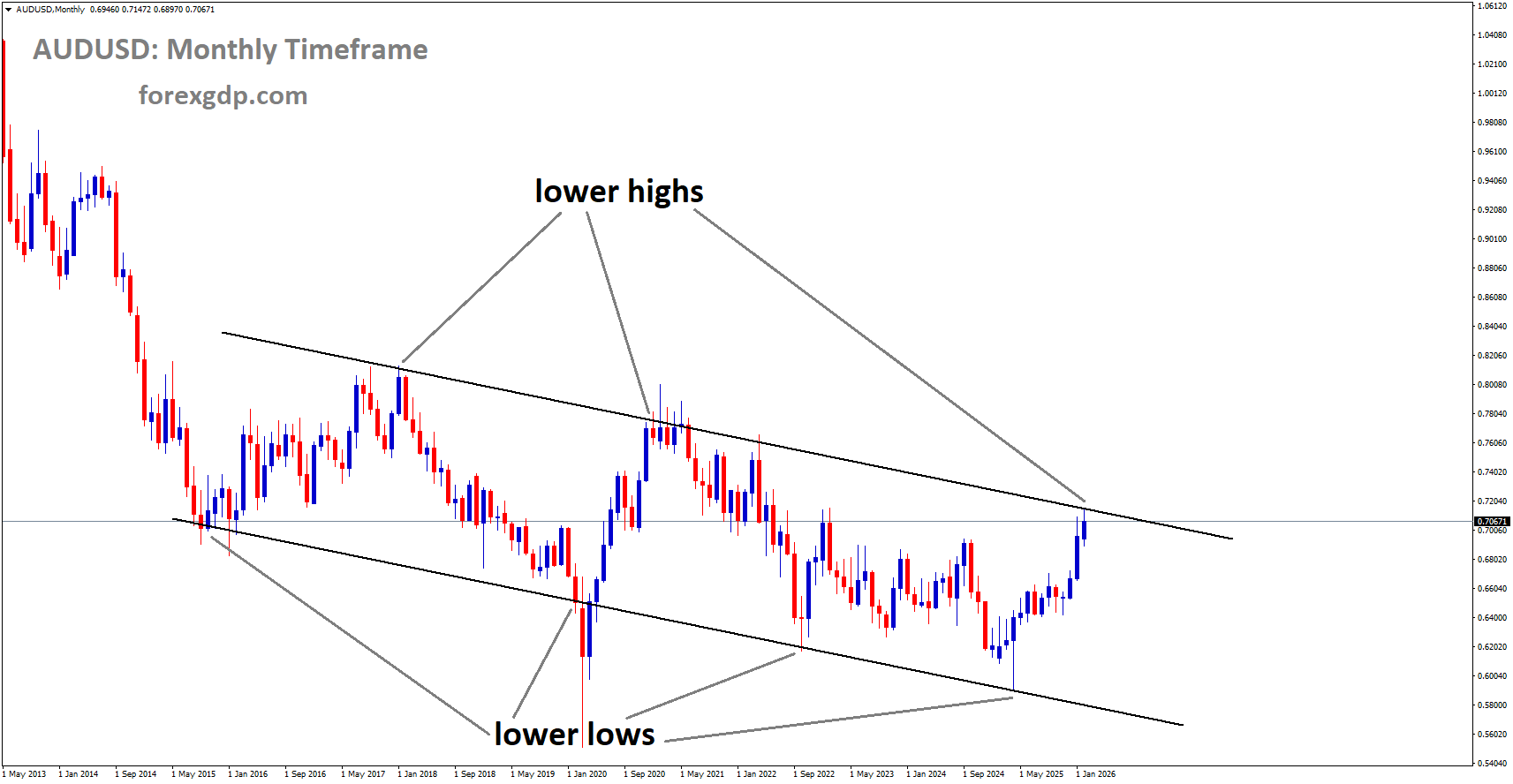
AUDUSD is moving in a descending channel, and the market has reached the lower high area of the channel
At the same time, the US Dollar is navigating its own set of mixed signals. Softer inflation data in the United States has fueled hopes that the Federal Reserve could lower interest rates later this year. However, strong job growth and steady economic performance are adding complexity to the outlook.
This combination of factors is keeping the AUD/USD pair subdued and investors cautious.
RBA Meeting Minutes Reinforce Data-Driven Approach
The latest RBA Meeting Minutes revealed that policymakers decided to raise interest rates in February due to stronger-than-expected economic data, persistent inflation across different sectors, and financial conditions that had become more relaxed.
According to the minutes, inflation remains a key concern for the central bank. Policymakers agreed that without further policy action, inflation could stay above the target range for a prolonged period. This concern played a major role in the board’s decision to tighten policy.
Importantly, the RBA emphasized that there is no fixed path for future interest rates. Instead, decisions will depend entirely on incoming economic data. This flexible approach signals that the central bank is prepared to adjust its stance if conditions change.
Inflation Still a Major Challenge
Inflation in Australia has proven to be broad-based and persistent. Even though some price pressures have eased globally, domestic inflation continues to show resilience.
RBA Governor Michele Bullock had previously noted that inflation had started to accelerate again, leaving the central bank with limited options. She pointed out that consumer spending and business investment had remained stronger than expected, which added upward pressure on prices.
This strength in demand has complicated efforts to bring inflation back within the target range. As a result, the RBA remains cautious and ready to act if needed.
Key Australian Data Releases Ahead
Market participants are now turning their attention to upcoming Australian economic reports. Two important releases are scheduled:
-
The Wage Price Index for the fourth quarter of 2025
-
The January labour market report
These reports will offer fresh insight into wage growth and employment conditions. Wage growth is especially important because rising wages can fuel inflation if businesses pass higher labor costs on to consumers.
If wage growth remains elevated, it could strengthen the case for further tightening. On the other hand, signs of cooling in the labour market could ease pressure on the RBA.
Investors are closely watching these numbers because they will help shape expectations about the central bank’s next move.
US Dollar Outlook: Mixed Signals from Inflation and Jobs Data
While the Australian Dollar faces domestic challenges, the US Dollar is also navigating uncertainty.

Recent US inflation data showed softer readings for January, particularly in consumer prices. This has strengthened expectations that the Federal Reserve may consider cutting interest rates later this year if inflation continues to cool.
However, the broader economic picture in the United States remains solid.
Strong Job Growth Adds Complexity
January’s Nonfarm Payrolls report showed the largest monthly increase in jobs in over a year. At the same time, the unemployment rate unexpectedly declined. These figures suggest that the US labor market remains resilient.
A strong job market typically supports consumer spending, which can keep inflation elevated. This makes the Federal Reserve’s job more complicated.
The central bank aims to bring inflation down to its 2% target. However, its preferred inflation measure, the Personal Consumption Expenditures (PCE) Price Index, has been hovering closer to 3%. Progress in reducing inflation has been uneven since mid-2025.
This creates a delicate balance. On one hand, softer consumer price data supports the argument for rate cuts. On the other hand, strong employment and steady economic growth suggest that inflation risks have not fully disappeared.
Upcoming US Data in Focus
Traders are now awaiting several key US releases, including:
-
The latest Federal Reserve Meeting Minutes
-
Fourth-quarter GDP figures
-
The core PCE Price Index
These reports will provide deeper insight into the Fed’s thinking and the broader health of the US economy.
The Fed Meeting Minutes, in particular, will help investors understand how policymakers are weighing inflation risks against economic strength. Any hints about potential rate cuts later in the year could influence the direction of the US Dollar.
AUD/USD Remains Caught Between Two Central Banks
The AUD/USD exchange rate is currently being shaped by the contrasting but equally cautious stances of the RBA and the Federal Reserve.
In Australia, inflation remains a pressing issue, and policymakers have made it clear that they are prepared to act if price pressures do not ease. At the same time, they are not committing to a specific path for rates, choosing instead to respond to data as it comes in.
In the United States, inflation appears to be moderating, but the labor market remains strong. This mixed picture leaves the Federal Reserve in a wait-and-see mode as well.
For traders and investors, this means uncertainty is likely to continue in the near term. Every new piece of data—whether it relates to wages, jobs, inflation, or economic growth—has the potential to shift expectations about future policy decisions.
Broader Economic Themes at Play
Beyond the immediate data releases, several broader themes are influencing currency markets:
-
Persistent global inflation pressures
-
Resilient consumer spending in major economies
-
Ongoing adjustments in monetary policy worldwide
Central banks are carefully balancing the need to control inflation with the risk of slowing economic growth too much. This balancing act is evident in both Australia and the United States.
For the Australian Dollar, domestic wage growth and employment conditions will be critical. For the US Dollar, inflation trends and the strength of the labor market remain key factors.
Final Thoughts
The Australian Dollar continues to face headwinds after the RBA’s latest Meeting Minutes highlighted ongoing inflation concerns and a commitment to data-driven policy decisions. At the same time, the US Dollar is navigating mixed economic signals, with softer inflation data raising hopes for rate cuts even as job growth remains strong.
With important economic reports scheduled in both countries, market participants are closely monitoring every development. The path ahead for AUD/USD will largely depend on how inflation and employment trends evolve, and how both central banks respond in the months to come.
In this environment, flexibility and close attention to economic data remain essential for anyone following the Australian Dollar, the US Dollar, and the broader currency market.
BTCUSD Trades Sideways Below 70K While Market Anxiety Fades
Bitcoin has been moving through a period of mixed signals. On one hand, signs of panic in the market have clearly faded. On the other hand, strong buying interest has not returned in a meaningful way. While fear has cooled, confidence has not fully stepped in to take its place.
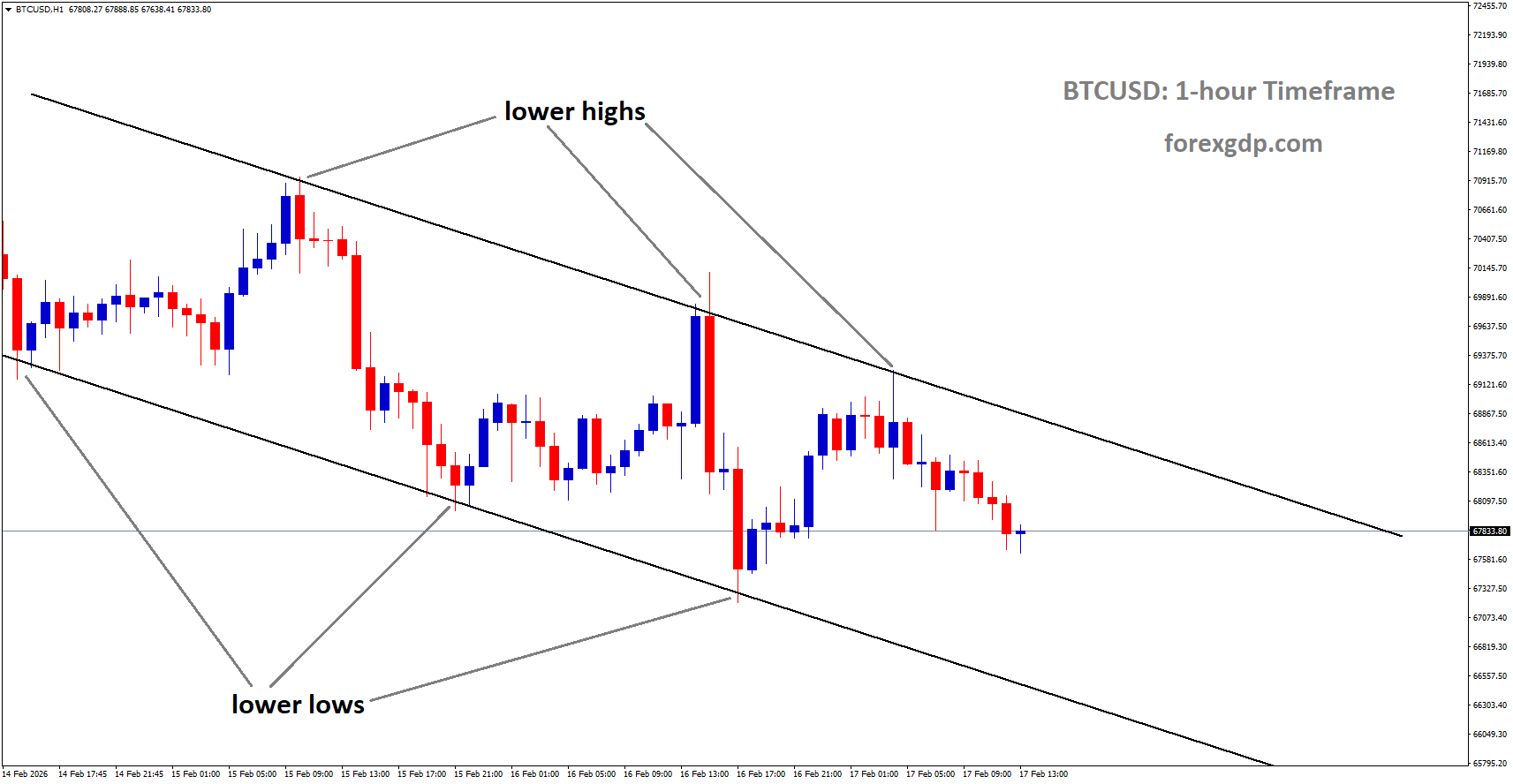
BTCUSD is moving in a descending channel, and the market has fallen from the lower high area of the channel
Recent changes in market data show that investors are no longer reacting with the same urgency seen earlier this month. However, price momentum remains weak. This leaves many traders wondering what comes next for the world’s largest cryptocurrency.
Volatility Drops as Market Fear Fades
One of the clearest signs that panic has eased is the sharp drop in Bitcoin’s implied volatility. Implied volatility measures how much traders expect prices to move over a certain period, usually 30 days. When it rises sharply, it often signals fear and uncertainty. When it falls, it suggests the market is calming down.
Earlier this month, implied volatility jumped dramatically as Bitcoin experienced a steep sell-off. During that period, traders rushed to protect themselves against further losses. As a result, demand for options surged, pushing volatility expectations much higher.
Now, that spike has reversed. Volatility has dropped back to much lower levels, showing that traders are no longer scrambling for protection. The intense fear that followed the sudden price drop has cooled significantly.
This shift suggests that investors feel the worst of the recent shock may be over. The market appears more stable, at least for now.
Understanding the Role of Options
Options play an important role in shaping implied volatility. These are contracts that allow traders to hedge against price swings or speculate on future movements.
A call option allows someone to benefit if Bitcoin rises in value. A put option helps protect against falling prices. When traders expect sharp moves, demand for these contracts rises. That increased demand pushes implied volatility higher.
Earlier in the month, investors rushed into options as Bitcoin’s price dropped quickly. That behavior reflected fear. Now that volatility has declined, it shows traders are no longer aggressively hedging or betting on extreme price swings.
This calmer behavior is often a positive sign. It means forced selling and heavy liquidation may be slowing down. But stability alone does not guarantee a strong recovery.
Bitcoin Struggles to Build Momentum
Despite the cooling panic, Bitcoin has not regained strong upward momentum. After the early-month sell-off found support near lower levels, prices rebounded. However, the recovery has struggled to push significantly higher.
The lack of sustained upward movement suggests that buyers are cautious. There is no wave of aggressive new demand entering the market.
When markets truly shift from fear to confidence, prices often move higher with strength. That has not yet happened. Instead, Bitcoin appears stuck in a period of consolidation, where traders are waiting for clearer signals.
Derivatives Market Shows Limited Enthusiasm
Another important clue comes from funding rates in the perpetual futures market.
Perpetual futures contracts are popular among crypto traders. These contracts include funding payments that move between traders holding long positions (betting on price increases) and short positions (betting on declines). When funding rates are positive, it usually means more traders are leaning bullish. When they are negative, it shows bearish pressure.
Right now, funding rates are only slightly positive. This tells us that traders are mildly optimistic but not strongly convinced of a major rally. There is no clear sign of aggressive buying or heavy leverage building in the system.
This is important because strong bull markets often come with rising leverage and confident positioning. The current data suggests stabilization rather than renewed excitement.
Institutional Demand Remains Soft
Retail traders are not the only ones showing caution. Institutional investors also appear hesitant.
Spot Bitcoin exchange-traded funds (ETFs) in the United States have seen net outflows this month. This extends a multi-month trend of redemptions. When ETFs experience outflows, it means more money is leaving these products than entering them.
ETF flows are often viewed as a key indicator of institutional interest. Strong inflows suggest growing demand from larger investors. Continued outflows, however, point to reduced appetite.
Without steady institutional buying, it becomes harder for Bitcoin to build strong upward momentum. Large capital inflows can act as powerful fuel for price advances. For now, that fuel appears limited.
Macro Conditions Could Offer Support
While short-term demand looks weak, broader economic conditions may offer some hope.
Recent data shows that inflation in the United States is slowing. The consumer price index has cooled compared to previous months. Slower inflation increases the chances that the Federal Reserve may reduce interest rates later this year.
Lower interest rates generally support risk assets. When borrowing costs fall, investors are often more willing to take on risk. Assets like Bitcoin, which do not generate income, can become more attractive in such environments.
Real Yields Are Moving Lower
Another important factor is the real yield on government bonds. Real yields represent interest rates after adjusting for inflation. When real yields fall, the relative disadvantage of holding non-yielding assets like Bitcoin decreases.
Recently, real yields on U.S. government bonds have declined. This shift can encourage investors to diversify into alternative assets.
Why Real Yields Matter
When real yields are high, investors can earn solid returns from relatively safe government bonds. In that case, risky or non-yielding assets may look less appealing.
When real yields drop, bonds become less attractive in comparison. This can push investors to look elsewhere for potential returns, including cryptocurrencies.
In addition, a softer U.S. dollar often improves global liquidity conditions. A weaker dollar can make it easier for international investors to allocate capital into risk assets.
A Market at a Crossroads
Bitcoin currently sits at an interesting point. Fear has clearly eased. Panic selling appears to have slowed. Volatility has returned to more normal levels.
Yet, strong buying demand has not returned in full force. Derivatives markets show mild optimism but not aggressive positioning. Institutional flows remain soft.
At the same time, macroeconomic trends are gradually shifting in a direction that could support digital assets. Lower inflation and falling real yields create a more favorable backdrop for risk-taking.
The key question now is whether improving macro conditions will translate into real demand for Bitcoin.
What Investors Are Watching

Traders and investors are likely focused on several areas:
-
Whether ETF outflows reverse into steady inflows
-
Whether funding rates strengthen, showing renewed bullish confidence
-
How inflation data and central bank policy evolve
-
Movements in real yields and the U.S. dollar
If macro trends continue to improve and capital starts flowing back into crypto products, Bitcoin could regain stronger momentum. If not, prices may continue to move sideways as the market waits for a clearer catalyst.
Final Thoughts
Bitcoin’s recent behavior reflects a cooling of panic rather than a surge of optimism. Volatility has dropped sharply, signaling greater stability. However, demand from both retail and institutional investors remains modest.
The derivatives market shows limited leverage building, and ETF flows point to cautious positioning. Still, broader economic shifts, including lower inflation and declining real yields, offer a supportive backdrop that could eventually benefit Bitcoin.
For now, the market appears balanced between fading fear and cautious patience. Whether this period turns into a renewed rally or extended consolidation will likely depend on how macro conditions evolve and whether investor confidence returns in a meaningful way.
Don’t trade all the time, trade forex only at the confirmed trade setups
Get more confirmed trade signals at premium or supreme – Click here to get more signals, 2200%, 800% growth in Real Live USD trading account of our users – click here to see , or If you want to get FREE Trial signals, You can Join FREE Signals Now!