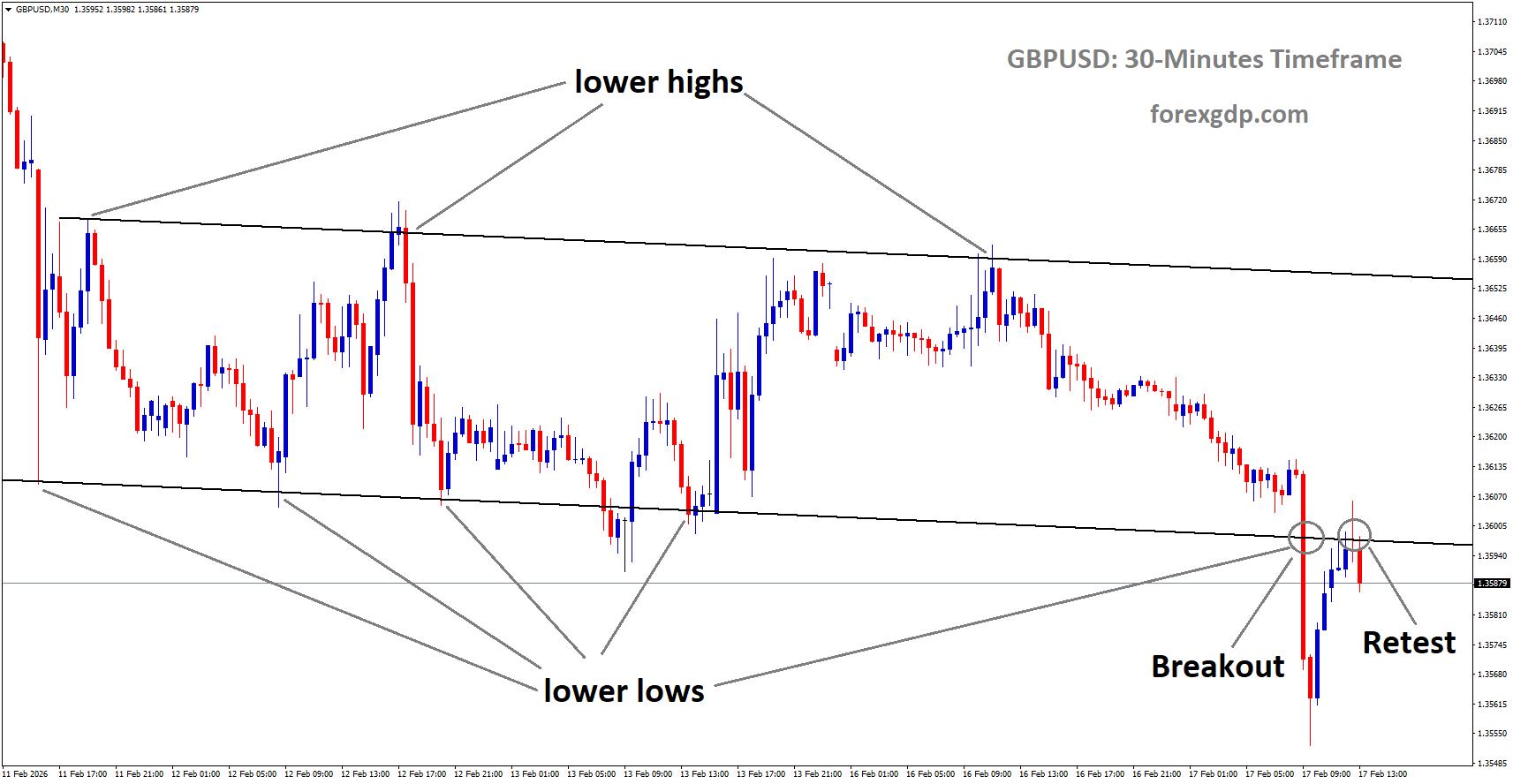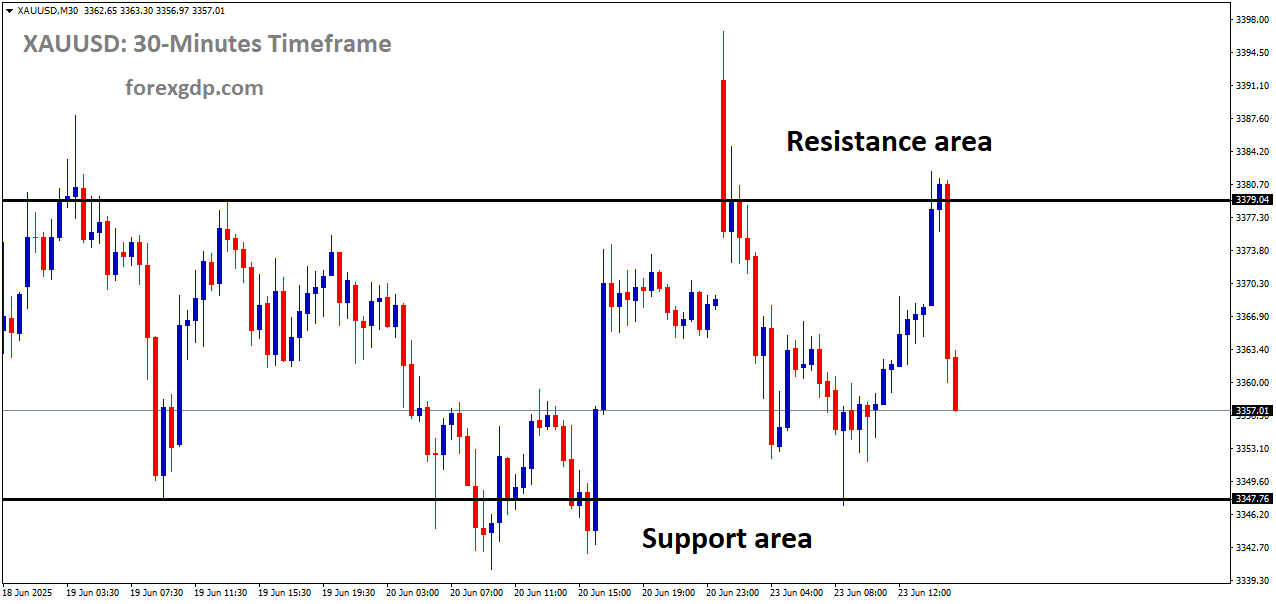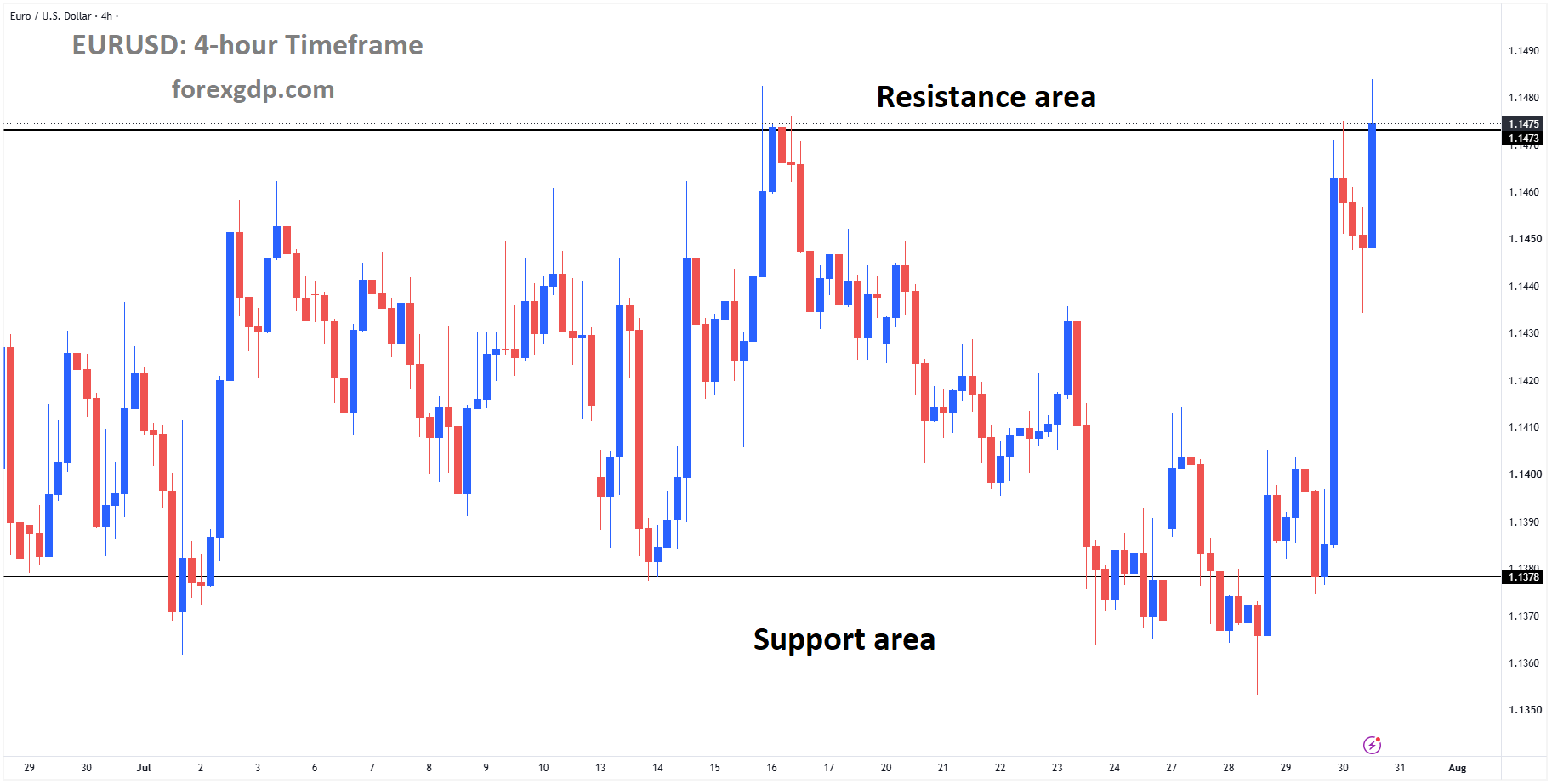
EURUSD reached the resistance area of the box pattern
EURUSD Advances on Robust Eurozone Data Despite Global Uncertainty
The Euro regained strength against the US Dollar after a series of stronger-than-expected economic reports from the Eurozone. Positive growth figures and improving business confidence helped lift market sentiment, allowing the common currency to recover from earlier weakness.
However, the positive mood did not last without challenges. Rising geopolitical tensions and increasing energy costs created fresh uncertainty, limiting the Euro’s upside. As a result, traders remained cautious even as the latest economic data painted a more optimistic picture for the Eurozone.
Eurozone Economy Delivers Better-Than-Expected Growth
Fresh economic figures showed that the Eurozone economy expanded more strongly than many analysts had predicted during the second quarter of the year. The better performance marked a clear improvement from the previous quarter and suggested that economic activity is gradually regaining momentum.
The stronger growth reflects improving demand across several sectors and indicates that businesses and consumers are becoming more active. This positive surprise has strengthened confidence that the region is moving toward a more stable economic environment despite ongoing global challenges.
Yearly Growth Shows Encouraging Progress
Annual economic growth also exceeded expectations, highlighting that the Eurozone has been recovering at a faster pace than many had anticipated. The stronger yearly performance points to improving business conditions and steady consumer activity across the region.
While economic recovery is still facing obstacles, these figures suggest that the Eurozone continues to build resilience. Investors often view stronger long-term growth as a positive sign for the region’s overall financial outlook.
Business and Consumer Confidence Continue to Improve
The latest confidence surveys also brought encouraging news. Consumer confidence improved compared to the previous month, showing that households are becoming slightly more optimistic about the economic outlook.
At the same time, business confidence strengthened as economic and industrial sentiment improved beyond expectations. Companies appear to be feeling more comfortable about future demand, which could encourage additional investment and hiring in the coming months.
Although the improvements are still moderate, they indicate that confidence is gradually returning after a period of uncertainty.
Labour Market Presents a Mixed Picture
Despite the stronger economic performance, not every report was positive. The Eurozone unemployment rate edged slightly higher, suggesting that the labour market is still facing some pressure.
Employment trends often take longer to reflect improvements in economic growth. Businesses may wait before expanding their workforce until they become more confident that stronger demand will continue over a longer period.
As a result, the labour market remains one area that policymakers will continue to monitor closely.
Germany Adds to the Positive Outlook
Germany, the largest economy in the Eurozone, also reported better-than-expected economic growth. Although growth slowed slightly compared to the previous quarter, it still exceeded forecasts and showed that the country’s economy remains on a steady recovery path.
Annual growth also accelerated, adding further support to the broader Eurozone outlook. Since Germany plays a major role in the region’s overall economic performance, stronger results there often boost confidence across European markets.
The latest figures suggest that Germany continues to provide an important foundation for the Eurozone’s recovery.
Improving Data Strengthens Investor Confidence
The combination of stronger growth, improving confidence surveys, and better-than-expected results from Germany encouraged investors to become more optimistic about the Eurozone economy.
When several economic indicators improve at the same time, it often creates a stronger overall picture of economic stability. Investors tend to respond positively to these developments, particularly when they exceed market expectations.
However, financial markets rarely move based on economic data alone.
Geopolitical Risks Create Fresh Challenges
Even as economic reports supported the Euro, renewed geopolitical tensions created fresh uncertainty for global markets.
The return of tensions involving the United States and Iran raised concerns about the possibility of further conflict. These developments reduced investors’ willingness to take on additional risk and increased demand for safer investments.
Periods of geopolitical uncertainty often make financial markets more cautious, even when economic conditions appear to be improving.
Higher Oil Prices Add More Pressure
The renewed tensions also contributed to higher oil prices, creating another challenge for the Eurozone economy.
Higher energy costs can increase expenses for businesses while also raising household spending on fuel and utilities. This can reduce consumer purchasing power and place additional pressure on economic growth over time.
Although stronger economic data provides support, rising energy prices remain an important risk that could slow future progress.
US Dollar Finds Support During Uncertainty
The US Dollar also benefited from the cautious mood in global markets. Investors often move toward the Dollar during periods of uncertainty because it is widely viewed as a safer asset.
Recent developments following the latest Federal Reserve meeting also kept attention focused on US monetary policy. While interest rates remained unchanged, policymakers offered limited guidance about future decisions, leaving investors with continued uncertainty about the outlook.
Questions surrounding future policy direction added another layer of caution across currency markets.
Markets Remain Focused on Future Developments
Although the Eurozone’s latest economic reports have improved confidence, markets continue to balance positive economic news against global risks.
Investors will closely watch upcoming economic releases, labour market data, and geopolitical developments to determine whether the recent improvement can continue.
The combination of solid economic performance and external uncertainties means that market sentiment could continue to shift quickly as new information becomes available.
Summary
The Euro received fresh support after stronger-than-expected Eurozone economic growth and improving business confidence signaled a healthier regional economy. Positive data from Germany further strengthened optimism and suggested that the recovery is gaining momentum.
However, geopolitical tensions, rising oil prices, and ongoing global uncertainty continue to limit confidence. While the economic outlook has improved, investors remain cautious as they weigh encouraging domestic data against risks that could affect global financial markets in the months ahead.
USDJPY Pushes Higher as Fed Signals Patience and Yen Weakens
The USDJPY currency pair moved slightly higher during Thursday’s Asian trading session as investors reacted to the latest policy update from the US Federal Reserve. The US Dollar gained strength after the Fed decided to leave interest rates unchanged while maintaining a firm stance on inflation. At the same time, traders are turning their attention to the Bank of Japan (BoJ), which is expected to announce its policy decision on Friday.
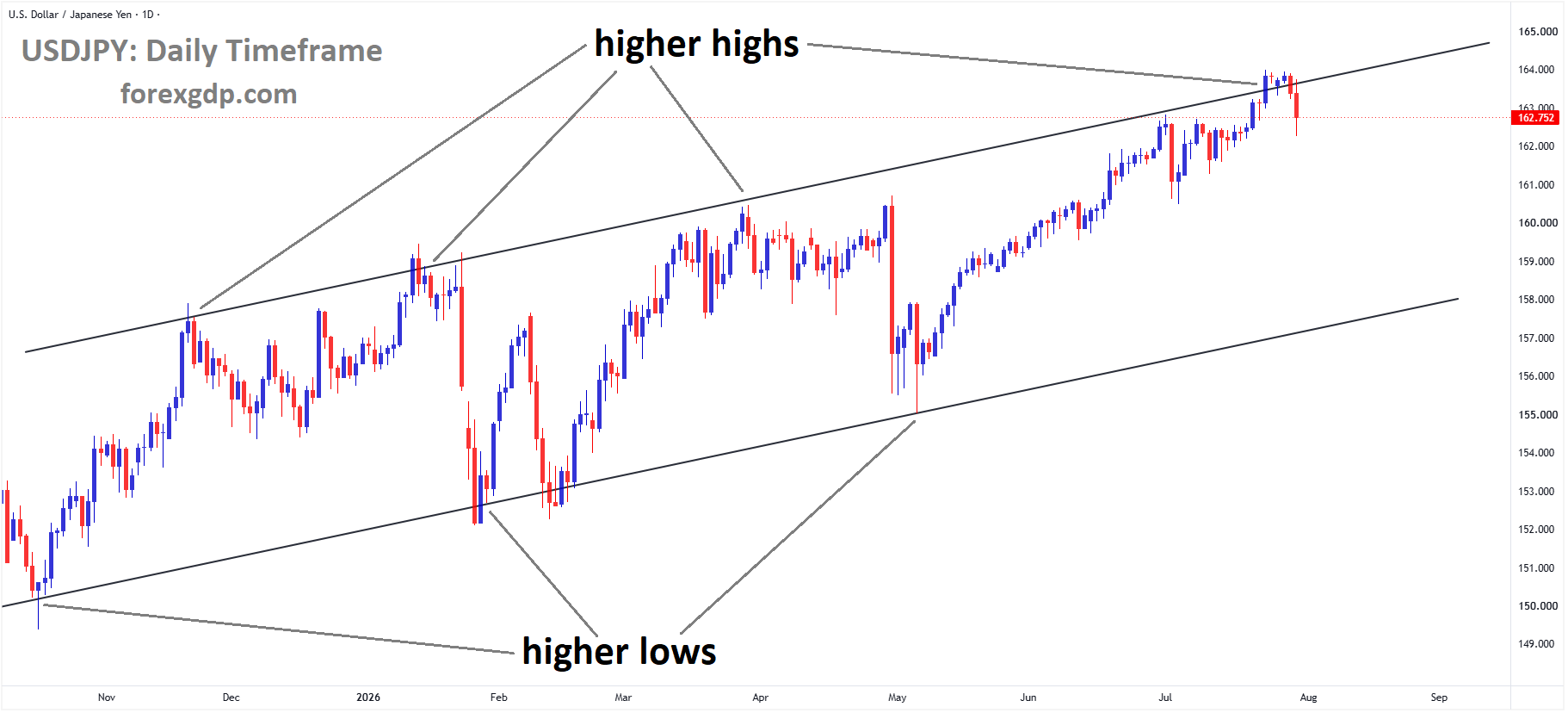
USDJPY is moving in an ascending channel, and the market has fallen from the higher high area of the channel
Although no immediate change in Japanese interest rates is expected, markets are closely watching the central bank’s guidance for clues about its future plans. With both central banks shaping expectations for the months ahead, USDJPY remains in focus for global currency traders.
Federal Reserve Keeps Rates Unchanged but Maintains Hawkish Tone
The Federal Reserve kept its benchmark interest rate unchanged during its July policy meeting, a move that was widely expected by financial markets. However, the meeting delivered a stronger message than many investors had anticipated.
Officials highlighted that inflation continues to remain a concern despite previous progress. Higher energy costs and ongoing price pressures were mentioned as important reasons for maintaining a cautious approach toward future monetary policy.
One notable aspect of the meeting was that three members voted in favor of raising interest rates instead of keeping them unchanged. This unusual level of disagreement within the committee suggests that some policymakers believe stronger action may still be needed if inflation remains stubborn.
As a result, investors have started increasing expectations that another interest rate hike could still be possible in the coming months if economic conditions support such a move.
Fed Chair Stresses Commitment to Inflation Goal
During the post-meeting press conference, Federal Reserve Chairman Kevin Warsh emphasized that the central bank is not offering advance guidance about future interest rate decisions.
Instead, he explained that every decision will depend on incoming economic data and whether inflation continues moving toward the Fed’s long-term objective of 2%.
This message reinforces the central bank’s flexible approach. Rather than committing to a specific path, policymakers are prepared to adjust their actions whenever necessary to maintain price stability.
For currency markets, that stance provides continued support for the US Dollar because investors generally expect higher interest rates to make a currency more attractive.
Middle East Tensions Increase Demand for the US Dollar
Geopolitical developments also played an important role in supporting the US Dollar.
Reports indicated that the United States launched military strikes against targets in Iran following Iranian missile attacks on American forces in the region. According to reports, the strikes included locations in the Iranian city of Abadan as well as Qeshm Island.
Whenever geopolitical uncertainty increases, investors often look for assets considered relatively safe during periods of global instability. The US Dollar has traditionally benefited from this type of market behavior.
As concerns over the Middle East continue, traders will closely monitor any new developments that could influence investor confidence and global financial markets.
Attention Turns to the Bank of Japan

While the Federal Reserve has already delivered its policy decision, the next major event for USDJPY will be the Bank of Japan’s announcement.
Most economists expect the Japanese central bank to leave interest rates unchanged. However, the focus will be less on the actual decision and more on the language used by policymakers during the meeting.
If officials express greater confidence about inflation and economic growth, markets could interpret that as a signal that future interest rate increases remain under consideration.
Because of this, even an unchanged policy decision could have a meaningful impact on the Japanese Yen.
BoJ May Keep the Door Open for Future Rate Hikes
Several analysts believe the Bank of Japan may continue expressing concern that inflation risks remain tilted to the upside.
According to economists at Mitsubishi UFJ Morgan Stanley Securities, policymakers are likely to maintain this assessment while keeping the option open for additional tightening if inflation strengthens further.
The analysts also suggested that the timing of any future rate increase could move forward if inflation rises faster than expected or if continued weakness in the Japanese Yen creates additional economic pressure.
This means traders will carefully examine every statement released by the central bank, looking for clues about possible policy changes later this year.
Markets Watch for Hawkish Communication
Many investors believe that the tone of the BoJ’s statement could prove more important than the interest rate decision itself.
If policymakers acknowledge stronger inflation risks and indicate that further tightening remains possible, expectations for future rate increases could strengthen.
That would likely improve confidence in the Japanese Yen even without an immediate policy adjustment.
Financial institutions have already warned that this week’s policy announcement carries meaningful risks for currency markets because any shift in guidance could quickly influence investor expectations.
Yen Could Find Support if BoJ Signals Confidence
Strategists at Scotiabank believe the balance of risks may increasingly favor the Japanese Yen toward the end of the week.
They suggest that if the Bank of Japan delivers a firm policy message while reinforcing expectations for future tightening, the Yen could receive additional support from domestic factors rather than global market movements.
Even without changing interest rates, stronger communication could encourage investors to believe that Japan is gradually moving toward a less accommodative monetary policy.
That possibility makes Friday’s policy announcement one of the most closely watched events for the foreign exchange market.
Investors Await Clearer Policy Direction
For now, the US Dollar is benefiting from the Federal Reserve’s determination to keep fighting inflation, while the Japanese Yen is waiting for fresh direction from the Bank of Japan.
The combination of central bank decisions, inflation expectations, and ongoing geopolitical developments is keeping currency traders cautious.
With both economies facing different challenges, every policy statement and economic update has the potential to shift market expectations in the weeks ahead.
Summary
USDJPY strengthened after the Federal Reserve left interest rates unchanged while maintaining a firm stance on inflation. The presence of multiple policymakers supporting a rate increase reinforced expectations that additional tightening remains possible if inflation persists.
Attention now shifts to the Bank of Japan, where investors expect interest rates to remain unchanged. However, markets will closely study the central bank’s guidance for signals about future policy moves. At the same time, rising geopolitical tensions in the Middle East continue to support demand for the US Dollar, adding another important factor influencing the currency pair.
USDCAD Advances as Rising USD Demand Pressures the Canadian Dollar
The USD/CAD currency pair moved higher on Thursday, recovering after falling to its lowest level in more than a week. A stronger US Dollar, rising geopolitical tensions in the Middle East, and cautious expectations surrounding the Bank of Canada all combined to support the pair.
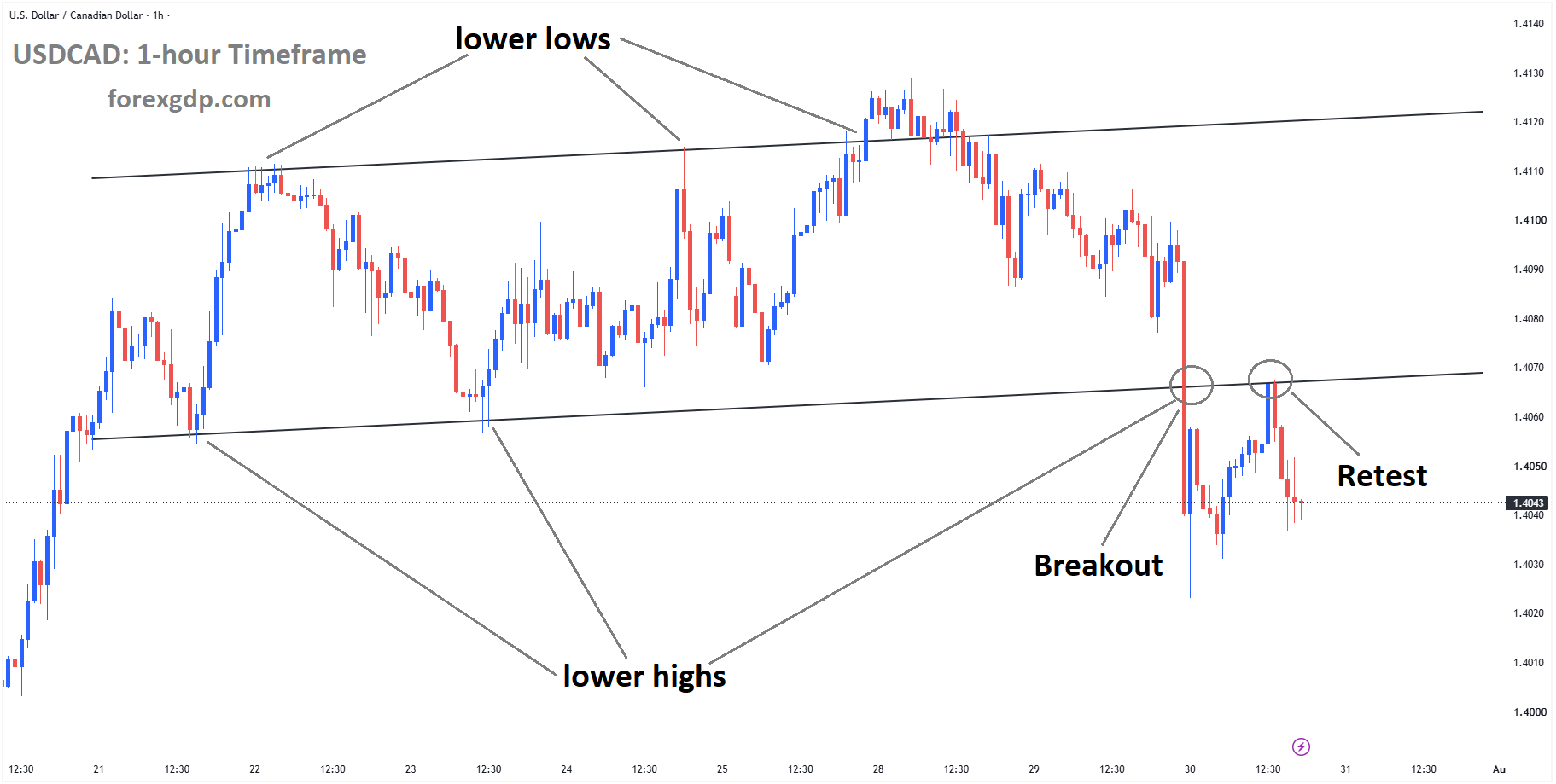
USDCAD is falling from the retest area of the broken ascending channel
Investors are also paying close attention to key US economic data, which could shape expectations for future interest rate decisions by the Federal Reserve. At the same time, concerns about global trade and uncertainty surrounding Canada’s economic outlook are limiting support for the Canadian Dollar, even as energy prices remain firm.
US Economic Data Takes Center Stage
Financial markets are closely watching a series of important economic reports from the United States. These include the Advance Gross Domestic Product (GDP) report for the second quarter and the Personal Consumption Expenditures (PCE) Price Index, which is one of the Federal Reserve’s preferred measures of inflation.
These reports are expected to provide fresh insight into the strength of the US economy and whether inflation remains persistent. If the data shows continued economic resilience or stronger inflation pressures, investors may believe that the Federal Reserve could maintain a tighter monetary policy for longer.
Such expectations generally increase demand for the US Dollar because higher interest rates often make US assets more attractive to global investors.
Federal Reserve Outlook Supports the US Dollar
Even before the latest economic reports are released, expectations surrounding the Federal Reserve remain an important driver for the US Dollar.
Many market participants continue to believe that another interest rate increase is still possible before the end of the year if inflation remains above the central bank’s target. While policymakers continue to emphasize a data-driven approach, recent developments have strengthened the argument for keeping monetary policy restrictive.
As a result, the US Dollar has regained strength after experiencing temporary weakness following the Federal Reserve’s latest policy meeting.
Middle East Tensions Add to Inflation Concerns
Geopolitical developments are once again influencing global financial markets.
Tensions between the United States and Iran have intensified following fresh military action in response to attacks on American forces stationed in the Middle East. The latest developments have raised concerns that the conflict could spread further across the region.
The situation has become even more complicated after reports suggested that Iran-backed groups may introduce new costs for commercial vessels traveling through important shipping routes. At the same time, uncertainty surrounding the Strait of Hormuz continues to create worries about potential disruptions to global energy transportation.
Whenever geopolitical risks threaten energy supplies, markets often become concerned that fuel costs could rise. Higher energy prices can contribute to inflation, making it more difficult for central banks to reduce price pressures.
Because of this, investors believe the Federal Reserve may have fewer reasons to ease monetary policy in the near future, providing additional support for the US Dollar.
Energy Market Remains Sensitive to Global Events
Energy markets continue to react quickly to political developments in the Middle East.
Analysts note that every increase in regional tensions raises the possibility of supply disruptions, which keeps concerns about future energy availability alive. Even without actual supply interruptions, uncertainty alone can influence market sentiment and increase expectations for higher inflation.
Since energy costs affect transportation, manufacturing, and consumer spending, any prolonged increase in prices could have a broader impact on economies around the world.
This ongoing uncertainty has become another factor encouraging investors to remain cautious while supporting demand for safe and stable currencies such as the US Dollar.
Canadian Dollar Faces Multiple Challenges

Normally, stronger energy prices tend to provide support for the Canadian Dollar because Canada is one of the world’s major energy exporters.
However, recent market conditions show that this relationship is not always straightforward.
Despite firm energy prices, the Canadian Dollar has struggled to gain momentum. One reason is the growing expectation that the Bank of Canada may continue to adopt a more cautious approach toward monetary policy compared to the US Federal Reserve.
If investors believe Canadian interest rates are less likely to rise, the Canadian Dollar can lose some of its appeal against the US Dollar.
Trade Concerns Continue to Pressure the Loonie
Another challenge for the Canadian Dollar comes from ongoing concerns about global trade.
Trade uncertainty creates additional risks for export-driven economies like Canada. Businesses often become more cautious when international trade conditions weaken, which can slow investment and economic growth.
These concerns have reduced investor confidence in the Canadian Dollar, making it more difficult for the currency to benefit fully from stronger energy prices.
As a result, the positive impact of higher oil prices has been largely offset by worries about Canada’s broader economic outlook.
Investors Await Fresh Market Direction
With several major economic and geopolitical developments unfolding at the same time, investors are waiting for clearer signals before making larger market decisions.
The upcoming US economic reports could significantly influence expectations for future Federal Reserve policy. Meanwhile, any new headlines from the Middle East may continue to affect inflation expectations and overall market sentiment.
At the same time, investors will continue monitoring comments from Bank of Canada officials for clues about the country’s monetary policy outlook. Any changes in expectations from either central bank could influence the direction of the USD/CAD pair in the coming sessions.
Summary
USD/CAD has regained strength as renewed demand for the US Dollar outweighs support for the Canadian Dollar from higher energy prices. Expectations that the Federal Reserve could maintain a firm stance on inflation, together with rising geopolitical tensions in the Middle East, have improved the appeal of the US currency.
Meanwhile, the Canadian Dollar remains under pressure as investors weigh the Bank of Canada’s cautious policy outlook and ongoing concerns about global trade. With important US economic data and geopolitical developments still unfolding, market participants are likely to remain focused on factors that could shape the next move for USD/CAD.
USDCHF Climbs Higher as Upbeat Swiss Growth Signals Can’t Lift CHF
The USDCHF currency pair moved higher on Thursday, recovering from the previous session’s weakness as the US Dollar regained momentum. The advance came even though Switzerland released stronger-than-expected economic data, highlighting that broader market sentiment and demand for the US Dollar continued to play a bigger role in driving the pair.
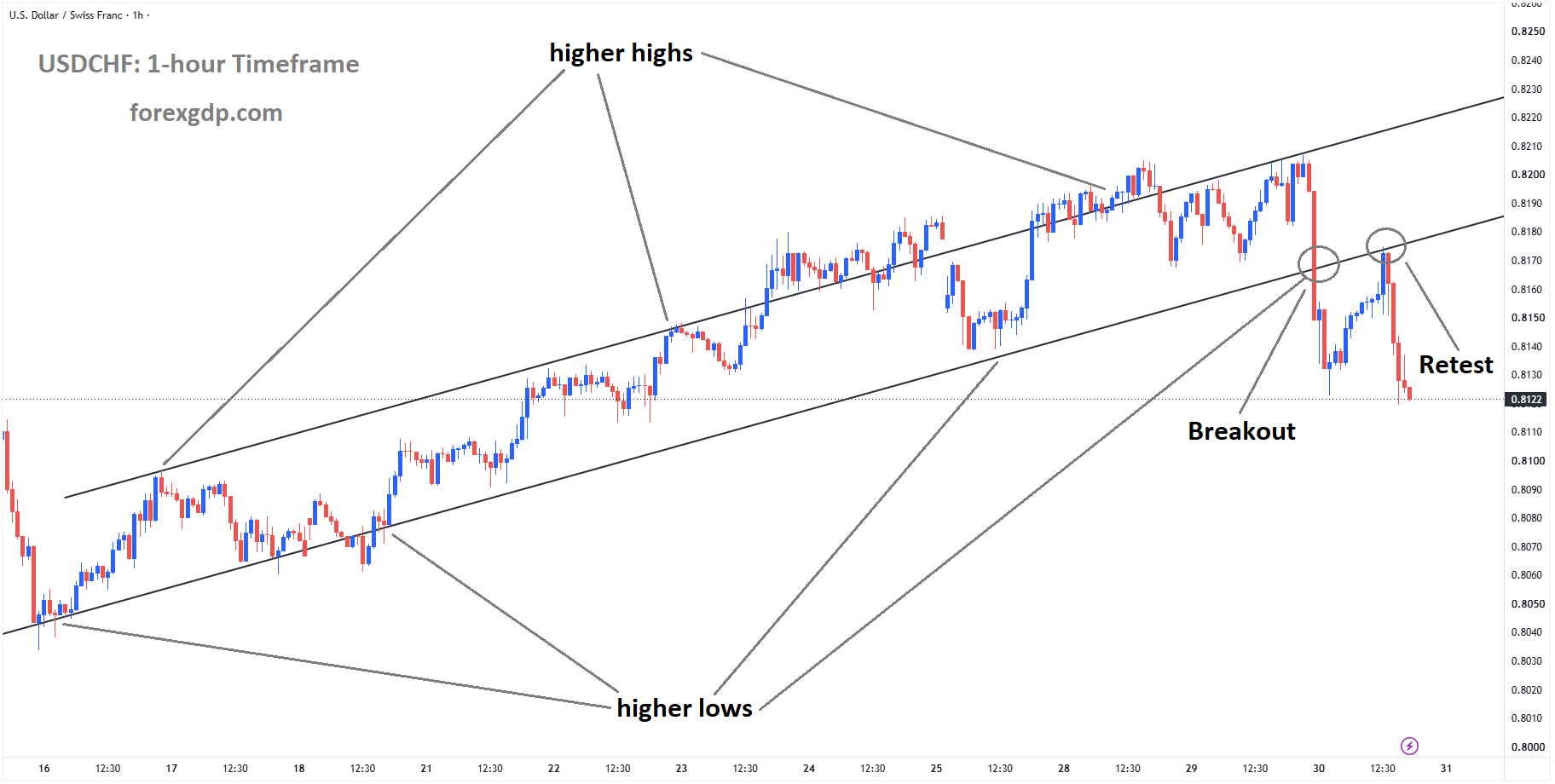
USDCHF is falling from the retest area of the broken ascending channel
While positive Swiss economic indicators offered support to the Swiss Franc, growing global uncertainty and renewed interest in safe-haven assets helped the US Dollar recover after facing pressure following the latest Federal Reserve meeting.
Swiss Economic Confidence Improves in July
Switzerland delivered encouraging economic news with the release of the latest KOF Economic Barometer. The closely watched indicator, which measures expectations for the country’s economic performance over the coming months, improved for the second consecutive month.
The reading surprised economists by rising instead of falling, signaling that Switzerland’s economy continues to show resilience. The stronger result reflects growing optimism among businesses and suggests that economic activity remains on a healthy path despite global challenges.
The report highlighted that production-related sectors were the main drivers behind the improvement. Manufacturing and other industrial activities showed stronger conditions, while most areas of the Swiss economy recorded positive performance.
At the same time, demand conditions remained relatively stable. Foreign demand and domestic consumer spending showed little change, indicating that the economy is maintaining a balanced pace of growth rather than experiencing rapid expansion.
Positive Swiss Data Fails to Lift the Franc
Although stronger economic indicators would normally provide support for the Swiss Franc, the currency struggled to gain ground against the US Dollar.
One reason was the broader shift in investor sentiment. Rising geopolitical tensions in the Middle East encouraged investors to seek safer assets, and the US Dollar benefited from that increased demand.
As a result, the positive Swiss economic report was not enough to outweigh the renewed buying interest in the Greenback. This highlights how global developments can sometimes have a greater influence on currency markets than domestic economic data.
Federal Reserve Decision Continues to Influence Markets
The Federal Reserve remained one of the main drivers of market sentiment this week.
At its latest policy meeting, the US central bank decided to leave interest rates unchanged. While the decision itself was largely expected, investors paid close attention to the comments made by Federal Reserve Chairman Kevin Warsh after the announcement.
Many market participants were left disappointed because the press conference offered very little guidance about the Fed’s future policy direction. Investors had hoped for clearer signals about how policymakers view inflation, economic growth, and the possibility of future interest rate changes.
Instead, the lack of specific direction created uncertainty, leading to increased volatility across financial markets.
Questions Grow Over Federal Reserve Communication

The Federal Reserve’s communication has become a major topic of discussion among investors and analysts.
Some market experts believe the central bank did not clearly explain why it decided to keep interest rates unchanged, especially with inflation remaining above its long-term target. This has raised concerns about whether the Fed’s policy decisions are providing enough confidence to financial markets.
Several analysts also noted that long-term US Treasury bonds came under pressure following the Fed meeting. Bond market movements reflected growing uncertainty about the future path of monetary policy and how effectively the central bank is responding to current economic conditions.
These concerns briefly weighed on the US Dollar after the meeting, although the currency later recovered as investors shifted their attention toward global risk factors.
Rate Expectations Continue to Change
The Federal Reserve’s cautious approach has also affected expectations for upcoming policy meetings.
Following the latest decision, investors adjusted their outlook for future interest rate moves. Market participants now see a greater possibility that the Federal Reserve could keep interest rates unchanged again at its next meeting.
These changing expectations show that investors remain uncertain about the central bank’s next steps. Every new economic report and every public statement from Federal Reserve officials will likely receive close attention as markets search for clearer direction.
For currency traders, this means the US Dollar could continue reacting sharply to fresh economic data and comments from policymakers in the weeks ahead.
Global Risk Sentiment Supports the US Dollar
Beyond central bank policy, global developments also played an important role in Thursday’s market moves.
Renewed geopolitical tensions increased demand for assets considered relatively safer during periods of uncertainty. The US Dollar benefited from this shift in investor sentiment, helping it recover despite ongoing questions surrounding Federal Reserve policy.
Meanwhile, the Swiss Franc, which is also traditionally viewed as a safe-haven currency, received support from stronger domestic economic data but was unable to match the broader strength seen in the US Dollar during the session.
This combination of improving Swiss fundamentals and stronger global demand for the Greenback created an interesting balance in the USDCHF pair.
What Traders May Watch Next
Looking ahead, investors will continue monitoring both Swiss and US economic developments.
Future Swiss economic reports will help determine whether the country’s improving outlook can provide stronger support for the Swiss Franc. Meanwhile, attention in the United States will remain focused on inflation, employment, and any new guidance from Federal Reserve officials.
Geopolitical events are also expected to remain an important factor. Any increase or easing in global tensions could quickly influence demand for safe-haven currencies, including both the US Dollar and the Swiss Franc.
With uncertainty surrounding monetary policy and global risks still present, market sentiment is likely to remain sensitive to incoming news.
Summary
USDCHF strengthened as the US Dollar recovered despite Switzerland reporting stronger-than-expected economic data. The improvement in the Swiss KOF Economic Barometer highlighted growing confidence in the country’s economy, supported by stronger production activity and stable demand. However, renewed global uncertainty and stronger demand for the US Dollar outweighed the positive impact of the Swiss data.
At the same time, the Federal Reserve’s decision to leave interest rates unchanged and the lack of clear guidance from Chairman Kevin Warsh continued to shape investor expectations. As markets reassess the outlook for future monetary policy, both economic data and geopolitical developments are expected to remain key drivers for USDCHF in the coming sessions.
AUDUSD Weakens While Traders Await High-Impact US Economic Releases
The AUDUSD currency pair remained under pressure on Thursday as the Australian Dollar struggled to build on its recent recovery. A stronger US Dollar, rising geopolitical tensions in the Middle East, and changing expectations about central bank policies combined to limit demand for the Aussie.
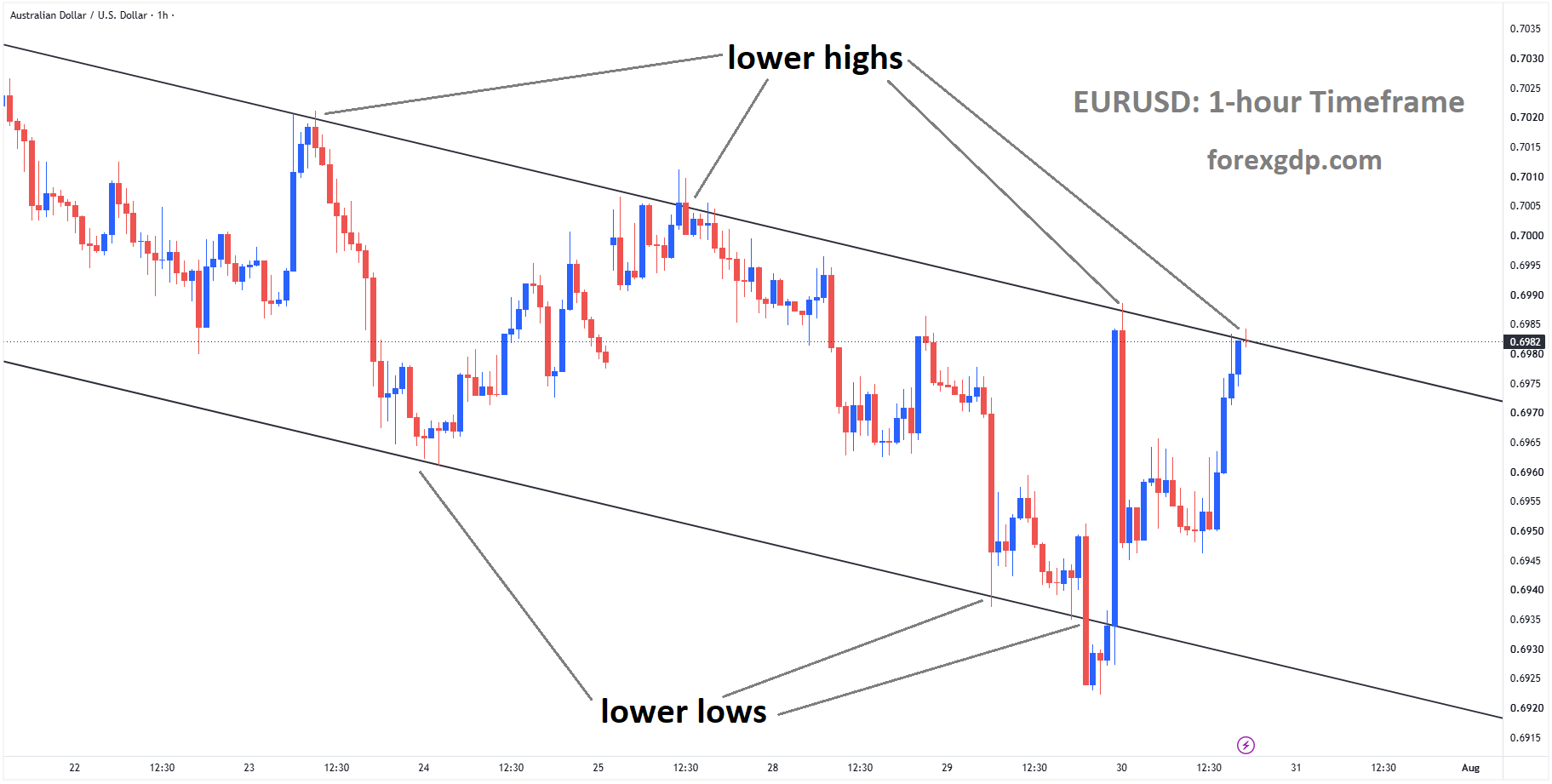
AUDUSD reached the lower high area of the descending channel
While the pair attempted to stabilize after recent weakness, buyers remained cautious. Investors preferred the safety of the US Dollar as uncertainty surrounding global events and the outlook for interest rates continued to shape market sentiment.
US Dollar Regains Strength After Fed Decision
The US Dollar recovered after slipping following the latest Federal Reserve policy announcement. Although the initial reaction saw some weakness in the greenback, investors quickly shifted their focus back to factors that continue to support the US currency.
One of the biggest reasons behind the renewed demand is the belief that the Federal Reserve may still need to keep monetary policy restrictive if inflation remains persistent. Rising energy prices have added fresh uncertainty to the inflation outlook, making it harder for policymakers to declare victory over price pressures.
As a result, many traders remain cautious about expecting rapid interest rate cuts or a softer policy stance from the Fed. This has helped the US Dollar regain momentum against several major currencies, including the Australian Dollar.
Middle East Tensions Increase Demand for Safe-Haven Assets
Geopolitical developments have become another major driver of financial markets. Recent military actions involving the United States and Iran have increased concerns about the possibility of a wider regional conflict.
Reports indicate that the US carried out strikes against Iran following missile attacks targeting American forces stationed in the Middle East. The situation follows earlier military operations involving Iran-linked groups and has raised fears that tensions could continue to escalate.
Whenever geopolitical uncertainty increases, investors often move money into assets that are considered safer during periods of instability. The US Dollar has traditionally been one of those preferred safe-haven currencies, and the latest developments have strengthened its appeal.
As long as uncertainty remains elevated, demand for the US Dollar could continue to stay firm.
Energy Supply Concerns Add to Inflation Worries
Another important factor supporting the US Dollar is growing concern over global energy supplies.
The ongoing dispute involving the Strait of Hormuz has increased fears about possible disruptions to oil shipments. At the same time, reports suggest that Iran-backed groups in Yemen may consider imposing additional charges on commercial vessels traveling through the southern Red Sea.
These developments have raised concerns that transportation costs and energy prices could remain elevated for longer than expected.
Higher energy costs often create additional inflationary pressure across the global economy. Since central banks closely monitor inflation when setting monetary policy, persistent price pressures may encourage the Federal Reserve to maintain a cautious approach toward easing policy.
This expectation continues to provide support for the US Dollar.
Australian Dollar Faces Additional Challenges
While the US Dollar has found fresh support, the Australian Dollar has struggled due to changing expectations surrounding the Reserve Bank of Australia (RBA).
Recent market sentiment suggests that investors have become less confident about the possibility of an immediate interest rate increase from the Australian central bank. As those expectations have eased, the Australian Dollar has lost one of its key sources of support.
The Australian economy also remains highly sensitive to global developments, including shifts in investor confidence and international trade conditions. During periods of heightened uncertainty, currencies linked to economic growth, such as the Australian Dollar, often face additional pressure.
This difference in market expectations between the Federal Reserve and the Reserve Bank of Australia has created a more favorable environment for the US Dollar.
Investors Turn Their Attention to Key US Economic Reports

The next major focus for financial markets is a series of important economic reports from the United States.
Investors are waiting for the release of advance second-quarter Gross Domestic Product (GDP) figures, which will provide a fresh look at the strength of the US economy. Strong economic growth could reinforce confidence in the country’s economic outlook and influence expectations for future Federal Reserve decisions.
Another closely watched report is the Personal Consumption Expenditures (PCE) Price Index, one of the Federal Reserve’s preferred measures of inflation.
If inflation remains stronger than expected, markets may continue to believe that the Fed will maintain a cautious policy approach. On the other hand, softer inflation data could reduce those expectations and influence demand for the US Dollar.
These reports are likely to play an important role in shaping market direction over the coming sessions.
Geopolitical Headlines Could Keep Volatility High
Beyond economic data, investors will also remain focused on geopolitical developments.
Any new updates regarding US-Iran relations, military activity in the Middle East, or disruptions to global shipping routes could quickly affect investor sentiment.
Financial markets tend to react rapidly to unexpected geopolitical events, especially when they involve major energy-producing regions. Such developments not only influence energy markets but also impact inflation expectations, central bank outlooks, and demand for safe-haven assets.
Because of this, geopolitical news is expected to remain an important factor influencing the direction of the AUDUSD pair.
Market Sentiment Remains Cautious
Overall, the balance of market sentiment currently favors the US Dollar. A combination of safe-haven demand, ongoing geopolitical uncertainty, and expectations that the Federal Reserve may keep policy restrictive has strengthened the greenback.
Meanwhile, the Australian Dollar continues to face headwinds as investors reduce expectations for near-term policy tightening by the Reserve Bank of Australia.
Until there is greater clarity from upcoming economic reports and geopolitical developments, traders are likely to remain cautious, with both factors continuing to influence the direction of the AUDUSD pair.
Summary
The Australian Dollar remains under pressure as stronger demand for the US Dollar dominates market sentiment. Rising geopolitical tensions in the Middle East, concerns about global energy supplies, and persistent inflation expectations have all contributed to renewed support for the greenback.
At the same time, reduced expectations for an immediate interest rate increase from the Reserve Bank of Australia have weakened the Australian Dollar’s outlook. With important US economic data and ongoing geopolitical developments ahead, investors are expected to stay alert as they assess the next major drivers for the AUDUSD pair.
Don’t trade all the time, trade forex only at the confirmed trade setups
Get more confirmed trade signals at premium or supreme – Click here to get more signals, 2200%, 800% growth in Real Live USD trading account of our users – click here to see , or If you want to get FREE Trial signals, You can Join FREE Signals Now!