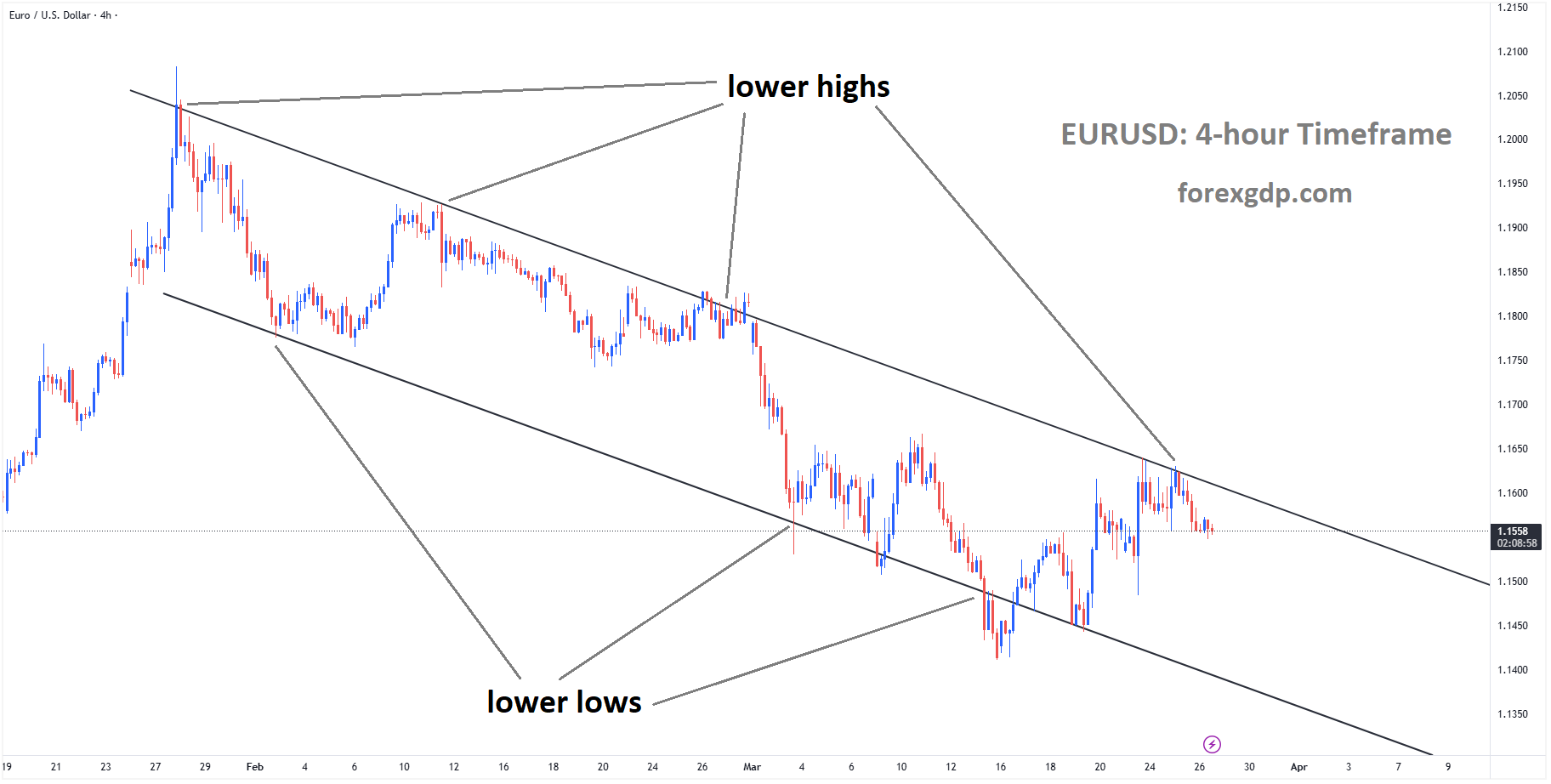
EURUSD is moving in a descending channel, and the market has fallen from the lower high area of the channel
EURUSD Stays Under Pressure Around 1.1550 as Middle East Tensions Rise
The Euro has been moving sideways in recent days, showing little strength against the US Dollar. Despite a brief recovery earlier in the month, the currency now appears to be losing steam again. A mix of global uncertainty, weak economic signals from Europe, and cautious investor behavior is keeping the Euro under pressure.
At the same time, the US Dollar is benefiting from its reputation as a safe place for investors during uncertain times. This shift in sentiment is playing a key role in how the currency pair is behaving.
Global Tensions Weigh on Market Confidence
One of the biggest factors influencing the Euro right now is the rising tension in the Middle East. Recent developments have made investors more cautious, leading them to move away from riskier assets like the Euro.
Iran has rejected a peace proposal from the United States, which had briefly raised hopes for a possible resolution to the ongoing conflict. Instead of progress, the situation has escalated further. The US has responded with stronger warnings, and military activity has continued on both sides. Reports of missile and drone attacks, along with ongoing airstrikes, have increased uncertainty in global markets.
Another major concern is the continued closure of the Strait of Hormuz. This key shipping route plays an important role in global trade, especially for oil. Its disruption is adding pressure to the global economy and making investors nervous.
When uncertainty rises like this, investors often shift their money into safer assets. The US Dollar is one of the most trusted currencies during such times, which explains why it is gaining strength while the Euro struggles.
Risk-Averse Sentiment Supports the US Dollar
Investor behavior is currently shaped by caution. When markets are uncertain, traders tend to avoid risk and look for stability. This is known as a “risk-off” environment.
In such conditions, the US Dollar usually performs well because it is seen as a reliable store of value. On the other hand, currencies like the Euro, which are more sensitive to economic growth and global trade, tend to weaken.
The recent geopolitical tensions have strengthened this trend. Even though there are no major changes in the Eurozone’s financial system, the overall mood in the market is enough to push the Euro lower.
Mixed Signals from the European Central Bank
While global events are playing a major role, internal developments in the Eurozone are also affecting the currency. Comments from European Central Bank (ECB) officials have created some uncertainty about future monetary policy.
Some ECB members, including Joachim Nagel, have suggested that interest rate increases could still be considered in the near future. This follows similar remarks from ECB President Christine Lagarde, who has said the bank is ready to act if inflation remains strong.
What This Means for the Euro
In theory, higher interest rates can support a currency because they offer better returns for investors. However, the situation is not that simple right now.
Investors are unsure whether the Eurozone economy is strong enough to handle tighter monetary policy. If the economy slows down too much, raising rates could do more harm than good. This uncertainty is limiting the positive impact of these hawkish comments.
Weak German Data Raises Concerns
Germany, the largest economy in the Eurozone, is showing signs of weakness. Recent data on consumer confidence has added to these concerns.
The GfK Consumer Confidence Survey for April showed a sharp drop, reaching its lowest level in more than two years. This decline suggests that consumers in Germany are becoming more pessimistic about the future.
Why Consumer Confidence Matters
Consumer confidence is an important indicator because it reflects how people feel about their financial situation and the overall economy. When confidence is low, people tend to spend less. This can slow down economic growth.
A weaker German economy can have a ripple effect across the entire Eurozone. Since Germany plays such a central role, any slowdown there raises concerns about the broader economic outlook.
Euro’s Recent Recovery Shows Signs of Fatigue
Earlier in March, the Euro managed to recover from lower levels, giving some hope that it could regain strength. However, that recovery now appears to be fading.
The currency is currently hovering just above a key level, but it is struggling to move higher. This lack of momentum suggests that buyers are becoming less confident.
Several factors are contributing to this slowdown:
Ongoing global tensions
Weak economic data from Europe
Uncertainty about ECB policy
Strong demand for the US Dollar
Together, these elements are creating a challenging environment for the Euro.
What to Watch Moving Forward
The future direction of the Euro will depend on several key developments. Traders and investors will be closely watching both global events and economic data.
Key Areas of Focus
Geopolitical developments: Any progress or escalation in the Middle East could quickly change market sentiment.
ECB decisions: Clear guidance from the European Central Bank will be important in shaping expectations.
Economic data: Indicators from Germany and other Eurozone countries will provide clues about the health of the economy.
Global risk appetite: If investors become more willing to take risks, the Euro could find some support.
At the same time, the US Dollar’s strength will continue to play a major role. As long as uncertainty remains high, the Dollar is likely to stay in demand.
Final Summary
The Euro is facing a mix of challenges that are limiting its ability to move higher. Rising geopolitical tensions have made investors more cautious, pushing them toward safer assets like the US Dollar. At the same time, weak economic data from Germany and uncertainty around ECB policy are adding pressure.
Although there have been some positive signals, such as the possibility of higher interest rates, they are not strong enough to overcome the current risks. The Euro’s recent recovery is losing momentum, and the overall outlook remains uncertain.
For now, the balance of factors continues to favor the US Dollar, leaving the Euro struggling to gain direction in a cautious and unpredictable market environment.
GBPUSD retreats as renewed conflict concerns shake investor confidence
The British Pound has come under slight pressure in recent trading sessions, showing weakness against major global currencies. This shift reflects growing uncertainty in global markets, driven by geopolitical tensions and concerns about energy supply. As investors turn cautious, the Pound is feeling the impact alongside other risk-sensitive assets.
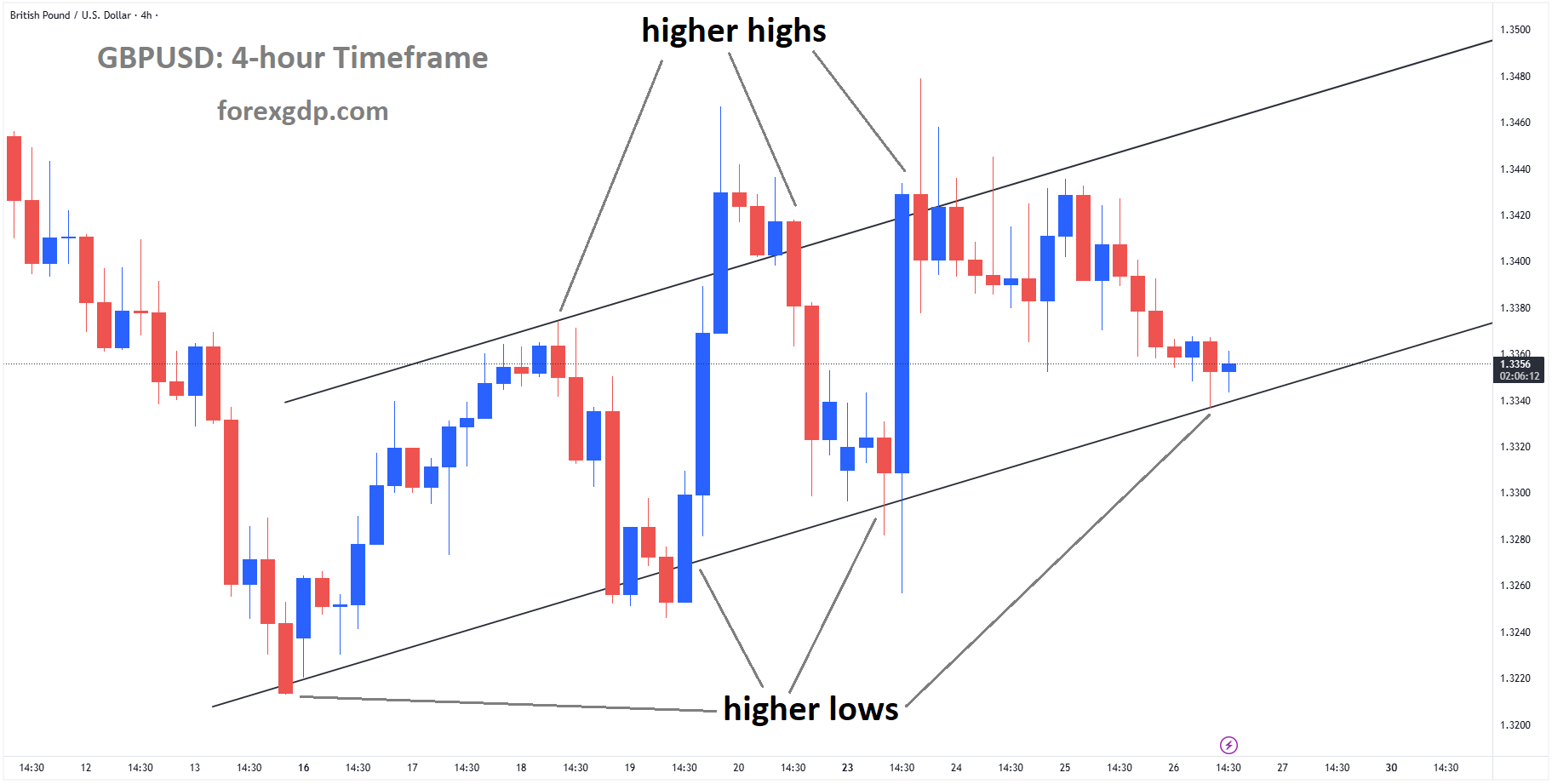
GBPUSD is moving in an ascending channel, and the market has reached the higher low area of the channel
At the center of this movement are renewed fears in the Middle East, rising energy costs, and cautious remarks from the Bank of England. Together, these factors are shaping the current direction of the UK currency and influencing broader economic expectations.
Rising Global Tensions Weigh on Market Confidence
Investor sentiment has turned cautious due to fresh developments in the Middle East. Iran’s rejection of a proposed ceasefire plan has raised concerns that conflicts in the region could continue for longer than expected. This has created uncertainty across global markets.
When tensions rise in key regions, especially those linked to energy production and supply routes, investors often move toward safer assets. This shift is known as a “risk-off” environment. In such situations, currencies like the US Dollar tend to strengthen, while others like the Pound may weaken slightly.
The rejection of the ceasefire proposal also signals that negotiations could take more time, increasing the chances of ongoing disruptions. As a result, market participants are adjusting their expectations and positioning themselves more cautiously.
Impact on Investor Behavior
The change in sentiment is clearly visible in stock market futures, which have shown a decline. This suggests that investors are becoming less willing to take risks in the short term.
At the same time, the US Dollar has remained firm, supported by its status as a safe-haven currency. When uncertainty rises, global investors often prefer holding assets tied to the US economy, which tends to be seen as more stable during turbulent periods.
This combination of weaker risk appetite and stronger demand for safety has contributed to the Pound’s recent dip.
Middle East Developments and Energy Supply Concerns
One of the biggest concerns tied to the ongoing tensions is the potential disruption of energy supply. The Strait of Hormuz, a key shipping route for oil, plays a vital role in global energy distribution. Any instability in this region can have wide-reaching effects.
Iran’s conditions for entering ceasefire talks reportedly include control over transit in the Strait and guarantees related to ongoing military actions. These demands have been viewed as difficult to accept, reducing the chances of quick progress in negotiations.
As a result, fears are growing that energy shipments could face disruptions. Even the possibility of such interruptions can influence oil markets and, in turn, impact global inflation.
Why Energy Matters for the UK Economy
The United Kingdom relies on energy imports, making it sensitive to global price changes. If energy supply becomes uncertain, prices can rise quickly. This puts pressure on households and businesses alike.
Higher energy costs often lead to increased overall inflation. For consumers, this means higher bills for electricity, heating, and fuel. For businesses, it raises operating costs, which can slow down economic growth.
These developments add another layer of concern for the UK economy, especially at a time when inflation remains an important issue.
Bank of England Signals Ongoing Challenges
The Bank of England has acknowledged the challenges posed by the current situation. Deputy Governor Sarah Breeden recently highlighted that the ongoing energy shock differs from the one experienced in 2022.
This distinction is important because it suggests that the impact on the economy may follow a different pattern. While past experiences can offer some guidance, each situation has its own unique factors.
Breeden emphasized that the full effects on inflation and employment are not yet clear. Policymakers will need more data to understand how long the current energy pressures will last and how deeply they will affect the economy.
What Makes This Energy Shock Different?
Unlike previous energy shocks, the current situation is closely tied to geopolitical developments that remain uncertain. The outcome depends heavily on how conflicts evolve and whether diplomatic solutions can be reached.
Additionally, global supply chains are still adjusting from earlier disruptions, which means the system may be less flexible in handling new shocks. This can lead to quicker and more noticeable impacts on prices and availability.
The Bank of England is expected to assess these factors carefully in its upcoming policy meetings. Decisions on interest rates and economic guidance will likely depend on how these risks develop.
The Pound Sterling’s Current Position
The Pound’s slight decline reflects a mix of external and domestic pressures. On the global side, rising tensions and a stronger US Dollar are playing a major role. On the domestic side, concerns about inflation and energy costs are adding to the uncertainty.
While the movement has been modest, it highlights how sensitive currencies can be to global events. Even small changes in sentiment can lead to noticeable shifts in exchange rates.
Short-Term Outlook
In the near term, the Pound’s direction may depend largely on how geopolitical events unfold. If tensions ease, investor confidence could improve, providing some support for the currency.
However, if uncertainty continues or increases, the pressure may remain. Markets will also keep a close eye on economic data from the UK, especially indicators related to inflation and consumer spending.
What to Watch in the Coming Weeks
Several key factors will shape the outlook for the Pound and the broader UK economy:
Geopolitical Developments
Any updates on negotiations or changes in the Middle East situation will have a direct impact on market sentiment. Signs of progress could reduce uncertainty, while further escalation may increase it.
Energy Prices
Movements in global energy markets will be closely monitored. Rising prices could add to inflation pressures, while stability could provide some relief.
Central Bank Guidance
Statements from the Bank of England will be important in understanding how policymakers view the situation. Investors will look for clues about future decisions and economic expectations.
Economic Data
Reports on inflation, employment, and consumer activity will help determine how the UK economy is responding to current challenges.
Final Summary
The Pound Sterling is facing mild downward pressure as global uncertainty increases. Renewed tensions in the Middle East have created a cautious environment, pushing investors toward safer assets and strengthening the US Dollar.
At the same time, concerns about energy supply disruptions are raising the risk of higher inflation in the UK. This adds complexity for policymakers, who are already navigating a challenging economic landscape.
The Bank of England has signaled that the current energy situation is different from past experiences, making it harder to predict its full impact. As more data becomes available, clearer trends may emerge.
For now, the Pound’s movement reflects a balance of global risks and domestic concerns. The coming weeks will be crucial in determining whether stability returns or uncertainty continues to shape the currency’s path.
USDJPY climbs past 159.50 as investors rush toward safety
The relationship between the US Dollar and the Japanese Yen has taken center stage as global tensions continue to rise. Recent developments in the Middle East, especially involving the United States and Iran, have shifted market sentiment and influenced currency movements. As uncertainty grows, investors are reacting quickly, leading to noticeable changes in the foreign exchange landscape.
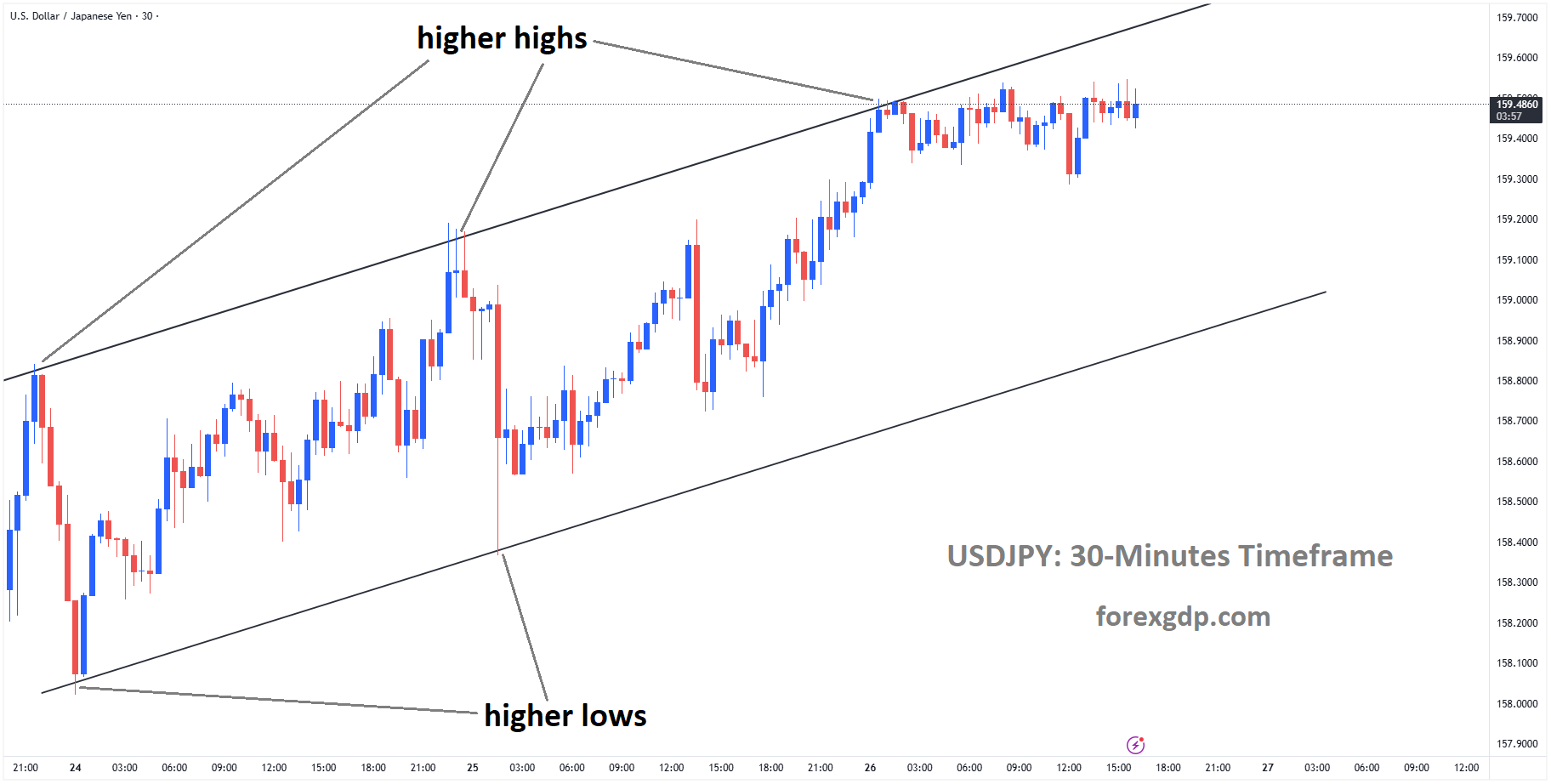
USDJPY is moving in an ascending channel, and the market has fallen from the higher high area of the channel
Geopolitical Tensions Drive Currency Movement
Global markets often respond strongly to political uncertainty, and the current situation is no exception. Hopes for a peaceful resolution between the United States and Iran have weakened significantly. Iran has firmly rejected a proposed peace plan and has made it clear that it will not engage in negotiations while military actions continue.
At the same time, conflict between Israel and Iran has intensified. Both countries continue to exchange attacks, and the ongoing closure of the Strait of Hormuz has added another layer of concern. This critical waterway plays a major role in global oil transportation, and its continued shutdown has raised fears of supply disruptions.
As tensions rise, investors tend to move their money into assets they believe are safer. The US Dollar often benefits in such situations because of its status as a global reserve currency. This shift in investor behavior has helped the Dollar strengthen against several currencies, including the Japanese Yen.
The US Dollar Shows Renewed Strength
The US Dollar has recently shown a strong recovery against the Japanese Yen. After dipping earlier in the week, it has climbed steadily and is now approaching higher levels. This upward movement reflects growing demand for the Dollar as investors seek stability in uncertain times.
When global risks increase, many investors prefer holding US assets. The size and stability of the US economy make the Dollar a preferred choice during periods of stress. As a result, even small changes in global sentiment can lead to noticeable gains for the currency.
The current environment, shaped largely by geopolitical uncertainty, continues to support the Dollar’s strength. Market participants are closely watching developments in the Middle East, as any escalation or de-escalation could quickly influence currency trends.
Rising Oil Prices Create Pressure on Japan
While the US Dollar gains strength, the Japanese Yen is facing challenges. One of the key factors affecting Japan is the rise in oil prices. As tensions in the Middle East disrupt supply routes, crude oil prices have increased, creating economic pressure on countries that rely heavily on energy imports.
Japan is one such country. It depends significantly on imported oil, especially from the Middle East. When oil prices rise, Japan has to spend more on imports, which affects its overall economic balance. This situation can weaken the Yen, as higher import costs reduce the country’s financial stability.
Impact on Trade and Fiscal Stability
Higher oil prices also worsen Japan’s terms of trade. This means the country has to pay more for imports while not necessarily earning more from exports. Over time, this imbalance can strain government finances and slow economic growth.
Experts have pointed out that Japan’s reliance on external energy sources makes its currency more sensitive to global events. In the current scenario, the effects of rising oil prices may be outweighing the Yen’s traditional role as a safe-haven currency.
Safe-Haven Status Under Pressure
The Japanese Yen has long been considered a safe-haven currency, similar to the US Dollar. In times of global uncertainty, investors often turn to the Yen for stability. However, the current situation presents a different dynamic.
Because Japan relies heavily on imported energy, rising oil prices create additional risks for its economy. This weakens the Yen’s appeal as a safe option. At the same time, the US Dollar continues to attract demand due to its global dominance and strong financial system.
This shift highlights how economic fundamentals can influence investor behavior. Even currencies known for their stability can face pressure when underlying conditions change.
Bank of Japan’s Policy Signals Limited Support
Another factor affecting the Yen is the stance of the Bank of Japan (BoJ). Recent discussions among policymakers have shown concern about rising inflation. Some members have considered the possibility of tightening monetary policy to address these pressures.
However, these discussions have not translated into strong action or clear signals. As a result, the Yen has not received significant support from domestic policy changes. Investors often look for clear direction from central banks, and the lack of decisive measures has left the currency vulnerable.
Inflation Concerns and Policy Debate
Inflation in Japan has been gradually increasing, prompting debate among policymakers. While some support tighter measures, others remain cautious due to concerns about economic growth. This mixed approach has created uncertainty about the future direction of monetary policy.
Without strong intervention or clear guidance, the Yen continues to face challenges, especially when compared to a strengthening US Dollar.
Market Focus Remains on Global Developments
While economic data and central bank decisions are important, the current market environment is being driven largely by geopolitical events. Investors are paying close attention to any updates related to the conflict involving Iran and its broader implications.
In the United States, routine economic reports such as jobless claims and speeches from Federal Reserve officials remain relevant. However, these factors are currently taking a back seat to global tensions. News from the Middle East is likely to have a stronger and more immediate impact on currency movements.
What Lies Ahead for USD and JPY
The future direction of the US Dollar and Japanese Yen will depend heavily on how the geopolitical situation evolves. If tensions continue to rise, the Dollar may maintain its strength as investors seek safety. On the other hand, any signs of peace or stability could shift sentiment and lead to different outcomes.
For Japan, the impact of rising oil prices will remain a key concern. Unless energy costs stabilize or economic conditions improve, the Yen may continue to face pressure. At the same time, any changes in monetary policy could influence how the currency performs in the coming weeks.
Summary
The US Dollar has gained momentum against the Japanese Yen as global uncertainty increases. Ongoing tensions in the Middle East, combined with rising oil prices, have shaped market behavior and influenced investor decisions.
Iran’s rejection of peace efforts and continued conflict in the region have weakened risk appetite, pushing investors toward the US Dollar. Meanwhile, Japan’s heavy reliance on imported energy has exposed its economy to higher costs, reducing the Yen’s strength.
The Bank of Japan’s cautious approach to policy changes has also contributed to the Yen’s challenges. With no strong support from domestic measures, the currency remains under pressure.
As the situation continues to develop, global events will play a major role in determining the path of both currencies. Investors will remain focused on geopolitical updates, energy markets, and central bank signals as they navigate an uncertain environment.
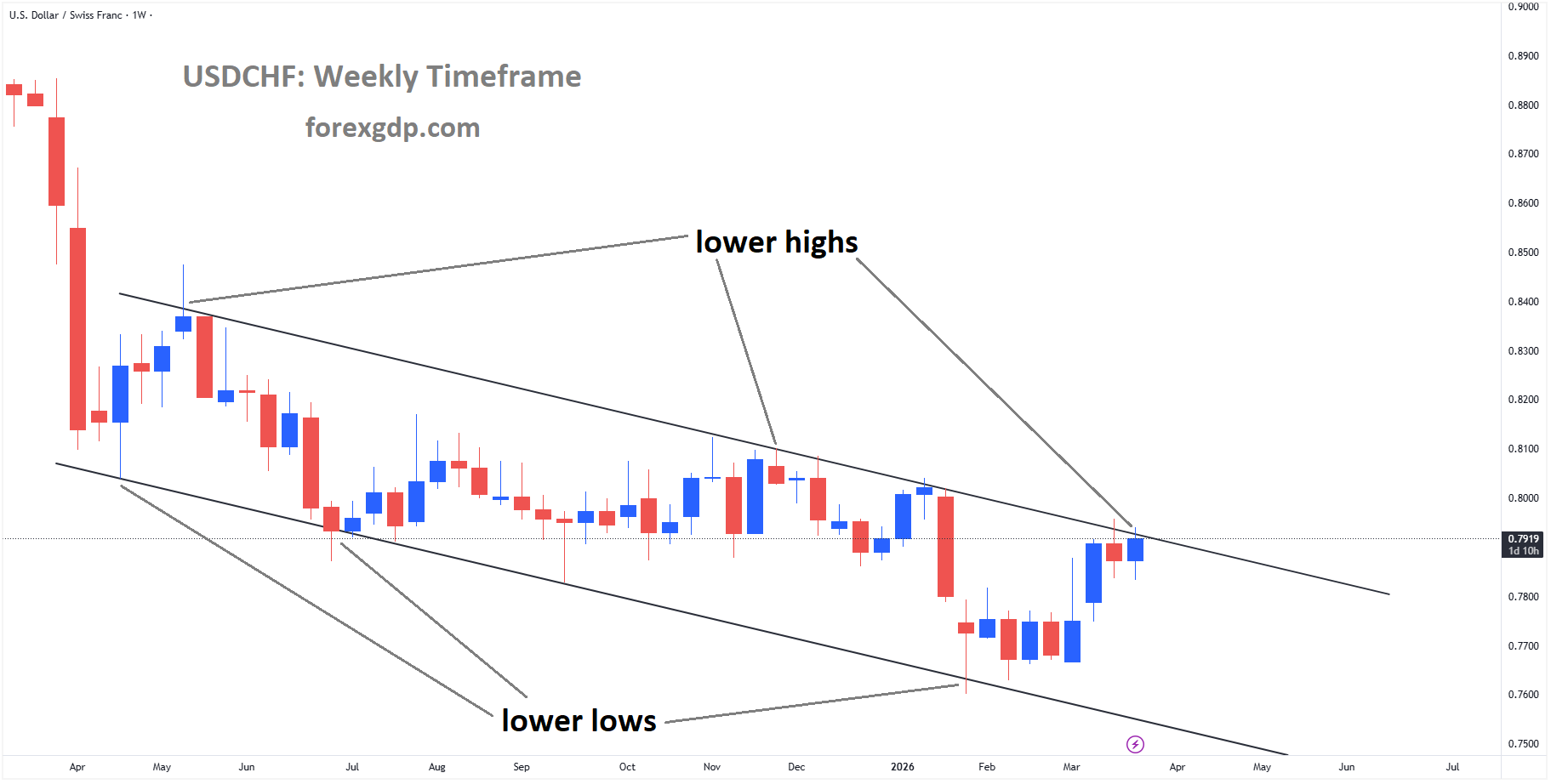
USDCHF gains momentum near 0.7925 as safe-haven demand strengthens the US Dollar
The USD/CHF currency pair has edged higher, reaching levels close to 0.7925 during Thursday’s European trading session. This upward movement reflects a stronger US Dollar, which continues to gain support from ongoing geopolitical uncertainty, particularly surrounding tensions between the United States and Iran.
USDCHF is moving in a descending channel, and the market has reached the lower high area of the channel
At the same time, the Swiss Franc has remained relatively stable, with limited movement against other major currencies. However, underlying factors such as central bank policies and global risk sentiment continue to shape its direction.
US Dollar Strength Driven by Geopolitical Uncertainty
The US Dollar has been trading firmly in recent sessions, supported by increasing concerns about the situation in the Middle East. Hopes for a quick resolution between the United States and Iran have faded, leading investors to move toward safer assets.
The US Dollar Index (DXY), which measures the strength of the Dollar against a basket of six major currencies, has held near recent highs. This steady performance shows that market participants are favoring the Dollar amid uncertainty.
Rising Tensions Between the US and Iran
The latest developments in US-Iran relations have added to market unease. Iran has reportedly rejected a ceasefire proposal put forward by former US President Donald Trump. The proposal included a one-month pause in hostilities and a detailed 15-point settlement plan, which was communicated through Pakistan.
Iranian officials described the plan as overly demanding and unrealistic. This strong response has reduced expectations for a near-term agreement, prolonging uncertainty in the region.
Further reports indicate that Iran has presented its own set of conditions for any potential deal. These include changes in how the Strait of Hormuz is managed, including the introduction of transit fees, as well as guarantees that hostilities will not resume.
In addition, Iran has called for an end to Israeli military actions involving Hezbollah and has insisted on maintaining its missile development program without external interference. US officials have dismissed these demands as impractical, further widening the gap between the two sides.
Safe-Haven Demand Boosts the Dollar
When global tensions rise, investors often turn to assets that are considered safe. The US Dollar is one of the most widely trusted safe-haven currencies in the world. As uncertainty increases, demand for the Dollar typically rises.
The ongoing lack of progress in resolving the Middle East conflict has reinforced this trend. Investors are choosing stability over risk, which helps explain why the Dollar continues to hold its ground.
This shift in sentiment has played a key role in pushing the USD/CHF pair higher. As the Dollar strengthens, it gains value relative to the Swiss Franc, even though the Franc itself is also traditionally seen as a safe-haven currency.
Swiss Franc Remains Stable but Faces Pressure
The Swiss Franc has shown limited movement in recent sessions. While it remains a safe-haven currency, its performance has been more subdued compared to the US Dollar.
One important factor influencing the Swiss Franc is the stance of the Swiss National Bank (SNB). The central bank has made it clear that it is prepared to step in if the Franc becomes too strong.
SNB Signals Willingness to Intervene
SNB Chairman Martin Schlegel recently emphasized the bank’s readiness to act in the foreign exchange market. The goal is to prevent excessive appreciation of the Swiss Franc, which could harm Switzerland’s export-driven economy.
A stronger Swiss Franc can make Swiss goods more expensive for international buyers, reducing demand and potentially slowing economic growth. To avoid this, the SNB may intervene by selling Francs and buying foreign currencies.
This proactive approach helps keep the Franc from rising too quickly, which in turn supports the upward movement of USD/CHF.
Market Sentiment and Currency Movement
Currency markets are heavily influenced by investor sentiment, and the current environment is shaped by caution and uncertainty. The lack of a clear resolution in the Middle East has created a risk-averse mood among traders.
In such conditions, even small developments can have a noticeable impact on currency values. News related to geopolitical events, policy statements, or diplomatic efforts can quickly shift market direction.
For now, the balance of factors appears to favor the US Dollar. Strong demand for safe-haven assets, combined with ongoing uncertainty, continues to provide support.
Competing Safe-Haven Currencies
Both the US Dollar and the Swiss Franc are considered safe-haven currencies, but they do not always move in the same way. In the current situation, the Dollar is benefiting more due to its global dominance and liquidity.
The Swiss Franc, while still stable, is being held back by the SNB’s intervention stance. This creates a unique dynamic where one safe-haven currency outperforms another.
What This Means for USD/CHF
The recent rise in USD/CHF reflects a combination of geopolitical risk and central bank influence. The pair’s movement highlights how global events can directly impact currency values.
As long as uncertainty remains high, the US Dollar is likely to stay supported. At the same time, the Swiss Franc may face limitations due to the SNB’s efforts to control its strength.
This interaction between external risk factors and domestic policy creates a complex environment for traders and investors.
Final Thoughts
The USD/CHF pair’s recent gains are closely tied to global developments, particularly the ongoing tensions between the United States and Iran. With no immediate resolution in sight, demand for safe-haven assets remains strong.
The US Dollar continues to benefit from this environment, while the Swiss Franc remains stable but constrained by central bank actions. The Swiss National Bank’s willingness to intervene adds another layer of influence, preventing the Franc from rising too sharply.
As geopolitical uncertainty persists, currency markets are likely to remain sensitive to new developments. For now, the strength of the US Dollar and the cautious stance of the SNB are key factors shaping the direction of USD/CHF.
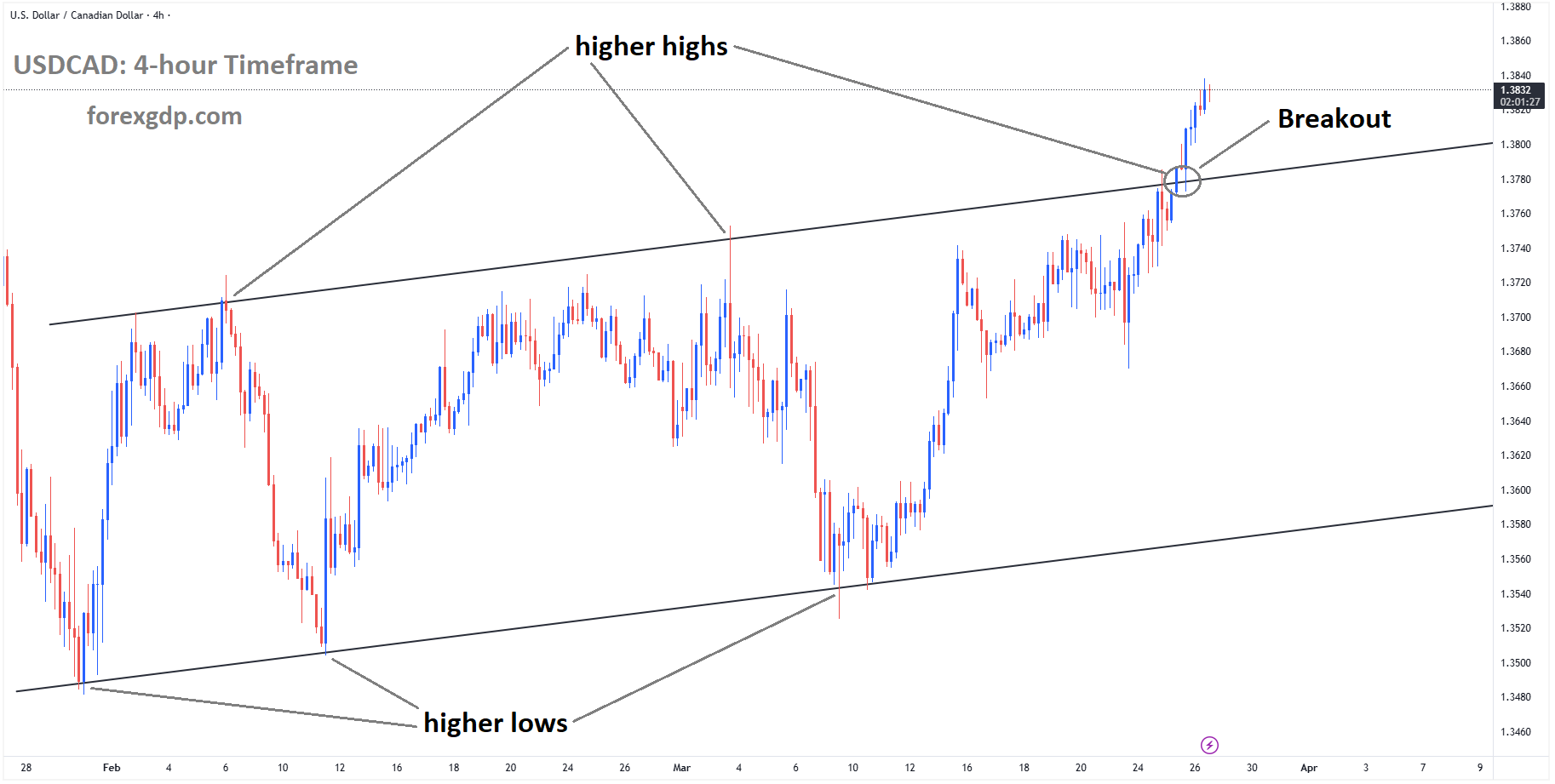
USDCAD climbs strongly with global unrest driving safe-haven demand
The USD/CAD currency pair has been gaining strong momentum, climbing steadily over recent trading sessions and reaching levels not seen in about two months. This upward move reflects a mix of global uncertainty, economic expectations, and the ongoing influence of energy markets. As investors react to geopolitical risks and central bank signals, both the US Dollar and the Canadian Dollar are being pulled in different directions.
USDCAD has broken the Ascending channel on the upside
Rising Tensions Drive Demand for the US Dollar
One of the main reasons behind the recent strength of the US Dollar is the growing uncertainty linked to conflicts in the Middle East. When global tensions increase, investors often look for safer places to store their money. The US Dollar has long been considered a “safe-haven” currency, meaning it tends to attract demand during times of crisis.
The current situation involves multiple countries, including the United States, Israel, and Iran. Ongoing disagreements and the lack of clear progress toward peace have kept investors cautious. Iran has recently pushed back against expectations of easing tensions, stating that it is not directly involved in negotiations with the United States. This has reduced hopes for a quick resolution.
There have been attempts to introduce a ceasefire and a broader settlement plan, but these proposals have faced resistance. Reports suggest that Iran considers some of the proposed terms too demanding, especially those related to control over key shipping routes like the Strait of Hormuz. While there is still a possibility of talks taking place in countries such as Pakistan or Turkey, uncertainty remains high.
This unclear outlook has strengthened the appeal of the US Dollar. Investors tend to move their funds into assets they believe are more stable during uncertain times, and the Dollar continues to benefit from this trend.
Federal Reserve Outlook Supports the Greenback
Another factor supporting the US Dollar is the current stance of the Federal Reserve. Market participants widely expect that the Fed will avoid lowering interest rates this year. This expectation plays a major role in currency movements.
When interest rates stay high or are expected to remain stable, a currency often becomes more attractive to investors. Higher rates can offer better returns on investments tied to that currency. In this case, the belief that the Federal Reserve will maintain its current policy has helped keep the US Dollar strong.
One key reason behind this expectation is rising energy prices. Higher oil and energy costs can lead to increased inflation. When inflation rises or becomes uncertain, central banks are usually cautious about easing monetary policy. As a result, traders believe the Fed will hold off on rate cuts to keep inflation under control.
This outlook adds another layer of support to the US Dollar, especially when combined with its safe-haven status during geopolitical tensions.
Canadian Dollar Faces Pressure Despite Oil Support
While the US Dollar is gaining strength, the Canadian Dollar has faced some pressure in recent sessions. This is partly due to the same global uncertainties that are boosting the Greenback. When investors become risk-averse, currencies like the Canadian Dollar, which are often linked to global growth and trade, may weaken in comparison.
However, the situation for the Canadian Dollar is not entirely negative. In fact, it has a key advantage that could support it in the near future—its strong connection to oil prices.
Canada’s Role as an Oil Exporter
Canada is one of the world’s major oil exporters. This means that when oil prices rise, the country’s economy often benefits. Higher oil prices can lead to increased revenue from exports, which in turn can strengthen the Canadian Dollar.
The current global environment, marked by concerns about energy supply disruptions, has pushed oil prices higher. Any risk to supply, especially in key regions like the Middle East, tends to drive prices up. For Canada, this creates a favorable backdrop.
Balancing Risks and Opportunities
Even though higher oil prices are supportive, they have not been enough to fully offset the pressure from global uncertainty. Investors remain cautious, and this has limited the Canadian Dollar’s ability to gain against stronger currencies like the US Dollar.
Still, the overall outlook for the Canadian Dollar remains relatively stable. If oil prices continue to rise or stay elevated, they could provide ongoing support. At the same time, any improvement in global sentiment could help the currency recover.
How Global Events Shape Currency Movements
Currency markets are heavily influenced by global events, and the current situation is a clear example of this connection. Political developments, economic policies, and commodity prices all play a role in shaping how currencies behave.
Geopolitics and Investor Sentiment
The ongoing tensions in the Middle East highlight how quickly investor sentiment can shift. Even small changes in the outlook for peace or conflict can have a major impact on financial markets. When uncertainty rises, investors tend to reduce risk and move toward safer assets.
Energy Markets as a Key Driver
Oil remains one of the most important commodities in the global economy. Changes in oil prices can affect inflation, trade balances, and overall economic growth. For countries like Canada, which rely heavily on energy exports, these changes can directly influence the strength of their currency.
Central Bank Expectations
Decisions made by central banks, or even expectations about future decisions, are another major factor. In this case, the belief that the Federal Reserve will not cut interest rates has helped support the US Dollar. These expectations can sometimes have as much impact as actual policy changes.
What to Watch Moving Forward
Looking ahead, several factors will likely continue to influence the USD/CAD pair and broader currency markets.
First, developments in the Middle East will remain a key focus. Any signs of escalation or progress toward peace could quickly shift market sentiment. Investors will be closely watching for updates on negotiations and political statements from the countries involved.
Second, oil prices will continue to play an important role. If supply concerns persist, prices may stay high, which could support the Canadian Dollar. On the other hand, any easing in supply risks could reduce this support.
Finally, updates from the Federal Reserve and other central banks will be critical. Changes in inflation data or economic outlooks could alter expectations about interest rates, which would directly impact currency movements.
Final Summary
The recent rise in the USD/CAD pair reflects a combination of global uncertainty, strong demand for the US Dollar, and mixed signals for the Canadian Dollar. Ongoing tensions in the Middle East have pushed investors toward safer assets, boosting the Greenback. At the same time, expectations that the Federal Reserve will maintain its current policy have added further support.
Although the Canadian Dollar has faced some pressure, higher oil prices offer an important source of strength. As a major oil exporter, Canada stands to benefit from rising energy costs, which could help stabilize its currency.
In the coming days, the balance between geopolitical risks, energy market trends, and central bank expectations will continue to shape the direction of USD/CAD. Investors will need to stay alert, as even small changes in these factors can lead to significant shifts in the market.
Don’t trade all the time, trade forex only at the confirmed trade setups
The content explores the application of forex robots in currency trading. These sophisticated tools execute trades autonomously, potentially enhancing traders'…