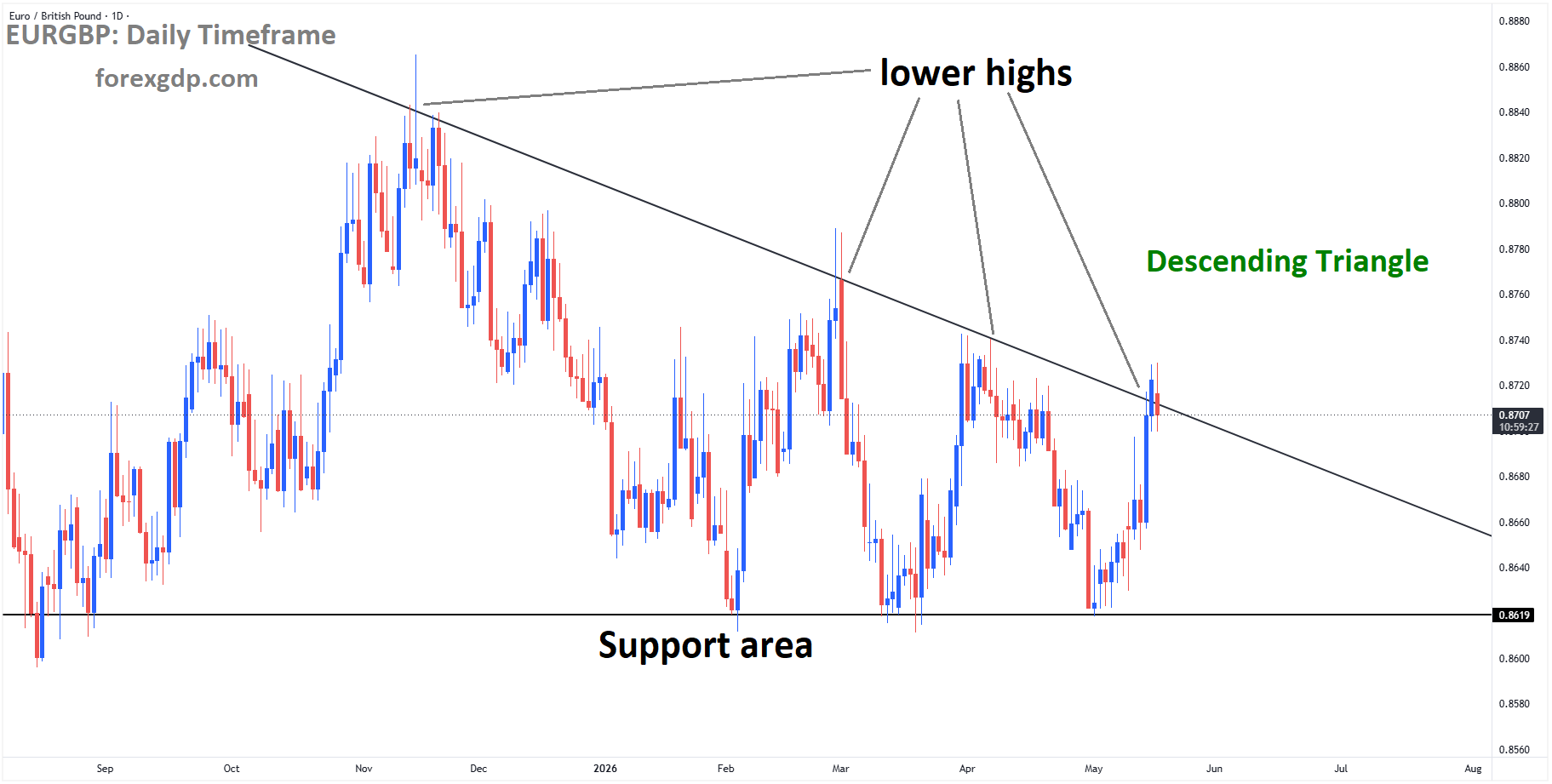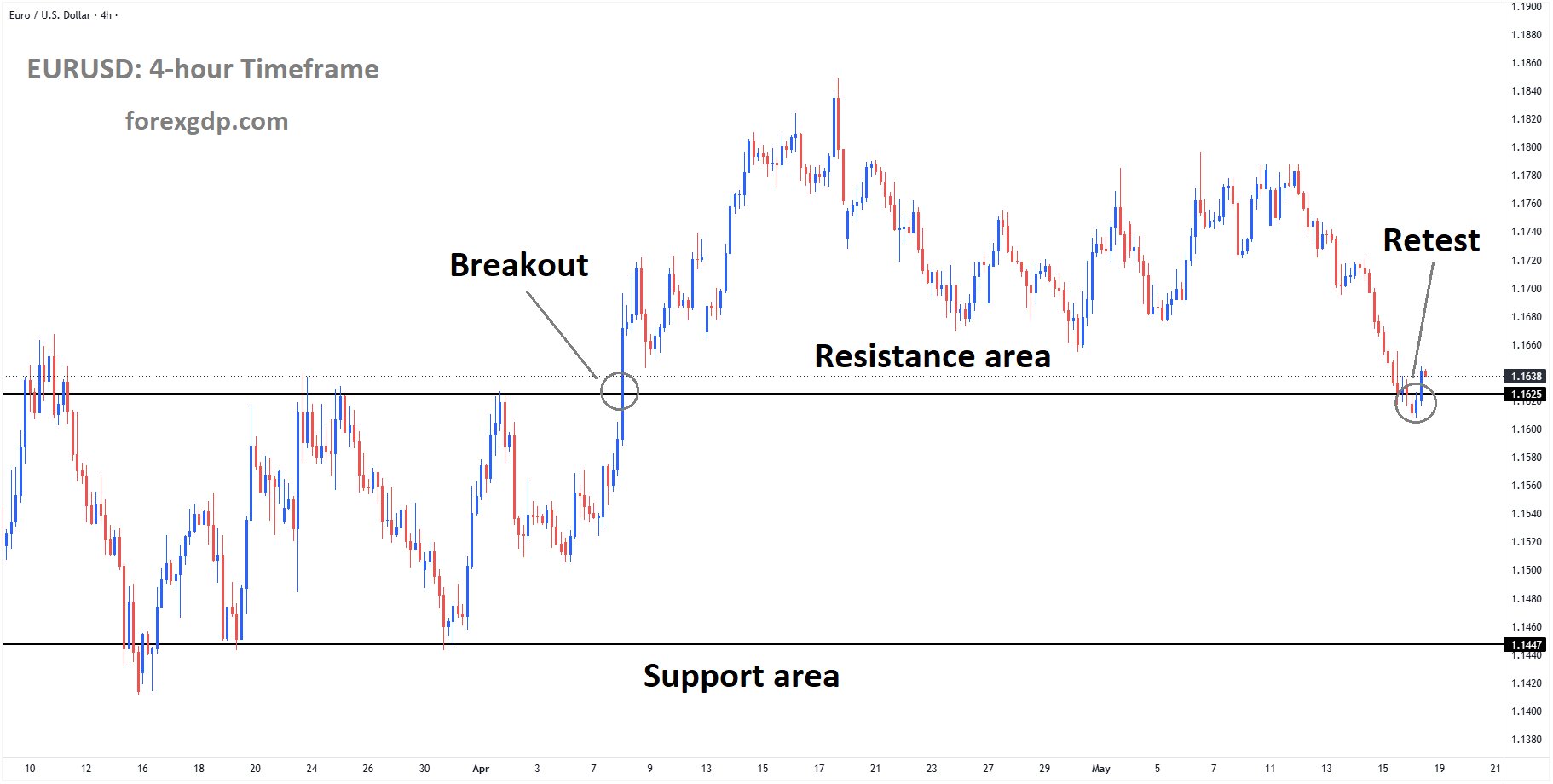
EURUSD reached the retest area of the broken box pattern
EURUSD Slides as Middle East Uncertainty Fuels Dollar Demand
The EUR/USD currency pair moved lower during the early Asian trading session on Monday, falling close to 1.1615. The decline came as investors reacted to rising geopolitical tensions between the United States and Iran, which pushed traders toward safer assets like the US Dollar.
At the same time, markets are closely watching upcoming economic data from both Europe and the United States. Fresh Purchasing Managers’ Index (PMI) reports are expected later this week and could influence the next direction for the currency markets.
Rising US-Iran Tensions Support the US Dollar
Concerns surrounding the ongoing conflict between the United States and Iran have continued to grow after negotiations reportedly failed to make meaningful progress. Iranian media stated that recent talks did not produce any major compromises from Washington, increasing fears that tensions could remain elevated for a longer period.
According to reports from Iran’s Fars news agency, the United States proposed several strict conditions as part of a possible peace agreement. These conditions reportedly included transferring uranium linked to Iran’s nuclear program to the US, limiting financial compensation to Tehran, and releasing only a small portion of Iran’s frozen assets.
The lack of progress in diplomatic talks has increased uncertainty across global markets. During times of geopolitical instability, investors often move money away from risk-sensitive assets and into safer alternatives. The US Dollar is traditionally viewed as one of the world’s leading safe-haven currencies, and demand for it usually rises during periods of global tension.
This trend placed additional pressure on the Euro and contributed to the weakness in the EUR/USD pair.
Trump Issues Fresh Warning to Iran
US President Donald Trump added more pressure to the situation after issuing a strong warning to Iran on Sunday. He urged Tehran to “get moving,” suggesting that the country could face additional consequences if negotiations continue to stall.
The comments increased market anxiety and reinforced concerns that the conflict may continue without a quick resolution. Investors remain cautious because any escalation in tensions could impact global trade, energy markets, and broader financial stability.
As uncertainty grows, traders often reduce exposure to riskier currencies and assets. This environment tends to benefit the US Dollar while weighing on currencies like the Euro.
Traders Await Key PMI Data
Market participants are also preparing for important economic reports scheduled for later this week. Preliminary PMI readings from both the Eurozone and the United States are expected on Thursday.
PMI data provides insight into business activity in the manufacturing and services sectors. Stronger readings can signal economic growth, while weaker numbers may point to slowing activity.
For the Eurozone, investors want to see whether economic conditions continue improving despite inflation concerns and higher borrowing costs. In the United States, the data could offer clues about the strength of the economy and the possible direction of future monetary policy.
These reports may play a major role in shaping market expectations and could create additional volatility for the EUR/USD pair.
ECB Maintains Focus on Inflation

Despite the Euro’s recent weakness, expectations surrounding the European Central Bank could help prevent a deeper decline.
Several ECB policymakers have recently indicated that inflation remains a major concern across the Eurozone. Officials continue to signal that further action may be needed to control rising prices and stabilize inflation expectations.
A recent Reuters poll showed that a large majority of economists expect the ECB to raise interest rates again in June. Around 85% of analysts surveyed predicted a quarter-point increase in the ECB’s deposit rate, which would lift it to 2.25%.
This marks a significant shift in market expectations. Before the ECB’s April meeting, only slightly more than half of economists expected another rate increase.
Higher interest rates generally support a currency because they can attract foreign investment seeking better returns. As a result, expectations of additional ECB tightening may provide some support to the Euro even as geopolitical tensions continue to favor the US Dollar.
Market Sentiment Remains Fragile
Investor sentiment remains cautious as several major global factors continue to influence the market at the same time. Geopolitical risks, central bank policy expectations, and economic growth concerns are all contributing to uncertainty.
The Euro has struggled recently because investors are prioritizing safety and stability. However, the ECB’s firm stance on inflation may help slow the currency’s losses if upcoming economic data remains resilient.
On the other side, the US Dollar continues to benefit from its safe-haven status. Any further escalation in US-Iran tensions could strengthen demand for the greenback even more.
Focus Shifts to Central Banks and Economic Signals
Currency traders are likely to remain highly sensitive to headlines related to both geopolitics and monetary policy in the coming days.
The upcoming PMI reports could offer a clearer picture of economic momentum in both regions. Strong US data may reinforce confidence in the Dollar, while stronger Eurozone numbers could improve support for the Euro.
At the same time, investors will continue monitoring comments from ECB officials and developments surrounding US-Iran negotiations. Any signs of easing tensions could reduce demand for safe-haven assets and potentially support risk-sensitive currencies again.
Final Summary
EUR/USD started the week on a weaker note as rising tensions between the United States and Iran boosted demand for the US Dollar. Concerns over stalled negotiations and fresh warnings from President Trump increased market caution, pushing investors toward safer assets.
Meanwhile, expectations that the European Central Bank may continue raising interest rates are helping to limit losses for the Euro. Traders are now turning their attention to upcoming PMI data from the Eurozone and the United States, which could provide fresh direction for the currency market in the days ahead.
GBPUSD Gains Pace as Middle East Peace Hopes Weigh on US Dollar
The British Pound regained some strength against the US Dollar on Monday after several days of losses. GBP/USD climbed toward the 1.3380 area after falling earlier in the day to its lowest level in six weeks near 1.3300. The rebound came as the US Dollar lost momentum following reports of renewed diplomatic talks between the United States and Iran.
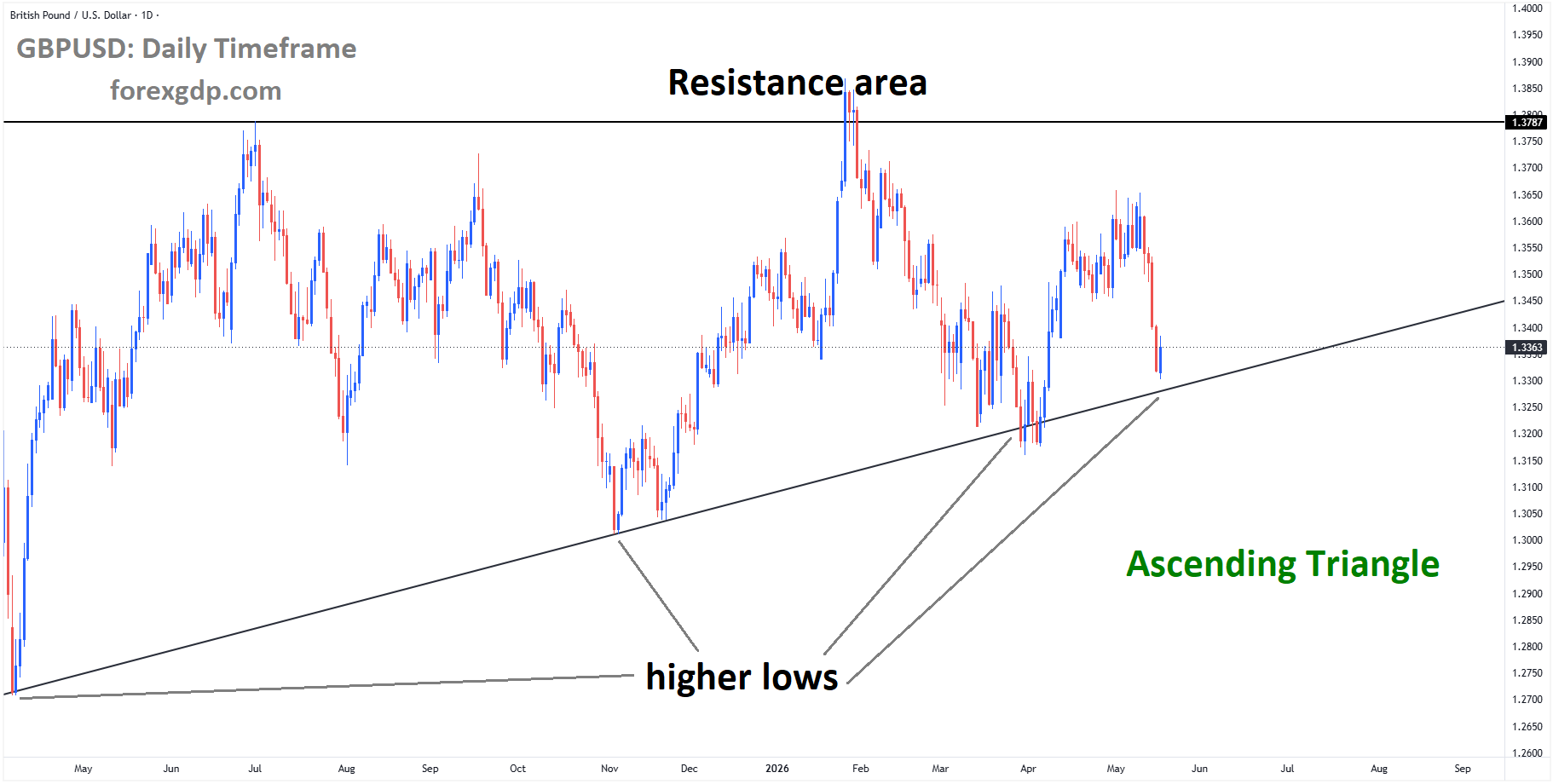
GBPUSD reached a higher low area of the ascending triangle pattern
Investors had previously rushed toward the US Dollar because of growing tensions in the Middle East. However, hopes for a possible peace agreement between Washington and Tehran improved overall market sentiment and reduced demand for the safe-haven Dollar.
At the same time, the British Pound still faces pressure from political uncertainty in the United Kingdom and cautious comments from Bank of England officials regarding future interest rate decisions.
GBP/USD Rebounds After Four-Day Decline
The currency pair managed to recover after suffering losses for four straight trading sessions. Earlier on Monday, GBP/USD touched a six-week low around 1.3302 before buyers stepped back into the market.
The recovery was largely linked to a weaker US Dollar rather than strong Pound demand. Traders moved away from the Dollar after signs emerged that tensions between the United States and Iran may not escalate further in the near term.
Safe-haven currencies like the US Dollar usually gain strength during periods of geopolitical uncertainty. When fears ease, investors often shift their focus back toward riskier assets and currencies, which can weaken the Dollar.
US-Iran Talks Improve Market Sentiment
Reports from Iranian state media suggested that Washington and Tehran are discussing a recent proposal submitted by Iranian authorities. According to an Iranian Foreign Ministry spokesperson, diplomatic communication between the two sides remains active.
The same source also confirmed that Iranian and Omani technical teams met in Oman last week. Their discussions reportedly focused on restoring safe passage through the Strait of Hormuz, one of the world’s most important oil shipping routes.
These developments helped calm investor concerns after a tense weekend in the region.
The market had reacted negatively during the Asian trading session after reports emerged of a drone attack on a nuclear facility in the United Arab Emirates. The incident raised fears that the fragile ceasefire in the region could collapse and trigger wider conflict.
However, the possibility of continued negotiations between the US and Iran helped reverse some of that fear-driven market reaction.
Trump Issues Warning to Tehran
Despite the renewed diplomatic efforts, tensions remain far from resolved.
US President Donald Trump reportedly met with senior national security officials to discuss the situation. Following the meeting, Trump warned that “the clock is ticking” on Iran, signaling that the United States is still maintaining pressure on Tehran.
His comments reminded investors that geopolitical risks remain active even as talks continue behind closed doors.
For financial markets, this creates an uncertain environment where investor sentiment can shift very quickly depending on political headlines and developments from the Middle East.
British Pound Faces Domestic Challenges
Although the Pound recovered during Monday’s session, the UK currency continues to face several domestic problems that may limit stronger gains.
Political uncertainty in Britain has become a growing concern for investors. Prime Minister Keir Starmer has promised to remain in office, but reports suggest that several Labour Party figures are positioning themselves as possible future replacements.
This has created concerns about leadership stability within the UK government.
Investors are particularly worried that any disorderly political transition could increase uncertainty around economic policy and government spending plans.
Fiscal Concerns Continue to Pressure Sterling
One of the main concerns among traders is the possibility of increased public spending if political leadership changes in the future.
Markets remain sensitive to the risk of another fiscal crisis in the UK, especially after previous periods of financial instability linked to government budget plans. Any signs of aggressive spending policies could reduce investor confidence in the British economy and place additional pressure on the Pound.
Because of these concerns, analysts believe that Sterling’s upside may remain limited even when the US Dollar weakens.
Bank of England Urges Caution on Interest Rates

In addition to political uncertainty, comments from Bank of England Deputy Governor Sarah Breeden also attracted attention on Monday.
Speaking in an interview with the Financial Times, Breeden warned that policymakers should not become “trigger happy” when it comes to adjusting interest rates.
Her remarks suggest that the central bank wants to move carefully before making any future policy decisions.
BoE Focuses on Stability
Breeden’s comments reflect broader caution within the Bank of England as officials continue to monitor inflation, economic growth, and financial stability.
Central banks often face a difficult balancing act. Moving too quickly on interest rates can damage economic growth, while moving too slowly may allow inflation pressures to remain elevated.
The Bank of England appears determined to avoid making rushed decisions, especially as the UK economy continues to face mixed signals.
For currency traders, cautious central bank language can sometimes reduce support for a currency because it lowers expectations for aggressive policy action.
Lack of Economic Data Keeps Focus on Headlines
With no major economic data releases scheduled from either the United States or the United Kingdom on Monday, market attention remained heavily focused on geopolitical developments and central bank commentary.
In quiet economic sessions like this, political headlines often have a stronger influence on currency movements.
That is exactly what happened with GBP/USD, as the pair reacted mainly to changing expectations surrounding Middle East tensions and broader investor sentiment toward the US Dollar.
Summary
GBP/USD managed to recover after falling to six-week lows, supported by a weaker US Dollar and improving market sentiment linked to renewed US-Iran diplomatic discussions. Hopes for reduced tensions in the Middle East encouraged investors to move away from the safe-haven Dollar, helping the Pound regain some ground.
However, the British currency still faces challenges from rising political uncertainty in the UK and concerns about future government spending policies. At the same time, cautious comments from Bank of England Deputy Governor Sarah Breeden highlighted the central bank’s careful approach toward interest rates.
While the short-term recovery offered some relief for Sterling, ongoing geopolitical risks and domestic political concerns are likely to keep investors cautious in the days ahead.
USDJPY Climbs as Japanese Yen Fails to Recover After Oil Pullback
The USD/JPY currency pair continued its upward movement for the sixth straight trading session, reaching around 158.90 during European trading hours on Monday. The recent rally has been driven mainly by rising oil prices, which are creating fresh pressure on the Japanese Yen.
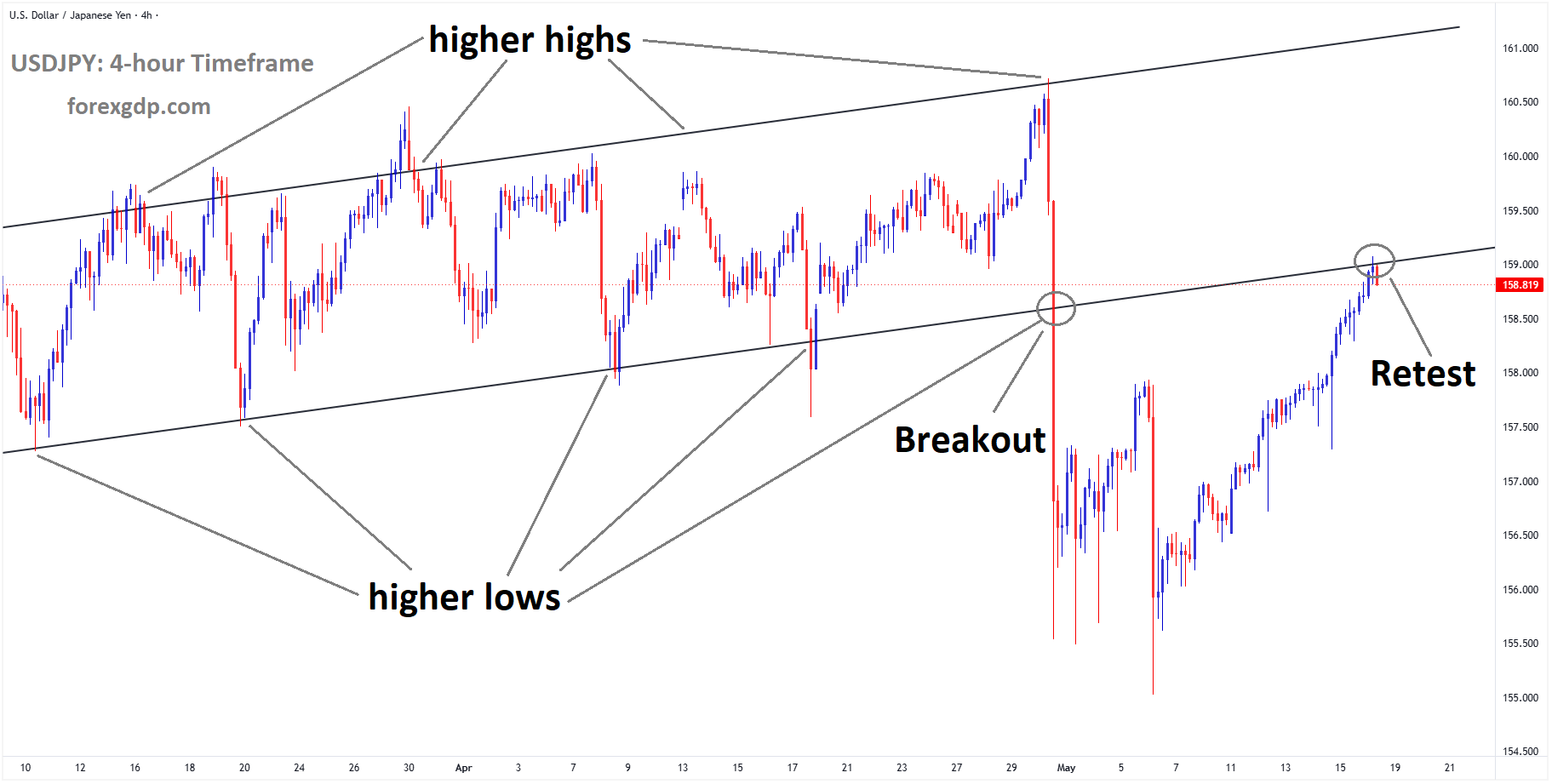
USDJPY reached the retest area of the broken ascending channel
Japan relies heavily on imported energy, and higher oil prices increase the country’s import costs. As Japanese companies buy more US Dollars to pay for expensive energy imports, the demand for the Yen weakens. This shift has helped the US Dollar strengthen further against the Japanese currency.
At the same time, global political tensions and ongoing discussions around interest rates are also influencing the market outlook for both currencies.
Higher Oil Prices Weigh on the Japanese Yen
Japan imports most of its energy resources from overseas, making the country highly sensitive to changes in oil prices. When oil becomes more expensive, Japanese energy companies and importers need larger amounts of US Dollars to complete international payments.
This process naturally increases demand for the Dollar while putting selling pressure on the Yen. As a result, the USD/JPY pair tends to move higher during periods of rising energy costs.
Recent geopolitical tensions in the Middle East have added uncertainty to global oil markets. Concerns over supply disruptions pushed oil prices higher, creating another challenge for Japan’s economy.
However, oil prices later reduced some of their earlier gains after reports suggested diplomatic discussions were taking place between Iranian and Omani officials. The talks reportedly focused on creating a safe transit mechanism through the Strait of Hormuz, one of the world’s most important oil shipping routes.
The Strait of Hormuz plays a major role in global energy transportation, and any threat to the region can quickly affect oil prices worldwide. Even small developments related to security or diplomacy in the area often influence currency markets, especially currencies tied to energy-importing nations like Japan.
Inflation Concerns Grow in Japan
While a weaker Yen can help Japanese exporters, it also creates problems for consumers and businesses inside the country. Imported goods become more expensive, increasing inflationary pressure across the economy.
The latest surge in oil prices has intensified concerns that inflation in Japan could remain elevated for a longer period. This situation is increasing speculation that the Bank of Japan may consider raising interest rates sooner rather than later.
Last week, Bank of Japan board member Kazuyuki Masu highlighted the growing risks tied to persistent inflation. He suggested that the central bank may need to move more quickly on interest rate adjustments if inflation pressures continue to rise.
For many years, Japan maintained extremely low interest rates to support economic growth and fight deflation. However, rising prices and stronger wage growth have recently changed the discussion around monetary policy.
If the Bank of Japan decides to tighten policy further, it could provide support for the Japanese Yen by making Japanese assets more attractive to investors. This possibility may help limit excessive weakness in the currency despite the current pressure from higher oil prices.
Japanese Government Closely Watches Currency Markets

Japanese officials are also paying close attention to market developments as the Yen remains under pressure.
Japan’s Chief Cabinet Secretary, Seiji Kihara, stated that authorities are monitoring market movements with a “high sense of urgency.” His comments included concerns about long-term interest rates and broader financial stability.
Although officials acknowledged the importance of recent currency moves, they avoided directly discussing the possibility of government intervention in foreign exchange markets.
Japan has a history of stepping into currency markets when the Yen experiences rapid or excessive declines. Government intervention usually involves buying Yen in an attempt to stabilize the currency and reduce volatility.
Traders often become cautious whenever Japanese officials issue strong verbal warnings about exchange rate movements. Even without direct action, such comments can temporarily influence market sentiment.
Still, authorities appear to be balancing multiple concerns at once. A weaker Yen can support exports and corporate profits, but it can also increase living costs for households through more expensive imports.
US Dollar Faces Pressure From Easing Safe-Haven Demand
Despite the strong upward movement in USD/JPY, the US Dollar has recently faced some pressure due to improving market sentiment.
The Dollar often benefits during periods of global uncertainty because investors view it as a safe-haven asset. However, signs of ongoing diplomatic communication between the United States and Iran have slightly reduced fears of a broader escalation in tensions.
Iran’s foreign ministry confirmed that indirect diplomatic channels with the US are still active even though relations remain strained. Officials noted that discussions continue under difficult conditions, but communication has not completely stopped.
This development helped ease some concerns in financial markets, reducing safe-haven demand for the US Dollar. As a result, the Dollar’s gains have become more limited in recent trading sessions.
Investors continue to watch geopolitical headlines closely because any sudden escalation in tensions could quickly affect oil prices, currency flows, and overall market confidence.
Focus Remains on Central Banks and Global Risks
Currency markets are currently being shaped by a combination of economic policy expectations and geopolitical developments.
For Japan, rising oil prices remain a major challenge because of the country’s dependence on imported energy. At the same time, inflation pressures are forcing the Bank of Japan to carefully consider its next policy steps.
Meanwhile, the United States continues to experience changing investor sentiment linked to global political developments and shifting expectations around economic growth.
The interaction between these factors is likely to keep USD/JPY highly active in the near term. Traders will continue monitoring comments from Japanese officials, oil price movements, and any updates regarding international diplomacy.
Final Summary
USD/JPY extended its rally as rising oil prices increased pressure on the Japanese Yen. Japan’s dependence on imported energy has forced companies to buy more US Dollars, weakening demand for the Yen in the process.
At the same time, growing inflation concerns in Japan are strengthening expectations that the Bank of Japan could move toward higher interest rates. Japanese authorities are also closely monitoring market movements, although they have not confirmed any plans for currency intervention.
On the US side, the Dollar has faced some resistance after reports suggested diplomatic communication between Iran and the United States is still ongoing. Reduced safe-haven demand has slightly limited the Dollar’s momentum.
With energy prices, central bank policies, and geopolitical tensions all influencing the market, USD/JPY is expected to remain closely watched by investors worldwide.
USDCAD Pushes Higher as Sticky US Inflation Strengthens Dollar Demand
The USD/CAD currency pair climbed closer to 1.3750 during Monday’s early European trading session as the US Dollar continued to strengthen against the Canadian Dollar. Investors shifted their focus toward rising inflation in the United States and growing expectations that the US Federal Reserve may keep interest rates higher for longer.
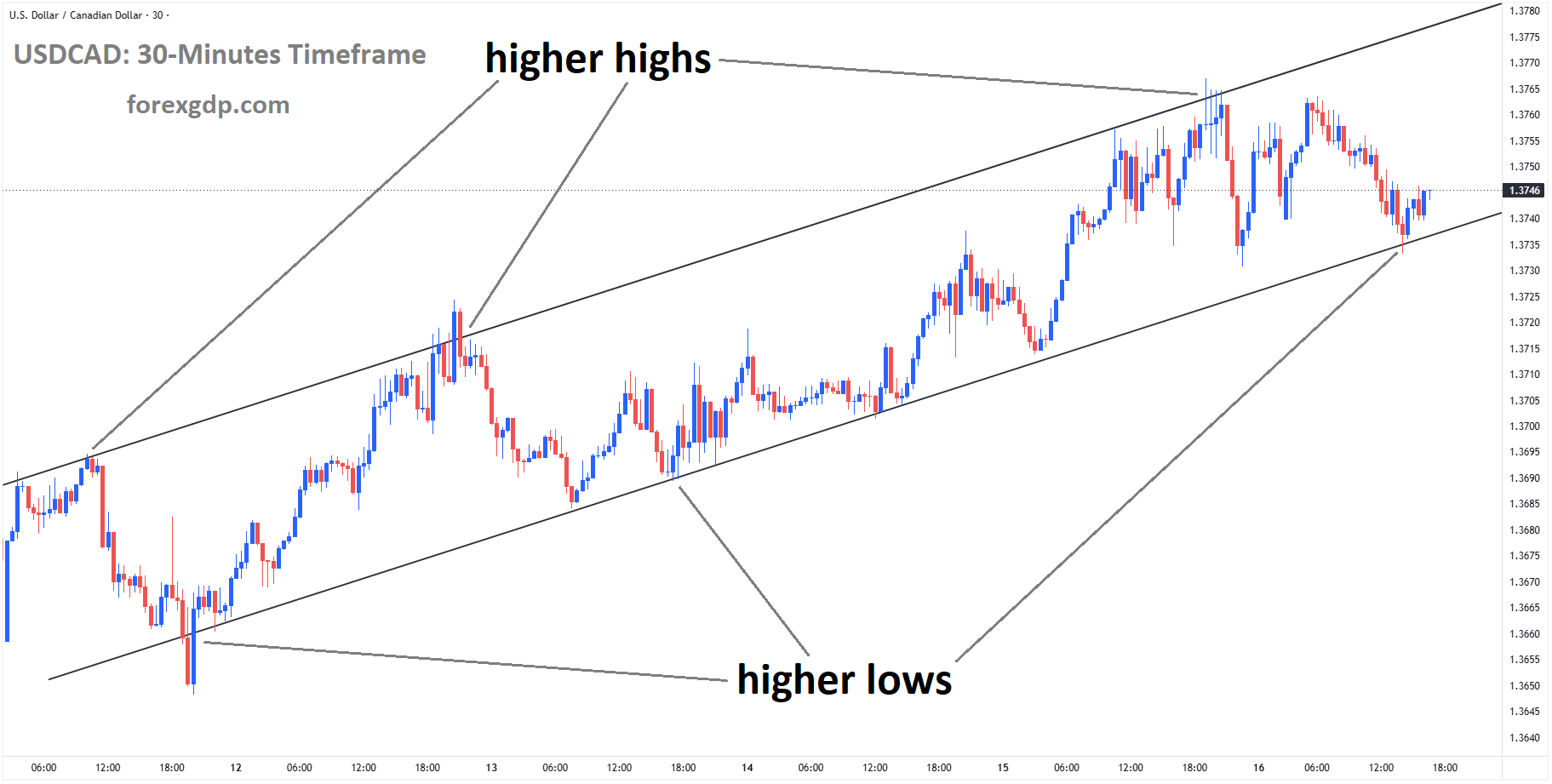
USDCAD reached a higher low area of the ascending channel
The latest market mood reflects increasing confidence that the Fed may not cut interest rates this year. In fact, some traders now believe another rate hike could happen before the end of the year. This change in expectations has provided strong support for the US Dollar and pushed USD/CAD higher.
At the same time, geopolitical tensions in the Middle East remain a major concern for global markets. Ongoing uncertainty involving Iran, Israel, and the United States has increased fears of wider conflict in the region. These developments are also affecting oil prices and adding another layer of pressure to the currency market.
Rising US Inflation Supports the Dollar
One of the main reasons behind the stronger US Dollar is the recent inflation data from the United States. Last week’s figures showed that inflation remains more stubborn than many investors expected. Higher inflation usually increases the chances that central banks will maintain tighter monetary policies to control rising prices.
Because of this, financial markets have quickly adjusted their expectations for the Federal Reserve. Instead of preparing for interest rate cuts, traders are now considering the possibility of another increase in borrowing costs later this year.
According to market estimates, the probability of a rate hike at the Fed’s December meeting has jumped sharply within just one week. This sudden shift highlights how sensitive investors are to inflation-related data and how quickly market sentiment can change.
Higher interest rates generally make the US Dollar more attractive because investors can potentially earn better returns on US-based assets. As demand for the Dollar rises, currency pairs such as USD/CAD tend to move higher.
Federal Reserve Outlook Remains in Focus
The Federal Reserve has repeatedly stated that its decisions will depend on incoming economic data. While inflation had shown signs of slowing earlier this year, the latest numbers suggest price pressures are still present in several parts of the economy.
This situation puts the Fed in a difficult position. Policymakers want to control inflation without damaging economic growth, but persistent inflation may force them to keep monetary policy tighter for longer than expected.
Investors are now closely watching future economic reports, especially inflation, employment, and consumer spending data. Any signs that inflation continues to remain elevated could strengthen expectations for another rate increase.
The possibility of higher rates has already changed the tone across financial markets. Treasury yields have remained firm, and the US Dollar has gained support against several major currencies, including the Canadian Dollar.
Middle East Tensions Add Market Uncertainty
Geopolitical developments are also playing a key role in market sentiment. Reports suggest that efforts to reduce tensions between Israel and Iran have stalled, increasing fears of a prolonged conflict in the Middle East.
US President Donald Trump recently warned that Iran must act quickly regarding ongoing diplomatic efforts. His comments added to concerns that the situation could worsen in the coming days.
According to reports, Trump is expected to meet with top national security advisers in the White House Situation Room on Tuesday. The meeting will reportedly focus on military options related to Iran.
Whenever geopolitical tensions rise in the Middle East, financial markets often react strongly because the region is critical to global energy supplies. Investors tend to move toward safer assets during uncertain periods, and the US Dollar usually benefits from that trend.
Oil Prices and the Canadian Dollar
The Middle East conflict has also affected crude oil prices. Concerns about supply disruptions often push oil prices higher, especially when tensions involve major oil-producing regions.
This is important for the Canadian Dollar because Canada is one of the world’s largest oil exporters. The Canadian economy has strong ties to the energy sector, meaning the currency often reacts to changes in crude oil prices.
Higher oil prices can support the Canadian Dollar since increased energy revenues may strengthen Canada’s economic outlook. This relationship sometimes limits losses in the Loonie, even when the US Dollar is gaining strength.
However, despite support from oil prices, the Canadian Dollar has struggled against the stronger US Dollar in recent trading sessions. The shift in Federal Reserve expectations appears to have had a larger impact on the USD/CAD pair.
Investors Remain Cautious
Market participants are expected to remain cautious as they monitor both economic and geopolitical developments throughout the week. Any new comments from Federal Reserve officials or updates on inflation could influence expectations for future US interest rate decisions.
At the same time, headlines related to Iran, Israel, and possible US military actions may continue to create volatility in currency and energy markets.
For traders and investors, the combination of rising inflation concerns, changing Fed expectations, and geopolitical uncertainty creates a highly sensitive market environment. Currency movements may remain unpredictable as markets react quickly to new information.
What Could Influence USD/CAD Next?
Several factors could shape the direction of the USD/CAD pair in the near term. US economic data will remain one of the biggest drivers, especially reports related to inflation and labor market conditions.
If upcoming data shows continued strength in the US economy, expectations for tighter monetary policy could grow further, potentially supporting the Dollar even more.
Meanwhile, oil market developments will likely remain important for the Canadian Dollar. Any major changes in crude oil supply expectations or Middle East tensions could affect energy prices and influence CAD performance.
Investors will also pay close attention to political and military developments involving Iran and the United States. Increased uncertainty could continue supporting safe-haven demand for the US Dollar.
Summary
USD/CAD moved higher near 1.3750 as growing expectations for another possible Federal Reserve rate hike strengthened the US Dollar. Stronger-than-expected US inflation data changed market expectations and reduced hopes for interest rate cuts this year.
At the same time, geopolitical tensions involving Iran, Israel, and the United States added uncertainty to global markets. Concerns over possible military action and rising oil prices created additional volatility for investors.
While higher crude oil prices may provide some support to the Canadian Dollar due to Canada’s strong energy sector, the US Dollar currently remains supported by shifting Fed expectations and increased demand for safer assets.