
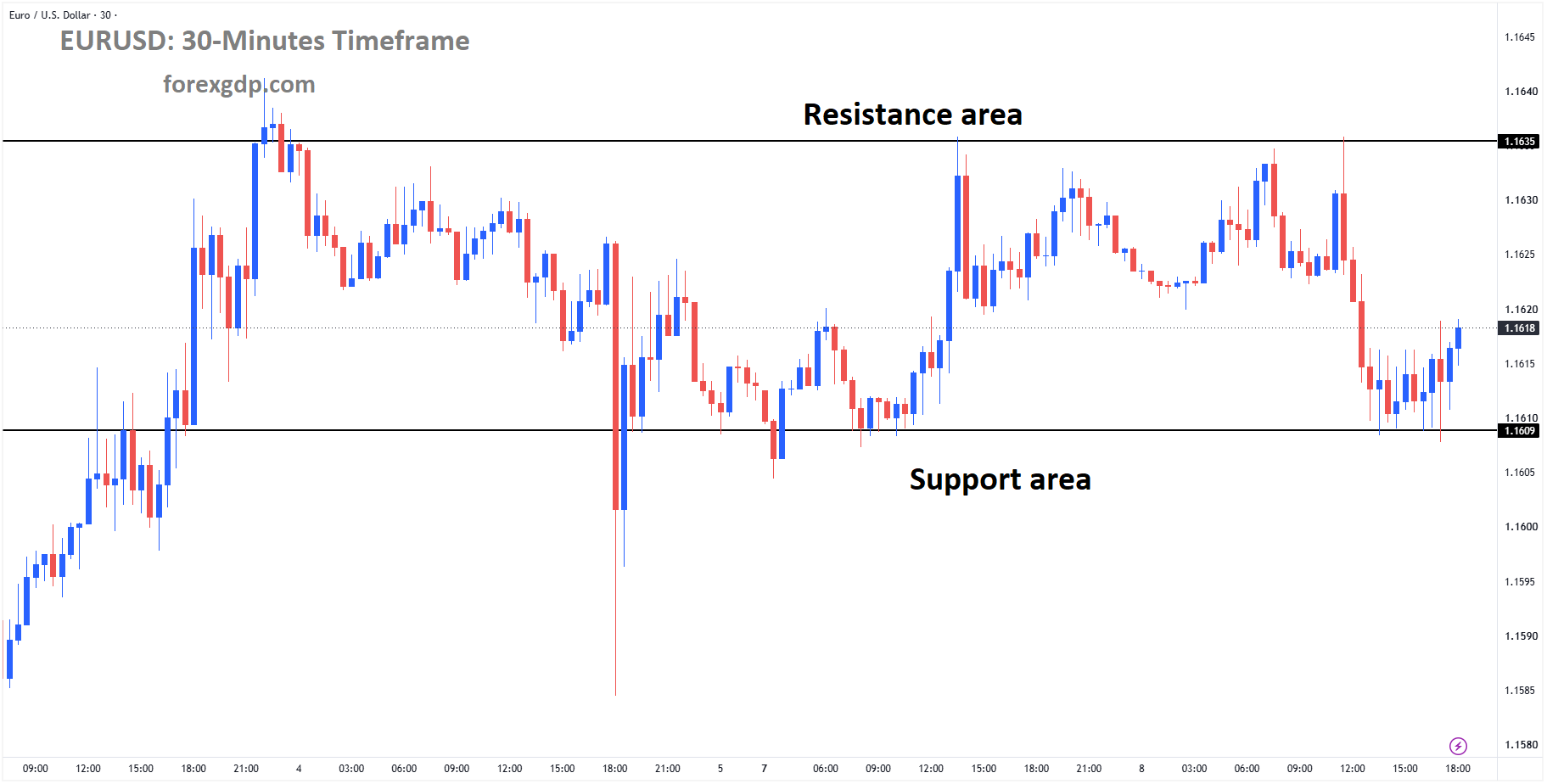
EURUSD is rebounding from the support area of the box pattern
EURUSD Pauses While Traders Await Inflation and ECB Updates
The EUR/USD currency pair remained calm during Tuesday’s early European session as traders avoided making major moves. The quiet mood reflects growing caution ahead of important economic announcements from both the United States and Europe.
Two major events are dominating market attention this week: the release of US inflation data and the European Central Bank’s upcoming interest rate decision. Both could influence expectations about borrowing costs and change the outlook for the US Dollar and the Euro.
For now, many traders appear unwilling to take strong positions. Why rush into the market when major announcements could quickly change the direction of both currencies? This wait-and-see approach may continue until policymakers and economic reports provide greater clarity.
Markets Enter a Cautious Waiting Period
Financial markets often become quieter before important economic events. Traders may reduce their activity because unexpected results can cause sudden changes in currency demand. Entering a position without enough information can feel like driving through thick fog—you may be moving, but you cannot clearly see what is ahead.
This week carries additional uncertainty because both sides of the EUR/USD pair face major economic developments. The United States will release inflation figures, while the ECB will announce its latest policy decision. Each event has the potential to influence interest rate expectations.
As a result, traders are staying on the sidelines rather than making aggressive decisions. This does not mean there is no interest in the currency pair. It simply shows that investors want stronger evidence before deciding whether to support the Euro or the US Dollar.
Strong US Employment Data Supports the Dollar Outlook
Recent US employment figures gave markets another reason to remain cautious. The American economy added 162,000 jobs in August, comfortably exceeding the forecast of 56,000. This stronger result suggested that the labour market remained healthier than many economists had expected.
The US Unemployment Rate also remained unchanged at 4.1%. A stable unemployment rate, combined with stronger job creation, may reduce pressure on the Federal Reserve to support the economy through lower borrowing costs.
A strong labour market can also influence inflation. When employment remains healthy, consumers may continue spending, and businesses may face pressure to offer better wages. That activity can keep prices elevated, making the Federal Reserve’s job more difficult.
Following the positive employment report, traders increased their expectations of a possible Federal Reserve rate increase. Markets began pricing in a nearly 60% chance of a hike during the month. However, the employment report alone may not be enough to determine the final decision.
US Inflation Data Becomes the Next Major Test

Attention is now turning toward the US Producer Price Index and Consumer Price Index reports. These figures will help investors understand whether inflation is cooling, remaining stubborn, or beginning to rise again.
The Producer Price Index measures price changes faced by businesses. Higher production costs can eventually reach consumers when companies increase the prices of their products and services. For this reason, the PPI can provide an early warning about future inflation pressure.
The Consumer Price Index measures price changes paid directly by households. It covers everyday costs and is one of the most closely watched inflation reports in the financial market. A higher-than-expected result could strengthen expectations that US interest rates will remain elevated or rise further.
Economists expect the August inflation report to show a small monthly acceleration. Global energy pressures may be one of the main reasons behind this increase. Rising energy expenses can spread across the wider economy because they affect transport, manufacturing, food production, and household bills.
Hotter Inflation Could Support the US Dollar
If US inflation rises more than expected, the Federal Reserve may have fewer reasons to adopt a softer policy. Policymakers could feel that further action is necessary to prevent price pressures from becoming more difficult to control.
Higher interest rate expectations often make a currency more attractive because investors may receive better returns from assets linked to that currency. Therefore, stronger inflation figures could increase demand for the US Dollar and create difficulty for EUR/USD.
However, a weaker inflation report could lead to a different reaction. If price growth appears to be slowing, traders may lower their expectations of another rate increase. That could reduce some support for the Dollar and give the Euro more breathing room.
The market’s reaction will depend not only on the headline figures but also on what those figures suggest about future Federal Reserve decisions. Traders are searching for direction, and the inflation data may provide it.
ECB Rate Decision Keeps the Euro in Focus
The Euro also faces an important test as the European Central Bank prepares to announce its latest interest rate decision on Thursday. The ECB is widely expected to increase its benchmark rate for the second time this year.
The central bank introduced its first rate increase since 2023 during the June policy meeting. That decision was aimed at controlling strong price pressures across the Eurozone. However, policymakers paused during the following meeting in July because they wanted more time to examine economic conditions and understand how the ongoing conflict might affect the region.
Central banks must make careful choices when raising interest rates. Higher borrowing costs may help slow inflation, but they can also weaken consumer spending, business investment, and overall economic growth. The ECB is therefore walking a narrow path between controlling prices and avoiding unnecessary damage to the European economy.
Markets Expect Another ECB Rate Increase
Andrew Kenningham, chief Europe economist at Capital Economics, said the ECB Governing Council appeared highly likely to increase the deposit rate from 2.25% to 2.5%. This expectation has made Thursday’s meeting especially important for Euro traders.
Still, the rate decision itself will not be the only thing that matters. Investors will also pay close attention to the ECB’s language, economic outlook, and comments about future policy. A central bank may raise rates while also suggesting that additional increases are unlikely. In contrast, it may signal that inflation remains a serious problem and that further action could follow.
If the ECB sounds confident and committed to controlling inflation, the Euro may receive support. If policymakers appear concerned about weak growth or signal that the rate increase could be the last for some time, traders may become less optimistic about the currency.
Two Central Banks Create One Difficult Decision
The EUR/USD outlook depends on the balance between expectations for the Federal Reserve and the ECB. It is not enough to study one central bank alone because the currency pair reflects the relative strength of both economies and their monetary policies.
If US inflation remains high while the ECB takes a cautious approach, the Dollar may gain the stronger advantage. If the ECB delivers a firm decision and US inflation weakens, the Euro could attract greater interest.
There is also the possibility that both sides send strong policy signals. In that case, neither currency may gain a clear advantage immediately. Markets may need additional economic data before choosing a more confident direction.
This is why the pair has remained quiet. Traders are not lacking interest; they are waiting for enough information to judge which central bank is likely to maintain the stronger policy position.
Final Summary
EUR/USD remains steady as traders prepare for a busy week of economic announcements. Strong US employment growth has increased expectations of a possible Federal Reserve rate hike, but upcoming inflation reports could either strengthen or weaken that view.
Meanwhile, the ECB is expected to raise its benchmark interest rate during Thursday’s meeting as it continues its fight against high prices. The decision, accompanying statement, and future policy guidance will all influence demand for the Euro.
Until these events provide clearer answers, cautious trading may continue. US inflation will shape expectations for the Dollar, while the ECB’s decision will guide sentiment toward the Euro. With both currencies facing major tests, patience may remain the dominant market mood.
GBPUSD Finds Fresh Support From the UK’s Stable Fiscal Outlook
GBP/USD strengthened during Tuesday’s early Asian session as investors reacted positively to fresh plans aimed at improving economic growth and attracting private investment to the United Kingdom. The British Pound gained support as the government outlined reforms designed to reduce regulatory pressure, encourage innovation, and give regional authorities greater economic freedom.
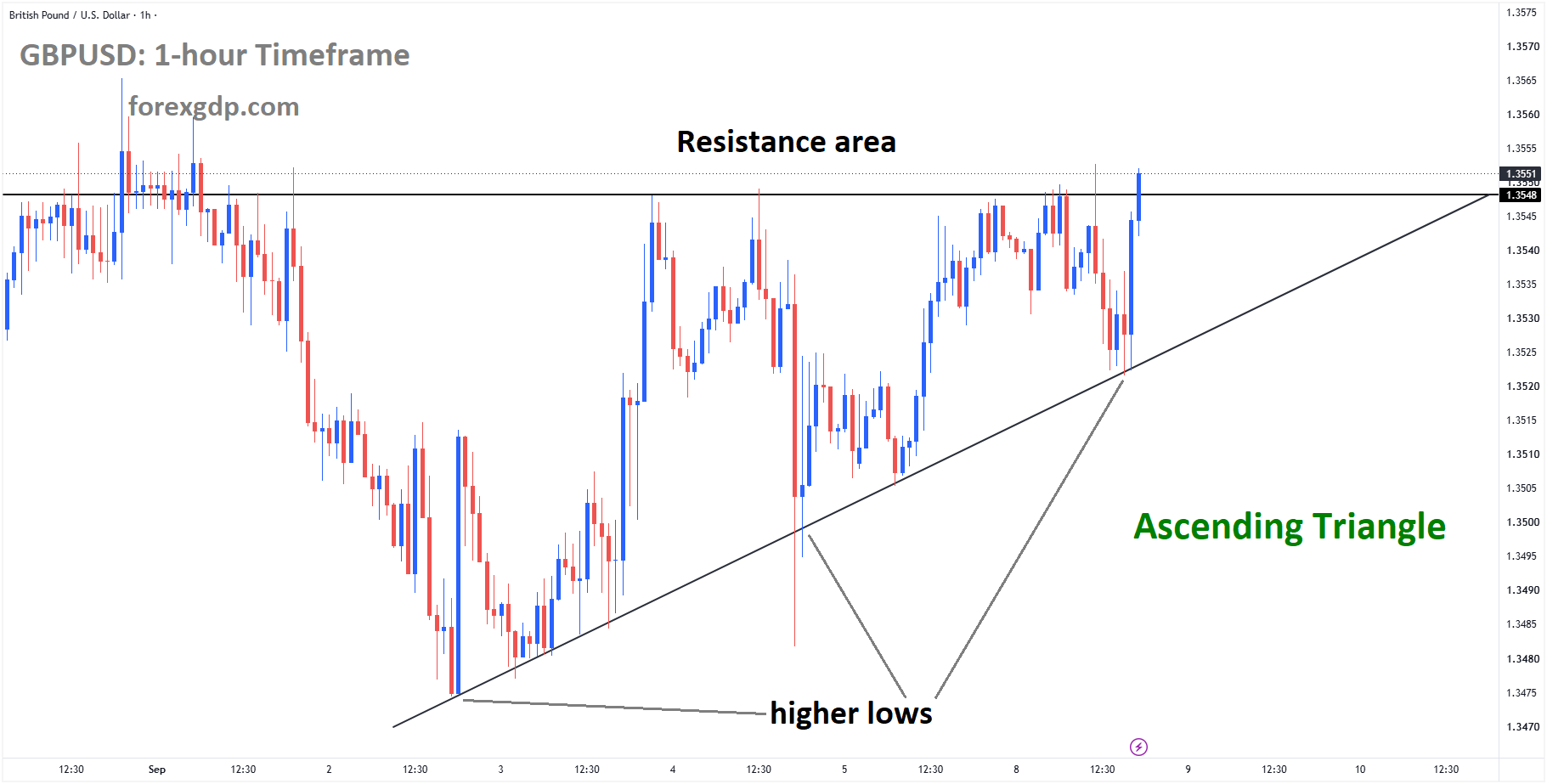
GBPUSD reached resistance area of the ascending triangle pattern
However, the Pound’s recovery faces a serious challenge from changing US interest rate expectations. Strong employment figures from the United States have increased speculation that the Federal Reserve may keep borrowing costs high or consider further tightening. With important US inflation reports also due this week, traders remain cautious about the currency pair’s next direction.
UK Investment Reforms Support the British Pound
The British Pound benefited from renewed optimism surrounding the UK government’s economic plans. Officials announced several measures intended to make the country more attractive to private investors while removing unnecessary barriers that can delay business expansion.
Regulation is often necessary to protect consumers and maintain fair competition. However, excessive rules can increase costs and discourage companies from investing in new projects. The government hopes that reducing this burden will make it easier for businesses to grow, create jobs, and introduce new products.
The planned reforms are especially important at a time when the UK economy is struggling to achieve consistent growth. Businesses continue to face high operating costs, weak demand, and uncertainty about future government policy. Clearer and more flexible rules could help restore confidence, although the success of the plans will depend on how effectively they are introduced.
Emerging Technologies Receive Greater Attention
One important part of the government’s proposal involves creating more freedom for emerging technologies. New testing arrangements could allow companies to experiment with innovative products and services in a controlled environment without immediately facing the full weight of existing regulations.
This approach may benefit sectors such as artificial intelligence, financial technology, clean energy, and digital services. These industries can attract large amounts of private capital, but rapid innovation often creates challenges for regulators. Rules written for traditional industries may not always fit modern technologies.
By allowing controlled testing, the government wants to balance innovation with public protection. If the policy works, it could strengthen the UK’s reputation as a place where new ideas can grow. That would be helpful for long-term investment and could improve confidence in the broader economy.
Regional Authorities Could Gain More Economic Power
The government also plans to give major city regions greater authority to attract private investment. This forms part of a wider effort to move some decision-making power away from central government and place it closer to local communities.
Regional leaders often understand their local economies better than officials working at the national level. They may be more aware of which transport projects, business zones, housing developments, and training programmes require investment. Greater local control could therefore help regions respond more quickly to their own economic needs.
Devolution may also reduce the heavy concentration of investment in London and the southeast of England. Many parts of the country have struggled with weaker productivity, limited infrastructure, and fewer employment opportunities. Giving local authorities more freedom could support more balanced growth, but they will still need clear funding arrangements and strong accountability.
Fiscal Discipline Remains a Key Government Priority
Alongside its investment plans, the government has stressed that it remains committed to controlling public spending. It also wants to reduce the financial burden created by regulation for businesses and the public before the next general election.
This balance will not be easy to achieve. Cutting regulatory costs may encourage investment, but economic development often requires government support for infrastructure, education, housing, and public services. Officials must therefore create room for growth without allowing public finances to weaken.
The Pound may continue to receive some support if investors believe the government can maintain financial discipline while improving the business environment. However, confidence could quickly fade if the reforms lack detail, face long delays, or create uncertainty ahead of the upcoming budget.
Strong US Employment Data Supports the Dollar Outlook
While UK reforms have helped the British Pound, strong US labour market data could limit further gains against the US Dollar. The latest employment report showed that American businesses continued to add a healthy number of jobs, while the unemployment rate remained steady.
A resilient labour market gives the Federal Reserve more freedom to keep interest rates high. When employment remains strong, policymakers may feel less pressure to reduce borrowing costs to support the economy. Strong job creation can also contribute to wage growth and consumer spending, which may keep inflation under pressure.
As a result, traders have raised their expectations that the Fed will maintain a firm policy stance. If US interest rates remain higher for longer, the Dollar may continue to attract demand because investors can earn stronger returns from Dollar-based assets.
US Inflation Reports Could Change Rate Expectations
Attention will now move toward the latest US producer and consumer inflation reports. These releases will provide important information about whether inflationary pressure is continuing to ease or becoming more persistent.
Producer inflation measures changes in the costs faced by businesses. Consumer inflation shows how prices are changing for households. Together, these reports can influence expectations surrounding the Federal Reserve’s next policy decision.
Higher-than-expected inflation would strengthen the argument for keeping interest rates elevated and could provide additional support to the US Dollar. Softer inflation would reduce the need for tighter policy and might allow the British Pound to maintain its recent improvement.
The reaction may depend on the wider details rather than one headline number. Policymakers will consider employment, wage growth, consumer demand, and inflation together before making any decision.
UK Growth Data May Have Limited Influence on the Bank of England

The upcoming UK economic growth report is expected to show that activity remained weak. Household spending has been under pressure, and softer retail activity may have offset improvements elsewhere in the economy.
Even so, analysts believe one monthly report is unlikely to cause a major change in Bank of England interest rate expectations. Policymakers must examine the wider economic picture, including inflation, wages, employment, business activity, and government spending.
The UK continues to face a fragile growth environment. If the economy operates below its full potential, aggressive interest rate increases could make the situation worse. Higher borrowing costs can discourage business investment, weaken household spending, and place more pressure on mortgage holders.
Fiscal policy may also become tighter as the government tries to control spending and protect public finances. When monetary and fiscal conditions are both restrictive, the case for a more aggressive Bank of England policy becomes weaker.
Final Summary
GBP/USD has gained support from the UK government’s plans to reduce regulatory costs, encourage investment, support new technologies, and give regional authorities greater economic power. These proposals have improved sentiment toward the British Pound, but their long-term impact will depend on effective delivery and continued fiscal discipline.
At the same time, strong US employment data has increased expectations that the Federal Reserve will maintain a firm interest rate policy. Upcoming US inflation reports may therefore become the main influence on the pair. UK growth figures will also attract attention, although they may not be strong enough to change the Bank of England’s outlook significantly.
USDJPY Drops as Investors Back a Stronger Japanese Yen
The Japanese Yen gained strong support against the US Dollar during Tuesday’s early European session. Growing expectations that the Bank of Japan may raise interest rates at its next policy meeting encouraged traders to increase their exposure to the Japanese currency.
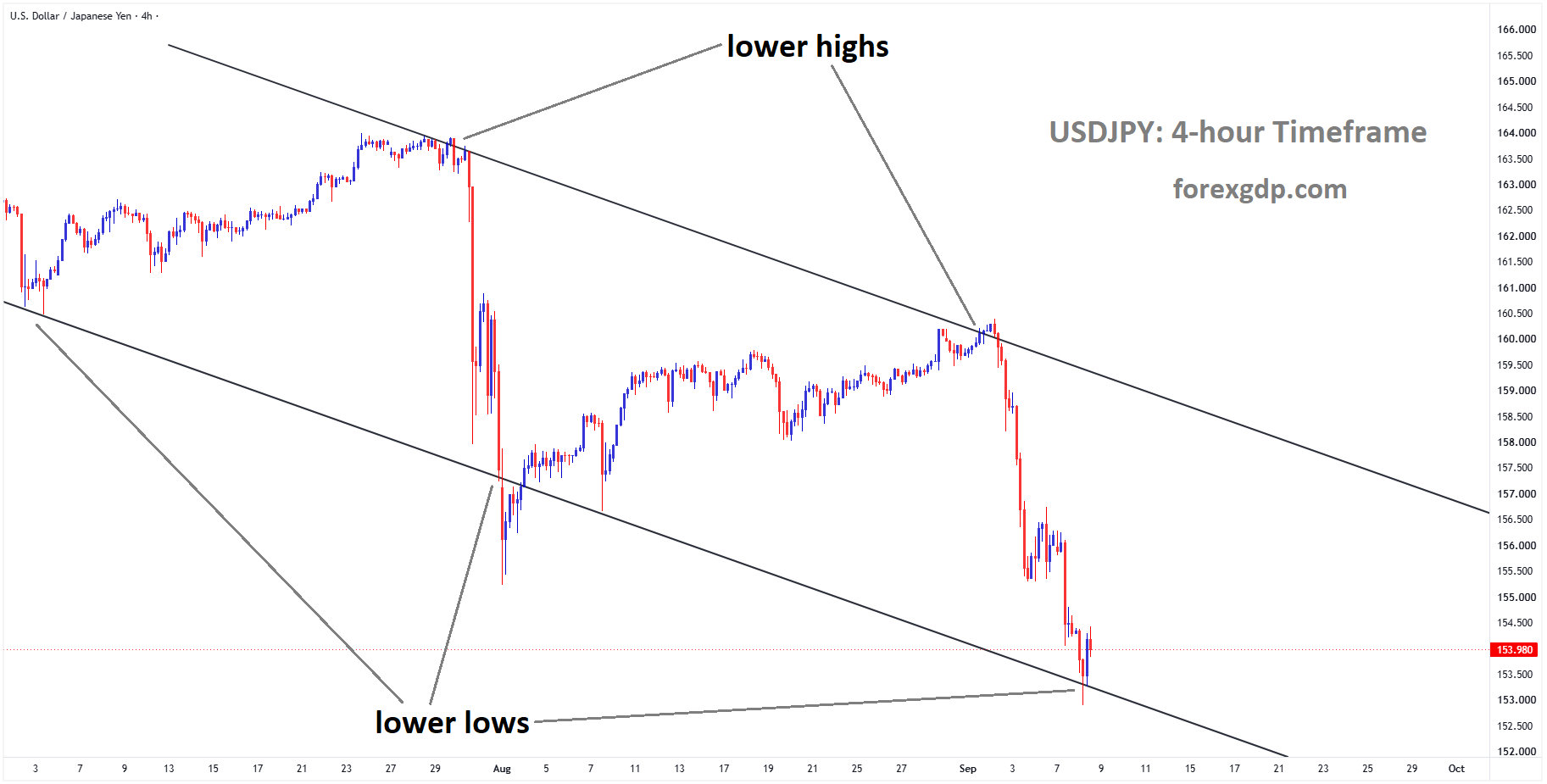
USDJPY reached the lower low area of the descending channel
At the same time, uncertainty surrounding the Federal Reserve’s next move continues to influence the US Dollar. Traders are waiting for important US inflation reports that could offer clearer guidance on whether the Fed will adjust interest rates this month.
The combination of changing expectations in Japan and uncertainty in the United States has created a noticeable shift in sentiment around USDJPY.
Bank of Japan Expectations Support the Yen
The main reason behind the Yen’s strength is the growing belief that the Bank of Japan could raise interest rates soon. For many years, Japan maintained extremely low borrowing costs to encourage spending, investment, and economic growth. However, conditions have gradually changed.
Inflation has become more persistent, wages have increased, and businesses appear more willing to raise prices. These developments give the central bank greater confidence that Japan may be moving away from its long period of weak inflation.
A potential rate increase would make Japanese assets more attractive to investors. When interest rates rise, investors may receive better returns from assets linked to that currency. As a result, demand for the Yen can increase as traders prepare for a possible policy change.
Even before the Bank of Japan makes an official announcement, expectations alone can influence currency movements. Financial markets often react to what traders believe will happen rather than waiting for the final decision.
BoJ Official Opens the Door to Stronger Action
Comments from Bank of Japan board member Hajime Takata added weight to expectations of tighter monetary policy. He suggested that the central bank may not be limited to a small and predictable rate increase.
Takata explained that a quarter-point move should not automatically be treated as the only possible option. He also indicated that consecutive rate increases could be considered if economic conditions support further action.
These comments attracted attention because the Bank of Japan has traditionally taken a cautious approach. Any suggestion that officials may act more aggressively can quickly change investor expectations.
Traders now appear to believe that the central bank is becoming more serious about controlling inflation and normalising monetary policy. If policymakers continue sending similar messages, the Yen may receive additional support from investors seeking stronger returns in Japan.
However, the final decision will still depend on economic conditions. The Bank of Japan will likely study wage growth, consumer spending, inflation pressures, and business confidence before deciding how quickly it should move.
Pension Fund Speculation Adds Further Support
Another factor helping the Japanese Yen is speculation about possible changes to the Government Pension Investment Fund’s asset allocation. This fund is one of the largest institutional investors in the world, so changes in its investment strategy can have a meaningful effect on financial markets.
If the fund reduces its exposure to overseas assets or increases investments in Japan, it may need to convert foreign currencies back into Yen. That process could create additional demand for the Japanese currency.
No major change should be assumed until an official announcement is made. Still, even speculation can influence market sentiment when investors believe a large institution may adjust its portfolio.
This possibility has strengthened the wider argument in favour of the Yen. Traders are not only considering higher Japanese interest rates but also watching for changes in institutional investment flows.
US Inflation Data Becomes the Next Major Focus
While developments in Japan are supporting the Yen, the next direction of USDJPY will also depend heavily on the United States. Traders are preparing for the release of the Producer Price Index and Consumer Price Index.
The Producer Price Index measures changes in the prices businesses receive for goods and services. It can offer an early view of inflation pressures before those costs reach consumers. The Consumer Price Index tracks changes in the cost of everyday goods and services paid by households.
Both reports can influence Federal Reserve policy expectations. If inflation remains stronger than expected, policymakers may feel greater pressure to keep monetary conditions tight or consider another rate increase. If inflation shows clear signs of cooling, expectations for tighter policy could weaken.
Current market expectations suggest that traders see a meaningful possibility of a Federal Reserve rate increase this month. However, those expectations may change quickly after the inflation data is released.
Different Central Bank Paths Drive USDJPY Sentiment

Currency pairs are often influenced by the difference between interest rates in two countries. For a long time, US interest rates were significantly higher than Japanese rates. That gap encouraged investors to hold Dollars while borrowing or selling Yen.
The situation may now be changing. If the Bank of Japan raises rates while uncertainty grows around the Federal Reserve’s policy direction, the difference between US and Japanese borrowing costs could narrow.
A smaller interest-rate gap may reduce the appeal of strategies that depend on selling the Yen to purchase higher-yielding assets. When traders begin closing these positions, they must buy back the Japanese currency, which can strengthen it further.
This does not mean the Yen will continue moving in one direction without interruption. Central bank expectations can change rapidly, especially when fresh economic data or official comments enter the market.
Traders Face an Important Week
The coming days could provide greater clarity about both central banks. Investors will study US inflation figures while preparing for the Bank of Japan’s next policy decision.
Strong US inflation could support expectations of tighter Federal Reserve policy and help the Dollar recover some demand. Softer inflation may reduce those expectations and place additional pressure on the US currency.
In Japan, traders will focus on whether policymakers confirm the market’s increasingly firm expectations. Any cautious language could disappoint Yen buyers, while a clear signal of further rate increases could reinforce confidence in the currency.
The tone used by officials may matter almost as much as the decision itself. Markets will want to know whether a rate change is a single adjustment or the beginning of a longer tightening cycle.
Final Summary
The Japanese Yen strengthened against the US Dollar as expectations of a Bank of Japan rate increase continued to grow. Comments from BoJ board member Hajime Takata raised the possibility of stronger action and even consecutive rate hikes if economic conditions justify them.
Speculation about changes to Japan’s major pension fund allocation also added support by creating expectations of stronger domestic investment flows.
Attention now turns to US producer and consumer inflation data. These reports could reshape expectations for the Federal Reserve and influence demand for the US Dollar. With both central banks facing important policy decisions, USDJPY sentiment will remain closely tied to inflation, interest-rate expectations, and official guidance.
AUDUSD Slips as Investors Brace for Crucial US Inflation Data
The Australian Dollar weakened against the US Dollar during Tuesday’s European trading session. The currency pair lost momentum as demand for the US Dollar improved following a softer start to the day.
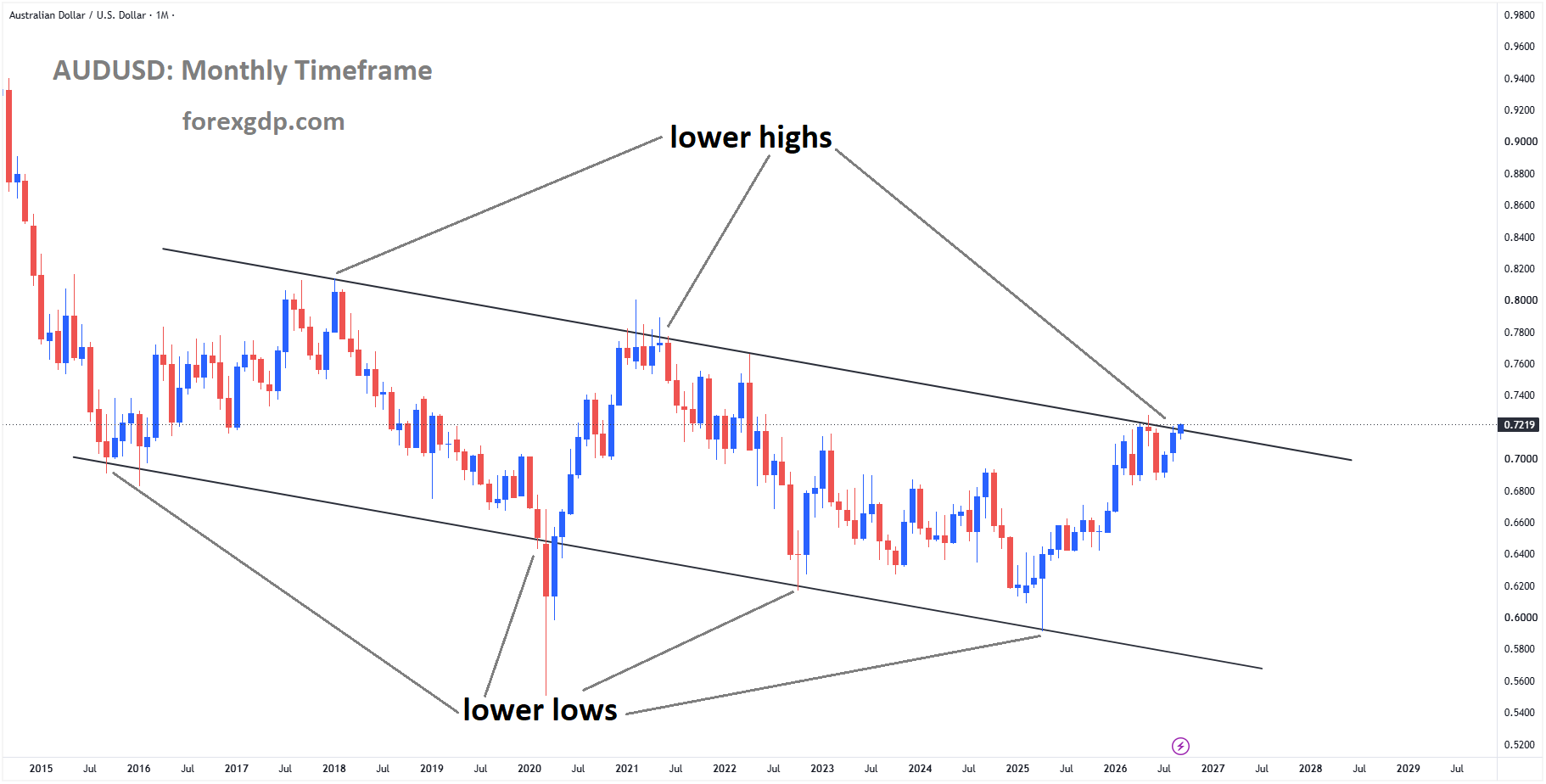
AUDUSD reached the lower high area of the descending channel
Investors remain cautious because several important events could influence both currencies. In the United States, attention is firmly focused on the upcoming Consumer Price Index report. In Australia, traders are waiting for comments from Reserve Bank of Australia Deputy Governor Andrew Hauser.
The combination of central bank communication and inflation uncertainty has created a careful mood across the currency market. Many investors may avoid making large decisions until they receive clearer guidance about the future direction of monetary policy.
US Dollar Recovers After a Weak Beginning
The US Dollar initially struggled to attract strong demand but later moved into positive territory. This recovery placed fresh pressure on the Australian Dollar, which had already been facing uncertainty about the Reserve Bank of Australia’s next policy steps.
However, the Greenback may struggle to build a clear and lasting direction before the release of the latest US inflation figures. Inflation remains one of the main factors influencing Federal Reserve policy, making the upcoming report especially important for global markets.
A strong inflation reading could increase concerns that the Federal Reserve may need to maintain tighter monetary conditions for longer. On the other hand, softer inflation could suggest that existing policies are successfully bringing price pressures under control.
Until the report is published, the US Dollar may continue to move cautiously as investors balance improving inflation signals against the risk of another unexpected rise in consumer prices.
US Inflation Report Takes Centre Stage
The upcoming US Consumer Price Index report is expected to provide an important update on how quickly inflation is changing. Policymakers and investors will closely study both headline and core inflation.
Headline inflation measures changes across a broad range of consumer goods and services, including food and energy. Core inflation removes these more volatile categories and is often used to identify longer-lasting price trends.
TD Securities expects underlying inflation to remain relatively controlled. The financial institution believes service-sector costs may continue to contribute to price growth, while some goods categories could help reduce overall pressure.
Energy costs are expected to have a stronger influence on headline inflation. Food inflation may also rise slightly, adding to broader consumer price pressures. These factors could create a noticeable difference between the headline and core readings.
The report matters because inflation does not affect every part of the economy in the same way. While goods prices may weaken, service costs can remain persistent due to wages, housing expenses and strong consumer demand. This makes the overall picture more complicated for the Federal Reserve.
Tariff-Exposed Goods Create Forecasting Risks
TD Securities has warned that inflation risks may be tilted toward a stronger result than currently expected. Its forecast depends partly on price declines in several categories that are exposed to tariffs, including clothing and household products.
Tariffs can raise the cost of imported goods and make it more expensive for companies to purchase materials. Businesses then face a difficult choice: absorb those additional expenses or pass them on to customers through higher prices.
If expected price declines fail to appear, inflation could prove more stubborn than economists anticipate. Such an outcome would make it harder for the Federal Reserve to argue that price stability is being restored.
This uncertainty explains why investors are reluctant to take strong positions before the inflation report. Even a small surprise could change expectations for interest rates and influence demand for the US Dollar.
Federal Reserve Officials See Encouraging Signs

Some Federal Reserve officials have recently expressed cautious optimism about the direction of inflation. Governor Christopher Waller said recent economic information had shown signs of disinflation, meaning that prices were still rising but at a slower pace.
This is an encouraging development for the central bank. The Federal Reserve has spent a long period trying to reduce inflation without causing unnecessary damage to economic activity or employment.
However, one encouraging set of figures is not enough to guarantee a major change in policy. Officials will want to see a consistent decline in inflation before becoming fully confident that price pressures are under control.
Waller also indicated that an unexpectedly strong inflation report could influence his view on the need for tighter monetary policy. His comments highlight how important the latest data will be when policymakers discuss their next interest-rate decision.
The Federal Reserve must carefully balance two risks. Keeping monetary policy tight for too long could weaken economic growth, while easing too quickly could allow inflation to return. That balancing act is likely to keep the US Dollar sensitive to every major economic release.
Australian Dollar Awaits RBA Guidance
While US inflation dominates the international agenda, the Australian Dollar also faces an important domestic event. Investors are waiting for an interview with RBA Deputy Governor Andrew Hauser, hoping he will provide more information about the central bank’s economic outlook.
His comments could help markets understand how concerned the RBA remains about inflation and whether officials believe current monetary conditions are restrictive enough.
A hawkish tone would suggest that the central bank remains prepared to keep policy tight or consider further action if inflation fails to improve. Such remarks could offer some support to the Australian Dollar by strengthening expectations of higher borrowing costs for longer.
A more cautious message could have the opposite effect. If Hauser focuses heavily on weaker growth, softer consumer spending or other economic risks, investors may believe that the RBA has less room to maintain a firm policy position.
Domestic and Global Factors Shape the Aussie Outlook
The Australian Dollar is influenced by more than local interest-rate expectations. It is often sensitive to global economic confidence because Australia depends heavily on exports and international trade.
When investors feel optimistic about the world economy, demand for growth-linked currencies can improve. When uncertainty rises, money often moves toward assets viewed as safer, which can place the Aussie under pressure.
The US Dollar’s direction is another major influence. A stronger Greenback can make it difficult for the Australian currency to recover, even when domestic conditions appear supportive.
Strategists at the Commonwealth Bank of Australia believe the Australian Dollar could remain relatively stable during the week. However, the tone of the RBA interview may determine whether the currency receives fresh support or continues to struggle against its US counterpart.
The market will therefore assess Hauser’s comments alongside the US inflation report. A firm RBA message combined with softer US inflation could benefit the Australian Dollar. In contrast, cautious Australian guidance and stronger US inflation could increase downward pressure.
Final Summary
The Australian Dollar is under pressure as the US Dollar regains strength and investors prepare for important economic and central bank developments. The upcoming US inflation report is expected to play a major role in shaping expectations for Federal Reserve policy.
Recent signs of disinflation have encouraged some Fed officials, but uncertainty remains. Stronger energy and food costs, persistent service inflation and tariff-related risks could still produce an uncomfortable inflation result.
At the same time, RBA Deputy Governor Andrew Hauser’s interview may provide valuable guidance about Australia’s interest-rate outlook. His tone could influence confidence in the Australian Dollar and determine whether it can withstand renewed demand for the US Dollar.
NZDUSD Falls as China’s Trade Figures Weigh on the Kiwi Dollar
The New Zealand Dollar has continued to lose strength against the US Dollar, extending its decline for a third straight trading day. The latest weakness followed the release of China’s August trade data, which raised fresh concerns about the health of domestic demand in the world’s second-largest economy.
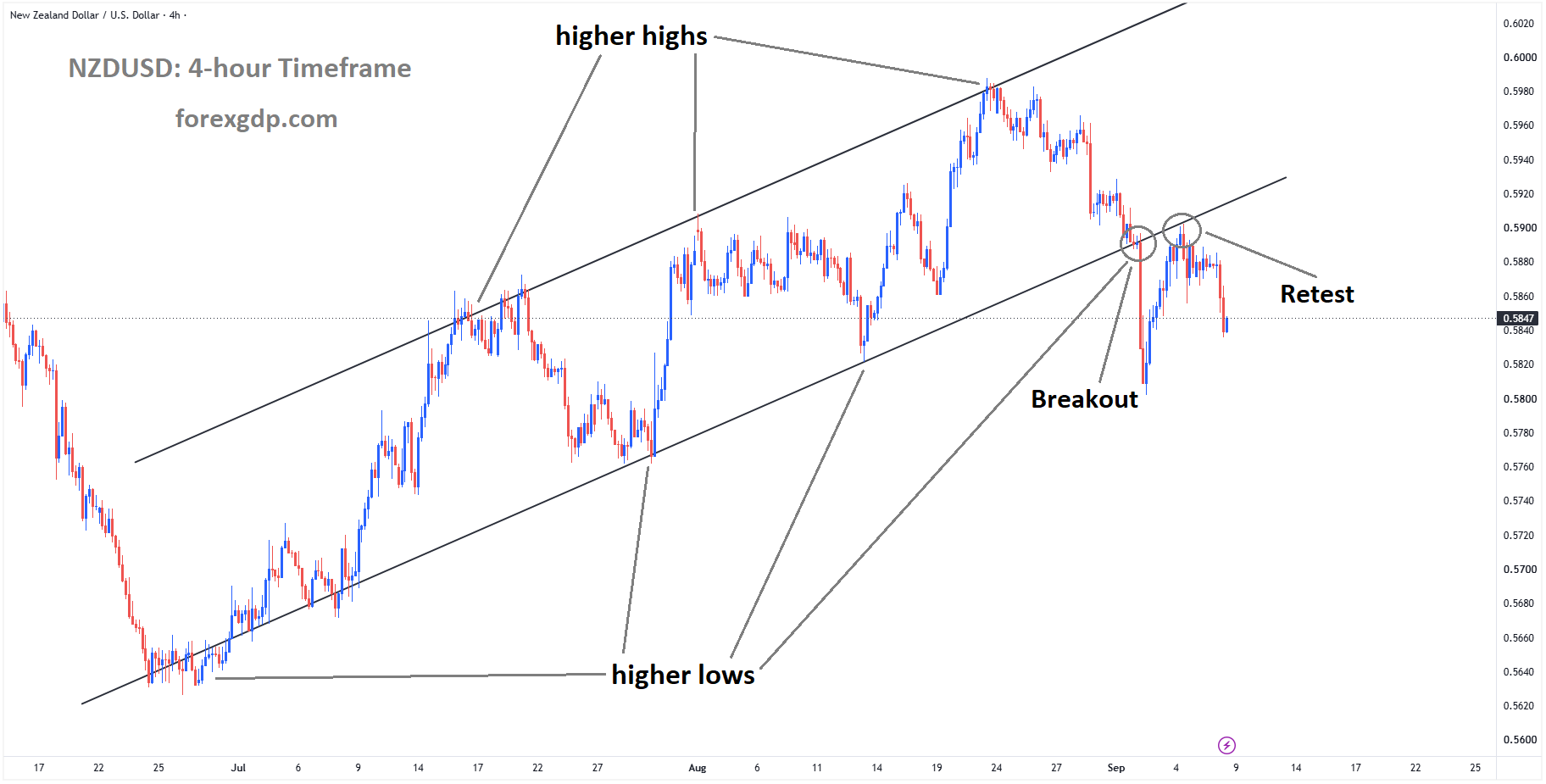
NZDUSD is falling from the retest area of the broken ascending channel
China is New Zealand’s largest trading partner, so changes in Chinese economic activity often have a direct effect on the Kiwi Dollar. When Chinese businesses and consumers buy fewer imported products than expected, investors may question whether demand for New Zealand’s key exports will remain strong.
However, the pressure on NZDUSD may be limited by broader weakness in the US Dollar. Investors are also waiting for important US inflation reports that could influence the Federal Reserve’s next interest rate decision. Until those reports are released, traders may remain cautious about making strong moves in either direction.
China’s Trade Report Delivers Mixed Signals
China’s latest trade figures offered both positive and negative signals. The country’s overall trade surplus improved compared with the previous month and came close to market expectations. Export growth also strengthened, showing that demand for Chinese products remained relatively healthy in overseas markets.
The main disappointment came from imports. Chinese imports expanded by 28.2% from a year earlier, improving slightly from the previous month’s growth rate. However, the result remained below the 30% increase that markets had expected.
This difference may appear small, but financial markets often react strongly when major economic reports fail to meet forecasts. Investors had hoped that faster import growth would point to stronger spending and business activity inside China. Instead, the weaker result suggested that domestic demand may still face challenges.
China’s export performance shows that international demand continues to support the economy. Yet the softer import figure raises questions about whether households and companies within China are confident enough to increase spending.
Why Chinese Demand Matters to the Kiwi Dollar
New Zealand has strong economic ties with China. A large share of New Zealand’s exports, including dairy products, meat, timber, and other agricultural goods, is sold to Chinese buyers. As a result, the New Zealand economy can be sensitive to changes in Chinese demand.
When China’s economy performs well, Chinese companies and consumers generally purchase more goods from abroad. This can support New Zealand exporters, improve business income, and strengthen confidence in the wider economy. These conditions often create a more positive environment for the New Zealand Dollar.
The opposite can happen when Chinese demand shows signs of weakness. Slower import growth may lead investors to expect reduced demand for New Zealand products. Even if the effect is not immediate, the possibility of weaker future exports can make the Kiwi Dollar less attractive.
The New Zealand Dollar is also widely seen as a currency connected to global growth and market confidence. Investors often buy it when they feel optimistic about the world economy. When concerns about China increase, they may reduce their exposure to currencies such as the Kiwi and move toward assets that are viewed as safer.
New Zealand’s Export Sector Faces Uncertainty
China’s weaker-than-expected imports do not necessarily mean that New Zealand exports will suddenly fall. One monthly report cannot provide a complete picture of future trade conditions. However, it does add uncertainty at a time when many businesses are already dealing with uneven global demand.
New Zealand’s agricultural sector depends heavily on stable overseas sales. Any slowdown in Chinese buying could affect export earnings, business investment, and rural confidence. Lower demand may also make it harder for producers to maintain strong revenues.
The impact could spread beyond exporters. When major industries earn less from overseas sales, they may reduce spending, delay investment, or become more careful about hiring. This can slow economic activity and influence expectations for New Zealand’s monetary policy.
Investors will therefore continue watching Chinese economic reports closely. Retail activity, manufacturing performance, consumer spending, and future trade figures may offer a clearer view of whether the latest import disappointment is temporary or part of a broader slowdown.
US Dollar Weakness Limits the Decline

Although the New Zealand Dollar remains under pressure, the US Dollar has not shown consistent strength. This has prevented NZDUSD from facing even heavier selling.
The Greenback’s direction remains closely connected to expectations for Federal Reserve policy. A stronger-than-expected US labour market report encouraged the view that the American central bank may need to keep monetary policy restrictive.
US employers added 162,000 jobs during August, while the unemployment rate remained unchanged. The report suggested that the labour market continues to grow, even as higher borrowing costs affect other parts of the economy.
A healthy labour market can support consumer spending and economic activity. At the same time, it may also keep inflation elevated because steady employment and wage growth allow households to continue spending. This creates a difficult situation for the Federal Reserve, which must control inflation without causing unnecessary damage to growth.
Still, one employment report may not be enough to create lasting US Dollar strength. Investors need more evidence about inflation before forming stronger expectations about the Fed’s next decision.
US Inflation Data Takes Centre Stage
The upcoming US Producer Price Index and Consumer Price Index reports are likely to attract significant attention. These figures will help investors understand whether inflationary pressure is easing or becoming more persistent.
The Producer Price Index measures price changes faced by businesses. Rising production costs can eventually be passed on to consumers, making the report an important early signal of wider inflation trends.
The Consumer Price Index measures changes in the cost of goods and services paid by households. It is one of the most closely watched economic reports because consumer inflation directly influences the Federal Reserve’s policy choices.
If inflation remains stronger than expected, investors may believe that the Fed will maintain higher interest rates or consider further tightening. That could increase demand for the US Dollar and place additional pressure on NZDUSD.
If inflation shows convincing signs of slowing, expectations for tighter policy could weaken. In that situation, the US Dollar may struggle to recover, providing some relief to the New Zealand Dollar.
Central Bank Expectations Remain Important
The outlook for NZDUSD depends not only on China and the United States but also on New Zealand’s domestic economy. Investors will continue evaluating whether the Reserve Bank of New Zealand needs to maintain restrictive monetary conditions.
New Zealand faces the challenge of controlling inflation while avoiding a deeper economic slowdown. If weak Chinese demand damages export activity, the central bank may have less freedom to keep policy tight for an extended period.
Meanwhile, the Federal Reserve is dealing with a different set of conditions. The US labour market remains relatively firm, but inflation will determine whether additional policy action is needed. Differences between the expectations surrounding the two central banks could become a major influence on the currency pair.
What Investors May Watch Next
Several developments could shape the direction of the New Zealand Dollar. Future Chinese data will be important because it may confirm or challenge concerns about domestic demand. Stronger consumer activity and improving imports could restore confidence in New Zealand’s export outlook.
US inflation reports will also play a central role. They may either strengthen the case for tighter Federal Reserve policy or support expectations that the central bank can remain patient.
New Zealand’s own economic reports should not be ignored. Employment, inflation, business confidence, and consumer spending will help investors judge whether the domestic economy can handle weaker external demand.
Final Summary
NZDUSD remains under pressure after China reported weaker-than-expected import growth. The result has affected the New Zealand Dollar because China is New Zealand’s largest trading partner and an essential buyer of its exports.
China’s strong export growth and improved trade surplus offered some encouragement, but softer imports raised concerns about domestic demand. These concerns may continue to influence the Kiwi Dollar unless upcoming Chinese reports show a clearer recovery.
At the same time, broader US Dollar weakness has limited the decline. Attention is now turning to US producer and consumer inflation data, which could shape expectations for the Federal Reserve’s next policy move. The balance between Chinese demand concerns and changing US interest rate expectations is likely to remain the main driver of NZDUSD sentiment.
Don’t trade all the time, trade forex only at the confirmed trade setups
Get more confirmed trade signals at premium or supreme – Click here to get more signals, 2200%, 800% growth in Real Live USD trading account of our users – click here to see , or If you want to get FREE Trial signals, You can Join FREE Signals Now!