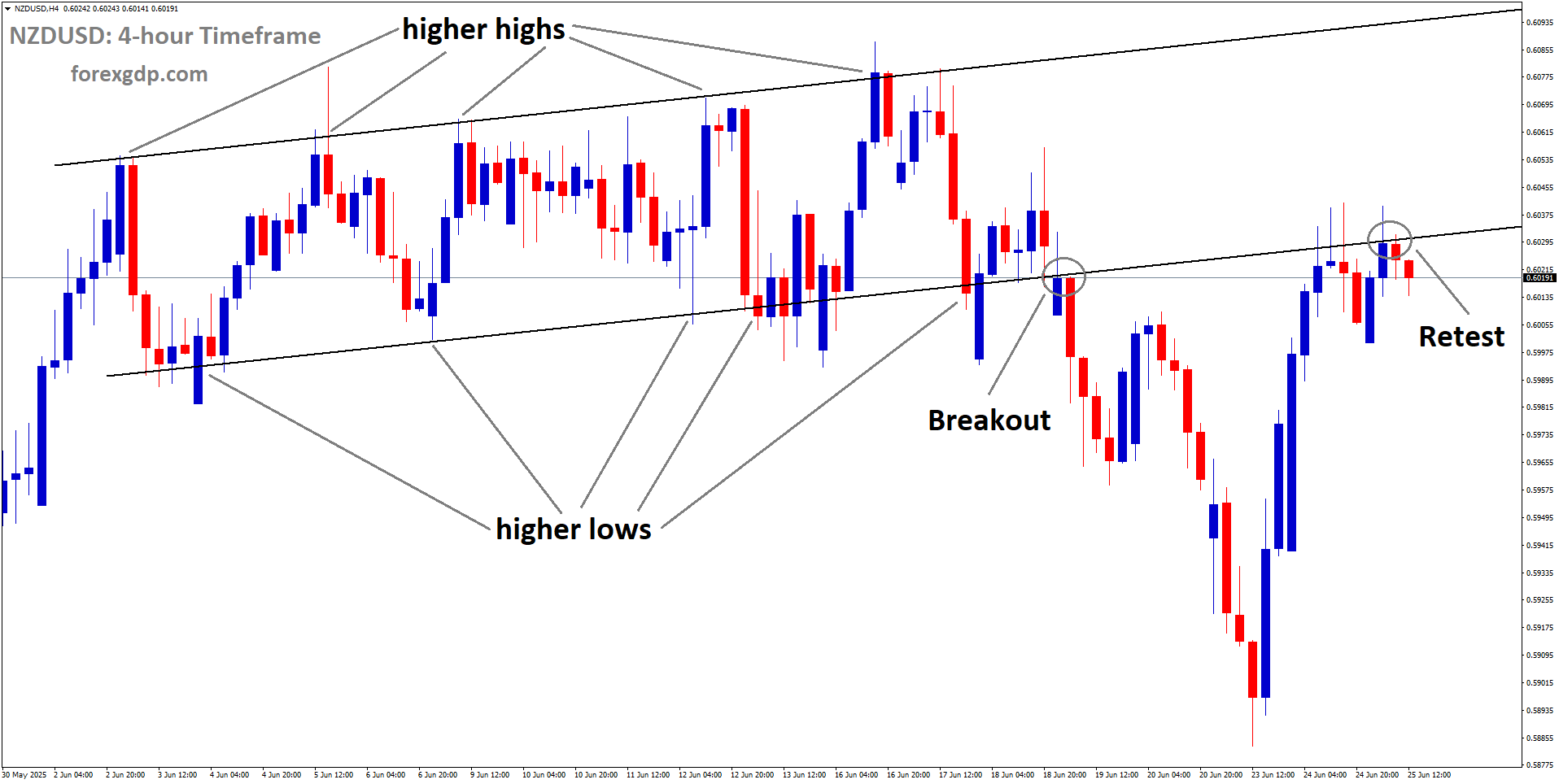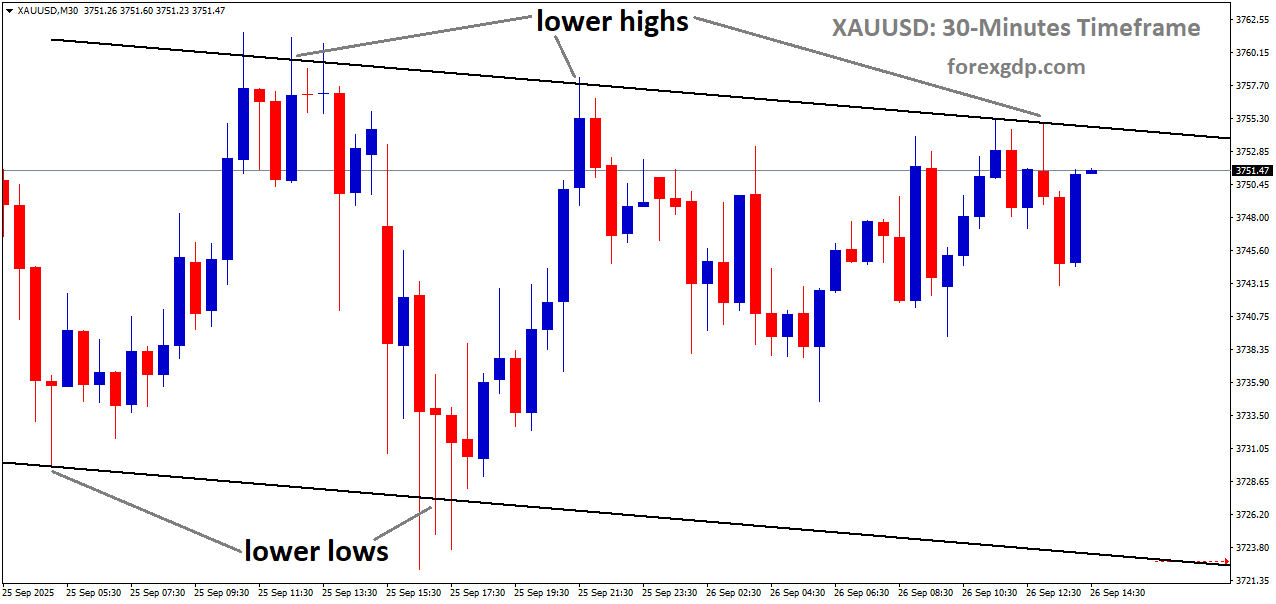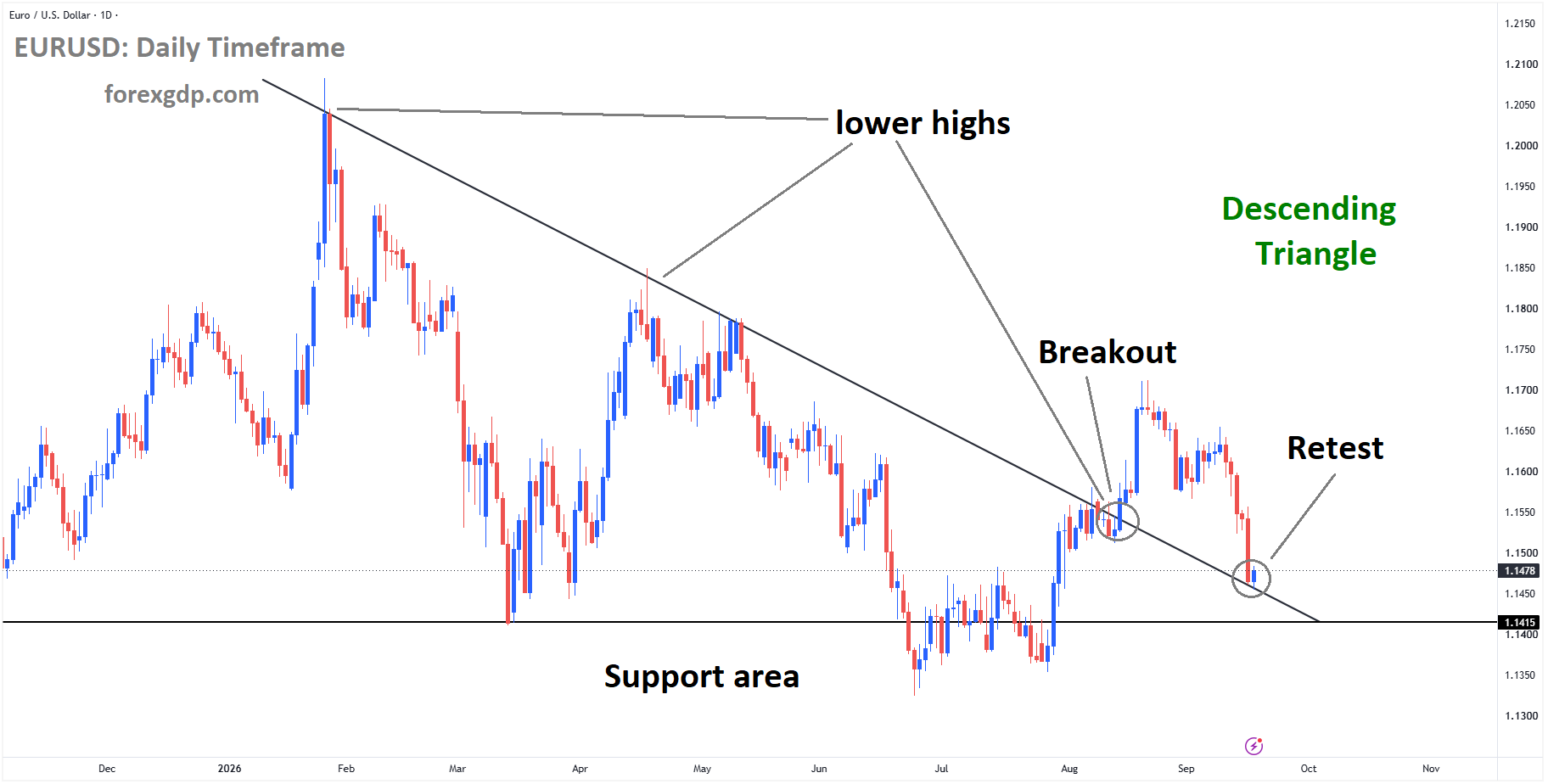
EURUSD reached the retest area of the broken descending triangle pattern
EURUSD Remains Vulnerable as Fed Fuels Dollar Strength
The Euro remains under pressure against the US Dollar as investors respond to a firm monetary policy message from the Federal Reserve. The currency pair has suffered a difficult week, with confidence in the Dollar improving after the US central bank raised interest rates and warned that inflation remains a serious concern.
Meanwhile, fresh inflation data from the Eurozone offered little encouragement to the Euro. Although the latest annual inflation figure was revised slightly lower, it remained above the European Central Bank’s target. This leaves European policymakers facing a difficult decision: continue tightening monetary policy or protect an economy already struggling with weak growth and high energy costs.
The contrast between the two regions has become increasingly important. The US economy appears relatively strong, while the Eurozone continues to face several internal challenges. As a result, the Dollar has attracted stronger demand, leaving the Euro vulnerable to further weakness.
Federal Reserve Delivers a Hawkish Message
The Federal Reserve raised interest rates by a quarter-point at its latest policy meeting. While the decision itself was widely expected, the language used by the central bank surprised many investors.
Federal Reserve Chair Kevin Warsh said inflation remained elevated and suggested that the US economy was becoming stronger. These comments were important because they showed that the central bank was not ready to declare victory over inflation. Instead, policymakers appeared willing to raise interest rates again if consumer prices failed to cool.
Markets quickly adjusted their expectations. Investors began to consider the possibility of additional rate increases in the coming months. This supported the US Dollar because higher interest rates can make Dollar-based investments more attractive to international investors.
The message also helped calm concerns about the Federal Reserve’s independence. Warsh’s firm position showed that the central bank was prepared to make difficult decisions based on economic conditions, even if those decisions created discomfort for financial markets.
Why Higher US Rates Support the Dollar

Interest rates play a major role in the currency market. When a central bank raises rates, investors may receive better returns from assets linked to that currency. This can increase demand and strengthen the currency against its major rivals.
In this case, the Federal Reserve’s rate increase was only part of the story. The larger impact came from the possibility of more hikes later in the year. Traders had hoped that the central bank might take a softer approach, but Warsh’s comments weakened those expectations.
The US economy also appears to have enough strength to handle tighter monetary conditions. If growth remains stable while inflation stays high, the Federal Reserve has a clear reason to maintain a firm policy stance.
For the Euro, this situation is uncomfortable. Even if the European Central Bank continues to fight inflation, the Euro may struggle when US interest-rate expectations appear stronger and more convincing.
Eurozone Inflation Is Revised Slightly Lower
Eurostat’s final inflation report showed that consumer price pressures increased during August compared with July. However, the annual Harmonised Index of Consumer Prices was revised slightly lower than the earlier estimate.
At first glance, a lower revision might appear positive because it suggests inflation is not rising as quickly as previously believed. However, the broader picture remains troubling. Inflation is still above the European Central Bank’s target, meaning the cost-of-living problem has not disappeared.
Core inflation, which excludes some of the most volatile items, also remained firm. This indicates that price pressure is not limited to energy or food. It has spread into other areas of the economy, making it harder for policymakers to control.
The European Central Bank must now balance two major risks. If it keeps interest rates high or raises them further, economic growth may weaken. But if it relaxes policy too early, inflation could remain stubbornly high for longer.
The ECB Faces a Difficult Policy Choice
The European Central Bank does not have an easy path ahead. High inflation requires a strong response, but the Eurozone economy is not showing the same resilience as the United States.
Businesses are dealing with expensive borrowing, uncertain consumer demand and rising operating costs. Households are also under pressure as higher prices reduce their spending power. If monetary policy becomes too restrictive, these problems could become worse.
However, the ECB cannot simply ignore inflation. Allowing price pressures to remain above target could damage confidence and make inflation harder to control later. Once consumers and businesses begin expecting prices to continue rising, those expectations can influence wages, contracts and spending decisions.
This leaves the ECB walking a narrow road. It needs to control inflation without pushing the economy into deeper weakness. Until investors see a clearer path forward, the Euro may find it difficult to build lasting confidence.
Higher Energy Costs Create More Trouble for Europe
Energy prices remain another important concern for the Eurozone. Europe depends heavily on imported energy, so higher oil and gas costs can affect the region more sharply than some other major economies.
Expensive energy increases transportation, manufacturing and household costs. Businesses may pass those expenses on to customers, keeping inflation elevated. At the same time, higher costs can reduce company profits and discourage investment.
This creates an unpleasant combination of weak growth and persistent inflation. Central banks find this environment especially difficult because the usual policy choices can solve one problem while making another worse.
A meaningful decline in energy costs could provide some relief. It would reduce pressure on businesses and households while helping inflation move closer to the ECB’s target. Without that relief, the Eurozone’s economic outlook may remain uncertain.
Different Economic Conditions Favour the Dollar
The current weakness in EURUSD reflects the growing difference between the American and European economic outlooks. The Federal Reserve is presenting a clear and forceful message, while the ECB must deal with stubborn inflation, weak growth and energy-related risks.
The Dollar benefits when investors believe US interest rates will remain higher for longer. It can also attract demand during periods of global uncertainty because many investors view it as a safer and more liquid currency.
The Euro does not currently have the same level of support. Lower inflation would help, but it may also reduce the need for stronger ECB action. Higher inflation could encourage tighter policy, yet it would also place more pressure on the region’s economy. Either outcome creates challenges.
A change in energy prices, stronger European growth or a softer Federal Reserve stance could improve the Euro’s prospects. Until one of these factors changes clearly, sentiment may continue to favour the US Dollar.
Final Summary
EURUSD remains under pressure as the Federal Reserve’s hawkish message strengthens confidence in the US Dollar. The latest interest-rate increase was expected, but the central bank’s willingness to consider further action surprised the market.
Eurozone inflation was revised slightly lower, yet it remains above the ECB’s target. Core inflation also continues to create concern, keeping pressure on European policymakers to maintain tight monetary conditions.
The Euro faces additional difficulties from weak regional growth and higher energy costs. Unless the Federal Reserve becomes less aggressive or the Eurozone outlook improves, the difference between the two economies may continue to favour the Dollar.
GBPUSD Remains Under Pressure With Fed Policy Supporting the Dollar
GBPUSD remains under pressure as traders prepare for the Bank of England’s latest interest rate decision. The currency pair has struggled to attract strong buying interest because investors are uncertain about the central bank’s next steps. Many market participants prefer to remain cautious until policymakers provide clearer guidance about the future direction of monetary policy.
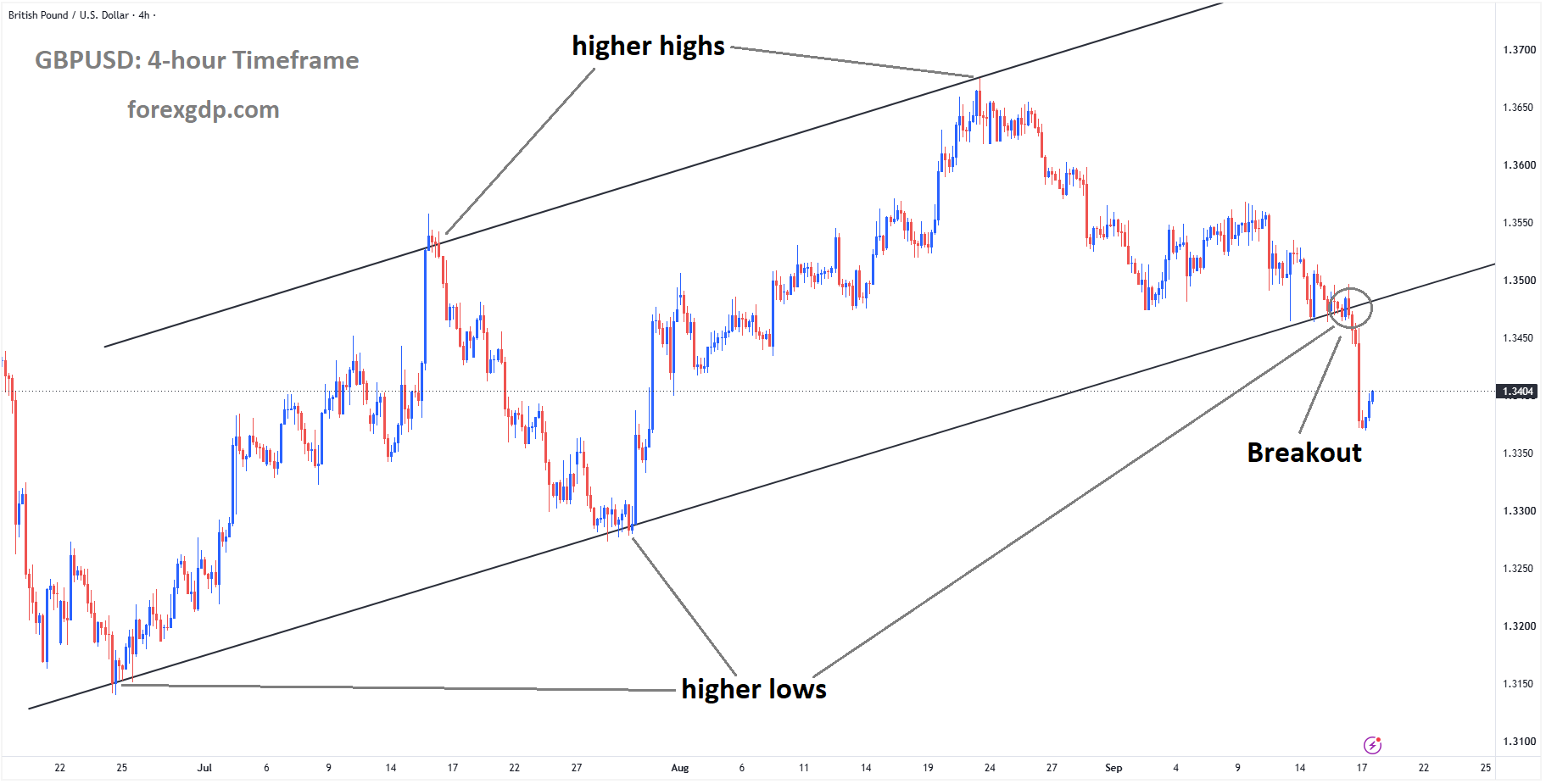
GBPUSD has broken the ascending channel to the downside
At the same time, the US Dollar continues to benefit from the Federal Reserve’s firm position on interest rates. The Fed’s latest decision and its message about possible further tightening have supported the American currency. Ongoing geopolitical tensions are also increasing demand for traditional safe-haven assets, giving the Dollar another advantage over the British Pound.
The upcoming Bank of England announcement could therefore become an important moment for GBPUSD. Although policymakers are widely expected to leave rates unchanged, their comments about inflation, energy costs, and future policy decisions may create significant movement in the Pound.
Bank of England Decision Takes Centre Stage
The Bank of England is expected to keep interest rates steady at its September meeting. However, the decision itself may not be the main focus. Traders will pay close attention to the central bank’s policy statement, voting pattern, and comments about the months ahead.
The British economy is facing a difficult mix of problems. Inflation remains a concern, while higher borrowing costs are already placing pressure on households and businesses. Policymakers must decide whether inflation risks are serious enough to justify another increase or whether maintaining the current policy is the safer choice.
Rising energy costs have made this decision more complicated. The prolonged conflict in the Middle East has created uncertainty in global energy markets. If energy prices remain elevated, businesses may face higher operating expenses, while consumers could see additional pressure on household budgets. These conditions may prevent inflation from slowing as quickly as the Bank of England would like.
For this reason, the central bank may choose to keep rates unchanged while warning that further action remains possible. Such a message would allow policymakers to monitor the economy without fully closing the door on another increase.
November Rate Increase Remains a Possibility
Investors increasingly believe that the Bank of England could raise rates at its November meeting. Expectations of a future increase have grown because inflation risks may continue if energy costs stay high.
A decision to wait would not necessarily mean that the central bank has become less concerned about inflation. Instead, it could reflect a cautious approach. Policymakers may want more information about economic growth, wages, consumer spending, and energy prices before taking another step.
Some analysts expect the Bank of England to deliver a firm hold. This means keeping rates unchanged while using strong language to signal that another increase may be necessary later. Such a message could provide temporary support to the British Pound, especially if the central bank shows clear concern about inflation.
The vote among policymakers will also matter. A divided decision would show that some members already support tighter policy. If more officials vote for an immediate increase than markets expect, traders may view the outcome as supportive for the Pound. However, a comfortable majority in favour of holding rates could reduce expectations of quick action.
Bank of England Faces a Difficult Balancing Act
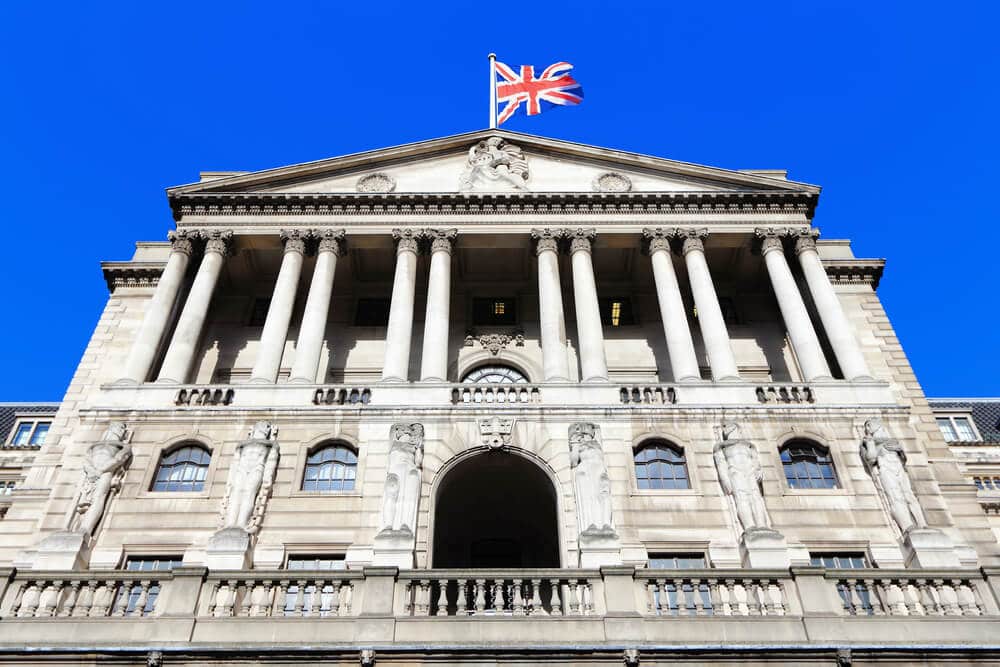
The Bank of England must control inflation without causing unnecessary damage to the economy. Higher interest rates can reduce demand and slow price growth, but they also increase mortgage payments, borrowing expenses, and financial pressure on businesses.
If the central bank acts too aggressively, economic activity could weaken further. Households may cut their spending, companies may delay investment, and the employment market could lose momentum. On the other hand, waiting too long could allow inflation to remain above the Bank’s preferred level.
This difficult balance explains why policymakers may continue with a wait-and-see approach. They can keep policy restrictive while studying fresh economic data. At the same time, they can warn markets that further tightening remains possible if inflationary pressure increases.
For GBPUSD, the strength of this warning may be more important than the rate decision itself. A confident message about future action could help the Pound, while a cautious or uncertain statement may leave it vulnerable.
Federal Reserve’s Firm Message Supports the US Dollar
The US Dollar continues to receive support from the Federal Reserve’s latest policy decision. The American central bank raised interest rates as widely expected and indicated that another increase could follow before the end of the year.
This message showed that the Fed remains focused on controlling inflation. It also reduced hopes that US policymakers would quickly move towards easier financial conditions. As a result, demand for the Dollar has remained strong.
The Fed’s position creates an additional challenge for GBPUSD. Even if the Bank of England delivers a relatively firm message, the Pound must compete with a Dollar backed by expectations of continued restrictive US policy.
The difference between the two central banks will remain important. If the Fed appears more determined to continue raising rates while the Bank of England prefers to wait, the Dollar may retain the advantage. However, a stronger-than-expected warning from British policymakers could reduce some of that pressure.
Geopolitical Uncertainty Increases Safe-Haven Demand
Tensions between the United States and Iran have added another layer of uncertainty to global markets. Investors often become more cautious when international conflicts threaten energy supplies, trade, or economic stability.
During uncertain periods, the US Dollar frequently attracts safe-haven demand. Investors may prefer the liquidity and relative security of Dollar-based assets while reducing exposure to currencies viewed as more vulnerable to economic disruption.
The United Kingdom could also be affected by prolonged geopolitical instability. Higher energy costs may increase inflation while weakening consumer confidence and business activity. This creates an uncomfortable situation for the Bank of England because the same problem can push prices higher while slowing economic growth.
As long as geopolitical concerns remain elevated, the Dollar may continue to benefit. This could limit the Pound’s ability to recover, even if the Bank of England maintains a firm policy message.
What Traders May Watch After the Announcement
After the Bank of England decision, traders are likely to examine several details. The policy vote will reveal how united or divided officials are, while the accompanying statement may show how seriously they view the latest inflation risks.
Comments about energy prices will be especially important. If policymakers believe higher costs could create lasting inflation, expectations of a November increase may grow. Clear concern about wage growth or stubborn domestic inflation could also strengthen the case for tighter policy.
Traders will also watch whether the Bank presents its decision as a temporary pause or the beginning of a longer holding period. A temporary pause accompanied by a strong warning may support the Pound. A softer message suggesting that current policy is sufficient could have the opposite effect.
However, any reaction may depend equally on developments in the United States and the Middle East. The Pound’s direction will not be determined by the Bank of England alone.
Final Summary
GBPUSD remains under pressure as traders wait for the Bank of England’s rate decision and future policy guidance. The central bank is expected to keep rates unchanged, but rising energy costs and persistent inflation risks may encourage policymakers to signal that another increase remains possible in November.
Meanwhile, the Federal Reserve’s firm stance continues to support the US Dollar. Expectations of further US tightening, combined with safe-haven demand caused by geopolitical tensions, create a difficult environment for the British Pound.
The Bank of England’s voting pattern, inflation message, and guidance about future decisions will shape the market’s response. Until greater clarity emerges, traders are likely to remain cautious, while the Dollar’s policy and safe-haven advantages may continue to limit any meaningful GBPUSD recovery.
USDJPY Falls as Yen Shines and Dollar Struggles
The Japanese Yen gained strength against the US Dollar as traders prepared for an important interest rate decision from the Bank of Japan. Expectations are growing that the Japanese central bank will raise its key rate by 25 basis points, making the Yen more attractive to investors.
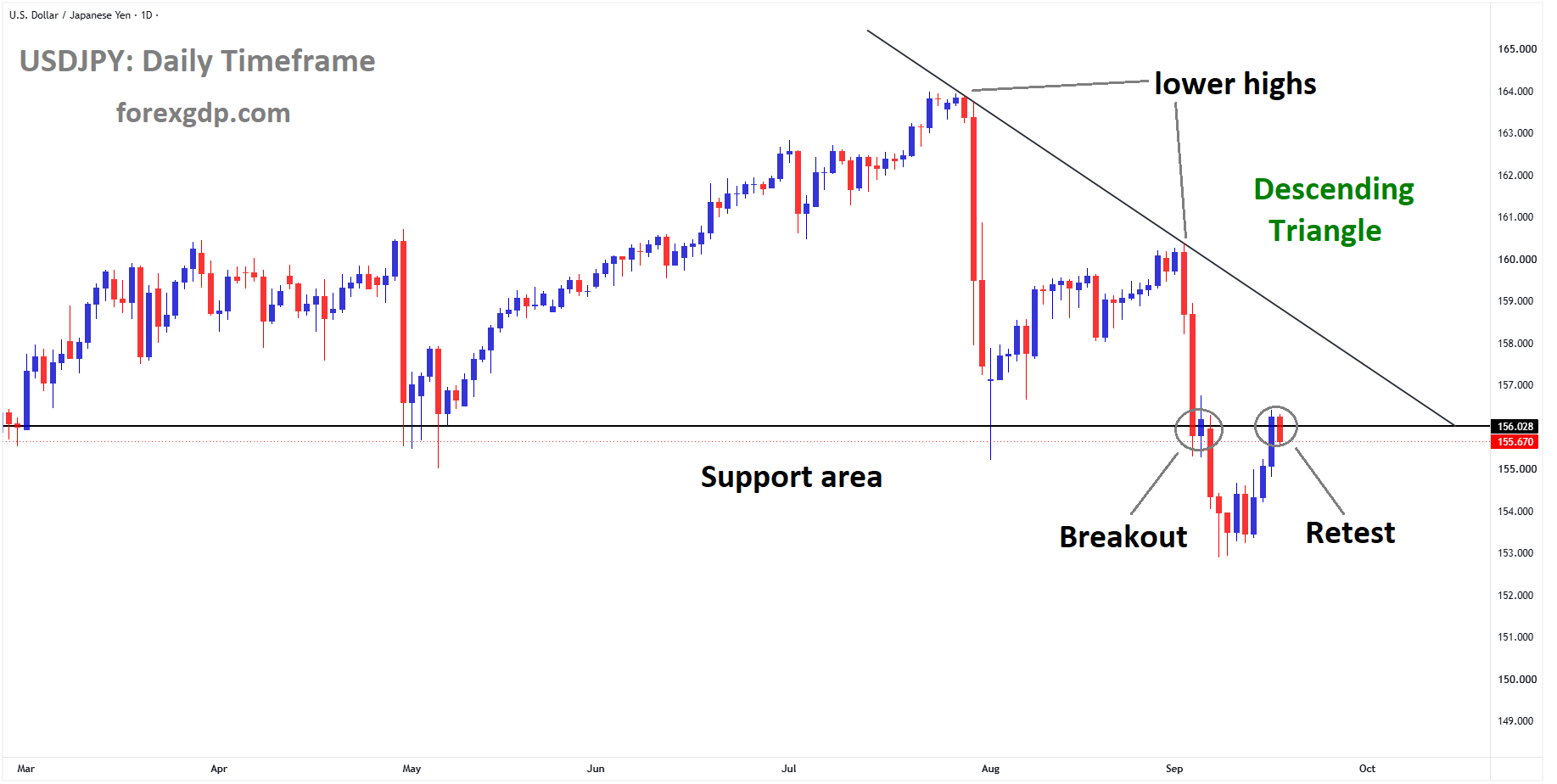
USDJPY reached the retest area of the broken descending triangle pattern
At the same time, the US Dollar remained under pressure even after the Federal Reserve increased interest rates. The unusual reaction shows that traders are looking beyond the latest policy move and questioning whether the Fed will need to continue raising rates over the coming months.
The different policy outlooks in Japan and the United States have placed USDJPY under selling pressure. While Japan appears ready to tighten its monetary policy, uncertainty surrounding future US rate increases has limited demand for the Dollar.
Markets Prepare for a Bank of Japan Rate Hike
The Bank of Japan is widely expected to raise its interest rate by 25 basis points at its upcoming policy meeting. If the central bank follows through, the decision would represent another important step away from Japan’s long period of extremely loose monetary policy.
For many years, the BoJ maintained very low borrowing costs to encourage spending, investment, and inflation. However, the economic environment has gradually changed. Inflation has become more noticeable, wages have improved, and policymakers are now trying to ensure that price growth remains stable instead of temporary.
A rate increase could support the Japanese Yen because higher interest rates can make Yen-based assets more attractive. It may also reduce the gap between borrowing costs in Japan and other major economies. That gap has been one of the main reasons investors previously preferred currencies offering higher returns.
Still, the Bank of Japan is likely to move carefully. Officials must avoid tightening policy too quickly because higher borrowing costs could hurt households, businesses, and government finances. The central bank therefore faces the difficult task of controlling inflation without damaging economic growth.
Japanese Officials Focus on Stability and Fiscal Discipline
Japanese government officials have offered cautious comments ahead of the central bank’s decision. Economy Minister Minoru Kiuchi said the government wants to maintain a strong economy while protecting fiscal sustainability. He avoided making direct comments about interest rates, respecting the independence of the Bank of Japan.
This balanced message reflects the challenges facing Japan. The government wants economic activity to remain healthy, but it must also manage a large public debt. Rising interest rates can increase the cost of servicing that debt, making responsible budget management even more important.
Finance Minister Satsuki Katayama explained that officials would carefully review budget requests and control debt issuance. The aim is to protect confidence in Japan’s financial management and reassure investors that the government remains committed to responsible spending.
Katayama also expressed confidence that the Bank of Japan would guide monetary policy appropriately. The broader objective is to achieve inflation that remains close to the 2% target in a stable and sustainable way.
Why Sustainable Inflation Matters
Japan does not simply want a short burst of inflation caused by expensive imports or temporary shortages. Policymakers want price growth to be supported by rising wages, stronger consumer demand, and healthy business activity.
Sustainable inflation can encourage companies to invest and give them more confidence to increase salaries. However, if prices rise much faster than wages, household purchasing power can suffer. This is why the central bank must examine whether inflation is becoming firmly established across the economy.
A cautious rate hike would signal that the BoJ sees enough progress to continue normalizing policy. However, officials are expected to remain flexible because Japan’s economic recovery still faces domestic and global risks.
US Dollar Weakens Despite Federal Reserve Rate Increase
The US Dollar failed to gain lasting strength after the Federal Reserve raised its benchmark rate by 25 basis points. The move was the Fed’s first increase in three years and was widely expected by financial markets.
Normally, higher interest rates can support a currency because they improve the potential return available from assets linked to that currency. However, markets often react to future expectations rather than the decision itself. Since the increase had already been anticipated, investors focused more closely on what the Fed might do next.
Federal Reserve officials left the door open for another rate increase before the end of the year. Even so, the possibility of further tightening did not provide strong support for the Dollar. Traders may be uncertain about whether the US economy can comfortably absorb additional increases in borrowing costs.
Higher rates can reduce inflation, but they can also slow business investment, weaken consumer spending, and increase financial pressure on borrowers. The Fed must therefore decide whether persistent inflation is a greater danger than the risk of weaker economic growth.
Fed Chair Kevin Warsh Keeps Further Tightening Possible

Federal Reserve Chair Kevin Warsh explained that inflation had remained too high for too long. He described the rate increase as a responsible response to ongoing price pressures while making it clear that further action remained possible.
His comments showed that the Fed is not prepared to declare victory over inflation. Policymakers want clearer evidence that price growth is moving toward a more acceptable level before changing direction.
Money markets responded by assigning a nearly even chance of another rate increase at the Fed’s October meeting. This level of uncertainty suggests that incoming economic data will play a major role in the next policy decision.
Employment figures, consumer spending, wage growth, and inflation reports could all influence the Fed’s next move. Strong economic activity and stubborn inflation may support another increase, while signs of a sharper slowdown could encourage officials to wait.
Federal Reserve Projections Point to a Cautious Rate Path
MUFG analysts warned investors against placing too much importance on the latest Federal Reserve projections. The central bank’s interest rate forecasts are based on current expectations and can change as economic conditions develop.
The projections suggest that one more rate increase may be possible, followed by a long period without cuts. They then indicate only gradual reductions in later years. This points to a cautious approach in which policymakers keep rates elevated until they feel confident that inflation is under control.
Such projections do not represent a firm promise. Unexpected changes in inflation, employment, growth, or financial conditions could quickly alter the outlook. The Federal Reserve may raise rates again, pause for longer, or begin cutting earlier than projected if the economy changes significantly.
MUFG also noted that lowering core inflation may require more than one additional rate increase. Core inflation removes some highly volatile components and is often used to understand the deeper direction of price pressures. If it remains stubborn, the Fed may need to maintain restrictive policy for longer.
Policy Differences Keep USDJPY Under Pressure
The Japanese Yen is benefiting from expectations that the Bank of Japan will continue moving toward tighter policy. In contrast, the US Dollar is struggling because the Federal Reserve’s latest rate increase was already expected and uncertainty remains over future decisions.
The outlook for USDJPY will depend heavily on the tone of both central banks. A confident message from the BoJ could strengthen expectations for continued policy normalization. A cautious message, however, may limit the Yen’s advance if officials express concern about economic weakness.
In the United States, the Dollar’s direction will depend on whether inflation remains persistent enough to justify another rate increase. Traders will closely examine future economic reports and comments from Federal Reserve officials for clearer guidance.
Final Summary
The Japanese Yen strengthened as investors prepared for a possible 25-basis-point rate increase from the Bank of Japan. Japanese officials emphasized economic stability, responsible budget management, and the importance of achieving sustainable inflation near the central bank’s target.
Meanwhile, the US Dollar remained weak despite the Federal Reserve’s latest rate increase. Although another increase remains possible, markets are uncertain about the future path of US policy. With Japan gradually tightening and the Fed moving cautiously, changing interest-rate expectations continue to place downward pressure on USDJPY.
EURJPY Retreats as BoJ Rate Hike Expectations Lift Yen
EURJPY moved lower on Thursday, ending three consecutive days of gains as the Japanese Yen attracted fresh demand. Investors became more cautious ahead of the Bank of Japan’s upcoming monetary policy decision, where officials are widely expected to raise interest rates.
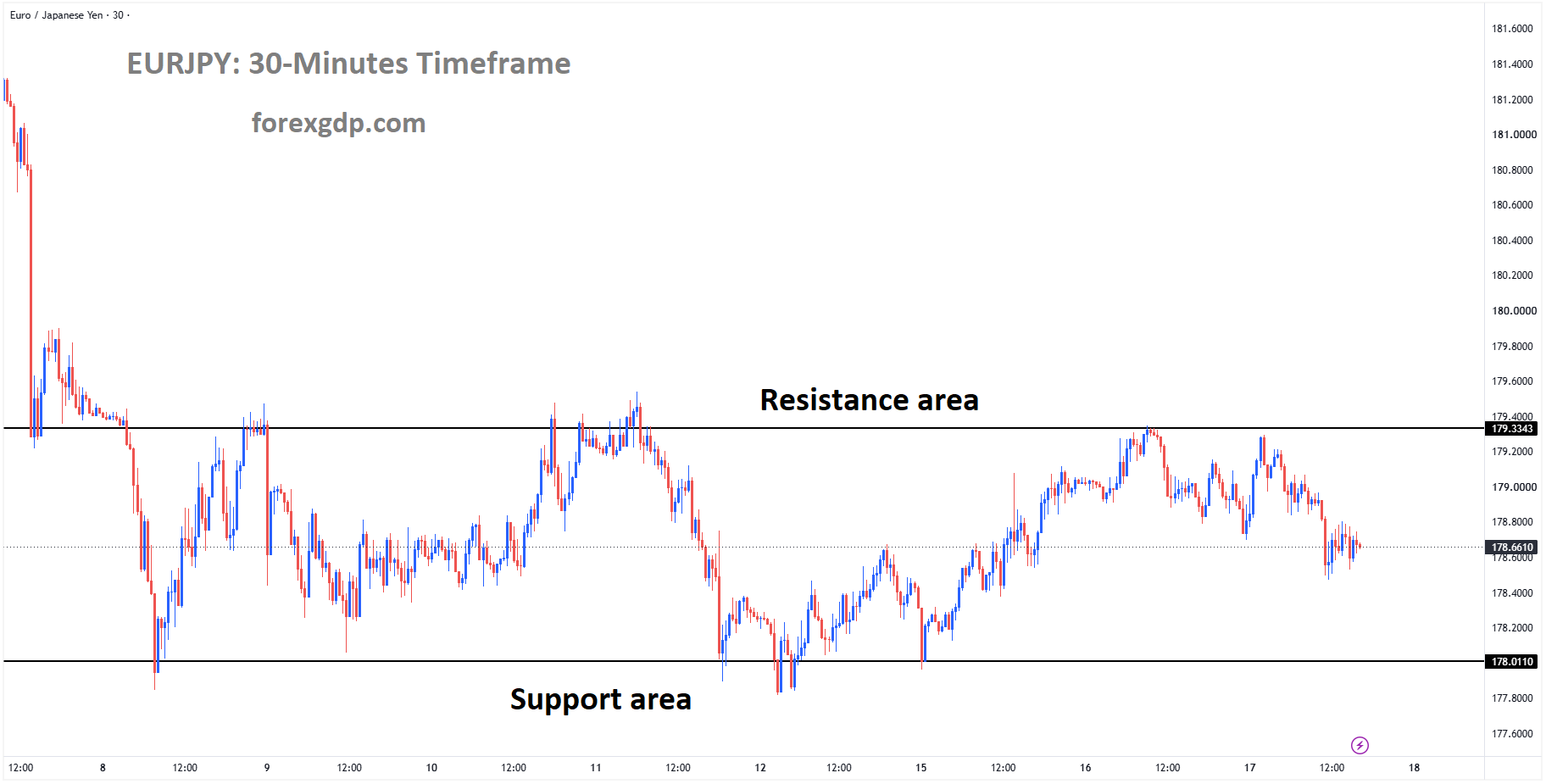
EURJPY is falling from the resistance area of the box pattern
The possibility of tighter monetary policy in Japan has become the main influence on the currency pair. At the same time, the latest Eurozone inflation report offered limited encouragement to the Euro. Headline inflation eased slightly, while underlying price growth remained in line with market expectations.
These developments have placed the difference between Japanese and European monetary policy at the centre of attention. Investors are now watching whether the Bank of Japan will continue moving away from its long period of extremely low interest rates.
Bank of Japan Rate Decision Takes Centre Stage
Financial markets widely expect the Bank of Japan to increase its policy rate by 25 basis points. If delivered, the decision would show that the central bank is becoming more confident about Japan’s inflation outlook and economic recovery.
For many years, Japan maintained exceptionally loose monetary policy to support growth and prevent falling prices. That approach kept Japanese interest rates far below those in many other major economies. As a result, the Yen often struggled against currencies offering higher returns.
However, conditions have gradually changed. Inflation has remained above the Bank of Japan’s target for an extended period, while wages have also shown signs of improvement. These factors have encouraged the central bank to take small but important steps toward more normal monetary conditions.
An interest rate increase would strengthen expectations that Japan’s monetary policy is entering a new phase. Even if the central bank continues to act carefully, the direction of policy is becoming increasingly important for the Yen.
Why Higher Japanese Interest Rates Matter
Higher interest rates can make a currency more attractive because investors may receive better returns on assets held in that currency. This does not mean the Yen will automatically strengthen after every rate increase, but it can improve its appeal when compared with currencies facing a less supportive policy outlook.
The Bank of Japan’s message will be just as important as the decision itself. Investors will want to know whether policymakers believe further rate increases could follow or whether they plan to pause and study the economy’s response.
A cautious message could limit the Yen’s strength, especially if officials express concern about weak consumer spending or slower economic growth. In contrast, confidence about wage increases and stable inflation could encourage expectations of additional tightening.
This uncertainty explains why traders are paying close attention to every statement from Japanese officials. The policy decision may provide direction, but the central bank’s comments could shape expectations for the months ahead.
Japanese Officials Maintain a Careful Approach
Japan’s government officials have avoided making direct predictions about the central bank’s next move. Economy Minister Minoru Kiuchi said the government is focused on balancing economic strength with fiscal sustainability. However, he declined to comment specifically on the interest rate outlook.
His comments reflect the difficult position facing Japanese policymakers. Higher borrowing costs may help control inflation and support the Yen, but they can also create pressure for households, businesses and the government.
Japan carries a large amount of public debt, which means rising interest rates can increase the cost of government borrowing. Policymakers must therefore manage the shift away from ultra-low rates without creating unnecessary stress in financial markets.
Finance Minister Satsuki Katayama also highlighted the importance of maintaining market confidence. She said authorities would carefully review budget requests and manage government debt issuance responsibly.
Katayama added that she expects the Bank of Japan to conduct monetary policy appropriately and work toward achieving its inflation target in a stable manner. Her remarks did not offer a clear signal about the immediate decision, but they showed that the government supports a careful and balanced policy approach.
Eurozone Inflation Provides Limited Support to the Euro
While attention remains firmly on Japan, the latest Eurozone inflation figures have also influenced the outlook for EURJPY. The data showed that consumer prices continued to increase on a monthly basis, matching both forecasts and the previous reading.
Annual headline inflation, however, eased slightly and came in below market expectations. This suggests that overall price pressures may be cooling, even though inflation remains an important concern for European households and policymakers.
Lower-than-expected annual inflation can reduce the pressure on the European Central Bank to maintain tighter monetary conditions. If inflation continues to slow, policymakers may have greater freedom to support economic activity.
This possibility does not necessarily mean the European Central Bank will quickly change its approach. Officials must examine several areas of the economy, including wage growth, services inflation, consumer demand and business activity. Still, softer headline inflation gives the Euro fewer reasons to attract strong buying interest.
Core Inflation Remains Stable
Core inflation, which removes some of the more volatile components, remained steady on a monthly basis. The annual core reading also matched expectations, indicating that underlying price pressures are not changing dramatically.
Stable core inflation can be viewed in different ways. On one hand, it suggests that price growth is not accelerating sharply. On the other hand, it shows that inflation has not completely disappeared from the Eurozone economy.
For the European Central Bank, this creates a reason to remain patient. Cutting interest rates too quickly could allow inflation to return, while keeping policy tight for too long could weaken economic growth.
The latest figures therefore provide no powerful new reason for investors to support the Euro. Instead, they reinforce the view that European policymakers may continue taking a measured approach while waiting for clearer evidence about the direction of inflation.
Policy Differences Shape the EURJPY Outlook
The central issue for EURJPY is the changing relationship between monetary policy in Japan and Europe. The Bank of Japan appears to be moving slowly toward higher interest rates, while the European Central Bank is dealing with easing headline inflation and an uncertain economic outlook.
This creates a notable shift in expectations. Japan is gradually leaving behind its highly supportive monetary policy, while Europe may have less reason to keep borrowing costs elevated for an extended period.
However, the policy gap will not change overnight. Japanese officials are likely to remain cautious because rapid tightening could damage economic activity and increase financial pressure. European policymakers are also unlikely to make major decisions based on a single inflation report.
Investors will therefore continue comparing the language used by both central banks. Any suggestion of further Japanese rate increases could benefit the Yen, while stronger European inflation or economic data could offer support to the Euro.
Final Summary
EURJPY lost momentum after three days of gains as expectations of a Bank of Japan interest rate increase strengthened the Japanese Yen. Markets are focused on a possible 25-basis-point hike and, more importantly, the central bank’s guidance about future policy.
Japanese government officials continue to support a careful approach that balances inflation control, economic growth and fiscal responsibility. Meanwhile, softer annual inflation in the Eurozone has provided little fresh support to the Euro, although core inflation remains stable.
The near-term direction of EURJPY will largely depend on the changing policy relationship between Japan and Europe. A more confident Bank of Japan could keep the Yen supported, while the Euro may need stronger economic evidence to regain broader demand.
GBPJPY Slides as BoE Rate Hold Weighs on Pound
GBPJPY came under selling pressure as the British Pound weakened following the Bank of England’s latest monetary policy announcement. The central bank kept its main interest rate unchanged, which was widely expected by financial markets. Although policymakers warned about rising inflation risks, the decision failed to provide meaningful support for Sterling.
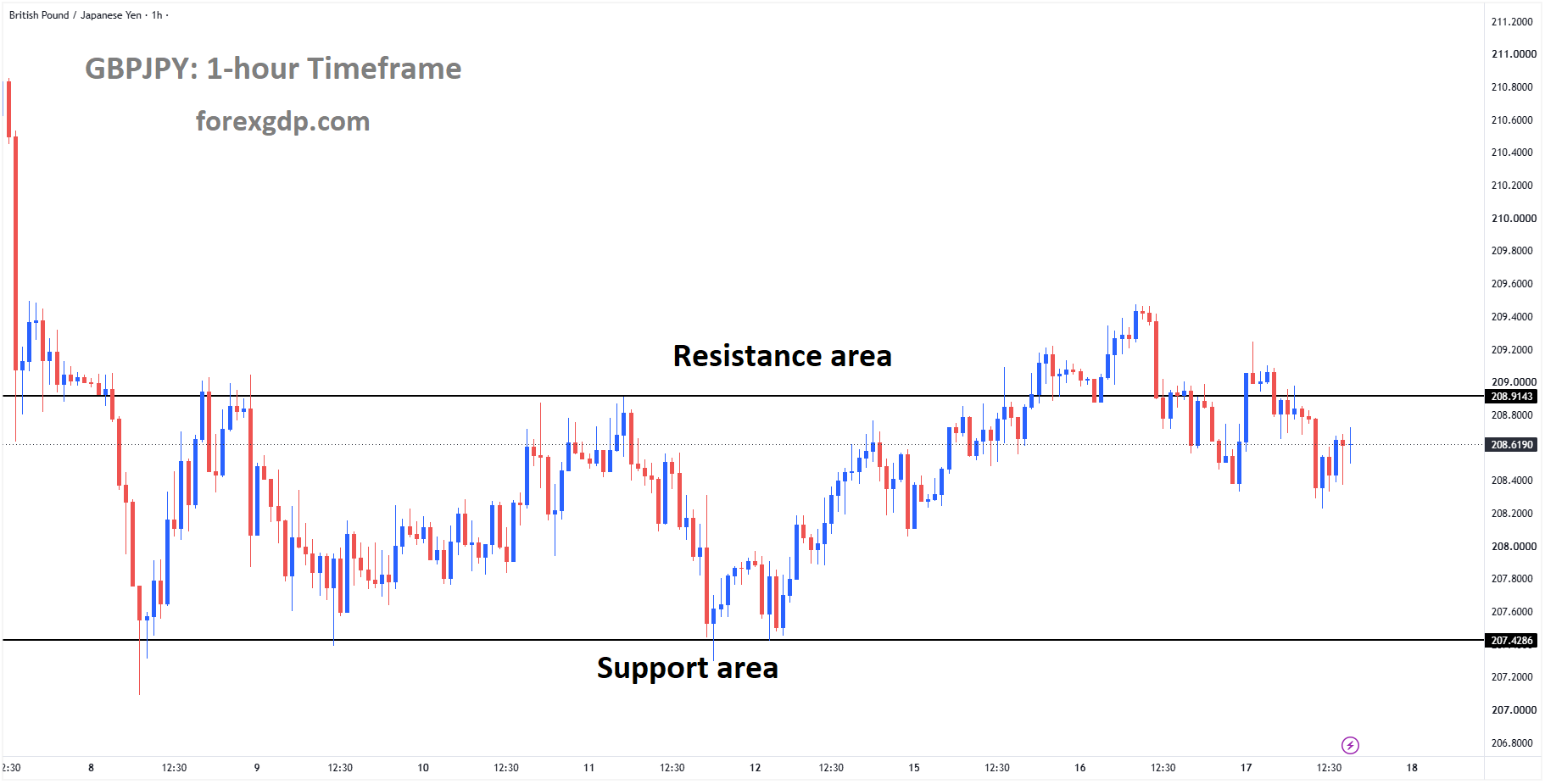
GBPJPY is moving in a box pattern, and the market has fallen from the resistance area of the pattern
At the same time, the Japanese Yen strengthened against several major currencies. Investors turned their attention toward the Bank of Japan’s upcoming policy meeting, where officials are expected to take another step toward tighter monetary policy. The combination of a softer Pound and a stronger Yen created a difficult environment for GBPJPY.
Bank of England Keeps Interest Rates Unchanged
The Bank of England decided to leave its policy rate at 3.75%. The decision was supported by six members of the Monetary Policy Committee, while three members preferred a quarter-point increase.
Chief Economist Huw Pill, along with external members Megan Greene and Catherine Mann, voted for higher borrowing costs. Their votes showed that some policymakers remain deeply concerned about inflation and believe the central bank may need to act more firmly.
However, the majority chose to keep rates unchanged while watching how recent global developments affect the British economy. This decision matched expectations, so it did not create a strong positive reaction in the Pound.
Currency traders often look for unexpected changes or clear shifts in central bank policy. In this case, the voting pattern remained unchanged from the previous meeting. As a result, the announcement offered little new information that could encourage investors to buy Sterling.
Energy Costs Increase UK Inflation Concerns
The Bank of England warned that inflation risks are leaning toward the upside. Higher energy costs have become an important concern because of the continuing conflict in the Middle East.
When energy becomes more expensive, the effect can spread throughout the economy. Businesses face higher transport, electricity, and production expenses. Some companies may pass these costs to customers by increasing the prices of goods and services.
Households can also feel the pressure through larger energy bills and higher everyday expenses. This leaves consumers with less money to spend elsewhere, which can weaken economic activity.
The central bank said its policy remains focused on returning inflation sustainably to its 2% target. However, managing an energy shock is not easy. Raising interest rates cannot directly produce more energy or reduce global fuel costs. It mainly works by slowing demand within the domestic economy.
This creates a difficult choice for policymakers. Keeping rates unchanged for too long could allow inflation to remain elevated. Raising them too quickly could place even more pressure on households, businesses, and the wider economy.
Domestic Price Pressures Remain Limited
Despite concerns about energy costs, the Bank of England said there was little evidence that the latest shock had created major second-round effects in domestic prices and wages.
Second-round effects can occur when workers demand higher pay to cover rising living costs and businesses raise their prices to manage larger wage bills. This cycle can make inflation more persistent and much harder for a central bank to control.
For now, policymakers do not appear to see strong evidence of such a cycle. This may explain why most committee members preferred to wait instead of immediately increasing rates.
The central bank also highlighted signs of weakness in the UK labour market. A softer employment environment could reduce wage pressure and make it more difficult to justify additional rate increases.
If businesses slow hiring or reduce staff, workers may have less power to negotiate higher salaries. That could help control inflation, but it may also hurt consumer confidence and spending. These mixed conditions make the outlook for British monetary policy increasingly complicated.
Tighter Financial Conditions Could Slow Inflation
Financial conditions have tightened since the conflict began and became even more restrictive later. This means households and companies are facing higher borrowing costs and less comfortable access to credit.
Expensive loans can discourage businesses from investing and prevent households from making large purchases. Mortgage borrowers may also become more cautious as their repayment costs increase.
From the Bank of England’s point of view, weaker borrowing and spending could help limit inflation. When demand slows, businesses may find it harder to keep raising prices.
However, policymakers disagreed about whether these tighter conditions would remain in place without an official rate increase. Some members believe current financial pressure may be enough to control inflation, while others think the central bank must take direct action.
This disagreement explains the divided vote and shows that future decisions could become even more difficult.
Andrew Bailey Leaves the Door Open to Higher Rates
Bank of England Governor Andrew Bailey warned that additional tightening may become necessary if the Middle East conflict continues and creates broader inflation pressure.
His message suggested that the central bank is not ready to declare victory over inflation. If higher energy expenses begin to influence wages and domestic prices, policymakers may consider raising rates at a future meeting.
Normally, such a warning could support the Pound because higher interest rates can make a currency more attractive to investors. However, Sterling remained weak because Bailey’s comments did not represent an immediate policy change.
Traders had already expected the Bank of England to keep rates unchanged. The familiar voting split and uncertain UK economic outlook gave investors few reasons to become more confident about the Pound.
Japanese Yen Strengthens Ahead of Bank of Japan Meeting

Pressure on GBPJPY also came from the strong performance of the Japanese Yen. Investors are preparing for the Bank of Japan’s policy announcement, with expectations focused on another increase in borrowing costs.
The main question is not only whether the Bank of Japan will tighten policy, but also what officials say about future decisions. Markets will closely follow any guidance about inflation, wages, economic growth, and the possible speed of further rate increases.
A more confident or hawkish message could strengthen expectations that Japan is moving away from its long period of very loose monetary policy. This could increase demand for the Yen and place additional pressure on currencies paired against it.
However, cautious guidance could limit the Yen’s strength. If the Bank of Japan expresses concern about economic growth or avoids committing to further tightening, investors may reconsider their expectations.
Why the British Pound Struggled to Recover
The Pound faced two major challenges. First, the Bank of England’s decision contained few surprises. Second, investors remained concerned about weakness in the British economy.
Although inflation risks have increased, the central bank must also consider the pressure already facing households, businesses, and workers. Higher rates may control inflation, but they could also reduce economic growth.
This uncertainty makes it difficult for Sterling to build lasting confidence. Investors want clear evidence that the UK economy can handle tighter policy without slipping into deeper weakness.
Meanwhile, expectations surrounding the Bank of Japan gave the Yen a stronger advantage. GBPJPY therefore reflected a clear difference in market mood toward the two currencies.
Final Summary
GBPJPY remained under pressure as the British Pound weakened after the Bank of England kept interest rates unchanged. The decision was widely expected, and the unchanged voting split offered little encouragement to Sterling buyers.
The Bank of England warned that higher energy costs could increase inflation, but it also noted limited evidence of strong domestic price and wage effects. Weakness in the UK labour market and tighter financial conditions added further uncertainty to the policy outlook.
At the same time, the Japanese Yen benefited from expectations of tighter Bank of Japan policy. Investors are now focused on whether Japanese officials will signal a quicker pace of future rate increases. Until the policy outlook becomes clearer, GBPJPY may remain strongly influenced by the contrast between cautious UK policy and rising expectations in Japan.
Don’t trade all the time, trade forex only at the confirmed trade setups
Get more confirmed trade signals at premium or supreme – Click here to get more signals, 2200%, 800% growth in Real Live USD trading account of our users – click here to see , or If you want to get FREE Trial signals, You can Join FREE Signals Now!