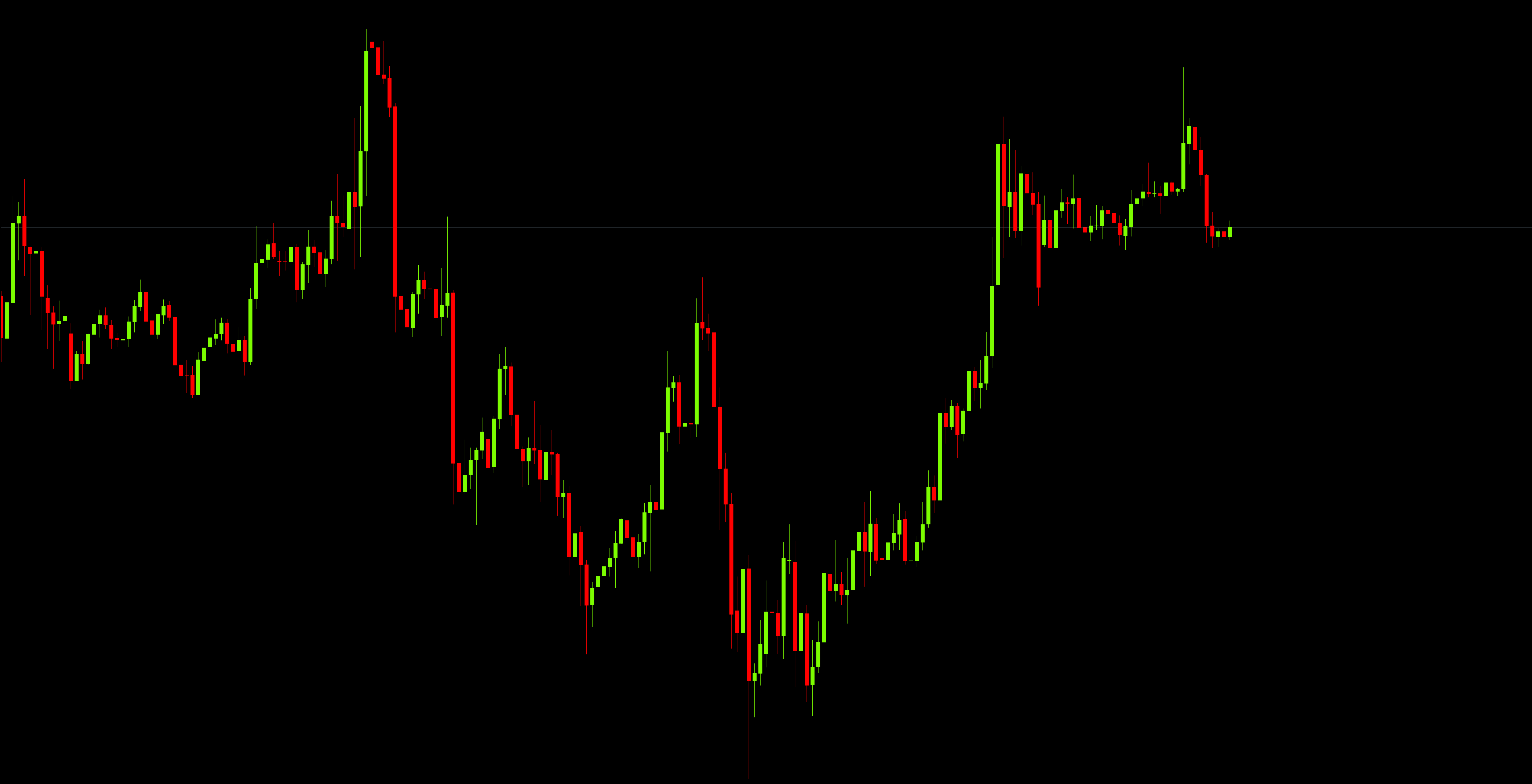
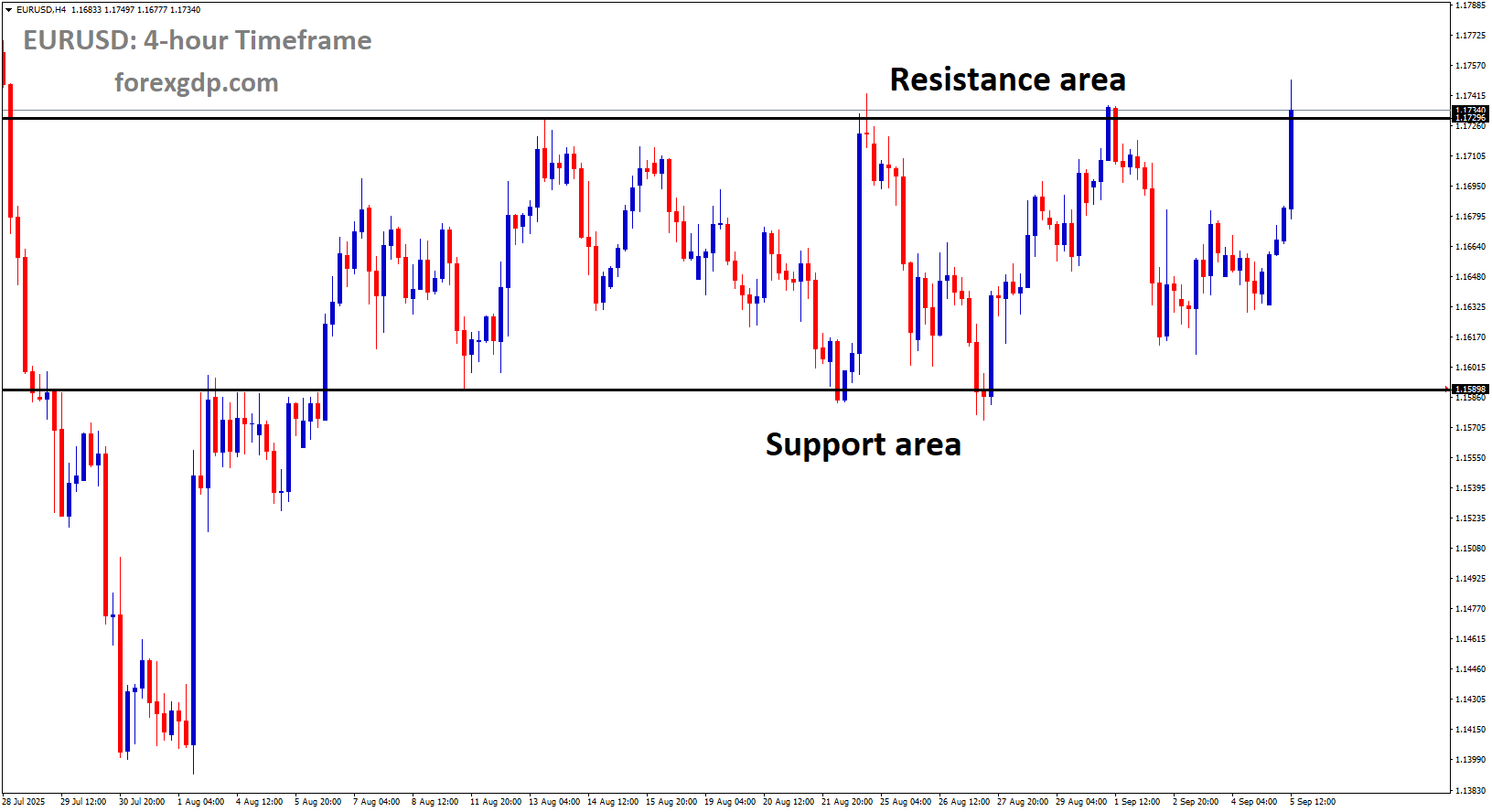
EURUSD reached the retest area of the broken Ascending channel
EURUSD Stays Under Pressure as Traders Await Fresh Signals from US Factories
The Euro and the US Dollar started the week locked in a cautious standoff. After a sharp sell-off late last week, the Euro is trying to stabilize, while the Dollar continues to find support from political clarity in the United States. At the same time, investors are navigating a tense global mood shaped by central bank expectations, economic data, and a busy week ahead.
Although Europe delivered encouraging signals from its manufacturing sector, the Euro’s recovery has been limited. The Dollar, on the other hand, has remained resilient as markets respond to leadership changes at the Federal Reserve and maintain a defensive stance toward risk.
This balance reflects a broader theme in global markets right now: optimism from economic improvements is being tempered by caution over future policy decisions.
Dollar Strength Supported by Federal Reserve Leadership Clarity
One of the key drivers behind the Dollar’s steady performance is renewed confidence around the future leadership of the Federal Reserve. Investors reacted positively after confirmation that Kevin Warsh is set to take over as the next Fed Chair once the current term ends.
Warsh is not new to central banking. He previously served as a Fed Governor and is well known for his firm stance on inflation risks. While he has recently shown openness to lower borrowing costs under the right conditions, his overall reputation suggests a careful and disciplined approach.
For markets, this combination matters. It signals continuity rather than disruption. Investors see Warsh as someone who understands the long-term risks of inflation while remaining flexible enough to respond if economic conditions weaken. That perception has helped calm nerves and keep the Dollar supported, even as global uncertainty remains high.
At the same time, expectations around future rate changes have become more structured. Instead of sudden shifts, markets are preparing for gradual adjustments over the coming years. This measured outlook has reinforced confidence in the Dollar, especially during periods when risk appetite is low.
Improving European Manufacturing Offers Limited Relief
Across the Atlantic, Europe delivered some positive news of its own. Updated survey results showed that manufacturing activity in both the broader Eurozone and Germany improved more than initially estimated. While the sector is still facing challenges, the upward revisions suggest that conditions may be stabilizing after a difficult period.
Germany, often seen as the industrial engine of Europe, showed signs that factory output is no longer deteriorating as quickly as before. This matters because manufacturing weakness has been one of the biggest drags on European growth in recent months.
Despite these improvements, the Euro did not gain much traction. The reason is simple: better data alone is not enough to shift sentiment when investors remain focused on larger global risks. Many market participants are waiting to see whether these early signs of recovery can turn into sustained momentum.
There was also some support from consumer activity in Germany, where retail spending showed modest improvement after a previous decline. This hinted at steady household demand, but again, the impact on the Euro was limited. Investors appear to be holding back until they see a clearer trend across multiple data points.
Risk-Averse Mood Keeps Investors on Edge
Even with encouraging signals from Europe, overall market sentiment remains cautious. A risk-averse environment tends to favor safe-haven assets and currencies, and the Dollar often benefits from this dynamic.
Several factors are contributing to this cautious mood. Geopolitical uncertainty, mixed economic signals, and upcoming central bank decisions are all encouraging investors to stay defensive. In such conditions, traders are less willing to make bold bets on currencies that depend heavily on growth optimism, such as the Euro.
This hesitation explains why the Euro’s gains have been modest. While fundamentals in Europe are not deteriorating, they are also not strong enough to overcome the pull of global caution. Until confidence improves more broadly, the Euro may continue to struggle to build momentum.
What Markets Are Watching in the Days Ahead
The coming days are packed with events that could shape currency markets in meaningful ways. Investors are closely monitoring both European and US developments, knowing that policy signals could shift expectations quickly.
European Central Bank Decision in Focus

Later this week, the European Central Bank is expected to deliver its latest policy decision. While major changes are not guaranteed, markets will pay close attention to the tone of the central bank’s communication.
Any hints about future policy direction, especially around inflation and growth risks, could influence how investors view the Euro. If policymakers sound confident about economic stability, the currency could receive some support. On the other hand, cautious or uncertain language may reinforce the current restrained outlook.
US Jobs Data Looms Large
In the United States, attention is turning toward the labor market. Employment data remains one of the most influential drivers of monetary policy expectations, and investors see it as a key test of economic resilience.
Strong job growth could strengthen the case for a patient approach to rate changes, supporting the Dollar further. Weaker data, however, might revive discussions about easing policy sooner than expected. Either way, the release is likely to inject volatility into markets.
US Manufacturing and Fed Voices Add Another Layer
Beyond jobs data, investors are also watching updates from the US manufacturing sector. Recent trends suggest some improvement, but concerns remain around rising input costs and overall demand.
Another point of interest is commentary from Federal Reserve officials. Public remarks from policymakers often reveal differences in opinion within the central bank. Some officials favor caution and tight control over inflation, while others are more open to easing financial conditions if growth slows.
These internal debates matter because they shape expectations about the future path of policy. Even subtle changes in tone can influence market positioning, especially in a week filled with important data releases.
Final Summary: A Week Defined by Caution and Clarity
The Euro and the US Dollar are entering a critical stretch shaped by cautious optimism and strategic patience. Europe has shown encouraging signs in manufacturing and consumer activity, but these improvements have not been strong enough to overcome a risk-averse global mood.
Meanwhile, the Dollar continues to benefit from clarity around Federal Reserve leadership and steady expectations for future policy. Investors appear reassured by the prospect of experienced guidance at the central bank, even as debates over inflation and growth continue.
With major policy decisions and economic reports on the horizon, markets are likely to remain careful rather than decisive. For now, stability—not excitement—is the dominant theme, as traders wait for clearer signals before making their next move.
GBPUSD Strengthens Slightly with Focus Turning to US Economic Data
The Pound Sterling has opened the week with renewed strength, gaining ground against several major global currencies. This positive start reflects a mix of global political developments, shifting investor sentiment, and anticipation around key economic events scheduled for the days ahead.
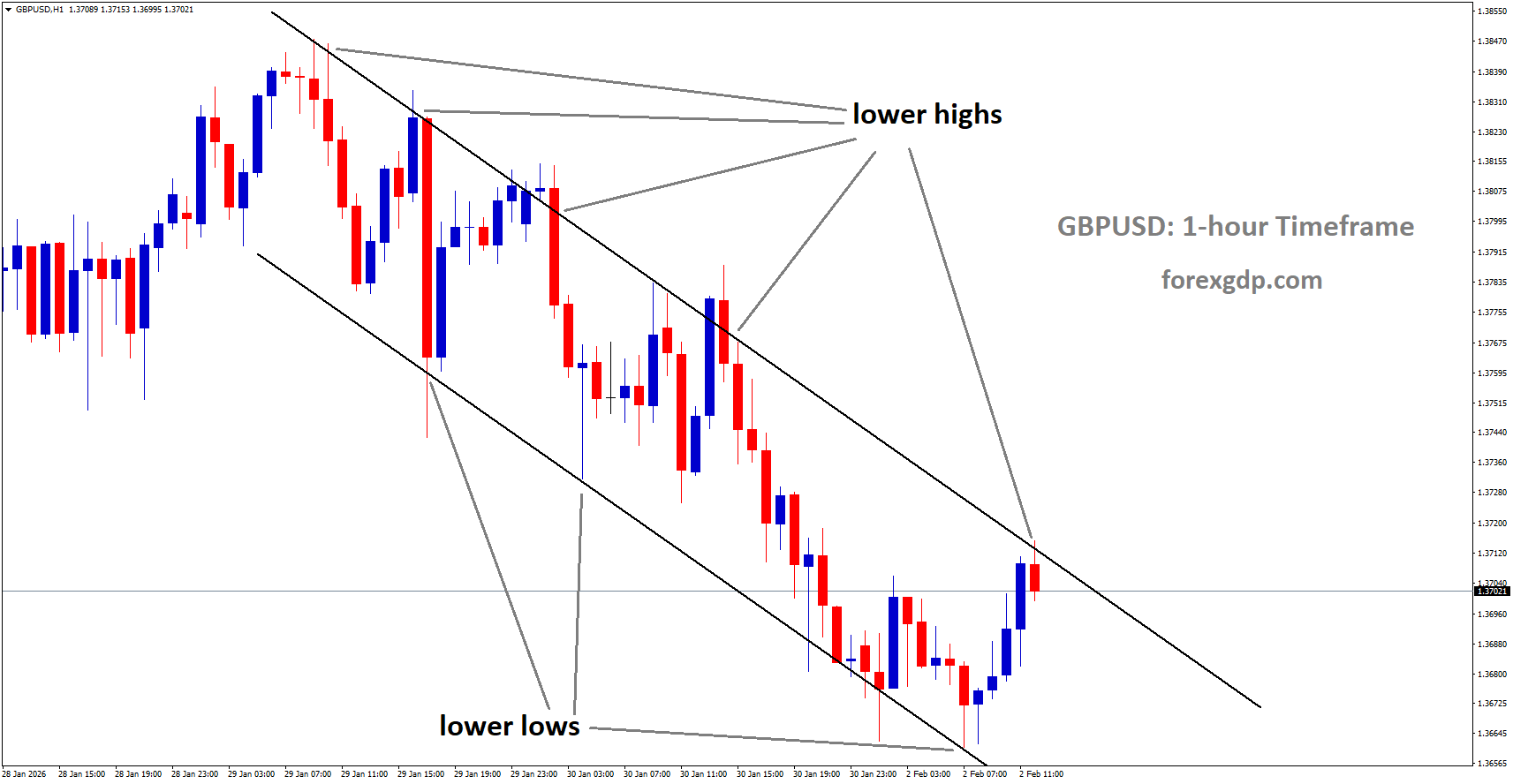
GBPUSD is moving in a descending channel, andthe market has reached the lower high area of the channel
During early European trading hours, the British currency showed resilience against the US Dollar, recovering from recent weakness. While short-term movements remain cautious, the overall tone suggests that traders are willing to give the Pound some breathing room as long as upcoming data supports stability in the UK economy.
The currency market is currently driven less by short-term speculation and more by expectations around central bank decisions and economic signals. For the Pound, the spotlight is firmly on the Bank of England, while developments in the United States are shaping broader global sentiment.
US Dollar Boosted by Federal Reserve Leadership Change
One of the major drivers influencing currency markets recently has been the announcement of a new Federal Reserve chair nominee. Former US President Donald Trump’s decision to nominate Kevin Warsh has added fresh momentum to the US Dollar.
Kevin Warsh is widely known for his firm stance on monetary discipline. During his earlier tenure as a Federal Reserve governor, he consistently supported a strong US Dollar and expressed concerns over aggressive monetary easing. His policy views suggest a preference for careful and measured decision-making, especially when it comes to adjusting interest rates or expanding the central bank’s balance sheet.
This reputation has strengthened confidence in the US Dollar, as investors believe Warsh may take a more cautious approach to rate cuts compared to other potential candidates. The expectation of slower policy easing often supports a currency, as it implies tighter financial conditions over a longer period.
As a result, the US Dollar has regained appeal across global markets. This renewed confidence has not only influenced currency pairs but has also led to reduced interest in assets that typically perform well during periods of uncertainty, such as precious metals and other risk-sensitive investments.
Shifting Expectations Around US Monetary Policy
Despite the US Dollar’s improved standing, expectations around future Federal Reserve decisions remain mixed. While Kevin Warsh’s nomination suggests a more conservative approach, some market participants still believe that economic conditions could push policymakers toward easing later in the year.
Recent tools that track investor expectations show a slight increase in the probability of a more accommodative stance at upcoming policy meetings. This reflects ongoing uncertainty about the strength of the US economy, inflation trends, and labor market conditions.
Investors are now closely watching incoming data to determine whether the Federal Reserve will prioritize growth concerns or remain focused on maintaining monetary discipline. These expectations are likely to influence currency movements throughout the week, particularly as major economic reports are released.
Bank of England Takes Center Stage
For the Pound Sterling, the most important event of the week is the Bank of England’s monetary policy announcement. This will be the central bank’s first policy decision of the year, making it especially significant for market participants.
The Bank of England is widely expected to keep its policy stance unchanged following a modest rate reduction at the end of last year. Policymakers have signaled a careful and gradual approach to future adjustments, aiming to balance inflation control with the need to support economic growth.
Investors will pay close attention not only to the decision itself but also to the accompanying policy report. This document provides valuable insight into how the central bank views the current state of the UK economy, including growth prospects, inflation pressures, and labor market trends.
Recent employment data from the UK has shown little change in jobless figures, suggesting that the labor market remains steady but not particularly strong. This backdrop supports the idea that policymakers will avoid aggressive moves and instead focus on maintaining stability.
UK Economic Outlook and Investor Sentiment

The broader outlook for the UK economy remains mixed. While some sectors have shown signs of resilience, others continue to feel pressure from higher borrowing costs and softer demand. This uneven performance has made investors cautious, especially ahead of major policy announcements.
The Bank of England has previously emphasized that any future easing will likely happen gradually. This message is expected to be reinforced, particularly as officials monitor how past policy decisions continue to affect businesses and households.
For currency traders, this cautious tone can limit sharp movements in the Pound. However, clarity and consistency from the central bank often provide a foundation for confidence, which can support the currency over time.
US Economic Data in Focus
Alongside developments in the UK, a series of important economic reports from the United States are set to influence global markets. Employment data, in particular, will be closely watched as it plays a key role in shaping Federal Reserve policy expectations.
The most anticipated release is the monthly US employment report, which offers insight into job creation, wage growth, and overall labor market health. Strong results could reinforce confidence in the US economy and support the Dollar, while weaker figures may revive discussions about earlier policy easing.
In addition to employment data, business activity surveys from the manufacturing sector will also attract attention. These reports help investors assess whether industrial activity is expanding or contracting, offering clues about broader economic momentum.
While recent surveys suggest some improvement, the sector continues to face challenges. Investors will be looking for confirmation that conditions are stabilizing rather than deteriorating further.
How Global Events Shape Currency Trends
Currency markets rarely move in isolation. Developments in one major economy often ripple across others, influencing investor behavior worldwide. This week is a clear example of that dynamic, with policy signals from both sides of the Atlantic shaping sentiment.
The Pound Sterling’s recent performance reflects a balance between domestic expectations and global influences. On one hand, steady signals from the Bank of England provide reassurance. On the other, renewed confidence in the US Dollar creates competition that can limit gains.
As traders navigate these cross-currents, volatility may remain contained until clearer signals emerge from policymakers and economic data. Patience and careful positioning are likely to define market behavior in the near term.
Final Summary
The Pound Sterling has begun the week with modest strength, supported by cautious optimism ahead of key policy and economic events. Developments in the United States, particularly the nomination of a new Federal Reserve chair, have boosted the US Dollar and reshaped investor expectations around monetary policy.
At the same time, attention is firmly fixed on the Bank of England’s upcoming decision and policy guidance. With both UK and US data releases scheduled, markets are entering a critical period that could set the tone for currency movements in the weeks ahead.
As investors weigh stability against uncertainty, the coming days are likely to provide clearer direction for both the Pound and the US Dollar, shaping sentiment across global financial markets.
USDJPY Remains Stable as BoJ Emphasizes a Slow and Measured Strategy
The USD/JPY currency pair has entered a phase of stability after a period of steady gains. This calm reflects a mix of policy guidance from Japan and the United States, along with political comments that have shaped expectations around economic growth, inflation, and interest rates. Rather than sharp moves, the market is responding to broader signals about how central banks and governments see the road ahead.
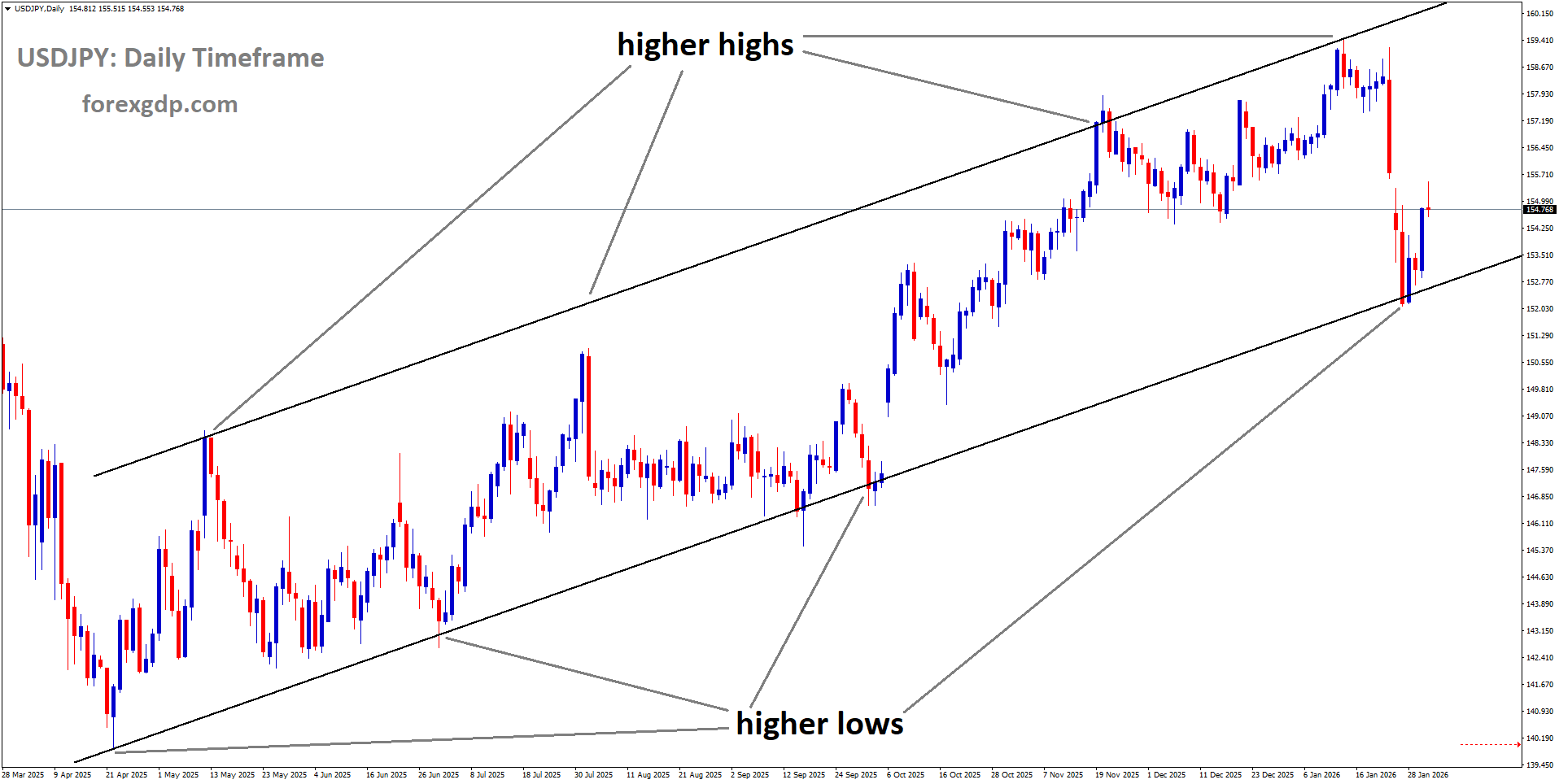
USDJPY is moving in an uptrend channel, and the market has rebounded from the higher low area of the channel
At the heart of this balance are messages from the Bank of Japan, comments from Japan’s prime minister on the benefits of a weaker yen, and renewed strength in the US dollar following a key leadership nomination at the Federal Reserve. Together, these factors are creating a cautious but clear narrative for traders and investors watching the yen-dollar relationship.
Bank of Japan Signals a Steady and Patient Approach
The Japanese yen has remained relatively calm after the Bank of Japan released its latest Summary of Opinions. The document offered reassurance that policymakers do not believe the risk of falling behind economic conditions has increased in a meaningful way. This message helped settle nerves in the market, as investors often worry that delayed action by central banks can lead to sharper adjustments later.
At the same time, the Bank of Japan acknowledged that timing matters more than before. While there is no sense of urgency, officials recognize that policy decisions must remain responsive to changes in growth and inflation. This balance between patience and readiness is central to the bank’s current stance.
One key takeaway from the discussion is that Japan’s real interest rates remain deeply negative. Because of this, policymakers agree that further rate increases would be appropriate if the economic outlook continues to improve. However, there is a strong preference for a gradual path. Rather than rushing toward aggressive tightening, the Bank of Japan appears committed to making careful, step-by-step adjustments.
This measured tone has helped prevent sharp swings in the yen. Markets generally respond well when central banks provide clarity without signaling abrupt shifts. In this case, the message is that Japan is not in a hurry, but it is also not standing still.
Political Support for a Weaker Yen in Japan
Over the weekend, Japanese Prime Minister Sanae Takaichi added another layer to the conversation by speaking openly about the potential benefits of a weaker yen. According to her comments, a softer currency can support export-focused industries and provide a buffer for the automobile sector, especially as it faces pressure from trade policies abroad.
For a country like Japan, exports play a major role in economic growth. When the yen is weaker, Japanese goods often become more competitive in overseas markets. This can boost revenues for manufacturers and help protect jobs at home. The prime minister’s remarks suggest that the government sees value in allowing market forces to keep the currency at levels that support these goals.
Her comments also touched on the auto industry, which has been navigating challenges linked to tariffs and trade tensions. A weaker yen can help offset some of these pressures by improving profit margins for exporters. This perspective aligns with a broader policy approach that prioritizes stability and growth over aggressive currency strengthening.
While the government does not directly control exchange rates, such statements can influence market sentiment. When political leaders openly acknowledge the advantages of a weaker currency, it can reduce expectations of sudden intervention or policy shifts aimed at strengthening it.
US Dollar Gains Strength from Federal Reserve Developments
On the other side of the currency pair, the US dollar has found renewed support following President Donald Trump’s nomination of Kevin Warsh as the next Chair of the Federal Reserve. Markets interpreted this move as a signal of a more disciplined and cautious approach to monetary policy.
Kevin Warsh is widely viewed as someone who favors careful decision-making, especially when it comes to easing policy. His nomination has led investors to believe that the Federal Reserve may avoid rushing into rate cuts unless economic conditions clearly justify them. This perception has helped lift confidence in the US dollar.
Leadership changes at central banks often have a strong psychological impact on markets. Even before any policy decisions are made, expectations about a new chair’s philosophy can influence currency flows. In this case, the belief that the Federal Reserve may stay firm for longer has supported the dollar against its major peers.
This dynamic has added upward pressure to USD/JPY, even as the yen remains steady due to domestic factors in Japan. The result is a market that feels balanced rather than volatile.
Inflation Data Reinforces the Fed’s Cautious Tone
Recent US inflation data has also played a role in shaping expectations. Producer-side inflation has shown signs of firmness, suggesting that price pressures at the early stages of the supply chain remain persistent. This kind of data matters to the Federal Reserve because it can eventually feed into consumer prices.
The fact that inflation has not cooled as much as expected reinforces the idea that the central bank should remain cautious. If price pressures stay elevated, cutting rates too quickly could risk reigniting inflation. This aligns with the market’s interpretation of the Federal Reserve’s current stance as patient and data-driven.
Several Federal Reserve officials have echoed this view in recent comments. They have emphasized that additional rate cuts are not necessary at this stage and that current policy settings are broadly appropriate for the economy. Others have argued for patience, suggesting that monetary policy should remain slightly restrictive to ensure inflation continues to move in the right direction.
These messages have added to the sense that the Federal Reserve is in no rush to change course. For the US dollar, this translates into ongoing support, especially when compared with currencies from regions where policy remains more accommodative.
What This Means for USD/JPY Going Forward
The current stability in USD/JPY reflects a market that is carefully weighing signals from both sides. In Japan, policymakers are signaling patience and gradualism, while political leaders highlight the benefits of a competitive currency. In the United States, a cautious Federal Reserve and firm inflation data are supporting the dollar.
Rather than dramatic moves, the pair appears to be responding to these longer-term themes. Investors are focusing less on short-term speculation and more on how policy paths may diverge over time. This environment tends to favor steady trends over sudden swings.
As long as the Bank of Japan maintains its gradual approach and the Federal Reserve stays patient, USD/JPY is likely to remain influenced by relative policy expectations rather than abrupt surprises. Any major change would likely require a clear shift in economic data or central bank communication.
Final Summary
USD/JPY has settled into a calmer phase as markets digest signals from Japan and the United States. The Bank of Japan has reassured investors that it is not falling behind, while still emphasizing the importance of timely and gradual policy action. Japan’s prime minister has openly supported the idea that a weaker yen can benefit exporters and protect key industries.
At the same time, the US dollar has gained strength following the nomination of a new Federal Reserve chair and inflation data that supports a cautious policy stance. Comments from US central bank officials have reinforced the message that patience remains the guiding principle.
Together, these factors have created a balanced environment for USD/JPY, where steady policy expectations matter more than short-term noise. The pair’s direction will continue to be shaped by how each central bank responds to growth and inflation in the months ahead.
USDCHF steadies after recent strength ahead of important US reports
The USD/CHF currency pair is starting the week on steady footing, supported by a mix of political developments in the United States and a cautious global market mood. Traders are weighing the implications of leadership changes at the Federal Reserve, upcoming economic data from the US, and the ongoing appeal of safe-haven currencies like the Swiss Franc.
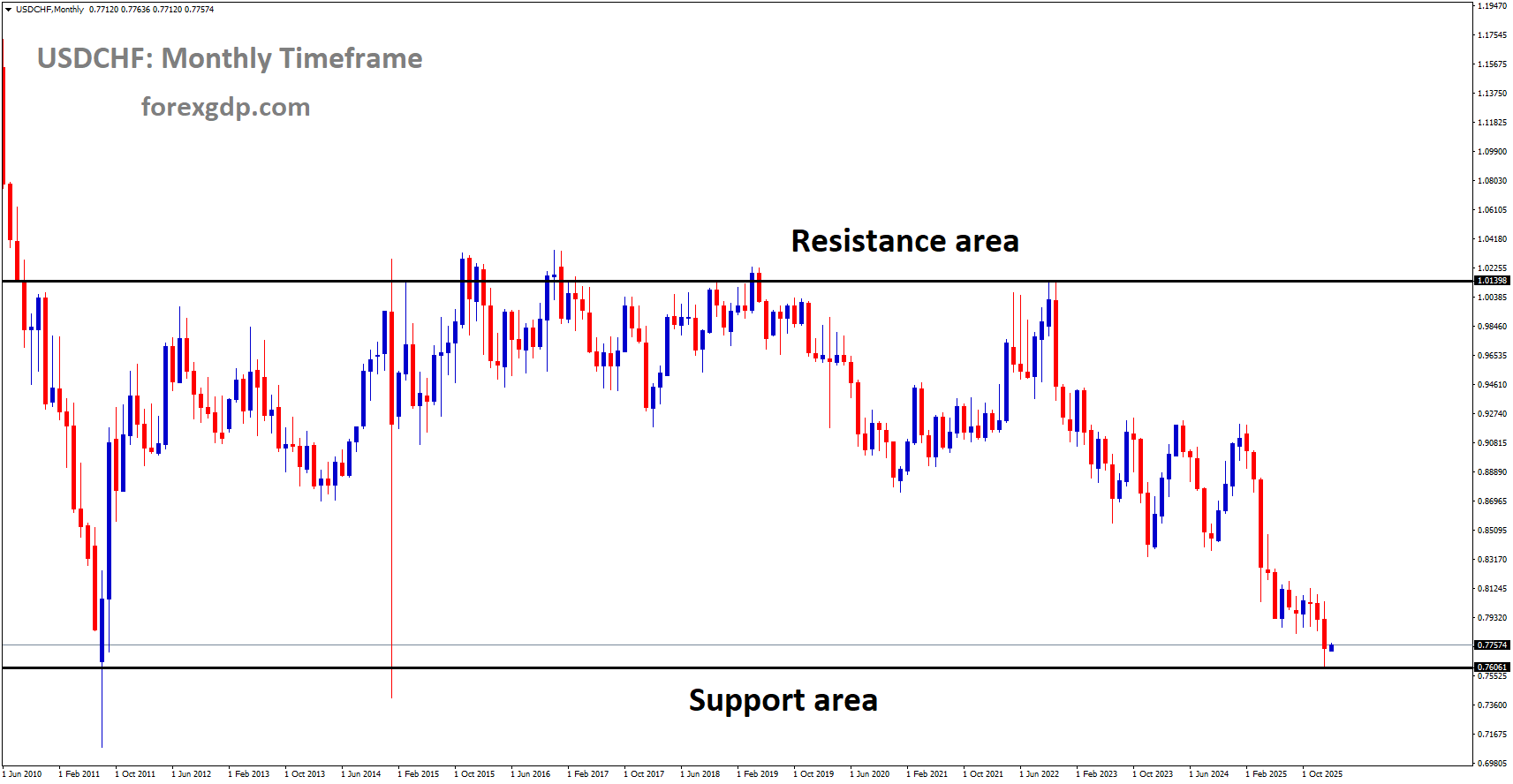
USDCHF is moving in a box pattern, and the market has reached the support area of the pattern
While neither side of the pair is making aggressive moves, the underlying themes driving price action are clear. Expectations around future US monetary policy, combined with investor caution ahead of key labor market data, are keeping the pair firmly in focus.
Kevin Warsh’s Nomination and Its Impact on the US Dollar
The recent nomination of Kevin Warsh as the next Chairman of the Federal Reserve has given the US Dollar a notable boost in confidence. Warsh, a former Fed Governor, is widely viewed as someone who favors a disciplined approach to monetary policy and a stable, strong US Dollar.
Market participants remember his past stance at the Federal Reserve, where he often leaned against overly loose policy measures. This background has led many investors to believe that his leadership could reduce the likelihood of aggressive interest rate cuts in the future. As a result, the Dollar has managed to hold onto recent gains, even as broader trading activity remains subdued.
This renewed confidence is not about immediate policy changes but about long-term direction. Currency markets tend to react quickly to shifts in leadership expectations, especially when they involve institutions as influential as the Federal Reserve. Warsh’s nomination has added a layer of predictability that many investors welcome, particularly during a period of global uncertainty.
A Calm but Watchful Dollar Ahead of Key US Data
Despite the supportive political backdrop, the US Dollar is not moving freely in one direction. Instead, it is trading cautiously as investors wait for fresh economic signals. The most important of these is the upcoming US Nonfarm Payrolls report, which is scheduled for release later in the week.
The labor market has long been a cornerstone of the US economic outlook. Strong employment data can reinforce confidence in economic growth, while weaker numbers can quickly shift expectations around interest rates. With the Federal Reserve widely expected to keep policy unchanged at its next meeting, traders are looking to the jobs report for clues about what may come next.
Until that data is released, many market participants are choosing to stay on the sidelines. This wait-and-see approach is keeping the Dollar relatively stable, as traders avoid taking large positions that could be quickly reversed by new information.
Why the Swiss Franc Remains in Demand
On the other side of the pair, the Swiss Franc continues to benefit from its reputation as a safe-haven currency. Even modest signs of global uncertainty can increase demand for the Franc, and recent market sentiment has leaned slightly toward caution.
Investors are becoming more selective as they assess geopolitical risks, mixed economic signals from major economies, and the direction of central bank policies worldwide. In this environment, the Swiss Franc’s stability and Switzerland’s strong financial foundations make it an attractive choice.
This demand does not necessarily reflect panic or extreme fear in the markets. Instead, it points to a defensive mindset, where investors prefer to balance risk rather than fully embrace it. As long as this cautious tone persists, the Franc is likely to remain well supported.
The Role of Risk Sentiment in USD/CHF Trading
Risk sentiment plays a central role in shaping movements in the USD/CHF pair. When investors feel confident, they tend to favor higher-yielding or growth-linked currencies. When uncertainty rises, safe havens like the Swiss Franc gain attention.
At the moment, the market mood is best described as guarded. There is no widespread sell-off, but there is also no strong appetite for risk. This balance is keeping USD/CHF relatively steady, as strength in the Dollar is partially offset by ongoing interest in the Franc.
For traders, this means that headlines and data releases can have an outsized impact. A single surprise, whether political or economic, could quickly tilt sentiment in one direction or the other.
Attention Turns to US Manufacturing Activity
In addition to labor market data, investors are also watching indicators that reflect the health of the US economy more broadly. Manufacturing activity is one such area, as it can signal changes in demand, business confidence, and overall economic momentum.
Recent surveys have suggested that the manufacturing sector is still facing challenges, though there are signs of gradual improvement. Even small shifts in these indicators matter to currency markets, as they help shape expectations around growth and policy.
If upcoming data confirms stabilization or improvement, it could lend further support to the US Dollar. On the other hand, persistent weakness may reinforce the cautious stance already seen among traders.
How Central Bank Expectations Influence the Pair
Central bank expectations are at the heart of USD/CHF movements. The Federal Reserve and the Swiss National Bank have very different policy frameworks, and shifts in their outlooks can quickly change the balance between the two currencies.
In the US, attention is firmly on whether the Fed will maintain its current stance or eventually move toward easing. The perception that future leadership may resist aggressive cuts has strengthened the Dollar’s position. In Switzerland, policy remains focused on maintaining stability and managing external pressures, rather than chasing growth.
This contrast creates a dynamic where the Dollar can find support from policy expectations, while the Franc continues to attract demand during periods of uncertainty. The result is a pair that often trades within a narrow range but reacts strongly to major developments.
What Traders Are Watching Next

Looking ahead, the immediate focus remains on upcoming US economic releases. Employment data, in particular, has the potential to reshape expectations around interest rates and economic momentum.
Beyond that, investors will continue to monitor comments and signals related to the Federal Reserve’s leadership transition. Any new information about policy priorities or future direction could influence sentiment toward the Dollar.
At the same time, global risk factors will remain in play. Developments in international politics, trade relations, and broader economic trends can all affect demand for safe-haven currencies like the Swiss Franc.
Final Summary
The USD/CHF pair is currently supported by a mix of political clarity in the United States and a cautious global market environment. The nomination of Kevin Warsh as the next Federal Reserve Chairman has strengthened confidence in the US Dollar by reinforcing expectations of a measured policy approach. However, traders are holding back from aggressive moves as they wait for key US labor market data that could shape the interest rate outlook.
Meanwhile, the Swiss Franc continues to benefit from its safe-haven status, supported by a risk-aware market mood. With central bank expectations, economic data, and global sentiment all in focus, USD/CHF is likely to remain sensitive to new developments in the days ahead.
AUDUSD Stabilizes After Early Dip While Markets Await Key RBA Decision
The AUD/USD currency pair showed renewed strength at the start of the week after recovering from earlier weakness. This move came as the US Dollar eased slightly, giving the Australian Dollar some breathing room. Even so, the broader outlook for the US Dollar remains solid, shaped by major political and economic developments in the United States.
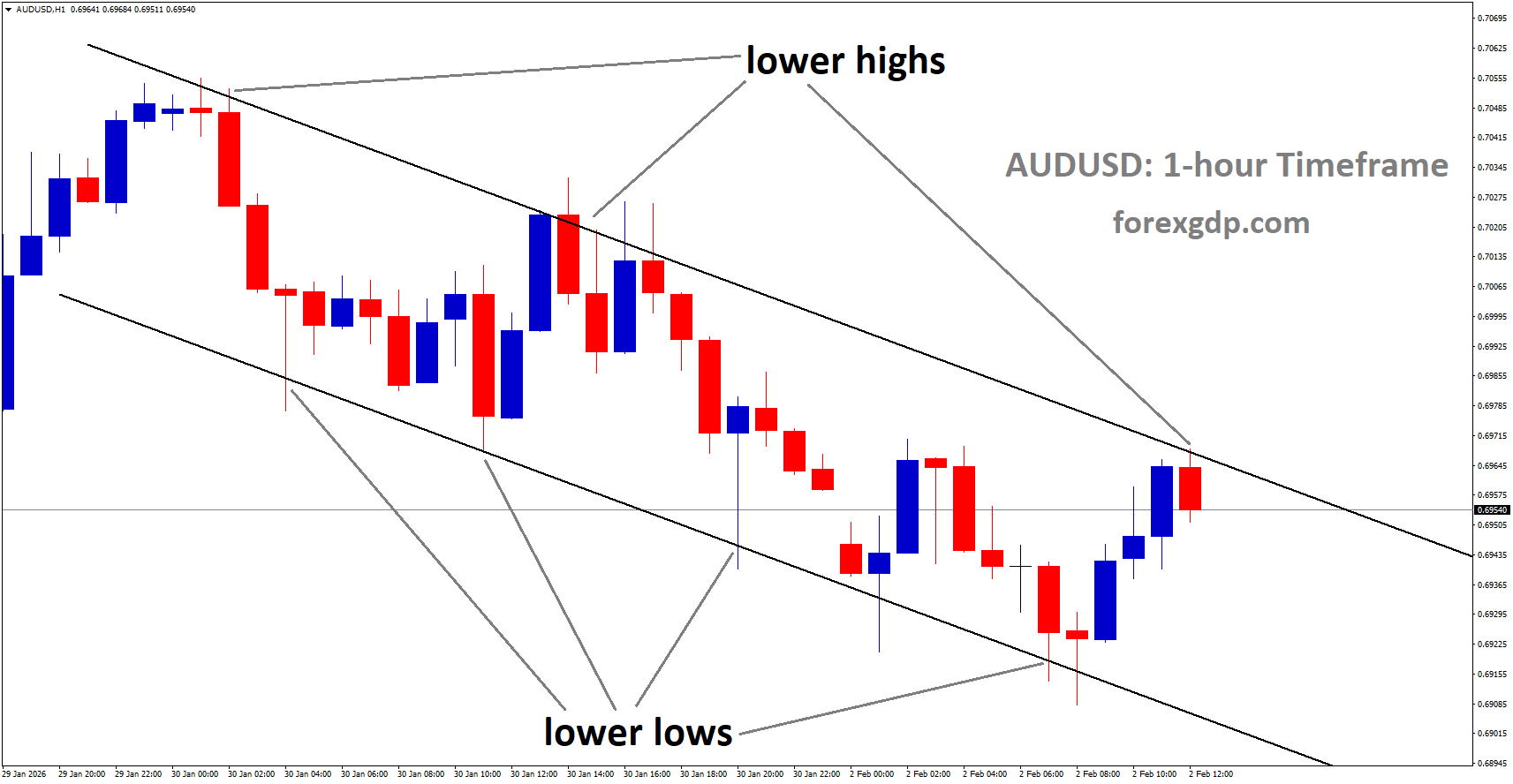
AUDUSD is moving in a downtrend channel, andthe market has reached the lower high area of the channel
At the same time, attention is turning toward key central bank decisions and economic data releases that could influence how both currencies behave in the days ahead. From leadership changes at the Federal Reserve to an expected policy move by the Reserve Bank of Australia, investors are closely watching signals that point to future interest rate paths and inflation control efforts.
US Dollar Holds Firm Despite a Mild Pullback
Although the US Dollar softened modestly during European trading hours, it continues to enjoy strong underlying support. This strength is largely tied to a shift in expectations around US monetary policy following a major announcement from the White House.
US President Donald Trump has nominated Kevin Warsh as the next Chairman of the Federal Reserve. This decision has attracted widespread attention in financial markets, as Warsh is known for holding firm views on monetary discipline. During his earlier time at the Federal Reserve, he consistently argued for a stronger US Dollar and voiced concerns about aggressive stimulus measures.
Because of this background, investors believe Warsh is unlikely to support rapid or deep interest rate cuts if confirmed. That expectation has boosted confidence in the US Dollar, even during short periods of weakness. In simple terms, the currency remains attractive because markets expect US policy to stay relatively tight compared to other major economies.
This sense of stability is why the US Dollar’s pullback has been limited rather than sharp. Many traders still see it as a reliable option in an uncertain global environment, especially as inflation risks and economic resilience remain part of the broader conversation.
Kevin Warsh’s Nomination and Its Market Impact
The nomination of Kevin Warsh has added a new layer of clarity to the Federal Reserve’s possible future direction. While Jerome Powell has been associated with flexible policy responses during challenging periods, Warsh is viewed as someone who favors caution and restraint.
Warsh has been openly critical of large-scale asset purchases in the past, arguing that they can distort markets and weaken the value of the currency over time. His stance suggests a preference for maintaining credibility through measured actions rather than quick fixes.
For currency markets, this matters a great deal. A central bank leader who prioritizes currency strength and inflation control often supports a more stable or firmer exchange rate. As a result, the US Dollar has benefited from renewed interest, even as investors wait for official confirmation and further guidance.
Beyond leadership changes, traders are also preparing for upcoming economic reports that could influence how the Federal Reserve positions itself later in the year.
Focus Shifts to US Employment Data
Another major event on the horizon is the release of US employment data for January. The Nonfarm Payrolls report is closely followed because it provides insight into job growth, wage trends, and overall economic momentum.
Strong employment data could reinforce the idea that the US economy can handle higher interest rates for longer. That would align with the market’s current view that aggressive easing is unlikely in the near term. On the other hand, signs of cooling in the labor market could revive discussions about policy adjustments later in the year.
For now, investors remain cautious, choosing to wait for concrete evidence before changing their expectations. This cautious approach has helped keep the US Dollar relatively steady, even as short-term movements continue to unfold.
Australian Dollar Gains Attention Ahead of RBA Decision
On the Australian side, the focus is firmly on the Reserve Bank of Australia and its upcoming policy announcement. The central bank is widely expected to raise its Official Cash Rate in an effort to bring inflation under control.
Inflation in Australia has shown signs of accelerating again, with recent data indicating that price pressures have picked up compared to earlier readings. This has increased the urgency for policymakers to act decisively, even if higher borrowing costs pose challenges for households and businesses.
A rate increase would signal the RBA’s commitment to managing inflation and maintaining price stability. For the Australian Dollar, such a move often provides support, as higher interest rates can make a currency more attractive to investors seeking yield.
However, markets are also mindful that policy tightening comes with trade-offs. Slower economic growth and softer consumer spending are risks that the RBA must balance carefully.
Inflation Trends Shape Australia’s Policy Outlook
Recent inflation data from Australia has played a key role in shaping expectations around monetary policy. The latest figures showed that price growth accelerated in the final quarter of the year, reversing the earlier trend of gradual easing.
This development has raised concerns that inflation could remain stubbornly high if left unchecked. As a result, the RBA is under pressure to act, even as global growth shows signs of slowing.
For the Australian Dollar, inflation-driven policy decisions are a double-edged sword. On one hand, higher interest rates can support the currency. On the other, fears of economic slowdown can limit gains if confidence weakens.
This tension explains why the Australian Dollar’s recent rebound has been measured rather than dramatic. Investors are encouraged by the prospect of tighter policy but remain cautious about the broader economic impact.
Balancing Forces Drive AUD/USD Movement
The recent recovery in AUD/USD reflects a balance between competing forces. A slightly softer US Dollar has given the pair room to rebound, while expectations of tighter policy in Australia have added support.
At the same time, the US Dollar’s overall strength has capped the upside. With markets anticipating a firm stance from the Federal Reserve under new leadership, the Greenback continues to attract interest during periods of uncertainty.
This push and pull dynamic is likely to persist as long as both central banks remain focused on inflation control. Short-term movements may continue, but the bigger picture will depend on how economic data evolves on both sides of the Pacific.
Final Summary
The AUD/USD pair has shown resilience as the US Dollar eases slightly, allowing the Australian Dollar to recover from earlier weakness. Despite this, the broader outlook for the US Dollar remains strong, supported by expectations that Kevin Warsh’s nomination as Federal Reserve Chairman will lead to a cautious and disciplined policy approach.
Meanwhile, attention is building around the Reserve Bank of Australia’s expected rate increase, driven by renewed inflation pressures. This policy outlook has provided support for the Australian Dollar, even as concerns about economic growth linger.
With key employment data from the United States and a major policy decision in Australia ahead, both currencies are being shaped by expectations rather than immediate action. As investors weigh these signals, AUD/USD is likely to remain sensitive to shifts in inflation trends, central bank guidance, and economic data releases in the weeks to come.
XAGUSD Slides Toward 78 With Fading Global Risk Tensions
Silver has long been seen as a metal that shines brightest during times of uncertainty. Recently, however, that shine has dulled. A mix of political decisions, easing global tensions, and cautious signals from the US Federal Reserve has changed how investors look at silver. What was once driven by fear and momentum is now being shaped by patience, realism, and a reassessment of risk.
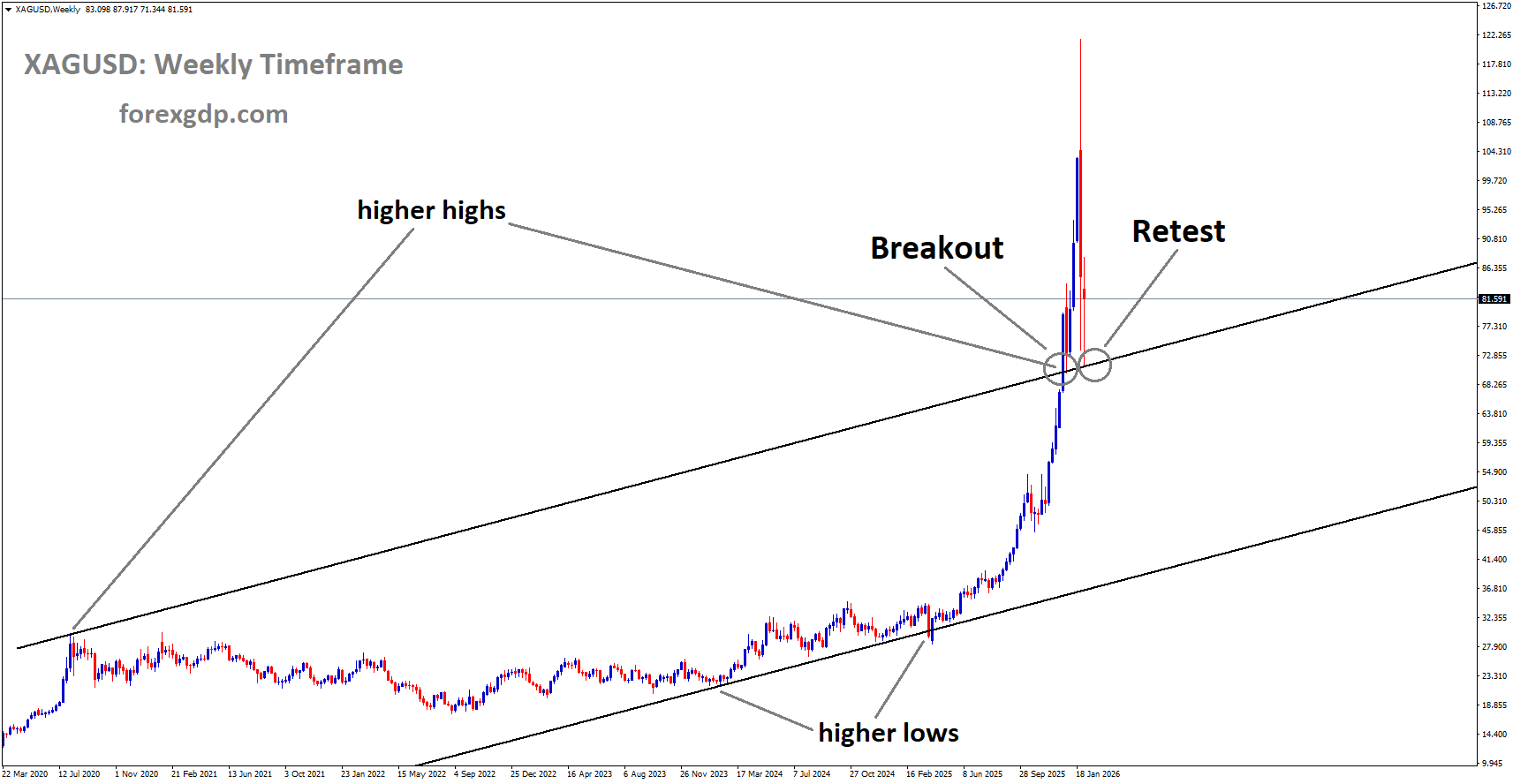
XAGUSD reached the retest area of the broken uptrend channel
This shift has sparked a sharp pullback after a powerful rally, reminding markets that even popular safe-haven assets can fall out of favor when the broader story changes.
A New Fed Chair Brings a More Careful Tone
One of the biggest triggers behind silver’s recent slide was the announcement of Kevin Warsh as the next Chair of the Federal Reserve. His nomination was quickly read by markets as a signal that the central bank may move more carefully when it comes to easing monetary policy.
Warsh is widely viewed as someone who favors discipline and restraint rather than aggressive stimulus. For investors who had been betting on faster or deeper rate cuts, this was a wake-up call. Silver, which does not pay interest, often benefits when rates are expected to fall quickly. When that expectation weakens, silver can lose its appeal.
The reaction was swift. Traders who had enjoyed a long and powerful rally began locking in profits. After weeks of strong gains, the market was crowded with optimistic positions. Once sentiment turned, the exit became fast and decisive.
Profit-Taking After an Extended Rally
Silver’s earlier surge had been fueled by a combination of fear, speculation, and momentum buying. As prices climbed, more participants jumped in, expecting the move to continue. This kind of behavior can push markets higher than fundamentals alone would justify.
Eventually, rallies driven by momentum tend to run out of steam. When a clear reason appears to take profits, many traders act at the same time. The nomination of a more cautious Fed Chair provided exactly that reason.
This wave of profit-taking was not necessarily a vote against silver’s long-term value. Instead, it reflected a short-term reset. Markets rarely move in straight lines, and sharp pullbacks often follow periods of intense enthusiasm.
Easing Geopolitical Tensions Reduce Safe-Haven Demand
Another important factor behind silver’s weakness has been a cooling of geopolitical fears. Safe-haven assets like silver typically benefit when global tensions rise and uncertainty dominates headlines. When those tensions ease, demand can fade just as quickly.
Recent developments involving the United States and Iran helped calm markets. Signals from political leaders suggested a willingness to pursue negotiations rather than confrontation. While risks remain, the immediate fear of a wider regional conflict appeared to diminish.
As investors grew more comfortable with the global outlook, they became less eager to hold defensive assets. Money that had flowed into silver for protection began to rotate elsewhere, favoring riskier opportunities.
Cautious Voices from the Federal Reserve
Comments from Federal Reserve officials also played a role in shaping sentiment. Several policymakers emphasized patience and restraint, suggesting that the current policy stance remains appropriate for now.
This cautious tone reinforced the idea that rapid changes in monetary policy are unlikely. For silver, which often thrives on expectations of looser financial conditions, this message was less supportive.
When central bankers signal stability rather than urgency, markets tend to reduce bets on dramatic shifts. As a result, assets that depend heavily on those expectations can lose momentum.
Improving Risk Sentiment Across Markets
Broader market sentiment has also improved, adding pressure on silver. Political developments in Washington helped reduce uncertainty around government operations, easing concerns that had previously weighed on investor confidence.
When risk sentiment improves, investors often move away from defensive positions. Stocks, growth-oriented assets, and other risk plays become more attractive. In this environment, silver’s role as a hedge becomes less urgent.
This shift does not mean that risks have disappeared. Instead, it reflects a market that feels more comfortable with the current balance of risks and rewards.
The Role of Speculation and Rapid Reversals
Speculative activity played a major role in both silver’s rise and its fall. Heavy buying, including strong interest from overseas traders, helped push the rally to extremes. As excitement grew, prices became increasingly sensitive to any negative news.
Once the mood changed, that same speculative energy worked in reverse. Positions that were built quickly were also unwound quickly. This kind of behavior often leads to sharp and dramatic price swings.
Such reversals can feel unsettling, but they are not unusual in markets driven by emotion and momentum. Over time, these swings tend to smooth out as longer-term investors reassess value.
Long-Term Themes Still Support Silver

Despite the recent pullback, some underlying themes continue to support silver over the longer term. Structural supply challenges remain a concern, with demand from industrial uses continuing to grow.
At the same time, worries about government debt and currency stability have not disappeared. Many investors still see physical assets as a way to protect purchasing power over time. This broader “debasement” narrative has helped support interest in precious metals, including silver.
While short-term sentiment has shifted, these deeper forces could resurface if economic or political conditions change again.
A Market Searching for Balance
Silver’s recent move highlights how quickly narratives can change. What was once driven by fear and optimism is now being shaped by caution and realism. Investors are adjusting expectations, weighing risks more carefully, and waiting for clearer signals.
This process of adjustment is healthy for markets. It allows prices to better reflect a balance between enthusiasm and caution, rather than leaning too far in one direction.
Final Summary
Silver’s decline reflects a combination of shifting expectations and improving confidence across global markets. The nomination of a more disciplined Federal Reserve Chair reduced hopes for aggressive monetary easing, while easing geopolitical tensions weakened the metal’s safe-haven appeal. Cautious commentary from central bank officials and better overall risk sentiment added to the pressure, encouraging profit-taking after a strong rally.
Even so, silver’s longer-term story is not over. Structural supply factors and concerns about debt and currency stability remain part of the broader conversation. For now, the market is pausing, reassessing, and waiting to see which forces will dominate next.
Don’t trade all the time, trade forex only at the confirmed trade setups
Get more confirmed trade signals at premium or supreme – Click here to get more signals, 2200%, 800% growth in Real Live USD trading account of our users – click here to see , or If you want to get FREE Trial signals, You can Join FREE Signals Now!