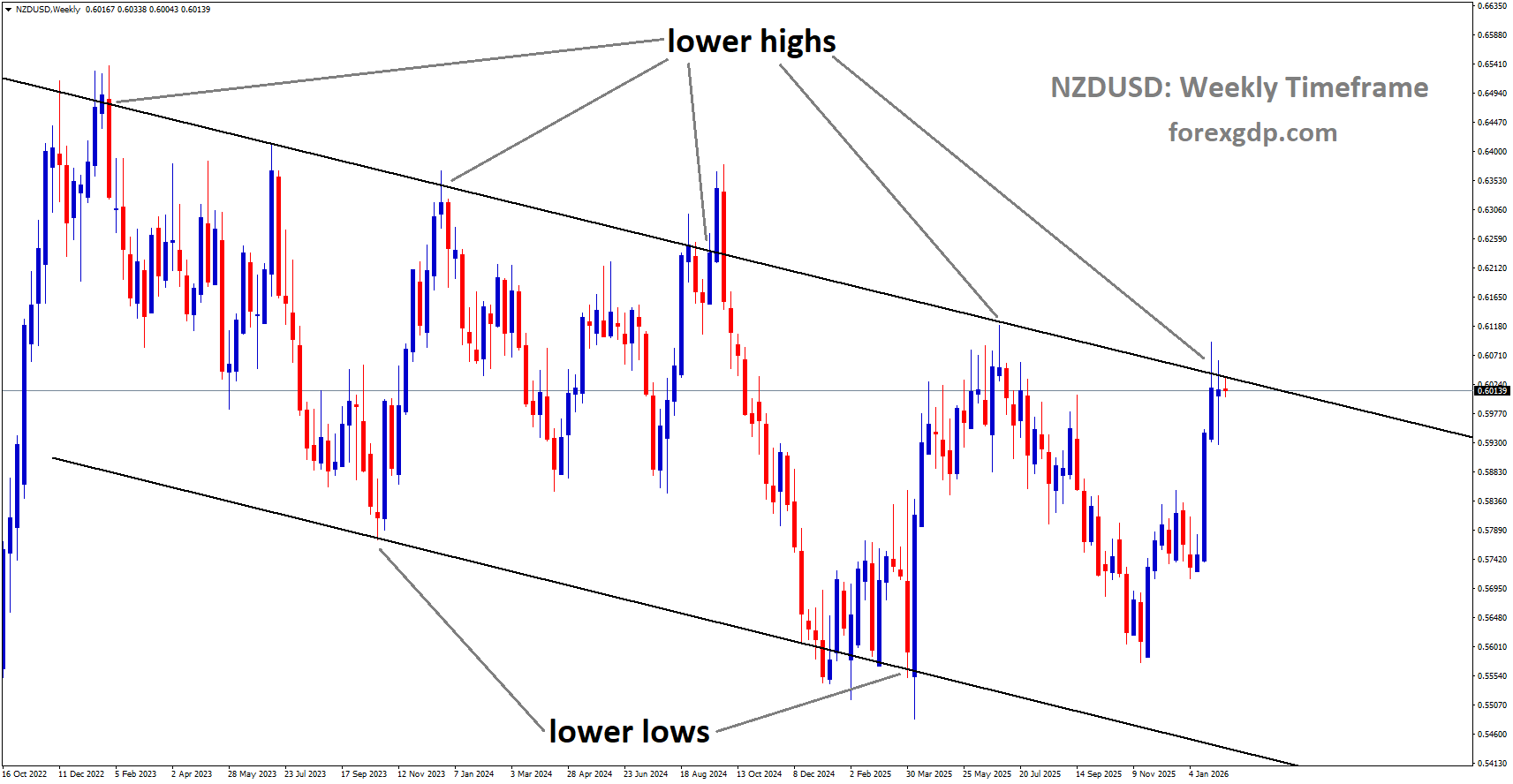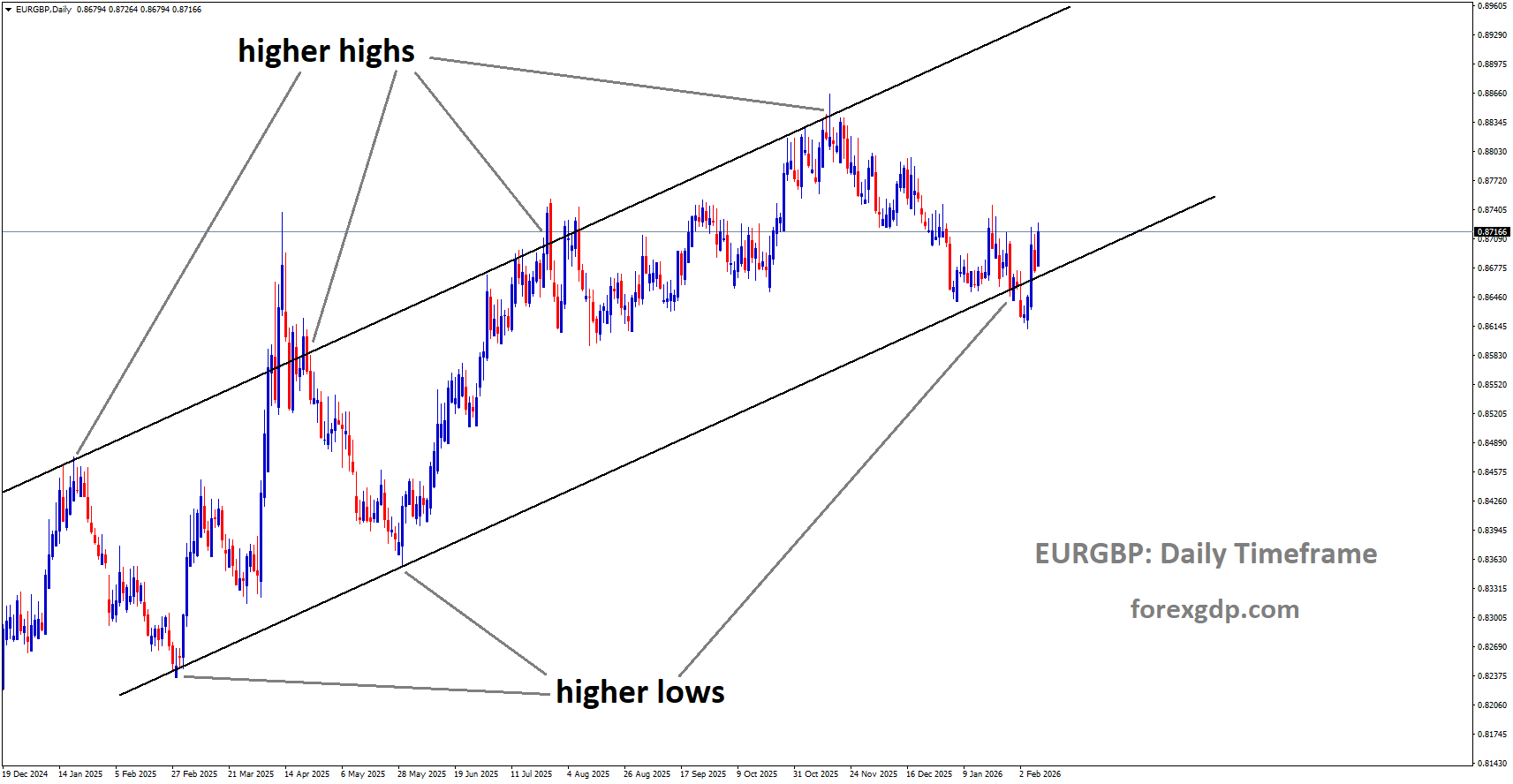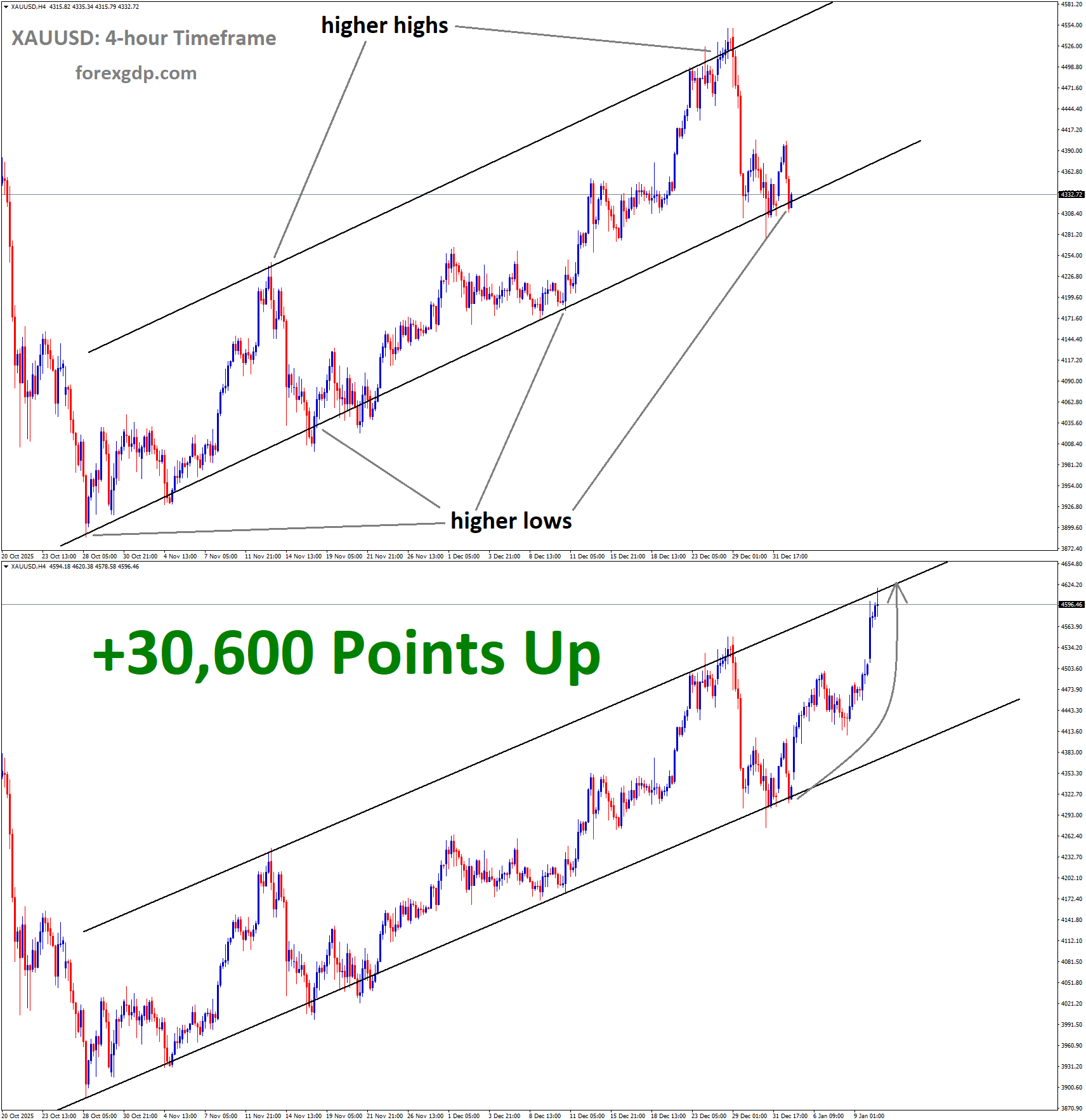


GBPUSD is moving in a descending channel, and the market has reached the lower high area of the channel
GBPUSD Stalls as Westminster Turmoil Sends the Pound on the Defensive
The GBP/USD currency pair has entered the new week with a calm but cautious tone. After small gains earlier, movement has slowed as traders weigh political uncertainty in the United Kingdom against shifting expectations around US monetary policy. While neither currency is making bold moves, the balance of risks is starting to tilt, especially as confidence in the Pound Sterling comes under strain.
At the heart of the current hesitation is a fresh political setback in the UK government. At the same time, the US Dollar is facing its own challenges as investors wait for delayed economic data and clearer signals from the Federal Reserve. Together, these factors are keeping traders alert and limiting strong directional moves.
Political Turmoil Weighs on the Pound Sterling
The Pound Sterling is feeling pressure after a new crisis emerged within the UK government. The resignation of Downing Street Chief of Staff Morgan McSweeney has raised fresh questions about leadership judgment and political stability. McSweeney stepped down after taking responsibility for advising Prime Minister Keir Starmer on the controversial appointment of Peter Mandelson as the UK’s ambassador to the United States. The situation attracted attention due to Mandelson’s past association with Jeffrey Epstein, which has proven politically damaging.
Political stability plays a key role in how global investors view a country’s currency. When uncertainty rises at the top levels of government, confidence can weaken quickly. In this case, the resignation has revived concerns about internal decision-making and the government’s ability to manage sensitive international relationships.
For the Pound, these developments arrive at an uncomfortable time. The UK economy is already navigating slower growth and fragile consumer confidence. Any sign of political distraction or instability risks adding another layer of doubt for investors who prefer clarity and predictability. As a result, the Pound may struggle to attract strong support in the near term.
Why Political Confidence Matters to Currency Markets
Currency markets are not just driven by numbers and data. Trust in leadership and policy direction matters just as much. When a government appears divided or under pressure, investors may hesitate to commit funds, especially in an environment where global risks are already elevated.
In the UK’s case, the current issue is not about economic policy directly, but about credibility. High-profile resignations can signal deeper challenges behind the scenes. Even if the economic outlook remains unchanged, perception alone can influence currency demand.
This is why political headlines often have an outsized impact on the Pound. Until the situation stabilizes and confidence is restored, the currency may remain vulnerable to negative sentiment.
The US Dollar Faces Its Own Set of Challenges
While the Pound struggles with domestic issues, the US Dollar is also under pressure, though for different reasons. Traders are becoming increasingly cautious ahead of several important economic reports that were delayed due to a partial government shutdown.
Among the most anticipated releases are employment and inflation data from January. These reports are expected to provide fresh insight into how the US economy is performing as it moves further away from the rapid growth phase seen in previous years. The delay has created a temporary information gap, leaving markets hesitant to make strong bets.
Early expectations suggest the US labor market is gradually stabilizing rather than expanding rapidly. Hiring is expected to remain modest, while unemployment is likely to show little change. This points to an economy that is cooling in a controlled way, rather than slipping into weakness.
Inflation Data Back in Focus
Inflation remains one of the most important drivers for the US Dollar. With consumer price data also delayed, traders are waiting for confirmation that price pressures are continuing to ease. While inflation has slowed from previous highs, it is still elevated enough to keep policymakers cautious.

Until fresh data is released, the US Dollar may lack a clear direction. Some investors are trimming positions, preferring to wait for confirmation rather than react to incomplete information. This cautious mood has limited the Dollar’s ability to strengthen, even as other currencies face their own problems.
Federal Reserve Signals Keep Markets Alert
Expectations around the Federal Reserve are playing a central role in shaping sentiment. Markets broadly believe that interest rates will remain unchanged at the next policy meeting. Attention is now shifting toward the middle of the year, when the first rate cuts are increasingly expected.
Several Federal Reserve officials have shared views that support a patient approach. San Francisco Fed President Mary Daly recently noted that the US economy appears to be in a low-hiring, low-firing phase. This suggests stability, but not strong momentum. She also warned that conditions could shift toward weaker hiring and higher layoffs if growth slows further.
Fed Governor Phillip Jefferson reinforced the idea that future decisions will depend heavily on incoming data. He highlighted signs that the labor market is stabilizing gradually, giving policymakers room to remain cautious rather than rush into action.
Balancing Growth Risks and Inflation Concerns
Not all Fed officials are equally comfortable with easing policy too quickly. Atlanta Fed President Raphael Bostic has emphasized that inflation has stayed elevated for longer than expected. In his view, the central bank cannot afford to overlook inflation risks, even if growth shows signs of slowing.
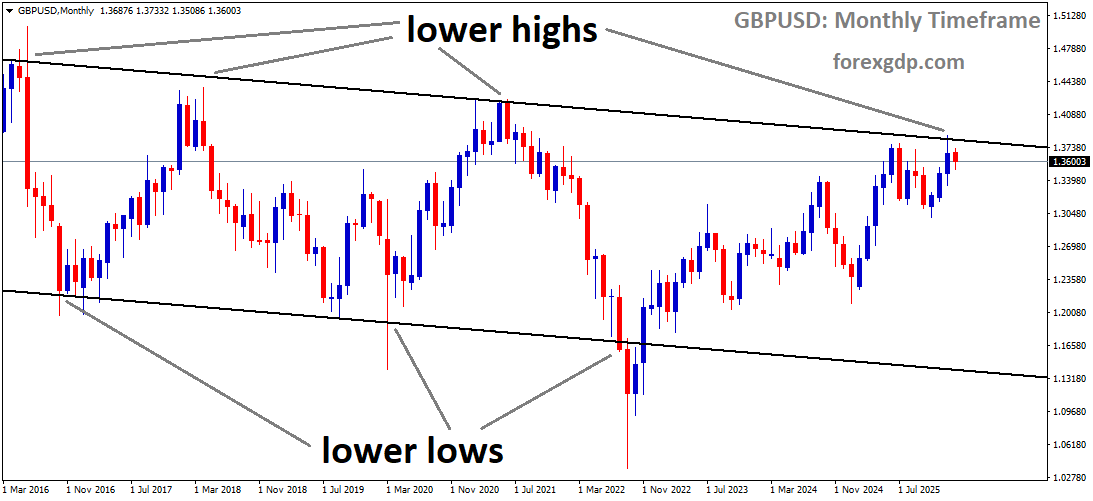
GBPUSD is moving in a downtrend channel, andthe market has reached the lower high area of the channel
This balance between supporting economic growth and controlling inflation is central to the Fed’s strategy. For currency markets, it means that expectations can shift quickly based on new data or changes in official tone. The US Dollar reflects this uncertainty, reacting not just to what the Fed does, but to what it might do next.
How These Forces Shape GBP/USD
When viewed together, the current outlook for GBP/USD is shaped by two competing forces. On one side, the Pound is dealing with political uncertainty that could undermine confidence. On the other, the US Dollar is navigating a waiting period marked by delayed data and cautious central bank messaging.
Neither currency has a strong advantage at the moment. Instead, the pair is moving sideways as traders assess which set of risks will become more influential. Political headlines from the UK and economic releases from the US are likely to remain key drivers in the days ahead.
If political concerns in the UK deepen, the Pound could face renewed pressure. Meanwhile, clearer signals from US data could either support the Dollar or limit its upside, depending on what the numbers reveal.
Final Summary
The GBP/USD pair is currently caught between political uncertainty in the UK and cautious optimism in the US. The resignation of a senior UK government official has raised concerns about stability, weighing on the Pound Sterling. At the same time, the US Dollar is struggling to find direction as traders wait for delayed economic data and clearer guidance from the Federal Reserve.
With interest rates expected to remain steady in the near term and potential cuts later in the year, market focus remains firmly on upcoming data and political developments. Until greater clarity emerges, GBP/USD is likely to remain sensitive to headlines and shifting expectations on both sides of the Atlantic.
EURUSD supported by weakening dollar sentiment tied to Fed outlook
The euro started the week on a strong note against the US dollar, extending its upward move for a second day in a row. This steady performance reflects a mix of improving confidence in the Eurozone, shifting expectations around US monetary policy, and a generally brighter mood across global financial markets.
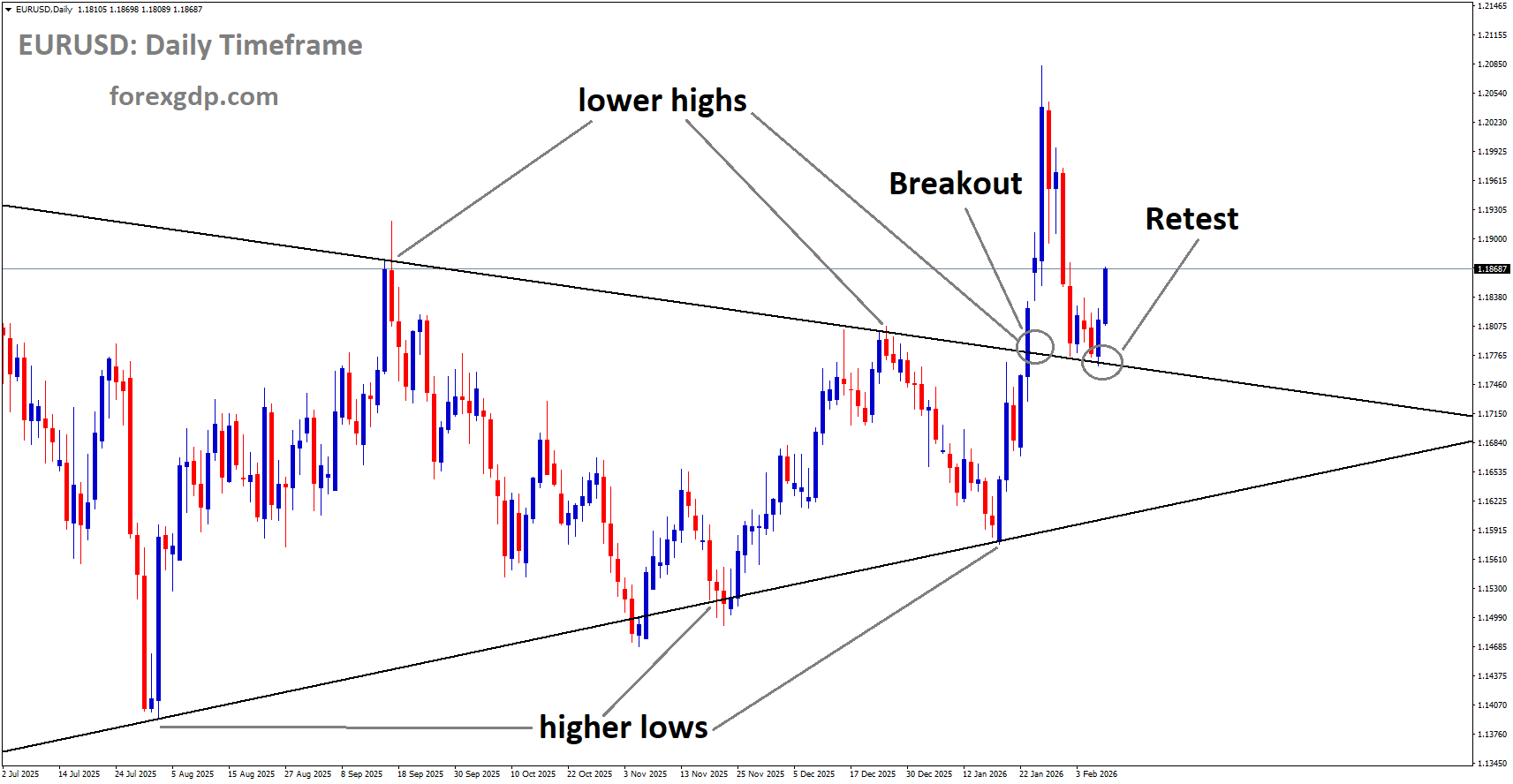
EURUSD is rebounding from the retest area of the broken symmetrical Triangle pattern
At the heart of this move is a growing belief that economic conditions in Europe may be stabilizing after a long period of uncertainty. At the same time, the US dollar has been under pressure as investors rethink the future path of interest rates in the United States. Together, these forces are shaping a market environment that currently favors the euro.
Improving Investor Confidence Lifts the Euro
One of the key drivers behind the euro’s recent strength is a noticeable improvement in investor sentiment across the Eurozone. Fresh data shows that investors are feeling more optimistic about the region’s economic outlook, marking a meaningful shift from the cautious tone seen in recent months.
This renewed confidence is especially important because sentiment often acts as an early signal of broader economic trends. When investors feel more positive, it suggests expectations of better growth, more stable demand, and fewer downside risks. For the euro, this kind of support can be powerful, particularly when it contrasts with uncertainty elsewhere.
Germany, the Eurozone’s largest economy, has been a major focus of this optimism. Investors appear more confident that the country can navigate recent challenges, helped by signs of stabilization in global growth. Stronger activity in major economies outside Europe is also feeding into this improved outlook, giving investors reasons to believe that the worst may be behind them.
US Dollar Weighed Down by Rate Cut Expectations
While the euro benefits from positive sentiment at home, the US dollar is facing its own set of challenges. Recent economic data from the United States has raised concerns about the strength of the labor market, leading investors to expect further action from the Federal Reserve.
Weaker employment figures have sparked debate about whether current borrowing costs are too restrictive for the US economy. As a result, expectations for future interest rate cuts have grown, putting pressure on the dollar. When markets believe that rates may move lower, a currency often loses some of its appeal, especially compared to alternatives backed by steadier policy signals.
This shift in expectations stands in contrast to the tone coming from the European Central Bank. While US policymakers appear divided, European officials have maintained a more consistent message, emphasizing patience and continuity. This difference in outlook has created a clear policy gap that currently favors the euro over the dollar.
Asian Developments Add to Dollar Weakness

Events in Asia have also played a role in shaping market sentiment at the start of the week. Political developments in Japan brought a sense of stability that reassured investors and triggered a strengthening of the Japanese yen.
A stronger yen often puts indirect pressure on the US dollar, especially when traders reduce positions that had previously favored dollar strength. In this case, the reaction suggests that markets were positioned for more uncertainty and were forced to adjust quickly once stability became the dominant theme.
This shift added to the dollar’s struggles and reinforced the broader narrative of a softer US currency. When combined with changing expectations around US interest rates, the impact from Asia helped set the tone for a weaker dollar across global markets.
Central Bank Voices Remain in Focus
As the week unfolds, attention is turning toward comments from central bank officials on both sides of the Atlantic. In Europe, policymakers are expected to stick closely to the message delivered at the most recent policy meeting. That message emphasized a steady approach, with decisions guided by incoming data rather than short-term market moves.
There is little reason to believe that European officials will signal any major changes in direction. This consistency has been welcomed by investors, who often favor clarity and predictability when making long-term decisions.
In the United States, the situation appears more complex. Several Federal Reserve officials are scheduled to speak, and their views may highlight ongoing differences within the policy committee. Some members are expected to support the idea of lower borrowing costs to protect jobs and economic momentum, while others may argue for a more cautious approach.
This internal debate adds another layer of uncertainty for the dollar. When policy direction is unclear, markets tend to hesitate, and that hesitation can weigh on a currency’s performance.
Mixed US Data Fails to Inspire Confidence
Recent economic releases from the United States have done little to restore confidence in the dollar. While some indicators have shown resilience, they have not been strong enough to offset concerns raised by softer labor market data.
Consumer sentiment has improved, suggesting that households feel somewhat better about the economic outlook. However, this improvement has not translated into stronger support for the dollar, as investors remain focused on the broader picture. Concerns about employment and growth continue to dominate discussions, limiting the impact of more positive data points.
This uneven performance highlights a key challenge for the dollar. Without clear signs of strength across multiple areas of the economy, it is difficult for the currency to regain momentum, especially when other regions are showing signs of recovery.
Key Economic Releases Ahead
Looking ahead, markets are preparing for several important economic updates from the United States later in the week. These releases are expected to provide deeper insight into the health of the economy and may influence expectations around future policy decisions.

Employment data will be closely watched, as it remains central to the Federal Reserve’s thinking. Retail activity and inflation figures will also play a role in shaping the outlook. Together, these reports could either reinforce current expectations or prompt a reassessment of the path ahead.
Until then, the euro is likely to continue drawing support from a combination of improving confidence at home and uncertainty abroad. The balance of risks currently appears tilted in its favor, at least in the near term.
Why the Euro’s Strength Matters
The euro’s recent performance is about more than just short-term market moves. It reflects a broader shift in how investors view the balance between Europe and the United States. After a long period in which the US economy appeared to outpace its peers, the gap may be narrowing.
Improving sentiment in Europe suggests that investors are becoming more comfortable with the region’s prospects. At the same time, questions around US growth and policy direction are becoming harder to ignore. This changing dynamic has important implications not just for currencies, but for global investment flows more broadly.
Final Summary
The euro’s strong start to the week is being driven by a combination of improving investor confidence in the Eurozone and growing doubts about the future path of US monetary policy. Better sentiment data from Europe, signs of stability in global growth, and political developments in Asia have all contributed to a weaker US dollar.
Meanwhile, differences in tone between the European Central Bank and the Federal Reserve are reinforcing this trend. With key economic data still ahead, markets remain cautious but increasingly receptive to the idea that the euro may continue to benefit from the current global backdrop.
As long as confidence in Europe holds and uncertainty in the United States persists, the euro is likely to remain well supported, reflecting a shifting balance in global economic expectations.
USDJPY steadies after political shake-up sparks brief volatility
The US Dollar and the Japanese Yen started the week moving in opposite directions, driven by political events in Japan and shifting expectations around US monetary policy. Early trading saw strong demand for the Yen following a decisive election outcome, while the Dollar struggled to find its footing as investors reassessed the outlook for interest rates in the United States.
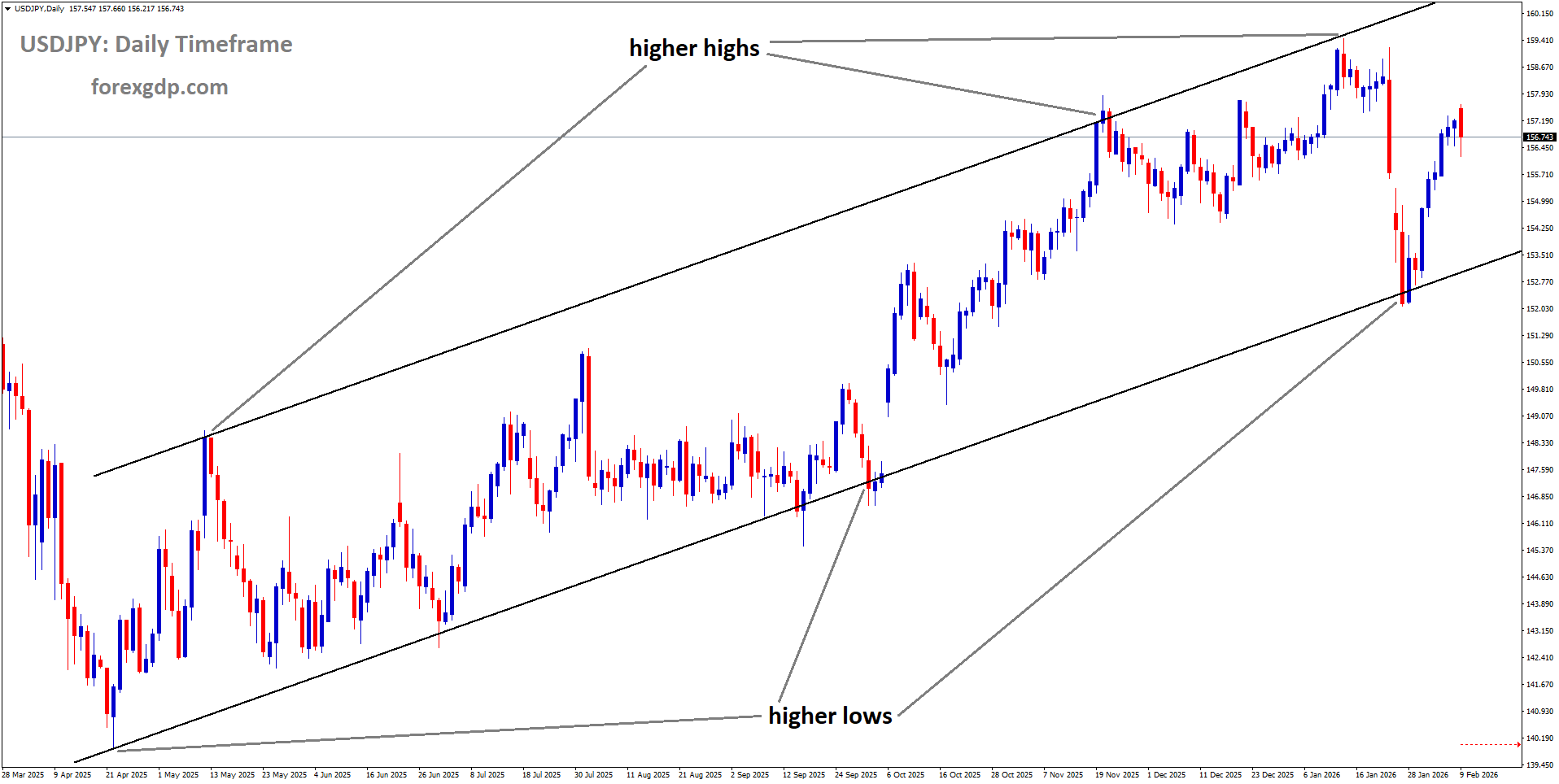
USDJPY is moving in an ascending channel, and the market has rebounded from the higher low area of the channel
As the day progressed, some of the initial Yen strength faded and the Dollar recovered part of its losses. Even so, the broader mood in the market suggests caution. Traders are weighing political stability in Japan against long-term fiscal risks, while also keeping a close eye on the US economy and the Federal Reserve’s next steps.
This mix of political confidence, fiscal uncertainty, and central bank speculation is shaping how investors view the USD/JPY pair in the near term.
Japan’s Election Brings Clarity and Short-Term Confidence
Japan’s snap election delivered a clear and powerful mandate for Prime Minister Sanae Takaichi and her Liberal Democratic Party. The scale of the victory removed doubts about leadership continuity and reduced fears of political gridlock. For currency markets, this kind of clarity often matters more than ideology, at least in the short run.
The immediate reaction was a stronger Yen. Many investors had been positioned against the Japanese currency, expecting uncertainty or policy surprises. When the election results confirmed a stable government instead, those positions were quickly unwound. This rush to reduce exposure gave the Yen a noticeable boost during early trading.
Another factor supporting the Yen was strong messaging from Japanese officials. Senior figures, including the Finance Minister and the country’s top currency diplomat, repeated warnings about excessive currency moves. These statements reminded markets that authorities are watching closely and are willing to step in if needed. Even without direct action, such comments can be enough to cool speculative behavior.
However, this initial surge in confidence did not last. Once the excitement of the election result settled, investors began looking beyond the headlines and toward the longer-term implications of Takaichi’s policy agenda.
Debt Concerns Limit the Yen’s Staying Power
While political stability is usually positive for a currency, Japan’s deeper challenges remain unresolved. Prime Minister Takaichi is widely associated with expansionary fiscal policies aimed at boosting growth and supporting households. These plans are popular domestically, but they come with a cost.
Japan already carries a heavy debt burden, and government finances are stretched. Markets are increasingly aware that further spending could add pressure to public finances rather than ease it. As this reality sinks in, enthusiasm for a sustained Yen recovery becomes more muted.
This is why the so-called “Takaichi trade,” which previously drove strong Yen gains, has been slower to return. Investors appear reluctant to commit to aggressive Yen buying when the longer-term outlook includes rising debt risks and limited room for fiscal maneuvering.
In other words, while the election result removed uncertainty, it did not remove risk. That distinction matters. Stability can support a currency for a while, but concerns about debt and fiscal sustainability tend to weigh on confidence over time.
The US Dollar Faces Its Own Set of Challenges
At the same time, the US Dollar is dealing with pressure from a different direction. Recent economic data from the United States, especially related to the labor market, has come in weaker than expected. This has prompted investors to rethink how aggressive the Federal Reserve can be with interest rates.
Hopes of additional rate cuts have grown as signs emerge that the US economy may be losing momentum. Lower interest rates generally make a currency less attractive, as returns on Dollar-based assets decline. This has kept the Dollar on the defensive, even as it attempts to recover from earlier losses against the Yen.

Adding to the uncertainty is the tone coming from Federal Reserve officials. Policymakers are expected to speak publicly in the coming days, and markets anticipate mixed messages. Some officials may focus on slowing growth and the need for support, while others may emphasize inflation risks and caution against moving too quickly.
These internal differences make it harder for investors to form a clear view of future policy. As a result, the Dollar remains sensitive to every new data release and public comment from central bank leaders.
Key US Data Could Shift Market Sentiment
Looking ahead, attention is firmly on upcoming US economic reports. Employment data later in the week is expected to play a major role in shaping expectations around Federal Reserve policy. Strong results could ease fears of an economic slowdown and offer support to the Dollar. Weak results, on the other hand, would likely reinforce calls for further easing.
This uncertainty keeps traders cautious. Rather than making bold bets, many are waiting for clearer signals before committing to a firm direction. In the meantime, the balance between US rate expectations and Japanese fiscal concerns continues to define market behavior.
What makes this moment particularly interesting is that neither currency has a clear advantage. The Yen benefits from political stability and official vigilance, but suffers from long-term debt worries. The Dollar remains a global safe haven, yet faces questions about growth and monetary support at home.
Final Summary
The recent moves in the USD/JPY pair reflect a complex mix of political confidence, fiscal risk, and central bank uncertainty. Japan’s election delivered stability and briefly strengthened the Yen, but concerns about government debt are limiting enthusiasm for a lasting recovery. Meanwhile, the US Dollar is under pressure as investors anticipate further action from the Federal Reserve in response to softer economic data.
With major US reports still ahead and policymakers on both sides sending cautious signals, markets remain in wait-and-see mode. Until clearer trends emerge, shifts in sentiment are likely to continue, driven by headlines, data releases, and evolving expectations around economic policy.
USDCHF weakens as confidence grows in a pause from Switzerland’s central bank
The US Dollar has been facing steady pressure against the Swiss Franc as traders take a cautious stance ahead of key economic and policy signals. The USD/CHF pair has continued to drift lower, reflecting a broader sense of uncertainty in global markets. At the center of this move is growing focus on the Swiss National Bank’s policy direction and upcoming US economic data that could shape expectations for Federal Reserve decisions later in the year.
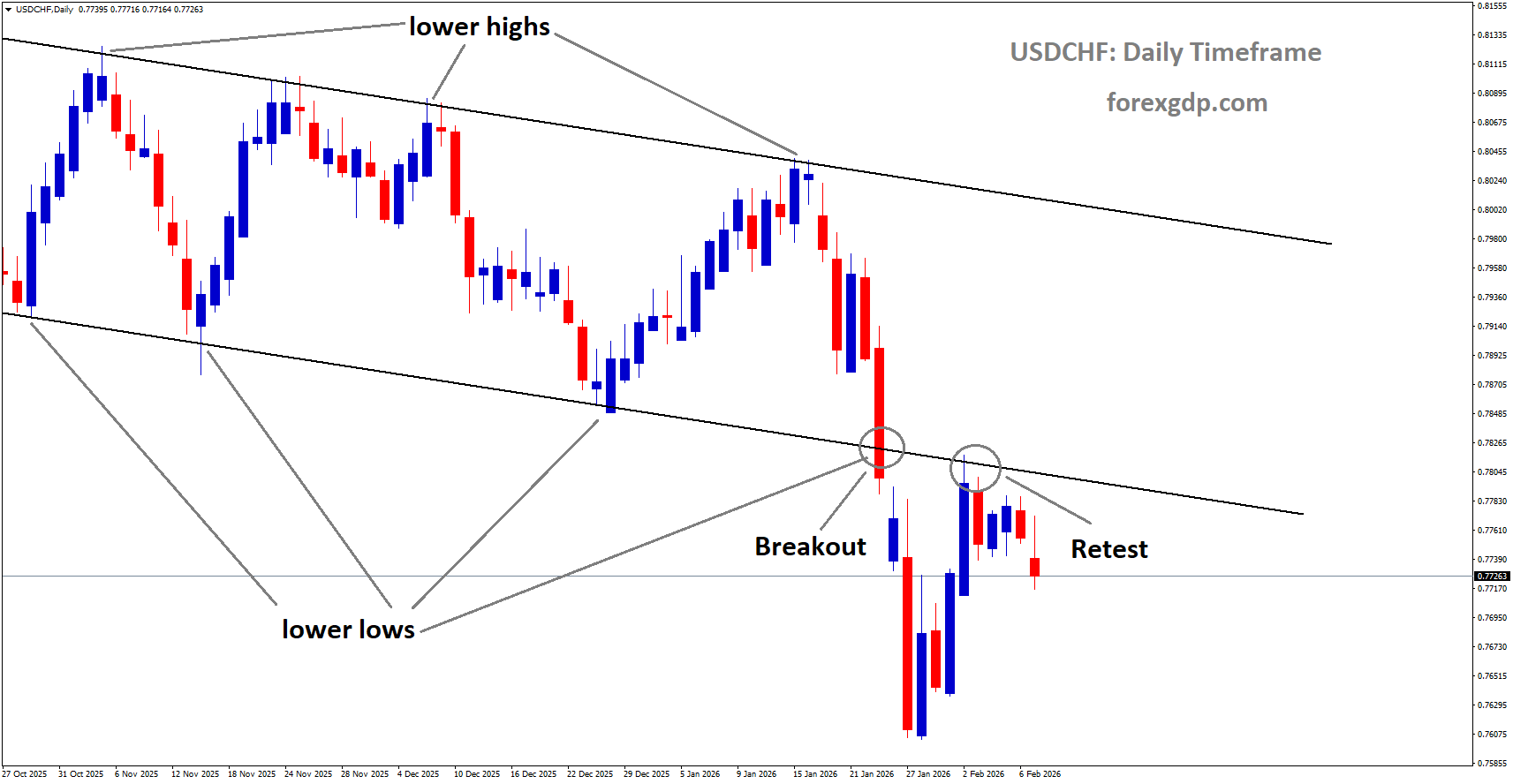
USDCHF is falling from the retest area of the broken downtrend channel
Investors are currently balancing two major themes. On one side, there is the Swiss National Bank’s commitment to price stability in an environment of weak inflation. On the other, there is a US economy that appears to be slowing but not stalling, with policymakers carefully watching labor market and inflation trends. Together, these forces are shaping sentiment around the USD/CHF pair.
Swiss National Bank Stays Focused on Inflation Risks
The Swiss National Bank remains firmly focused on its core mandate of maintaining price stability. Policymakers have signaled that they are not in a hurry to change their current stance, as inflation pressures in Switzerland remain subdued. This cautious approach has reassured markets that the central bank will continue to act conservatively until there is clear evidence of sustained inflation.
SNB Chairman Martin Schelegl has emphasized that inflation remains his primary concern. He has made it clear that the bank is prepared to take whatever steps are necessary to protect price stability. These remarks reinforce the view that the SNB is closely monitoring economic conditions and will not rush into policy adjustments that could undermine its objectives.
This steady and predictable tone from the SNB has supported confidence in the Swiss Franc. For many investors, the currency continues to serve as a safe option during periods of global uncertainty. As long as inflation remains weak and the central bank maintains its cautious stance, the Franc is likely to stay well supported.
US Dollar Weakens Ahead of Delayed Economic Releases
The US Dollar has struggled as traders grow more cautious ahead of several important economic reports. Some of these data releases were delayed due to a partial government shutdown, adding to uncertainty and reducing short-term conviction in the currency.
Market participants are particularly focused on upcoming labor market and inflation figures. These reports are seen as critical for assessing whether the US economy is stabilizing or heading toward a more pronounced slowdown. Until clearer signals emerge, many traders appear reluctant to make strong directional bets on the Dollar.
This hesitation has contributed to broader USD softness across major currency pairs. Against the Swiss Franc, the Dollar’s lack of momentum has been especially noticeable, as investors favor currencies backed by stable policy outlooks and lower perceived risks.
US Jobs Report in Focus as Labor Market Stabilizes
One of the most anticipated releases is the January US jobs report. Expectations point toward a labor market that is cooling but not collapsing. Forecasts suggest modest job growth, while the unemployment rate is expected to remain steady. This combination would support the idea that the labor market is entering a more balanced phase after years of strong expansion.
A stabilizing labor market is a key piece of the puzzle for policymakers. It suggests that previous policy tightening is having its intended effect without triggering widespread job losses. For investors, this scenario supports a wait-and-see approach, as neither rapid growth nor sharp deterioration appears to be taking hold.
In addition to employment data, delayed consumer price index figures are also set to be released. Inflation readings will be closely examined for signs that price pressures are easing in a sustainable way. Together, these reports will play a major role in shaping near-term expectations for US monetary policy.
Federal Reserve Signals Patience on Rate Decisions
The Federal Reserve has consistently signaled that it is in no rush to make abrupt policy changes. Markets widely expect policymakers to keep interest rates unchanged at their next meeting, with potential adjustments later in the year if conditions allow.
Several Fed officials have recently shared their views on the economic outlook. San Francisco Fed President Mary Daly has noted that the economy may be entering a phase characterized by low hiring and low layoffs. While this environment suggests stability, she also acknowledged that conditions could shift, highlighting the need for continued monitoring.
Fed Governor Phillip Jefferson has echoed this data-dependent approach. He has emphasized that future policy decisions will be guided by incoming information and evolving assessments of the economic outlook. According to Jefferson, the labor market appears to be gradually stabilizing, which supports a cautious and measured policy path.

At the same time, Atlanta Fed President Raphael Bostic has warned that inflation has remained elevated for longer than expected. He has stressed that policymakers cannot afford to lose sight of inflation risks, even as growth shows signs of slowing. This balance between supporting the economy and controlling inflation remains at the heart of Fed decision-making.
Diverging Central Bank Paths Shape Currency Sentiment
The contrast between the Swiss National Bank and the Federal Reserve is an important driver of USD/CHF dynamics. While the SNB remains focused on guarding against weak inflation, the Fed is navigating a more complex environment marked by cooling growth and lingering price pressures.
This divergence creates uncertainty for currency markets. Investors must weigh the relative stability of Swiss policy against the evolving outlook in the United States. When US data raises questions about growth or inflation, the Dollar tends to lose ground to currencies backed by steadier policy expectations.
As a result, shifts in sentiment around central bank priorities can quickly influence the USD/CHF pair. Comments from policymakers, even when they reinforce existing views, can have an outsized impact in a market environment driven by caution and data sensitivity.
What to Watch in the Days Ahead
Looking forward, attention will remain firmly on economic data and central bank communication. The upcoming US jobs and inflation reports will be critical in shaping expectations for Federal Reserve actions later in the year. Any surprises could prompt a reassessment of the current outlook.
At the same time, traders will continue to listen closely to signals from the Swiss National Bank. While no immediate changes are expected, any shift in tone regarding inflation or economic risks could influence demand for the Swiss Franc.
In an environment marked by uncertainty and careful positioning, the USD/CHF pair is likely to remain sensitive to headlines and data releases. Investors are not looking for dramatic moves, but rather for clarity on the direction of monetary policy on both sides of the Atlantic.
Summary
The USD/CHF pair has been under pressure as traders weigh cautious signals from central banks and await key US economic data. The Swiss National Bank remains focused on price stability amid weak inflation, supporting confidence in the Swiss Franc. Meanwhile, the US Dollar has softened as investors look ahead to delayed jobs and inflation reports that will shape expectations for Federal Reserve policy. With the Fed signaling patience and a data-driven approach, and inflation risks still in focus, market sentiment remains cautious. In the near term, clarity from upcoming economic releases and central bank commentary will be crucial in guiding the next moves in USD/CHF.