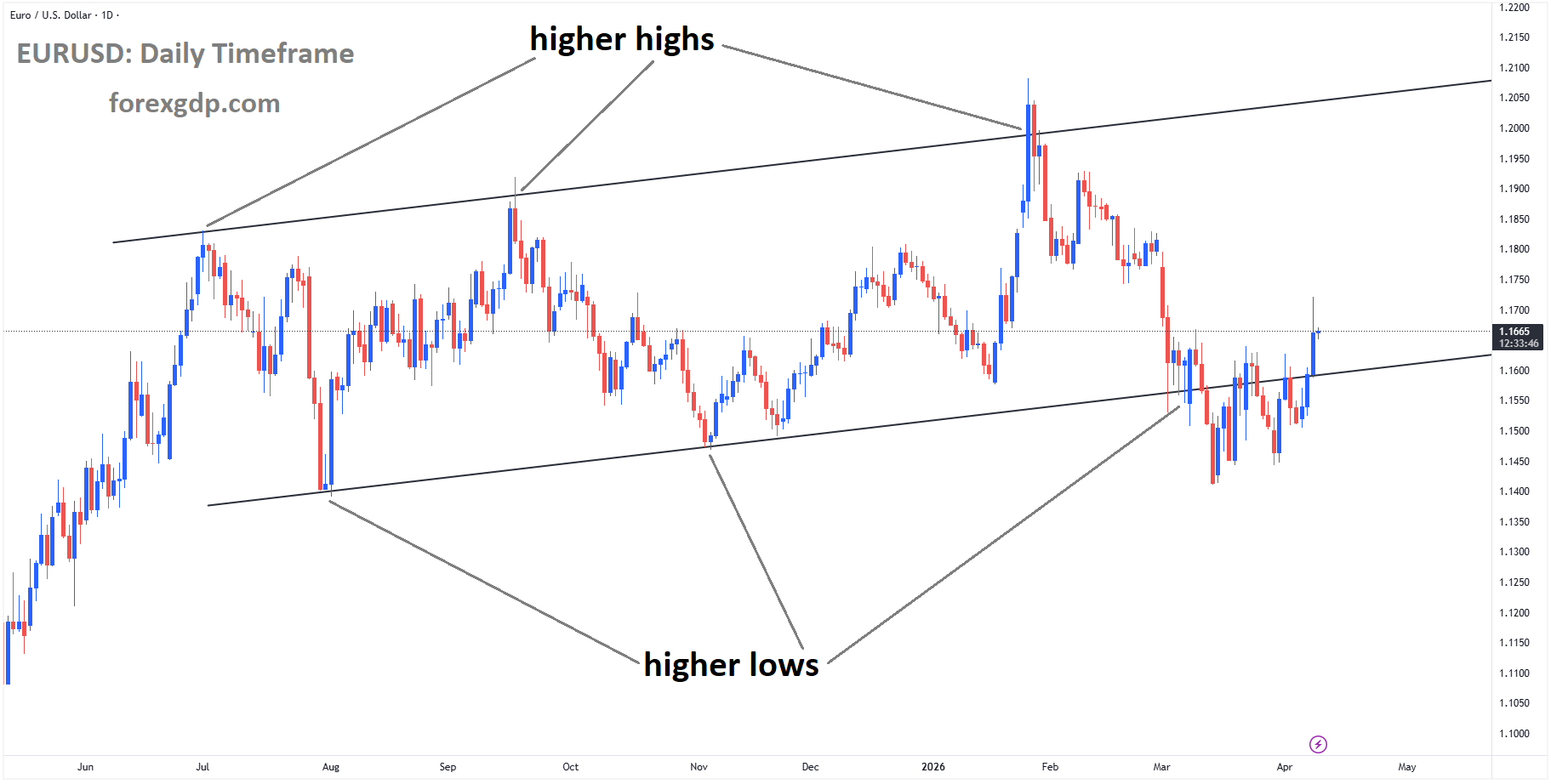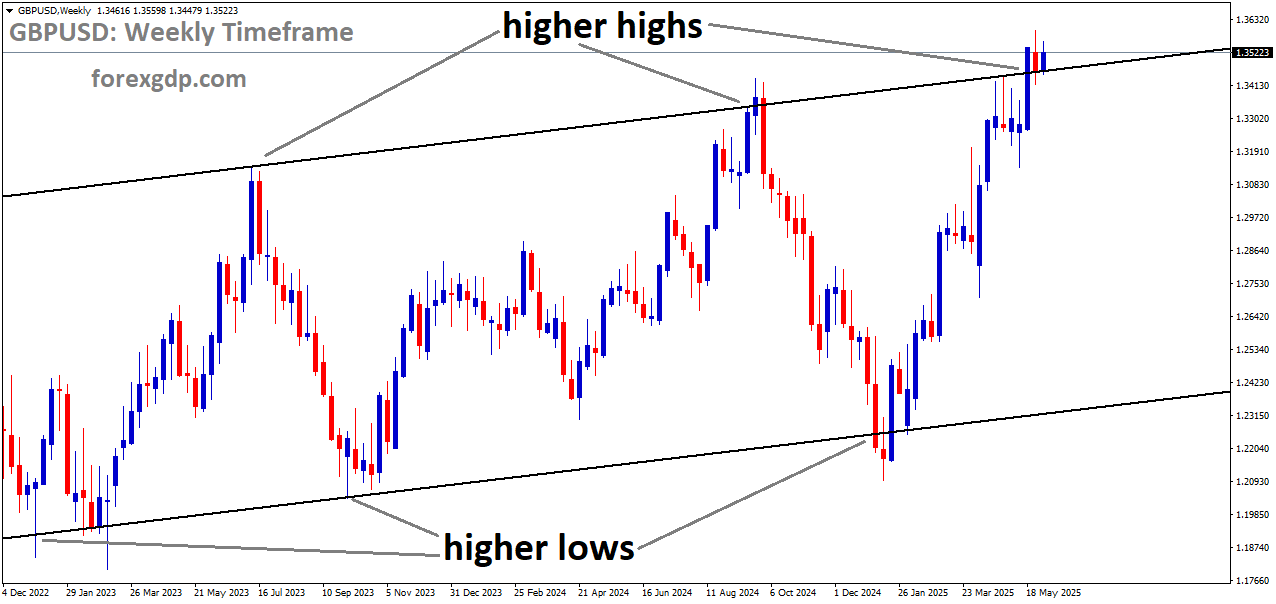

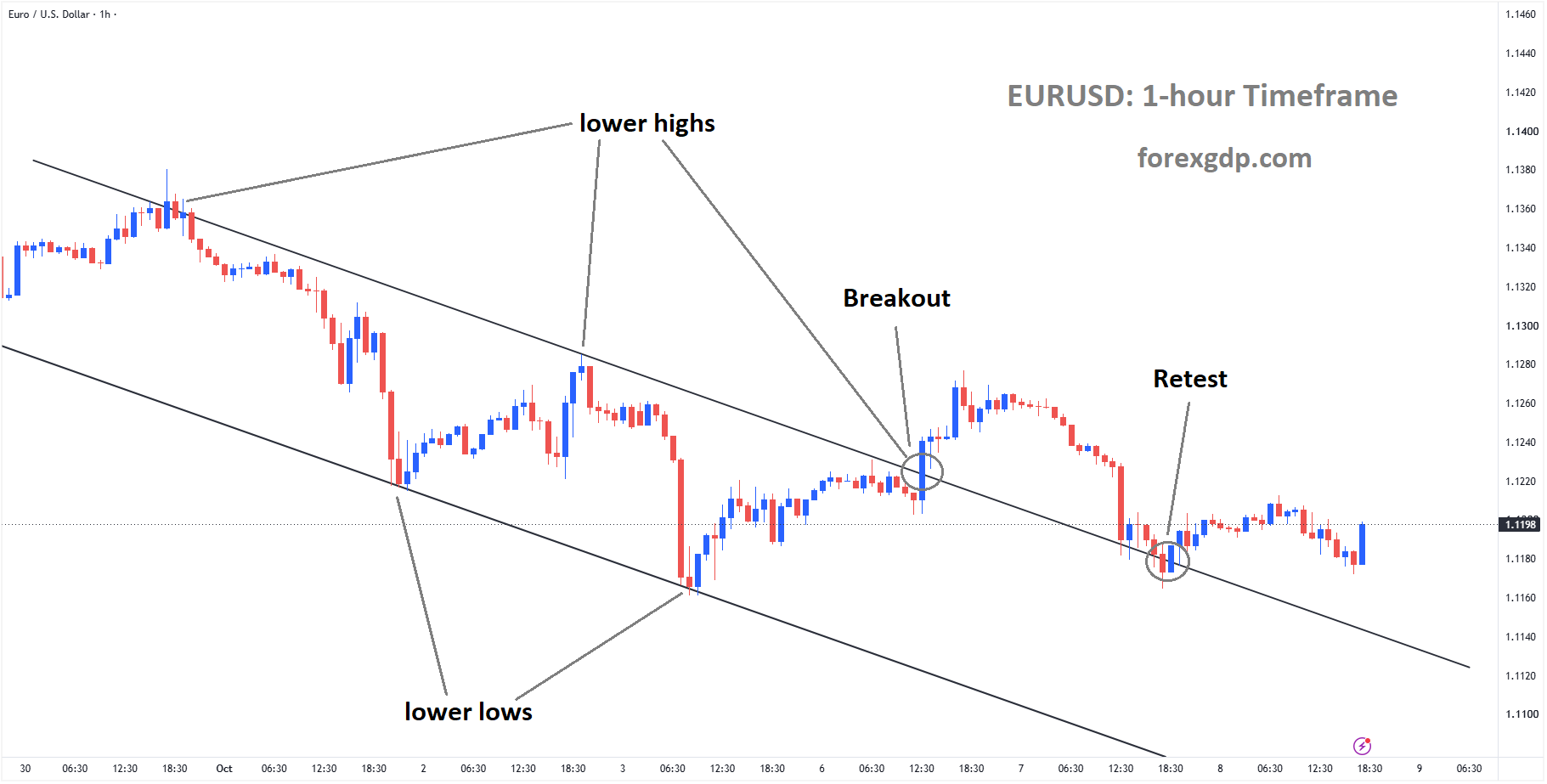
EURUSD is rebounding from the retest area of the broken descending channel
EURUSD Edges Higher as French Fiscal Risks Keep Traders Cautious
EURUSD has regained some ground, but the Euro still faces a difficult mix of political uncertainty and interest rate concerns. France’s public finances remain a major source of unease, while the latest Federal Reserve meeting minutes show that US policymakers continue to take inflation seriously.
The recovery reflects a pause in pressure on the shared currency, yet the wider concerns have not disappeared. Investors are weighing whether France can deliver meaningful budget savings and whether the Fed could raise interest rates again.
Attention is also turning to US weekly jobless claims and upcoming comments from Federal Reserve officials. These developments could influence expectations for US monetary policy and shape demand for the Dollar.
France’s Budget Problems Keep Investors Cautious
France’s fiscal position has become an important issue for the Euro. Investors want to see a credible plan to reduce the country’s budget deficit, but political divisions make that task harder.
Prime Minister Sébastien Lecornu’s minority government has proposed a substantial savings programme to improve public finances. The challenge is turning that proposal into measures that lawmakers will approve and the government can carry out.
A minority government has limited room to act without support from other political groups. Spending reductions can face resistance from parties concerned about public services, household incomes and the wider economy. That makes negotiations difficult, especially when the proposed changes affect large groups of voters.
For investors, announcing savings is only the first step. They also need confidence that those savings are realistic and that the government can follow through.
If the measures are weakened, delayed or rejected, concerns about France’s debt could deepen. This uncertainty is keeping investors cautious about the Euro even as EURUSD recovers.
The Presidential Election Adds to the Challenge
The approaching 2027 presidential election creates another obstacle to France’s efforts to repair its finances.
Budget discipline often involves unpopular choices. Governments may need to limit spending, change benefits or increase revenue. Political parties can become less willing to support these measures when an election is approaching.
This leaves France facing competing demands. Investors want stronger control over the deficit, while voters may resist policies that place more pressure on household budgets or reduce public services.
The election also raises questions about how long any current plan will last. Even if the government secures approval for its proposals, a future administration could change them.
Currency investors therefore have to consider both the immediate budget negotiations and the longer political timetable. A plan that looks workable today may carry less weight if its future remains uncertain.
The key issue is whether France can establish a path towards healthier public finances that survives political disagreements. Until that becomes clearer, fiscal concerns may continue to affect confidence in the shared currency.
Why French Debt Concerns Matter Across the Eurozone
France’s financial difficulties matter beyond its own borders because it is one of the Eurozone’s largest economies.
When investors become worried about a major member country’s debt, they may reassess risks across the wider currency bloc. This can put pressure on government borrowing conditions and raise concerns about financial stability.
More expensive borrowing can make deficit reduction harder. Governments must devote more money to debt servicing, leaving less available for other spending priorities. That can create further political tension around budget decisions.
However, concerns about France’s finances do not automatically mean a sovereign debt crisis will occur. The immediate problem is uncertainty over how the government will manage its deficit and maintain investor confidence.
For the Euro, that uncertainty can still have consequences. Investors may become less willing to hold the currency when political disputes and debt concerns dominate the discussion.
A convincing agreement on spending and revenue could help ease those worries. Continued disagreement would leave an important source of pressure unresolved.
The ECB Faces a More Complicated Policy Balance

France’s fiscal problems also complicate expectations for the European Central Bank.
The ECB must assess inflation across the Eurozone while considering economic growth and financial conditions. Stress in government debt markets can make that balance more difficult.
Higher interest rates may help contain inflation, but they can also increase borrowing costs for governments, businesses and households. If debt concerns intensify, investors may become less confident that the ECB will deliver further rate increases.
That matters for EURUSD because expectations for European and US interest rates influence the appeal of each currency.
If investors believe the ECB has less room to tighten policy while the Fed remains open to another increase, the Dollar may retain an advantage. Still, European policy decisions will depend on the broader economic picture, rather than France’s budget situation alone.
Fed Minutes Keep Inflation in Focus
The latest Federal Open Market Committee minutes delivered a firm message on inflation. Policymakers continued to view it as a major risk, keeping the possibility of another interest rate increase in the discussion.
For the Dollar, this is significant. Expectations that US rates could stay elevated can support demand for the currency, particularly when other economies face greater policy uncertainty.
The minutes suggest that Fed officials want more confidence that inflation is moving towards their goal. They appear reluctant to assume that the problem has been fully resolved.
However, keeping another hike under consideration is different from committing to one. The next decision will depend on incoming economic information and how officials judge the balance between inflation risks and growth.
This leaves investors watching each new release for evidence that could strengthen or weaken the case for further tightening.
US Jobless Claims and Fed Comments Take Centre Stage
US weekly initial jobless claims are the next important release in focus. The report provides a timely view of how many people are applying for unemployment benefits.
Relatively low claims could suggest that employers are still retaining workers, giving the Fed more room to maintain a firm policy stance. A sustained increase could point to a cooling labour market and encourage a more cautious approach.
One report alone is unlikely to settle the interest rate debate. Investors will assess it alongside inflation figures and other measures of economic activity.
Comments from Fed officials may also help explain how they interpret the latest information. Any change in their language about inflation, employment or further tightening could influence Dollar demand.
Final Summary
EURUSD has recovered some ground, but its progress remains tied to unresolved policy concerns on both sides of the Atlantic.
France’s budget negotiations and the approaching presidential election are weighing on confidence in the Euro. At the same time, the Fed’s continued focus on inflation is keeping another US rate increase under consideration.
The next direction will depend on whether France makes credible progress on its finances and whether US economic data changes the Fed’s assessment. Jobless claims and central bank commentary remain important developments to watch.
USDCHF Faces Pressure as Inflation Worries Fuel Franc Demand
USDCHF is drawing attention as investors weigh the outlook for US interest rates against Switzerland’s calmer inflation environment. The US Dollar continues to benefit from expectations that the Federal Reserve will keep monetary policy tight, while the Swiss Franc faces questions about how long the Swiss National Bank will leave borrowing costs unchanged.
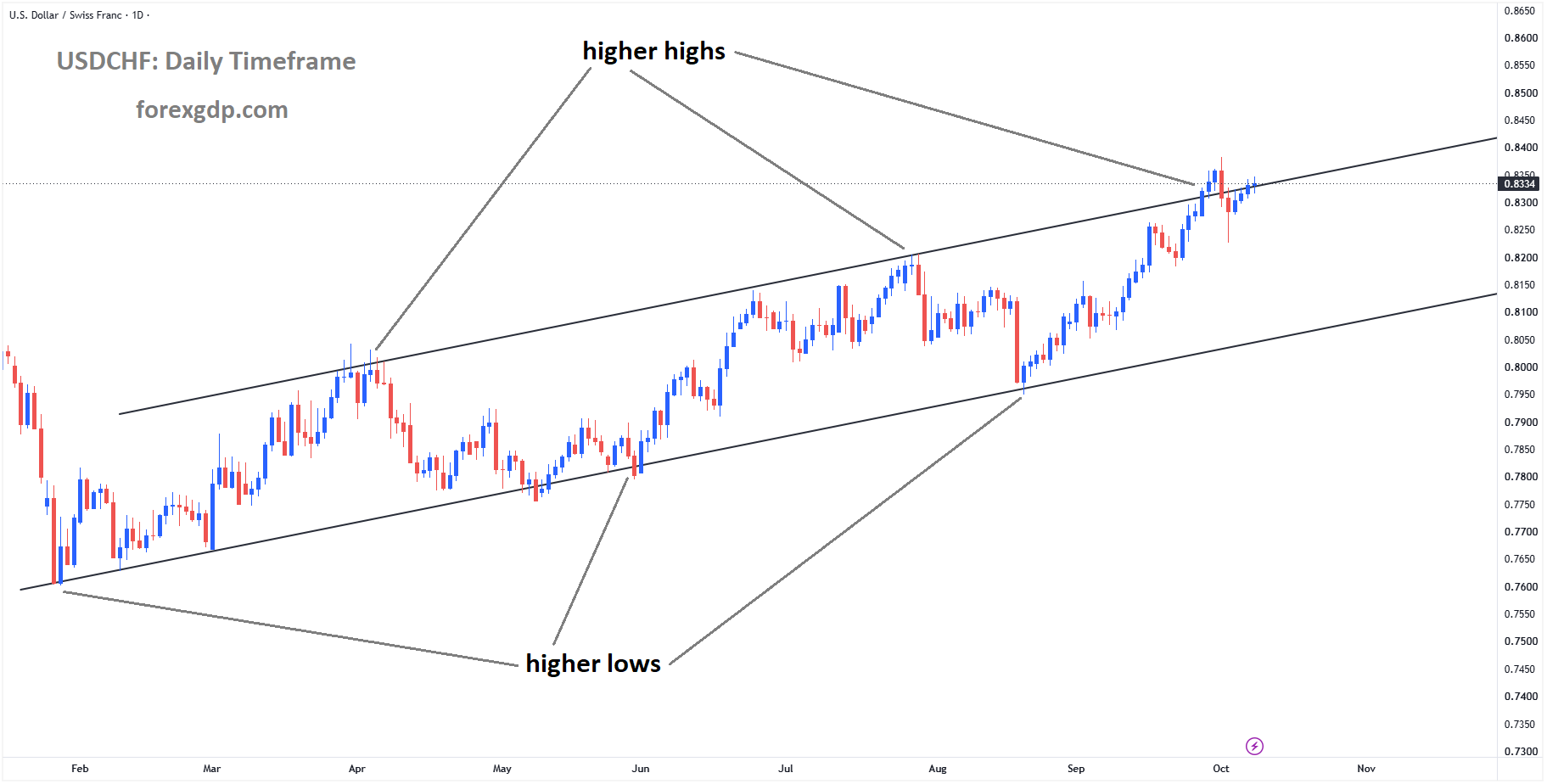
USDCHF reached the higher high area of the ascending channel
The pair paused after three days of gains during Asian trading on Thursday. Even so, the broader factors supporting demand for the Dollar remain in focus. Firm US bond yields and concerns about inflation have kept investors cautious about expecting an early shift toward easier Federal Reserve policy.
Switzerland presents a different picture. Inflation has increased, partly because of higher energy costs, but remains within the range the SNB associates with price stability. This difference between the two economies helps explain why interest rate expectations are playing such a large role in the USDCHF discussion.
Fed Policy Keeps the US Dollar in Focus
The Federal Reserve’s approach to inflation remains a central influence on the US Dollar. When policymakers signal that borrowing costs may need to stay high, investors have less reason to expect an immediate reduction in US interest rates.
The September meeting minutes described in the market report reflected broad support for tighter policy. They also indicated that many officials considered another increase appropriate before the end of the year.
That message matters because currency markets respond to expectations about future decisions, as well as decisions already made. Even if the Fed leaves rates unchanged at its next meeting, investors may continue to favour the Dollar if they believe another increase remains possible.
A pause would give policymakers more time to assess economic conditions. It would not necessarily mean that their concerns about inflation had faded. For USDCHF, the distinction is important: a central bank can hold rates steady while still sending a firm message about keeping inflation under control.
Higher Treasury Yields Add to Dollar Appeal
US Treasury yields are another major part of the currency picture. Elevated yields can make US government debt more attractive to investors seeking income, particularly when returns elsewhere are lower.
Foreign investors purchasing Dollar-denominated assets may need to buy the US currency first. This can support demand for the Greenback, although the relationship is not automatic. Currency hedging, investor confidence and expectations about future policy also affect how money moves across borders.
Rising yields can reflect several concerns. Investors may expect interest rates to remain high for longer, demand greater compensation for inflation, or become more cautious about holding longer-term bonds.
For USDCHF, the key issue is whether US yields remain attractive compared with Swiss returns. A lasting gap can encourage investors to favour Dollar assets. However, that advantage may weaken if expectations for US borrowing costs begin to change.
Fed Remarks Could Clarify the Next Policy Step
Investors are also watching comments from Federal Reserve officials for a clearer sense of the policy direction. Remarks from Christopher Waller and Alberto Musalem are among the communications highlighted in the report.
The most useful clues will concern how officials assess inflation, employment and the effect of earlier rate increases. If they believe inflation remains too persistent, they may emphasise the need to keep policy restrictive.
If they see clearer signs that price pressures are easing, their language could become more cautious about further increases. That would give investors a reason to reassess some of the expectations currently supporting the Dollar.
Individual speeches still need to be viewed in context. One official’s comments do not establish a final decision for the entire committee. Markets will compare those remarks with incoming economic reports and the broader message from the Fed.
Swiss Rate Expectations Create a Different Picture

The Swiss Franc faces a separate set of monetary policy pressures. Economists cited in the report generally expect the Swiss National Bank to maintain its policy rate at zero for an extended period.
Such an outlook gives the Franc a limited interest rate advantage. When US assets offer higher returns, some investors may find holding Dollars more appealing than holding Swiss currency.
However, money market expectations suggest that traders see a possibility of Swiss rate increases next year. This creates a meaningful difference between economists’ forecasts and market pricing.
That disagreement leaves room for adjustments. If Swiss inflation stays contained, traders may reduce their expectations for tighter SNB policy. If price pressures become broader or more persistent, economists may reconsider their forecasts instead.
USDCHF will therefore remain sensitive to evidence that changes either view. The direction of Swiss policy is not settled simply because current inflation remains manageable.
Swiss Inflation Gives the SNB Room to Wait
Swiss inflation accelerated in September as energy costs increased. Despite that rise, inflation remained within the SNB’s price-stability range, reducing the immediate pressure for higher interest rates.
The source of inflation matters as much as the overall reading. A temporary increase in energy costs may require a different response from a lasting rise across goods, services and wages.
Policymakers will want to understand whether higher energy expenses are spreading into other parts of the economy. They will also consider whether households and businesses expect inflation to remain elevated.
For now, the inflation picture described in the report gives the SNB room to assess developments before changing policy. That more measured position contrasts with the inflation concerns keeping the Fed cautious about easing.
Safe-Haven Demand Remains Important for the Franc
Interest rate differences do not explain every move in USDCHF. The Swiss Franc also attracts investors during periods of uncertainty because of Switzerland’s reputation for economic and financial stability.
A deterioration in global confidence could increase demand for the Franc even when Swiss interest rates remain low. Political uncertainty, financial stress or concerns about economic growth can all change investors’ priorities.
This means the Dollar’s yield advantage operates alongside a separate influence: the desire to preserve capital during unsettled conditions. The balance between those forces can shift quickly.
Final Summary
USDCHF remains shaped by the contrast between firm US monetary policy expectations and a Swiss inflation environment that gives the SNB more room to wait. Elevated Treasury yields add to the Dollar’s appeal, while uncertainty about future Swiss rate increases keeps the Franc’s policy outlook in focus.
Fed communication, upcoming economic data and the persistence of Swiss inflation will help determine how those expectations develop. Global confidence also matters, as stronger safe-haven demand could provide the Franc with support beyond interest rate considerations.
AUDUSD Under Pressure as Dollar Demand Returns
The Australian Dollar has softened against the US Dollar as investors weigh the possibility of further interest rate increases in the United States. Minutes from the Federal Reserve’s latest policy meeting showed that officials remained concerned about inflation and were open to raising borrowing costs again.
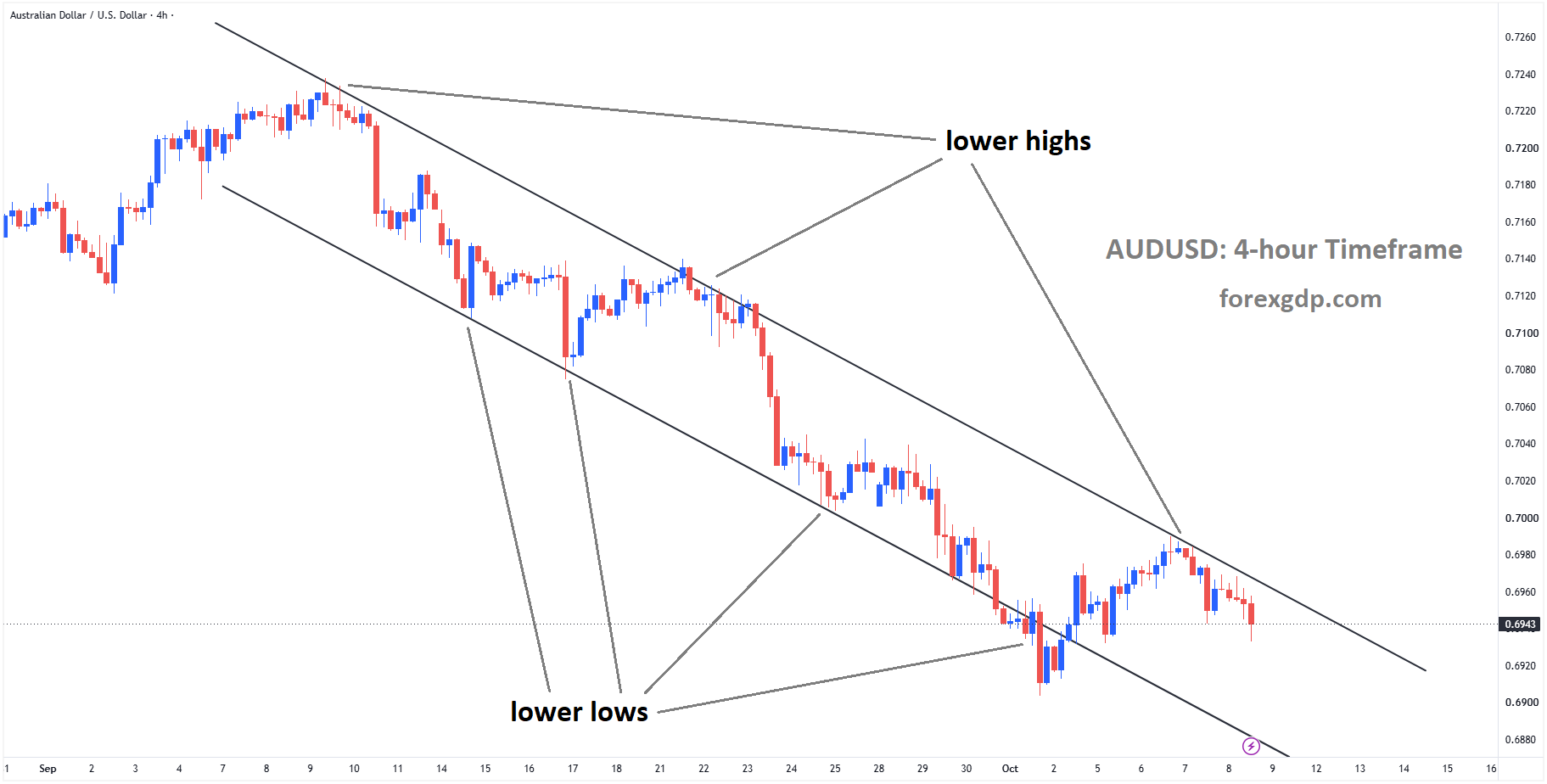
AUDUSD is falling from the lower high area of the descending channel
That message gave the US Dollar fresh support and left AUDUSD under pressure during Asian trading. Attention is now turning to US employment figures and comments from Federal Reserve officials, which could help shape expectations for the next policy decision.
Australia’s interest rate outlook is also attracting attention. Former Reserve Bank of Australia board member Ian Harper said another rate increase this year was possible, although he stopped short of describing it as likely. This leaves investors comparing two uncertain policy paths while watching for clearer evidence from economic data.
Fed Minutes Keep Inflation Concerns in Focus
The Federal Reserve’s meeting minutes reinforced the cautious message that accompanied its September interest rate increase. Officials supported that decision because inflation remained above the central bank’s target, and many believed further action could be necessary.
Most participants considered additional tightening appropriate at the time of the meeting. Almost all also saw a greater risk of inflation turning out higher than expected.
That distinction matters. Policymakers were not simply looking at whether inflation had eased recently. They were also considering whether that improvement would last and whether existing policy was restrictive enough to bring inflation under control.
When officials worry that inflation could remain stubborn, they have less reason to reduce borrowing costs. They may instead keep rates elevated for longer or raise them again if incoming figures show renewed pressure.
For currency markets, this can strengthen interest in the US Dollar. Higher US interest rates can make dollar-denominated investments more attractive, particularly when investors expect those returns to remain elevated.
September Rate Increase Shapes the Dollar’s Appeal
The Fed raised its benchmark interest rate by a quarter of a percentage point in September. The supplied report described this as its first increase since July 2023, making the decision an important change in the policy discussion.
The meeting minutes suggested that officials viewed the increase as part of their effort to address persistent inflation. They did not present it as a clear end to further action.
Westpac analysts highlighted the firm tone of the minutes, pointing to support for additional tightening and widespread concern about upside inflation risks.
This helped explain the renewed demand for the US Dollar. Investors had another reminder that the Fed could remain focused on inflation even as markets debated the timing of its next move.
For AUDUSD, that creates a challenge. The Australian Dollar needs its own sources of support to compete with a US currency benefiting from expectations of relatively high borrowing costs.
Investors Remain Uncertain About Another Fed Hike
Although the minutes carried a firm message, market expectations did not suggest that another immediate rate increase was certain.
The report placed the probability of a quarter-point increase at the October meeting at roughly 22%. That was considerably lower than the approximately 70% probability seen in the days after September’s decision.
This gap between the Fed’s language and market pricing shows why the outlook remains unsettled. Officials can believe more tightening may be needed without committing to a specific meeting.
The minutes also describe discussions held at an earlier point. Investors must weigh those views against economic information released afterward.
A fresh inflation report, a change in employment conditions or a shift in consumer spending could alter the case for another increase. As a result, traders are watching whether the next round of data supports the concerns expressed in the minutes.
The dollar’s direction will depend partly on whether investors move closer to the Fed’s cautious position or become more confident that further tightening can wait.
US Jobless Claims and Fed Comments Draw Attention

The next US weekly initial jobless claims report is one of the immediate events in focus. It offers a timely look at how many people are applying for unemployment benefits for the first time.
A relatively steady labour market could give the Fed more room to maintain a restrictive policy stance. A noticeable rise in claims, however, could raise questions about whether higher borrowing costs are placing greater pressure on the economy.
One weekly release rarely settles the policy debate. Investors usually look for a broader pattern before drawing firm conclusions about employment conditions.
Comments from Fed officials could provide further guidance. Markets will be listening for whether policymakers continue to emphasise inflation risks or place more weight on signs of slower activity.
Those remarks may also help clarify how broadly officials support another increase before the end of the year.
Australia’s Rate Outlook Offers a Counterweight
The Australian Dollar is not being driven by US developments alone. Expectations for the Reserve Bank of Australia remain an important part of the AUDUSD story.
Former RBA board member Ian Harper described a November interest rate increase as plausible, while making clear that it was not necessarily the most likely outcome.
His assessment leaves room for another increase without treating it as a settled decision. It also highlights how dependent the Australian policy outlook remains on incoming economic evidence.
According to the ASX Rate Tracker figures cited in the report, money markets assigned a 27% probability to another increase at the next RBA board meeting.
That level of pricing suggests investors recognised the possibility but were not strongly convinced it would happen. Harper’s comments may keep the discussion alive, though they represent a former board member’s assessment rather than an official commitment from the central bank.
If Australian data strengthens the case for higher rates, the Australian Dollar could receive support. If that case weakens, US policy expectations may continue to carry more influence over the pair.
Final Summary
AUDUSD is facing pressure as the Federal Reserve’s meeting minutes keep inflation concerns and further rate increases in the spotlight. The US Dollar has benefited from that firm policy message, even though investors remain uncertain about the timing of another move.
US jobless claims and comments from Fed officials will help shape the next stage of the debate. In Australia, the possibility of another RBA increase offers a potential source of support, but market expectations remain cautious.
The key issue is how new economic evidence changes the interest rate outlook in each country. That comparison will remain central to sentiment toward the Australian Dollar and the US Dollar.
NZDUSD Holds Steady as Higher Treasury Yields Support the Dollar
The New Zealand Dollar is caught between two competing forces. Rising US government bond yields are helping the US Dollar regain strength, while expectations of further interest rate increases in New Zealand are giving the Kiwi some support.
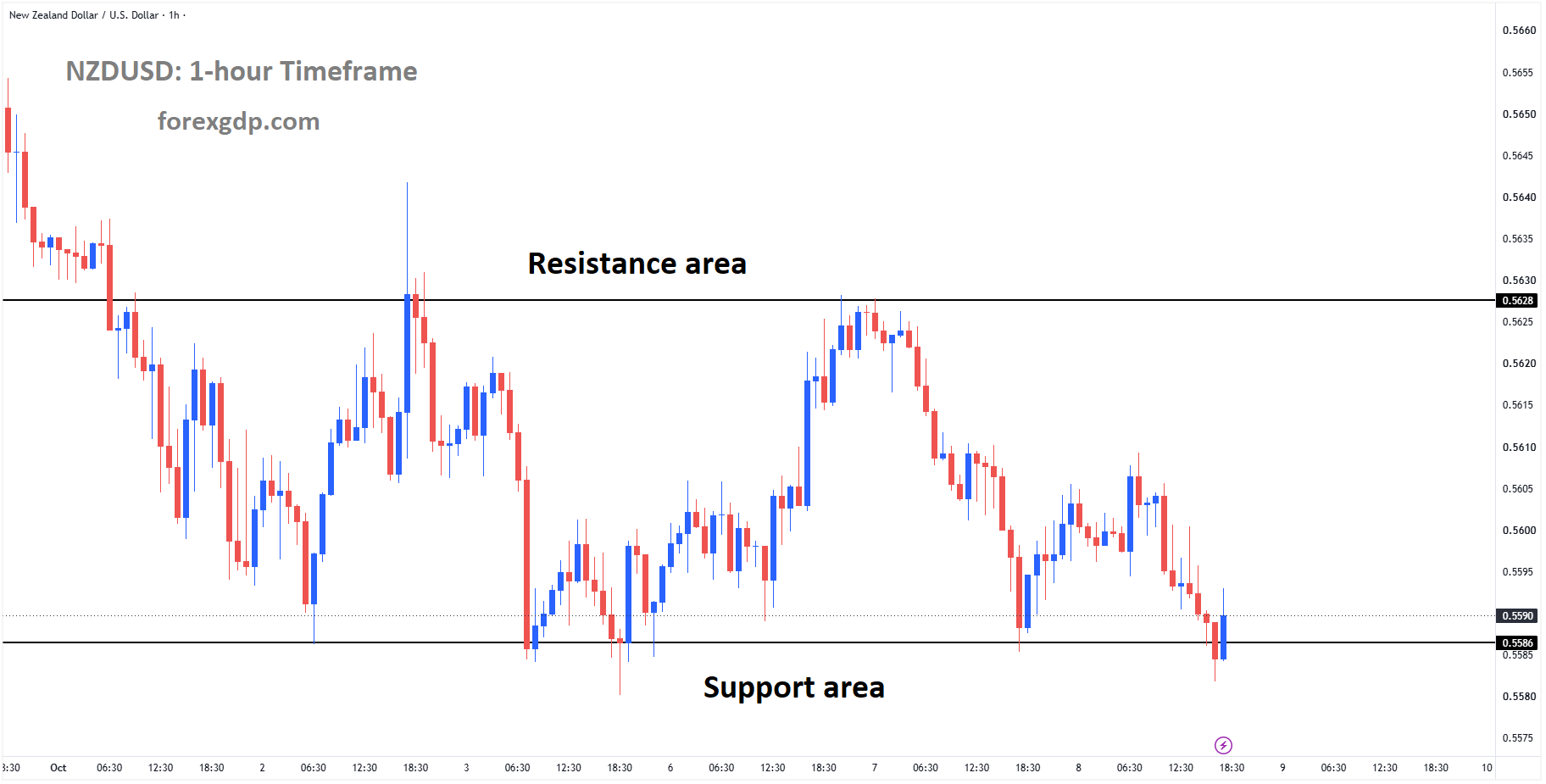
NZDUSD reached support area of the box pattern
NZDUSD has seen uneven trading as investors weigh these developments. After recording modest losses in the previous session, the pair recovered some ground during Asian trading. However, buyers remained cautious because the broader conditions supporting the US Dollar had not changed.
Much of the attention is on inflation and how central banks plan to respond. Higher oil costs have added fresh uncertainty, making investors question how quickly price pressures will ease. At the same time, expectations surrounding the Federal Reserve and the Reserve Bank of New Zealand are keeping both currencies sensitive to policy news.
Rising US Treasury Yields Give the Dollar Support
The recovery in US Treasury yields has become an important influence on NZDUSD. Yields on longer-term government debt have moved back toward levels associated with the highest readings since 2002, drawing attention to the returns available on US assets.
When Treasury yields increase, US investments can become more attractive to international investors. Buying those assets often involves buying US Dollars, which can help strengthen the currency.
That creates a challenge for the New Zealand Dollar. Even when domestic developments offer support, the Kiwi may struggle to make lasting progress if investors continue favouring the returns available in the United States.
However, the reason behind rising yields also matters. Expectations of tighter monetary policy, persistent inflation, and changes in demand for government debt can all affect bond returns. Investors therefore need to consider the wider economic picture rather than viewing every increase in yields as the same signal.
For NZDUSD, the immediate issue is whether the recovery in US yields continues to attract demand for the Dollar.
Oil Costs Keep Inflation Concerns Alive
A recent increase in oil costs has brought inflation back into focus. Energy affects far more than fuel spending. It also influences transport, production, shipping, and the cost of delivering goods to consumers.
When businesses face higher operating expenses, some may pass those costs on to customers. That can slow the decline in inflation and make it harder for central banks to feel confident that price pressures are under control.
This is particularly relevant for Federal Reserve policy. If inflation remains stubborn, policymakers may decide that interest rates need to stay elevated for longer. They may also consider another increase if the economic evidence supports it.
Higher energy costs can create difficulties for New Zealand as well. Households may have less money available for other purchases, while businesses may face pressure on their margins.
These effects create a complicated backdrop for the Kiwi. Inflation concerns can strengthen expectations of tighter policy, but rising costs can also weaken spending and economic activity.
Federal Reserve Expectations Shape Dollar Demand
The Federal Reserve remains central to the outlook for the US Dollar. Minutes from its latest meeting showed broad support for the September interest rate increase, with most policymakers considering another rise before the end of the year appropriate.
That message reinforced the view that the Fed was still focused on controlling inflation. It also reduced confidence that a shift toward lower interest rates would happen quickly.
Markets were largely expecting the central bank to leave rates unchanged at its October meeting. However, expectations for a December increase remained strong.
A pause does not necessarily mean that the tightening cycle has ended. Policymakers may choose to wait while assessing how earlier increases are affecting borrowing, employment, and consumer demand.
This distinction matters for NZDUSD. If investors believe the Fed could raise rates again, the Dollar may retain support even during a meeting at which policy remains unchanged.
The next economic releases will help determine whether those expectations hold. Evidence of persistent inflation could strengthen the case for further action, while weaker activity could encourage a more cautious approach.
Fed Speeches Could Clarify the Policy Debate

Investors are also watching comments from Federal Reserve officials, including Christopher Waller and Alberto Musalem. Their remarks could provide more detail about how policymakers view inflation and the need for additional tightening.
The focus will be on whether officials believe current interest rates are restrictive enough. Markets will also listen for signs that higher energy costs are changing their assessment of inflation risks.
Central bank speeches can influence currencies because they help investors judge the likelihood of future decisions. A firm message on inflation may reinforce demand for the US Dollar. A more cautious assessment of economic conditions could soften expectations of another rate increase.
Individual comments, however, do not represent a final policy decision. The broader message from the committee and incoming data will remain important.
RBNZ Rate Expectations Offer the Kiwi Some Support
The New Zealand Dollar has its own source of support through expectations surrounding the Reserve Bank of New Zealand.
Following its recent quarter-percentage-point rate increase, money markets fully priced in another hike by December. Investors are now watching the October 28 policy decision for clues about the next steps.
Higher interest rates can make New Zealand assets more attractive by improving their potential returns. This can encourage demand for the Kiwi, particularly if the RBNZ signals that inflation requires further action.
However, an expected increase may already be reflected in market positioning. The currency’s reaction will therefore depend partly on whether the central bank delivers a message that is firmer or more cautious than investors anticipate.
The RBNZ also faces a balancing task. It needs to control inflation while considering the pressure that higher borrowing costs place on households and businesses.
Summary
NZDUSD remains influenced by the interaction between US bond yields, inflation concerns, and interest rate expectations in both countries.
The US Dollar is receiving support from recovering Treasury yields and the possibility of further Federal Reserve tightening. Meanwhile, expectations of another RBNZ rate increase are helping the New Zealand Dollar resist some of that pressure.
Upcoming central bank comments and policy decisions will give investors more information about the direction of interest rates. For the Kiwi, the key question is whether New Zealand’s policy outlook can provide enough support to offset renewed demand for the US Dollar.
USDJPY Advances as Yen Faces Fresh Pressure
The Japanese Yen has weakened against the US Dollar as expectations for another Federal Reserve interest rate increase give the American currency an advantage. Although Japan reported a stronger current account surplus, that positive development has not been enough to change the broader mood surrounding USDJPY.
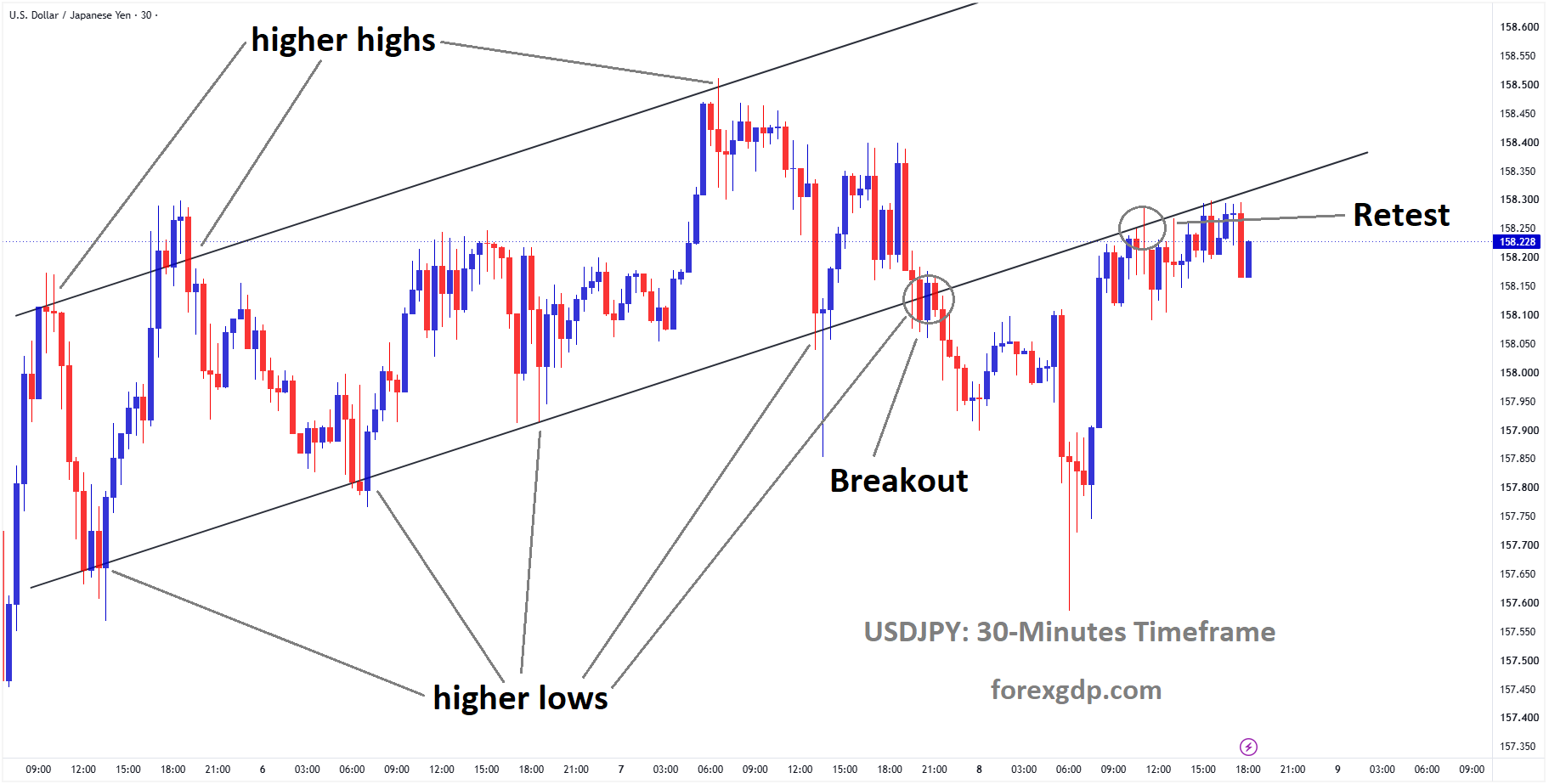
USDJPY reached the retest area of the broken ascending channel
The main focus remains on the difference between the economic forces affecting the two currencies. In the United States, policymakers are still concerned about inflation and believe the economy may be able to handle further monetary tightening. In Japan, the latest figures show healthy income flows from overseas, but they offer a different kind of support for the Yen.
For investors, these developments carry different weight. A larger current account surplus is encouraging for Japan’s external finances. However, expectations about US interest rates have a more immediate influence on the appeal of holding Dollars.
That helps explain why the Yen has softened despite better domestic data. Currency movements often reflect what investors expect next, rather than whether a single economic report looks positive.
Fed Minutes Keep Another Rate Increase in Focus
The minutes from the Federal Reserve’s September meeting reinforced expectations that another interest rate increase could arrive before the end of the year.
According to the meeting account, most participants considered an additional increase likely to be appropriate. This suggests that policymakers were not yet comfortable treating the inflation challenge as fully resolved.
The Fed uses interest rates to influence borrowing, spending, and investment. When rates rise, loans generally become more expensive for households and businesses. Over time, that can reduce demand and help ease pressure on prices.
However, officials must also consider whether the economy can absorb those higher borrowing costs. Raising rates too aggressively can weaken activity, while stopping too early can allow inflation to remain stubborn.
The September discussion pointed toward continued confidence in the economy’s ability to withstand further tightening. The staff’s economic assessment was stronger than it had been in July, giving policymakers more reason to consider another increase.
For the US Dollar, that message matters because it keeps the possibility of higher returns on Dollar assets in view. Even before an actual policy decision, changing expectations can influence where investors choose to place their money.
AI Investment Adds to the Inflation Debate
One notable part of the Fed discussion involved the rapid expansion of artificial intelligence investment.
Several officials warned that spending associated with the AI buildout could eventually push demand ahead of supply. If businesses increase investment faster than the economy can provide the necessary workers, equipment, energy, and materials, additional price pressure may develop.
This does not mean that AI investment automatically creates lasting inflation. New technology can also improve productivity and help businesses produce more efficiently. The concern raised in the minutes was about the timing of those effects.
Large investment projects can increase demand quickly, while the benefits from greater productive capacity may take longer to appear.
That creates a difficult balance for policymakers. Strong investment can help the economy grow, but it can also make inflation harder to control when resources are already stretched.
The discussion shows why the Fed remains cautious. Officials are looking beyond household spending and considering how changing business activity could affect the wider economy.
For currency markets, the significance is straightforward: if these developments keep inflation risks alive, expectations for another rate increase may remain firm.
Why US Rate Expectations Matter for USDJPY

USDJPY is closely influenced by expectations about monetary policy and the returns available on investments in each currency.
When investors anticipate higher US interest rates, Dollar assets can become more attractive. That can encourage demand for the US currency and make it harder for the Yen to gain ground.
However, the relationship is not automatic. Investors also consider economic growth, uncertainty, and whether an expected policy change is already reflected in their decisions.
The latest Fed minutes have added weight to the view that US policy could tighten further. Analysts at Societe Generale also interpreted the minutes as reaffirming a preference for another increase before year-end.
That assessment helps explain the Dollar’s broader firmness. The currency is benefiting from expectations that the Fed may continue taking action against inflation while the economy remains resilient.
The Yen, meanwhile, needs more than one encouraging domestic report to offset that influence. Investors are comparing the likely direction of policy and financial returns, alongside the strength of each economy.
Japan’s Current Account Delivers Encouraging News
Japan’s August current account report offered a positive development. The surplus increased from the previous reading and exceeded expectations, pointing to stronger external income flows.
The current account measures transactions between a country and the rest of the world. It includes trade in goods and services, income earned from overseas investments, and certain transfers.
A larger surplus means Japan received more through these channels than it paid out during the reporting period. That is useful evidence of the country’s external financial position.
For the Yen, a stronger surplus can provide a supportive economic backdrop. However, it does not guarantee an immediate increase in the currency.
The details behind the surplus also matter. Income earned abroad does not necessarily turn into instant demand for Yen, because companies and investors may retain or reinvest those earnings overseas.
The report therefore adds a positive element to Japan’s economic picture without directly settling the question of how its currency will perform.
What Could Shape the Next Change in Sentiment
The balance between US policy expectations and Japan’s economic performance remains central to USDJPY.
Future US inflation and activity reports will help investors judge whether another Fed increase is becoming more or less likely. Evidence of persistent price pressure could strengthen the case for further tightening. Clear signs of cooling demand could lead investors to reassess that expectation.
Japan’s upcoming economic releases and central bank communication will also matter. They can help clarify whether stronger external finances are accompanied by broader domestic improvement.
For now, the Fed’s message carries greater influence over the pair. Japan’s current account figures are encouraging, but the Dollar continues to benefit from expectations of additional monetary tightening.
Final Summary
The Japanese Yen has weakened against the US Dollar as the September Fed minutes reinforced expectations for another interest rate increase before year-end. A stronger economic assessment and concerns about inflation, including demand linked to AI investment, have kept further tightening in focus.
Japan’s larger-than-expected August current account surplus provides a positive backdrop for the Yen. However, investors continue to give greater weight to US interest rate expectations. The next shift in USDJPY sentiment will depend on how incoming economic data changes that balance.
GBPJPY Finds Buyers as Yen Struggles and Tokyo Keeps Watch
GBP/JPY is struggling to find a clear direction as investors weigh concerns about Japan’s finances against expectations for higher interest rates in both Japan and the United Kingdom. The British Pound has attracted some buying interest, but the Japanese Yen still has factors working in its favour.
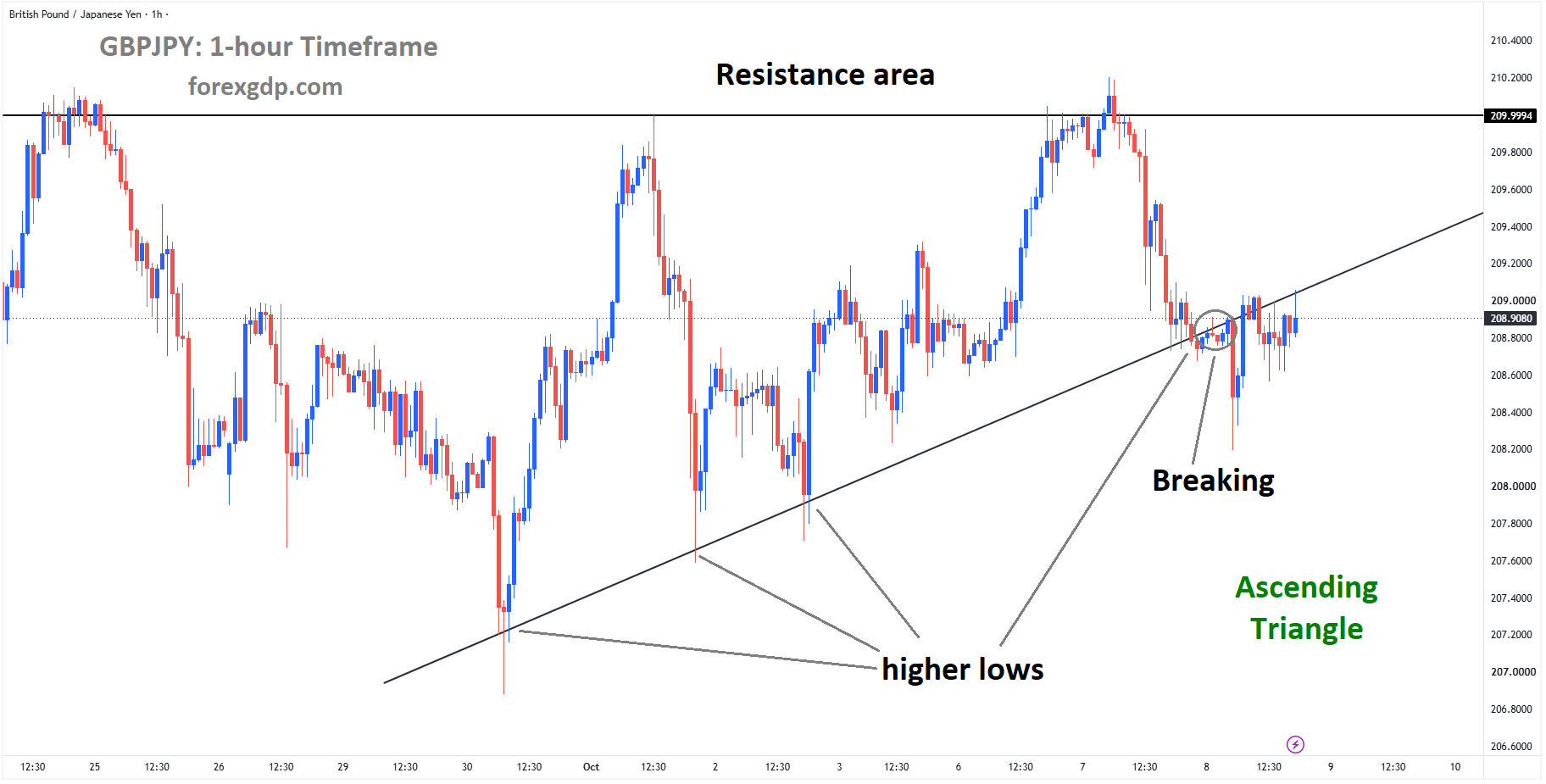
GBPJPY is breaking the higher low area of the ascending triangle
Japan’s public debt and plans for greater government spending are putting pressure on confidence in the Yen. At the same time, the possibility of action from Japanese authorities makes traders cautious about selling the currency too heavily.
For the Pound, expectations of another Bank of England interest rate increase provide some encouragement. Investors are now looking to comments from central bank officials for a clearer view of what comes next. Together, these competing forces explain why GBP/JPY has found buyers without making a convincing advance.
Japan’s Public Finances Put Pressure on the Yen
Concerns about Japan’s fiscal position remain an important influence on the Japanese Yen. Investors are paying close attention to the government’s plans to expand spending while the country already carries a large public debt burden.
Government spending can help businesses, support households and encourage economic activity. However, it also raises questions about how that spending will be funded and whether borrowing costs will become harder to manage.
These questions become more significant when interest rates are rising. Higher rates can increase the cost of servicing debt over time, adding pressure to public finances.
For currency investors, the issue is confidence. They want to see a balance between measures that support the economy and a credible approach to managing government obligations. When that balance appears uncertain, demand for the domestic currency can weaken.
This concern has made it harder for the Yen to attract sustained buying interest. It has also given GBP/JPY some support, even though the Pound’s own performance has been uneven.
Possible Currency Intervention Keeps Traders Alert
Despite the pressure on the Yen, investors remain aware that Japanese authorities could act to support the currency.
Currency intervention involves authorities buying or selling currencies to influence exchange rate movements. Even the possibility of such action can affect trading behaviour, particularly when investors believe officials are becoming uncomfortable with rapid currency weakness.
This creates a challenge for anyone expecting further Yen losses. A market move that appears supported by economic concerns can change quickly if authorities announce action or deliver a firm warning.
As a result, some traders may reduce their exposure or wait for more clarity before taking larger positions against the Yen.
Intervention expectations do not resolve Japan’s debt concerns. However, they can slow the currency’s decline by increasing uncertainty about how far authorities will allow weakness to continue.
For GBP/JPY, this means that pressure on the Yen does not automatically translate into a sustained advance. Investors must also consider the possibility of an official response.
Bank of Japan Rate Expectations Offer the Yen Some Support

The Bank of Japan’s policy direction provides another reason for caution.
Recent remarks from Japanese central bank officials have encouraged expectations that further interest rate increases remain possible. Investors have paid particular attention to signs that policymakers are becoming more open to additional tightening.
Higher interest rates can make a currency more attractive by improving the returns available on assets held in that currency. They can also influence the appeal of borrowing in Yen to invest elsewhere.
However, the effect depends on what markets already expect. A rate increase that investors have fully anticipated may have less impact than an unexpected shift in policy.
The broader message from the Bank of Japan matters as much as any individual decision. Traders want to understand whether future increases will be gradual, how officials view inflation and what conditions could change their plans.
For now, expectations of tighter Japanese monetary policy are helping offset some of the pressure created by fiscal concerns. That balance is keeping GBP/JPY sensitive to comments from policymakers.
Bank of England Expectations Encourage Pound Buyers
The British Pound is finding support from expectations that the Bank of England could raise interest rates at its next policy meeting.
Investors are considering the possibility of a quarter-point increase as they assess the central bank’s approach to inflation. If policymakers believe price pressures require a firmer response, borrowing costs could move higher.
That possibility can support Sterling because higher rates may improve the appeal of Pound-denominated assets.
Still, expectations are not the same as a confirmed decision. The Bank of England must weigh inflation risks against the condition of the wider economy. Higher borrowing costs can affect household spending, business investment and demand for credit.
This leaves investors watching for clues about how officials are balancing those pressures. Any indication that policymakers favour further tightening could encourage Pound buyers. More cautious comments could lead markets to reconsider how likely an increase really is.
BoE Speeches Could Shape the Next Move
Speeches from Bank of England Monetary Policy Committee members Megan Greene and Clare Lombardelli are drawing attention as traders seek guidance on the policy debate.
Investors will be listening for their views on inflation, wage growth and the outlook for economic activity. Comments on these subjects can help explain whether officials see a need for higher rates or prefer to gather more evidence.
The tone of their remarks will also matter. A firm focus on controlling inflation could reinforce existing rate expectations, while greater concern about economic weakness could soften them.
Meanwhile, a firmer US Dollar is adding pressure to the Pound in the wider currency market. Although GBP/JPY does not include the Dollar, broad changes in Sterling demand can still influence the pair.
This combination makes it difficult to judge the Pound through UK policy expectations alone. Its performance also reflects how investors are positioning across major currencies.
Final Summary
GBP/JPY remains caught between several competing influences. Concerns about Japan’s debt and spending plans are weighing on the Yen, while Bank of England rate expectations are offering support to the Pound.
However, possible Japanese currency intervention and expectations of further Bank of Japan tightening are limiting the case for continued Yen weakness. Broader pressure on Sterling is also making progress harder.
Upcoming central bank comments could help clarify these competing pressures. Until investors gain a clearer view of policy in both countries, GBP/JPY may continue to struggle for a consistent direction.
Don’t trade all the time, trade forex only at the confirmed trade setups
Get more confirmed trade signals at premium or supreme – Click here to get more signals, 2200%, 800% growth in Real Live USD trading account of our users – click here to see , or If you want to get FREE Trial signals, You can Join FREE Signals Now!