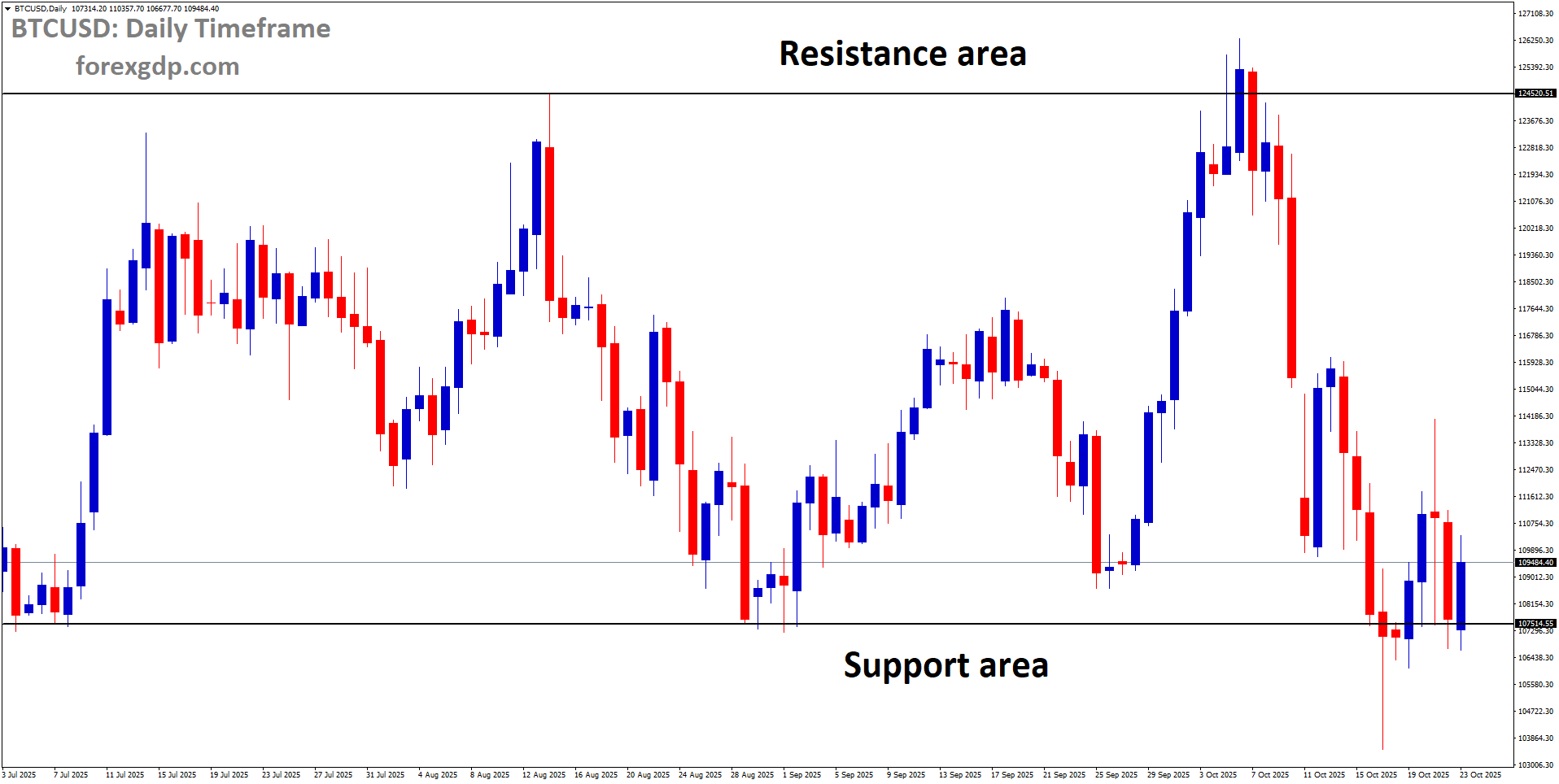
BTCUSD is moving in a box pattern, and the market has reached the support area of the pattern
BTCUSD Struggles for Momentum as Traders Eye the Next Big Rally
The crypto market never fails to surprise us. Just when things start looking up, an unexpected twist sends investors on another emotional rollercoaster. Recently, Bitcoin has been struggling to regain its momentum after a sharp correction. Many traders are watching closely, waiting for signs of a solid comeback. But the real question is — what’s holding Bitcoin back from another bull run? Let’s dive deep into what’s happening and what could come next for the king of cryptocurrencies.
The Waiting Game: When Will the Next Bull Run Begin?
If you’ve been following Bitcoin for a while, you know how the market works — it moves in cycles. After every major rally, there’s usually a cooldown period where prices consolidate before the next upward push. Right now, analysts believe that the next big rally might not happen until Bitcoin climbs back to a stronger price zone.
According to many crypto analysts, Bitcoin needs to stabilize and build momentum before any major bull run can take shape. They point out that the market has been through multiple corrections and rebounds over the years — and each time, patience has paid off for long-term investors.
The current phase feels similar to the mid-2023 correction when Bitcoin took a short breather before skyrocketing again. Some experts believe we’re in that same kind of consolidation phase now — a time when the market is catching its breath before making its next move.
The Forces Shaping Bitcoin’s Path Forward
There’s more to Bitcoin’s story than just price action. The crypto market doesn’t exist in a bubble — global events, government policies, and even political tensions play a massive role in shaping investor confidence.
Economic Tensions and Political Uncertainty
One major factor influencing Bitcoin’s recent slowdown is the tension between the U.S. and China. Renewed tariff talks and trade disagreements have made investors cautious. On top of that, the ongoing government shutdown in the U.S. has added another layer of uncertainty, discouraging traders from making bold moves.

When traditional markets are unstable, Bitcoin often becomes a safe haven for some investors. However, in times like these — when there’s widespread fear about global economic policies — even crypto markets feel the pressure. Traders are hesitant, waiting for clarity before diving back in.
Institutional Confidence Still Growing
Despite all this uncertainty, institutional interest in Bitcoin remains strong. Large financial firms and investment funds continue to explore crypto opportunities. Many are expanding their exposure to Bitcoin as a long-term store of value rather than a short-term trading asset.
This institutional backing is crucial because it gives Bitcoin a level of credibility that it didn’t have a few years ago. Even if prices fluctuate in the short term, the growing presence of big investors shows that confidence in Bitcoin’s future hasn’t disappeared — it’s just temporarily on pause.
Behind the Scenes: The Liquidity Story and Market Psychology
There’s an interesting dynamic unfolding behind the scenes — something that’s not visible on surface-level charts. Analysts have noticed a large cluster of liquidity building around key levels where traders tend to buy or sell in bulk.
Why Liquidity Matters
Liquidity simply refers to how easily an asset can be bought or sold without drastically affecting its price. When there’s a strong liquidity zone, it usually means there’s high interest and activity from both buyers and sellers. In Bitcoin’s case, this indicates that investors are closely watching and waiting for the right moment to re-enter the market.
This behavior isn’t new. Historically, Bitcoin tends to experience heavy accumulation before major rallies. Investors who believe in long-term growth often take advantage of quieter periods to build their positions gradually.
Market Sentiment and Fear Factor
Right now, sentiment in the market is mixed. Many retail investors — those who trade smaller amounts — are still recovering from the recent correction. They’re being cautious, waiting for clear signs of stability before investing more.
However, long-term holders and institutional players view this period differently. To them, temporary dips are opportunities to accumulate. Their perspective is that Bitcoin has always rebounded after every correction, and the fundamentals behind its growth remain strong.
Rising Miner Debt: The Hidden Pressure on the Industry
While investors focus on prices, another story is unfolding in the mining sector — one that could have long-term effects on Bitcoin’s stability.
Recent reports from major investment firms reveal that Bitcoin miners are carrying massive amounts of debt. Over the past year, miner debt has increased dramatically. Why? Because mining companies are expanding operations to meet growing global demand — not just for Bitcoin, but also for the rapidly evolving artificial intelligence (AI) industry.
How Mining and AI Are Connected
Mining and AI might seem like two completely different worlds, but they share one critical requirement: computing power. Bitcoin mining farms use powerful hardware to verify transactions and secure the blockchain, while AI development relies on the same kind of high-performance chips.
As a result, miners are now competing with tech companies for hardware and energy resources. This competition has driven up operational costs, forcing many mining firms to borrow heavily to stay ahead.
Why This Matters to Investors
When miners carry too much debt, it can create stress in the ecosystem. If mining costs rise too high and profitability drops, some miners might be forced to sell off their Bitcoin holdings to cover expenses. This can temporarily flood the market with supply, slowing down price recovery.
However, it’s important to remember that these challenges are part of a natural growth phase. The industry is expanding, and temporary financial strain is a sign that Bitcoin mining — and crypto as a whole — is evolving beyond its early stage.
What’s Next for Bitcoin Investors?
So, what should you make of all this? The short answer — patience is key. Every major Bitcoin cycle in history has gone through similar periods of uncertainty. The market cools down, investors doubt the next move, and then — often when least expected — a strong rally begins.
If you’ve been holding or planning to invest, it’s wise to focus on the bigger picture. Bitcoin continues to gain global recognition, regulatory clarity is slowly improving, and institutional players are here to stay. These are strong signs that long-term confidence remains intact.
Instead of worrying about short-term price swings, consider observing market behavior, staying updated with credible sources, and avoiding panic-driven decisions. Crypto markets reward patience and punish emotional reactions — a lesson most experienced investors have learned the hard way.
Final Summary
Bitcoin’s current slowdown isn’t a sign of weakness — it’s part of a larger market rhythm. The world’s leading cryptocurrency is regrouping after a turbulent period marked by global tensions, rising miner costs, and cautious investor sentiment.
While short-term traders may feel uncertain, long-term believers see this as a phase of quiet accumulation before the next surge. With strong institutional interest, continued adoption, and an expanding digital ecosystem, Bitcoin still holds its crown as the most influential asset in the crypto world.
The road to recovery might take time, but history has shown one thing repeatedly — Bitcoin always finds a way to rise again.
EURUSD weakens while the Dollar gains traction on global trade uncertainty
The Euro is facing a challenging period, trading quietly against a slightly stronger US Dollar. The calmness seen in the market hides a sense of anticipation, as traders and investors watch for the next big move—particularly the release of key US inflation data that could reshape expectations around Federal Reserve decisions. Meanwhile, renewed tensions between the United States and China are stirring old trade war fears, bringing uncertainty back into the picture.
The Euro Stays Quiet as the Dollar Gains Strength
The Euro has been moving sluggishly, hovering below the 1.1600 mark, as the US Dollar regains some of its lost ground. This mild pullback in the Euro comes amid global caution, with most traders avoiding large positions ahead of major US data. The American currency is being supported by its reputation as a safe haven—an asset investors turn to when global risks rise.
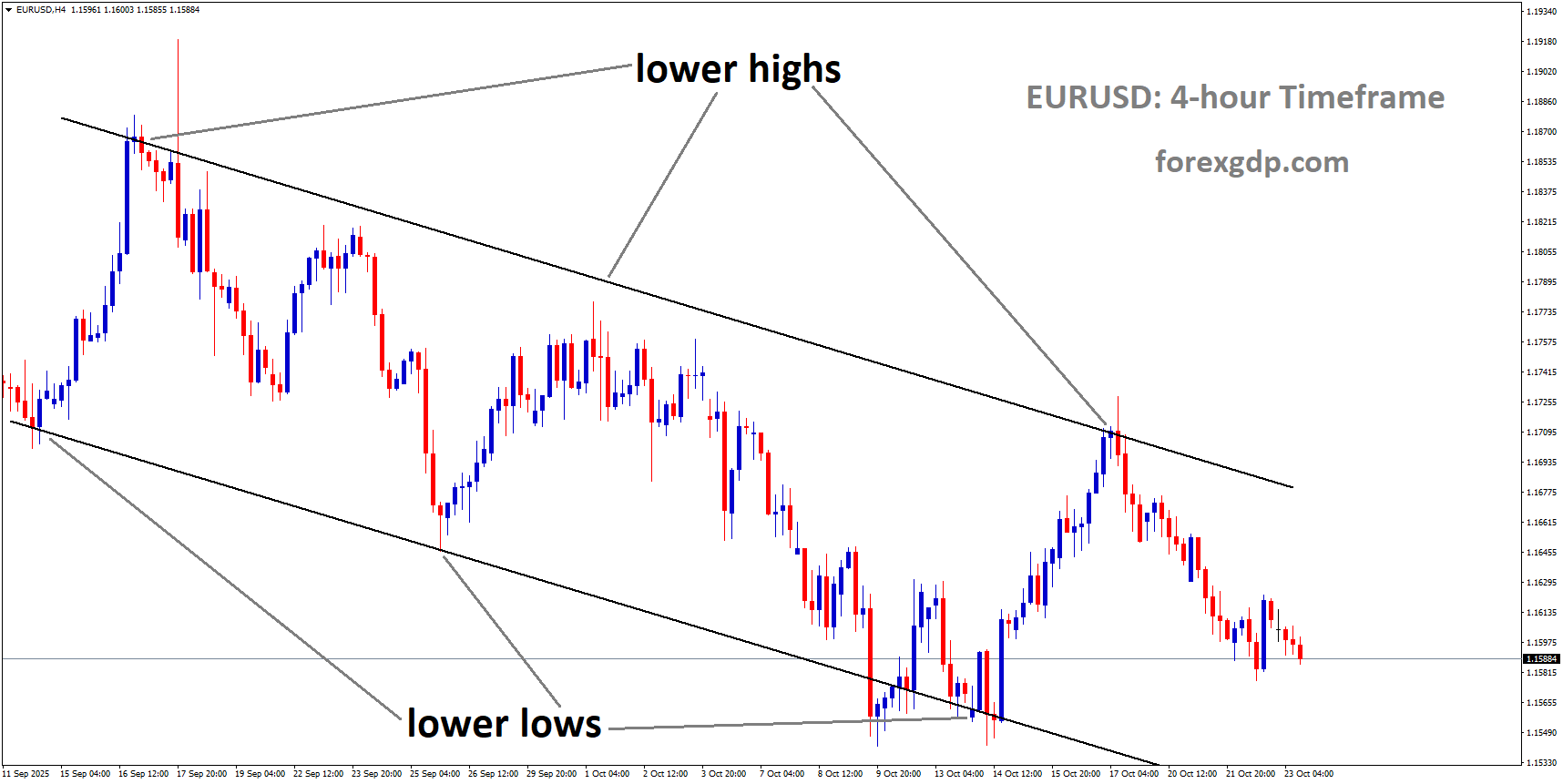
EURUSD is moving in a descending channel
In this case, the spark came from Washington’s latest move to consider new restrictions on software exports to China. This news quickly reminded markets of the trade war tensions that had previously caused volatility across global assets. While the reaction so far has been moderate, investors are keeping a close eye on how these developments unfold in the coming days.
Many believe that a diplomatic meeting between US President Joe Biden and Chinese President Xi Jinping could help ease the tension, potentially leading to a temporary agreement or at least avoiding an escalation. Until then, the market remains cautious and slow-moving.
Trade Frictions Return to the Spotlight
New Restrictions Revive Old Fears
The recent news from the White House about possible software export curbs to China has once again put global trade under the microscope. This move, reportedly in response to China’s decision to limit certain exports like rare earth materials, shows that economic rivalry between the two nations is far from over.
For global investors, this creates a familiar sense of déjà vu. Memories of the 2018–2019 trade war still linger, when tariff battles and diplomatic standoffs caused wild market swings. Today’s situation, however, feels slightly different. The markets appear calmer—perhaps because traders have seen this playbook before and expect a resolution before things spiral.
US Treasury Secretary Scott Bessent has attempted to calm the situation, stating that American negotiators are approaching talks with “good intentions” and “great respect.” Similarly, President Biden has downplayed the potential fallout from China’s export limits, suggesting confidence that discussions with President Xi could lead to practical outcomes.
Europe Watches Cautiously
While the main stage is occupied by the US and China, Europe is not just a bystander. European officials, including European Central Bank (ECB) Vice President Luis de Guindos, have highlighted that the Eurozone’s inflation risks remain balanced. He noted that price growth is stabilizing, and the current interest rate environment is still appropriate for the region’s recovery.
For the Euro, this message from the ECB brings a sense of stability. The bank appears comfortable with its current stance, even as other major central banks, like the Federal Reserve, prepare for possible policy adjustments.
Market Mood: Waiting for the US Inflation Report

One of the biggest events this week is the long-awaited release of the US Consumer Price Index (CPI) data. Initially delayed, this report is now expected to provide clarity on how inflation is trending in the world’s largest economy. Analysts forecast that overall consumer inflation could rise to around 3.1% year-over-year, while core inflation (which excludes food and energy prices) may remain steady.
Traders know that this data will be crucial. If inflation comes in higher than expected, it could spark discussions about whether the Federal Reserve needs to keep interest rates elevated for longer. However, even if inflation is slightly higher, most market participants believe that the Fed is still likely to consider a rate cut later this year.
Until this data is released, volatility remains low. Investors are waiting for confirmation before making big moves, leading to the current “sideways” trading behavior in the currency markets.
Global Sentiment and Investor Outlook
Safe-Haven Demand Keeps the Dollar Supported
The US Dollar’s strength is not just about economic data—it’s also about perception. In times of uncertainty, the Dollar tends to benefit from its reputation as a stable and reliable currency. This week’s cautious sentiment, driven by trade headlines and anticipation of the CPI data, has once again made investors turn to the greenback.
Even with ongoing political and economic challenges, the Dollar often emerges stronger during global uncertainty. The same pattern has appeared now, with traders preferring safety over risk-taking.
Euro’s Struggle for Direction
On the other hand, the Euro is struggling to find strong momentum. While Europe’s inflation data shows steady progress, there’s little sign of aggressive policy changes from the ECB. Without a fresh catalyst, the Euro remains dependent on global developments—especially the US data and geopolitical news.
The currency may see some short-term movement based on speeches from European policymakers and consumer sentiment updates, but overall, traders seem content to stay cautious for now.
Key Factors to Watch in the Coming Days
-
US Inflation Data (CPI Report):
This remains the most anticipated economic release. A higher reading could boost the Dollar temporarily, while a weaker figure might give the Euro some breathing space. -
Trade Negotiations Between the US and China:
Any progress—or lack thereof—will directly affect global market sentiment. Investors are particularly sensitive to any mention of tariffs, export bans, or new restrictions. -
Comments from Central Bank Officials:
Speeches from key figures at the Federal Reserve and European Central Bank will shape expectations for future monetary policy, influencing currency movements. -
Consumer Confidence Trends in Europe:
Economic confidence across the Eurozone remains an important measure of potential growth and spending patterns. Positive data could help lift the Euro slightly, while weak figures may reinforce its subdued tone.
Final Summary
In summary, the Euro is treading water as global markets wait for clarity on both trade tensions and upcoming US economic data. Renewed discussions of export restrictions between Washington and Beijing have injected a dose of uncertainty, but for now, investors remain calm and focused on the numbers.
The US Dollar continues to draw strength from its safe-haven appeal, while the Euro’s direction largely depends on how the economic landscape evolves in the next few days. With inflation data, central bank commentary, and global diplomacy all on the table, traders know that the current calm might not last much longer.
For now, the markets are simply holding their breath—waiting for the next headline that could shift momentum one way or the other.
GBPUSD Struggles for Direction While Markets Eye Upcoming US CPI Report
The financial markets are witnessing a phase of quiet anticipation as the Pound Sterling (GBP) moves sideways against the US Dollar (USD). Traders and investors are holding their positions steady, waiting for key economic data and central bank updates that could shape the near-term currency outlook. Let’s dive into what’s driving the GBP/USD market sentiment and why both the Bank of England (BoE) and US Federal Reserve (Fed) are in the spotlight this week.
The Calm Before the Storm: Why the Pound Is Holding Steady
The Pound Sterling has been treading water lately, showing little directional movement against the US Dollar. This sideways trend comes as traders await the release of US inflation data, which could determine the next major move for the dollar.
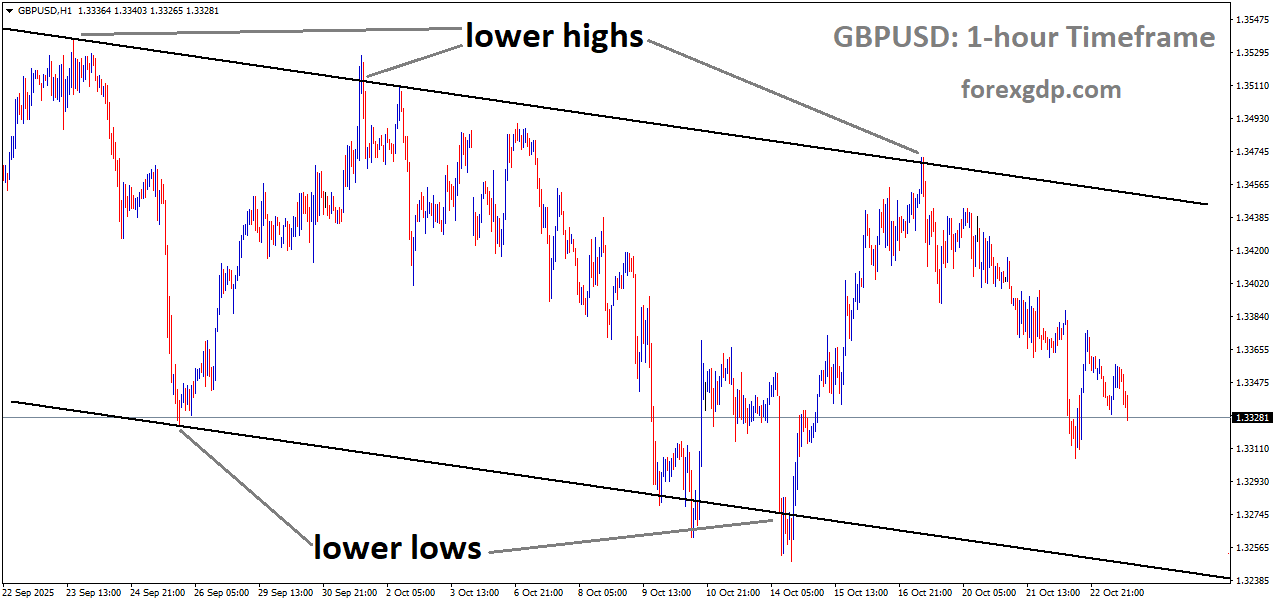
GBPUSD is moving in a downtrend channel
For now, market participants are cautious. The US government’s temporary shutdown delayed the Consumer Price Index (CPI) data, adding to market uncertainty. Since inflation is one of the most crucial indicators for monetary policy decisions, investors are eager to see whether US prices are still rising sharply or finally cooling down.
A stronger inflation reading could revive the US Dollar’s strength, as it might discourage the Federal Reserve from aggressively cutting interest rates. On the other hand, a softer inflation report could push the dollar lower, giving the Pound a chance to gain ground.
The US Perspective: Inflation, the Fed, and Market Expectations
The upcoming US inflation report is widely seen as a potential market mover. Analysts expect consumer prices to show a modest uptick from previous readings, reflecting the lingering impact of energy and service sector costs.
This data is particularly important because many other US economic indicators have been delayed or canceled amid the federal shutdown. As a result, the CPI report carries extra weight — it might be the only major clue about the health of the US economy this month.
Meanwhile, traders are growing more confident that the Federal Reserve will start easing its policy soon. According to market tools that track interest rate expectations, most investors believe the Fed will cut interest rates twice before the end of the year — once this month and again in December.
That expectation reflects a broader belief that inflation is gradually coming under control and that the Fed can shift its focus from fighting price pressures to supporting growth. Still, if the CPI numbers come in hotter than expected, those assumptions could be tested quickly.
The UK Scene: BoE Dovish Tone and Shifting Market Sentiment
Across the Atlantic, the story is somewhat similar but with its own twist. The Bank of England (BoE) is also facing a turning point.
Recent UK inflation data showed that price growth is finally slowing, suggesting that the worst of the inflation wave may be behind the country. The core inflation rate, which excludes volatile components like energy and food, eased slightly in September. That subtle decline, though small, reinforced the belief that the BoE’s series of rate hikes is starting to take effect.
As a result, markets are now betting heavily that the BoE will cut interest rates before the year ends. Just a day after the inflation report was released, traders increased their expectations of a 25-basis-point rate cut from around 46% to nearly 78%.
This dovish shift in sentiment has had visible effects on UK bond markets. Yields on government bonds, or gilts, have fallen to their lowest levels in nearly a year, signaling that investors expect looser monetary policy and slower economic momentum ahead.
What’s Next for the UK Economy?

Attention is now turning toward upcoming UK economic releases, especially Retail Sales and the Purchasing Managers’ Index (PMI) for October.
These reports will offer deeper insight into how households and businesses are coping with high borrowing costs and stubborn living expenses. If consumer spending and business activity show further signs of weakness, it could strengthen the case for the BoE to start easing monetary policy sooner rather than later.
However, any unexpectedly strong data could complicate that picture, keeping policymakers cautious about lowering rates too quickly.
A Broader View: Global Tensions and the US-China Trade Story
While monetary policy and inflation dominate headlines, global trade tensions are quietly returning to the spotlight. The United States has announced plans to tighten export restrictions on software-powered products destined for China, beginning in November.
This move is part of Washington’s broader strategy to limit the transfer of advanced technology to Chinese firms, citing national security concerns. The restrictions could impact a wide range of industries, as officials noted that nearly “everything imaginable is made with US software.”
Such trade frictions add another layer of uncertainty to the global economic outlook. They may not directly affect currency markets in the short term, but they can shape risk sentiment and investor confidence. If tensions escalate further, markets could see renewed volatility, especially in emerging economies and technology-related sectors.
Investor Takeaway: What This All Means for the GBP/USD Pair
Right now, the GBP/USD pair is trapped in a tug-of-war between two competing narratives. On one hand, the US Dollar finds support from its safe-haven status and expectations around inflation data. On the other, the Pound’s trajectory depends on how quickly the BoE turns from fighting inflation to supporting growth.
The short-term outlook remains uncertain, and traders seem unwilling to make big bets until more concrete data arrives. For those watching the market closely, the next few days could be decisive. A softer US inflation print might help the Pound regain momentum, while stronger data could push it lower as the dollar rebounds.
In the bigger picture, both economies are showing early signs of stabilization after months of policy tightening. Central banks on both sides of the Atlantic are now walking a fine line — trying to keep inflation in check without slowing their economies too much.
Final Summary
The Pound Sterling’s sideways movement reflects a broader mood of global market caution. With the US inflation data and BoE’s next steps both looming large, traders are waiting for fresh clues before taking clear positions.
The Federal Reserve seems to be nearing a pivot point, potentially preparing for rate cuts as inflation cools, while the Bank of England is facing growing pressure to do the same as UK price growth slows. At the same time, renewed US-China trade tensions add another element of risk to the international landscape.
In the coming weeks, currency traders will be watching not just the inflation figures but also signals from policymakers about how they plan to navigate this delicate period. For now, patience seems to be the market’s main strategy — and rightly so, as both economies adjust to a new phase of monetary and global uncertainty.
USDJPY Advances as Investors Eye Policy Continuity and Economic Stimulus in Japan
The USD/JPY currency pair has continued to show remarkable strength, marking its fifth straight session of gains. The U.S. dollar remains on the rise against the Japanese yen as traders and investors anticipate that Japan’s new Prime Minister, Sanae Takaichi, will embrace a more expansionary fiscal policy and maintain the Bank of Japan’s (BoJ) accommodative stance.
The sentiment in the market has shifted toward optimism, as investors believe these measures could boost Japan’s economy while keeping borrowing costs low. Let’s break down what’s driving this momentum and what could be next for the USD/JPY pair in the coming weeks.
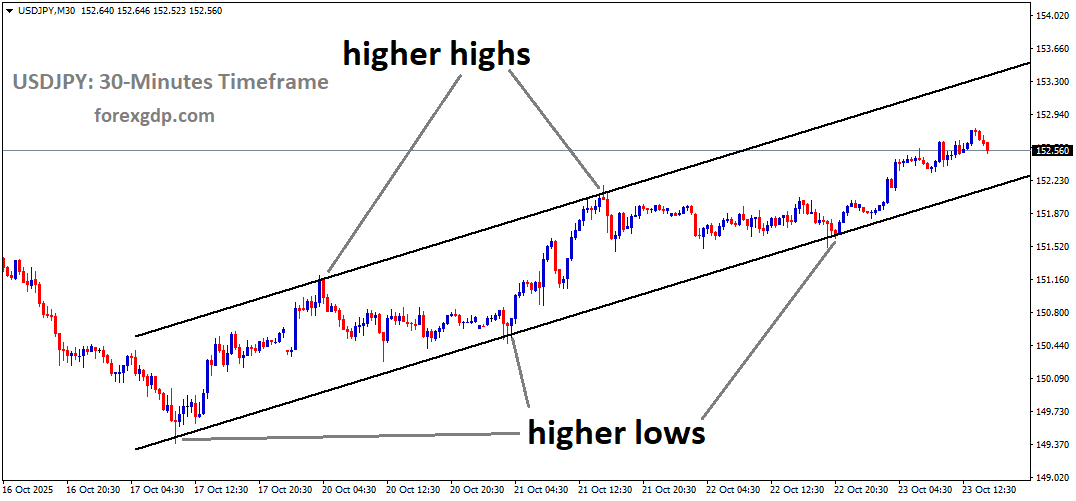
USDJPY is moving in an uptrend channel
Japan’s New Leadership and Policy Outlook: What Traders Expect
The leadership change in Japan has sparked a fresh wave of speculation among investors. Prime Minister Sanae Takaichi is expected to roll out a large-scale economic stimulus plan, possibly within the next few weeks. Reports suggest the new administration could unveil a massive spending package designed to support households and businesses affected by persistent inflation and global economic pressures.
Expansionary Fiscal Policies on the Horizon
Fiscal expansion simply means the government plans to increase spending to stimulate economic growth. This typically involves public investments, subsidies, and financial support to lower- and middle-income groups. The aim is to boost domestic demand, create new jobs, and counter rising prices that have put pressure on consumers.
By pushing for more spending, Takaichi’s administration could indirectly weaken the yen. Why? Because when government spending increases, it can raise inflation expectations, which often leads investors to move away from the yen — a traditionally safe-haven currency — toward higher-yielding assets like the U.S. dollar.
BoJ’s Policy Stance Remains Accommodative
The Bank of Japan is expected to keep interest rates unchanged at its upcoming meeting. The BoJ has long been known for its ultra-loose monetary policy — maintaining near-zero interest rates to support economic recovery and encourage borrowing.
However, there’s growing talk of a possible rate hike in early next year if inflation continues to rise and the economy stabilizes. For now, though, the central bank appears comfortable staying on its current path of patience and caution, especially under a new administration that favors growth-friendly policies.
Boost from U.S.-China Trade Optimism
Adding to the positive momentum for the USD/JPY pair is renewed optimism surrounding trade relations between the United States and China. U.S. President Donald Trump recently expressed confidence that several new agreements could be reached with Chinese President Xi Jinping during their scheduled meeting in South Korea next week.
Trade Talks Could Improve Global Market Sentiment
The discussions are expected to cover major issues such as agricultural exports, nuclear security, and energy trade. Specifically, there’s hope that both nations might strike deals involving U.S. soybean exports and China’s oil purchases, which could ease some of the trade tensions that have weighed on global markets in recent years.
Improved U.S.-China relations typically have a ripple effect across the world economy. When the world’s two largest economies cooperate, global trade tends to flourish, boosting confidence among investors and supporting demand for the U.S. dollar. This combination of optimism and policy support has given USD/JPY the momentum it needs to sustain its upward run.
Potential Challenges Ahead for the U.S. Dollar
Despite the bullish momentum, not everything looks perfect for the dollar. A few concerns could limit how far USD/JPY can climb in the short term.
Impact of the U.S. Government Shutdown
One of the key risks is the ongoing U.S. government shutdown, which has disrupted several important federal functions. This includes delays in releasing critical economic data such as Nonfarm Payrolls (NFP) and inflation figures.
Without timely data, investors are left uncertain about the actual strength of the U.S. economy. The lack of transparency can create hesitation in the market and potentially slow the dollar’s progress. It also complicates the Federal Reserve’s decision-making process, as policymakers rely heavily on economic data to guide their actions.
Expectations of Fed Rate Cuts

According to the CME FedWatch Tool, traders are now pricing in a high probability that the Federal Reserve will cut interest rates in the coming months. There’s nearly a 97% chance of a rate cut in October and another strong likelihood of a reduction by December.
Lower interest rates in the U.S. generally make the dollar less attractive to investors seeking higher returns. If the Fed indeed moves ahead with multiple rate cuts, it could limit the greenback’s potential gains and introduce volatility in USD/JPY trading.
Global Economic Dynamics Supporting USD/JPY’s Momentum
Beyond Japan and the U.S., the global economic environment is also playing a significant role in shaping the direction of this currency pair.
Safe-Haven Shift
When market uncertainty rises, investors typically flock to “safe-haven” assets such as gold or the Japanese yen. However, as global conditions improve — particularly with renewed optimism about trade and stronger fiscal policies in Japan — investors are shifting toward higher-yielding currencies like the U.S. dollar.
Investor Confidence in Stability
The overall sense of stability and cooperation between major economies has restored some degree of investor confidence. This environment encourages more cross-border trade and investment, strengthening the demand for U.S. dollars in the global market.
What to Watch Going Forward
The coming weeks will be crucial for both Japan and the United States. Market participants are watching several key developments that could influence the USD/JPY pair’s next move.
-
Details of Japan’s Stimulus Package:
If Prime Minister Takaichi announces a larger-than-expected spending plan, it could lead to further yen weakness as investors anticipate inflationary effects. -
Bank of Japan’s Policy Meeting:
Any subtle change in tone from the BoJ, especially regarding inflation or rate expectations, could have an immediate impact on the yen. -
U.S.-China Trade Talks:
The outcome of the Trump-Xi meeting will be closely monitored. Any signs of cooperation or new agreements could further strengthen the dollar. -
Federal Reserve’s Next Moves:
The Fed’s tone in upcoming speeches or minutes will determine how investors position themselves for potential rate cuts in the U.S.
Final Summary
The USD/JPY pair has been riding a wave of optimism fueled by Japan’s policy outlook, U.S.-China trade hopes, and a steady monetary environment. Traders expect Prime Minister Takaichi’s government to focus on growth through large-scale spending, while the Bank of Japan remains supportive with its accommodative approach.
At the same time, optimism from global trade discussions is helping keep risk appetite alive, benefiting the U.S. dollar. However, the upside could face some challenges as concerns about a U.S. government shutdown and possible Fed rate cuts linger.
Overall, the current environment favors a stable yet cautiously optimistic outlook for USD/JPY. If both Japan’s and the U.S.’s policy paths align with market expectations, the pair may continue its positive momentum in the near term — but investors should stay alert to any surprises that could shift the tone.
EURJPY Extends Losses After EU Tightens Pressure on Moscow
The EUR/JPY pair saw a mild decline during Thursday’s Asian trading hours as investors reacted to the latest political and economic developments from Europe and Japan. The Euro slipped against the Japanese Yen following the European Union’s (EU) announcement of new sanctions on Russia over the ongoing war in Ukraine. At the same time, Japan’s new government is gearing up to roll out a large-scale economic stimulus plan, while expectations continue to rise that the Bank of Japan (BoJ) could raise interest rates sometime early next year.
Fresh Sanctions From the EU: Growing Pressure on Russia and the Eurozone
The European Union recently approved another round of sanctions against Russia, intensifying its stance in response to Moscow’s continued military actions in Ukraine. Alongside the EU, the United States also announced new restrictions, citing Russia’s unwillingness to engage in meaningful peace talks. These coordinated sanctions reflect the West’s ongoing frustration and commitment to increasing diplomatic and economic pressure on Russia.
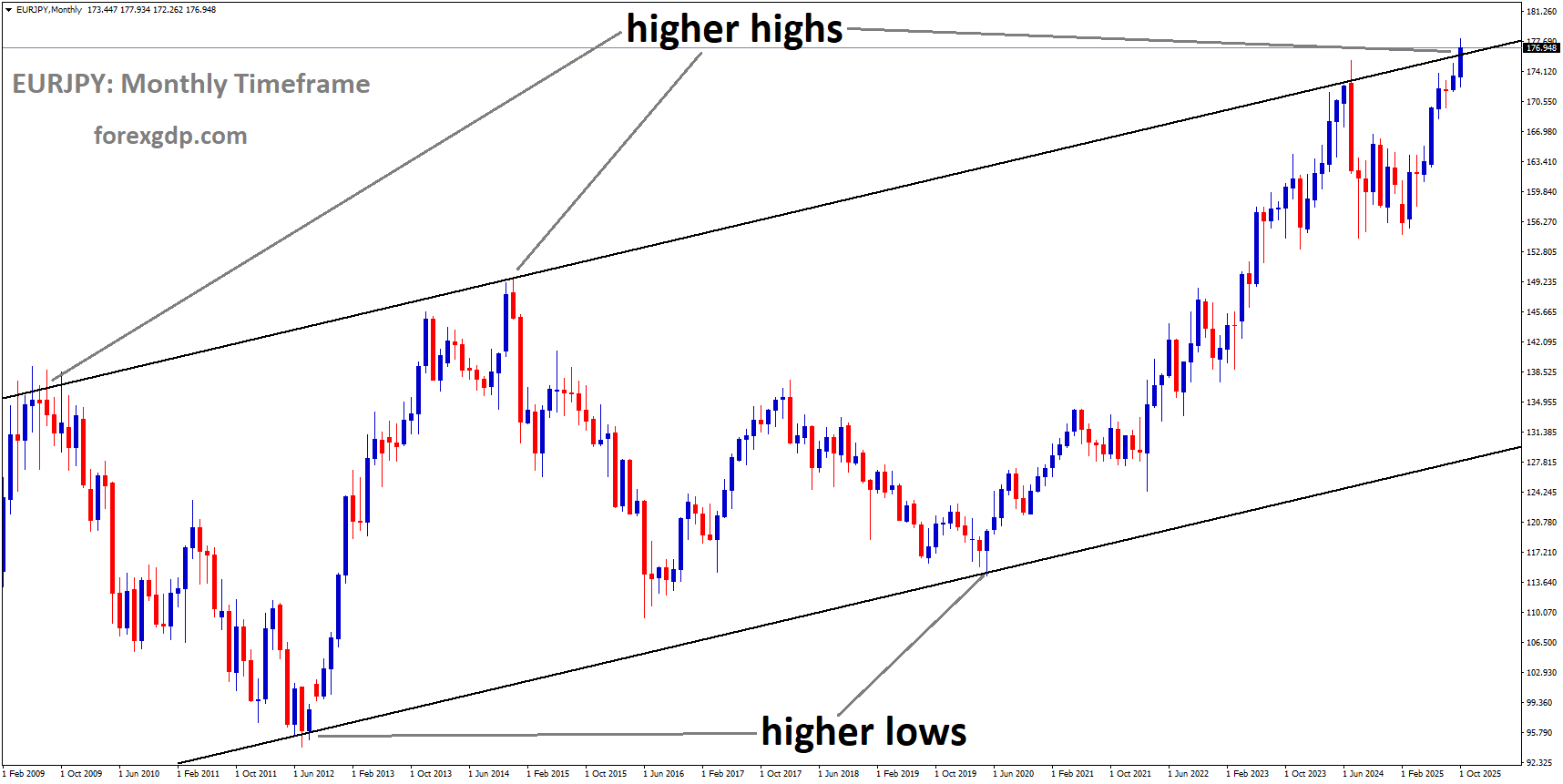
EURJPY is moving in an Ascending channel, and the market has reached a higher high area of the channel
However, while the move demonstrates unity among Western allies, it also brings potential challenges for the Eurozone economy. Sanctions typically result in disruptions in energy markets, trade relationships, and supply chains — all of which could indirectly weigh on European growth. Investors often interpret such developments as negative for the Euro because they introduce uncertainty into the region’s economic outlook.
The announcement came shortly before the release of the Eurozone’s preliminary consumer confidence data for October. Economists anticipate that consumer sentiment may have weakened slightly amid persistent inflation and slower wage growth, both of which continue to strain household budgets.
Why Sanctions Often Strengthen the Yen: The Safe-Haven Effect
Whenever geopolitical tensions rise, the Japanese Yen tends to gain ground due to its status as a traditional “safe-haven” currency. Investors often move their money into Yen-denominated assets during times of global instability because Japan’s economy and financial system are viewed as stable and low-risk.
The new round of EU sanctions triggered another wave of caution among global investors. Many traders reduced exposure to riskier assets like stocks and high-yield currencies and instead sought safety in the Yen. This shift in sentiment contributed to the downward movement of the EUR/JPY pair.
In times like these, it’s not unusual for currency markets to react sharply to headlines rather than to economic data. Political developments often drive short-term fluctuations, especially when they raise concerns about global stability or the future of international trade.
Japan’s Economic Plans: Balancing Growth and Inflation
A New Stimulus Package on the Way
Japan’s newly appointed Prime Minister, Sanae Takaichi, is reportedly preparing a major stimulus package aimed at supporting households and businesses struggling with the effects of rising inflation. Early reports suggest that the plan may surpass last year’s $92 billion package, making it one of the largest in recent years.
This move underscores the government’s determination to sustain economic recovery and shield citizens from higher living costs. Inflation has been gradually picking up in Japan, largely driven by higher import prices and rising energy costs. However, wage growth has not kept pace, leading policymakers to introduce measures that can help maintain consumer spending.
Impact on the Yen and Monetary Policy
While fiscal stimulus is generally positive for domestic growth, it can also put downward pressure on the Yen if markets believe it will lead to more government borrowing or looser monetary conditions. The Bank of Japan (BoJ), which has maintained ultra-low interest rates for years, continues to monitor inflation closely.
Despite Japan’s inflation rate finally climbing above the BoJ’s 2% target, the central bank has been cautious about tightening monetary policy too quickly. Many economists now expect that the BoJ will begin a gradual shift away from its long-standing easy-money stance.
According to a recent Reuters survey, around 60% of economists believe the BoJ will raise rates by 25 basis points in the current quarter. Nearly all — about 96% — anticipate that the first rate hike will occur by the end of March next year. Such a move would mark a significant turning point for Japan, signaling the beginning of a more balanced policy approach after years of aggressive stimulus.
Market Sentiment: Investors Remain Cautious
Traders currently appear to be weighing two opposing forces — geopolitical risks that favor the Yen and Japan’s domestic stimulus measures that could weaken it. On one hand, rising tensions in Europe and persistent uncertainty surrounding global politics encourage investors to seek safe assets. On the other, Japan’s plans for expansionary fiscal policy might offset some of that demand for the Yen by hinting at stronger domestic growth and potential inflationary effects.
At the same time, the Euro faces its own set of challenges. The region continues to battle slowing economic growth, stubborn inflation, and a fragile manufacturing sector. The European Central Bank (ECB) has recently paused its rate hikes, signaling a more cautious stance as it assesses the effects of previous tightening moves on the economy.
The combination of geopolitical headwinds, weaker European data, and shifting interest rate expectations has left the Euro struggling to find solid ground against the Yen.
Global Investors Watching the BoJ’s Next Move Closely

The Bank of Japan’s next policy decisions will likely play a crucial role in shaping the Yen’s direction in the coming months. If the BoJ indeed raises interest rates early next year, it would mark Japan’s first meaningful tightening cycle in years. That could potentially attract more foreign investment into Yen-denominated assets, strengthening the currency further.
However, the timing remains uncertain. Policymakers have repeatedly emphasized that they will proceed carefully, ensuring that Japan’s economic recovery remains steady and that wage growth can support higher prices sustainably.
Until then, the Yen is likely to remain influenced by both domestic developments and global political tensions. The market’s focus will stay on how these two forces interact — the EU’s sanctions weighing on European growth and Japan’s policy shifts potentially redefining its monetary landscape.
Final Summary
The EUR/JPY pair has drifted lower as multiple global factors come into play. The European Union’s new sanctions on Russia have increased geopolitical risks, dampening confidence in the Eurozone and boosting the safe-haven appeal of the Yen. Meanwhile, Japan’s government is preparing a large fiscal stimulus to support households amid rising prices, and expectations are growing that the Bank of Japan may raise rates early next year.
Together, these factors have created a complex environment for traders. The Euro faces pressure from Europe’s economic slowdown and political uncertainty, while the Yen benefits from risk aversion but could later be influenced by Japan’s own policy changes. As investors continue to monitor both regions closely, volatility in the EUR/JPY pair is likely to persist, driven by shifts in sentiment rather than technical factors or chart movements.
In short, the currency market is being shaped by real-world events — politics, policy, and public expectations — reminding everyone that in global finance, it’s not just numbers that move prices, but the stories and strategies behind them.
USDCAD Struggles to Rebound as Traders Await Key Canadian Retail Sales Figures
The USD/CAD currency pair has seen a slight dip as the Canadian Dollar (CAD) gained momentum against the US Dollar (USD). This movement mainly comes from rising oil prices, which have provided strong support for the commodity-linked Loonie. Traders are now keeping a close eye on Canada’s upcoming Retail Sales report, which could further influence the direction of this pair in the short term.
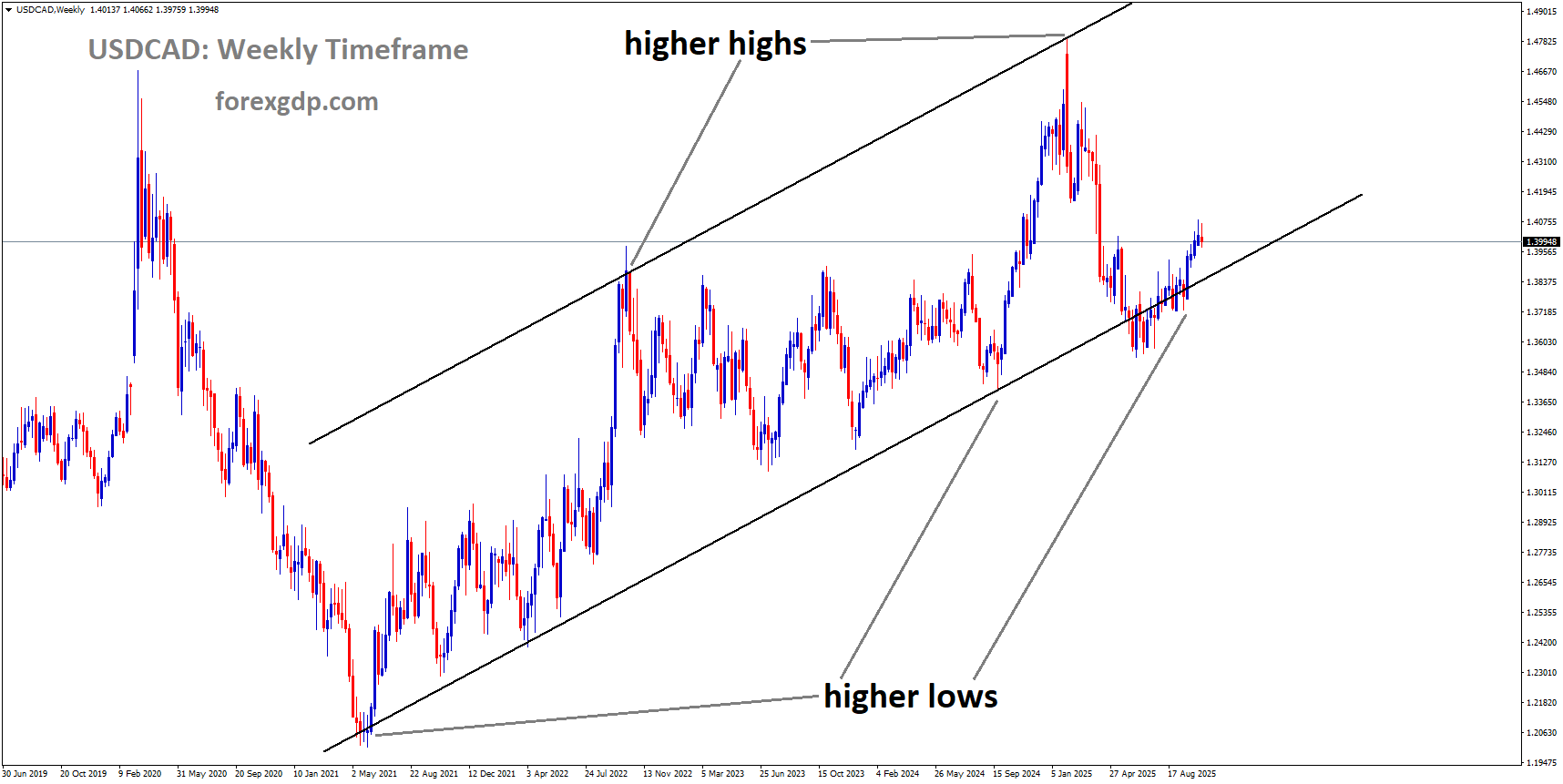
USDCAD is moving in an uptrend channel, and the market has reached a higher low area of the channel
The Influence of Oil Prices on the Canadian Dollar
Canada’s economy is heavily tied to oil exports, and whenever global oil prices climb, the CAD tends to follow suit. This is because higher oil prices mean more revenue for Canada, which strengthens its currency against others, particularly the US Dollar.
Recently, oil prices have risen following sanctions imposed by the United States on major Russian oil companies. These sanctions tightened global supply expectations, pushing oil prices higher. As a result, the Canadian Dollar gained strength. Since Canada is the largest oil exporter to the United States, fluctuations in oil prices play a vital role in determining the CAD’s value. When oil prices go up, the Loonie usually benefits.
This positive connection between crude oil and the Canadian Dollar often makes the USD/CAD pair move in the opposite direction of oil prices. So, when oil climbs, USD/CAD tends to move lower. That’s exactly what the market has witnessed recently — a strengthening CAD as oil values rise.
Economic Outlook: Canada vs. the United States
While oil is a big part of the story, other economic developments are also shaping the USD/CAD movement. In Canada, attention is turning toward the Retail Sales report for August. Retail sales data is a key indicator of consumer spending, which reflects the overall strength of the economy. Economists expect a positive reading, suggesting that Canadian consumers continue to spend steadily despite global uncertainties.
If the actual data beats expectations, it would likely reinforce confidence in the Canadian economy and push the CAD even higher. On the other hand, if the report disappoints, it might weaken the Loonie temporarily.
In contrast, the US economy is facing its own challenges. The ongoing uncertainty in the United States, including political tensions and data release delays due to government disruptions, has made it difficult for traders to assess the health of the US economy accurately. The Federal Reserve (Fed), which plays a critical role in setting interest rates, has been navigating these challenges carefully.
US Dollar Weakness and Federal Reserve’s Policy Stance
The US Dollar has been under mild pressure recently as investors anticipate further interest rate cuts by the Federal Reserve. According to market expectations, the Fed may lower its benchmark rate in upcoming policy meetings to support economic growth. Lower interest rates typically make a currency less attractive to investors seeking higher yields, and that’s what has been weighing on the USD lately.
At the same time, the ongoing trade and political tensions between the US and other nations have added uncertainty to the market. Traders are being cautious, especially given how closely the US and Canadian economies are connected. Any disruptions in trade relations could have direct effects on the currency pair.
Interestingly, Canadian Prime Minister Mark Carney recently commented that the decades-long process of deepening economic ties between Canada and the US has slowed down. This statement adds another layer of complexity to how investors perceive future trade and policy interactions between the two countries.
What Traders Are Watching Next
For now, the spotlight remains on Canada’s Retail Sales report. Strong retail sales figures would reinforce the belief that Canada’s domestic economy remains resilient, even amid global challenges. This could give the Bank of Canada (BoC) confidence to maintain its current policy stance rather than move toward rate cuts.

Additionally, traders are keeping an eye on the Kansas Fed Manufacturing Activity report in the United States. While this report is not a major market mover compared to others, it can still offer insights into regional manufacturing performance and economic momentum. If the data shows continued weakness, it could further pressure the US Dollar, providing additional support for the CAD.
Broader Market Sentiment and Investor Strategy
The market’s overall sentiment remains cautious. Many investors are balancing between risk and safety, watching how global events like sanctions, political uncertainty, and interest rate decisions unfold. In times like these, currencies tied to commodities, such as the Canadian Dollar, can experience stronger movements due to shifts in global demand and supply conditions.
For traders dealing with USD/CAD, it’s not just about the short-term data. The long-term picture also matters — including oil market dynamics, monetary policies, and cross-border trade developments. With the Fed leaning toward more dovish policies and oil prices showing signs of recovery, the CAD could remain relatively supported in the near term.
Final Summary
The USD/CAD pair is currently under gentle downward pressure as the Canadian Dollar gains from improving crude oil prices. Canada’s position as a major oil exporter continues to play a key role in boosting its currency when global oil demand and prices rise. Meanwhile, the US Dollar remains slightly weaker as expectations grow for more interest rate cuts from the Federal Reserve.
Traders are now turning their attention to the upcoming Canadian Retail Sales data, which could offer new direction for the pair. Strong consumer spending would likely enhance the CAD’s outlook, while weaker numbers could limit its gains.
In the big picture, USD/CAD remains influenced by a blend of factors — from oil market trends and central bank policies to geopolitical developments. For now, the balance appears to favor the Canadian Dollar, especially if oil prices continue their upward momentum and the US Dollar stays weighed down by rate-cut expectations and economic uncertainty.