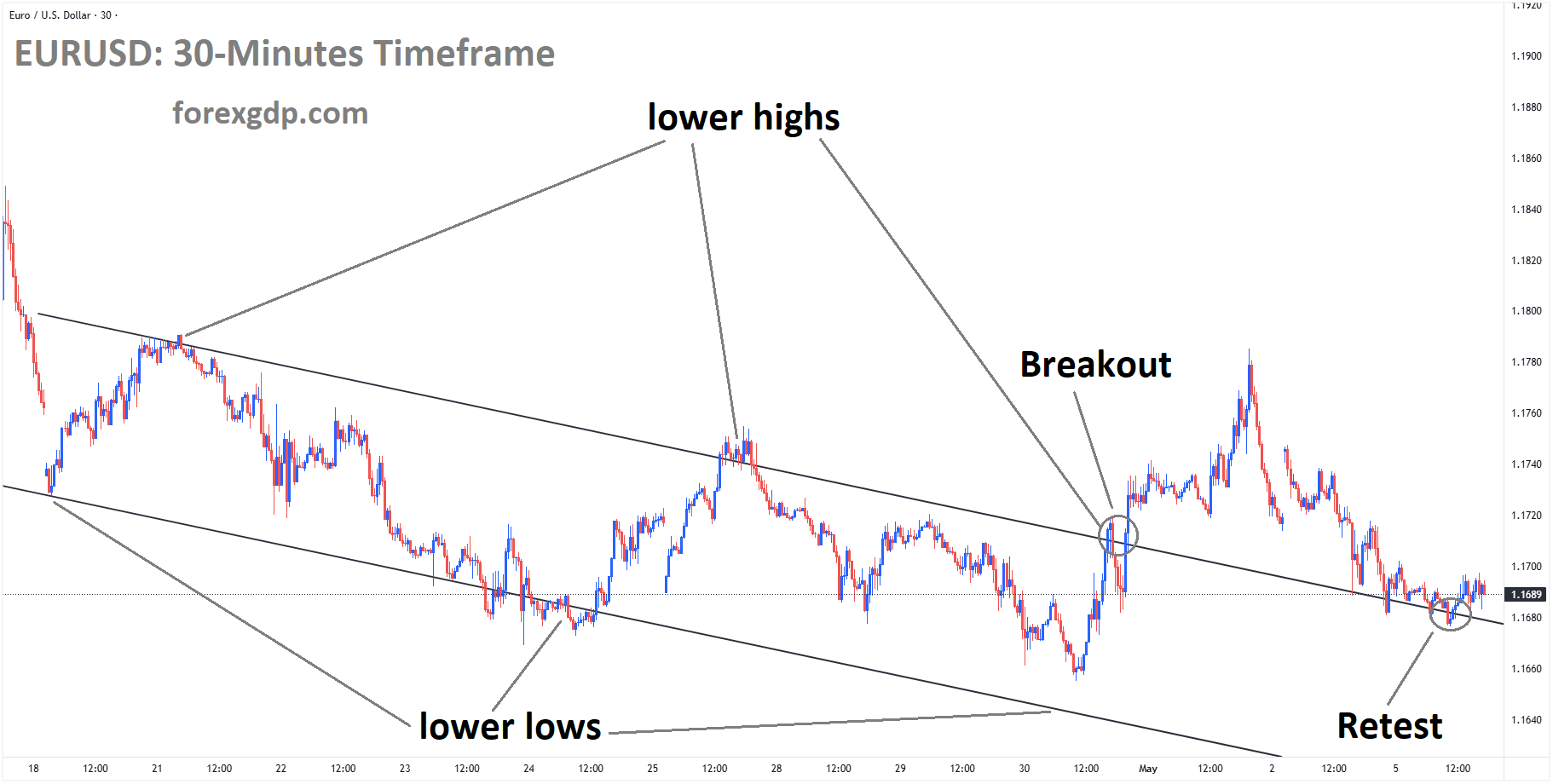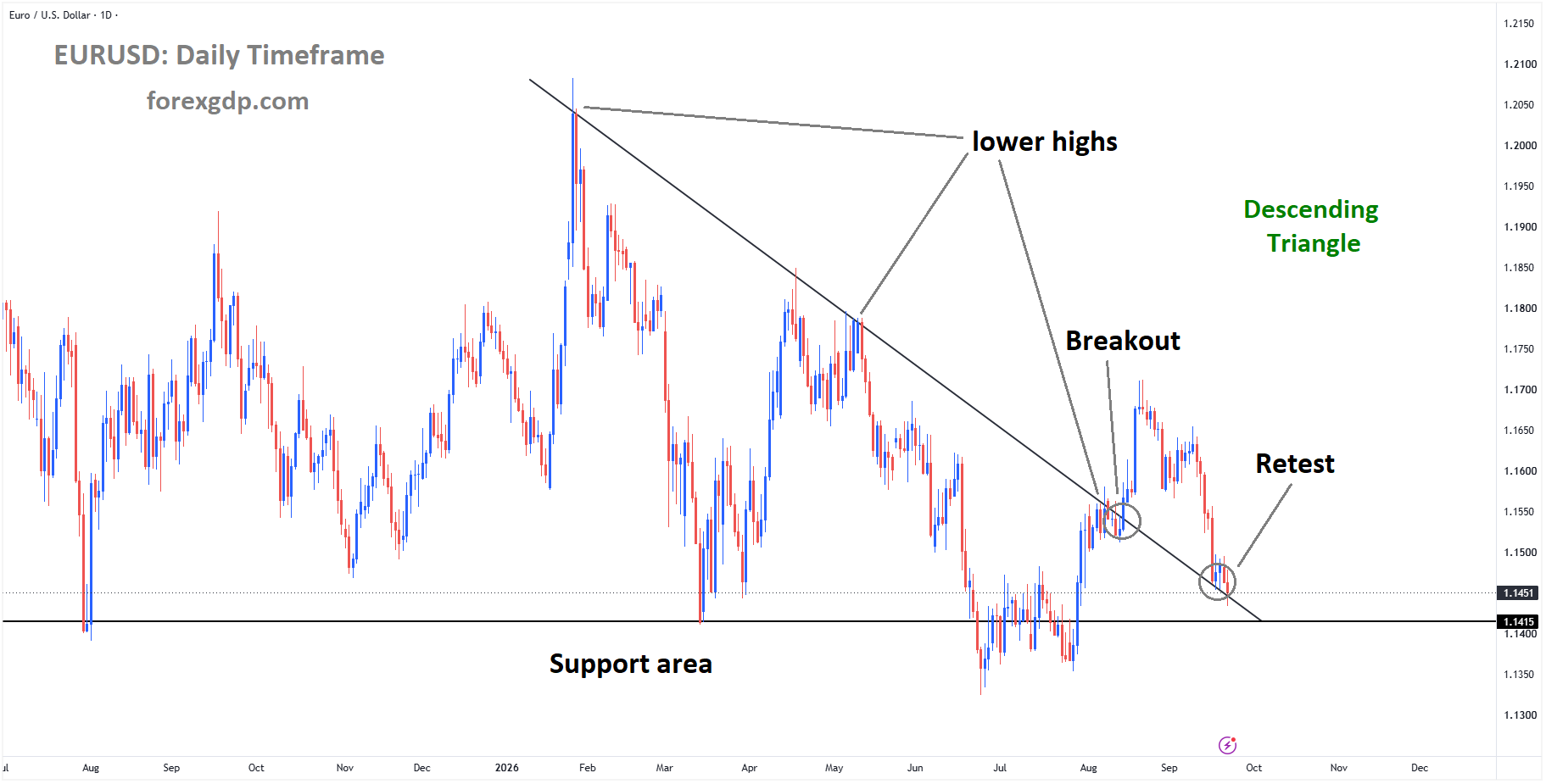
EURUSD reached the retest area of the broken descending triangle pattern
EURUSD Extends Decline as Germany’s Political Turmoil Weighs on Euro
The Euro remains under pressure against the US Dollar as investors become increasingly concerned about political and financial conditions across the Eurozone. A moderate improvement in global risk sentiment has failed to provide meaningful support for the common currency.
Falling Oil costs would normally help European economies because the region depends heavily on imported energy. Lower energy expenses can reduce pressure on businesses, households, and inflation. However, these potential benefits are currently being overshadowed by political uncertainty in Germany and growing worries about France’s public debt.
Investors are focusing less on short-term improvements in market sentiment and more on the larger challenges facing Europe. Questions about government stability, future spending plans, and fiscal discipline are making the Euro less attractive.
Meanwhile, the US Dollar continues to receive support from expectations that American interest rates could remain elevated. This contrast between European uncertainty and firm US monetary policy expectations has created a difficult environment for EURUSD.
German Political Uncertainty Hurts the Euro
Germany has become a major source of concern for Euro investors following a disappointing election result for Chancellor Friedrich Merz’s Christian Democratic Union. The party’s poor performance in the Mecklenburg-Vorpommern state election has raised questions about the government’s public support and political strength.
The CDU reportedly failed to secure enough votes to enter the state parliament. Such a result carries symbolic importance because Germany has long played a central role in shaping the Eurozone’s political and economic direction.
Chancellor Merz has promised to remain in office until his government’s planned economic reforms are completed. However, a leader needs strong political backing to introduce major reforms successfully. Weak election results can make it harder to gain support from lawmakers, regional governments, coalition partners, and the wider public.
This uncertainty matters beyond Germany’s domestic affairs. As Europe’s largest economy, Germany plays a powerful role in decisions involving the European Union’s budget, defence policy, industrial strategy, and long-term economic priorities.
When Germany’s leadership appears politically vulnerable, investors may question whether major European projects can move forward as planned.
European Spending Plans Face Fresh Questions
Germany’s political difficulties have also created uncertainty around the European Union’s ambitious budget proposals. The plans include significant spending commitments, with defence expected to receive greater attention.
European leaders have been discussing ways to strengthen the region’s security, improve military readiness, and reduce reliance on outside support. These goals require large financial commitments and close cooperation among member states.
Germany is essential to these efforts because of the size of its economy and its influence within the European Union. If the German government struggles to maintain political support, reaching an agreement on major spending programs may become more difficult.
The growing influence of the Alternative for Germany party adds another layer of uncertainty. Its approach to foreign policy, European cooperation, and relations with Russia differs from that of many mainstream parties.
A stronger position for the party in national politics could complicate decisions involving defence spending and support for shared European priorities. Reports suggest that recent election developments have already encouraged European officials to reconsider what can realistically be achieved in the coming months.
This reassessment is weakening confidence in Europe’s ability to act quickly and decisively during a period of economic and geopolitical change.
France’s Debt Creates Another Challenge
Political uncertainty in Germany is not the only problem affecting the Euro. France’s financial position has also returned to the spotlight after a rating agency lowered its assessment of French government debt.
France’s debt burden has reached its highest level in several decades. This has increased concern about whether the government can control spending and improve its finances without causing further political tension.
Credit rating decisions matter because they influence how investors view a country’s ability to manage and repay its debt. A downgrade from a smaller agency may have a limited immediate effect, but it can still act as a warning. Investors may begin to fear that larger rating agencies could take similar action in the future.
The main concern is that meaningful fiscal reform appears difficult to achieve. Reducing debt usually requires spending cuts, tax changes, stronger economic growth, or a combination of these measures. Each option can face resistance from voters, opposition parties, labour groups, and other political forces.
If France cannot present a convincing plan to control its finances, confidence in the country’s debt may weaken further. Since France is one of the Eurozone’s largest economies, its fiscal problems can affect perceptions of the entire currency bloc.
European Central Bank Communication Takes Focus

Attention is also turning toward comments from European Central Bank President Christine Lagarde. Investors are looking for guidance about inflation, borrowing costs, and the future direction of monetary policy.
The ECB has maintained a firm approach as it attempts to keep inflation under control. Policymakers have indicated that further action may remain possible if price pressures continue.
Lagarde is likely to repeat the central bank’s commitment to price stability. However, the ECB faces a difficult balance. Keeping borrowing costs elevated can help manage inflation, but it can also place additional pressure on households, businesses, and governments with high debt levels.
This challenge is especially important when major economies such as France and Germany are dealing with political and financial uncertainty. The ECB must respond to inflation without creating unnecessary damage to economic activity or financial stability.
A firm message from the central bank may provide limited support for the Euro, but monetary policy alone cannot solve the political and fiscal problems facing the region.
US Dollar Benefits From Firm Rate Expectations
While the Euro faces several sources of pressure, the US Dollar is being supported by expectations surrounding Federal Reserve policy.
Investors increasingly believe that the Federal Reserve may keep monetary conditions tight for longer than previously expected. Recent comments from regional Fed officials have reinforced the view that controlling inflation remains a priority.
Higher expectations for US borrowing costs can make Dollar-based assets more attractive to global investors. This creates additional demand for the American currency and places pressure on competing currencies, including the Euro.
The policy difference between the Federal Reserve and the European Central Bank is therefore receiving close attention. Even if both institutions maintain firm positions, investors may continue to favour the Dollar when the US economy appears more resilient or when European political risks increase.
Final Summary
EURUSD remains under pressure as investors respond to a difficult combination of European political uncertainty, fiscal concerns, and firm US monetary policy expectations.
Germany’s election setback has raised doubts about Chancellor Friedrich Merz’s political strength and the future of major European spending plans. At the same time, France’s growing debt burden and the risk of further credit rating action have weakened confidence in the Eurozone’s financial outlook.
The European Central Bank may continue to deliver a firm message on inflation, but its policy guidance cannot fully remove concerns about government stability and public debt. With the US Dollar supported by expectations of prolonged monetary tightening, the Euro may continue to face a challenging environment until confidence in Europe’s political and fiscal direction improves.
GBPUSD Turns Lower as Britain’s Financial Pressure Intensifies
The British Pound lost its earlier strength against the US Dollar after fresh government finance data raised concerns about the United Kingdom’s fiscal position. The latest figures showed that public sector borrowing increased more than analysts expected during August, placing additional pressure on the government ahead of the next budget.
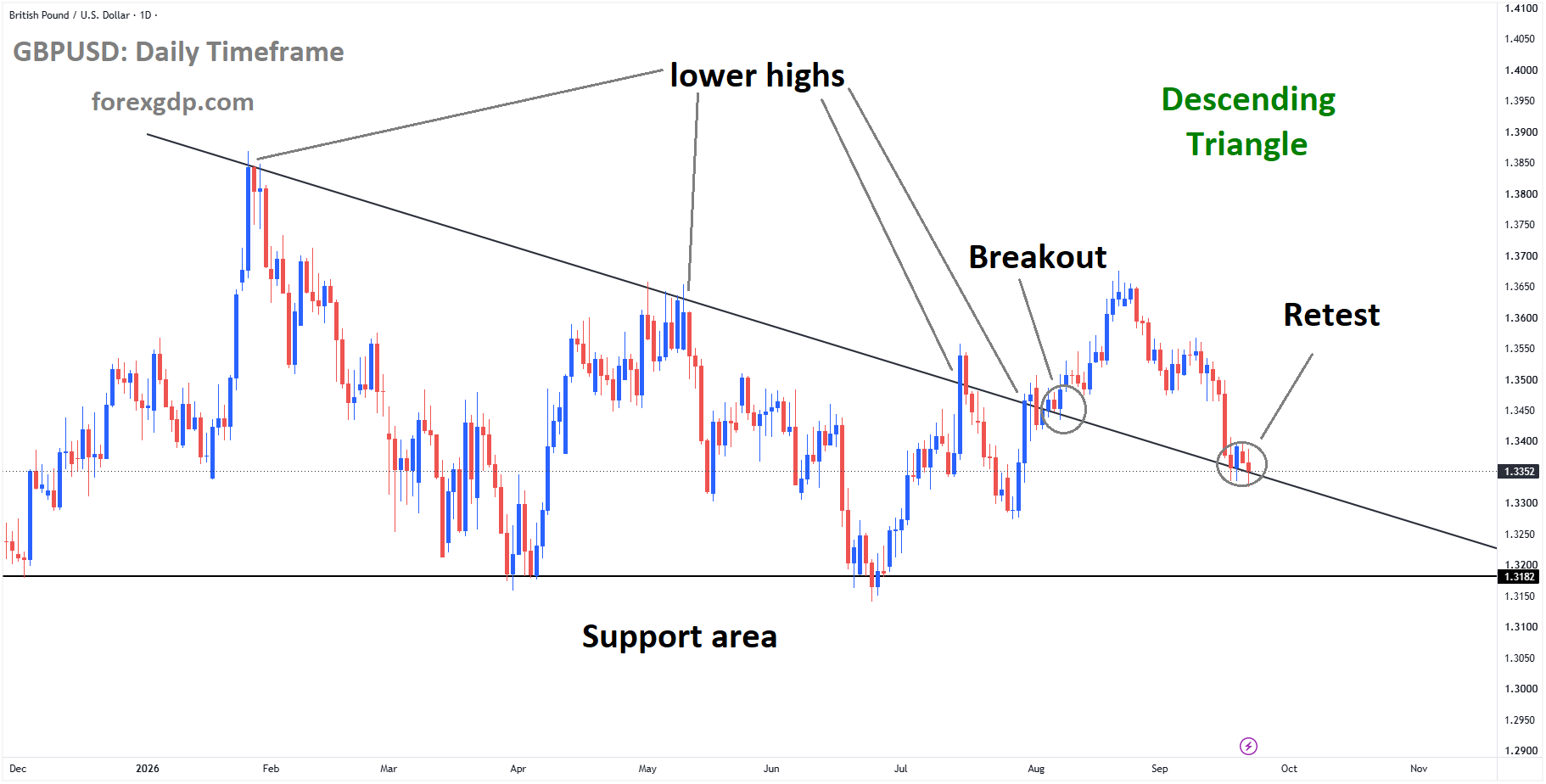
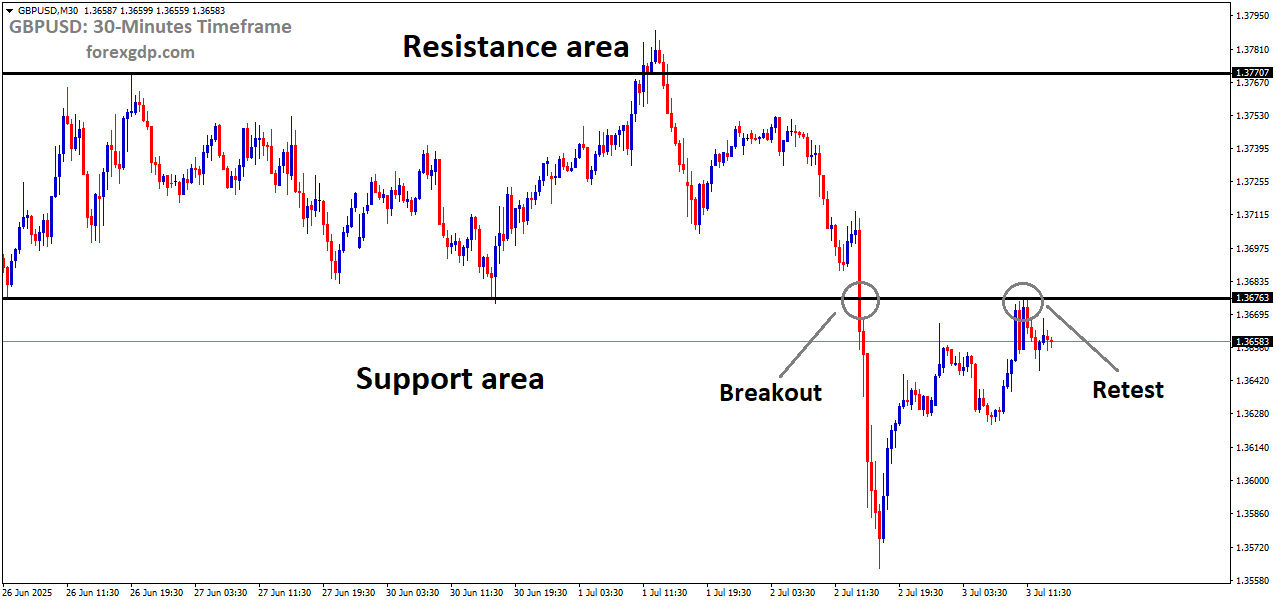
GBPUSD reached the retest area of the broken descending triangle pattern
Sterling had initially attracted buying interest, but the mood changed after investors examined the borrowing report. The data highlighted the financial challenges facing the UK government as public spending continues to exceed income from taxes and other sources.
The Pound’s weakness also reflects broader uncertainty surrounding the UK economy. Higher borrowing costs, persistent inflation pressures, and questions about future tax policies are making investors more cautious. Meanwhile, the US Dollar remains supported by expectations that the Federal Reserve may keep monetary policy restrictive for longer.
UK Government Borrowing Rises Sharply
Figures released by the UK’s Office for National Statistics showed a significant monthly increase in public sector net borrowing during August. The total was considerably higher than the previous month and also exceeded market forecasts.
Public sector borrowing rises when government spending is greater than the income received through taxes and other revenue. A higher figure means the government must raise more money, usually by selling bonds. This can increase the cost of servicing the national debt, especially when borrowing costs are already elevated.
The latest increase was also notably higher than the amount recorded during the same month a year earlier. Government expenses grew faster than income, creating a wider gap in the public finances.
Inflation linked to geopolitical tensions in the Middle East contributed to some of the pressure. Higher costs can increase government spending across several areas, including public services, benefits, and debt interest payments.
Although total government debt remained below a major psychological threshold, its overall size continues to attract attention. Investors are closely watching whether the government can maintain control over its finances without introducing painful spending reductions or higher taxes.
Fiscal Pressure Builds Ahead of the Budget
The borrowing figures arrive at a difficult time for the UK government. Public sector borrowing for the current fiscal year has already moved beyond the level projected by the Office for Budget Responsibility.
This difference between actual borrowing and official forecasts reduces the government’s financial flexibility. It means the Chancellor may have less room to announce new spending plans, tax reductions, or economic support measures in the upcoming budget.
The government must now present a plan that is credible to both the public and financial markets. Investors want evidence that borrowing will remain manageable and that debt will not rise uncontrollably.
Rising government bond yields make this task more difficult. When yields increase, the government must pay more to borrow money. These additional interest costs can consume funds that might otherwise be used for healthcare, infrastructure, education, or other public priorities.
The Chancellor could consider raising taxes, reducing spending, or changing existing fiscal rules. Each option carries economic and political risks. Higher taxes could weaken consumer spending and business activity, while spending cuts could place additional pressure on public services.
A balanced budget plan will therefore be essential. Any sign that the government lacks a clear strategy could create further uncertainty around the Pound and UK financial assets.
Bank of England Expectations Offer Limited Support
The British Pound has received some support from expectations surrounding the Bank of England. Following its latest policy meeting, some investors began to believe that the central bank might maintain a firm approach toward inflation.
A more restrictive policy outlook can support a currency because it may keep borrowing returns attractive. However, there are doubts about whether the Bank of England will deliver everything financial markets currently expect.
The UK central bank must balance inflation risks against signs of weaker economic activity. Keeping policy tight for too long could place additional pressure on households and businesses. Mortgage payments, business loans, and other borrowing costs remain important concerns across the economy.
If the Bank of England adopts a more cautious position in future meetings, investors may need to reduce their expectations for tighter policy. Such a change could remove an important source of support for Sterling.
Fiscal policy also influences the central bank’s decisions. If the government introduces measures that increase demand or inflation, the Bank may need to remain cautious. On the other hand, spending reductions or higher taxes could slow the economy and reduce the need for further policy tightening.
US Dollar Remains Firm After Federal Reserve Shift
The US Dollar continues to benefit from the Federal Reserve’s firm policy message. The central bank has maintained a cautious approach toward inflation, encouraging investors to believe that US monetary conditions may stay restrictive.
This has helped the Dollar remain attractive even as global risk sentiment improves. Falling oil costs have reduced some concerns about inflation and supported confidence in risk-sensitive markets. However, that improvement has not been strong enough to produce a meaningful decline in demand for the US currency.
Investors are now waiting for fresh information about the American economy. Upcoming business activity reports will provide further evidence about the strength of the manufacturing and services sectors.
If the data shows that the US economy remains resilient, expectations of continued Federal Reserve firmness may grow. That could encourage additional demand for the Dollar and create further pressure on the Pound.
However, weaker economic figures could have the opposite effect. Signs of slowing activity might reduce expectations for tighter policy and limit the Dollar’s strength.
UK Economic Confidence Faces a Fresh Test
The borrowing report has brought the condition of the UK’s public finances back into focus. It has also created another challenge for confidence at a time when households and businesses are already dealing with elevated costs.
A clear and realistic budget could help calm concerns. Investors will look for evidence that the government understands the scale of the fiscal challenge and has a workable plan to address it.
The government must also avoid damaging economic growth. Aggressive spending reductions or large tax increases could weaken activity, making it harder to improve public finances over time. Slower growth can reduce tax income and create additional demand for government support.
For the Pound, confidence will depend on several connected factors. These include the credibility of the budget, the direction of Bank of England policy, inflation developments, and the performance of the wider economy.
Final Summary
The British Pound lost its earlier momentum after UK public sector borrowing rose more sharply than expected. The figures renewed concerns about government finances and reduced the fiscal flexibility available ahead of the upcoming budget.
Higher borrowing costs are adding to the challenge, while uncertainty about future taxes and spending is keeping investors cautious. Expectations of a firm Bank of England policy provide some support to Sterling, but doubts remain about whether the central bank will meet current market expectations.
At the same time, the US Dollar remains supported by the Federal Reserve’s restrictive position and the resilience of the American economy. Upcoming economic reports from both countries will help shape sentiment, but the UK government’s budget plans are likely to remain a major influence on the Pound.
USDJPY Moves Higher as BoJ Silence Weighs on the Yen
USDJPY moved higher during Tuesday’s early Asian trading session as investors continued to assess the different policy directions of the Federal Reserve and the Bank of Japan. The US Dollar attracted fresh demand, while the Japanese Yen struggled to gain lasting support.
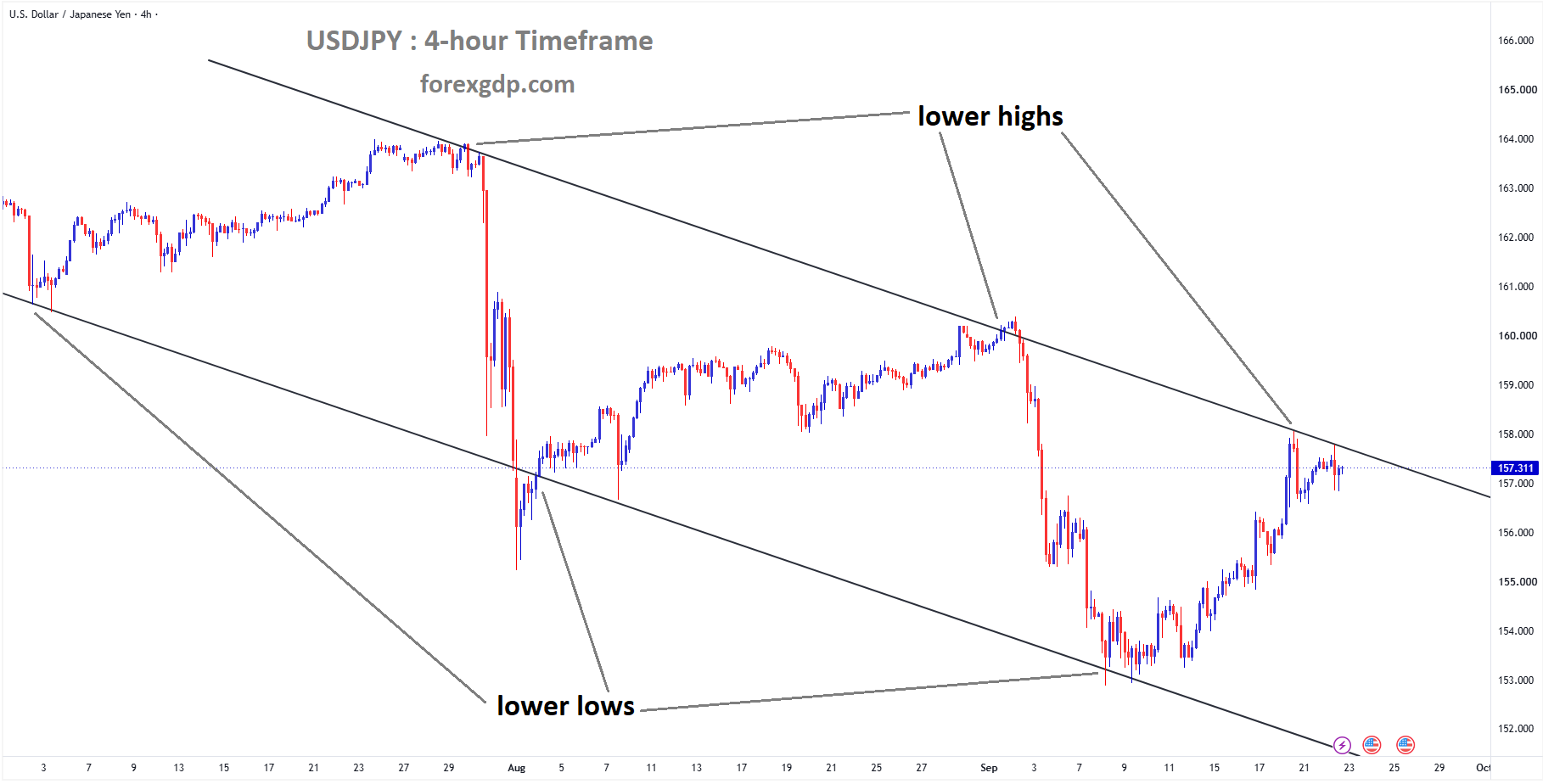
USDJPY reached the lower high area of the descending channel
The latest movement reflects growing uncertainty about Japan’s monetary policy outlook. Although the Bank of Japan raised interest rates last week, it did not provide the strong guidance many investors had expected. The lack of a clear commitment to further tightening weakened confidence in the Yen.
At the same time, expectations that the Federal Reserve may raise borrowing costs again have strengthened. Traders are now paying close attention to comments from several Fed officials, including John Williams, Philip Jefferson and Thomas Barkin. Their statements could offer further clues about the direction of US monetary policy.
The contrast between a cautious BoJ and a more aggressive Fed continues to influence USDJPY. Unless Japanese policymakers deliver a clearer message about future rate increases, the Yen may find it difficult to build meaningful momentum.
Bank of Japan Raises Rates but Avoids Strong Guidance
The Bank of Japan increased its interest rate by 25 basis points last week, taking it to the highest level seen in 31 years. The decision was approved by seven policymakers, while two members voted against it.
The rate increase was an important step in Japan’s long effort to move away from extremely loose monetary conditions. However, the central bank did not accompany the decision with strongly hawkish guidance. Investors were looking for clear signs that further tightening would follow soon, but the BoJ remained cautious.
This measured approach created doubts about how quickly the central bank is prepared to continue raising rates. Market expectations indicate only a limited possibility of another move at the next meeting in October. However, traders see a much greater chance of a further increase at the December meeting.
The BoJ’s caution may be linked to concerns about economic growth, consumer spending and the effect of higher borrowing costs on Japanese households and businesses. Officials may prefer to study incoming economic data before taking another major step.
However, a slow policy response carries risks for the Yen. When borrowing costs in Japan remain far below those in the United States, investors often prefer Dollar-based assets that can offer better returns. This difference in interest rates can continue to work against the Japanese currency.
Japanese Authorities Increase Intervention Watch
The renewed weakness of the Yen has placed Japanese authorities back in the spotlight. Traders remain alert to the possibility that officials could step into the currency market if the Yen falls too quickly or if movements become disorderly.
Reports indicated that Japanese officials recently conducted rate checks. During this process, authorities contact banks and request currency quotations to evaluate current market conditions. A rate check does not mean that direct intervention has begun, but investors often view it as a warning.
The action suggests that officials are closely watching the speed and scale of the Yen’s decline. It also reminds traders that the government and the BoJ have tools available to discourage excessive speculation against the currency.
Analysts at MUFG noted that reports of a rate check helped the Yen recover late on Friday. According to their assessment, the move sent a clear signal that Japanese authorities may be prepared to intervene again if the currency continues to weaken.
This threat could limit aggressive selling of the Yen in the short term. Traders may become more cautious about building large positions when the possibility of sudden official action is rising.
However, intervention alone may not create lasting Yen strength. Official buying can slow a sharp decline or cause a temporary recovery, but its longer-term impact is often limited when the wider interest-rate environment remains unfavorable. A lasting improvement may require stronger domestic policy guidance or a meaningful shift in Federal Reserve expectations.
Federal Reserve Outlook Supports the US Dollar
Expectations surrounding the Federal Reserve are another major influence on USDJPY. Investors increasingly believe that the US central bank may need to raise interest rates further to control inflation.
St. Louis Fed President Alberto Musalem delivered a notably firm message on Monday. He suggested that additional monetary tightening could be necessary because strong demand and broader commodity-related pressures continue to affect inflation.
Musalem warned that inflation could remain well above the Federal Reserve’s target over the next 18 months without further policy restraint. He also pointed out that underlying price pressures remain uncomfortable even when temporary supply-related effects are removed.
His preference for earlier and gradual rate increases indicates that he sees an advantage in acting before inflation becomes more difficult to control. This approach supports expectations that the Fed may continue tightening instead of quickly moving toward easier policy.
Musalem also described the US labor market as being close to full employment. This matters because the Fed may have more freedom to focus on inflation when employment conditions remain stable. If policymakers believe the economy can handle higher borrowing costs, they may be more willing to approve another increase.
Markets Raise Bets on Another Fed Rate Increase
Traders have increased their expectations for a Federal Reserve rate hike at the October policy meeting. Current market pricing indicates a 56.5% probability of an increase of at least 25 basis points. That compares with 43.5% only one week earlier.
The sharp change shows how quickly monetary policy expectations can shift when Fed officials use stronger language. If more policymakers express similar concerns about inflation, the probability of another rate increase could rise further.
A hawkish Fed outlook generally supports the US Dollar because higher interest rates can make Dollar-denominated investments more attractive. This effect becomes especially important against a currency such as the Yen, where borrowing costs remain comparatively low.
Measures of Federal Reserve communication also point toward a firm policy position. Musalem’s speech received a strongly hawkish assessment, exceeding his historical average. Broader Fed sentiment readings also remained well above neutral, suggesting that policymakers are still more concerned about persistent inflation than about providing near-term monetary support.
Investors will now listen carefully to upcoming speeches from other Fed officials. If Williams, Jefferson and Barkin reinforce the case for further tightening, demand for the US Dollar may remain healthy. A more cautious tone, however, could reduce expectations for an October move and offer the Yen some relief.
Final Summary
USDJPY remains supported by the widening contrast between the Federal Reserve and the Bank of Japan. The BoJ raised interest rates to a multi-decade high, but its cautious guidance left investors uncertain about the timing of its next move.
Japanese rate checks have increased the possibility of official currency intervention and may discourage excessive Yen selling. However, intervention concerns may provide only temporary support unless Japan’s broader monetary outlook becomes more forceful.
Meanwhile, hawkish comments from Federal Reserve officials have strengthened expectations for another US rate increase. Markets now see a greater chance of an October move as policymakers continue to warn about persistent inflation.
The next direction will depend heavily on central bank communication. Firm Fed statements could continue to support the US Dollar, while stronger guidance from Japan or direct intervention could help the Yen recover.
EURJPY Strengthens While Japanese Yen Faces Heavy Pressure
EURJPY moved higher during Tuesday’s European trading session as the Japanese Yen continued to struggle against other major currencies. The Euro benefited from this weakness, even as investors became slightly less confident that the European Central Bank would deliver aggressive interest rate increases.
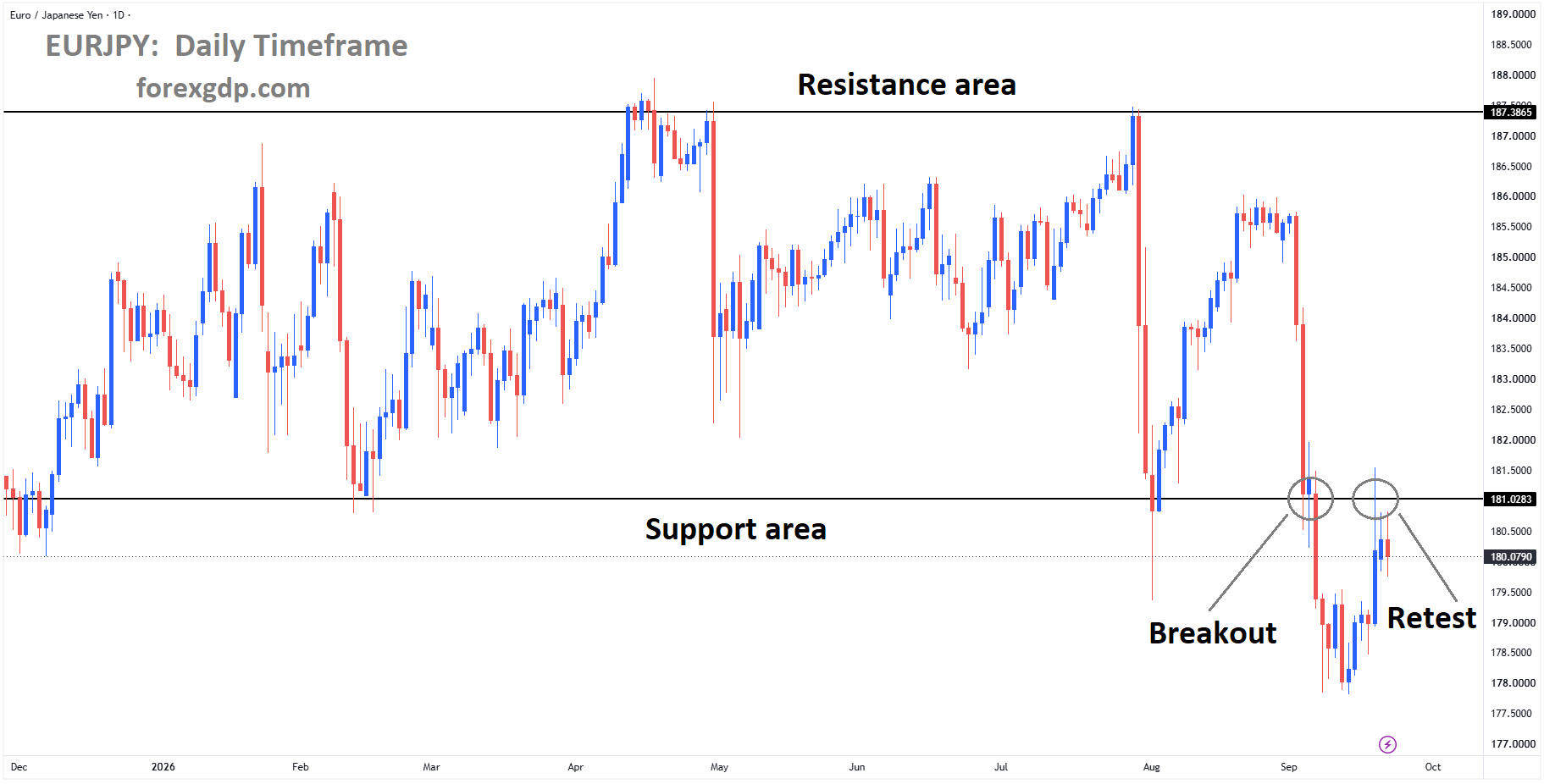
EURJPY reached the retest area of the broken box pattern
The Japanese Yen has faced renewed selling pressure since the Bank of Japan announced its latest monetary policy decision. Although the central bank raised borrowing costs, the move failed to provide lasting support to the currency. Investors are now questioning whether the policy change will be enough to control inflation and improve confidence in the Yen.
At the same time, the currency’s rapid depreciation has increased speculation that Japanese authorities could intervene in the foreign exchange market. Officials have not confirmed any direct action, but recent developments suggest that policymakers are closely watching the Yen’s movement.
On the European side, the outlook is more balanced. A correction in oil prices has reduced some concerns about inflation, encouraging traders to reconsider how quickly the European Central Bank may raise interest rates. However, expectations for further policy tightening have not disappeared completely.
Bank of Japan Raises Interest Rates
The Bank of Japan decided to increase its main interest rate by 25 basis points. This brought the rate to its highest level in more than three decades and represented another major step away from Japan’s long period of extremely loose monetary policy.
The decision was not fully supported by the central bank’s board. Two policymakers, Toichiro Asada and Ayano Sato, opposed the increase. Their disagreement highlighted the difficult position facing the Bank of Japan.
Higher interest rates may help control inflation and support the national currency. However, they can also increase borrowing costs for households and businesses. Japan’s economy has faced several challenges, and a rapid tightening of policy could place additional pressure on domestic demand.
Despite these risks, the Bank of Japan left open the possibility of further rate increases. The central bank warned that inflation could rise beyond its official target. It also acknowledged that continued Yen depreciation could make imported goods more expensive and add to price pressures across the economy.
This message indicated that Japanese policymakers remain concerned about inflation. Still, investors did not view the statement as strong enough to create sustained demand for the Yen.
Why the Yen Remains Under Pressure

Normally, higher interest rates can make a currency more attractive because investors may receive better returns from assets held in that currency. However, foreign exchange markets also pay close attention to future policy expectations.
The Bank of Japan raised rates, but uncertainty remains about how quickly it will act again. The opposition from two board members may have added to concerns that future increases could be slow or difficult to approve.
Japan’s interest rates also remain relatively modest compared with those in several other major economies. This difference continues to affect the Yen’s appeal, particularly when global investors are searching for currencies that offer stronger returns.
The market may also have expected a more forceful message from the Bank of Japan. While officials warned about inflation and currency weakness, they did not provide a clear path for future policy decisions. That lack of firm guidance allowed selling pressure on the Yen to continue.
As a result, the Euro gained ground against the Japanese currency despite the more cautious outlook for European interest rates.
Intervention Speculation Returns to the Market
The Yen’s recent decline has increased expectations that Japanese authorities could enter the market to support the currency. Japan has intervened in the past when exchange-rate movements became too fast or disorderly.
A currency intervention usually involves authorities buying Yen and selling foreign currencies. The aim is to slow depreciation, improve market stability, and discourage traders from pushing the currency lower too quickly.
Analysts at MUFG reported that the Bank of Japan had conducted a rate check during the New York trading session. A rate check occurs when officials contact financial institutions to ask about current exchange rates and trading conditions.
Such an action does not guarantee that intervention will follow. However, it can serve as a warning that officials are prepared to respond if currency weakness continues.
The timing also attracted attention because it came before a three-day holiday period in Japan. Trading activity can become thinner during holidays, meaning fewer transactions may have a greater effect on currency movements. This environment can increase volatility and make intervention concerns more important.
Traders are therefore likely to remain cautious. Even without immediate action, the possibility of official support could limit aggressive selling of the Yen.
Lower Oil Prices Change the ECB Outlook
While Yen weakness supported EURJPY, developments in the energy market influenced expectations surrounding the Euro.
Oil prices corrected sharply from their recent highs amid hopes that Saudi Arabia could increase energy supplies. Lower oil costs can reduce pressure on transportation, manufacturing, and household energy expenses. Over time, this may help ease broader inflation concerns.
Energy prices are especially important for Europe because the region depends heavily on imported fuel. When oil becomes more expensive, companies often face higher operating costs. Some of those costs may eventually be passed on to consumers through higher prices.
A decline in oil prices can create the opposite effect. It may reduce business expenses, ease pressure on household budgets, and slow the pace of inflation. This can give the European Central Bank more flexibility when deciding whether further interest rate increases are necessary.
As inflation concerns eased, traders slightly reduced their expectations for aggressive ECB tightening. The adjustment did not suggest that investors expect an immediate shift toward lower rates. Instead, the market began to anticipate a more careful and gradual policy approach.
Investors Expect a More Measured ECB Path
Deutsche Bank strategists noted that improving inflation expectations had encouraged investors to reduce the likelihood of rapid rate increases. The change in sentiment reflected a more positive view of the inflation outlook following the decline in energy costs.
Markets continued to expect another European Central Bank rate increase before the end of the year. However, confidence in an additional move weakened. This suggests that investors believe the ECB may remain focused on inflation while avoiding unnecessary pressure on economic activity.
The European economy must manage several competing risks. Keeping interest rates too low could allow inflation to remain elevated, while raising rates too aggressively could weaken borrowing, investment, and consumer spending.
For the Euro, the effect of changing ECB expectations may depend on how inflation develops in the coming months. If energy prices remain lower and price pressures continue to ease, policymakers may feel less urgency to tighten policy rapidly. If inflation proves more persistent, expectations for stronger action could return.
Final Summary
EURJPY advanced mainly because the Japanese Yen remained weak following the Bank of Japan’s latest policy decision. Although the central bank raised interest rates and warned that inflation could exceed its target, investors remained uncertain about the pace of future tightening.
The Yen’s depreciation has also increased speculation that Japanese authorities may intervene. A reported rate check strengthened the view that officials are monitoring the currency closely and may respond if its decline becomes excessive.
Meanwhile, lower oil prices have encouraged traders to scale back expectations for aggressive European Central Bank rate increases. Even so, further ECB tightening remains possible.
The direction of EURJPY will therefore depend heavily on signals from Japanese authorities, future Bank of Japan guidance, European inflation developments, energy prices, and changing expectations surrounding ECB policy.
EURCAD Falls Under Pressure as Energy Strength Lifts Canadian Dollar
EURCAD moved lower after advancing for three consecutive trading days, as renewed demand for the Canadian Dollar placed pressure on the currency pair. The Canadian currency gained support from rising oil prices and a cautious mood across global markets.
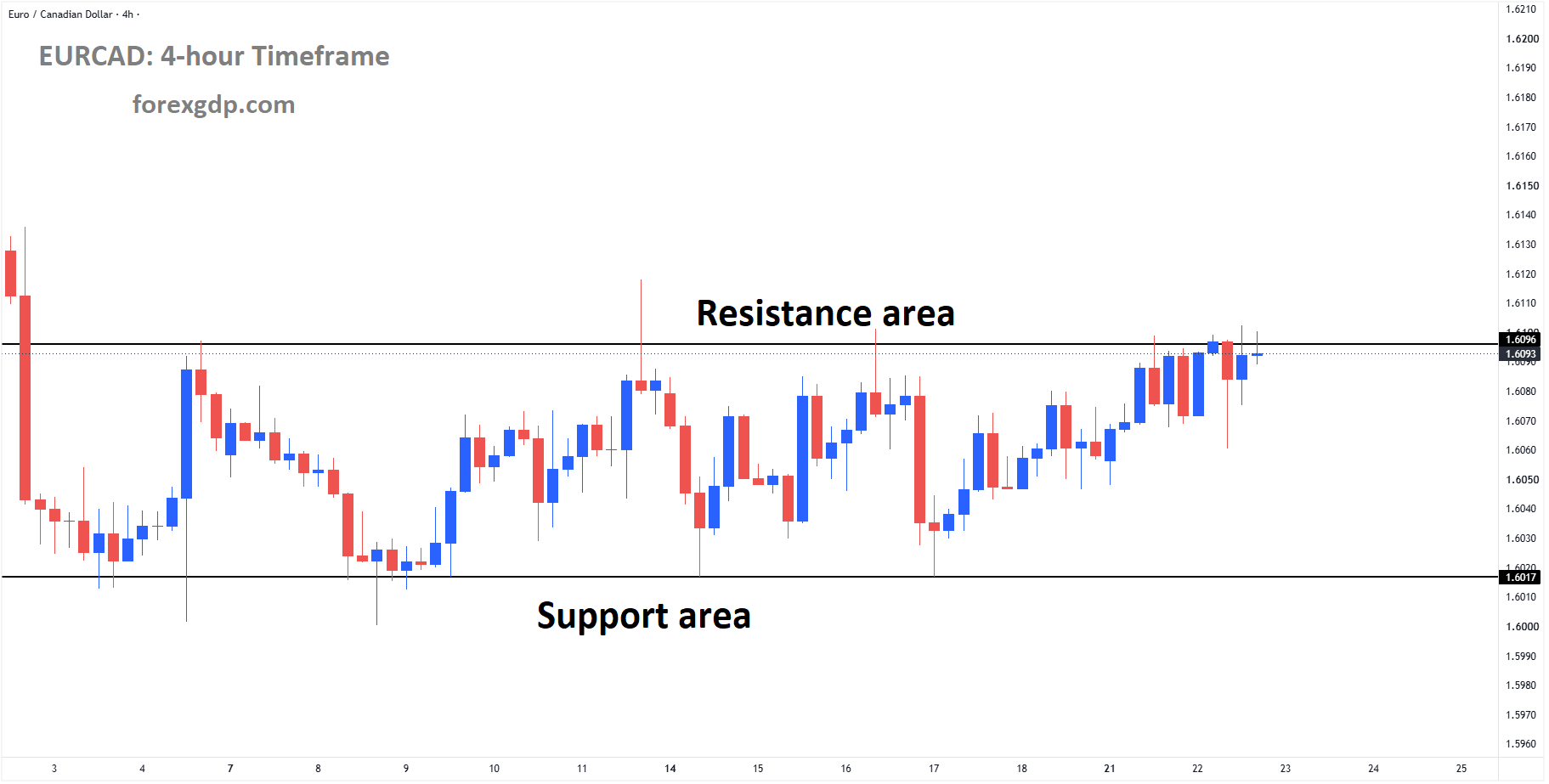
EURCAD reached the resistance area of the box pattern
Canada is one of the world’s major oil-producing countries, making its currency sensitive to changes in the energy market. When oil prices rise, expectations for Canadian export income often improve. This can increase demand for the Canadian Dollar, especially when investors believe energy markets may remain firm.
The latest increase in oil prices has been linked to growing geopolitical uncertainty in the Middle East. Market participants are closely following diplomatic developments involving the United States, Iran, China, and Gulf nations. Any tension involving major oil-producing regions can raise concerns about possible supply disruptions.
Although energy shipments recently passed safely through the Strait of Hormuz, investors remain cautious. The waterway plays a vital role in global oil transportation, and any threat to its security can quickly influence energy markets. Even without an immediate disruption, uncertainty surrounding the region can encourage traders to place greater value on oil-linked currencies such as the Canadian Dollar.
Global Caution Supports Oil-Linked Canadian Currency
The broader market mood has also helped the Canadian Dollar. Investors are carefully assessing political and diplomatic developments during the United Nations General Assembly in New York.
US President Donald Trump is expected to address the General Assembly, with markets paying close attention to his comments on Iran, China, and the Middle East. A possible meeting with Iranian President Masoud Pezeshkian has attracted particular interest because it could influence relations between Washington and Tehran.
Such a meeting could create an opportunity for dialogue after a period of increased regional tension. However, investors are likely to remain careful until there is clear evidence of progress. Diplomatic discussions can reduce uncertainty, but they can also highlight unresolved disagreements.
President Trump is also expected to hold talks with Chinese President Xi Jinping and several leaders from Gulf countries. These meetings may cover international trade, regional security, energy cooperation, and economic relations.
China is one of the world’s largest consumers of energy, while Gulf nations play a central role in global oil production. Therefore, conversations involving the United States, China, and Middle Eastern governments may have a meaningful impact on oil market expectations.
For the Canadian Dollar, changes in energy sentiment remain important. If oil demand appears strong or supply concerns increase, the currency may continue to receive support. On the other hand, successful diplomatic efforts that reduce geopolitical risk could calm oil markets and limit further strength in the Canadian currency.
Middle East Reconstruction Proposal Draws Attention
The Trump administration has also proposed creating a fund worth several billion dollars to help rebuild infrastructure damaged by war across the Middle East. The proposal is part of a wider effort to support reconstruction and improve regional stability.
Rebuilding transport systems, power networks, hospitals, housing, and public facilities would require major international cooperation. It could also create new economic activity across the region. However, the success of the proposal would depend on political agreements, secure funding, and support from regional partners.
Investors are watching whether Gulf nations and other international allies will participate in the plan. Their involvement could give the proposal greater financial and diplomatic strength.
The initiative may also become part of wider discussions between the United States and Middle Eastern leaders. If it helps ease tensions and encourages cooperation, it could improve global risk sentiment. However, if political disagreements prevent progress, uncertainty may remain elevated.
For currency markets, these developments matter because geopolitical risk often affects energy prices, investor confidence, and demand for certain currencies. The Canadian Dollar has benefited from the current cautious environment because of Canada’s close connection to the oil industry.
German Political Uncertainty Pressures the Euro

While the Canadian Dollar receives support from energy markets, the Euro is facing pressure from political developments in Germany.
The Alternative for Germany party secured first place in a state election in northeastern Germany. The result represented an important regional victory for the far-right party and highlighted growing dissatisfaction among voters.
At the same time, Chancellor Friedrich Merz’s conservative party suffered a major defeat. The poor performance has increased questions about his leadership and the government’s ability to maintain public support.
Germany is the largest economy in the Eurozone and plays a leading role in shaping European policy. Political instability in Berlin can therefore influence confidence in the Euro across international markets.
Investors generally prefer clear and stable political leadership, particularly during periods of economic uncertainty. A weakened government may struggle to introduce reforms, approve spending plans, or build agreement on important European issues.
The election result may also increase divisions over immigration, energy policy, public spending, and Germany’s relationship with the European Union. If these disagreements become more intense, decision-making could become slower and less predictable.
Merz Faces Growing Leadership Challenges
The regional defeat has left Chancellor Merz in a more vulnerable position. Opposition parties may use the result to challenge his policies, while members of his own political group could demand changes in strategy.
A single state election does not determine the future of the federal government, but it can reveal broader changes in voter sentiment. If similar results appear in other regions, pressure on the chancellor could grow further.
The rise of the AfD also presents a wider challenge for mainstream German parties. They must respond to voter concerns without increasing political division. Building stable coalitions may become more difficult if support continues to move away from traditional parties.
For the Euro, the main concern is uncertainty. Investors want to know whether the German government can remain united, protect economic confidence, and contribute effectively to European decision-making.
Political weakness in Germany could also affect discussions on defence, trade, energy security, and fiscal policy across the European Union. Since Germany holds considerable influence within the bloc, domestic political difficulties can have effects far beyond its borders.
Diplomacy and Politics Remain Key Drivers
EURCAD is currently being influenced by two separate forces. The Canadian Dollar is receiving support from stronger oil prices and cautious global sentiment, while the Euro is struggling under the weight of German political uncertainty.
The United Nations meetings may shape the next stage of market sentiment. Investors will watch for signs of progress in discussions between the United States and Iran, as well as talks involving China and Gulf leaders.
Positive diplomatic outcomes could reduce fears surrounding energy supplies and improve confidence. However, limited progress or renewed tension could keep oil prices supported and continue to benefit the Canadian currency.
In Europe, attention will remain focused on Chancellor Merz and the response of Germany’s governing parties to the election defeat. Markets will look for evidence that the government can maintain stability and address the concerns that contributed to the AfD’s strong performance.
Final Summary
EURCAD has come under pressure as the Canadian Dollar benefits from higher oil prices and increased caution surrounding Middle East developments. Possible diplomatic meetings involving the United States, Iran, China, and Gulf countries could influence both energy sentiment and global investor confidence.
At the same time, the Euro is facing political pressure after the AfD’s regional election victory and a historic defeat for Chancellor Friedrich Merz’s conservative party. With German leadership concerns rising, political developments in Europe and diplomatic activity at the United Nations will remain important influences on the currency pair.
USDCHF Slides as Positive Market Mood Weakens Dollar Demand
USDCHF remained under pressure for a fourth straight trading day as improving global sentiment reduced demand for the US Dollar. Investors showed greater interest in risk-sensitive assets amid hopes for progress in international trade discussions and diplomatic negotiations.
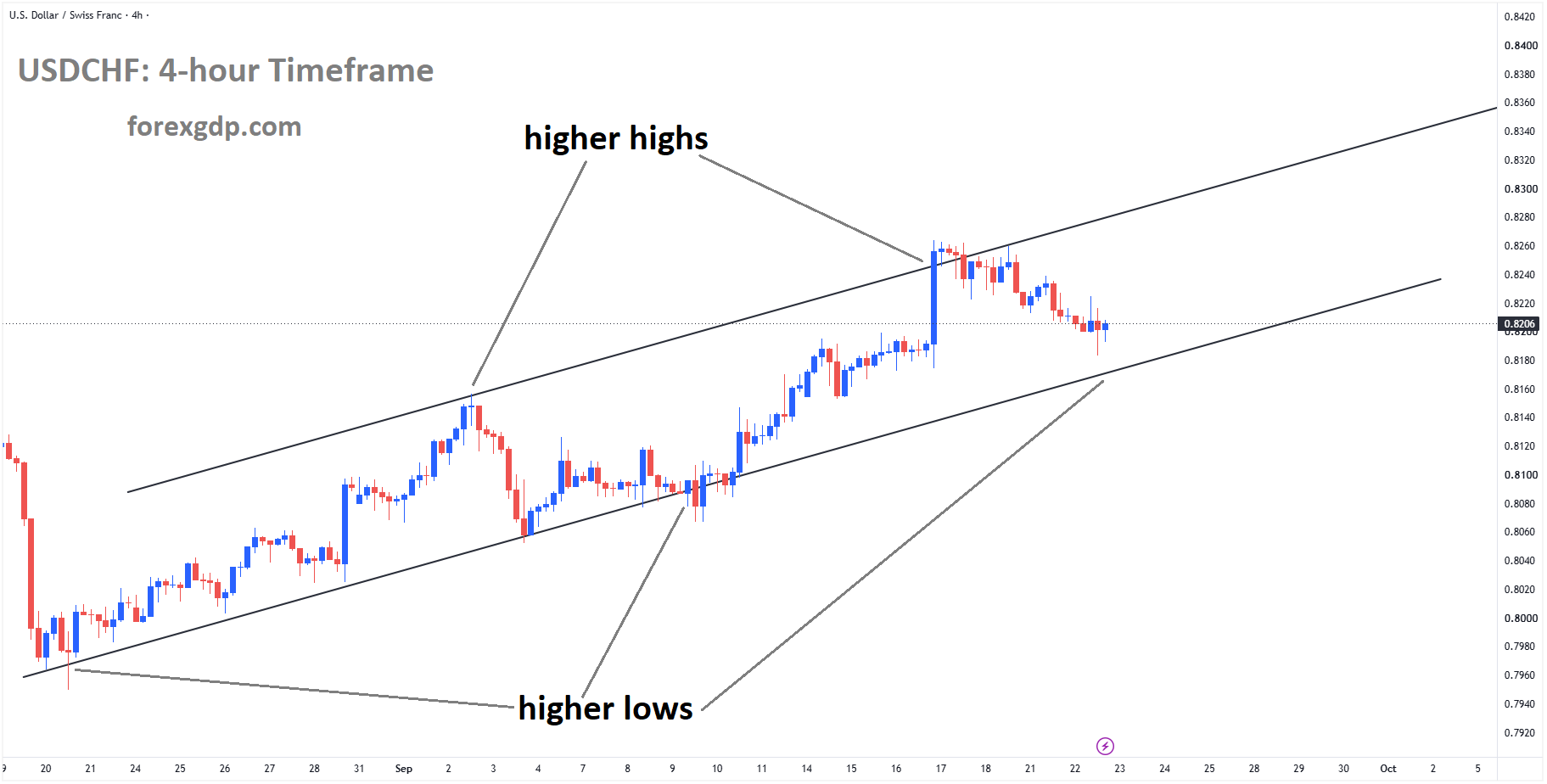
USDCHF is moving in an ascending channel
The Swiss Franc benefited as the Greenback lost momentum across the wider currency market. Although Switzerland’s currency is traditionally viewed as a safe-haven asset, movements in USDCHF often depend heavily on the overall direction of the US Dollar. When confidence improves and traders reduce their Dollar holdings, the pair can weaken even if demand for defensive currencies is also limited.
Attention is now focused on upcoming political meetings, Federal Reserve policy signals, and the global inflation outlook. These developments could shape the next major move in both currencies.
Improved Risk Sentiment Pressures the US Dollar
The US Dollar weakened as investors became more optimistic about the global economic and political environment. This improved mood encouraged traders to move toward assets offering greater growth potential, reducing the need to hold the Greenback for protection.
One of the main reasons behind the change in sentiment is the possibility of better relations between the United States and China. Traders are closely monitoring an expected summit involving the world’s two largest economies.
Any improvement in their relationship could help ease concerns about trade restrictions, tariffs, supply chains, and global economic growth. Businesses around the world remain highly sensitive to changes in US-China relations because both countries play a major role in international commerce.
A productive meeting could strengthen confidence among investors and companies. However, disappointment or renewed tension could quickly revive demand for defensive assets, including the US Dollar.
Diplomatic Hopes Support a More Positive Market Mood
Developments in the Middle East have also contributed to the stronger risk appetite. Investors welcomed reports that Iranian President Masoud Pezeshkian would lead a delegation at the United Nations General Assembly.
Comments from US President Donald Trump added to hopes that diplomatic engagement may be possible. His indication that he could be open to a separate meeting encouraged speculation that dialogue between the United States and Iran might improve.
The possibility of talks does not guarantee a major agreement. Relations between the two countries remain complicated, and several sensitive political and security matters still need to be addressed. Nevertheless, markets often respond positively when communication appears possible because dialogue can reduce the immediate threat of further escalation.
Lower geopolitical tension could improve the outlook for global trade, energy markets, and business confidence. For the US Dollar, however, a calmer environment may reduce safe-haven demand and encourage investors to seek opportunities elsewhere.
Federal Reserve Policy Could Limit Dollar Weakness
Despite the current decline in the Greenback, Federal Reserve policy may prevent the currency from weakening too sharply. Several Fed officials continue to express concern about persistent inflation and the need for a restrictive policy stance.
St. Louis Federal Reserve President Alberto Musalem recently delivered a firm message about inflation risks. He warned that inflation could remain noticeably above the central bank’s target for an extended period unless policymakers apply additional restraint.
His remarks suggested that earlier and gradual interest-rate increases may be necessary if inflation does not continue moving in the desired direction. This position reflects concern that price pressures are still affecting several areas of the economy rather than being limited to a small group of goods or services.
Commodity costs remain one source of uncertainty. While energy prices often receive the most attention, rising expenses across a broader range of raw materials can also affect production and consumer prices.
Businesses may pass higher costs to customers, making inflation more difficult to control. If companies continue planning price increases, the Federal Reserve may become less comfortable with maintaining a softer policy stance.
Underlying Inflation Remains a Key Concern
Musalem also highlighted the importance of underlying inflation. Even when temporary price changes are removed from the calculation, inflationary pressure remains stronger than the Federal Reserve would prefer.
Business expectations are another important part of the inflation outlook. If companies believe that higher inflation will continue, they may adjust wages, prices, contracts, and investment decisions accordingly. These actions can make inflation more persistent over time.
The labor market, meanwhile, remains relatively healthy. Employment conditions appear close to full capacity, but Musalem does not view the labor market as the main cause of current inflation.
This distinction matters because it suggests policymakers may remain focused on controlling prices even if employment growth begins to slow moderately. The Fed must balance inflation control with its responsibility to support maximum employment, but stubborn price pressures could keep policy restrictive for longer.
Hawkish Fed Communication Supports the Greenback
The broader tone of Federal Reserve communication remains hawkish. Policymakers continue to emphasize inflation risks and the possibility of further action if price growth fails to cool.
A hawkish central bank outlook usually supports the US Dollar because higher interest rates can make Dollar-based assets more attractive to international investors. If markets become convinced that the Fed may raise rates again or maintain restrictive conditions for longer, demand for the Greenback could recover.
This creates a mixed environment for USDCHF. Improved global sentiment and diplomatic hopes are currently pressuring the Dollar. At the same time, expectations of tighter Federal Reserve policy could provide renewed support.
The next direction may depend on which influence becomes stronger. Positive political developments could keep risk appetite healthy, while stronger inflation concerns or firm Fed comments could restore demand for the US currency.
Swiss Franc Outlook Depends on Global Confidence

The Swiss Franc remains sensitive to changes in global uncertainty. Switzerland’s political stability, strong financial system, and reputation for economic discipline have traditionally made its currency attractive during uncertain periods.
However, the Franc can also strengthen against the Dollar when the Greenback faces broad selling pressure. This appears to be an important factor in the recent USDCHF decline.
Investors will continue monitoring global diplomatic developments, trade negotiations, inflation data, and statements from central bank officials. Any deterioration in international relations could increase demand for safe-haven currencies, while further improvement may encourage greater risk-taking.
The Swiss National Bank’s policy outlook will also remain relevant. Differences between the Federal Reserve and the Swiss National Bank can influence capital flows and shape demand for both currencies.
Final Summary
USDCHF has extended its decline as a more positive global mood weakens demand for the US Dollar. Hopes surrounding US-China discussions and possible diplomatic engagement between the United States and Iran have encouraged investors to take on more risk.
However, the Dollar may still receive support from the Federal Reserve’s firm position on inflation. Alberto Musalem’s comments indicate that policymakers remain concerned about persistent price pressures and may consider gradual rate increases if necessary.
The outlook for USDCHF therefore remains closely connected to global diplomacy, inflation expectations, and central bank policy. Improved international relations may continue to pressure the Greenback, while a more hawkish Federal Reserve could help the US currency recover.
Don’t trade all the time, trade forex only at the confirmed trade setups
Get more confirmed trade signals at premium or supreme – Click here to get more signals, 2200%, 800% growth in Real Live USD trading account of our users – click here to see , or If you want to get FREE Trial signals, You can Join FREE Signals Now!