
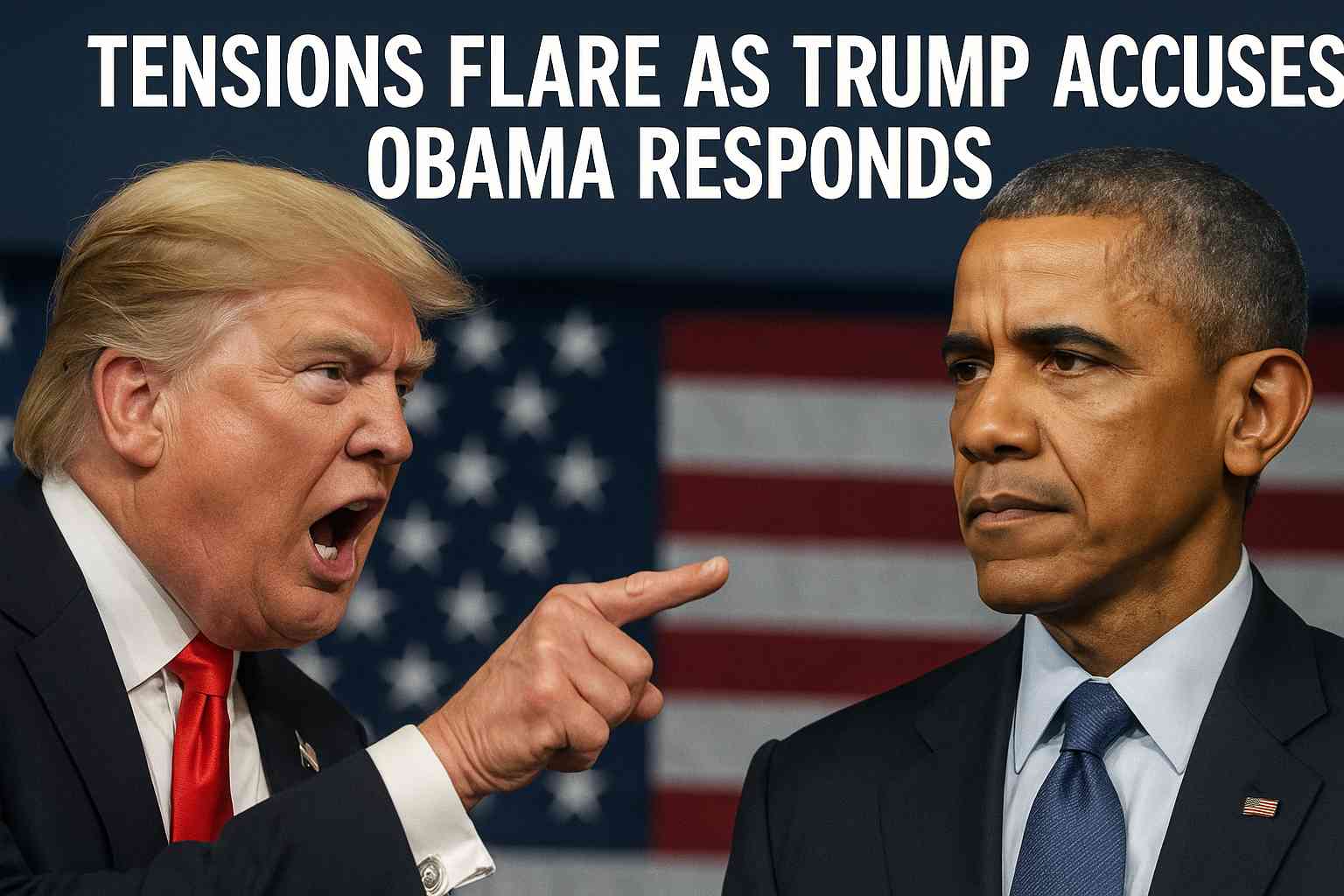
When it comes to American politics, things are rarely quiet for long—especially when it involves two of the most high-profile presidents in recent history. Once again, former President Donald Trump has taken direct aim at his predecessor, Barack Obama, this time using a word that’s as serious as it gets: treason.
The accusation? That Obama and his administration plotted to sabotage Trump’s 2016 victory and the early days of his presidency by linking him to alleged Russian interference in the election. Let’s dive into what Trump said, how Obama’s camp responded, and why this story continues to stir the political pot even years after that turbulent election.
Trump Accuses Obama of Undermining His Presidency
Trump has never been shy about expressing his thoughts—especially when it comes to defending the legitimacy of his win in 2016. During a recent conversation at the White House, Trump accused Barack Obama of leading an effort to discredit his campaign and undermine his administration before it even began.
According to Trump, the effort involved attempts to falsely connect his campaign to Russian meddling. Speaking forcefully, he stated that the previous administration was essentially trying to “steal the election,” insisting that Obama had been “caught cold.”
This wasn’t just a casual remark. Trump went further, calling Obama’s actions “treasonous” and saying it was time to “go after people.” He claimed that everything from spying on his campaign to shaping intelligence reports was orchestrated to bring him down before he even took office.
And he didn’t stop there.
The timing of Trump’s comments was notable—he was addressing reporters on a range of issues, including the long-standing public interest in the Jeffrey Epstein case. But instead of focusing solely on that topic, he steered the conversation toward what he referred to as “the real witch hunt.”
A Rare Response from Team Obama
Now, it’s not often that Barack Obama or his team responds directly to Trump’s claims. But this time, his spokesman Patrick Rodenbush issued a statement pushing back hard.
He called the accusations “bizarre,” “ridiculous,” and a “weak attempt at distraction.” According to Rodenbush, the former president’s office generally refrains from responding to “constant nonsense” but felt the need to address the claims due to their seriousness.
Obama’s team insisted there was nothing new in the documents that had been recently made public—at least nothing that would support Trump’s claims of treason or conspiracy.
What Sparked These Allegations Again?
So, what’s behind this renewed firestorm?
The spark was a newly declassified report released by the Office of the Director of National Intelligence. That report included internal emails and intelligence assessments from late 2016, in the weeks after Trump won the election. It claimed that Obama’s administration may have tried to shape public perception by downplaying intelligence that didn’t align with the idea of Russian interference.
Tulsi Gabbard, a former congresswoman and now a national intelligence figure, publicly pointed to these documents as proof of a “years-long coup” against Trump. She even hinted that some Obama-era officials could face legal consequences.
One specific detail from the report described how intelligence leaders were instructed to prepare new assessments on Russia’s activities—allegedly under Obama’s direct orders. The implication was that the Obama team may have tried to build a narrative around Russian interference, even when their own early findings didn’t fully support that story.
How Much Did Russia Actually Influence the Election?
Let’s clear something up. According to a 2017 report by the U.S. intelligence community, Russia did try to interfere in the 2016 election. That much is widely accepted. The methods included social media manipulation through bot accounts and hacking Democratic emails.
But here’s the key part: U.S. intelligence agencies concluded that, although Russia aimed to help Trump and damage Clinton, they didn’t actually manage to change the outcome of the election. There was no evidence that vote counts were altered or that the result itself was tampered with.
In fact, even the bipartisan Senate Intelligence Committee reaffirmed this in a 2020 report. Though they acknowledged that Russia was clearly working to assist Trump’s campaign, the ultimate impact remained unclear and likely limited.
The Aftermath: Investigations That Followed
These claims didn’t just float in the media for a few days. They sparked years of official investigations. The most high-profile of these was the Mueller investigation, which looked into whether Trump’s campaign conspired with Russia.
The result? While Mueller did uncover plenty of contact between Trump allies and Russian figures, the final report did not find enough evidence to charge Trump or his campaign with criminal conspiracy.
Then came the Durham report—a special counsel inquiry that looked into how the original FBI investigation was handled. That report criticized the FBI for jumping to conclusions and relying on weak sources, but it didn’t offer a smoking gun proving that Obama or his team committed treason.
Why This Still Matters Today
So why is this all still relevant?
Simple. Trust in the electoral process and the integrity of political institutions is at the heart of any democracy. When former presidents are publicly accusing each other of treason, it fuels division and skepticism. People start to question everything—election results, the role of intelligence agencies, even the justice system.

And when such claims are made without rock-solid evidence, the conversation shifts away from the real issues. Instead of focusing on solutions or healing political rifts, the attention gets sucked into finger-pointing and conspiracy theories.
Also, let’s not forget that these accusations could play a role in upcoming elections. With Trump still a major force in American politics and Obama remaining a respected voice for many, the conflict between their legacies continues to shape the political landscape.
Final Thoughts: The Battle of Narratives Isn’t Over
This isn’t just a clash between two presidents—it’s a battle between two very different visions of what happened in 2016. Trump wants to prove that his victory was legitimate and that the attacks on his presidency were part of a larger plan to bring him down. Obama’s team, on the other hand, insists that intelligence agencies did their jobs fairly and that Trump’s claims are nothing more than a smokescreen.
Whether you believe one side or the other, one thing is clear: the story of the 2016 election is far from over. With new reports, old emails, and powerful voices on both sides, this political drama is likely to keep unfolding for years to come. And as voters, it’s up to us to stay informed, question what we hear, and demand the full picture—not just the loudest headlines.