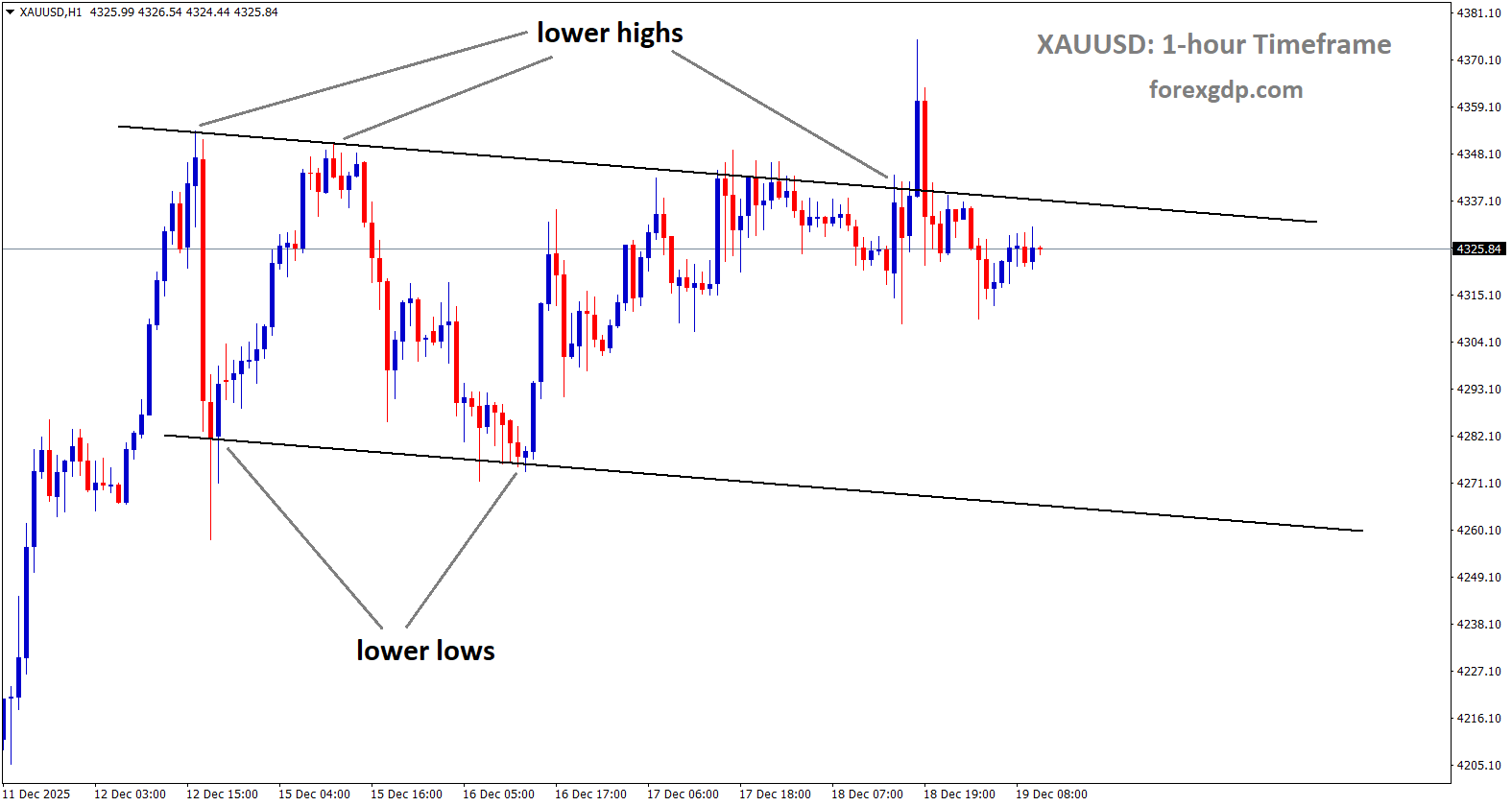
XAUUSD hovers close to 4,200 as markets lean toward lower rates
Gold has spent the last few sessions moving sideways, holding in a tight range around the $4,200 area. It’s not a sign that investors have lost interest. Quite the opposite. This kind of calm often shows up when markets are waiting for a major event, and right now, the big event is the upcoming Federal Reserve policy meeting.
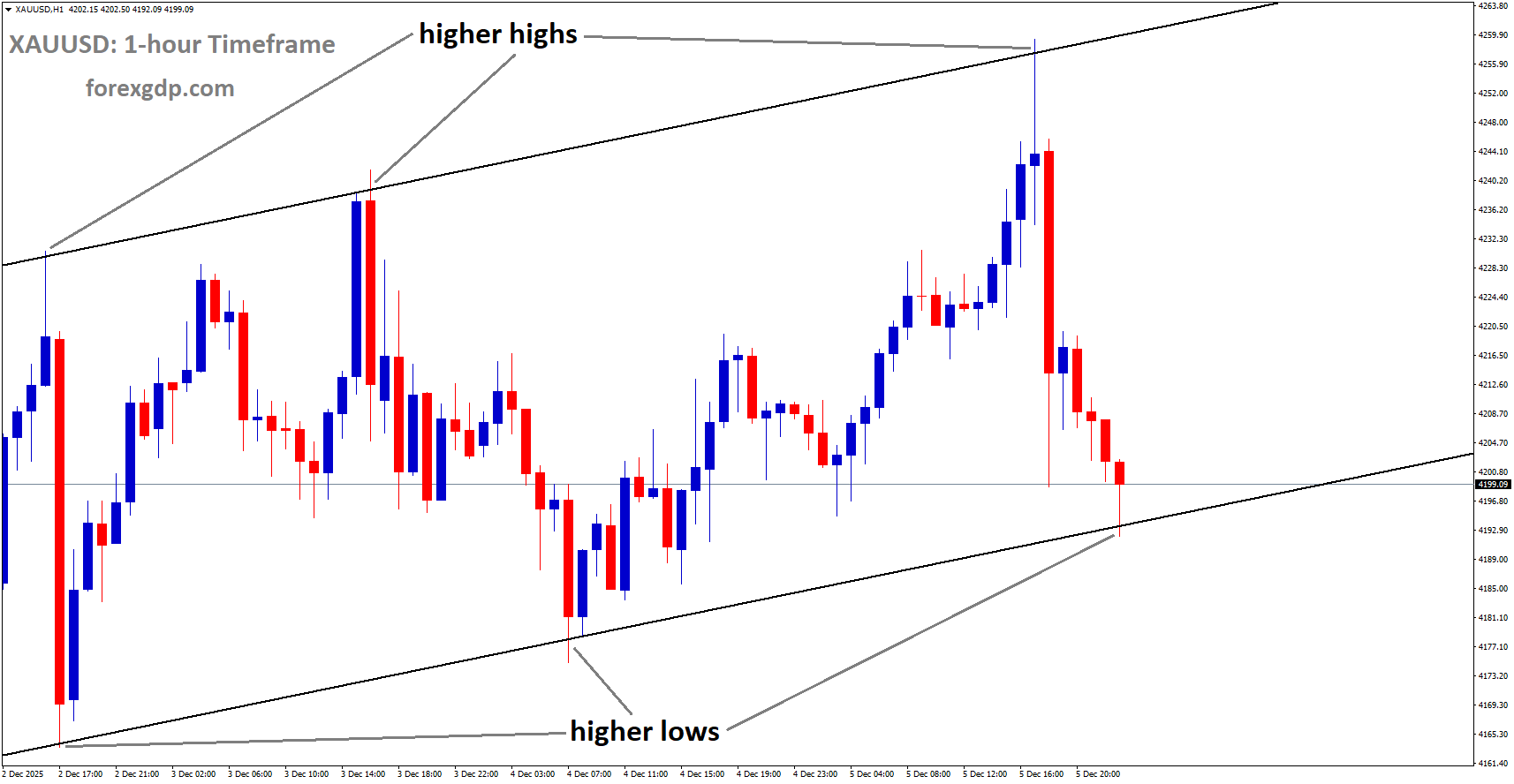
XAUUSD is moving in an uptrend channel, and the market has reached a higher low area of the channel
By the end of the week, gold was hovering a little above $4,200 and on track to finish almost unchanged. That “quiet” result matters because it reflects a market that is trying to balance two forces at the same time: softer inflation data that supports easier policy ahead, and rising bond yields that can make gold less attractive in the short run.
Why Gold Is Consolidating Right Now
When gold consolidates, it usually means buyers and sellers are close to agreeing on value—at least temporarily. In this case, traders seem comfortable keeping positions steady until they learn what the Fed plans to do next.
A major reason is that expectations for US interest rates are shifting. Many investors believe the Fed is likely to lean more dovish soon, and that tends to support gold. Lower interest rates reduce the appeal of yield-paying assets like bonds, which can make non-yielding gold look more competitive.
At the same time, markets aren’t moving blindly. Traders are watching incoming data closely, especially inflation and employment numbers. Those two areas carry the most weight in shaping Fed decisions, and recent signals have been mixed enough to keep gold in a holding pattern.
Inflation Data: Cooling, But Not Quite at the Finish Line
This week’s key economic release was the Core Personal Consumption Expenditures (Core PCE) Price Index, the inflation measure the Fed watches closely. The report suggested inflation is still easing, but not rapidly.
Core PCE increased at a steady monthly pace and edged down slightly on a yearly basis. In other words, inflation pressures appear to be gradually cooling, but they remain above the Fed’s long-term target. That leaves room for debate.
On paper, inflation sitting near the 3% area could argue for patience from policymakers. If inflation is still above target, why rush into cuts? But markets don’t look at inflation alone. Investors also weigh whether the economy and labor market are losing momentum—and recent job data has hinted at some cooling.
That’s why gold traders aren’t reacting aggressively to inflation data by itself. Instead, they’re treating it as one piece of a bigger puzzle.
What This Means for Gold Investors
For gold, the story is fairly straightforward: when inflation cools and the Fed becomes more comfortable easing policy, gold often gets a tailwind. The metal tends to do well when real returns in traditional assets look less compelling and when investors want a hedge against uncertainty.
Even if inflation isn’t back to the Fed’s target yet, “direction” matters. And right now, the overall direction seems to be slower price growth.
Fed Rate Cut Expectations Are Back in Focus

The bigger driver for gold at the moment isn’t what inflation is today—it’s what the Fed might do next. Markets are increasingly positioned for the Fed to cut rates soon, with strong expectations that the next policy step will be a reduction rather than another hold or hike.
That expectation alone can support gold, even before any policy change actually happens. Markets trade forward-looking narratives, and the narrative right now is simple: the Fed is closer to easing than tightening.
A separate poll of economists also reinforced the idea that a rate cut is on the table. Add in recent dovish-leaning comments from some Fed officials and signs that the labor market is cooling, and you can see why gold has remained resilient even without a strong weekly rally.
Consumer Mood Improves Slightly, Inflation Expectations Ease
Another piece of the week’s story came from consumer sentiment data. A University of Michigan report showed that Americans are feeling a bit better about the economic outlook than they did previously.
The improvement wasn’t dramatic, but it mattered because it came alongside an easing in inflation expectations. Both short-term and longer-term inflation expectations ticked down in the survey. That’s important because expectations can influence real-world behavior—like wage demands, pricing decisions, and spending patterns.
When consumers expect inflation to cool rather than rise, it can reduce the risk of inflation becoming “sticky.” For the Fed, that’s helpful. It suggests that inflation psychology might be settling, which can make officials more confident that inflation will continue drifting lower over time.
The survey also included a note worth paying attention to: despite some areas of improvement, the overall tone remained cautious. That combination—slightly better sentiment but still a somber mood—fits the broader market theme: the economy is okay, but people are not fully convinced the challenges are over.
A Note on Tariffs and Future Inflation
There’s also ongoing speculation that some inflation effects may show up later rather than sooner, especially if tariff impacts take time to filter through supply chains and pricing decisions. That kind of uncertainty is another reason gold can stay supported. When investors feel unsure about the next inflation wave—whether it arrives or not—gold often remains part of the conversation.
Bond Yields and the Dollar: Two Forces Gold Can’t Ignore
Even with rate-cut expectations building, gold doesn’t move in a straight line. Two market factors can pressure gold in the short term: the US dollar and Treasury yields.
The US dollar has been fairly steady, which has kept currency pressure on gold limited. But Treasury yields have moved higher, and that matters. When yields rise, bonds become more attractive relative to gold because they offer return through interest.
On top of that, “real yields” (yields adjusted for inflation) have also pushed up. Real yields often have an inverse relationship with gold. When real yields rise, gold can face headwinds because the opportunity cost of holding a non-yielding asset increases.
So why hasn’t gold fallen more? Because gold is being supported by policy expectations. If investors believe rate cuts are coming, they may be less willing to aggressively sell gold on yield strength alone—especially ahead of a major Fed meeting that could reshape the rate outlook.
What to Watch Next Week
Gold’s next meaningful move will likely depend on how the Fed communicates its plans. Traders won’t just focus on the headline rate decision. They’ll also pay attention to:
The Fed’s Tone and Guidance
Even a small policy shift can have a big impact if the Fed signals more easing ahead. Markets respond strongly to language that suggests confidence about inflation falling and concern about slowing growth.
Inflation and Jobs Data Together
Inflation reports like Core PCE matter, but they will be interpreted alongside employment trends. If the labor market continues to cool, markets may price in a more supportive environment for gold.
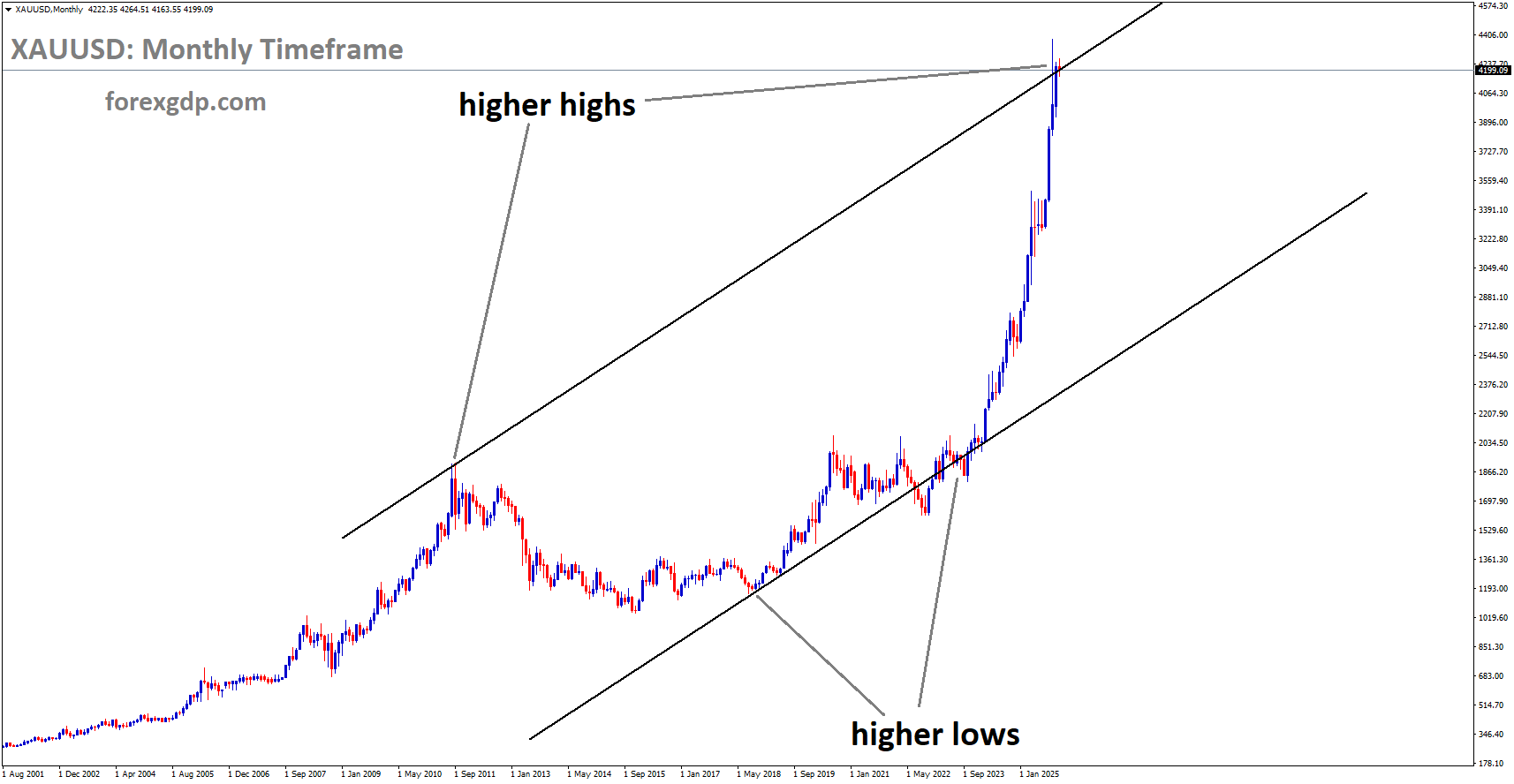
XAUUSD is moving in an uptrend channel, and the market has reached a higher high area of the channel
Market Positioning and Volatility
With gold consolidating, a lot of traders may be waiting on the sidelines. When everyone is watching the same event, the reaction can be sharp if the outcome surprises expectations in either direction.
Summary
Gold is holding steady around the $4,200 area as traders wait for the next Federal Reserve meeting. Inflation data has shown gradual cooling, and consumer inflation expectations have eased, both of which support the idea that the Fed may lean dovish. At the same time, rising Treasury yields and firmer real yields can act as short-term headwinds. For now, gold remains resilient because markets are focused on what comes next in US monetary policy—and the Fed’s next message is likely to set the tone for the metal’s next big move.
EURUSD Trades Sideways at 1.1650 While US Prices and ECB Signals Reset Expectations
The EUR/USD pair has been moving in a tight range near the 1.1650 area, taking a breather after a week that still looks set to end in positive territory. Trading has been calmer than earlier sessions, with many market participants stepping back as they look ahead to the next big catalyst: the Federal Reserve’s policy decision next week.
Even when a currency pair appears quiet on the surface, the drivers underneath can be busy. This time, the mood has been shaped by a mix of US inflation numbers, improving American consumer confidence, stronger-than-expected Eurozone growth data, and a reminder from the European Central Bank that inflation risks are not evenly balanced.
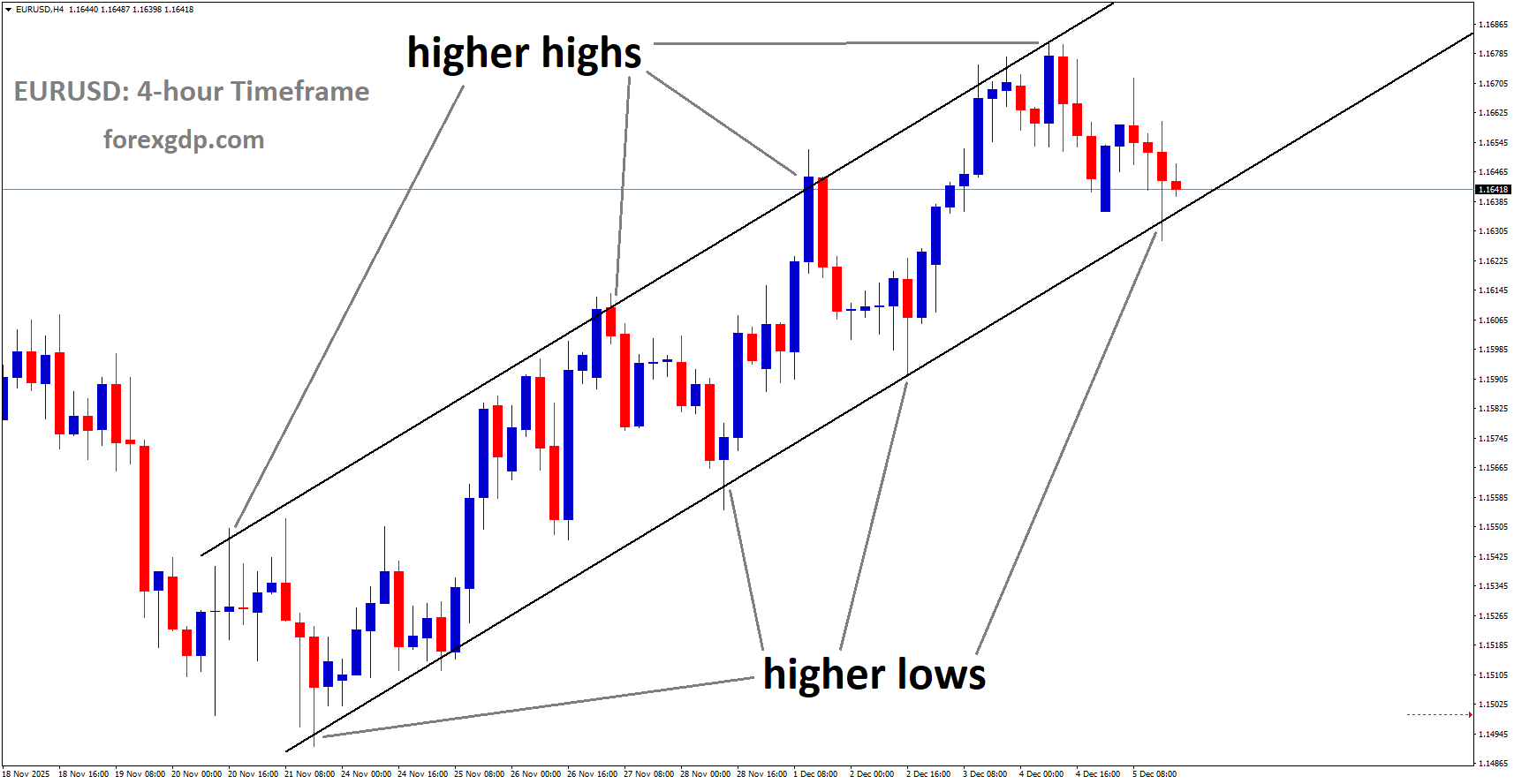
EURUSD is moving in an uptrend channel, and the market has reached a higher low area of the channel
A Quiet Finish to the Week, but Not a Quiet Story
By Friday, EUR/USD was steady and hovering around 1.1650, with the pair on track to post a modest weekly gain. That kind of pause often shows up when traders have already made their key moves earlier in the week and then shift into “wait and see” mode before a major central-bank event.
This positioning matters because it reflects uncertainty more than confidence. When a Fed decision is right around the corner, many traders prefer to reduce risk rather than place large bets. That tends to cap big moves in either direction, even if the underlying news flow is active.
What makes this moment especially interesting is that both sides of the pair have reasons to look stronger, depending on which data you focus on. The US Dollar found support after inflation data came in broadly as expected and consumer sentiment improved, while the Euro benefited from signs the Eurozone economy is showing resilience.
US Inflation Meets Expectations and Sentiment Improves
A major piece of the market puzzle came from US inflation data tied to the Federal Reserve’s preferred measures. The latest core inflation reading was in line with forecasts on a monthly basis, and the annual pace eased slightly. In a market that reacts strongly to surprises, “no surprise” can still be meaningful. It often reinforces confidence that the central bank can stick to its planned path rather than rushing to change direction.
At the same time, another data point helped the Dollar regain some footing: US consumer sentiment improved noticeably, according to the University of Michigan survey. The latest reading beat expectations and rose from the previous month. This kind of improvement can influence the market narrative because consumer confidence is closely linked to spending, and spending is one of the biggest engines of the US economy.
Inflation expectations cool down
Alongside the sentiment index, inflation expectations in the survey also moved lower. Short-term expectations eased, and longer-term expectations edged down as well. For markets, this detail can matter almost as much as the headline sentiment number. When households expect inflation to ease, it can support the idea that price pressures are gradually becoming less intense.
Put together, the US data painted a picture of an economy that is still steady, with inflation not accelerating and consumers sounding a little more optimistic. That combination helped the US Dollar trim some of its earlier losses against the Euro.
Fed Rate-Cut Expectations Stay Firm Ahead of Next Week
Even with upbeat sentiment and stable inflation readings, expectations for the Federal Reserve’s next step did not change much. Traders still leaned toward the view that a small rate cut is likely at the coming meeting, with market pricing continuing to favor that outcome.
This highlights a key theme in currency markets: it’s not only about whether the news is “good” or “bad,” but whether it changes expectations. In this case, the data didn’t force traders to rethink the current outlook, so it shaped the tone without dramatically shifting the bigger narrative.
For EUR/USD, that set up a situation where the Dollar could recover a bit in the short term, but without triggering a major reversal. It’s one reason the pair stayed range-bound instead of making a sharp move.
Eurozone Growth Shows Resilience, but the ECB Stays Guarded
On the European side, recent growth figures offered a positive signal. Monthly data for the Eurozone came in better than expected, suggesting the region’s economy is holding up more firmly than many had feared.
In normal circumstances, stronger growth can be a clear boost for a currency. It can imply healthier business activity, steadier employment, and better overall momentum. But in today’s environment, the Euro’s reaction has also been shaped by what the European Central Bank is saying about inflation and policy risks.

ECB policymaker Francois Villeroy made an important point: even if policy is in a certain place today, it doesn’t mean the central bank should feel comfortable. He also emphasized that inflation risks are tilted more to the downside than the upside. That kind of remark can land in a meaningful way, because it signals that policymakers remain alert to the possibility that inflation could cool more than expected.
Why the ECB’s tone matters for the Euro
When a central bank focuses on downside inflation risks, markets often interpret it as a hint that policymakers may be cautious about keeping policy too tight for too long. That perception can limit how far a currency rallies, even when growth data looks encouraging. In other words, the Euro can benefit from signs of resilience, but it may struggle to accelerate if traders think the ECB is worried about inflation fading too quickly.
This helps explain why EUR/USD can hold its gains, yet still face a ceiling near key levels when the policy outlook feels uncertain.
Geopolitics Still Adds a Layer of Pressure
Beyond the data and central-bank messaging, geopolitics continues to sit in the background as a steady source of pressure on the Euro. The Russia-Ukraine conflict remains unresolved, and that ongoing uncertainty can weigh on European assets and sentiment more broadly.
There have been headlines suggesting progress in talks involving major players, including interactions between Washington and Moscow and contacts involving Kyiv. Even when such headlines sound constructive, markets tend to respond cautiously until there is something concrete that changes the outlook in a lasting way.
For EUR/USD, this means the Euro is not only responding to rates and growth expectations, but also to broader risk perception. When uncertainty rises, traders often lean toward safer positioning, and that can reduce demand for risk-sensitive currencies or regions seen as more exposed.
What Traders Are Watching Next
With EUR/USD consolidating near 1.1650, the next move is likely to depend on what shifts expectations rather than what simply confirms them. The upcoming Federal Reserve decision is front and center. Traders will be listening closely to what the Fed signals about the pace of future policy moves and how it views inflation progress.
On the European side, markets will keep tracking whether stronger growth can continue, and whether the ECB’s concern about downside inflation risks becomes a bigger theme. At the same time, any meaningful geopolitical developments could quickly affect sentiment, especially if they change energy concerns or regional stability expectations.
Summary
EUR/USD has steadied near 1.1650 after a week of modest gains, with traders reluctant to make aggressive moves ahead of next week’s Federal Reserve decision. US data offered support for the Dollar as inflation readings largely matched forecasts and consumer sentiment improved, while inflation expectations cooled. In Europe, better-than-expected growth data showed resilience, but ECB messaging highlighted concern about inflation risks leaning to the downside, which can limit the Euro’s upside. Geopolitical uncertainty tied to the Russia-Ukraine conflict remains an added weight on sentiment, keeping the pair sensitive to headlines as markets head into a decision-heavy week.
GBPUSD edges higher as traders price in a softer Fed stance
The GBP/USD pair is back on the front foot. After slipping on Thursday, it regained its upward momentum on Friday and moved higher again, with the British Pound showing resilience even as the US Dollar tried to steady itself. At the latest reading, the pair was trading near the mid-1.33 area, reflecting renewed interest in Sterling.
Behind this move is a familiar theme in today’s currency market: interest rate expectations. Fresh US inflation data and a small improvement in consumer sentiment helped reinforce the idea that the Federal Reserve could cut rates at its next meeting. On the UK side, traders are also looking ahead to the Bank of England, where a rate cut later in December is still widely expected.
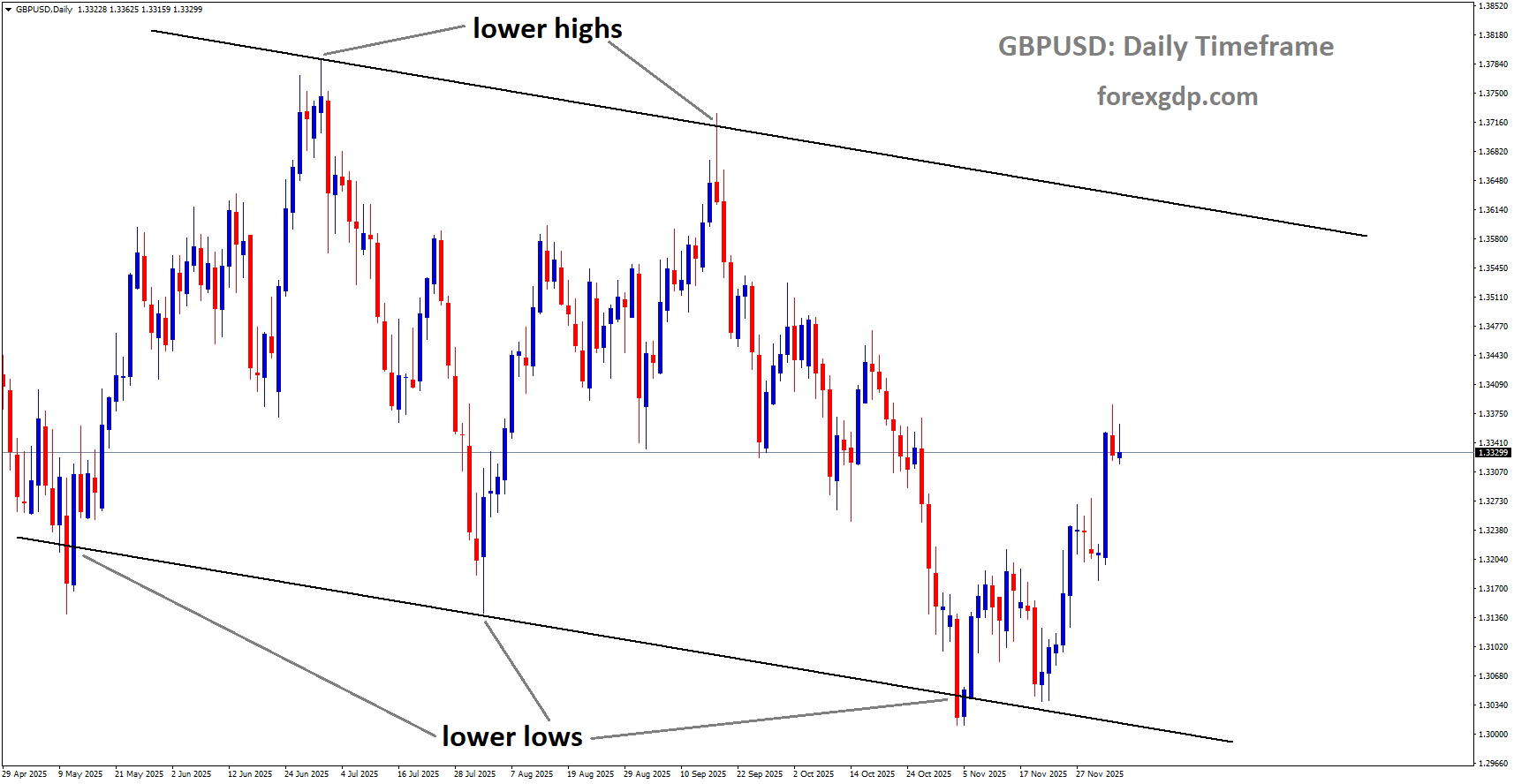
GBPUSD is moving in a descending channel, and the market has rebounded from the lower low area of the channel
Together, these forces are shaping how investors think about the Pound, the Dollar, and where GBP/USD might head next.
A Stronger Tone for GBP/USD After a Midweek Dip
Even in a market that often changes direction quickly, GBP/USD has managed to hold onto a broadly positive tone. Friday’s rebound mattered because it showed that buyers were still willing to step in after a short-term pullback.
In simple market terms, this kind of action often reflects steady confidence rather than panic-driven trading. The pair trimmed earlier losses and moved higher again as attention shifted back to the bigger narrative: a likely Fed rate cut, and a Bank of England that may also start easing soon.
For many traders, this isn’t just a one-day story. It’s part of a wider debate about which central bank will move faster, and how that difference may affect the relative strength of the Pound versus the Dollar.
US Inflation Data Keeps Rate-Cut Talk Alive
One of the most important updates came from the US Core Personal Consumption Expenditures (Core PCE) Price Index. This report matters because it is widely viewed as the Federal Reserve’s preferred inflation gauge. It strips out food and energy prices, which can swing around a lot, and focuses on the underlying trend.
The latest figures showed Core PCE rising at a steady monthly pace, while the annual rate eased slightly. That may not sound dramatic, but in markets, “steady” can be powerful. It suggests inflation is not reaccelerating, and it gives policymakers more room to consider easing.
When inflation isn’t running hot, the pressure on the Fed to keep rates higher for longer often fades. And right now, investors are highly sensitive to anything that supports the idea of lower US rates ahead.
Why this matters for the US Dollar
The US Dollar tends to benefit when interest rates are high or expected to rise. When the market starts leaning toward lower rates, the Dollar can lose some of its appeal, especially if traders believe additional cuts could follow.
That’s why inflation reports like Core PCE can move currencies quickly. Even when the numbers match forecasts, they can still reinforce the direction traders are already watching.
Consumer Sentiment Improves, But the Mood Stays Cautious
Another piece of the puzzle came from the University of Michigan Consumer Sentiment survey. The latest reading edged higher, coming in above expectations and improving from the prior month.
That’s a positive headline, but the details suggest consumers are still uneasy. According to commentary from the survey’s leadership, people are noticing modest improvements in a few areas, yet the overall mood remains subdued.
This matters because consumer confidence influences spending behavior, and spending drives a huge part of the US economy. A cautious public can mean slower demand, which can reduce inflation pressure over time. And once again, anything that supports easing inflation expectations can influence the Fed outlook.
Inflation expectations are also drifting lower
The same survey showed that short-term and longer-term inflation expectations eased compared to the previous month. This is another signal the market pays attention to, because expectations can shape real-world behavior—like how workers negotiate wages or how businesses set prices.
Lower inflation expectations often make it easier for a central bank to justify rate cuts, especially if it believes inflation is returning closer to target.
The Fed Outlook: A Cut Is Still the Base Case
Put all of this together, and the overall message from the US data stays consistent: markets continue to expect the Federal Reserve to cut rates at the upcoming meeting.

Traders have been treating a quarter-point reduction as the most likely outcome, and the latest data did little to challenge that thinking. In fact, it helped reinforce it.
At the same time, big financial institutions are already mapping out what could come next. Some forecasts suggest the Fed may follow a gradual path of additional cuts after December, depending on how inflation and growth evolve.
What this means for currency traders
When markets lock into a rate-cut expectation, currency movement often becomes tied to surprises. If the Fed cuts as expected, the reaction may be limited unless the central bank signals more easing ahead. But if officials sound cautious—or the data suddenly changes—sentiment can shift quickly.
For GBP/USD, the key point is that Fed easing generally reduces one major support for the Dollar. That can make it easier for the Pound to hold up, even if the UK has its own challenges.
UK Picture: The Pound Finds Support Despite Budget Concerns
On the UK side, the British Pound has been able to shake off lingering worries related to last month’s budget. Budget discussions can sometimes create uncertainty, especially when markets debate how fiscal decisions might affect growth, inflation, or government borrowing needs.
Still, Sterling has remained relatively steady, and recent business activity data hinted at some improvement. That doesn’t mean the UK economy is suddenly booming, but it does suggest conditions may not be deteriorating as quickly as feared.
In currency markets, it’s often about momentum and perception. If traders believe the worst-case scenario is less likely, a currency can stabilize or even strengthen.
S&P Global business activity adds a bit of optimism
Business surveys don’t give a perfect picture, but they offer a timely snapshot of how companies are feeling right now. Even small improvements can influence market mood, especially when investors are trying to decide whether an economy is slowing sharply or simply cooling in a manageable way.
Bank of England: A December Rate Cut Is Still Expected
Even with some better business signals, the Bank of England is still widely expected to cut rates in December. After pausing in November, many forecasts point toward a quarter-point reduction at the December meeting.
For everyday households, the conversation around UK rates often connects to the cost of living. Lower rates can ease pressure over time by reducing borrowing costs and improving financial conditions. However, changes don’t always filter through instantly, and the BoE will still be balancing inflation control with economic support.
For GBP/USD, the tricky part is that both central banks may be moving in the same direction—down. When that happens, the currency impact is less about “who cuts” and more about “who cuts faster,” “who signals more cuts,” and “whose economy looks steadier.”
A two-central-bank story
If both the Fed and the BoE are easing, traders tend to compare:
-
The pace and size of cuts implied by guidance
-
How confident each bank sounds about inflation progress
-
Whether growth risks are rising more in one economy than the other
That comparison is what can keep GBP/USD moving even when the headline news sounds similar on both sides of the Atlantic.
Summary: What’s Driving GBP/USD Right Now
GBP/USD is climbing again as the market refocuses on interest rate expectations. US inflation readings and consumer sentiment data have supported the view that the Federal Reserve is likely to cut rates at its next meeting, which can reduce support for the US Dollar. Meanwhile, the British Pound has stayed resilient despite recent budget concerns, helped by signs of slightly better business activity. Looking ahead, traders are also watching the Bank of England, where a December rate cut remains a central expectation—and the balance between Fed and BoE decisions will likely keep GBP/USD in motion.
USDJPY pushes above 155 ahead of the closely watched US PCE inflation update
The US Dollar has pushed back above the 155.00 level against the Japanese Yen during Friday’s European trading hours. This rebound comes after the pair bounced from a two-week low near 154.30 seen on Thursday. Even with that recovery, the Dollar is still on track to finish the week lower overall, down around 0.6%.
So what’s driving this tug-of-war between the Dollar and the Yen? In short: investors are watching the US Federal Reserve closely for signs of more interest rate cuts, while Japan’s side of the story includes both shifting policy expectations and repeated warnings that officials could step in if the Yen weakens too quickly.
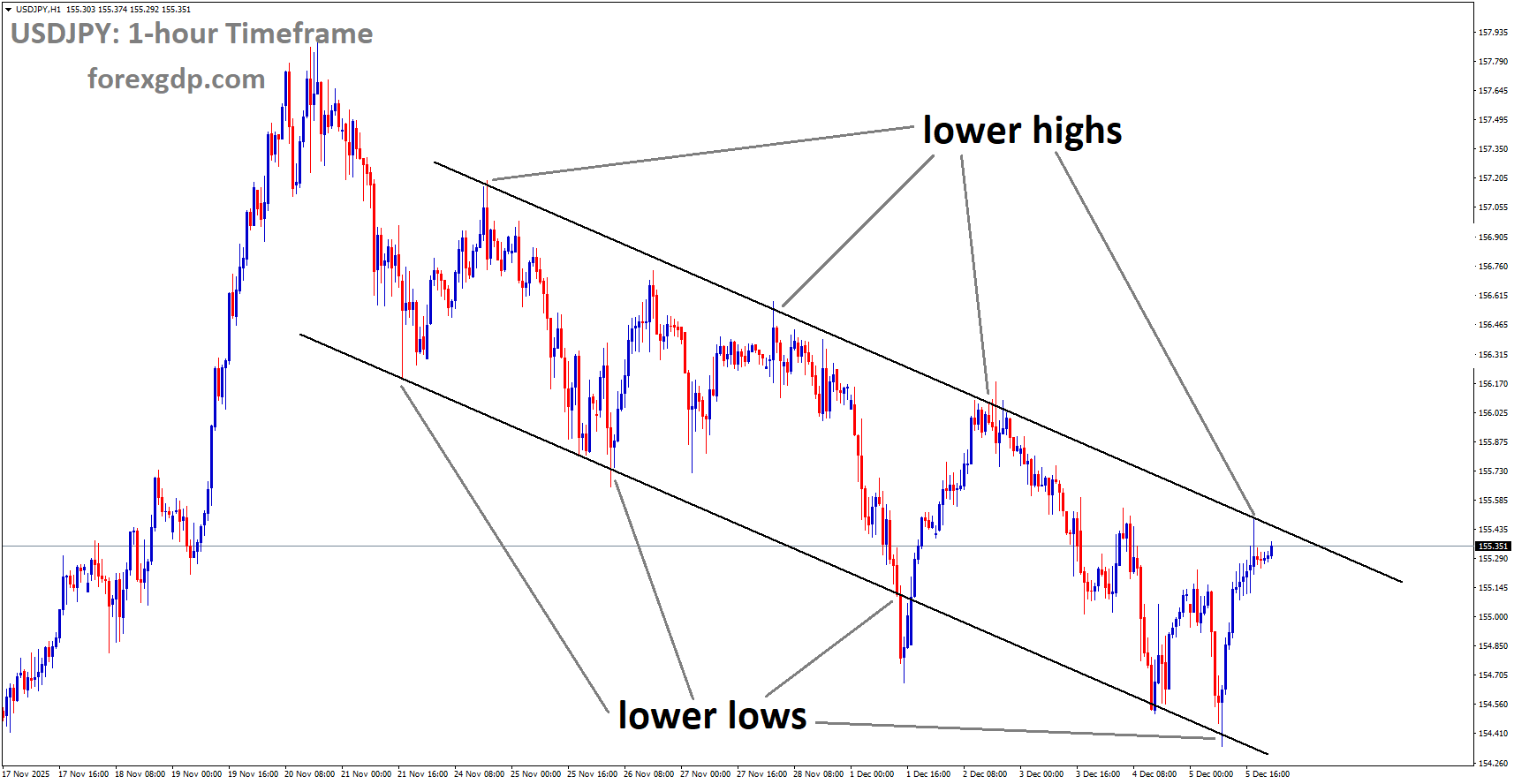
USDJPY is moving in a downtrend channel, and the market has reached the lower high area of the channel
The Dollar’s Rebound: A Bounce, Not a Full Comeback
Friday’s move back above 155.00 looks like a classic rebound after a dip, rather than a new burst of confidence. The US Dollar found support after slipping toward 154.30, but it’s still carrying the weight of growing expectations that US interest rates could move lower soon.
When investors believe the Fed is heading toward rate cuts, the Dollar often loses some of its appeal. Higher interest rates can make a currency more attractive because investors may earn better returns holding assets tied to that currency. If those rates are expected to fall, that advantage can fade, even if the currency gets short-term lifts like the one seen today.
The Fed’s Role: Why Easing Expectations Keep the Dollar on Defense
The bigger story this week has been the market’s belief that the Federal Reserve may lower borrowing costs again soon. That expectation has encouraged many traders to stay cautious about the US Dollar, even when it shows occasional strength.
One key moment came midweek, when the US ADP Employment Change report showed an unexpected drop in net job gains. In a market that constantly looks for hints about where the economy is heading, weaker employment signals can quickly shift sentiment.
What weaker job numbers suggest
A softer labor market can imply that the economy is cooling. That matters because the Fed often tries to balance two goals: keeping inflation under control while also supporting employment and growth. If job momentum slows, the argument for lowering rates can become more convincing—especially if inflation is no longer accelerating.
As a result, the narrative of “more rate cuts ahead” has stayed alive, and that has helped keep the Dollar from building a stronger weekly trend.
The PCE Inflation Report: The Main Event Traders Are Watching
On Friday, attention turns to the US Personal Consumption Expenditures (PCE) Price Index report, which arrived later than usual. This report matters because it is one of the inflation readings the Federal Reserve watches closely.
Expectations going into the release suggest inflation pressures may still look uncomfortable. Even so, many investors believe the report is unlikely to dramatically change the market’s current thinking about Fed policy in the near term.
That creates an interesting situation:
-
If inflation is still elevated, it sounds like rates should stay higher.
-
But if the economy and jobs data show weakness, investors may still bet on cuts.
Markets don’t always move on a single number. They move on the overall story. Right now, that story seems to be that growth and employment are losing strength, and that may matter more to investors than inflation staying somewhat sticky—at least for the moment.
Japan’s Side of the Pair: A Different Policy Direction (For Now)
While the US market is focused on potential Fed easing, the Bank of Japan is being watched for almost the opposite reason. Japanese policymakers have been laying the groundwork for a possible 25 basis point rate hike after the BOJ’s December 19 meeting.
That kind of shift is notable because Japan has spent years with extremely low interest rates. Even small changes can carry a big signal, especially when compared with the idea of the Fed cutting rates again.
Still, the BOJ’s path is not perfectly clear. Governor Kazuo Ueda recently added uncertainty by raising doubts about what might follow after the next policy step. That has left traders balancing two thoughts at once: Japan may move toward higher rates, but the pace and direction afterward may not be straightforward.
Why BOJ uncertainty matters

Currency markets don’t just react to what central banks do—they react to what they might do next. If investors believe Japan will raise rates and keep going, the Yen can strengthen. If they believe a hike might be a “one and done” move or followed by caution, the Yen’s support may be more limited.
Official Warnings: Japan Signals It Could Act on Rapid Yen Weakness
Beyond interest rate expectations, Japan’s government has been very clear about one thing: it does not like disorderly moves in the currency market.
Japanese officials reiterated this stance again this week. Japan’s Cabinet Secretary said authorities would take appropriate action against “excessive, disorderly” moves in foreign exchange. That message echoed earlier comments from Japan’s Finance Minister, reinforcing the point that officials are watching the Yen carefully.
This kind of statement typically serves two purposes:
-
It warns speculators not to push the Yen too far too fast.
-
It signals readiness to respond if moves become extreme.
Even without any immediate action, repeated comments like these can slow down Yen selling. Traders tend to be cautious when there’s a risk that authorities might step in, because sudden intervention can cause sharp reversals.
What This Means for Everyday Observers
It’s easy to think the Dollar-Yen exchange rate is only relevant to currency traders, but it has real-world effects.
For US consumers and companies, a stronger Dollar versus the Yen can make Japanese imports feel cheaper in relative terms. For Japan, a weaker Yen can raise the cost of imported goods and energy, which can affect businesses and households. That’s part of the reason Japanese officials pay close attention when the Yen weakens quickly.
For investors, the pair often reflects a broader story about global interest rates, inflation expectations, and how confident markets are in economic growth. When USD/JPY moves sharply, it can hint at shifting expectations far beyond the currency market itself.
Final Summary
The US Dollar has moved back above 155.00 against the Japanese Yen after rebounding from lows near 154.30, but it remains lower on the week. The main pressure on the Dollar continues to come from strong market expectations that the Federal Reserve may cut interest rates soon, reinforced by signs of weaker momentum in the US labor market. Investors are now focused on the delayed US PCE inflation report, which may show inflation remains elevated but may not be enough to change the current rate-cut narrative. On the Japanese side, the Bank of Japan is being watched for a potential rate hike after its December 19 meeting, though uncertainty remains about what comes next. Meanwhile, Japanese officials have repeated their warning that they are prepared to respond to excessive or disorderly Yen weakness, offering some support to the currency.
USDCAD retreats sharply as Canada payrolls smash forecasts; US PCE now in the spotlight
The USD/CAD pair moved lower on Friday as the Canadian Dollar gained strength after a surprisingly strong update from Canada’s job market. When Canada posts solid employment numbers, it often boosts confidence in the country’s economy. That can encourage investors to buy the Canadian Dollar, especially when the data comes in well above expectations.
By the time traders finished digesting the report, USD/CAD was trading around 1.3889 and touching its weakest level since September 25. In simple terms, the US Dollar lost ground while the Canadian Dollar found fresh support, and the reason was clear: Canada’s labour market looked a lot healthier than many had predicted.
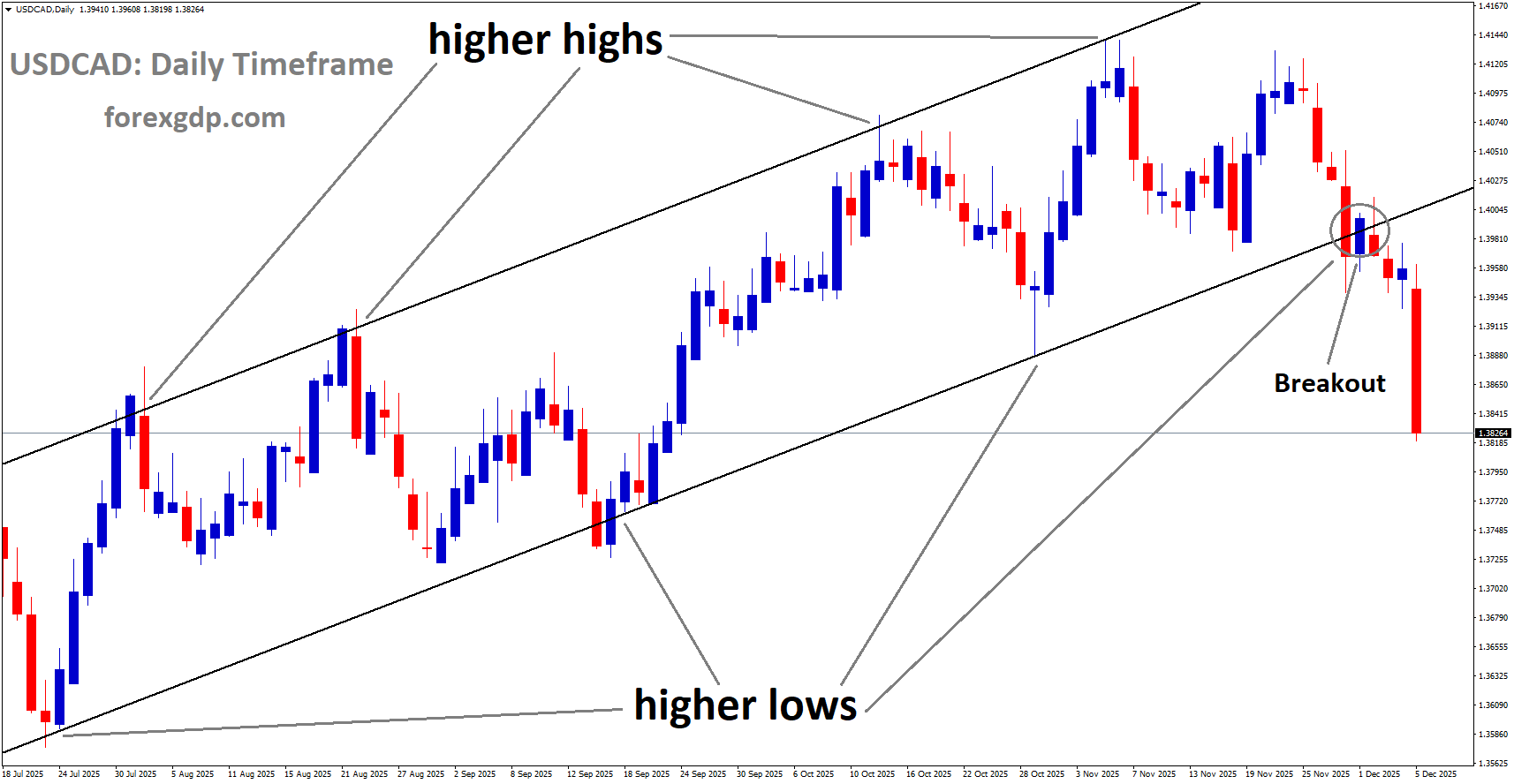
USDCAD has broken the Ascending channel on the downside
Canada Adds Jobs and Surprises Nearly Everyone
Canada’s Labour Force Survey delivered a headline that turned heads. Statistics Canada reported that the economy added 53.6K jobs in November, far stronger than the market consensus. Many forecasts had pointed to a small decline—around 5K fewer jobs—so a gain of this size was a major upside surprise.
What made the report even more notable is that it wasn’t a one-off bounce. Canada also saw a strong 66.6K increase in October, and with November’s gain, that marks three straight months of job growth. When job creation remains steady over multiple months, it tends to send a message that employers still have confidence and demand in the economy hasn’t cooled as much as feared.
For currency markets, consistency matters. One strong report can be brushed off as noise. Three months in a row starts to look like a trend.
Unemployment Drops Sharply, Beating Expectations
The biggest “wow” moment came from the unemployment rate. Instead of rising, it fell to 6.5% in November from 6.9%. That move beat expectations by a wide margin, since markets had been bracing for an increase toward 7.0%.
A drop like that is meaningful because it suggests the job market isn’t just adding positions—it’s doing so at a pace strong enough to absorb workers and reduce joblessness. It also marks the largest monthly improvement since late 2021, which adds to the sense that the Canadian labour market may be more resilient than previously thought.
Wages Hold Steady, Participation Edges Lower
Wage trends can matter just as much as job totals, because wage gains influence household spending and can shape inflation pressures. In this report, average hourly earnings rose 4.0% year over year, matching the pace seen at the same time last year. That steadiness may be reassuring to policymakers who want to see wage growth normalize without collapsing.
One softer detail was the participation rate, which slipped slightly to 65.1% from 65.3%. Participation measures how many people are working or actively looking for work. A small decline doesn’t cancel out the strong headline numbers, but it does add a layer of nuance. It suggests some people may have stepped out of the workforce, which can influence how we interpret the unemployment drop.
Still, the overall message was positive: Canada’s labour market looked better than the market had priced in, and the Canadian Dollar reacted quickly.
What This Means for the Bank of Canada

Strong labour data doesn’t automatically lock in a central bank decision, but it can shift how markets think about the next move. After Friday’s report, expectations strengthened that the Bank of Canada (BoC) will likely keep its policy rate unchanged at its upcoming meeting on December 10.
That’s especially important given the BoC’s recent path. In October, the BoC cut its policy rate by 25 basis points to 2.25% and suggested the cut could represent the end of the easing cycle. Policymakers signaled that the current level of rates is “about right” for the economy—language that markets typically interpret as a sign the central bank wants to pause and assess incoming data.
Friday’s employment report gave the BoC more reason to be patient. When job growth is solid and unemployment is falling, there’s less urgency to provide additional support. A central bank may still cut later if other areas weaken, but strong jobs data can buy time.
Economists Mostly Expect Rates to Stay Put
A fresh Reuters poll released earlier Friday added another layer to the story. According to the poll, all 33 economists surveyed expected the BoC to hold the policy rate at 2.25% next week. Beyond the near term, a majority of respondents also projected that rates could remain unchanged for a long stretch, with 18 of 29 expecting no move at least until 2027.
Polls like this don’t “decide” policy, of course. But they can influence market thinking by showing where consensus expectations are clustered. When nearly everyone expects a hold, it can take a major shock to shift that view—and Friday’s data wasn’t the kind of shock that usually triggers immediate cuts.
All Eyes Turn to Key US Data Later in the Day
While Canada delivered the big surprise in the morning, traders didn’t stop there. Attention in the US shifted toward a heavy slate of economic releases scheduled later in the day. These include:
-
Personal Consumption Expenditures (PCE)
-
Personal Income
-
Personal Spending
-
University of Michigan (UoM) Consumer Sentiment (preliminary)
-
UoM inflation expectations (preliminary)
These reports matter because they help shape expectations for what the Federal Reserve (Fed) might do next. Even when a currency pair is moving due to Canadian news, the US side of the equation is always important—especially when the market is sensitive to changes in interest rate expectations.
Why PCE Gets So Much Attention
PCE is closely watched because it is widely viewed as the Fed’s preferred inflation gauge. Inflation data influences how comfortable the Fed feels about easing or holding steady. If inflation looks like it’s cooling in a sustained way, investors may feel more confident that rate cuts are coming. If it looks sticky, markets may reassess how soon the Fed can move.
Income and spending numbers also add context. Strong spending can suggest demand remains firm, which can keep inflation from falling quickly. Weaker spending can point to cooling momentum, which could support the case for easier policy.
Sentiment and Inflation Expectations: The “Feelings” That Matter
The University of Michigan survey adds a different angle. Consumer sentiment helps markets gauge how households feel about the economy and their personal finances. Meanwhile, inflation expectations can be important because expectations can influence real-world behavior, like wage demands and how quickly people spend.
If consumers expect inflation to stay high, it can create a feedback loop that makes inflation harder to bring down. If expectations remain anchored, it can help policymakers feel more confident that inflation will keep trending in the right direction.
What Traders Are Watching Next in USD/CAD
After a strong Canadian jobs report, the next step for USD/CAD depends on how US data comes in and how it changes expectations around the Fed. Investors have been leaning toward the view that the Fed is still on track to deliver another rate cut at next week’s policy meeting. Friday’s US releases could reinforce that belief—or challenge it.
At the same time, markets will keep one eye on Canada’s broader economic picture. Employment strength is a powerful driver, but it is only one piece of the puzzle. The most important theme right now is that Canada delivered a clear positive surprise, and the Canadian Dollar responded in the way it often does when confidence rises: it strengthened.
Summary
Canada’s stronger-than-expected November labour report gave the Canadian Dollar a boost and pushed USD/CAD lower, with the pair falling to its weakest level since September 25. Job growth came in at 53.6K, unemployment fell sharply to 6.5%, and wage gains held steady at 4.0% year over year. The data supported expectations that the Bank of Canada will keep rates unchanged at 2.25% at its December 10 meeting. Next, traders are focused on major US releases—especially PCE inflation, income and spending data, and University of Michigan sentiment readings—which could shape market expectations for the Federal Reserve’s next policy move.
USDCHF weakens past 0.8050 as markets brace for PCE inflation and a softer Fed outlook
The USD/CHF pair started Friday’s early European session on a softer note, drifting near 0.8030 as the US Dollar struggled to find firm footing against the Swiss Franc. While this currency pair often reacts to shifting views on interest rates and central bank messaging, today’s move has a clear driver: markets are leaning more heavily toward a near-term US rate cut, and investors are also weighing fresh political headlines about who could lead the Federal Reserve next.
At the same time, Switzerland delivered a surprise of its own. New inflation data came in weaker than expected, which can sometimes reduce demand for the Franc. That Swiss development could help limit USD/CHF losses, even as the Dollar faces pressure from the US side of the equation.
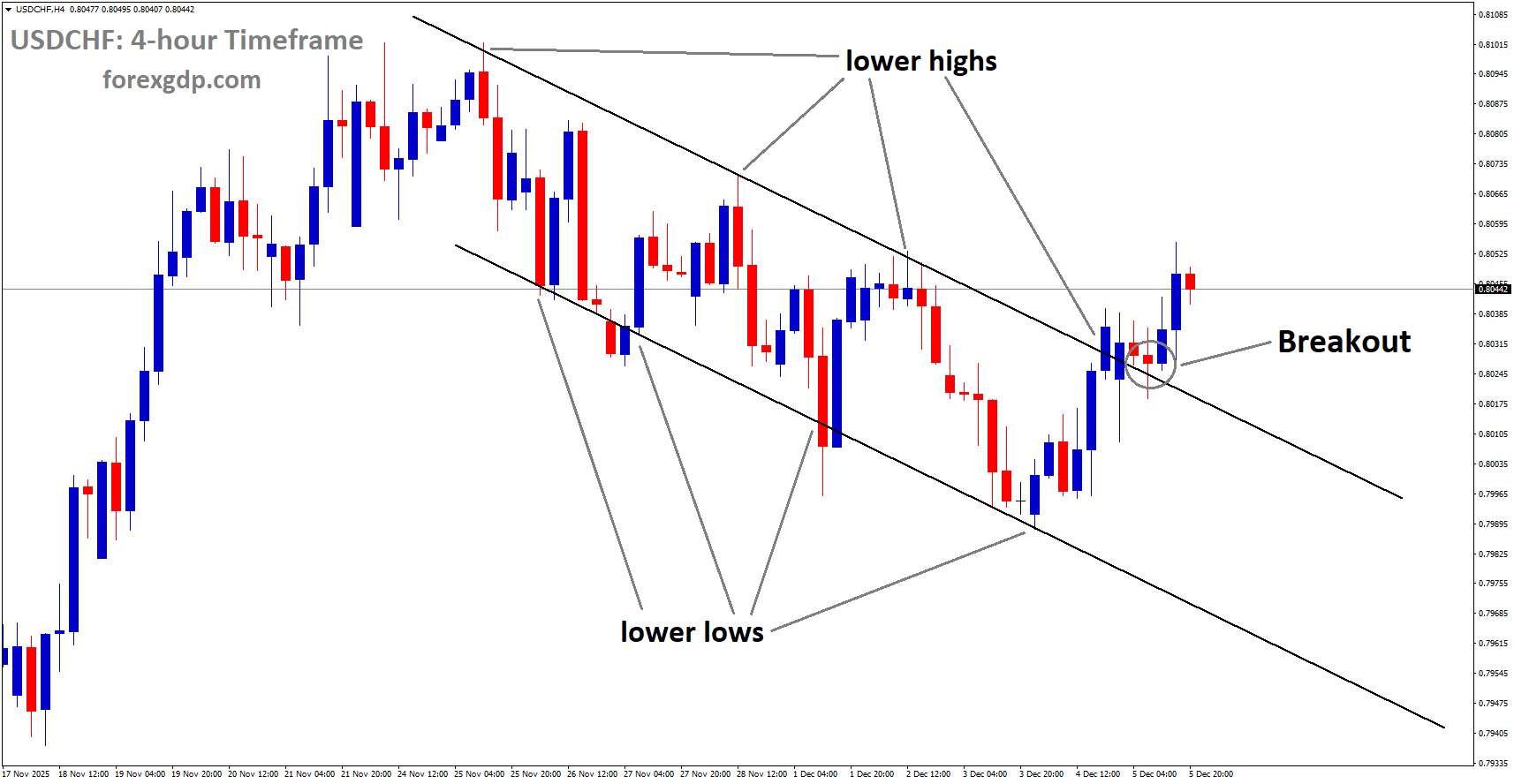
USDCHF has broken the downtrend channel on the upside
What’s Pushing USD/CHF Lower This Friday?
In the currency world, the US Dollar tends to weaken when traders believe the Federal Reserve is preparing to lower interest rates. Lower rates can reduce the return investors can get from holding Dollar-based assets, which often makes the currency less attractive in the short run.
That’s exactly what markets have been focusing on. Traders have increased their expectations that the Fed could deliver a 25 basis point rate cut at its upcoming meeting. A shift like this doesn’t need to be confirmed yet to move currencies—often, the expectation alone is enough to push the market.
There’s also a second layer: uncertainty around the future of Fed leadership. Any hint that the central bank could become more open to rate cuts, or even appear more politically influenced, can create extra selling pressure on the Dollar. And right now, that debate is becoming louder.
Rate-Cut Expectations Are Doing the Heavy Lifting
Heading into the end of the week, investors are pricing in a strong probability that the Fed will reduce rates soon. That kind of belief tends to weigh on the Dollar broadly, not just against the Swiss Franc.
In simple trading terms, when a rate cut looks likely, some investors adjust positions early. They may reduce Dollar exposure, rotate into other currencies, or shift to “safer” holdings depending on the wider market mood. Those flows can be enough to nudge major pairs like USD/CHF lower during quieter sessions—like early Europe—before the biggest US data releases land.
Fed Chair Speculation Adds Another Source of Uncertainty
Alongside interest-rate expectations, markets are also reacting to new headlines about who may lead the Federal Reserve in the future. Reports and commentary suggest that Kevin Hassett, a White House economic adviser, is being viewed by many as a leading candidate to replace Jerome Powell when Powell’s term ends.
This matters because currencies are not just driven by what central banks do today. They also respond to what investors think central banks might do tomorrow. If traders believe a potential future Fed chair would push for more frequent or deeper rate cuts, the Dollar can weaken even before anything officially changes.
In other words, it’s not only about policy—it’s also about perceived direction, independence, and predictability. When markets sense that the future path of the Fed could tilt more “dovish” (more open to easing), the Dollar can lose support.
The PCE Inflation Report Could Shape the Next Move

Later on Friday, attention is expected to shift to the US Personal Consumption Expenditures (PCE) Price Index inflation report, one of the Fed’s most-watched inflation measures.
PCE matters because it helps the Fed judge whether inflation is cooling fast enough to justify rate cuts. If the report comes in softer than expected, it could reinforce the idea that a rate cut is right around the corner. That would likely keep the US Dollar under pressure and could pull USD/CHF lower again.
On the other hand, if inflation proves stubborn, some traders may rethink whether the Fed can comfortably cut rates as soon as markets expect. In that case, the Dollar could stabilize or even rebound, especially if the market has become too one-sided.
Why Markets Watch PCE So Closely
Unlike some other inflation readings, PCE is often viewed by policymakers as a more flexible and comprehensive measure of consumer prices. It can capture changes in spending behavior and is frequently cited in Fed communication.
Because of that, PCE can shift expectations quickly. Even if the Fed doesn’t react immediately, investors care about how central bankers will interpret the data—and whether it changes the tone of upcoming statements, forecasts, or voting behavior.
Switzerland’s Surprise Inflation Drop Changes the CHF Story
While the Dollar has been under pressure, the Swiss Franc has its own storyline today. Switzerland’s latest Consumer Price Index (CPI) report came in unexpectedly soft. Headline inflation dropped to 0% in November, and core inflation slowed to its weakest pace in several years.
Normally, lower inflation can reduce pressure on a central bank to raise rates or keep policy tight. In Switzerland’s case, it strengthens the argument that the Swiss National Bank (SNB) can afford to stay supportive of the economy through a more accommodative stance.
That can weigh on the Franc because investors may see fewer reasons to expect tighter policy in the near future. If markets believe Swiss rates will stay lower for longer, the CHF may lose some appeal—especially against currencies where yields are still higher, even if rate cuts are coming.
How Soft Swiss Inflation Can Limit USD/CHF Losses
This is where the tug-of-war shows up in USD/CHF.
-
On the US side, rate-cut expectations and Fed leadership uncertainty are weighing on the Dollar.
-
On the Swiss side, softer inflation suggests the SNB can stay accommodative, which may reduce demand for the Franc.
So, even if the Dollar is having a weak moment, the Franc may not be strong enough to create a sharp drop in the pair. That balance can lead to choppy, hesitant movement—exactly the kind of slow drift seen near 0.8030.
What Traders Are Watching Next
With both currencies influenced by central bank expectations, USD/CHF is likely to remain sensitive to headlines and data.
Here are the key pressure points markets are monitoring:
US: Policy Direction and Fed Credibility
Markets want clarity on how soon rate cuts might arrive and how aggressive they could be. On top of that, any fresh updates on the next Fed chair discussion could matter, especially if it changes how investors view the Fed’s future independence or policy preferences.
Switzerland: SNB Expectations After Weak Inflation
If Swiss inflation stays low, it becomes easier for the SNB to keep policy supportive. That could prevent the Franc from strengthening too much, even during periods of global uncertainty when CHF often benefits from “safe haven” demand.
Global Mood: Risk Sentiment Still Matters
USD/CHF often reacts to changes in overall market confidence. When investors feel cautious, the Swiss Franc can gain due to its reputation as a defensive currency. When investors feel more optimistic, CHF can soften. That broader mood can amplify—or dampen—whatever the central bank story is doing.
Summary
USD/CHF eased toward 0.8030 in early European trading as the US Dollar faced pressure from rising expectations of an imminent Fed rate cut and growing attention around possible future Fed leadership. Later in the day, the US PCE inflation report is set to be a major focal point, as it can influence how confident traders feel about near-term easing. Meanwhile, Switzerland’s unexpectedly soft inflation data points to a continued accommodative SNB stance, which could weaken the Swiss Franc and help limit deeper declines in the pair.
NZDUSD pushes upward to a new top as the US dollar retreats
The New Zealand Dollar has been climbing to a fresh monthly high near 0.5780 against the US Dollar, and the upward momentum still looks healthy. Over the past couple of weeks, the Kiwi has kept a clear bullish tone, with pullbacks finding support above 0.5760. That resilience has helped the pair rebuild the uptrend that began after the mid-November lows.
As the NZD/USD exchange rate pushes higher, traders are also keeping an eye on the next psychological area around 0.5800, a zone that lines up with earlier highs seen in October. While currency markets rarely move in a straight line, the overall story remains the same: the US Dollar has struggled to extend rallies, and the New Zealand Dollar has benefited from a policy outlook that looks firmer by comparison.
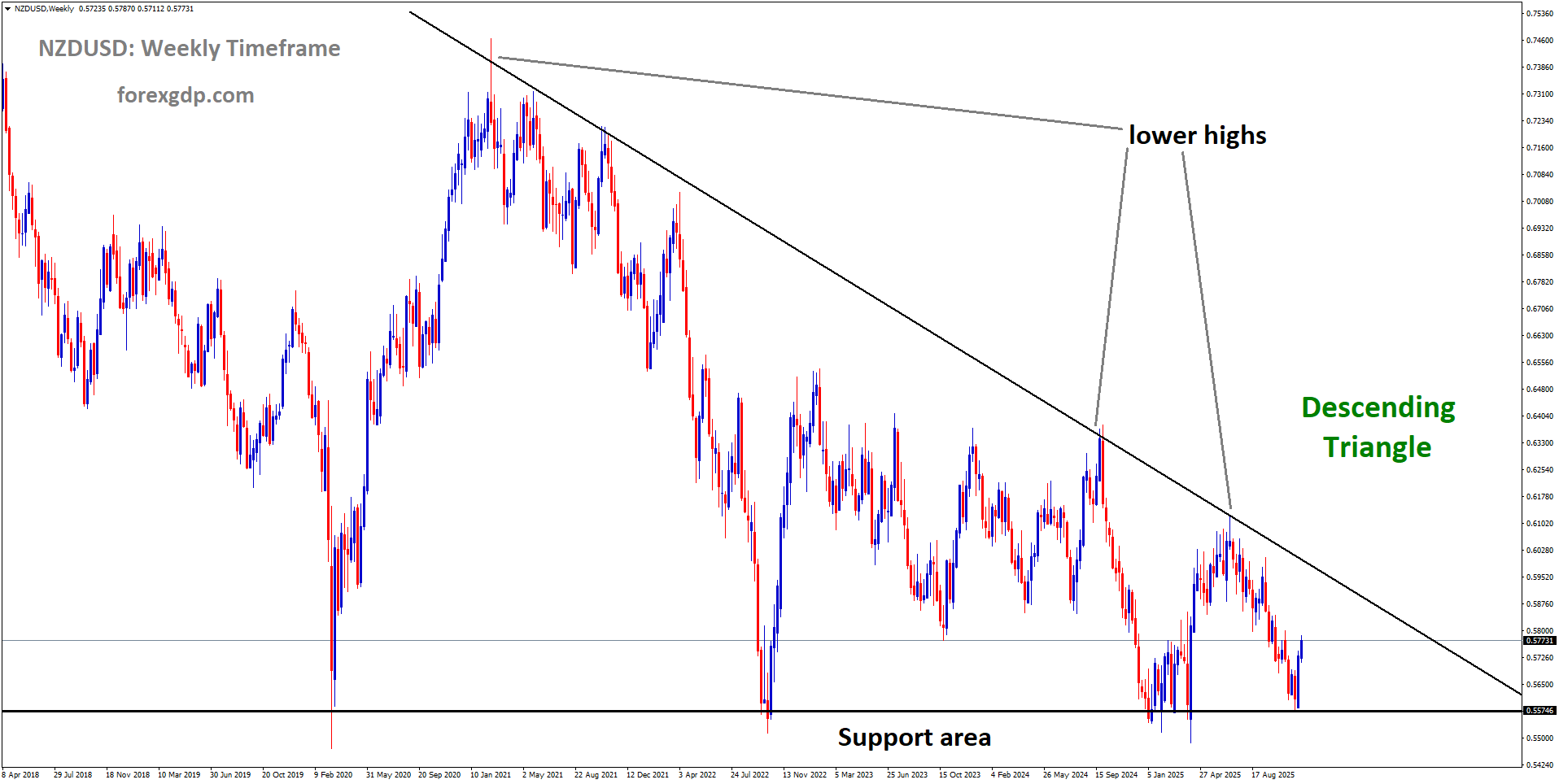
NZDUSD is moving in a descending triangle pattern, and the market has rebounded from the support area of the pattern
What’s driving the New Zealand Dollar higher?
If you’ve been watching NZD/USD lately, the main theme is pretty straightforward. The New Zealand Dollar is gaining ground largely because the US Dollar has been on the back foot. That weakness isn’t coming from one single headline. Instead, it’s being shaped by shifting expectations around where US interest rates are headed next.
Investors increasingly believe the US Federal Reserve is moving closer to a more supportive stance for growth, which usually means lower interest rates. When markets start to price in rate cuts, the US Dollar often loses some of its appeal because the return you can earn from holding dollar-based assets may fall.
That’s exactly the kind of environment where currencies like the New Zealand Dollar can outperform, especially when their own central bank is not signaling the same level of easing. In simple market terms, traders tend to follow the direction of relative policy: when one central bank looks more likely to cut than another, the currency tied to the “less dovish” bank can get a lift.
Right now, that policy contrast is a big part of what’s helping NZD/USD stay supported on dips and continue pushing toward new monthly highs.
Fed rate-cut expectations are capping US Dollar rebounds
A major reason US Dollar rallies have been limited is the growing belief that the Federal Reserve may soon begin easing policy. Traders are bracing for a near-term rate cut and potentially additional cuts in the following year. Even when the Dollar gets a short-lived bounce, the broader mood in the market tends to pull it back down as long as those easing expectations remain in place.
This matters because currencies trade on expectations just as much as they trade on current conditions. If investors believe US rates are likely to be lower in the months ahead, they often adjust their positions early. That can reduce demand for the Dollar in advance, rather than waiting for the actual decision.
When that happens, the NZD can rise even without a major domestic catalyst. In other words, the Kiwi doesn’t always need “great news” from New Zealand to move higher—it can simply benefit from the US Dollar losing momentum.
US employment signals add fuel to the easing narrative
Recent US employment-related data has also played a role in strengthening expectations for easier Fed policy. A weaker-than-expected reading on private-sector job creation has encouraged traders to believe the economy may be cooling enough to justify rate cuts.
Employment data is closely watched because the Fed has a dual responsibility: managing inflation while supporting maximum employment. If hiring significantly slows, it can shift the balance toward easing—especially if inflation is no longer accelerating.
The situation has become even more unusual due to delays in key US official data releases tied to a prolonged government shutdown. With major reports not arriving on the normal schedule, markets have had to lean more heavily on alternative indicators and forward-looking expectations. That uncertainty can amplify reactions because traders are working with fewer “anchor points” from official releases.
In periods like this, sentiment can matter more than usual. If traders are already positioned for Fed easing, and the available data supports that view, the US Dollar can remain under pressure for longer than many would expect.
Why the RBNZ’s stance is supporting the Kiwi
While the US outlook is tilting toward easing, New Zealand’s central bank is sending a different kind of signal. The Reserve Bank of New Zealand (RBNZ) cut rates by a small step at its November meeting, but the key detail wasn’t the cut itself—it was the message that followed.
Markets interpreted the RBNZ’s guidance as a sign that the easing cycle may be near its end. That’s important because investors are always trying to answer one question: what happens next? If the RBNZ is done cutting (or close to it), that makes New Zealand’s interest-rate outlook look steadier than the US outlook right now.
When a central bank suggests it is finished easing, the local currency often benefits. The logic is simple: fewer cuts ahead can mean relatively higher returns on New Zealand assets compared to countries where rates may keep moving lower.
A newly hawkish tone from leadership
Another supportive factor for the New Zealand Dollar has been commentary from the RBNZ’s new leadership. In her first public appearance at New Zealand’s Parliament, incoming Governor Anna Breman emphasized that she would be “laser focused on inflation.”
That kind of statement matters in currency markets because it reinforces credibility. When central bank leaders stress inflation control, traders tend to hear a more disciplined, less accommodative policy approach. Even if rates don’t rise, the perception that policymakers are not rushing into further cuts can still strengthen the currency.
It also adds weight to the idea of monetary policy divergence—a situation where two central banks appear to be heading in different directions. If the Fed is easing while the RBNZ is holding firm, NZD/USD has a fundamental reason to stay supported.
Key levels traders are watching without overthinking it
While market watchers often focus on specific price zones, the bigger takeaway here doesn’t require complicated charts. NZD/USD has stayed constructive because:
-
It has held above recent dip levels around 0.5760
-
It has pushed up to 0.5780, marking a fresh monthly high
-
It is drifting toward the 0.5800 neighborhood, an area tied to earlier market peaks
The exact day-to-day path will depend on incoming headlines and shifts in rate expectations. But as long as the Fed-cut narrative stays alive and the RBNZ maintains a firmer tone, the New Zealand Dollar has a reasonable backdrop for staying strong.
What could change the story?
Even in a bullish trend, it’s worth knowing what could challenge it. The main risk to the Kiwi’s recent strength would be a shift back in favor of the US Dollar. That could happen if US data suddenly shows stronger growth or stickier inflation, leading markets to scale back expectations for rate cuts.
On the New Zealand side, the Kiwi could lose some support if the RBNZ signals it may need to cut more than markets currently anticipate. For now, that doesn’t look like the base case, but central banks can change their tone quickly if inflation or growth surprises.
In the near term, traders will be watching for developments around US rate expectations and any fresh signals from the RBNZ that confirm (or challenge) the idea that New Zealand is near the end of its easing phase.
Summary
The New Zealand Dollar has reached a fresh monthly high near 0.5780 against the US Dollar, supported by a steady uptrend and contained pullbacks above 0.5760. The broader driver has been limited strength in the US Dollar as traders anticipate more accommodative policy from the Federal Reserve, reinforced by softer employment signals and unusual delays in official data releases. At the same time, the RBNZ has sounded firmer, with guidance suggesting it may be nearing the end of its easing cycle, while fresh leadership commentary has emphasized a strong focus on inflation. Together, these forces have widened the policy contrast between the two countries and helped keep the Kiwi supported.
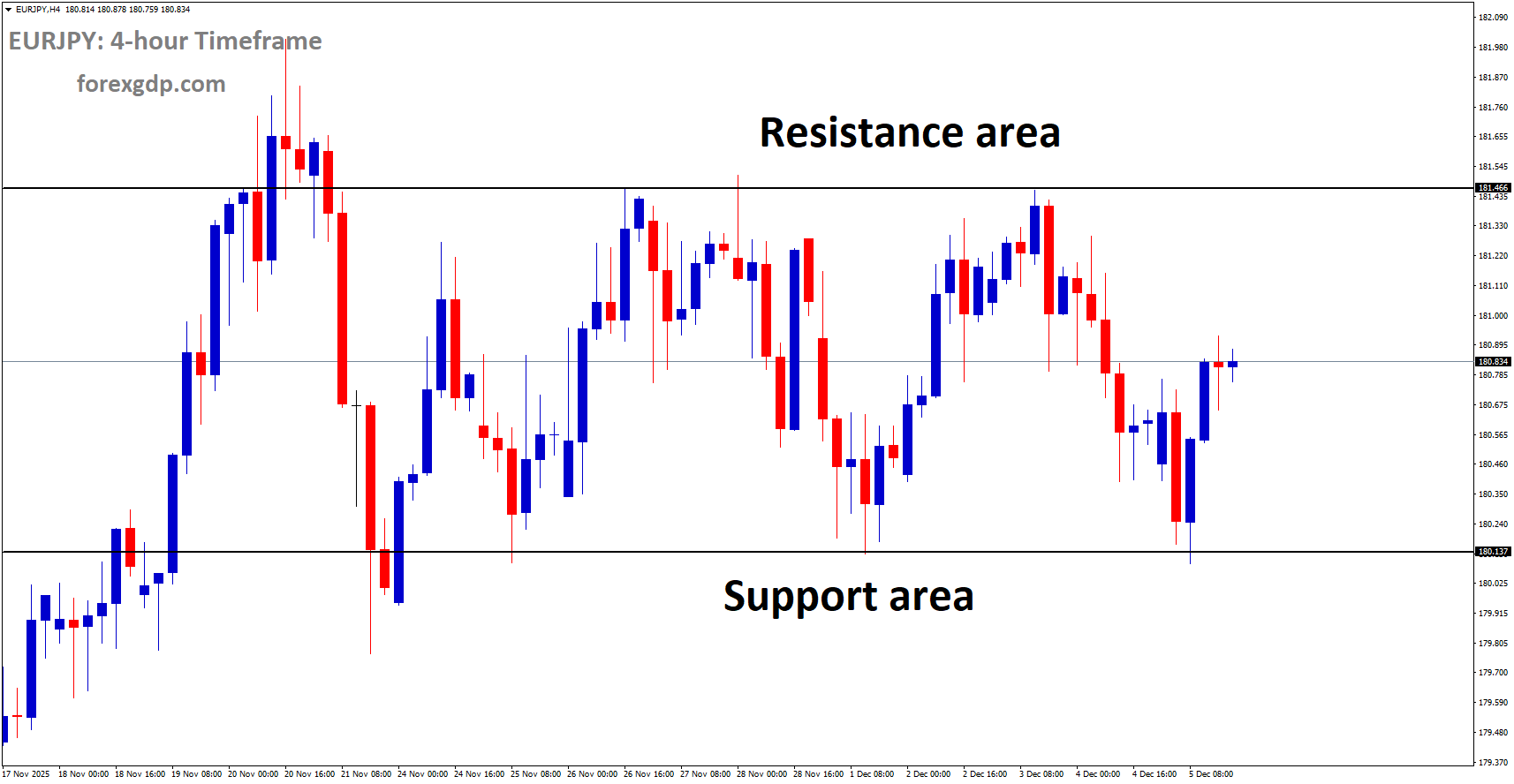
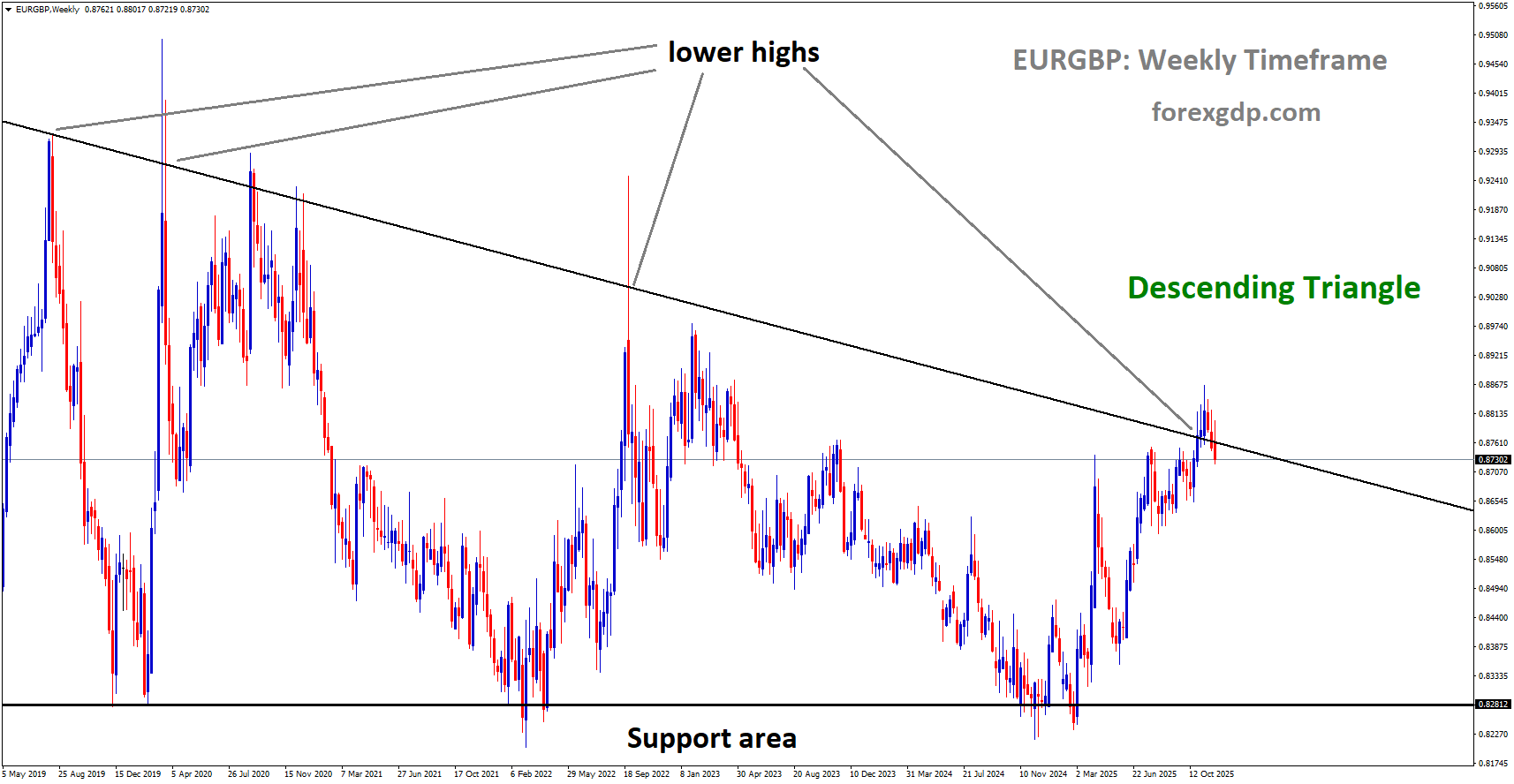
EURJPY Edges Up as Eurozone Updates Support the Euro and the Yen Stays Weak

BTCUSD Dips Below $90K as Year-End Bounce Fails to Show Up
Bitcoin has been hanging around the $90,000 zone, and the mood across the market feels like a pause between big moves. Many traders still hope for a strong finish to the year and a return above the important six-figure mark. But at the same time, some of the energy that powered Bitcoin’s earlier surge has cooled.
One of the biggest reasons is simple: large institutions have been stepping back. In December, more than $250 million flowed out of Spot Bitcoin ETFs in the United States, signaling weaker demand from the same group that helped fuel Bitcoin’s breakout earlier in the year. Add in a shift in market dominance and changing trader behavior, and it becomes clear why Bitcoin’s next move may take longer than many hoped.
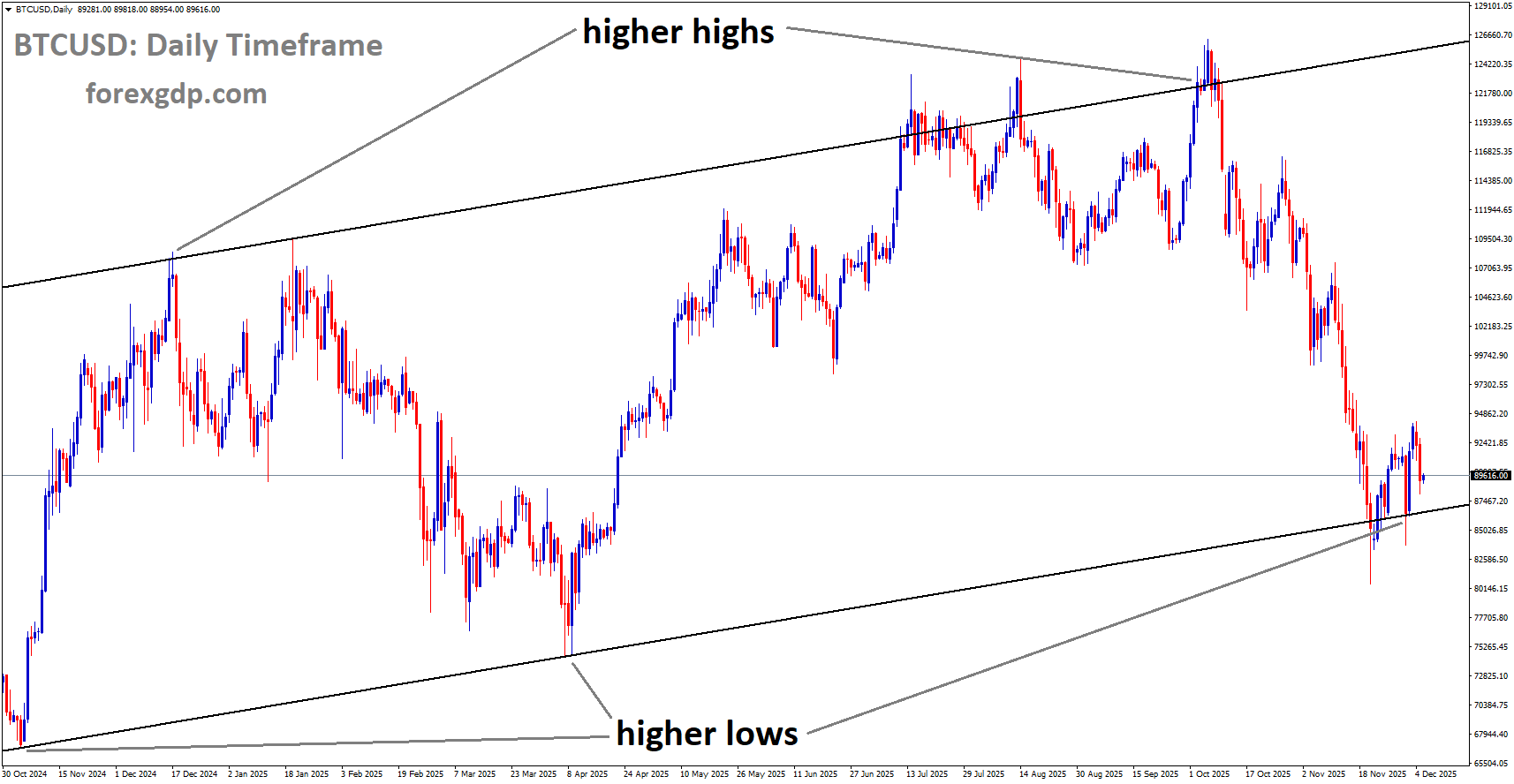
BTCUSD is moving in an uptrend channel, and the market has reached a higher low area of the channel
What happens next likely depends on a few key catalysts. These factors won’t guarantee a rally, but they often set the stage for Bitcoin to regain momentum when the market is looking for direction.
Why Bitcoin Feels “Stuck” Around $90,000
Bitcoin markets often move in waves: a strong push upward, a period of cooling off, and then either another surge or a deeper pullback. Right now, Bitcoin looks to be in that cooling phase.
At the start of the year, excitement around Spot Bitcoin ETFs and rising institutional participation gave the market a clear storyline. Investors had a reason to believe that a new pool of demand could keep building. That narrative helped support strong confidence and a powerful run upward.
Now the storyline is less straightforward. Institutions are not showing the same appetite they did earlier, and crypto investors are reading that as a sign that the rally may be losing fuel. Even when the broader environment includes positive expectations—such as easier monetary policy or friendlier regulation—Bitcoin still tends to need real demand to move meaningfully higher.
And demand is exactly what traders are watching.
Institutional ETF Flows: The Market’s “Heartbeat” for Demand
The rise of Spot Bitcoin ETFs in the US created a new gateway for big money. Instead of dealing with crypto exchanges or custody concerns, institutions and traditional investors could gain exposure in a more familiar structure. That mattered, because Bitcoin’s biggest rallies often need large buyers who can absorb supply without blinking.
Earlier in the year, strong ETF inflows helped create that effect. It wasn’t just retail excitement—it was consistent, visible demand that traders could track.
But December has told a different story. Over $250 million reportedly left Spot Bitcoin ETFs during the month, which suggests that institutional interest weakened rather than improved. Outflows don’t automatically mean a collapse is coming, but they do change the tone. They tell the market that some large investors are either taking profits, reducing risk, or waiting for better conditions before buying again.
What ETF withdrawals often signal
-
Less immediate buying pressure from large investors
-
More hesitation across the market, since institutions are seen as “smart money” by many traders
-
A slower path to renewed momentum unless inflows return in a meaningful way
If Bitcoin is going to regain strong upward speed, many traders believe ETF inflows need to stabilize first—and ideally turn positive again.
Bitcoin Dominance Slips Below 60%: What That Can Mean
Another key clue traders are watching is Bitcoin dominance, which refers to Bitcoin’s share of the total crypto market compared to other coins and tokens. When dominance rises, it often suggests Bitcoin is leading the market and attracting the most attention and capital. When dominance falls, it can hint that money is moving into other parts of crypto, such as Ethereum or smaller altcoins.
Bitcoin dominance dropping below 60% is notable because it can reflect a shift in where traders are placing their bets. Instead of concentrating on Bitcoin, the market may be spreading capital across other assets. That can sometimes happen late in a bullish cycle, when investors chase higher risk opportunities after Bitcoin has already made a large move.
Why dominance matters for a potential year-end rally
If Bitcoin is going to power upward again, it often helps when Bitcoin is the main focus. Lower dominance doesn’t stop Bitcoin from rising, but it can reduce the feeling of a strong Bitcoin-led market, which is usually what drives broad confidence.
A drop in dominance can also mean the market is less unified. And when a market is less unified, big breakouts can take longer because fewer participants are pulling in the same direction.
Trader Profit-Taking: When Gains Create Selling Pressure
Bitcoin doesn’t only move because of news. It also moves because of human behavior—especially what traders do after a strong run. When people are sitting on profits, many will eventually sell some portion, whether to lock in gains or reduce risk.
That’s why trader profit and loss activity often becomes a quiet but powerful force. If many holders are taking profits at the same time, it can create a headwind that slows a rally, even if the long-term outlook still looks positive.
This is especially relevant after a major run-up. As Bitcoin climbed earlier in the year, it naturally created more profitable positions. Over time, those profitable positions turn into decisions: “Do I hold longer, or do I take money off the table?”
When institutional buying slows and traders take profits, Bitcoin can end up moving sideways while the market waits for the next wave of demand.
A common pattern markets fall into
-
Strong rally creates paper profits
-
Profit-taking increases selling activity
-
Price action steadies as buyers and sellers balance out
-
Market waits for a new catalyst to break the tie
This doesn’t mean the bull market is “over.” It often means Bitcoin needs a fresh reason to attract new buyers in size.
The Three Catalysts Traders Are Watching Most Closely
Bitcoin can move for countless reasons, but right now, three themes stand out as the most closely watched drivers.
1) A rebound in institutional demand through ETF inflows
If Spot Bitcoin ETFs return to steady inflows, it can quickly shift the mood. Traders pay attention because these flows are visible signals of real demand, not just talk.
2) Bitcoin dominance stabilizing (or rising again)
A stronger dominance figure can suggest Bitcoin is reclaiming leadership in the crypto market. That leadership often helps rallies feel more “real” and supported.
3) A cooldown in profit-taking behavior
When profit-taking slows, it can reduce selling pressure and give the market more room to move upward. Traders often watch this to understand whether the market is still distributing gains or preparing for another push.
What This Means for the Weeks Ahead
Right now, Bitcoin is in a watch-and-wait phase. Traders aren’t short on optimism, but they are short on clear momentum. If institutions return, if Bitcoin regains leadership in the wider crypto market, and if profit-taking eases, the conditions for another strong move could appear quickly.

On the other hand, if ETF outflows continue and market attention remains divided, Bitcoin could remain choppy as investors look for the next strong narrative.
Either way, this stage is not unusual for Bitcoin. Big moves are often followed by quiet periods, and the next trend usually starts when the market stops forcing it and simply reacts to fresh demand.
Final summary
Bitcoin’s pause near $90,000 reflects a market that has cooled after a strong run. The biggest shift is weaker institutional participation, highlighted by significant December outflows from Spot Bitcoin ETFs. At the same time, Bitcoin dominance slipping below 60% suggests capital may be spreading across other crypto assets, which can delay a Bitcoin-led surge. Finally, profit-taking behavior matters more than many realize, because selling pressure often increases after major gains. For traders watching the next big move, the most important signals remain ETF flows, Bitcoin’s share of the overall crypto market, and whether selling pressure starts to fade.
Don’t trade all the time, trade forex only at the confirmed trade setups
Get more confirmed trade signals at premium or supreme – Click here to get more signals, 2200%, 800% growth in Real Live USD trading account of our users – click here to see , or If you want to get FREE Trial signals, You can Join FREE Signals Now!