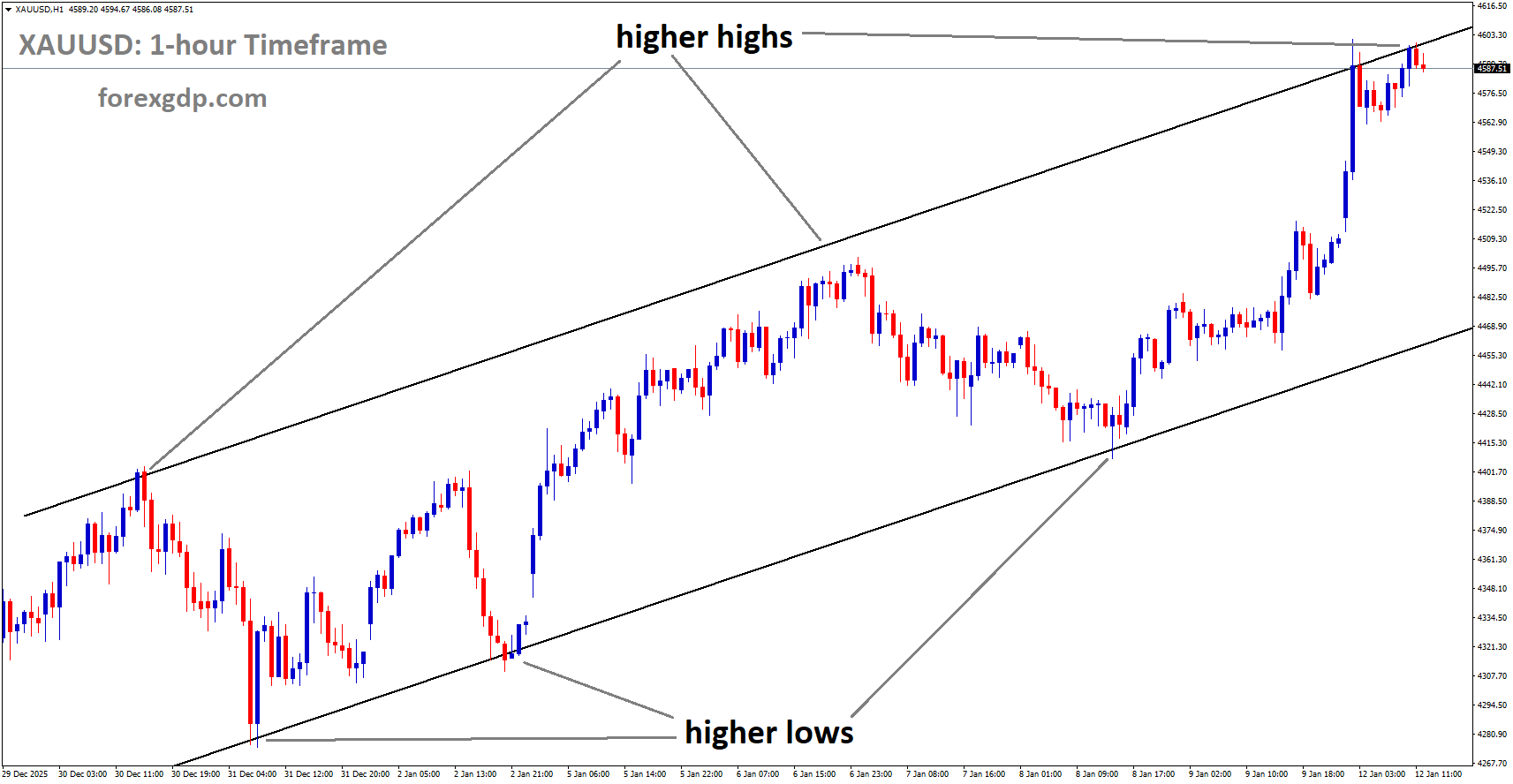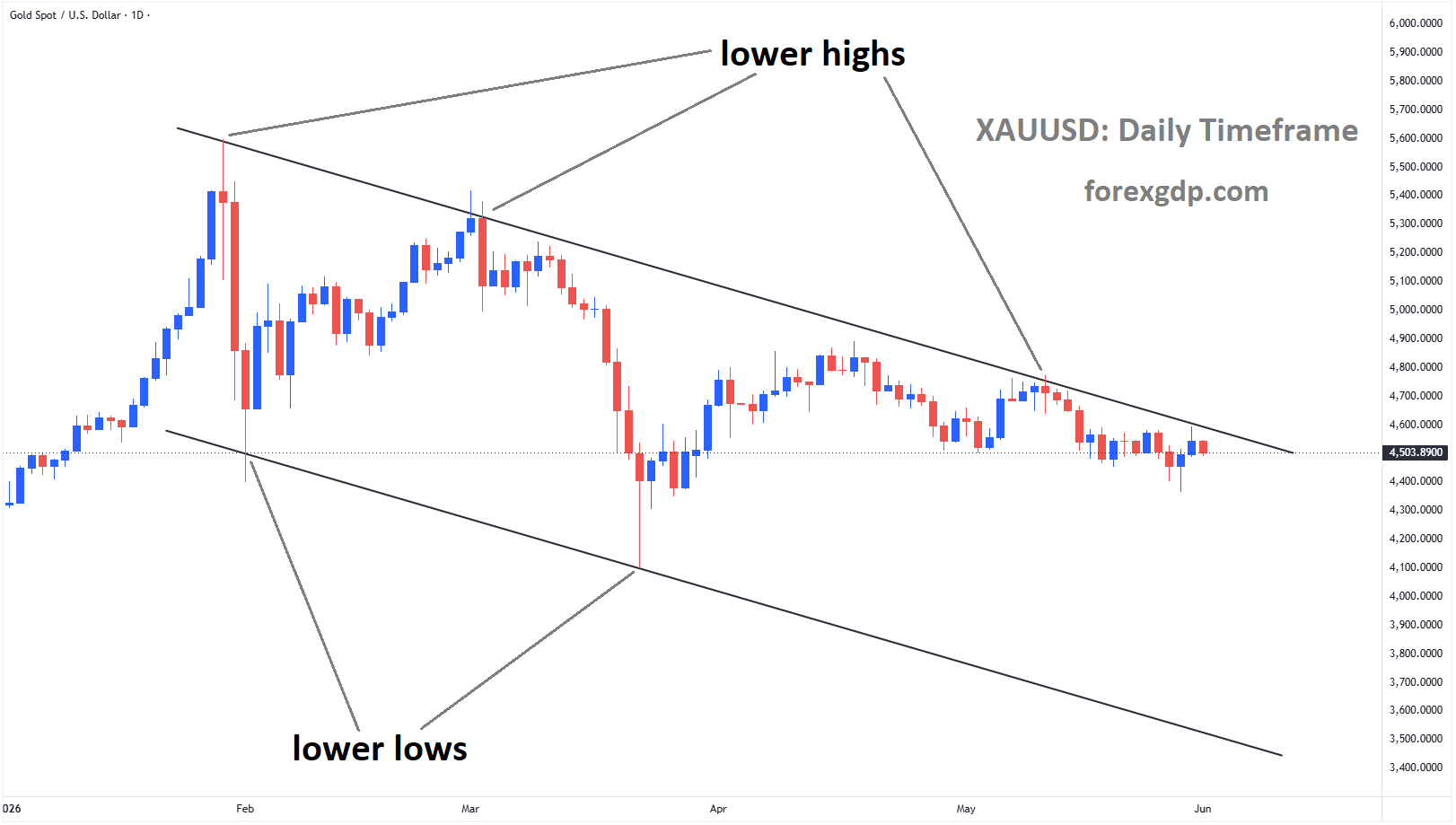
XAUUSD is moving in a descending channel, and the market has reached the lower high area of the channel
Gold continued to move lower during Monday’s trading session, giving back some of the gains it achieved at the end of last week. After reaching its highest level in two weeks, the precious metal struggled to maintain momentum as several global factors combined to weigh on investor sentiment.
A stronger US Dollar, growing expectations of tighter monetary policy from the Federal Reserve, and ongoing geopolitical developments have all contributed to the recent weakness in gold. While uncertainty in the Middle East continues to support safe-haven demand, investors are also turning toward the US Dollar, creating a challenging environment for the precious metal.
Stronger US Dollar Limits Gold’s Upside
One of the main reasons behind gold’s decline is the renewed strength of the US Dollar. Traditionally, gold and the dollar tend to move in opposite directions. When the dollar gains value, gold often becomes less attractive to investors because it becomes more expensive for buyers using other currencies.
Recent developments have increased demand for the US Dollar as a safe-haven asset. Ongoing geopolitical tensions and concerns about global stability have encouraged investors to seek safety in the world’s reserve currency. As a result, the dollar has regained momentum, putting pressure on gold prices.
Although gold remains above the multi-month lows reached last week, its ability to recover further has been limited by the stronger dollar environment.
Federal Reserve Expectations Continue to Influence Markets
Another important factor affecting gold is the outlook for US monetary policy. Investors are increasingly focused on the possibility that the Federal Reserve could maintain a cautious stance toward interest rates due to persistent inflation concerns.
Gold does not provide interest or yield, making it less appealing when expectations for higher interest rates increase. In such situations, investors often prefer assets that can generate returns, reducing demand for non-yielding assets like gold.
Recent market sentiment suggests that traders believe the Federal Reserve may remain firm in its fight against inflation. These expectations have strengthened support for the US Dollar and created additional headwinds for gold.
As a result, many market participants are taking a wait-and-see approach before making major investment decisions.
US-Iran Negotiations Remain Uncertain

Developments surrounding the ongoing discussions between the United States and Iran are also playing a major role in shaping market sentiment.
Iranian Foreign Minister Abbas Araqchi stated that communication and negotiations with the United States are continuing. However, he warned against placing too much importance on unverified reports regarding the progress of the talks.
At the same time, Iran’s chief negotiator, Mohammad Bagher Qalibaf, emphasized that Tehran would not accept any agreement unless the country’s national interests and rights are fully protected.
These comments highlight the challenges facing both sides as they attempt to reach a diplomatic solution. Reports indicate that the United States has recently taken a tougher negotiating stance, adding another layer of uncertainty to an already complex situation.
Because of these unresolved issues, investors remain cautious about the prospects for a breakthrough in negotiations.
Key Disagreements Continue to Complicate Peace Efforts
Several major issues continue to stand in the way of a final agreement between Washington and Tehran.
Among the most significant concerns are disagreements over Iran’s nuclear program and the future of the strategically important Strait of Hormuz. These matters remain central to discussions and have proven difficult to resolve.
Reports suggest that US President Donald Trump requested revisions to sections of the proposed agreement dealing with enriched uranium and the Strait of Hormuz. These requests have added further complexity to negotiations aimed at ending months of regional tensions.
Diplomatic messages continue to be exchanged through regional intermediaries, including Pakistani officials and other mediators. However, there is still little clarity regarding whether meaningful progress is being made.
This uncertainty keeps investors focused on potential geopolitical risks and supports demand for traditional safe-haven assets.
Rising Tensions in Lebanon Add to Regional Concerns
Beyond the US-Iran negotiations, the broader Middle East situation remains a major source of concern for global markets.
Israel has expanded its military operations in Lebanon as fighting with the Iran-backed Hezbollah group continues. According to reports, Israeli forces captured the historic Beaufort Castle and advanced beyond the Litani River.
This development represents Israel’s deepest military presence inside Lebanon since its withdrawal from the country in 2000. The expansion of military activity has raised concerns that regional instability could intensify further.
As geopolitical risks rise, investors often seek safety in assets perceived as more secure during periods of uncertainty. This has helped support demand for the US Dollar and influenced broader market sentiment.
Oil Recovery Revives Inflation Concerns
Another important market development has been the rebound in crude oil prices following a recent decline.
Oil prices recovered from lows reached late last week, partly due to concerns that ongoing Middle East tensions could disrupt supply chains or increase regional instability. Higher energy prices often raise fears of inflation because they can increase costs across multiple sectors of the economy.
Renewed inflation concerns have encouraged investors to reassess expectations for future Federal Reserve decisions. If inflation remains elevated, policymakers may be less willing to ease monetary conditions.
This scenario strengthens support for the US Dollar and creates additional challenges for gold, which tends to perform better when interest rate expectations are lower.
Investors Await Major US Economic Data
Market participants are now turning their attention toward a series of important economic reports from the United States.
The week begins with the release of the ISM Manufacturing Purchasing Managers’ Index (PMI), a closely watched measure of activity in the manufacturing sector. The report could provide valuable insight into the health of the US economy and influence market sentiment.
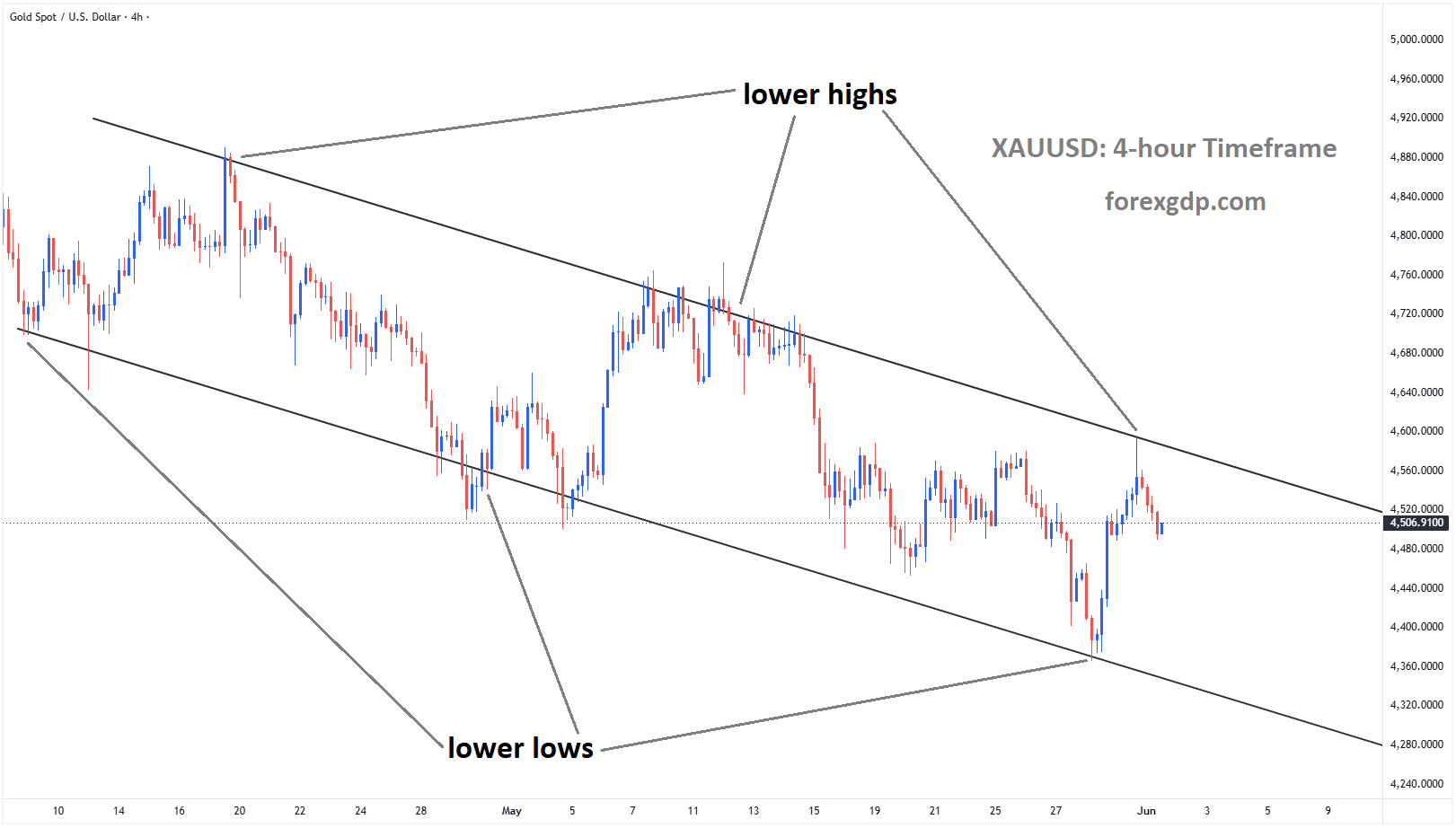
XAUUSD is falling from the lower high area of the descending channel
However, the most anticipated event will be Friday’s Nonfarm Payrolls (NFP) report. The employment data is widely regarded as one of the most influential economic indicators in the United States.
A strong labor market report could reinforce expectations that the Federal Reserve will maintain its current policy stance, potentially supporting the US Dollar further. On the other hand, weaker-than-expected figures could alter market expectations and affect demand across financial markets.
Summary
Gold remains under pressure as investors balance several competing forces. A stronger US Dollar, expectations of a firm Federal Reserve policy stance, and renewed inflation concerns have all limited the metal’s recent gains. At the same time, ongoing uncertainty surrounding US-Iran negotiations and escalating tensions in Lebanon continue to keep geopolitical risks elevated.
As traders await key US economic data, especially the upcoming Nonfarm Payrolls report, market sentiment is likely to remain sensitive to both economic developments and events in the Middle East. The interaction between these factors will continue to play a crucial role in shaping the direction of gold and broader financial markets in the days ahead.