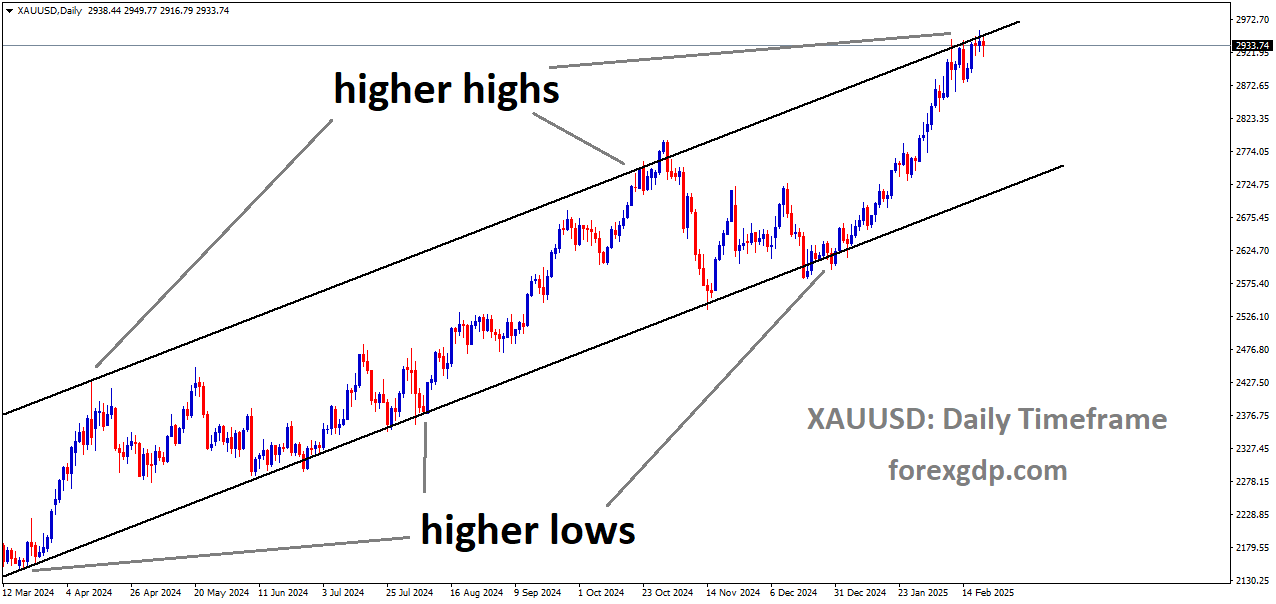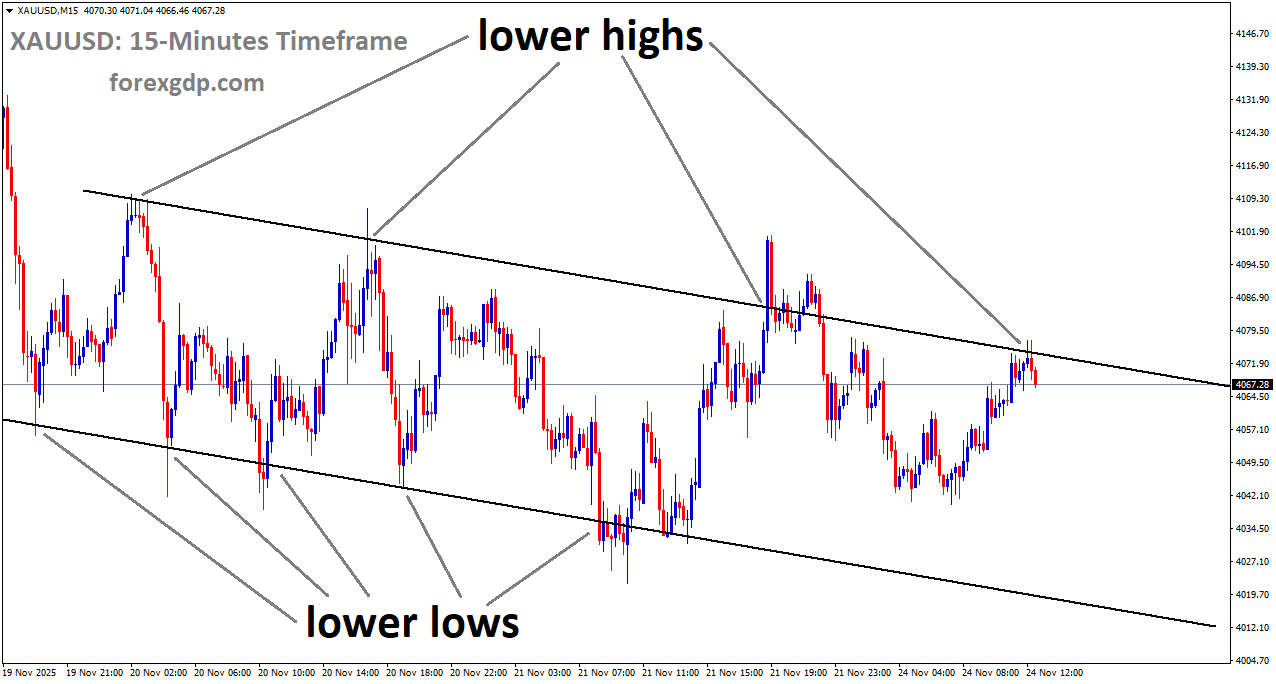
XAUUSD is moving in a downtrend channel, and the market has reached the lower high area of the channel
Gold began the week moving slightly lower as improving risk sentiment encouraged investors to shift toward assets seen as more growth-oriented. Even so, the metal managed to steady after touching its early-session low in Europe. It continued trading with a mild downward lean, holding just above the 4,060 level. While the pullback was limited, it reflected a broader mood across global markets, where mixed messages from US Federal Reserve officials and ongoing geopolitical tensions shaped investor expectations.
Despite the softer tone, gold still found pockets of support. Recent remarks from members of the Federal Reserve introduced uncertainty around the path of interest rates, softening the US Dollar from its recent multi-month high. This gave gold some breathing room, as a weaker dollar typically helps make the metal more attractive to investors. At the same time, elevated geopolitical risks continued to play a role in keeping demand for safety alive, although traders appeared hesitant to make bold moves ahead of several important US economic reports due in the coming days.
Fed Commentary Influences Market Expectations
Recent comments from policymakers at the Federal Reserve have added a layer of complexity to the outlook for interest rates. New York Fed President John Williams noted that current monetary policy remains somewhat restrictive and hinted that there may be space for the bank to reduce rates sooner rather than later. His comments were interpreted by some investors as a sign that another rate cut could be on the table for December.

Traders reacted quickly. Market expectations shifted to reflect a growing probability that borrowing costs may indeed be lowered before the year ends. This shift led to some profit-taking in the US Dollar, which had recently climbed to levels not seen since late spring. Because gold does not offer interest or yield, it tends to benefit when expectations tilt toward lower interest rates, and this dynamic helped the metal stabilize after its early dip.
Still, the broader picture remains mixed. Other Fed leaders have taken a more cautious tone. Dallas Fed President Lorie Logan stressed the need to keep policy steady for now, suggesting that inflation trends require careful monitoring before any new steps are taken. These differing views kept the dollar relatively firm and limited gold’s attempts to gain ground.
Shifting Risk Appetite in Global Markets
The prospect of easier monetary policy later in the year also sparked more appetite for risk in financial markets. Asian equity indices strengthened at the start of the week, recovering part of their recent declines. When investors move into stocks and other risk-oriented sectors, safe-haven assets like gold tend to soften. This rise in confidence across equities added to the mild pressure limiting gold’s upside.
Even with the improved sentiment, traders appear far from complacent. The overall environment remains uncertain, and many investors are waiting for more definitive economic signals. This week’s US data releases—including key inflation metrics and the latest GDP estimate—have the potential to influence expectations around the Fed’s next move. Until those numbers are released, many market participants seem inclined to wait before committing to new positions.
Geopolitical Risk Continues to Support Gold
While economic forces dominate day-to-day trading, geopolitical tensions continue to play a significant role in shaping demand for safer assets. The conflict between Russia and Ukraine saw new developments as Ukraine carried out a major drone strike on a power station in the Moscow region. Russia responded by claiming additional advances in eastern Ukraine, adding more strain to the already-fragile situation.
In parallel, diplomatic efforts remain underway. The United States has pushed Ukraine to make progress on a proposed peace framework intended to bring an end to the prolonged war. However, Ukraine has requested adjustments to the plan, citing concerns about several of Russia’s demands. These uncertainties keep geopolitical tensions elevated, and because gold is traditionally viewed as a store of value in times of instability, these events help prevent sharper declines in the metal.
Developments in the Middle East add another layer of complexity for traders. With multiple regions experiencing unrest and no clear path toward resolution, many investors remain mindful of the potential for sudden market shifts. Although risk appetite has improved in the short term, the broader backdrop favors maintaining some exposure to assets that can offer stability when uncertainty rises.
Key US Economic Data in Focus
The week ahead features several major reports that could shape financial markets and influence the direction of gold. The economic calendar includes the delayed Producer Price Index, Retail Sales data, and the Consumer Confidence Index. These indicators provide insight into inflation trends, consumer activity, and overall economic sentiment.
Mid-week, the preliminary estimate of third-quarter GDP will give investors a clearer view of the pace of US economic growth. The Personal Consumption Expenditure Price Index, a key inflation gauge closely watched by the Federal Reserve, will also be released. This particular report often has significant influence on expectations for future interest-rate decisions.
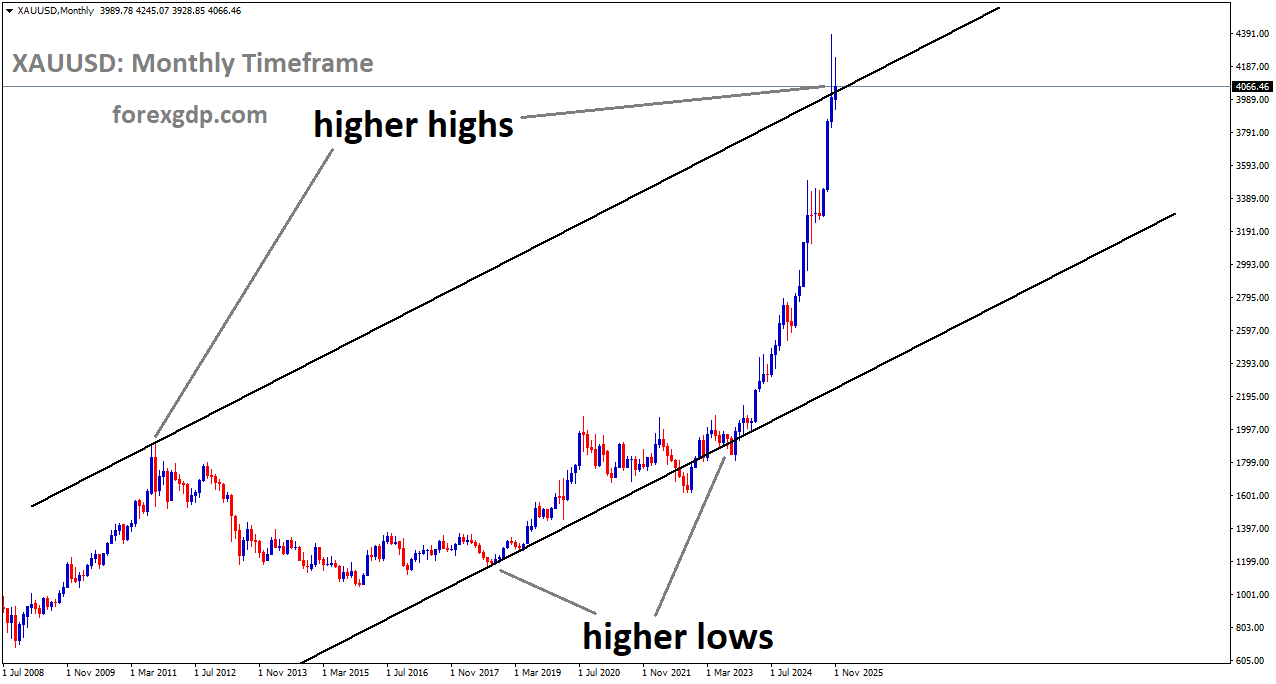
XAUUSD is moving in an uptrend channel, and the market has reached a higher high area of the channel
Because interest rates and the strength of the dollar play such important roles in determining gold’s performance, these upcoming data releases are being watched closely. A softer-than-expected reading could reinforce bets on lower interest rates, potentially supporting gold. Conversely, stronger numbers might encourage the Fed to maintain its more cautious approach, offering additional strength to the dollar and weighing on the precious metal.
Summary
Gold began the week under modest pressure as improving global risk sentiment reduced demand for safe-haven assets. Even so, the metal held steady after dipping early in the European session, supported by mixed signals from Federal Reserve officials and ongoing geopolitical uncertainty. Comments suggesting the possibility of a rate cut in December helped soften the US Dollar, while rising tensions in both Eastern Europe and the Middle East kept some investors positioned in defensive assets.
Traders now turn their attention to a series of important US economic reports that will offer fresh insights into inflation, economic activity, and the likely path of interest rates. The results of these releases may determine gold’s next meaningful move, as markets seek clearer guidance amid an environment shaped by both economic and geopolitical crosscurrents.