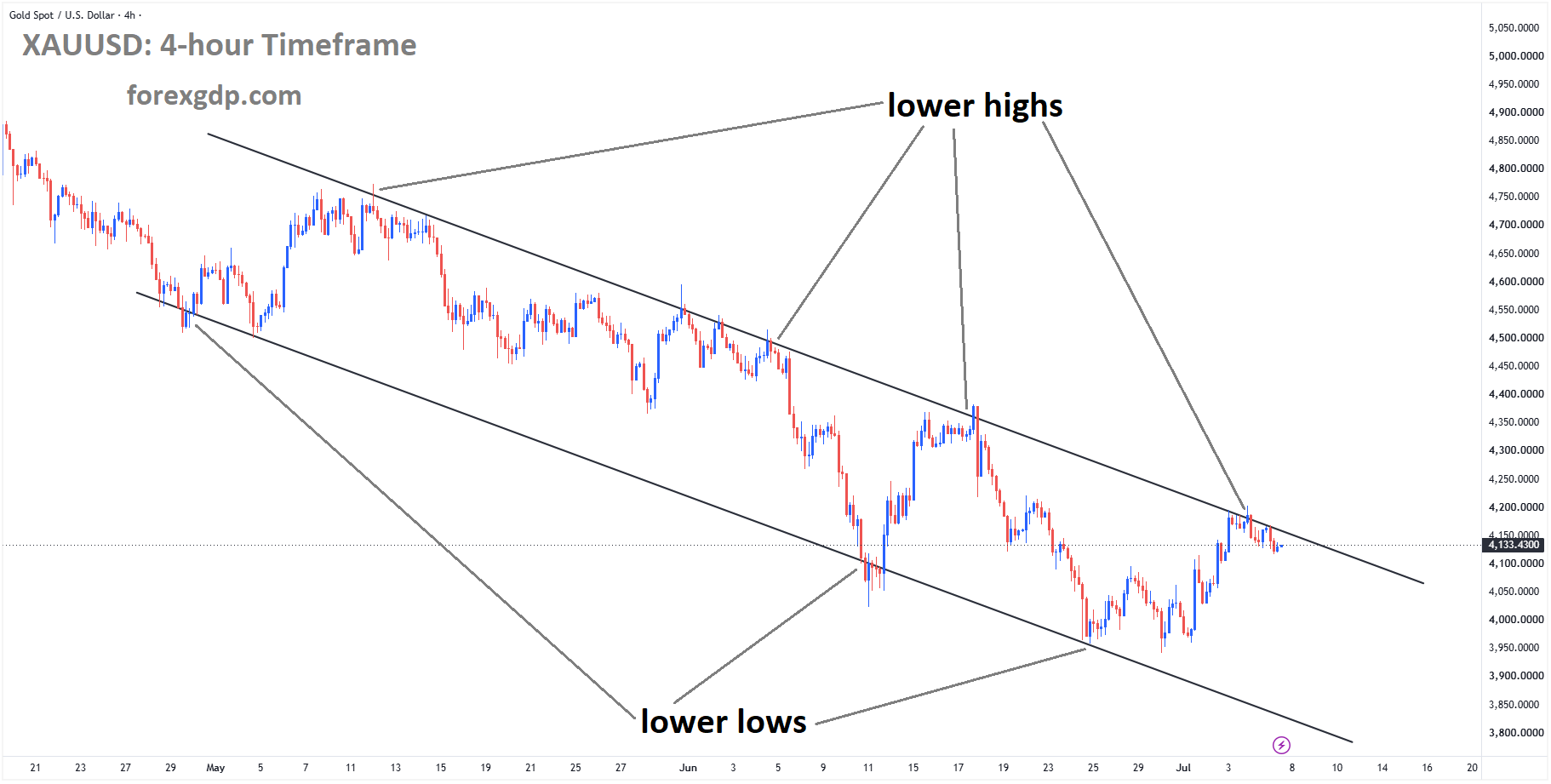
XAUUSD reached the lower high area of the descending channel
Gold started the week under pressure, extending its losses for a second straight session as the US Dollar remained firm. While the precious metal recently enjoyed a short-lived recovery, investors are becoming more cautious as expectations surrounding the US Federal Reserve continue to shape market sentiment.
A stronger US Dollar, steady government bond yields, and uncertainty surrounding future interest rate decisions have all reduced demand for Gold. At the same time, traders are closely watching upcoming economic events and geopolitical developments that could influence the metal’s next major move.
Strong US Dollar Continues to Weigh on Gold
One of the biggest reasons Gold has struggled is the strength of the US Dollar. Since Gold is priced in US Dollars, a stronger currency often makes the metal more expensive for international buyers. As demand slows, Gold tends to lose momentum.
The Dollar has remained supported by confidence in the US economy and expectations that the Federal Reserve will continue taking a careful approach toward monetary policy. As long as the US currency stays firm, Gold may find it difficult to attract strong buying interest.
Federal Reserve Keeps Markets on Alert
The Federal Reserve remains the biggest influence on Gold’s direction. Investors continue to study every statement from central bank officials for hints about future policy decisions.
Although recent US employment data came in weaker than expected, it has not completely changed expectations for the Fed’s long-term strategy. Many policymakers continue to emphasize the importance of controlling inflation before considering major policy changes.
Federal Reserve Governor Christopher Waller recently reaffirmed the central bank’s commitment to bringing inflation back to its long-term target. His comments reminded investors that the fight against inflation is not over, even if some economic data shows signs of slowing.
Interest Rate Expectations Remain Uncertain
Market expectations have shifted slightly in recent days, with many investors believing the Federal Reserve could leave interest rates unchanged at its upcoming meeting. However, uncertainty still surrounds what may happen later in the year.
This uncertainty creates a difficult environment for Gold. Investors generally become more selective when they are unsure about future monetary policy, often choosing to wait for stronger confirmation before making major investment decisions.
As a result, Gold continues to trade without a clear bullish catalyst.
Higher Bond Yields Reduce Gold’s Appeal
Government bond yields have also played an important role in limiting Gold’s recovery.
Unlike bonds or savings accounts, Gold does not generate regular income. When bond yields remain attractive, many investors prefer assets that offer returns instead of holding a non-yielding metal.
This shift in investment preference often limits buying interest in Gold, especially during periods when financial markets expect tighter monetary policy.
Geopolitical Risks Still Offer Some Support
Despite recent weakness, Gold has not completely lost its appeal as a safe-haven asset.
Fresh tensions involving Iran have kept geopolitical risks in focus. Reports suggested that Iran’s Islamic Revolutionary Guard Corps was involved in an attack on a commercial vessel near the Strait of Hormuz, adding another layer of uncertainty to global markets.
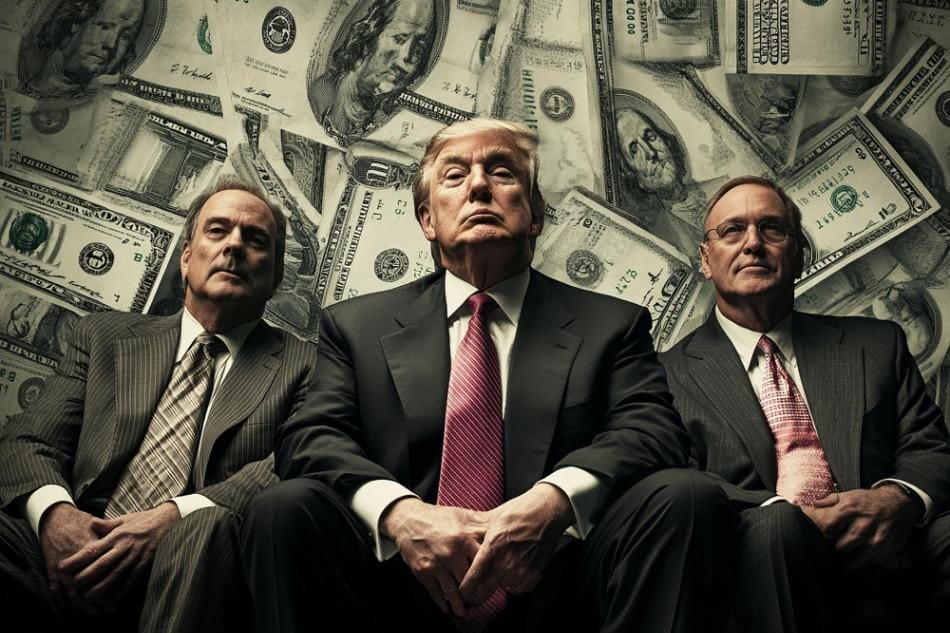
At the same time, negotiations between the United States and Iran remain complicated. Iranian Foreign Minister Abbas Araghchi stated that meaningful discussions would not begin while threats continue, following strong comments from US President Donald Trump regarding future relations with Tehran.
Whenever geopolitical tensions rise, investors often look toward safe-haven assets like Gold. While these developments have provided some support, they have not been strong enough to outweigh the pressure coming from the stronger US Dollar and interest rate expectations.
Investors Await Key Federal Reserve Minutes
Attention is now shifting toward the upcoming release of the Federal Open Market Committee (FOMC) meeting minutes.
The minutes provide a detailed summary of discussions among Federal Reserve officials and often offer valuable insight into how policymakers view inflation, economic growth, and future interest rate decisions.
Investors will carefully examine the document for any signs that the central bank may become more flexible or maintain its cautious stance. Even small changes in language could significantly influence market expectations.
Because of this, many traders are avoiding aggressive positions until the report becomes available.
Investor Confidence in Gold Remains Steady
Although Gold has faced short-term selling pressure, longer-term investor interest remains healthy.
The latest Commitments of Traders (COT) report from the Commodity Futures Trading Commission showed that large speculative investors increased their bullish positions in Gold during the latest reporting week.
This increase suggests that many institutional traders continue to believe Gold has long-term value despite current market challenges.
Growing interest from large investors often reflects confidence that economic uncertainty, inflation concerns, or geopolitical risks could continue supporting Gold over the longer term.
What Could Influence Gold Next?
Several important factors will likely determine Gold’s direction over the coming weeks.
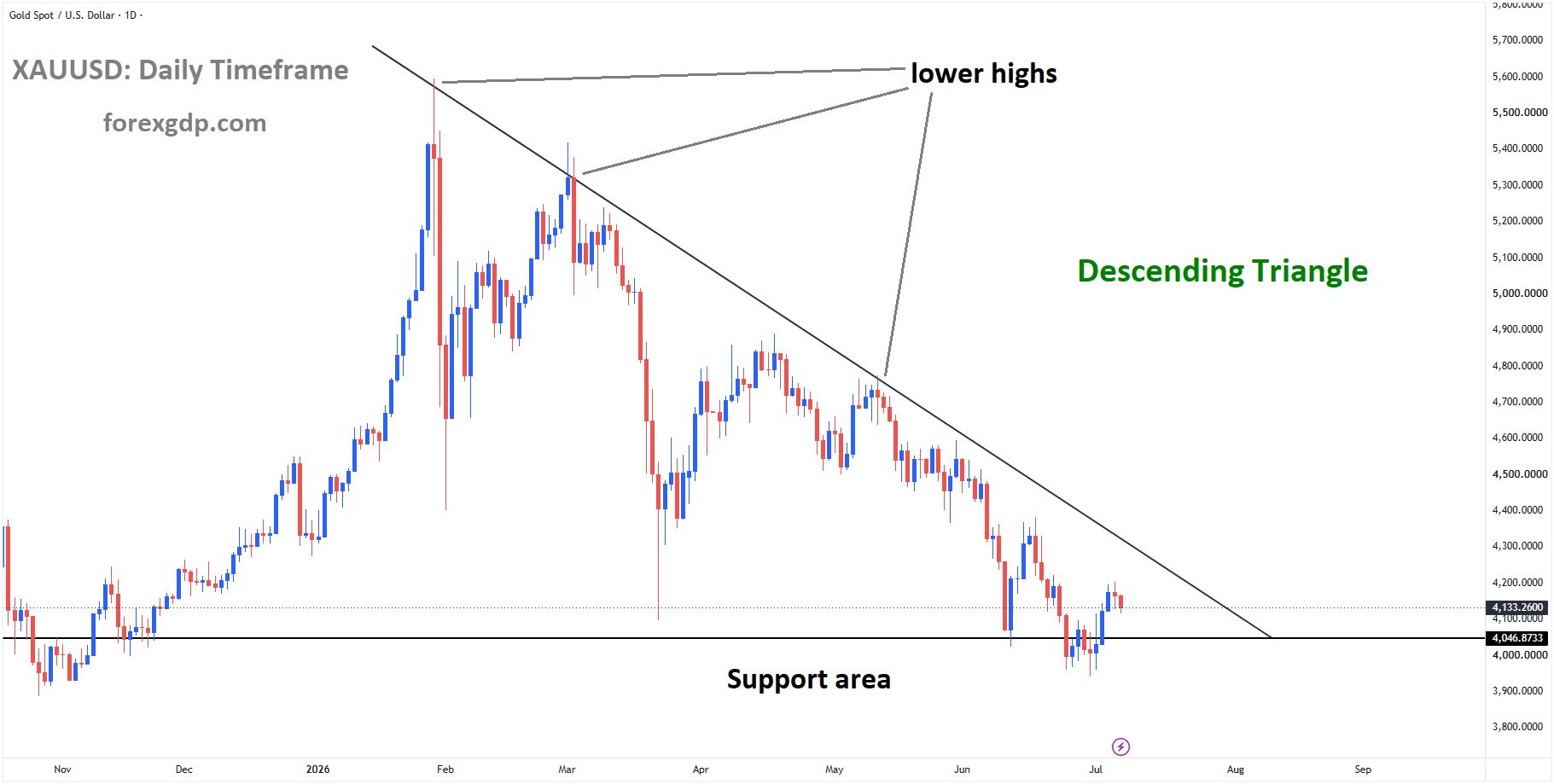
XAUUSD is moving in a descending triangle pattern
Federal Reserve policy remains the primary driver. Any indication that policymakers are becoming more comfortable with inflation could improve investor confidence in Gold. On the other hand, continued emphasis on keeping policy tight may strengthen the US Dollar further and maintain pressure on the precious metal.
Economic reports, inflation trends, employment data, and developments in global political tensions will also remain closely watched. Together, these factors will shape investor sentiment and influence future demand for Gold.
Final Summary
Gold is facing short-term pressure as a stronger US Dollar, elevated bond yields, and uncertainty over Federal Reserve policy reduce investor enthusiasm. While recent economic data has softened expectations for additional tightening, policymakers continue to stress their commitment to controlling inflation.
Meanwhile, geopolitical tensions continue to provide some support for safe-haven demand, preventing a sharper decline in Gold. Investors are now looking ahead to the release of the Federal Reserve’s meeting minutes, hoping for clearer guidance on future monetary policy.
Although short-term volatility may continue, long-term investor interest in Gold remains intact, suggesting that the precious metal could continue playing an important role in diversified investment portfolios as global economic and political uncertainties evolve.