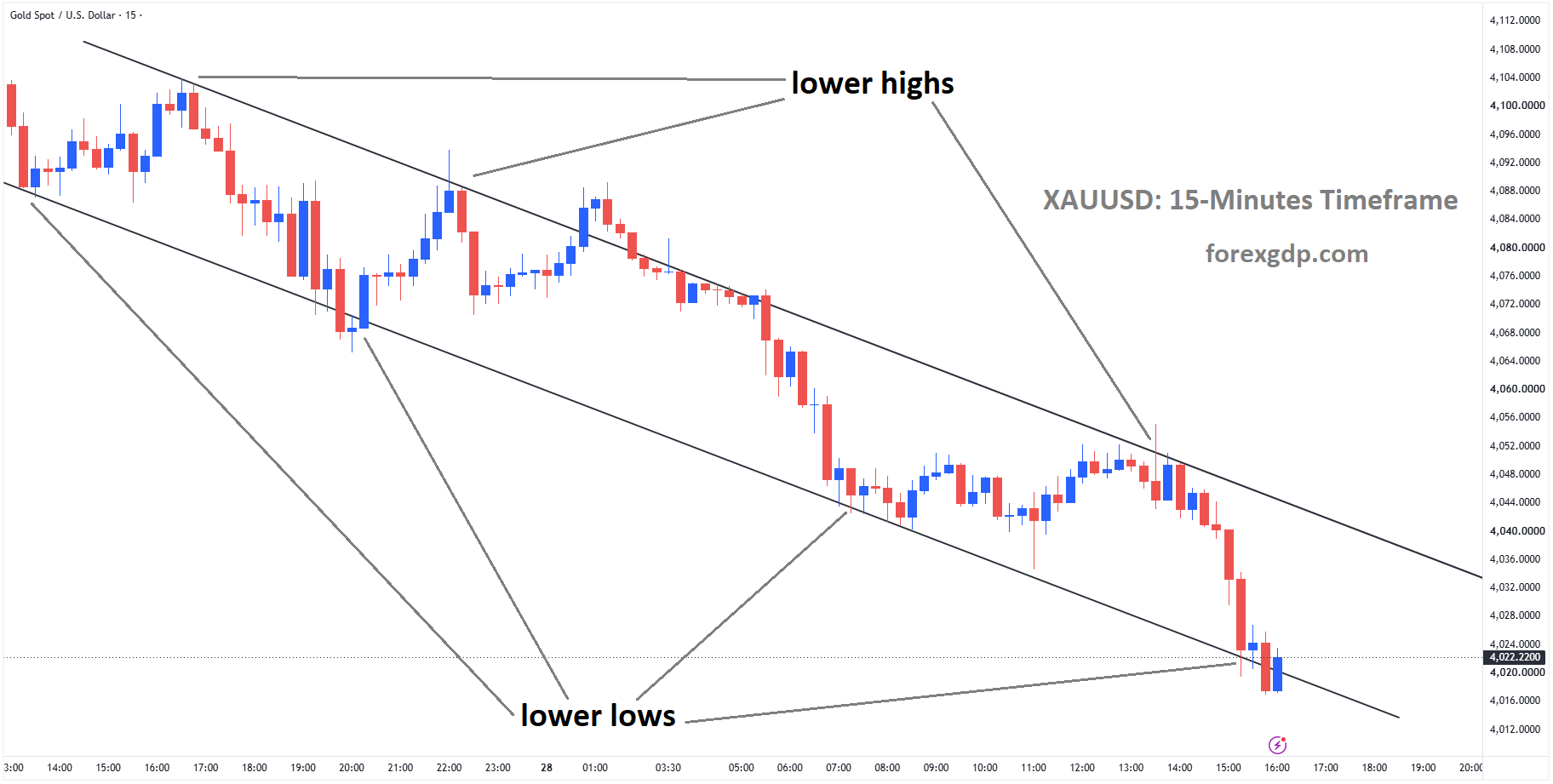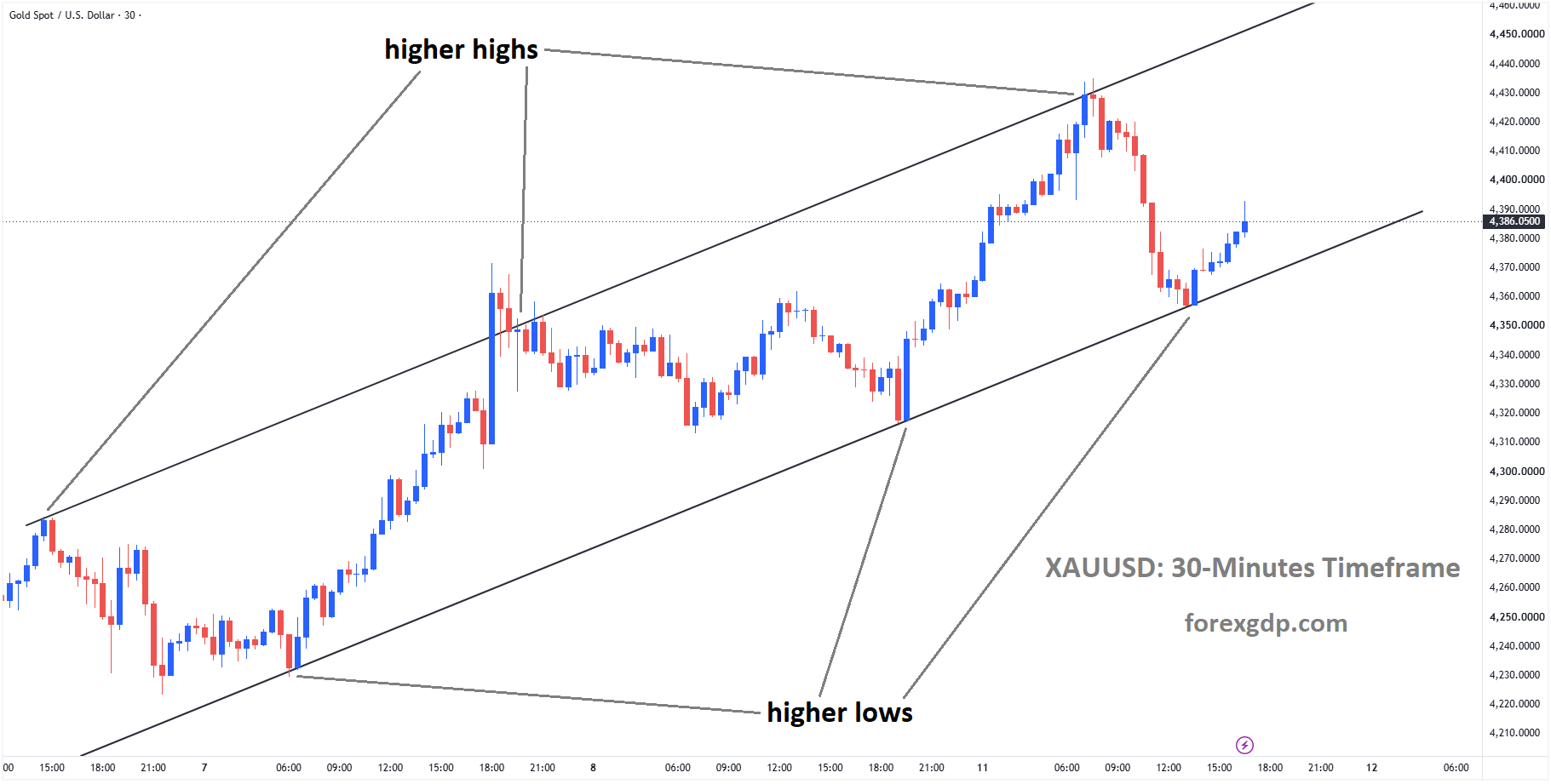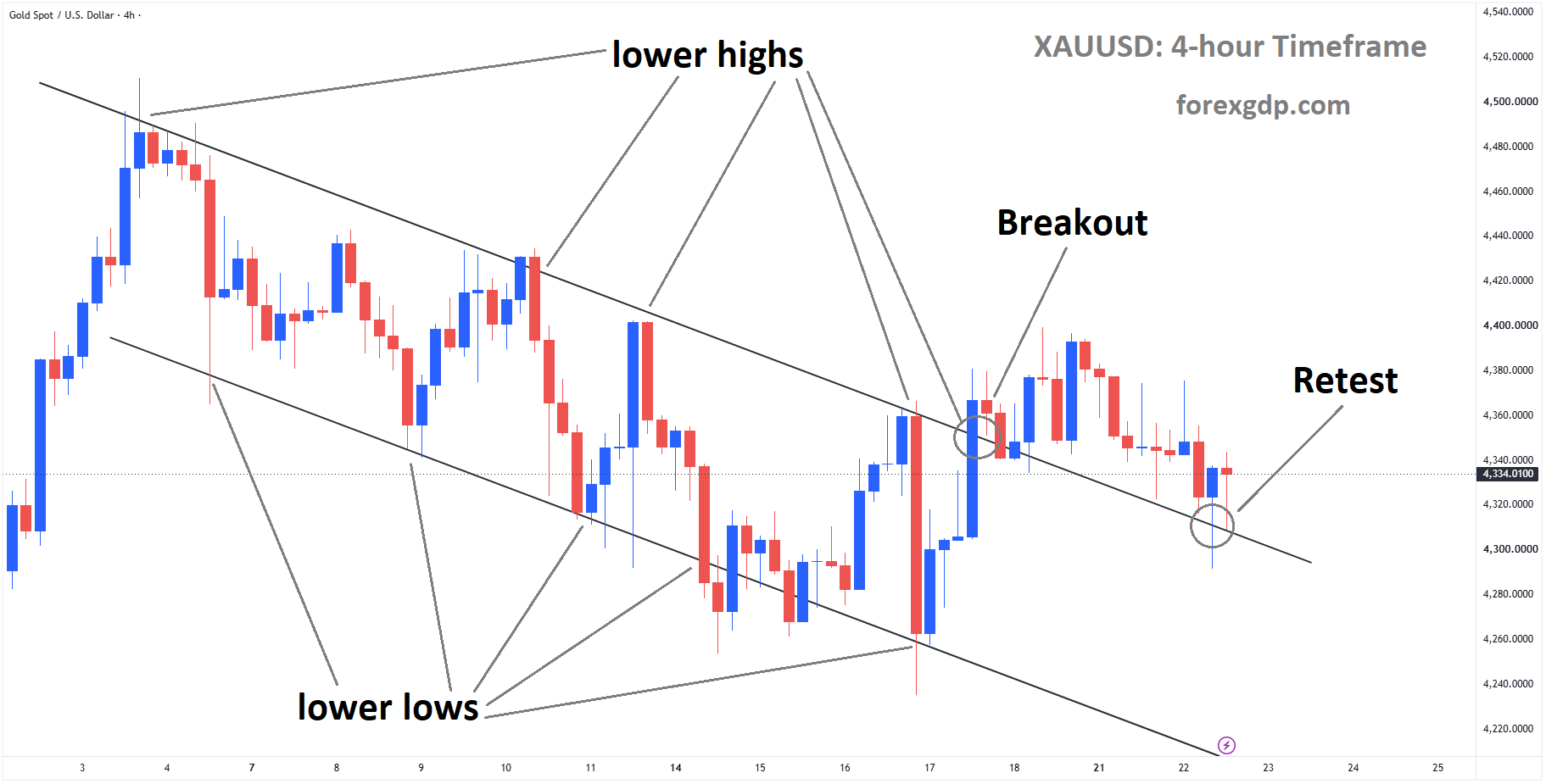
XAUUSD reached the retest area of the broken descending channel
Gold continues to face selling pressure as investors respond to the Federal Reserve’s firm policy outlook, rising inflation concerns, and renewed strength in the US Dollar. Although the precious metal has attracted some buying interest during brief periods of uncertainty, it has struggled to maintain upward momentum.
The Federal Reserve’s continued focus on controlling inflation remains one of the biggest challenges for gold. Policymakers have indicated that further monetary tightening may still be necessary if inflationary pressures remain strong. At the same time, recovering crude oil prices are increasing concerns that inflation could stay elevated for longer.
These factors are supporting US bond yields and strengthening the US Dollar, making gold less attractive to many investors. However, growing tensions in the Middle East are preventing traders from becoming overly confident about a sustained decline in the precious metal.
Federal Reserve’s Firm Position Limits Gold Demand
The Federal Reserve’s latest economic projections have reinforced expectations that US interest rates may remain high for an extended period. Officials have also left the door open for another rate increase if inflation fails to move toward the central bank’s target.
This outlook is important for gold because the metal does not provide interest or regular income. When interest rates and bond yields rise, investors can earn better returns from government bonds and other yield-paying assets. As a result, demand for non-yielding assets such as gold can weaken.
Recent comments from Federal Reserve officials have strengthened this view. Boston Fed President Susan Collins and St. Louis Fed President Alberto Musalem have both supported the possibility of additional policy tightening. Their comments suggest that the central bank remains concerned about fresh inflation risks, particularly those linked to higher commodity and energy costs.
The Federal Reserve is likely to remain cautious before changing its policy direction. Even if economic growth begins to slow, officials may hesitate to reduce borrowing costs while inflation remains a concern. This uncertainty could continue to limit investor interest in gold.
Recovering Oil Prices Revive Inflation Concerns
Crude oil prices have recovered modestly after falling to their weakest level in nearly two weeks. Although the recovery has been limited, it has been enough to revive worries about energy-driven inflation.
Oil affects many areas of the global economy. Higher energy costs can make transportation, manufacturing, food production, and international trade more expensive. Businesses may then pass these additional costs on to consumers, keeping inflation higher than central banks would prefer.
If inflation remains elevated, the Federal Reserve may maintain its restrictive policy for longer or consider further tightening. Expectations of higher interest rates generally support US bond yields, which can strengthen the US Dollar.
A stronger US Dollar often creates pressure on gold because the metal is mainly traded in dollars. When the American currency rises, gold becomes more expensive for buyers using other currencies. This can reduce international demand and encourage traders to move toward dollar-based assets.
The relationship between oil, inflation expectations, bond yields, and the US Dollar is therefore playing an important role in gold’s current weakness. As long as energy prices remain firm and policymakers continue to warn about inflation, gold may find it difficult to attract lasting demand.
Middle East Tensions Keep Investors Cautious

Despite the pressure created by the Federal Reserve and the stronger US Dollar, geopolitical uncertainty continues to offer some protection to gold. Investors are closely monitoring the Middle East as tensions between Iran, the United States, the Iran-backed Houthi group in Yemen, and Saudi Arabia intensify.
Iran’s Islamic Revolutionary Guard Corps has warned that the nature and location of the conflict could change if the United States becomes more involved. Meanwhile, Washington is increasing economic pressure on Iran and has warned that Iranian airlines could face serious restrictions in international aviation.
Fighting involving the Houthi group and Saudi Arabia has added another layer of uncertainty. Any escalation could affect important shipping routes, oil production, or energy supplies. Such developments could push crude oil prices higher and increase global inflation concerns.
This situation creates a complicated environment for gold. Geopolitical tension usually encourages demand for safe-haven assets. However, if the same tension causes oil prices and inflation expectations to rise, it may also encourage the Federal Reserve to maintain higher interest rates.
Therefore, gold could receive support from fear and uncertainty while facing pressure from the economic consequences of the conflict. Traders are waiting to see which of these forces becomes more influential.
Investors Await Fresh Global Developments
Market participants are avoiding large directional positions while waiting for more information about the Middle East crisis. Developments related to Iran, the United States, Yemen, and Saudi Arabia could quickly change investor sentiment.
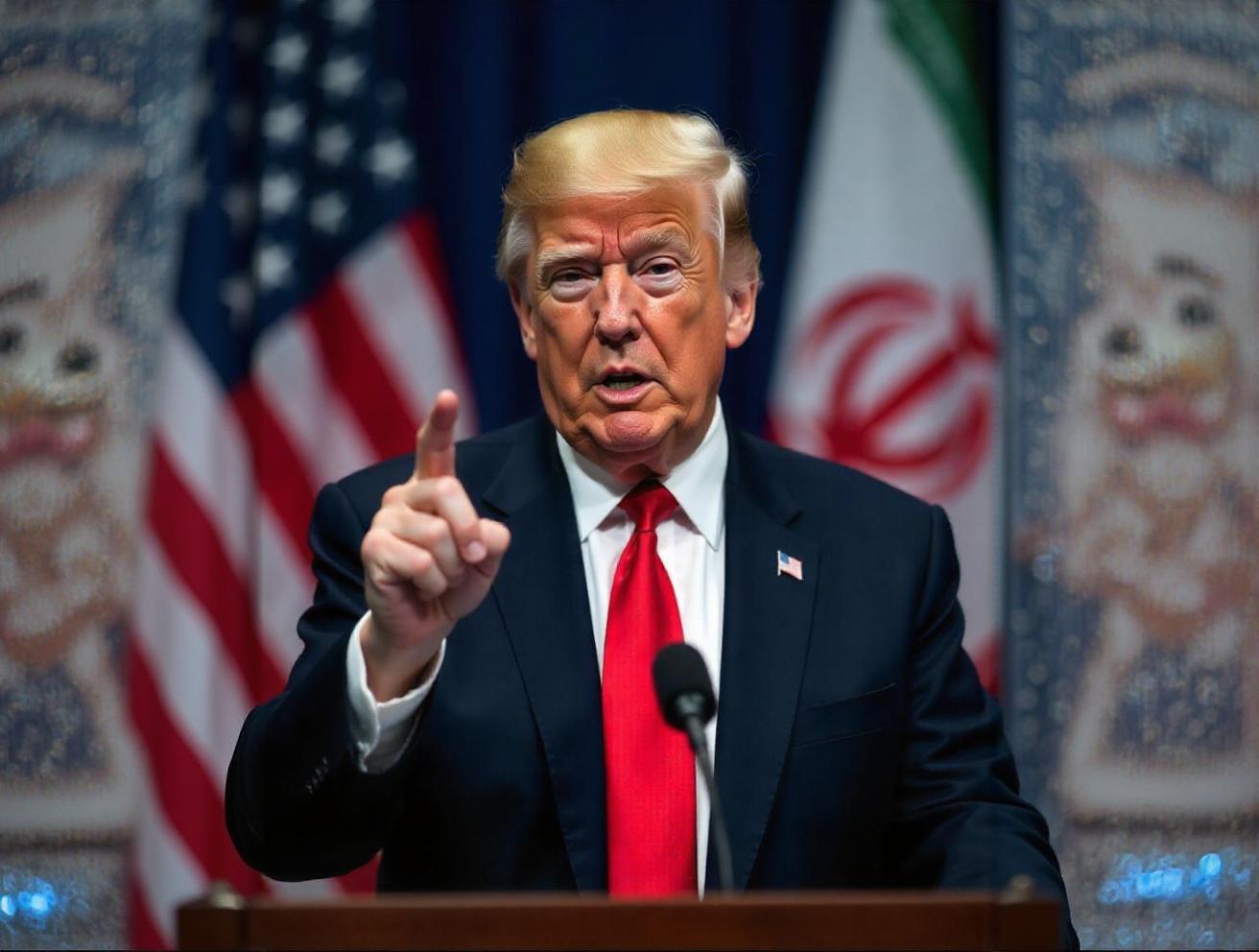
Attention is also turning toward an important meeting between US President Donald Trump and Chinese President Xi Jinping. Any progress in talks between the world’s two largest economies could improve confidence in the global outlook. On the other hand, signs of renewed disagreement could increase market uncertainty and support demand for defensive assets.
The relationship between the United States and China influences global trade, business investment, supply chains, and economic growth. Because of this, the meeting may affect demand for both the US Dollar and gold.
Investors will also follow speeches from influential members of the Federal Open Market Committee. Their comments may offer more details about the future direction of US interest rates. If officials continue to emphasize inflation risks and the need for tighter policy, the US Dollar could remain supported. A softer tone, however, may provide some relief to gold.
Competing Forces Shape the Outlook for Gold
Gold is currently caught between two powerful forces. On one side, the Federal Reserve’s firm policy stance, higher bond yields, rising oil-related inflation fears, and a strong US Dollar are creating selling pressure.
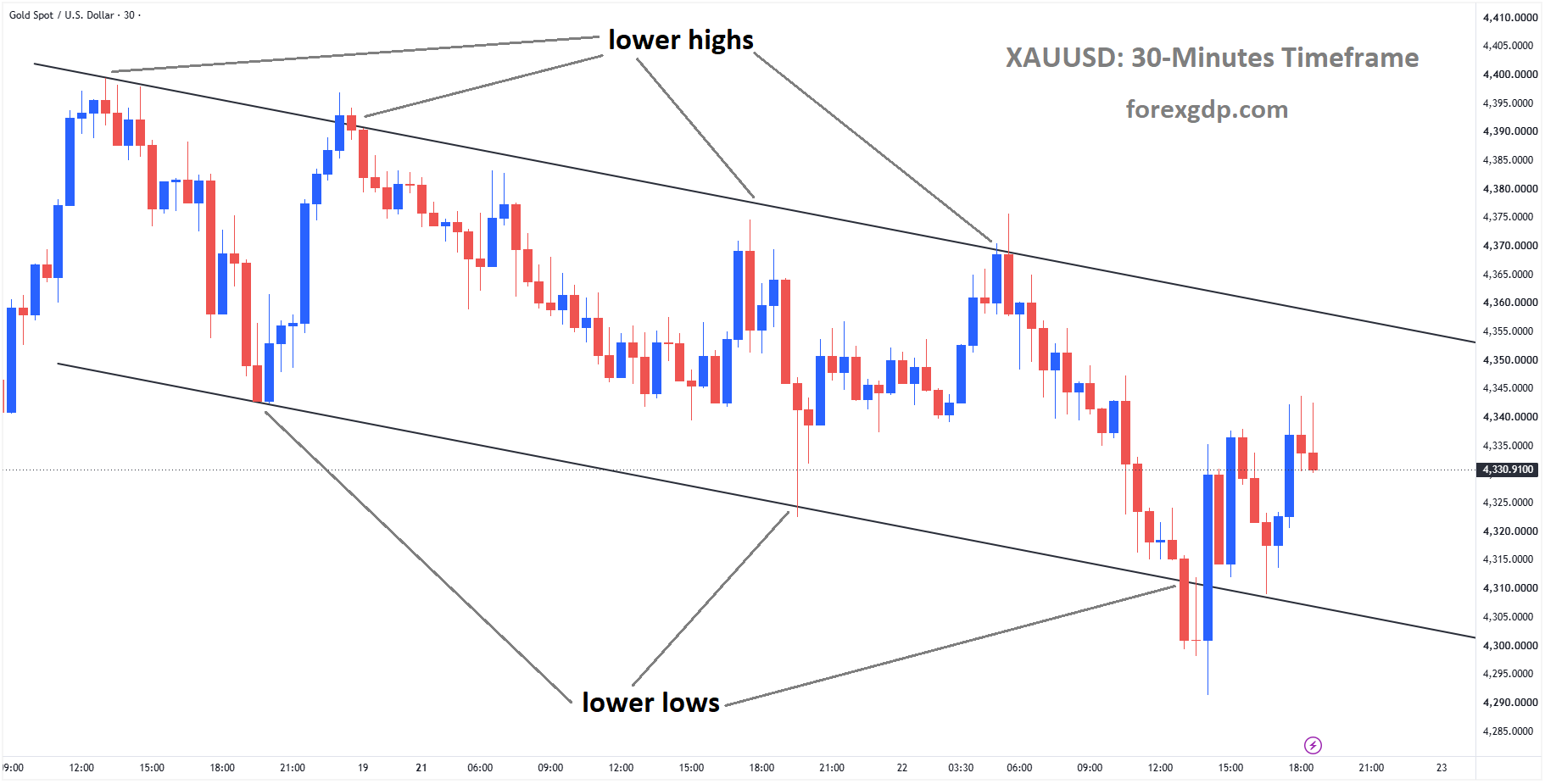
XAUUSD is moving in a descending channel
On the other side, geopolitical uncertainty and the possibility of a wider conflict in the Middle East are encouraging some investors to maintain exposure to safe-haven assets. These concerns are limiting the extent of gold’s weakness, even though they have not yet produced a lasting recovery.
Much will depend on how energy prices behave and whether the conflict begins to affect global oil supplies. A sharp increase in oil prices could strengthen inflation fears and keep US monetary policy restrictive. However, a serious military escalation could also trigger stronger safe-haven demand for gold.
This mixed environment may lead to cautious trading until investors receive clearer signals from geopolitical developments, Federal Reserve officials, and the upcoming US-China meeting.
Final Summary
Gold remains under pressure as the Federal Reserve maintains a firm stance on inflation and interest rates. Recovering crude oil prices have added to inflation concerns, supported US bond yields, and helped the US Dollar remain strong. These conditions have reduced the appeal of the non-yielding precious metal.
However, uncertainty surrounding the Middle East is limiting aggressive selling. Tensions involving Iran, the United States, the Houthi group, and Saudi Arabia could disrupt energy markets and increase demand for safe-haven assets.
Investors are also watching the meeting between Donald Trump and Xi Jinping, along with upcoming comments from Federal Reserve officials. Until these events provide clearer direction, gold is likely to remain influenced by the balance between restrictive US monetary policy and growing geopolitical risks.