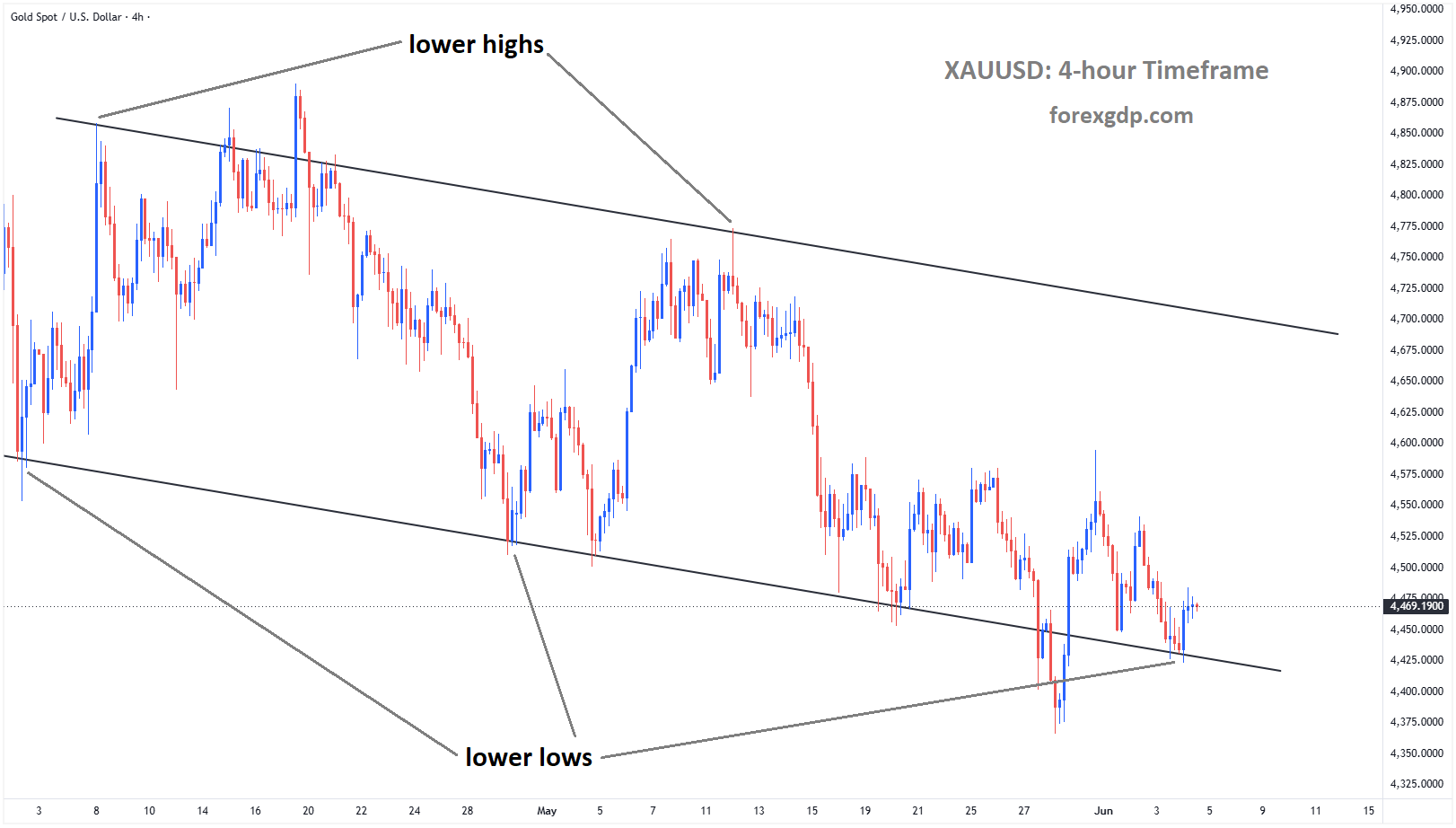

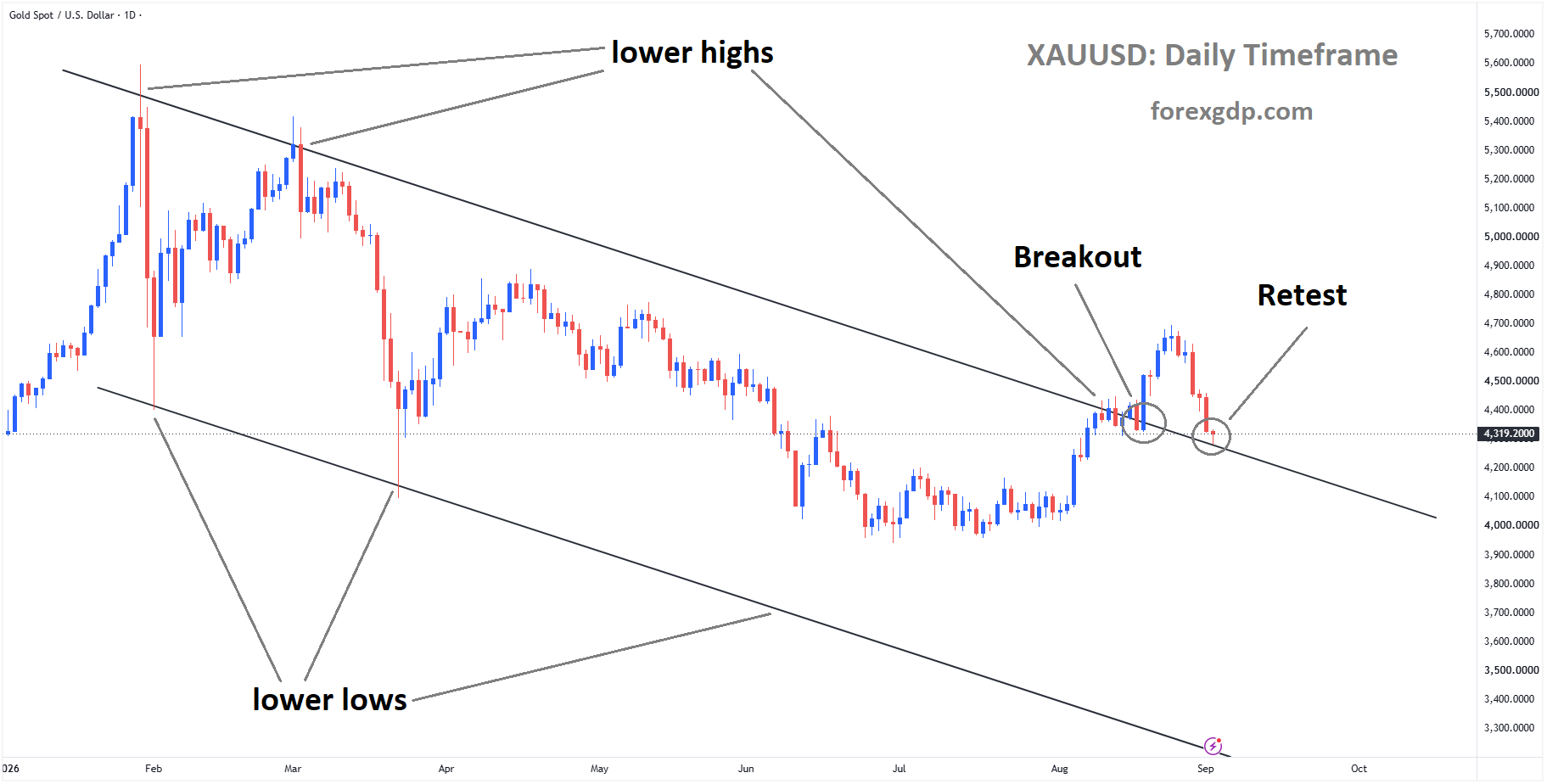
XAUUSD reached the retest area of the broken descending channel
Gold recovered some of its recent losses as buyers returned after a sharp sell-off. A slight decline in US Treasury yields gave the precious metal room to breathe, but the recovery remained cautious. Investors are still dealing with rising energy costs, stubborn inflation fears and uncertainty about the next move from the US Federal Reserve.
Normally, geopolitical conflict and inflation concerns increase demand for gold. This time, however, the situation is more complicated. Higher oil prices could keep inflation elevated, encouraging central banks to maintain strict monetary policies. That possibility is supporting bond yields and the US Dollar, both of which create pressure on gold.
Gold Finds Buyers After a Heavy Decline
Gold attracted fresh buying interest after suffering a steep fall in the previous session. Some investors viewed the decline as an opportunity to enter the market at a more attractive point. A modest easing in Treasury yields also helped reduce part of the pressure on the metal.
However, the recovery does not necessarily mean that market confidence has returned. Gold remains trapped between two powerful forces. Geopolitical uncertainty encourages safe-haven buying, while expectations of tighter monetary policy make the metal less appealing.
This conflict creates an uncomfortable environment for traders. Gold may receive short-term support whenever fear rises, but it can quickly lose momentum when investors focus on interest rates and the US Dollar. As a result, market moves may remain unstable until there is greater clarity about inflation and Federal Reserve policy.
Middle East Tensions Push Energy Costs Higher
The return of hostilities in the Middle East has increased concerns about global energy supplies. After several quieter weeks, renewed tension has reminded investors that the situation remains fragile. Any threat to oil production, shipping routes or regional stability can quickly lift energy costs.
Higher oil prices matter because energy affects almost every part of the economy. Businesses need fuel to manufacture and transport products, while consumers pay more for travel, heating and electricity. When these costs rise, companies may pass the extra expense on to customers.
This can keep inflation elevated even when central banks are trying to bring it under control. It is like trying to put out a fire while someone continues to add small pieces of wood. Inflation may slow temporarily, but another surge in energy prices can make the problem difficult to contain.
Why Expensive Oil Complicates the Inflation Outlook

Major central banks have spent a long time attempting to control inflation. Rising oil prices threaten that progress because they can increase costs throughout the economy. Policymakers may therefore feel less comfortable reducing interest rates.
This is where gold faces a difficult situation. The metal is traditionally viewed as protection against inflation, so rising price pressures can increase demand. Yet the same inflation fears can force central banks to keep borrowing costs high or even raise them further.
When investors can earn better returns from interest-bearing assets, holding gold becomes less attractive because the metal pays no interest. Therefore, inflation does not always help gold immediately. The reaction depends on how central banks are expected to respond.
Treasury Yields Remain a Major Challenge for Gold
US Treasury yields eased slightly, offering some relief to gold buyers. Even so, borrowing costs remain close to their recent highs, which continues to limit enthusiasm for the precious metal.
Elevated yields increase the appeal of government bonds because they offer investors regular income. Gold, by comparison, depends mainly on changes in its value. When safe government debt provides attractive returns, some investors may prefer bonds over a non-yielding asset.
High yields can also raise borrowing costs for households and businesses. Mortgages, business loans and other forms of credit become more expensive, which can slow economic activity. While weaker growth could eventually support gold, the immediate effect of high yields is often negative for the metal.
The bond market is therefore playing an important role in gold’s direction. A brief fall in yields may encourage a recovery, but lasting strength could remain difficult unless borrowing costs decline more clearly.
Federal Reserve Expectations Create More Pressure
Investors are becoming increasingly concerned that the Federal Reserve may take a tougher approach to inflation. Recent comments from Fed leadership have encouraged speculation that another interest-rate increase could arrive sooner than previously expected.
A more aggressive Federal Reserve is generally negative for gold. Higher rates increase the opportunity cost of holding the metal, while also attracting international money into US financial assets. That flow can strengthen the US Dollar and place additional pressure on gold.
The market is particularly sensitive to changes in policy expectations. Even if the Federal Reserve has not taken action, the belief that rates may rise can influence currencies, bonds and commodities immediately. Financial markets often react to tomorrow’s risk before tomorrow arrives.
Still, policymakers must consider more than inflation. They also need to monitor employment, consumer spending and economic growth. If the economy begins to lose momentum, the Federal Reserve may become less willing to tighten policy further.
A Stronger US Dollar Limits Gold’s Recovery
The US Dollar has benefited from expectations of higher interest rates and increased demand for safety. During periods of global uncertainty, investors often move money toward the Dollar because of its central role in international trade and finance.
This creates another obstacle for gold. Since the metal is mainly traded in US Dollars, a stronger Greenback makes it more expensive for buyers using other currencies. That can weaken international demand and restrict gold’s ability to recover.
The Dollar’s strength is not unlimited, however. Recent US private-sector employment figures were weaker than economists expected. Softer hiring may suggest that businesses are becoming more cautious as high borrowing costs and economic uncertainty weigh on confidence.
Weak labour data creates a difficult decision for the Federal Reserve. Persistent inflation could support higher interest rates, but a deteriorating job market would argue for greater caution. This tension may prevent investors from making aggressive decisions before receiving more employment information.
Employment Data Could Change Market Expectations
Attention is now shifting toward the upcoming US employment report. The figures will provide a broader view of hiring conditions and could strongly influence expectations surrounding Federal Reserve policy.
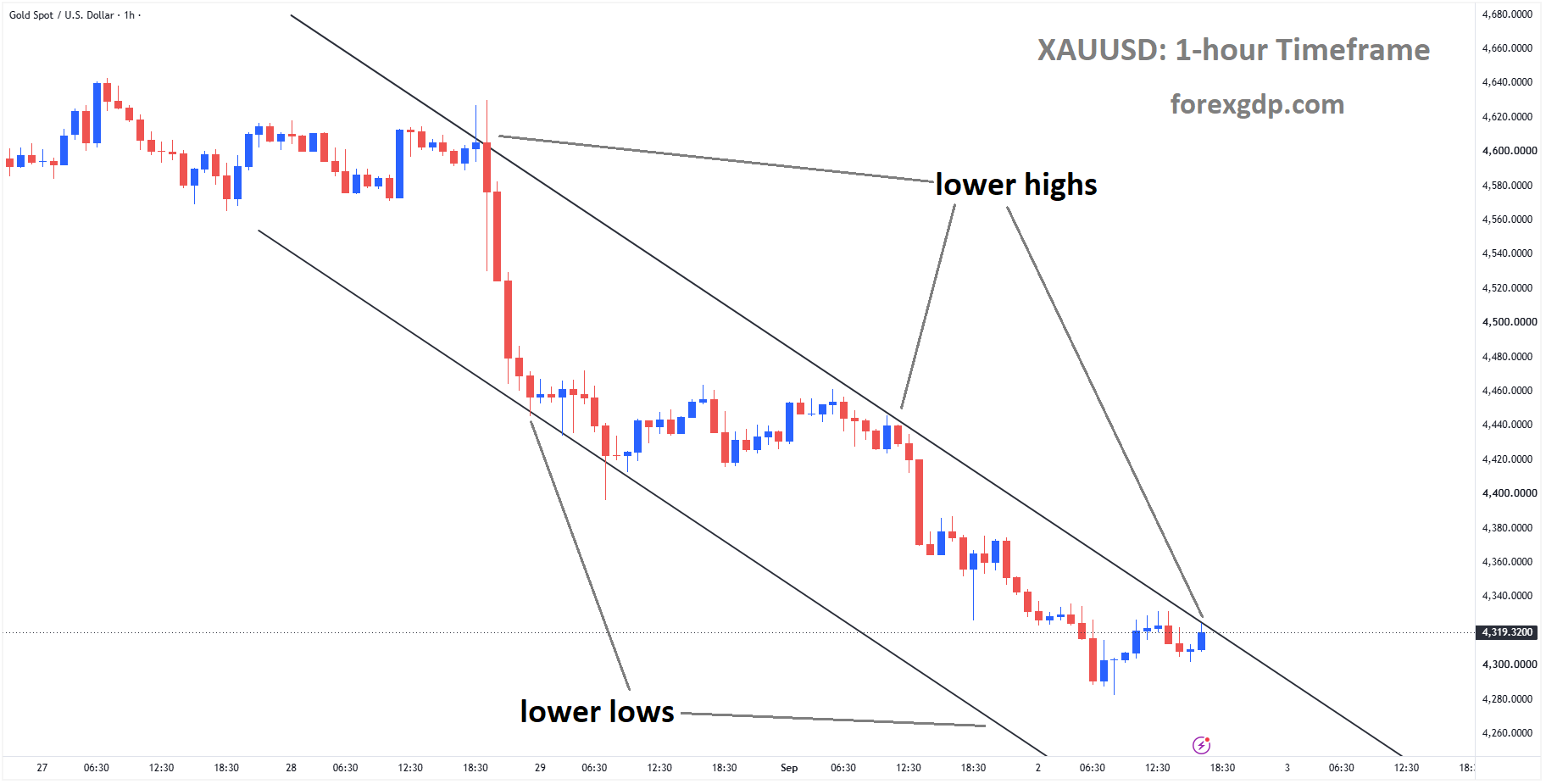
XAUUSD reached the lower high area of the descending channel
A resilient labour market may give policymakers more freedom to maintain a strict stance against inflation. Such an outcome could support the Dollar and Treasury yields, creating further pressure on gold.
On the other hand, clear signs of weakness in employment may reduce expectations of tighter monetary policy. That could push yields lower, slow the Dollar’s advance and improve demand for the precious metal.
Until the report is released, many market participants may avoid taking large positions. Gold could remain vulnerable, but sellers may hesitate to become overly confident when an important economic release has the power to change sentiment quickly.
Final Summary
Gold has recovered part of its recent decline, helped by bargain buying and a modest easing in US Treasury yields. However, the broader environment remains challenging. Rising oil costs, renewed Middle East tensions and persistent inflation fears are increasing uncertainty about future interest-rate decisions.
Although geopolitical risk normally supports gold, expectations of tighter Federal Reserve policy, elevated bond yields and a firm US Dollar are limiting its appeal. Weak employment figures have introduced some caution, but they have not completely changed the outlook.
The next major US labour market report may provide a clearer direction. Until then, gold is likely to remain caught between safe-haven demand and the heavy pressure created by high interest rates. Investors may therefore approach the market carefully rather than treating the latest recovery as proof of a lasting change.