XAUUSD is rebounding from the retest area of the broken Ascending channel
Gold has started to attract some interest again after slipping from its fresh record high earlier this week. On Thursday, the precious metal bounced from the $4,773–$4,772 area, showing that many traders still see value in buying when prices pull back. However, the rebound has not been strong enough to push gold back to the all-time peak it touched on Wednesday.
At the heart of gold’s latest move is a familiar mix of forces: the direction of the US dollar, shifting expectations about US interest rates, and changing levels of global fear and uncertainty. Right now, gold is being pulled in two different directions. On one side, softer demand for the dollar is helping gold stay supported. On the other side, improving global confidence is reducing the need for safe-haven assets like gold.
With major US economic data on the way, many investors are choosing to stay patient instead of making big bets too early.
Why the US Dollar Matters So Much for Gold
Gold and the US dollar often move in opposite directions. When the dollar weakens, gold tends to look more attractive to global buyers because it becomes cheaper in other currencies. When the dollar strengthens, gold can struggle because it becomes more expensive for non-US investors.
This week, the dollar has had a hard time building momentum. A major reason is the market’s growing belief that the US Federal Reserve could cut interest rates again in the future, including the possibility of two more rate cuts being priced in for 2026.
Even though 2026 sounds far away, financial markets are forward-looking. Traders don’t wait until something happens—they position themselves based on what they think might happen next. When expectations shift toward lower rates, the dollar can lose some strength.
And when the dollar is not climbing, gold gets a bit of breathing room.
Rate Cut Expectations Support Gold’s Appeal
Gold is known as a “non-yielding” asset, meaning it doesn’t pay interest like a savings account or a government bond. That’s why gold usually performs better when interest rates are low or expected to fall.
When rates are high, investors can earn better returns elsewhere, and gold may look less appealing. But when the market believes rates could come down over time, gold becomes more competitive again—even if prices are already high.
That’s one of the reasons gold has remained supported even after pulling back from its recent record.
Risk-On Mood Returns and Reduces Safe-Haven Demand
While interest rate expectations are helping gold, global politics and improving market confidence are working against it.
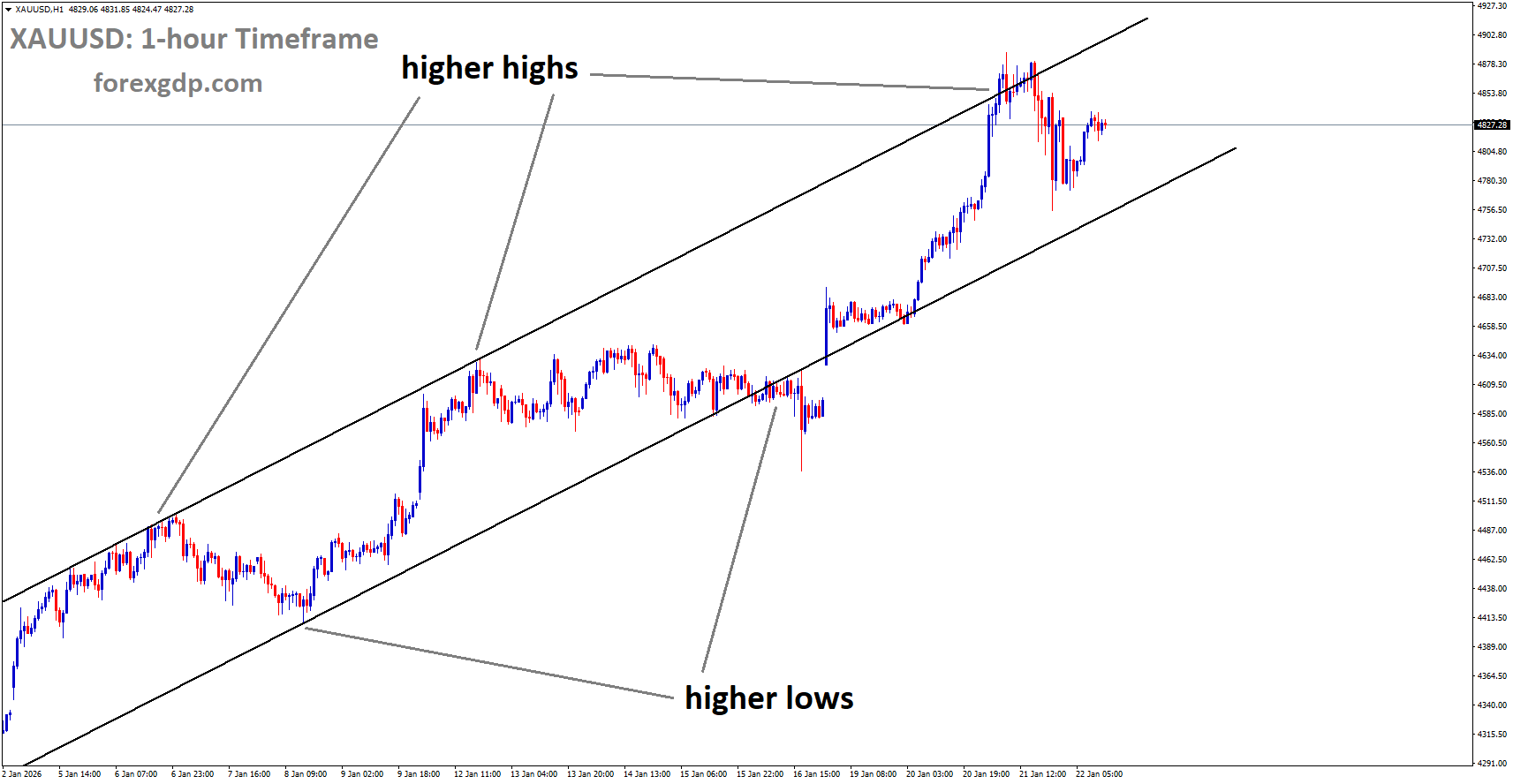
XAUUSD is moving in an uptrend channel
Gold often rises when people feel uncertain or nervous about the world. It’s considered a classic “safe-haven” asset—something investors buy when they want protection. But when fear fades and confidence returns, gold can lose some of that emergency demand.
That’s exactly what seems to be happening now.
Recent comments from US President Donald Trump helped ease concerns about new tensions with Europe. Trump stepped back from his earlier threat to impose additional tariffs on eight European nations. He also ruled out using force to seize Greenland, which had been a source of uncertainty in global markets.
These updates encouraged a more positive, “risk-on” mood. In simple terms, investors started feeling more comfortable taking risks again, which reduced the need to hold gold for safety.
A Shift in Global Sentiment Can Cap Gold’s Gains
When markets turn optimistic, money often flows into assets like stocks and other growth-focused investments. In those moments, gold may still hold value, but it can struggle to rise quickly because fewer people feel the urgent need to buy it.
This doesn’t mean gold suddenly becomes unpopular. It simply means the market no longer has the same level of fear pushing prices higher.
Gold can still move up for other reasons, such as a weaker dollar or falling rate expectations, but the lack of strong safe-haven demand can limit how far it climbs in the short term.
Political Headlines Are Also Influencing the Market
Gold is especially sensitive to big political developments, and right now there are several global stories shaping investor behavior.
One of the most important is the ongoing situation involving Russia and Ukraine. Reports suggest there is progress in peace-related discussions, including talk of a US-led plan and another meeting scheduled between Russian President Vladimir Putin and US Special Envoy Steve Witkoff.
Trump also suggested that Ukraine’s President Volodymyr Zelensky and Putin may be reaching a point where an agreement to end the war could be possible.
Any sign of reduced conflict tends to calm markets. And when markets feel calmer, gold often loses part of its safe-haven advantage.
That doesn’t mean everything is suddenly resolved. But even the possibility of progress can shift investor expectations, which then impacts demand for defensive assets like gold.
The “Sell America” Trade Begins to Reverse
Another interesting theme in the background is the idea that some investors had been pulling away from US assets due to political concerns. That trend is sometimes described as a “Sell America” trade.
As tensions ease and the outlook becomes more stable, some of those flows can reverse. This can support the US dollar, which then becomes a headwind for gold.
In other words, when confidence in US stability improves, the dollar may strengthen, and gold may lose part of its support.
Traders Are Waiting for Key US Inflation Data
Even with all the global headlines, one of the biggest short-term drivers for gold is still the upcoming release of the US Personal Consumption Expenditures (PCE) Price Index.
This report is closely watched because it’s the inflation measure the Federal Reserve pays the most attention to. It can influence how the Fed thinks about future rate decisions.
Gold traders are paying attention because inflation data can shift interest rate expectations quickly. If the report suggests inflation is cooling faster than expected, it may increase confidence in future rate cuts, which could weaken the dollar and support gold. If inflation comes in hotter, the market may reduce rate-cut expectations, lifting the dollar and putting pressure on gold.
Along with the PCE report, investors are also watching the final US Q3 GDP report, which can provide more insight into how strong the US economy really is.
Why the PCE Report Is So Important for Gold Right Now
At the moment, gold is in a delicate position. It has pulled back from a record high but still holds strong support from buyers who want to enter on dips. That creates a kind of “wait and see” environment where the next major data point could determine the direction.
Many traders don’t want to make aggressive moves before a report that could reshape expectations in a matter of minutes. That’s why gold’s rebound has looked somewhat cautious rather than explosive.
What the Federal Reserve Outlook Looks Like Today
While markets are still pricing in the chance of more rate cuts in 2026, many economists are less certain.
According to a Reuters poll, most economists believe the Federal Reserve will likely hold interest rates steady through the end of this quarter, and possibly for longer. Some even expect rates could remain unchanged until Fed Chair Jerome Powell’s tenure ends in May.
That gap between economist expectations and market pricing is important. It means the market could be vulnerable to sudden adjustments depending on what new data shows.
There is also another layer of uncertainty: concerns about political influence over the Fed’s independence. If investors believe the Fed could face pressure in its decision-making, it can add complexity to how the dollar behaves.
This uncertainty is one reason the dollar’s upside has been limited, even when it tries to recover.
What to Watch Next for Gold
Gold is still trading below its record high, but the overall trend remains supported by several key forces. Buyers are stepping in on pullbacks, the dollar is not gaining strong momentum, and the market is still open to the idea of future rate cuts.
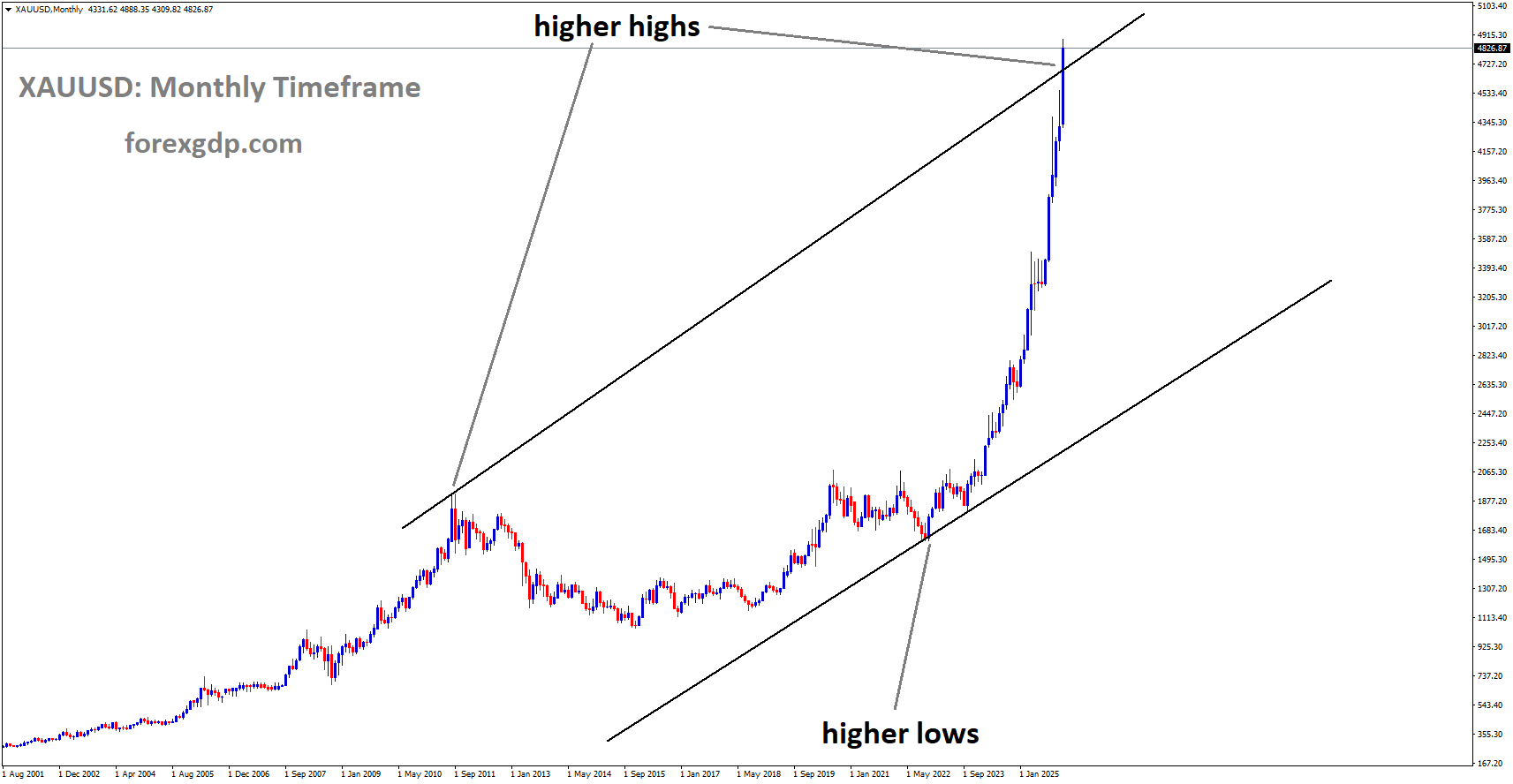
XAUUSD is moving in an uptrend channel, andthe market has reached a higher high area of the channel
At the same time, gold is no longer getting as much help from fear-driven buying. Global sentiment has improved, and easing political tensions are encouraging more risk-taking.
In the near term, gold’s direction may depend heavily on the next round of US data and whether it shifts the outlook for inflation and interest rates.
Final Summary
Gold is attracting dip-buyers after pulling back from its record high, but it remains under pressure from improving global confidence. Expectations for future Federal Reserve rate cuts are keeping the US dollar from rising too strongly, which supports gold. However, reduced safe-haven demand—helped by easing tensions around tariffs, Greenland, and Ukraine—may limit gold’s upside for now. With the US PCE inflation report and final GDP data ahead, traders are staying cautious as they wait for clearer direction.