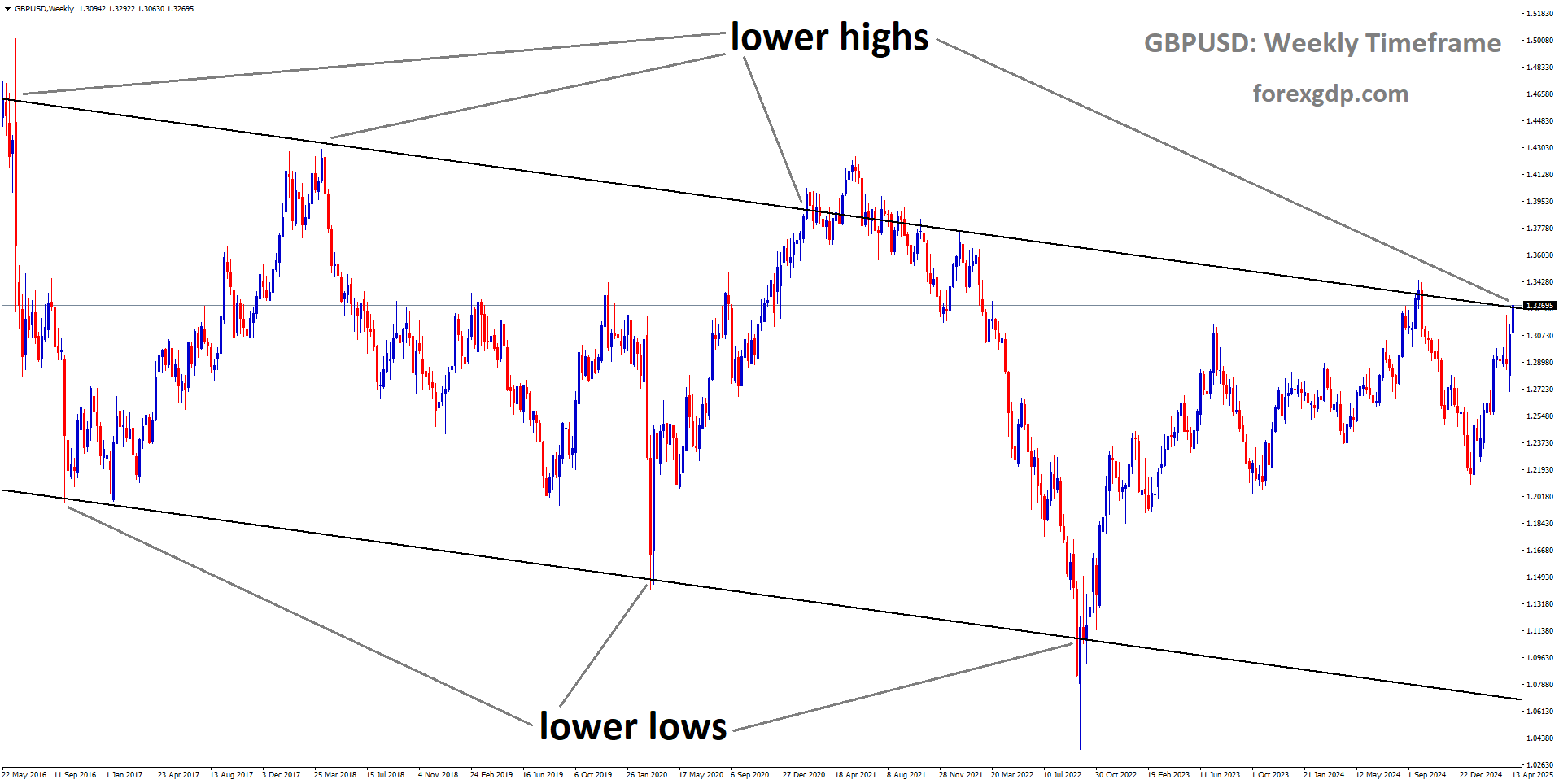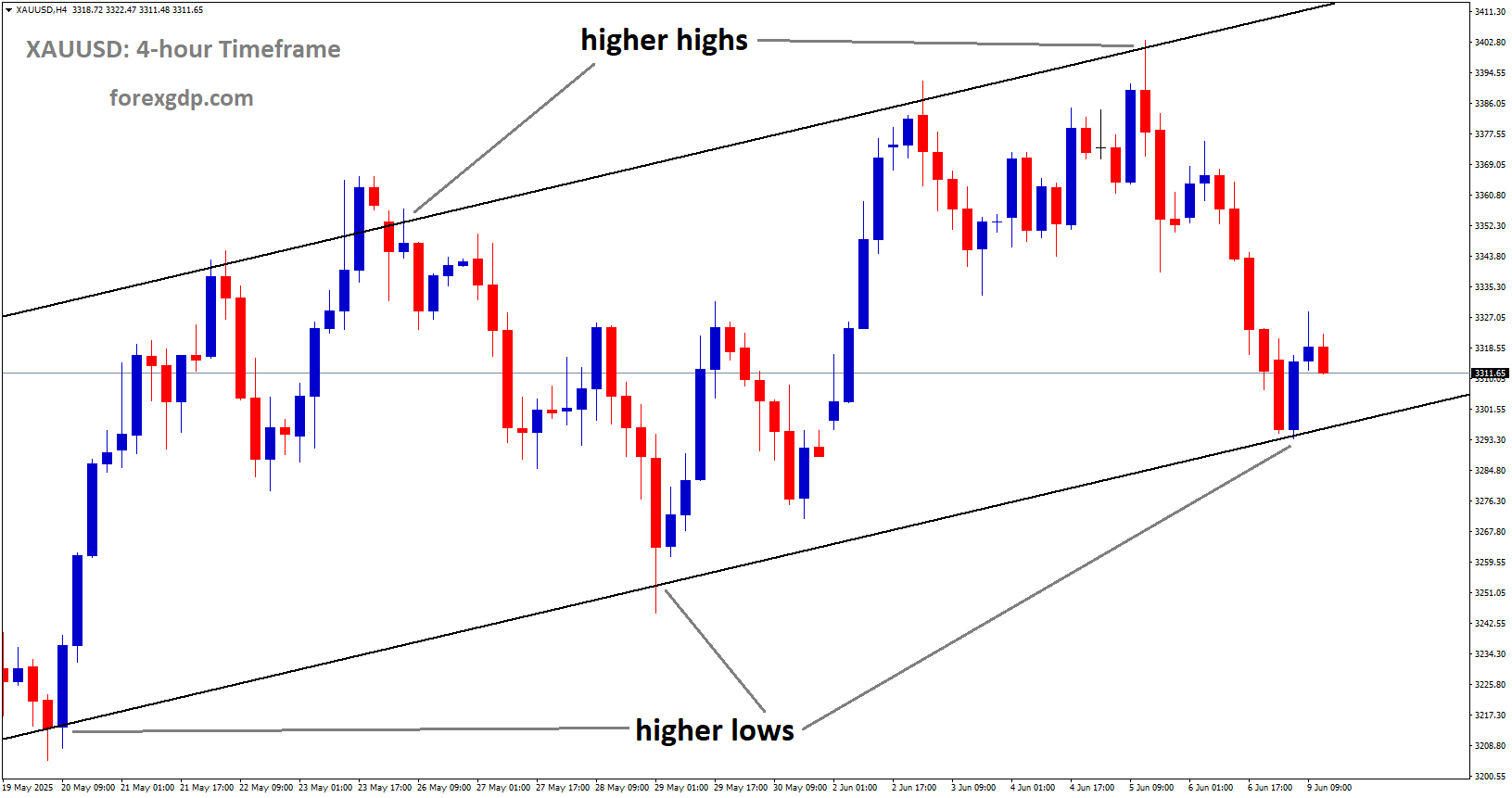


XAUUSD is moving in an uptrend channel, and the market has reached a higher high area of the channel
Gold moved higher on Friday, trading above the $5,000 mark as rising tensions between the United States and Iran pushed investors toward safer assets. After staying mostly quiet a day earlier, the precious metal gained fresh strength as geopolitical concerns returned to the spotlight.
At the time of writing, gold is hovering near $5,035. This marks a strong recovery after it slipped earlier in the week to a level close to $4,842, which was its lowest point in nearly two weeks. The quick rebound suggests that buyers stepped back into the market once uncertainty increased.
US-Iran Tensions Drive Investors Toward Safety
One of the main reasons behind gold’s recent rise is the growing tension between the United States and Iran. Political and military developments in the Middle East have made global investors nervous, and when uncertainty rises, gold often becomes more attractive.
On Thursday, US President Donald Trump said he expects clarity on a new nuclear deal with Iran within the next 10 to 15 days. His statement hinted that the situation could move in one of two directions — either a new agreement is reached, or tensions could worsen. Such comments often increase market anxiety because they suggest possible political or military escalation.
Adding to concerns, the United States has continued to strengthen its military presence in the Middle East. At the same time, Iran and Russia carried out joint naval drills in the Gulf of Oman. This show of cooperation between Tehran and Moscow has drawn attention from global observers.
Iran’s representative at the United Nations responded strongly, saying that Tehran would react “decisively” to any military action by the United States. Iran also urged the UN Security Council to condemn what it described as threats coming from Washington.
When global powers exchange warnings and conduct military exercises, financial markets usually react quickly. Investors often move their money into assets that are seen as stable during uncertain times. Gold has historically played that role, which helps explain its recent upward movement.
Gold Recovers Losses Despite Dollar Strength

Earlier in the week, gold faced pressure and slipped to a near two-week low. However, the latest geopolitical developments helped the metal recover almost all of those losses. This shows that buyers are still interested in holding gold when risk levels increase.
Interestingly, gold’s rise has come even as the US Dollar remains firm. A strong dollar can sometimes limit gold’s gains because gold is priced in US dollars. When the dollar strengthens, gold can become more expensive for buyers using other currencies.
In addition, expectations about interest rates in the United States have shifted recently. Earlier hopes that the Federal Reserve would quickly cut rates have faded somewhat. Recent economic reports and the latest Federal Reserve meeting notes suggested that policymakers are not in a rush to lower borrowing costs.
Even so, many investors still believe the Federal Reserve could reduce interest rates twice before the end of the year. Lower interest rates generally support gold because the metal does not pay interest. When rates fall, the opportunity cost of holding gold becomes smaller.
For now, gold appears to be balancing two forces. On one side, geopolitical tensions are supporting demand. On the other side, a strong dollar and cautious Federal Reserve policy are acting as limiting factors.
All Eyes on Key US Economic Data
While geopolitical headlines are driving short-term movements, upcoming US economic data could shape gold’s next move. Several important reports are scheduled for release, and they may provide clues about the future direction of monetary policy.
Core PCE Inflation Data
One of the most closely watched reports is the core Personal Consumption Expenditures (PCE) Price Index. This measure is important because it is the Federal Reserve’s preferred gauge of inflation. It looks at how much prices are rising, excluding food and energy, which can be volatile.
If inflation remains high, the Federal Reserve may decide to keep interest rates elevated for longer. That could reduce gold’s appeal in the short term. However, if inflation shows signs of cooling, it may increase expectations for rate cuts, which could support gold.
US GDP Growth Figures
Investors are also waiting for the advance estimate of fourth-quarter US Gross Domestic Product (GDP). This data shows how fast the US economy is growing.
Stronger-than-expected growth could suggest that the economy is resilient. In that case, the Federal Reserve may feel less pressure to cut rates quickly. On the other hand, weaker growth could increase speculation that policymakers will ease monetary policy sooner rather than later.
Gold often reacts to these shifts in expectations because interest rates influence the broader financial environment.
Consumer Sentiment and Business Activity
The US economic calendar also includes preliminary Purchasing Managers’ Index (PMI) readings from S&P Global. These reports give insight into how businesses are performing in both the manufacturing and services sectors.
In addition, the University of Michigan will release its Consumer Sentiment Index and inflation expectations data. Consumer confidence can influence spending patterns, which in turn affect economic growth and inflation trends.
All of these reports together will help investors better understand the health of the US economy. As a result, short-term volatility in gold is possible around the time these figures are published.
The Bigger Picture for Gold
Gold’s recent price action highlights its role as a safe-haven asset. Whenever political risks rise or economic uncertainty increases, the metal tends to attract attention.
The current situation is a mix of global tensions and economic uncertainty. On one side, developments in the Middle East are pushing investors toward safety. On the other side, US economic strength and cautious central bank messaging are preventing gold from moving sharply higher without resistance.
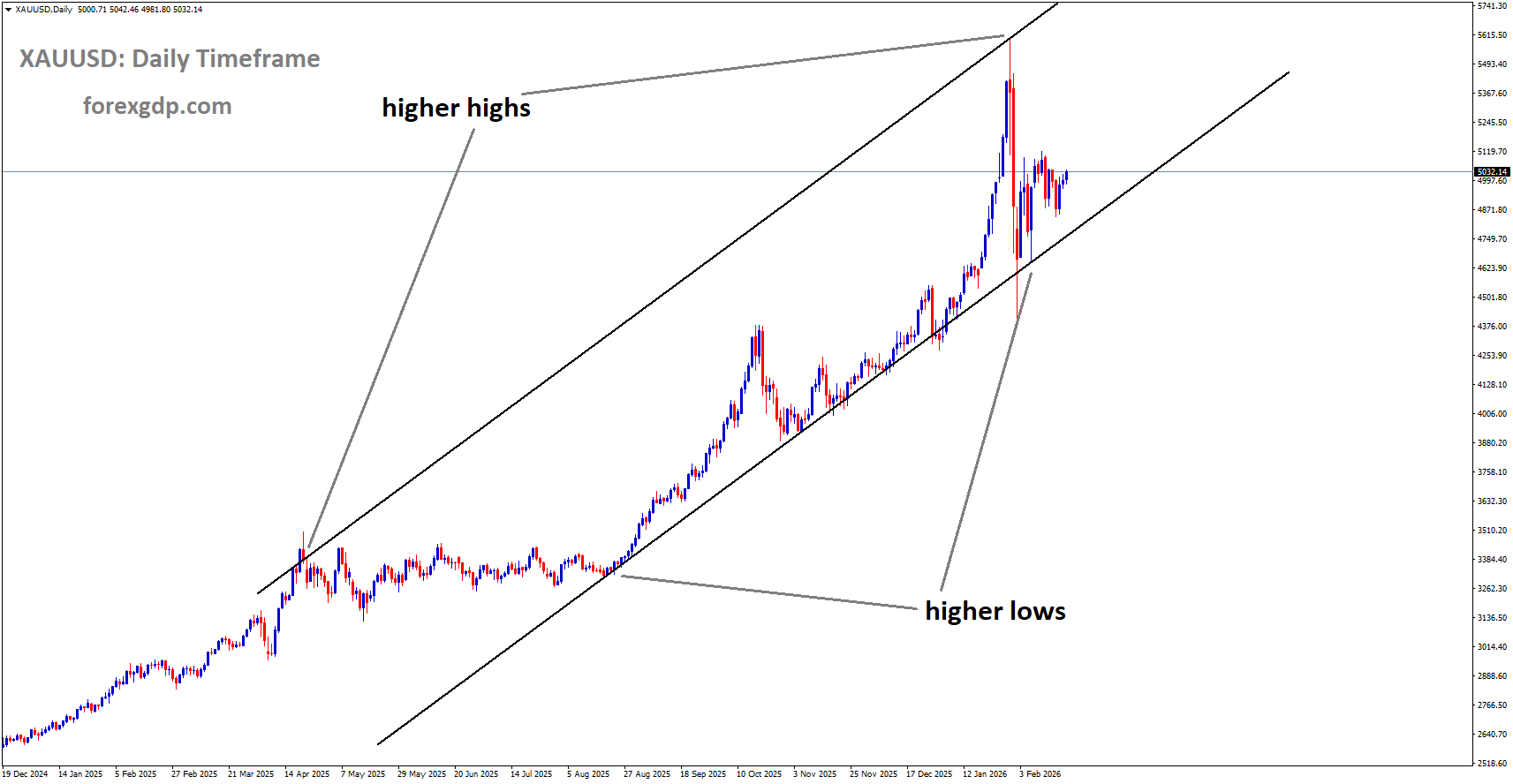
XAUUSD is moving in an Ascending channel, and the market has rebounded from the higher low area of the channel
This balance creates a dynamic environment. Gold is supported by fear and uncertainty, but at the same time, it faces challenges from a strong dollar and firm interest rate expectations.
For investors, this means that headlines can quickly shift market direction. Political statements, military actions, or new economic data releases may all play a role in shaping gold’s path in the coming days.
Final Thoughts
Gold’s move above $5,000 reflects growing demand for safe-haven assets as tensions between the United States and Iran intensify. Military buildup, strong political statements, and joint drills in the Middle East have raised concerns among global investors.
At the same time, attention is turning toward key US economic data, including inflation, GDP growth, business activity, and consumer sentiment. These reports could influence expectations about future Federal Reserve decisions and create short-term volatility in the gold market.
For now, gold remains supported by uncertainty, while economic resilience and a steady US dollar limit its upside. The coming days may bring further clarity as both geopolitical developments and economic data continue to shape investor sentiment.