
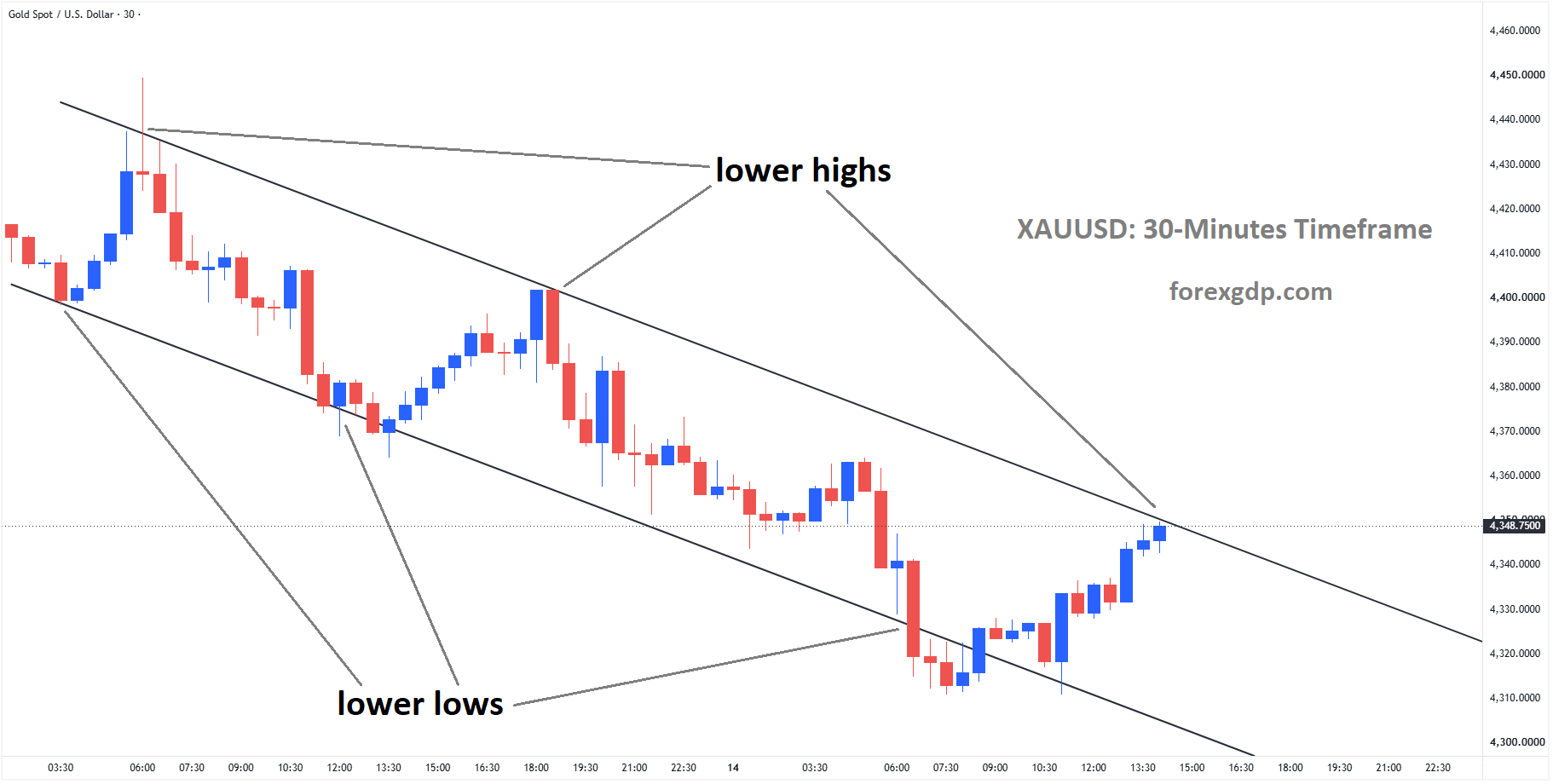
XAUUSD reached the lower high area of the descending channel
Gold recovered from a fresh weekly low on Friday as weakness in the US Dollar and changing expectations for Federal Reserve policy encouraged buyers to return. The precious metal had opened the session under pressure, but the decline lost momentum as investors considered a series of softer economic reports from the United States.
Recent inflation and employment figures have reduced expectations that the Federal Reserve will raise interest rates at its September meeting. This shift has created a more supportive environment for gold, which often benefits when the US currency and short-term Treasury yields weaken.
However, the outlook remains uncertain. Inflation is still above the Federal Reserve’s target, energy-related risks have not disappeared, and longer-term borrowing costs remain elevated. These factors could prevent gold from extending its recovery without interruption.
Softer US Dollar Supports Gold’s Recovery
The US Dollar came under renewed pressure after economic data suggested that inflation is gradually cooling and the labor market may not be as strong as previously believed. Because gold is mainly traded in dollars, a weaker US currency can make the precious metal more attractive to international buyers using other currencies.
The Dollar Index remained under pressure as traders reduced their expectations for an immediate Federal Reserve rate increase. This change in sentiment helped gold recover after an early decline and showed that investors are closely following every sign of weakness in the US economy.
Gold does not pay interest, so its appeal often depends on what investors can earn from interest-bearing assets such as government bonds. When expectations for higher interest rates decline, the opportunity cost of holding gold becomes less significant. That can encourage investors to increase their exposure to the metal.
The latest recovery also reflects gold’s continuing role as a defensive asset. Even when its short-term performance is mixed, investors may turn to it during periods of economic uncertainty, geopolitical tension, or concern about the direction of monetary policy.
Cooling Inflation Changes the Federal Reserve Outlook
This week’s US Consumer Price Index and Producer Price Index reports indicated that inflationary pressure is beginning to ease. The Consumer Price Index measures changes in the cost of goods and services paid by households, while the Producer Price Index tracks price changes faced by businesses.
Together, the reports offered some reassurance that inflation may be moving in a more favorable direction. That matters because the Federal Reserve has been trying to control price growth through higher borrowing costs.
If inflation continues to slow, policymakers may have less reason to raise interest rates again in the near future. Analysts at MUFG noted that slower private-sector hiring and weaker wage growth have given the central bank more flexibility to leave borrowing costs unchanged.
They also pointed to the limited evidence that higher energy costs linked to the US-Iran conflict have spread into broader measures of underlying inflation. This reduces some of the pressure on the Federal Reserve to respond immediately with tighter policy.
Traders now see a strong likelihood that policymakers will keep interest rates steady in September. Although expectations can change quickly when new economic reports are released, the current view is clearly less aggressive than it was before the latest inflation and employment data.
For gold, a pause in rate increases would generally be favorable. Stable or lower interest-rate expectations can weaken demand for the US Dollar and reduce the appeal of short-term fixed-income assets.
Weak Employment Data Raises Economic Concerns

The inflation reports were not the only reason investors reconsidered the possibility of another Federal Reserve increase. The July Nonfarm Payrolls report showed weaker job creation than economists had expected.
More importantly, employment figures for the previous two months were revised sharply lower. These revisions suggested that the labor market had been losing strength for longer than the initial reports indicated.
A cooling labor market can affect Federal Reserve policy in several ways. The central bank is responsible for supporting stable prices while also promoting strong employment. If hiring slows too quickly, further interest-rate increases could place additional pressure on businesses and households.
Weaker employment growth can also lead to slower wage gains and more cautious consumer spending. That may help reduce inflation, but it can also increase concerns about the wider economy. Policymakers must therefore balance the risk of keeping inflation too high against the danger of weakening economic activity too much.
The softer payroll numbers caused short-term US Treasury yields to fall as investors reduced their expectations for tighter monetary policy. This decline provided another source of support for gold.
Retail Sales and Consumer Sentiment Take Center Stage
Investor attention is now turning to upcoming US Retail Sales figures and the preliminary University of Michigan Consumer Sentiment report. These releases could offer further evidence about the health of household demand and the overall mood of American consumers.
Retail sales are especially important because consumer spending is a major part of the US economy. Strong spending could suggest that economic activity remains resilient despite high borrowing costs. Weak figures, however, may reinforce concerns that households are becoming more cautious.
Consumer sentiment data can also provide useful information about inflation expectations. The Federal Reserve watches these expectations because they can influence wage demands, business pricing decisions, and household spending behavior.
If the reports show weaker demand and improving inflation expectations, traders may become even more confident that the central bank will leave rates unchanged. On the other hand, unexpectedly strong consumer activity could revive concerns that inflation will remain stubborn.
Gold may therefore remain sensitive to incoming US data. Each report has the potential to influence the Dollar, Treasury yields, and expectations for Federal Reserve policy.
Inflation and Energy Risks Have Not Disappeared
Despite the recent improvement in inflation data, the Federal Reserve’s fight against rising prices is not complete. Inflation remains above the central bank’s target, meaning policymakers are unlikely to declare victory based on a few encouraging reports.
Energy prices remain an important source of uncertainty. Oil costs are still elevated as questions continue over the reopening of the Strait of Hormuz, a vital route for global energy supplies. Any prolonged disruption could increase transportation and production expenses across many industries.
Higher energy costs do not always move directly into underlying inflation measures, but a lasting shock can eventually affect a wide range of goods and services. Businesses facing higher fuel, shipping, and manufacturing costs may pass some of those expenses on to consumers.
This risk gives the Federal Reserve a reason to remain cautious. Officials may choose to keep rates unchanged in the near term while leaving open the possibility of further action if inflation begins to strengthen again.
High Long-Term Yields Could Limit Gold Demand
While short-term Treasury yields have declined, longer-dated yields remain relatively high. Investors continue to demand protection against the possibility that inflation will stay elevated for an extended period.
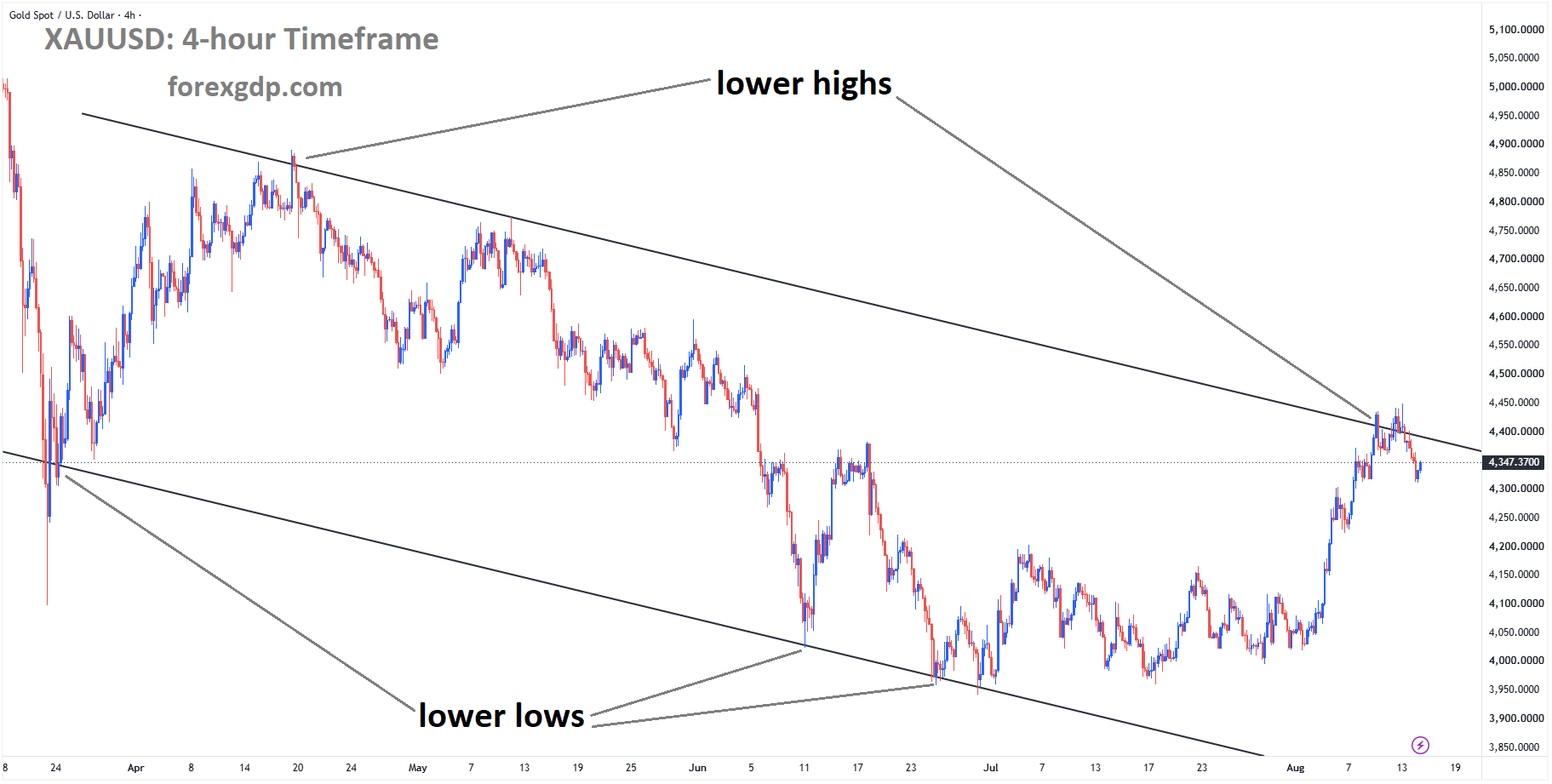
XAUUSD is moving in a descending channel
High long-term yields can create challenges for gold because government bonds offer investors income, while the precious metal does not. If bond returns remain attractive, some buyers may hesitate to increase their gold holdings aggressively.
This creates a mixed environment for the precious metal. A softer Dollar, weaker employment data, and reduced expectations for an immediate Federal Reserve move are providing support. At the same time, persistent inflation concerns and elevated long-term yields are limiting confidence.
Gold’s next direction is likely to depend on whether incoming economic reports confirm that inflation and employment are cooling at a controlled pace. A sharper economic slowdown could increase defensive demand, while renewed inflation pressure could bring expectations of higher rates back into focus.
Summary
Gold recovered from its weekly low as the US Dollar weakened and traders reduced expectations for a September Federal Reserve rate increase. Cooling consumer and producer inflation, weaker job creation, and downward revisions to earlier employment figures have strengthened the case for keeping borrowing costs unchanged.
The near-term environment has become more supportive for the precious metal, particularly as short-term Treasury yields have fallen. Still, important risks remain. Inflation continues to exceed the Federal Reserve’s target, energy uncertainty could keep price pressures alive, and elevated long-term yields may discourage aggressive buying.
Upcoming retail sales and consumer sentiment figures will help shape expectations for the US economy and Federal Reserve policy. Until the inflation and energy outlook becomes clearer, gold may continue to benefit from softer monetary policy expectations while facing limits from persistent long-term risks.