
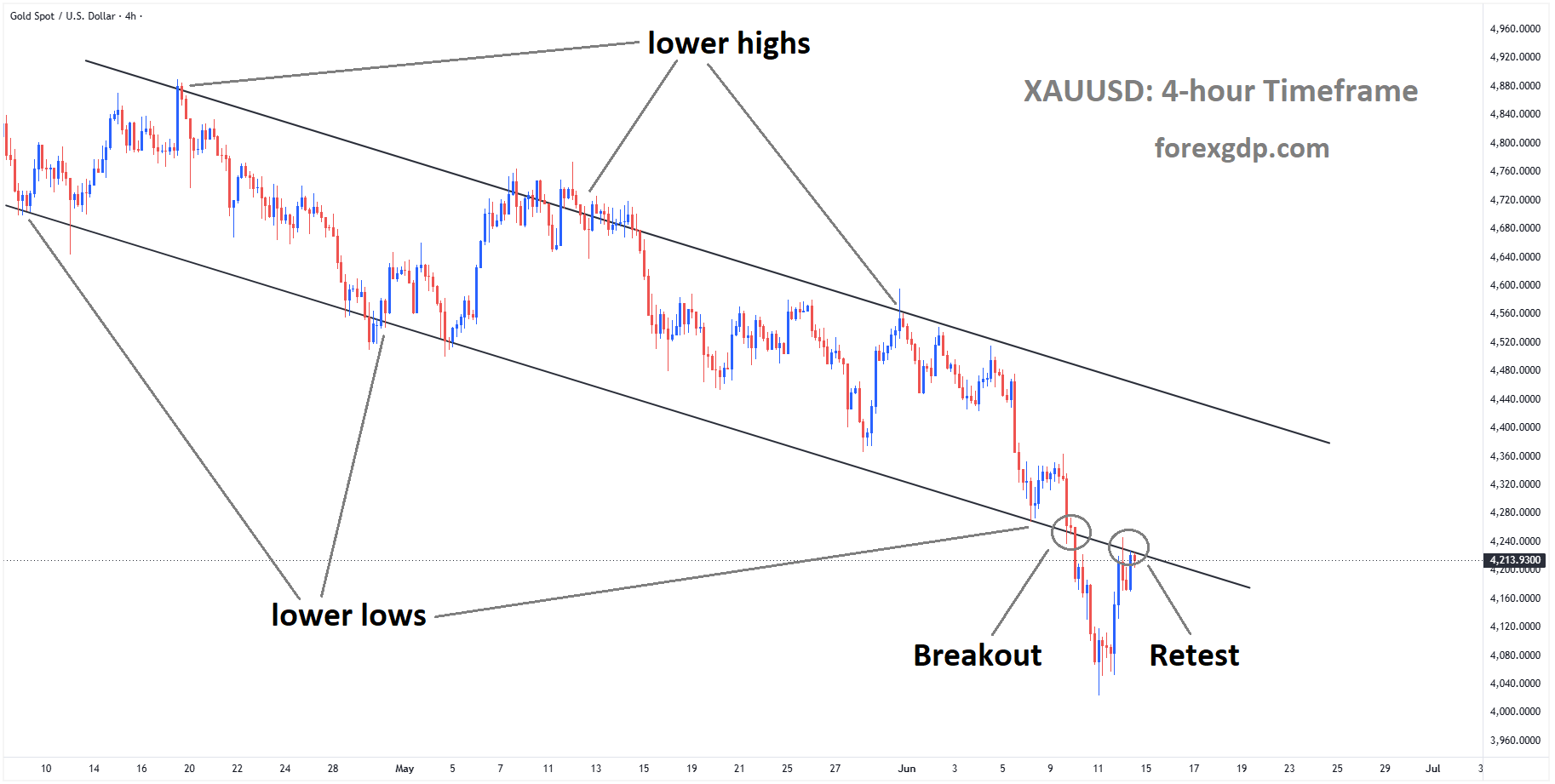
XAUUSD reached the retest area of the broken descending channel
Gold prices struggled to gain momentum on Friday as investors weighed a complex mix of geopolitical developments, inflation concerns, and expectations for future US monetary policy. While the precious metal managed to recover some of its earlier losses during European trading hours, its broader outlook remained under pressure as the US Dollar retained support from expectations that interest rates could stay elevated for longer.
The combination of uncertainty surrounding a potential US-Iran agreement and renewed inflation worries has created a challenging environment for gold, which is now on track for a second consecutive week of significant declines.
US-Iran Negotiations Continue to Create Market Uncertainty
One of the major factors influencing investor sentiment has been the evolving situation between the United States and Iran.
US President Donald Trump recently expressed optimism, stating that a deal with Iran had effectively been reached and that a final agreement could potentially be signed in the coming days. His comments initially raised hopes that tensions in the region might ease, reducing concerns over geopolitical risks.
However, those expectations were quickly challenged by responses from Iran. Iranian officials indicated that no final decision had been made regarding the proposed agreement. Reports also suggested that Iran’s leadership had not yet approved the deal, leaving its future uncertain.
Adding to the confusion, Iran’s Foreign Ministry reportedly stated that several important issues remain unresolved. Among the key concerns are access through the Strait of Hormuz and the status of frozen Iranian financial assets. These unresolved matters continue to complicate negotiations and prevent investors from fully embracing the possibility of a breakthrough.
Middle East Tensions Keep Risk Concerns Alive
Despite discussions about a potential agreement, recent events in the Middle East highlight that tensions remain elevated.
Reports indicated that Iranian forces recently stopped a tanker from moving through the strategically important Strait of Hormuz without prior coordination. The incident reinforced concerns about the security of one of the world’s most important energy transportation routes.
At the same time, reports emerged that US forces intercepted and destroyed two Iranian attack drones near the same waterway. These developments serve as a reminder that geopolitical risks have not disappeared, even as diplomatic discussions continue.
The ongoing uncertainty has helped support energy markets, as traders remain cautious about potential disruptions to global oil supplies. Higher energy costs can contribute to broader inflationary pressures, which in turn affect expectations for central bank policy and financial markets worldwide.
Inflation Data Reinforces Higher Interest Rate Expectations

Another major factor influencing gold has been the latest inflation data from the United States.
Recent reports on consumer and producer prices suggested that inflation may be accelerating again after showing signs of cooling earlier. The data strengthened the belief among many market participants that the Federal Reserve may need to maintain a restrictive policy stance for a longer period.
Investors increasingly expect policymakers to remain focused on controlling inflation, even if economic growth slows. The possibility of additional policy tightening later in the year has supported demand for the US Dollar and reduced the appeal of assets that do not provide regular income.
Gold often faces challenges in environments where borrowing costs remain elevated because investors can find more attractive returns elsewhere. As a result, expectations of prolonged higher interest rates have become a key headwind for the precious metal.
US Dollar Strength Continues to Influence Gold
The US Dollar remains one of the most important drivers of gold’s performance.
Although the currency gave back part of its earlier gains during Friday’s session, broader sentiment still favors the dollar due to expectations surrounding Federal Reserve policy. A stronger dollar typically makes gold more expensive for international buyers, which can reduce demand and limit upward movement.
At the same time, geopolitical risks are preventing a deeper decline in gold prices. Investors often turn to gold during periods of uncertainty, and the ongoing developments involving Iran continue to provide some support.
This creates a tug-of-war between two opposing forces. On one side, geopolitical concerns encourage demand for safe-haven assets such as gold. On the other, a stronger dollar and expectations for higher interest rates reduce the metal’s attractiveness.
Investors Remain Cautious Ahead of Further Developments
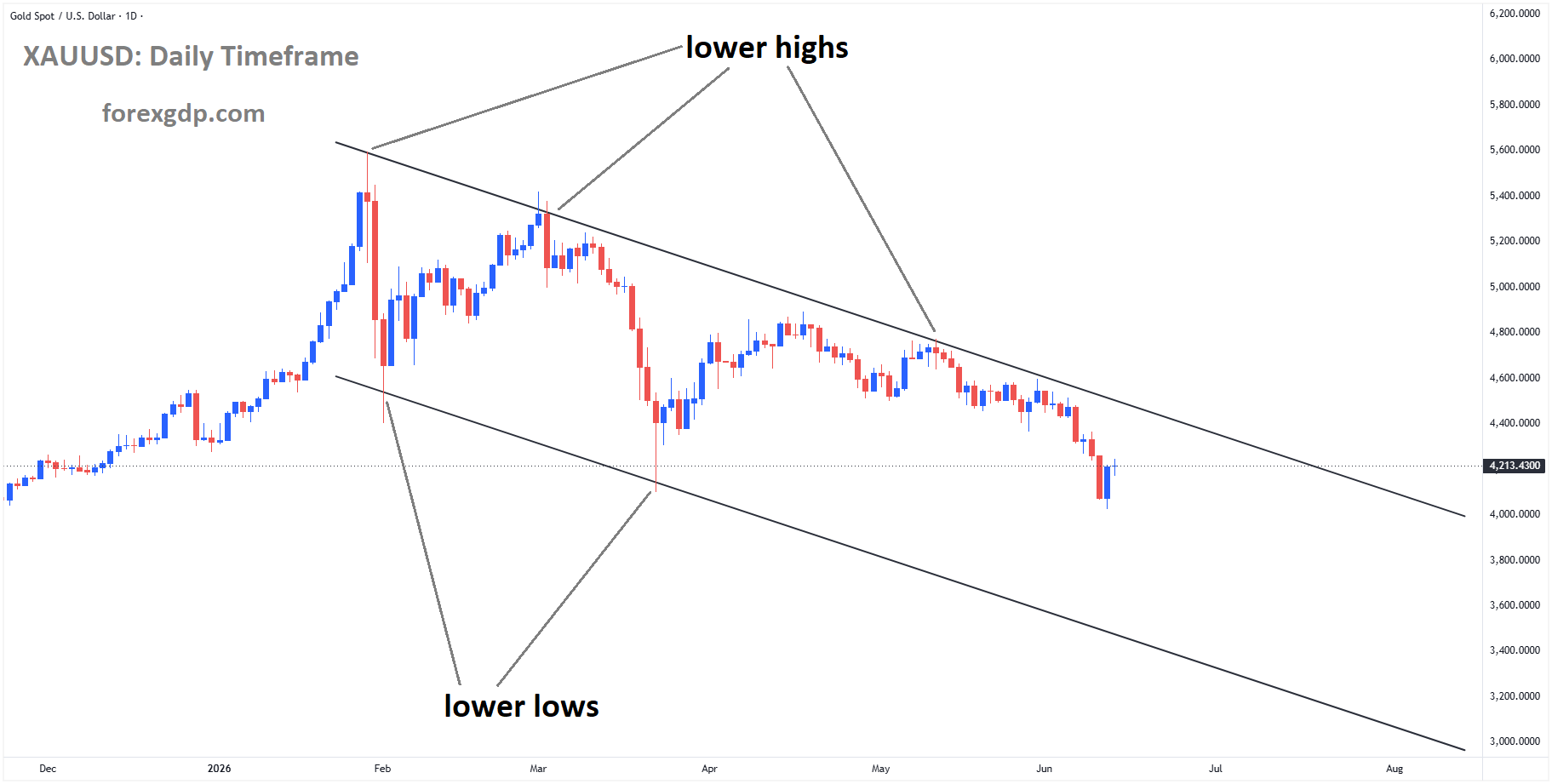
XAUUSD is falling from the lower high area of the descending channel
Many traders appear reluctant to make aggressive moves until there is greater clarity regarding both the Middle East situation and the future direction of US monetary policy.
A confirmed agreement between the United States and Iran could significantly reduce geopolitical concerns, while any breakdown in negotiations could trigger renewed market anxiety. Similarly, upcoming economic data and comments from Federal Reserve officials could further shape expectations for inflation and interest rates.
This cautious approach has limited gold’s ability to stage a meaningful recovery despite occasional intraday rebounds.
Summary
Gold remains under pressure as investors balance geopolitical uncertainty with expectations that US interest rates could stay higher for longer. While ongoing tensions involving Iran continue to provide some safe-haven support, stronger inflation data and a resilient US Dollar are limiting the metal’s recovery prospects.
Uncertainty surrounding the proposed US-Iran agreement, combined with concerns about global energy supplies and persistent inflation, has created a complex backdrop for financial markets. Until clearer signals emerge on both diplomatic negotiations and Federal Reserve policy, gold is likely to remain caught between competing forces, leaving it on track for a second consecutive week of notable losses.