
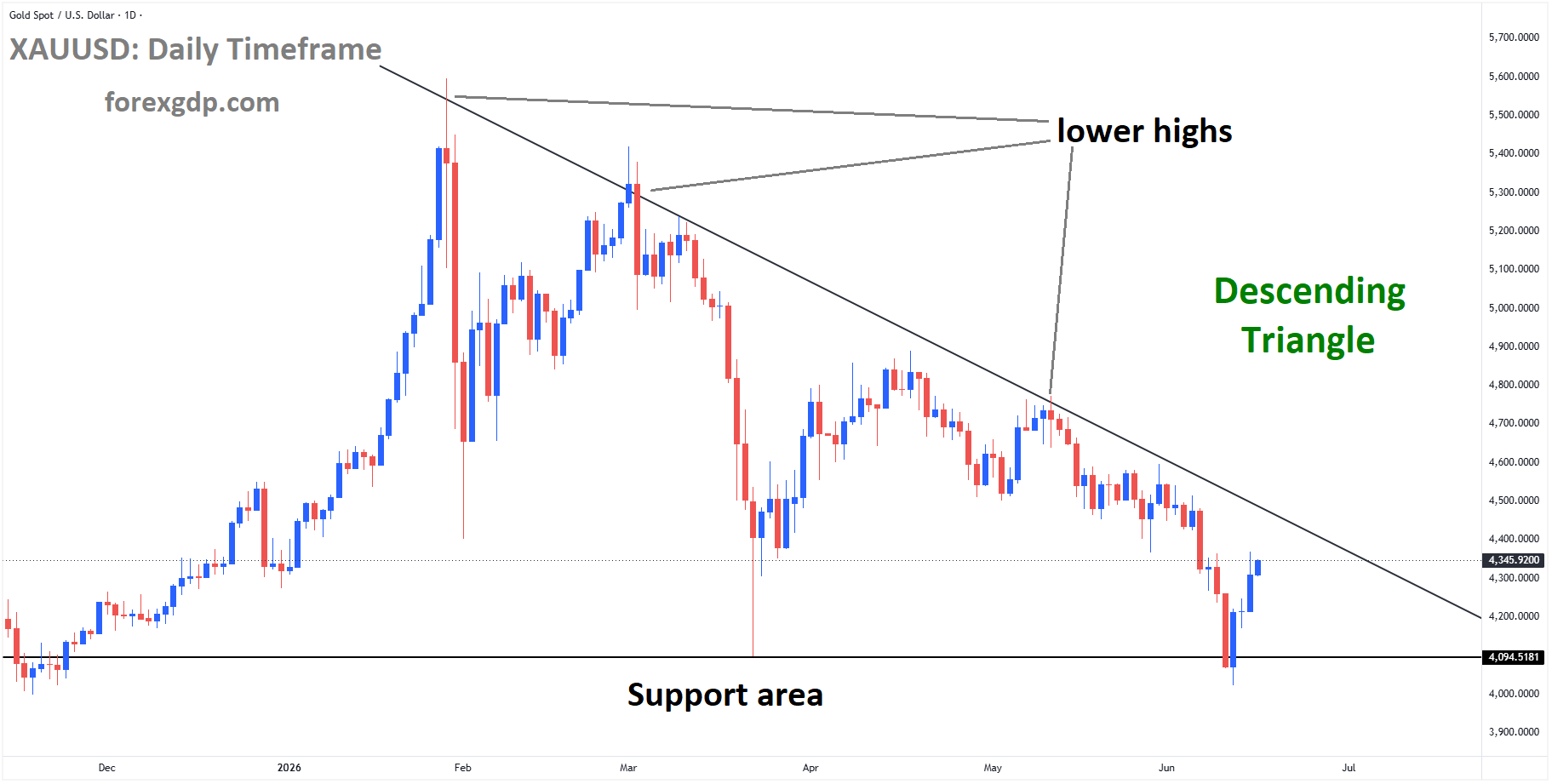
XAUUSD is moving in a descending triangle pattern, and the market has rebounded from the support area of the pattern
Gold moved higher during Tuesday’s Asian trading session, extending its recent gains as investors reacted to developments in the Middle East and shifting expectations for US monetary policy. The precious metal found support after reports emerged that the United States and Iran had agreed on a framework aimed at ending ongoing hostilities, reducing concerns about broader economic disruptions and inflation pressures.
At the same time, traders scaled back expectations for additional interest rate increases from the US Federal Reserve, creating another supportive factor for gold.
US-Iran Agreement Brings Relief to Global Markets
Investor sentiment improved after news that Washington and Tehran had reached a significant framework agreement intended to ease tensions between the two nations.
According to reports, US President Donald Trump and Vice President JD Vance signed an electronic memorandum of understanding alongside representatives from Iran. The agreement is viewed as an important step toward reducing conflict in the region and restoring stability to critical global trade routes.
One of the key areas of focus remains the Strait of Hormuz, a strategically important waterway through which a large portion of the world’s energy supplies travel. Trump stated that the passage has already begun reopening and is expected to be fully operational by the end of the week.
The easing of geopolitical tensions helped calm fears that disruptions to global energy supplies could trigger renewed inflationary pressures. As a result, markets began adjusting expectations across several asset classes.
Gold Benefits as Inflation Concerns Ease
While gold is often considered a safe-haven asset during periods of uncertainty, the latest market reaction highlights another important factor influencing the metal: interest rates.
Analysts noted that the peace framework reduced concerns about potential spikes in energy costs, which had previously been seen as a risk to inflation. Lower inflation worries can influence central bank policy expectations and affect broader financial markets.
Phillip Streible, Chief Market Strategist at Blue Line Futures, explained that investors appear to be moving beyond the conflict and gradually removing its impact from market pricing. According to Streible, the announcement of the agreement contributed to declines in Treasury yields, the US dollar, and oil-related inflation risks, creating a more supportive environment for gold.
The combination of softer inflation expectations and changing views on future interest rates helped strengthen demand for the precious metal.
Questions Remain Despite Progress
Although the framework agreement has improved market sentiment, uncertainty has not disappeared completely.
Officials from both countries continue to present different interpretations of several important aspects of the arrangement. One area of disagreement involves the future operation of the Strait of Hormuz.
Iran has indicated that it plans to collect certain fees associated with passage through the waterway. However, Trump has maintained that the route will reopen fully without any tolls or charges.
These differences suggest that negotiations are still ongoing and that the path toward a final and lasting agreement may not be entirely smooth.
Adding to the uncertainty, Trump warned that military action against Tehran could resume if Iran ultimately fails to reach a final nuclear agreement with the United States. Such comments remind investors that geopolitical risks have not been completely eliminated, even as diplomatic progress continues.
Federal Reserve Expectations Shift
Another major factor supporting gold has been the changing outlook for US monetary policy.
Following the announcement of the framework deal, traders reduced their expectations that the Federal Reserve would need to raise interest rates later this year. Market participants now see a lower probability of a rate increase by December compared with expectations seen only a week earlier.
Gold often benefits when expectations for higher interest rates decline. Because the metal does not generate interest or yield, it tends to become more attractive when investors believe borrowing costs are likely to remain stable or rise more slowly than previously anticipated.
The shift in expectations has therefore provided an additional boost to gold demand.
Markets Await Key Fed Decision
Attention is now turning to the Federal Reserve’s upcoming policy announcement scheduled for Wednesday.
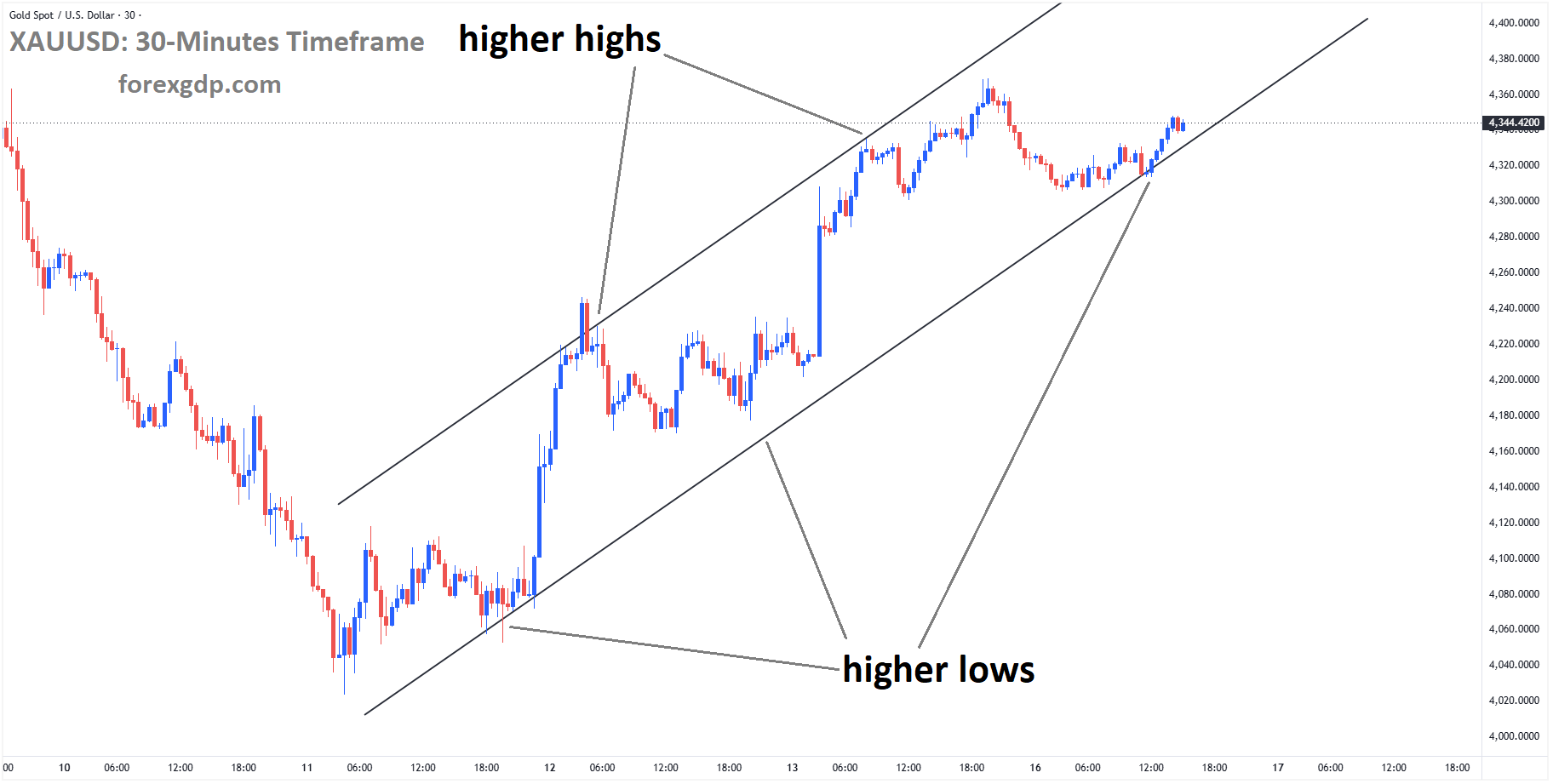
XAUUSD reached a higher low area of the ascending channel
Most economists expect the central bank to leave interest rates unchanged while officials continue assessing the economic impact of recent geopolitical developments. Policymakers are particularly focused on understanding how energy market disruptions and broader global uncertainties could affect inflation and economic growth in the months ahead.
Investors will closely examine the Fed’s statement and comments from policymakers for clues about the future direction of monetary policy. Any signals regarding inflation trends, economic conditions, or potential rate changes could have a significant impact on gold and other financial markets.
Summary
Gold strengthened during Tuesday’s Asian session as investors responded positively to reports of a framework agreement between the United States and Iran aimed at reducing regional tensions. The development eased concerns about energy-related inflation risks and encouraged traders to lower expectations for future Federal Reserve rate hikes.
Despite the improved outlook, some uncertainty remains due to differing interpretations of the agreement and ongoing negotiations surrounding a final nuclear accord. With the Federal Reserve set to announce its next policy decision, market participants remain focused on both geopolitical developments and the future path of US monetary policy, two factors that are likely to continue influencing gold in the near term.