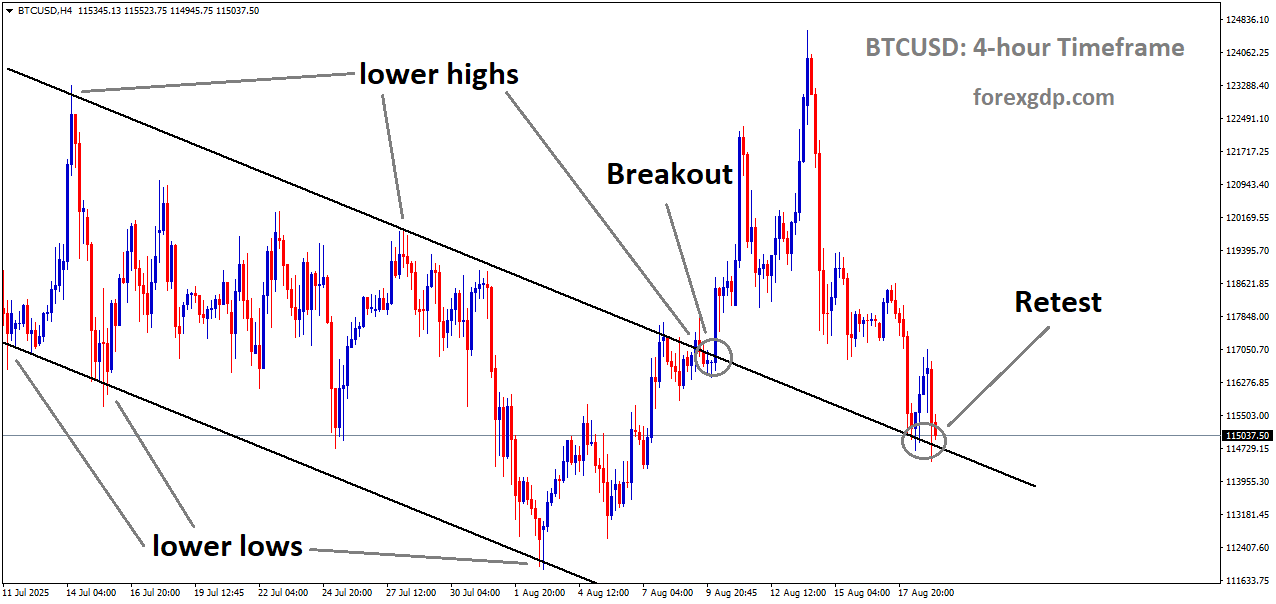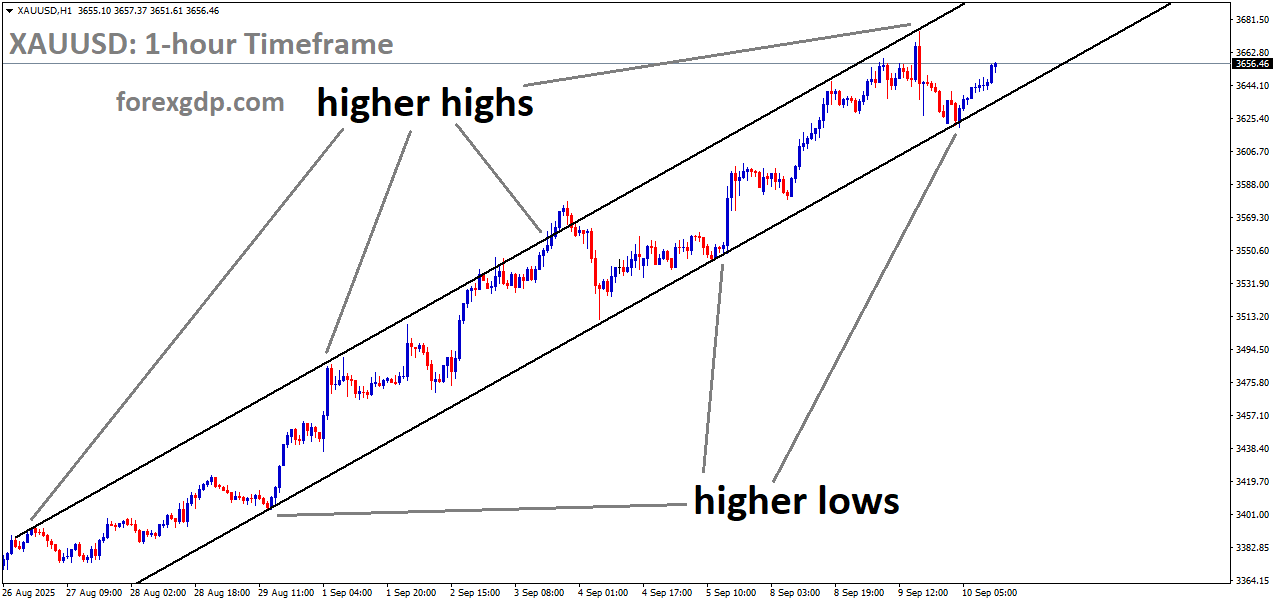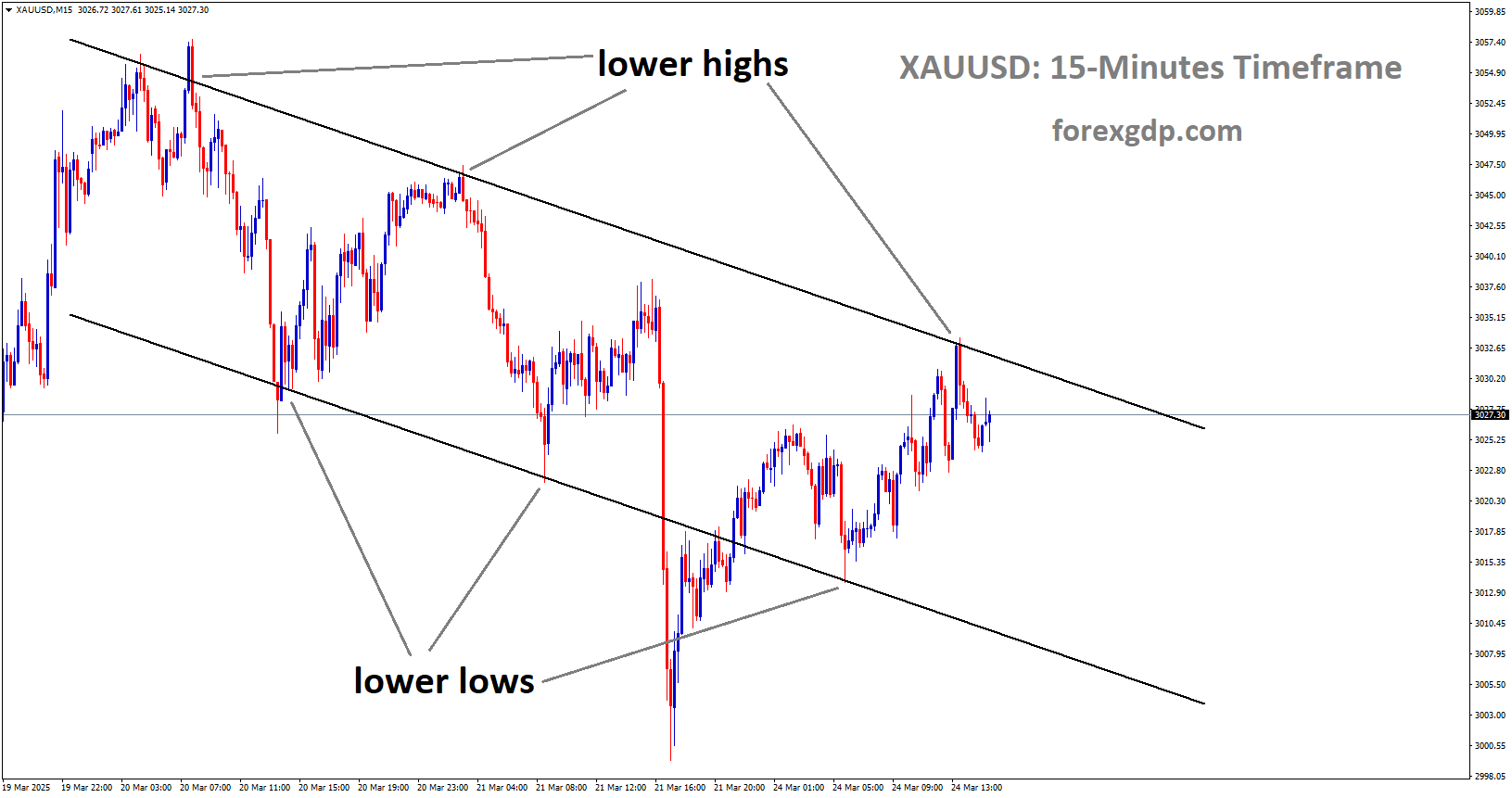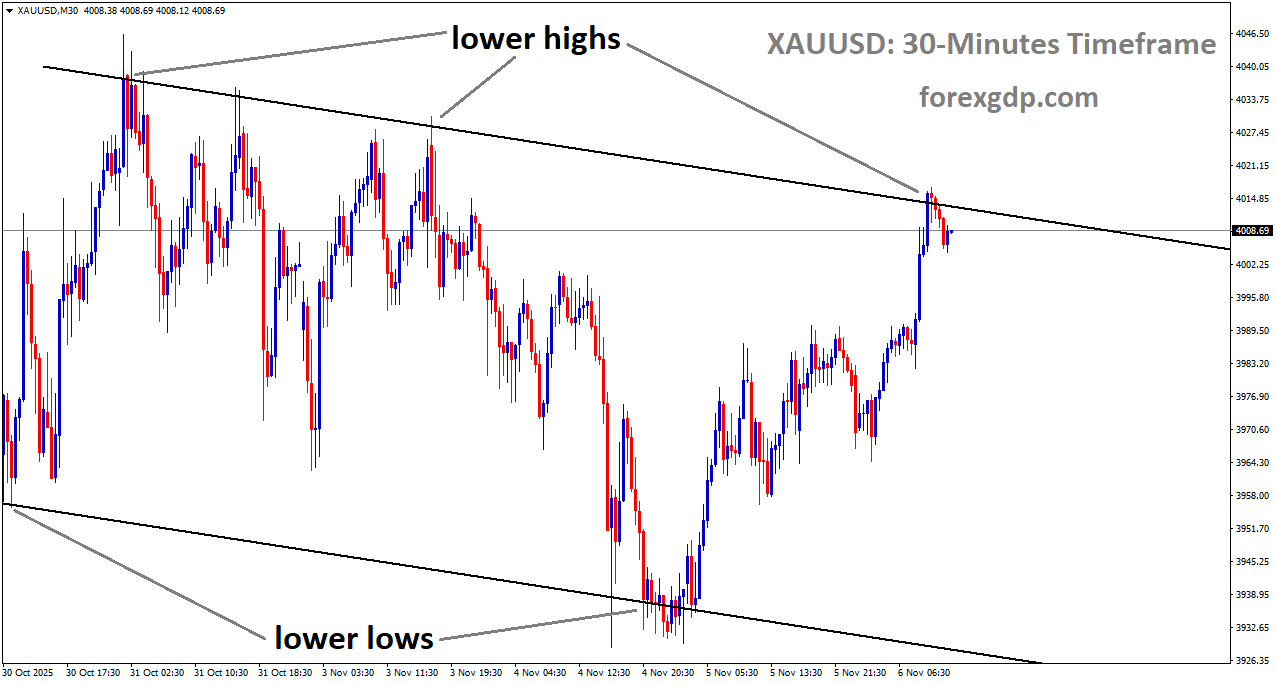

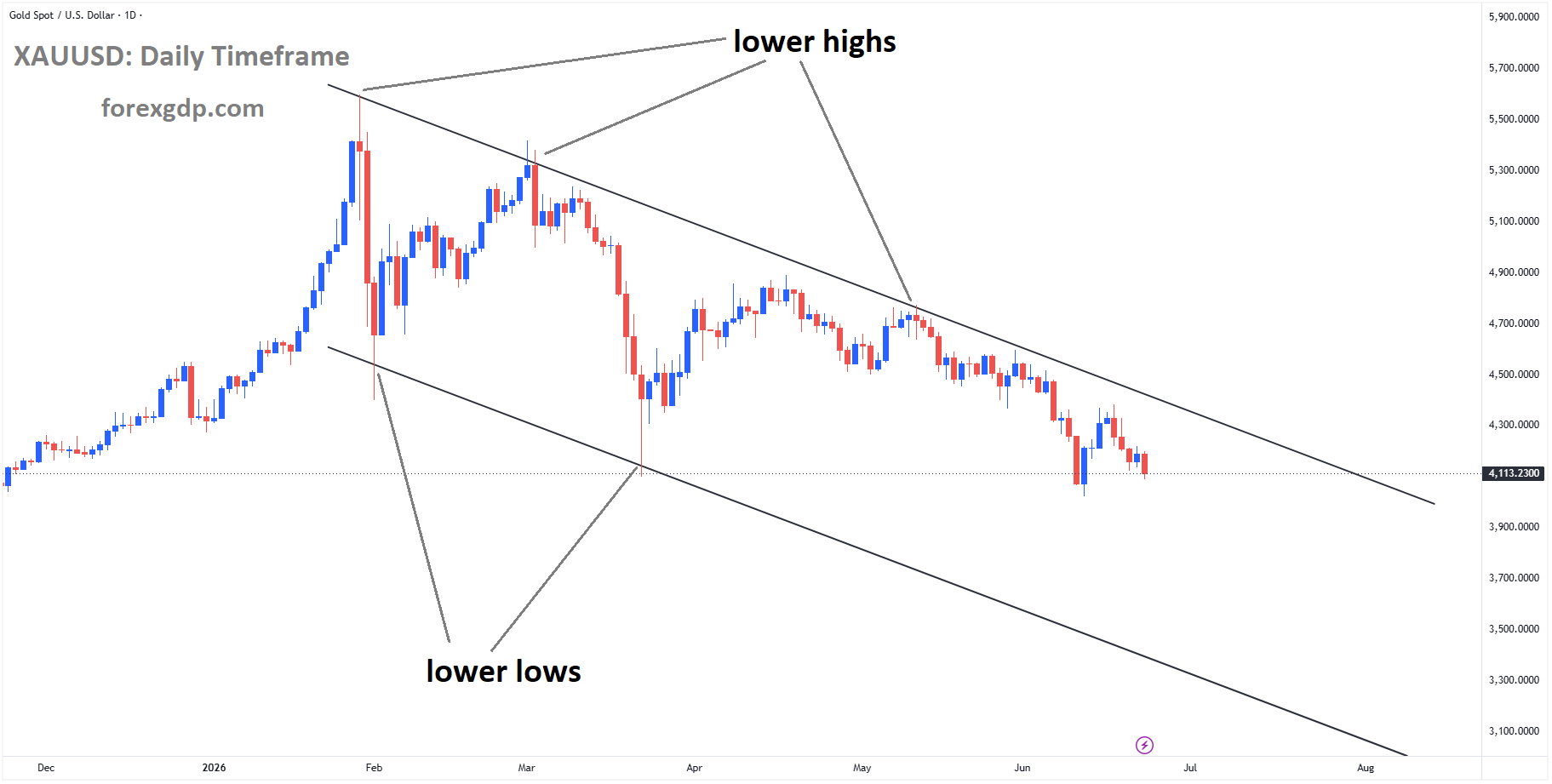
XAUUSD is moving in a descending channel
Gold started the week under pressure as investors reacted to a stronger US Dollar and growing expectations that the US Federal Reserve could tighten monetary policy later this year. The precious metal has struggled to regain momentum as traders increasingly favor the Dollar amid signs that interest rates may remain elevated for longer than previously expected.
At the same time, global markets are closely watching economic data from the United States and geopolitical developments in the Middle East, both of which could influence the next major move for Gold.
Higher Interest Rate Expectations Reduce Gold’s Appeal
One of the biggest factors affecting Gold is the changing outlook for US monetary policy. Market participants are becoming more convinced that the Federal Reserve may raise interest rates again before the end of the year.
Federal Reserve officials have continued to stress their commitment to bringing inflation back to the central bank’s long-term target. Policymakers have signaled that controlling inflation remains a top priority, even if it means maintaining a restrictive policy stance for a longer period.
Higher interest rates generally create a challenging environment for Gold. Unlike interest-bearing assets such as government bonds, Gold does not generate income. As borrowing costs rise and bond yields increase, investors often shift capital toward assets that offer returns, reducing demand for the precious metal.
Recent market pricing suggests that traders see a significant possibility of another rate increase in the coming months, reinforcing the belief that interest rates could stay elevated well into the future.
US Dollar Strength Adds Further Pressure
Gold is also being weighed down by the continued strength of the US Dollar.
The US Dollar Index, which measures the currency against a basket of major global currencies, has climbed to its highest level in more than a year. A stronger Dollar typically makes Gold more expensive for buyers using other currencies, which can reduce international demand.
The combination of rising Treasury yields and a stronger Dollar has created a difficult backdrop for Gold. Investors seeking safety or returns have increasingly turned to US financial assets, leaving less room for the precious metal to attract fresh buying interest.
This trend has contributed to Gold remaining in a correction phase after an extraordinary rally over the past two years.
Geopolitical Risks Begin to Ease
Another factor influencing market sentiment is the apparent easing of tensions in the Middle East.
Investors have been closely monitoring discussions between the United States and Iran after both countries signed a 60-day Memorandum of Understanding aimed at supporting further negotiations. While the long-term outcome remains uncertain, the agreement has reduced some immediate concerns about regional instability.
Lower geopolitical tensions can affect Gold because the metal is widely viewed as a safe-haven asset. During periods of conflict or uncertainty, investors often seek protection in Gold. When risks begin to ease, some of that defensive demand can fade.
The cooling of tensions has also contributed to softer energy markets, reducing fears that rising oil prices could trigger another wave of inflation. This development has further supported expectations that the Federal Reserve can continue focusing on inflation control without facing additional pressure from energy-driven price increases.
Gold Pulls Back After a Historic Rally

The current weakness in Gold comes after a remarkable period of gains.
Over the last two years, the metal benefited from several powerful drivers, including geopolitical uncertainty, strong purchases by central banks, and periods of monetary easing from the Federal Reserve. These factors helped push Gold to record levels earlier this year.
However, market conditions have changed significantly. As the Dollar strengthens and interest rate expectations rise, investors are reassessing the outlook for precious metals.
The shift in sentiment has led to a substantial pullback from previous highs, highlighting how sensitive Gold remains to changes in monetary policy and currency movements.
Key Economic Data Could Shape the Next Move
Attention is now turning toward several important US economic reports that could influence the Federal Reserve’s next decision.
Among the most closely watched releases is the Personal Consumption Expenditures (PCE) inflation report, which is the Fed’s preferred measure of inflation. Investors will also be analyzing updated economic growth figures to determine whether the US economy continues to show resilience.
If inflation remains stubbornly high or economic growth exceeds expectations, markets may strengthen their expectations for tighter monetary policy. Such an outcome could further support the Dollar and create additional challenges for Gold.
On the other hand, signs of slowing inflation or weaker economic activity could ease concerns about future rate hikes and provide some support for the precious metal.
Analysts Watch for Signs of a New Floor
Market observers are also monitoring whether Gold can stabilize after its recent decline.
According to assessments from the World Gold Council, continued strength in the US Dollar could keep pressure on Gold in the near term. The organization noted that sustained Dollar gains may increase the risk of a deeper correction in the precious metals market.
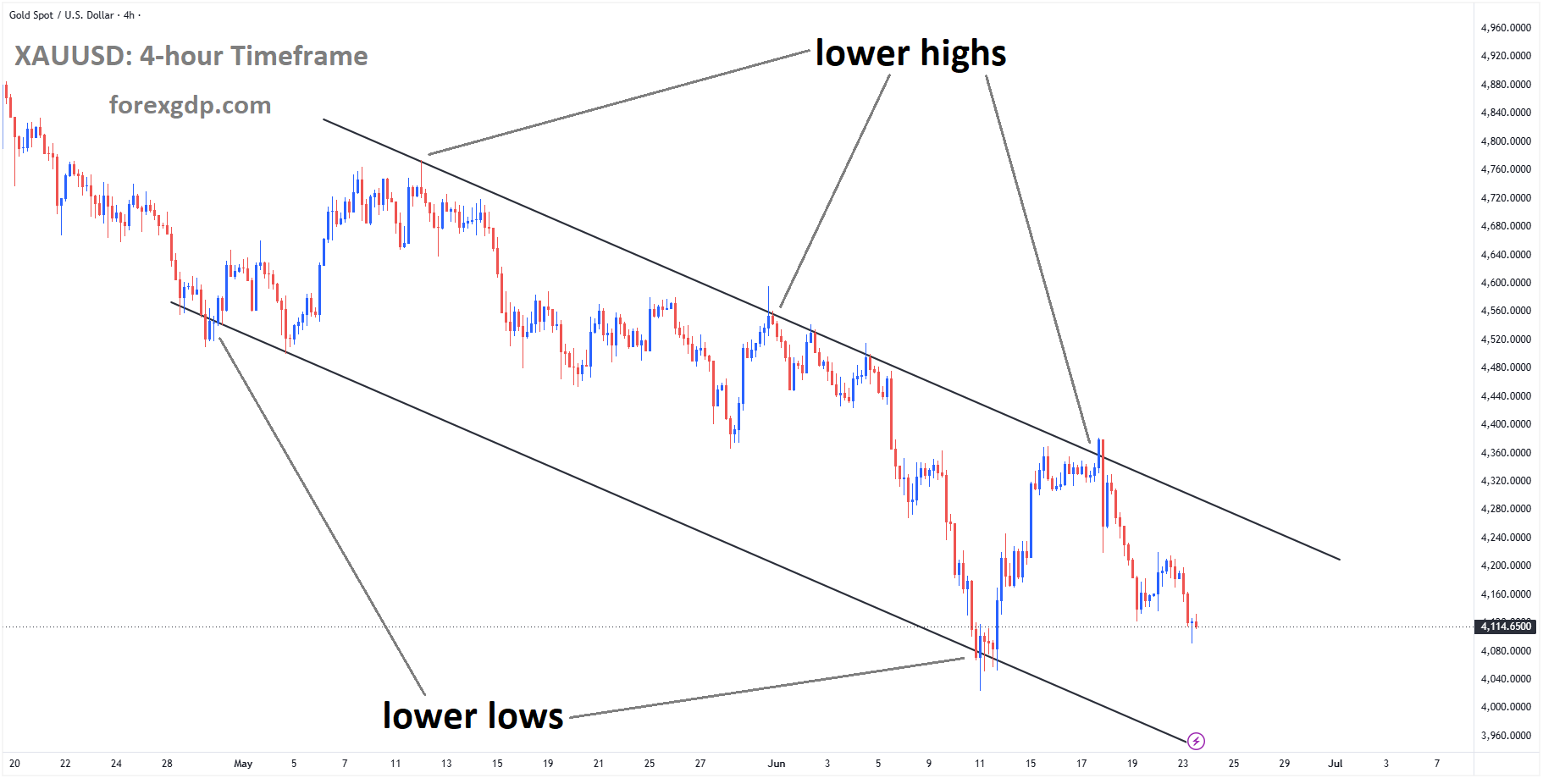
XAUUSD is moving in a descending channel, and the market has fallen from the lower high area of the channel
However, analysts are also watching for areas where long-term investors may return to the market. Historically, periods of weakness in Gold have often attracted buyers looking for opportunities to build positions when prices retreat from major highs.
Whether such buying interest emerges will likely depend on upcoming economic data, Federal Reserve communication, and broader market sentiment.
Summary
Gold remains under pressure as investors respond to a stronger US Dollar and growing expectations that the Federal Reserve may maintain a tougher stance on interest rates. Higher borrowing costs and rising Treasury yields have reduced the appeal of non-yielding assets such as Gold, while easing geopolitical tensions have weakened safe-haven demand.
The next phase for the precious metal will likely be determined by upcoming US inflation and economic growth data. Until there is a meaningful shift in the outlook for Federal Reserve policy, Gold may continue facing challenges as investors favor the Dollar and interest-bearing assets. Nevertheless, market participants remain alert for signs that the recent decline could eventually attract fresh buying interest from long-term investors.