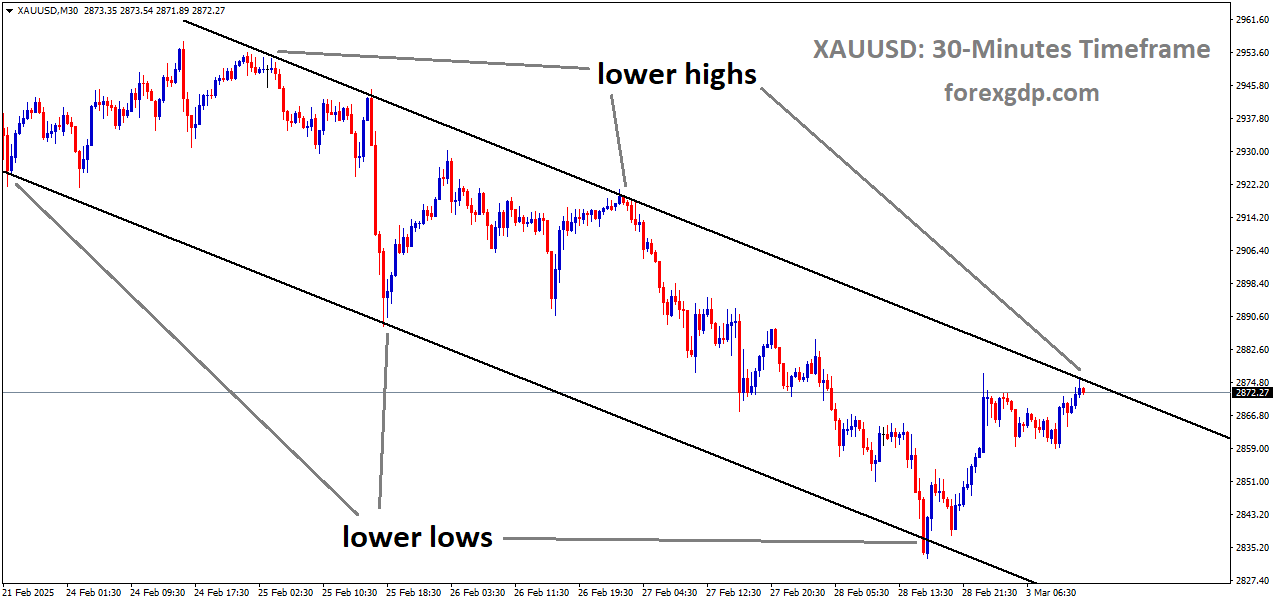

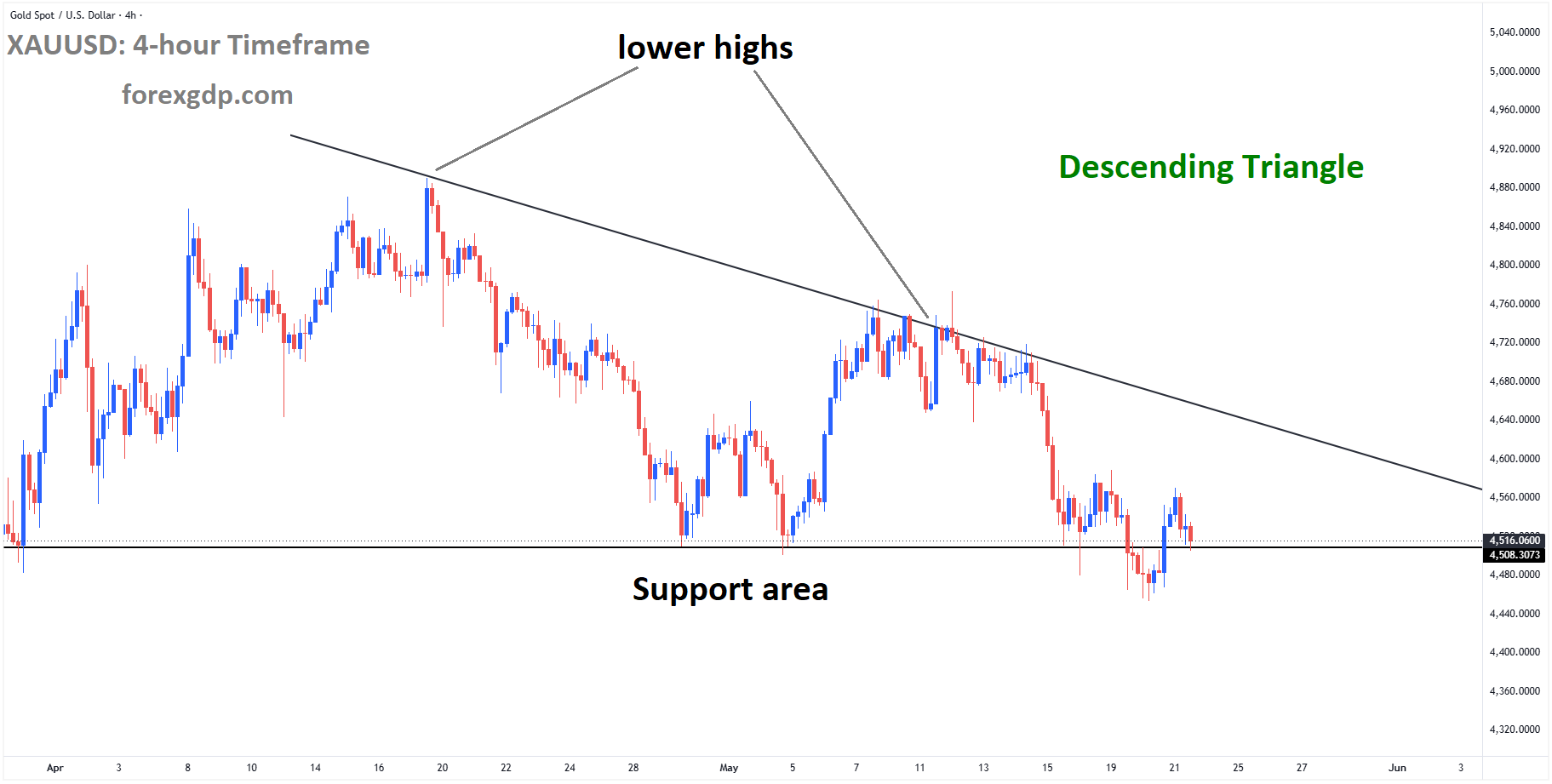
XAUUSD reached the support area of the descending triangle pattern
Gold prices moved slightly lower on Thursday, but the precious metal continued to show resilience despite pressure from a stronger US Dollar. Investors remained cautious after the release of the latest Federal Reserve meeting minutes, which strengthened expectations that interest rates in the United States could rise again later this year. At the same time, ongoing tensions in the Middle East helped prevent a deeper fall in gold prices.
The market remains caught between two major forces. On one side, a stronger US Dollar and expectations of tighter monetary policy are weighing on gold. On the other side, geopolitical uncertainty and concerns over global stability continue to support demand for safe-haven assets like gold.
Federal Reserve Signals Tougher Stance on Inflation
The latest meeting minutes from the Federal Reserve gave investors a clearer picture of how US policymakers currently view inflation and interest rates. According to the minutes, many officials believe that additional policy tightening may become necessary if inflation continues to remain above the central bank’s 2% target.
Fed officials also noted that inflation risks still lean to the upside. This means policymakers are concerned that prices may continue rising faster than expected, which could force the central bank to keep borrowing costs higher for longer.
As a result, traders increased their expectations that the Fed may deliver another interest rate hike before the end of the year. Market participants are also beginning to price in the possibility of additional increases in 2026.
Higher interest rates usually create pressure on gold because the metal does not pay interest or yield income. When interest-bearing assets become more attractive, investors often shift funds away from gold and into the US Dollar or government bonds.
US Dollar Remains Strong
The hawkish tone from the Federal Reserve helped keep the US Dollar near its highest level in several weeks. A stronger Dollar typically makes gold more expensive for international buyers, reducing demand and limiting upward movement in prices.
Although the Dollar briefly weakened after renewed hopes of easing tensions between the United States and Iran, the decline remained limited. Investors still see the US currency as a safe and stable asset during uncertain global conditions.
The combination of strong monetary policy expectations and cautious investor sentiment continues to provide underlying support for the Greenback. This has made it difficult for gold to build strong upward momentum despite ongoing geopolitical concerns.
Middle East Tensions Continue to Support Gold

While the stronger Dollar created pressure on gold prices, rising tensions in the Middle East prevented the metal from falling sharply.
Investors closely monitored comments from US President Donald Trump, who stated that the United States was in the “final stages” of negotiations with Iran. US Vice President JD Vance also expressed optimism, saying that Iran appeared interested in reaching an agreement.
These comments initially boosted market confidence and reduced fears of a wider regional conflict. As investor sentiment improved, some demand shifted away from traditional safe-haven assets like gold.
However, optimism surrounding a possible peace agreement remained limited. Trump also warned that military action could still take place if Iran failed to cooperate. That warning quickly reminded investors that the situation remains highly fragile.
Because of this uncertainty, many traders chose to remain cautious rather than aggressively selling gold.
Iran Pushes Back Against US Warnings
Iran responded strongly to recent comments from US officials. Iranian leaders criticized threats of military action and warned that any renewed attacks involving the United States or Israel could significantly worsen the conflict in the region.
The sharp exchange of warnings added another layer of uncertainty to global markets. Investors remain concerned that any escalation could disrupt energy supplies, increase global tensions, and create instability across financial markets.
One of the biggest concerns involves the Strait of Hormuz, a strategically important waterway through which a large portion of the world’s oil supply passes. Iran recently announced the launch of a new “Persian Gulf Strait Authority” aimed at controlling traffic through the area.
This development raised fresh concerns among investors because any disruption in the Strait of Hormuz could impact global oil shipments and create broader economic risks.
Investors Remain Skeptical About a Peace Deal
Despite positive comments from US officials, many investors remain doubtful that a full agreement between the United States and Iran can be reached anytime soon.
Major disagreements still exist over Iran’s nuclear program, and negotiations continue to face significant obstacles. The long history of tensions between both countries has also made traders cautious about expecting a quick resolution.
Because of this uncertainty, market participants are reluctant to fully abandon safe-haven assets. Gold continues to benefit from this cautious mood even while facing pressure from rising interest rate expectations.
The mixed signals surrounding diplomacy and military risks have created a complicated environment for financial markets. Investors are balancing hopes for peace with fears that tensions could escalate again without warning.
Gold Market Faces Competing Forces
The current gold market reflects a battle between economic and geopolitical factors. On one side, expectations of higher US interest rates and a strong Dollar are limiting demand for gold. On the other side, global uncertainty and Middle East tensions are helping the metal maintain support.
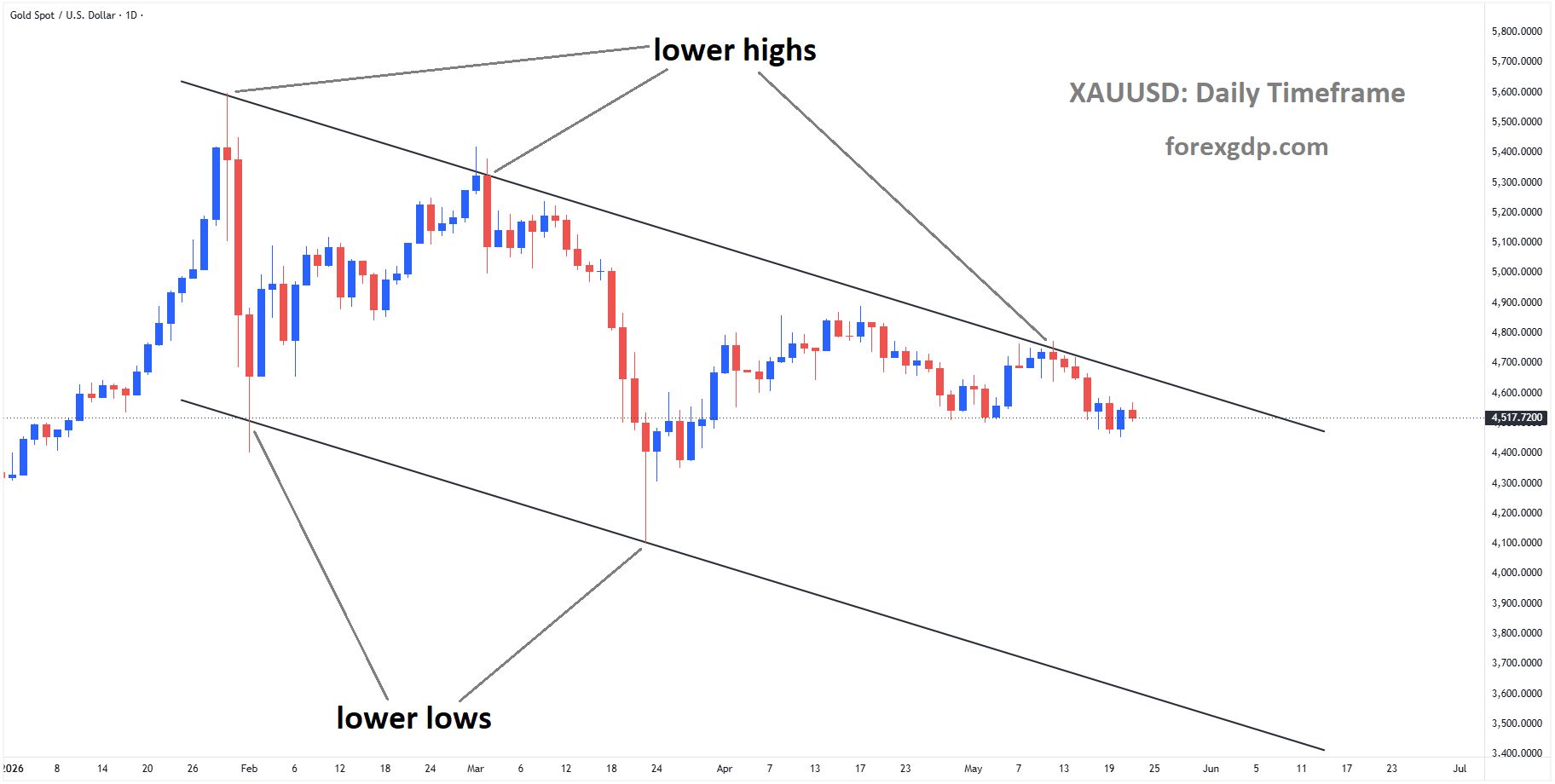
XAUUSD reached a lower high area of the descending channel
This balance explains why gold prices have struggled to make major moves in either direction. Buyers remain cautious because of the strong Dollar, while sellers are hesitant due to geopolitical risks.
As long as uncertainty surrounding Iran and the broader Middle East continues, gold may continue to attract safe-haven interest. At the same time, any further signs of aggressive Federal Reserve policy could continue putting pressure on the metal.
Final Summary
Gold prices remained under pressure as stronger US monetary policy expectations supported the US Dollar and reduced demand for non-yielding assets. The Federal Reserve’s latest meeting minutes reinforced the possibility of future interest rate hikes, keeping investors focused on inflation risks and tighter financial conditions.
At the same time, geopolitical tensions involving the United States and Iran helped prevent a sharper decline in gold prices. Uncertainty surrounding possible military action, ongoing disagreements over Iran’s nuclear program, and concerns about the Strait of Hormuz continued to support safe-haven demand.
With both economic and geopolitical forces influencing market sentiment, gold remains trapped between downside pressure from a stronger Dollar and support from rising global uncertainty.