

XAUUSD is moving in an uptrend channel, and the market has reached a higher high area of the channel
Gold prices moved higher during the week as investors looked for safety amid rising geopolitical tensions and a softer US Dollar. Despite these gains, the precious metal is still heading toward its first weekly decline in five weeks. The mixed performance reflects the complex forces currently shaping the global financial environment, including inflation concerns, uncertainty over US interest rate policy, and escalating conflict in the Middle East.
The precious metals market has seen renewed attention from traders seeking stability during uncertain times. However, shifting expectations about Federal Reserve policy and rising energy costs are creating pressure that may limit further upside in gold.
Safe-Haven Demand Returns as Global Risks Increase
Gold has long been viewed as a safe-haven asset during times of political instability and economic uncertainty. As tensions in the Middle East intensified, investors once again turned to the metal as a store of value.
The ongoing conflict between Israel and Iran has entered a more dangerous phase, drawing attention across global markets. Reports indicate that the confrontation has expanded into its seventh day, with both sides escalating military actions.
Iran launched missiles and drones across the Gulf region, targeting infrastructure and strategic locations. One of the reported strikes hit an oil refinery in Bahrain, raising concerns about disruptions in energy supplies. At the same time, Israel continued airstrikes aimed at locations in Tehran.
The growing conflict has created fears of wider regional instability. These developments have increased demand for assets that investors typically consider safer during crises, including gold.
Precious metals broadly benefited from this shift in sentiment. As investors sought protection from uncertainty, gold experienced renewed buying interest.
Middle East Conflict Raises Oil and Inflation Concerns
While geopolitical tensions often support gold prices, the situation is complicated by the impact of rising oil prices. The conflict has pushed energy markets higher, raising concerns about global inflation.
Higher oil prices tend to increase the cost of transportation, manufacturing, and energy production. This can lead to broader inflation pressures across the economy. When inflation risks rise, central banks may respond by maintaining tighter monetary policies.
This is where gold faces a challenge.
Investors had previously expected the US Federal Reserve to begin cutting interest rates in the near future. Lower interest rates typically support gold because the metal does not pay interest. When rates fall, the opportunity cost of holding gold decreases.
However, the latest surge in oil prices is creating doubts about how quickly the Fed will move toward rate cuts. If inflation remains stubbornly high, policymakers may decide to keep interest rates elevated for longer.
This shift in expectations has caused some traders to reduce their bullish bets on gold, contributing to the metal’s potential weekly decline.
Weaker US Dollar Provides Temporary Support
Despite the uncertainty around interest rates, gold has managed to maintain some gains thanks to a softer US Dollar.
Gold is priced globally in US Dollars. When the dollar weakens, the metal becomes more affordable for buyers using other currencies. This typically increases demand and can help support prices.
The dollar had previously recorded modest gains, but it recently softened again. This allowed gold to hold onto its upward momentum during the week.
However, the outlook for the dollar remains uncertain. Federal Reserve officials have indicated that additional interest rate increases remain possible if inflation does not move closer to the central bank’s target.
If policymakers maintain a cautious stance and keep rates higher for longer, the dollar could strengthen again. A stronger dollar would likely create headwinds for gold in the near term.
Escalating Conflict Adds Political Uncertainty
Political developments related to the Middle East conflict are also influencing market sentiment.
US President Donald Trump recently stated that Iranian officials had reached out in an attempt to discuss an agreement to end the conflict. However, he suggested that negotiations were unlikely to succeed at this stage and emphasized that the United States is pushing to defeat Iran.
Meanwhile, Iranian Foreign Minister Abbas Araghchi said that Tehran is not seeking a ceasefire and has no intention of entering negotiations. Iran’s Islamic Revolutionary Guard Corps also warned that retaliatory actions could intensify in the coming days.
These conflicting statements have increased uncertainty about how the situation may evolve.
In addition, the United States temporarily suspended operations at its embassy in Kuwait due to security concerns, highlighting the broader regional risks connected to the conflict.
Political instability often encourages investors to move funds into safe assets like gold. However, if the conflict drives energy prices significantly higher, it could also strengthen the case for tighter monetary policy, creating mixed signals for the metal.
Investors Await Key US Economic Data
Another major factor influencing gold this week is the upcoming release of important US economic data.
Investors are closely watching the US labor market, particularly the Nonfarm Payrolls report. Economists expect job growth to slow compared with the previous month. After a strong reading earlier in the year, the next report is forecast to show a smaller increase in employment.
Labor market data is important because it helps policymakers assess the strength of the economy. A strong job market may encourage the Federal Reserve to keep interest rates higher for longer, while weaker data could support the case for policy easing.
Retail Sales figures are also scheduled for release. Expectations suggest a modest decline compared with the previous month. Consumer spending is a key driver of the US economy, so any slowdown could influence how the Federal Reserve views economic conditions.
These data releases could play a significant role in shaping expectations about future interest rate decisions, which in turn may influence gold demand.
Trade Policy Changes Add Another Layer of Uncertainty
Beyond economic data and geopolitical developments, changes in US trade policy are also attracting attention.
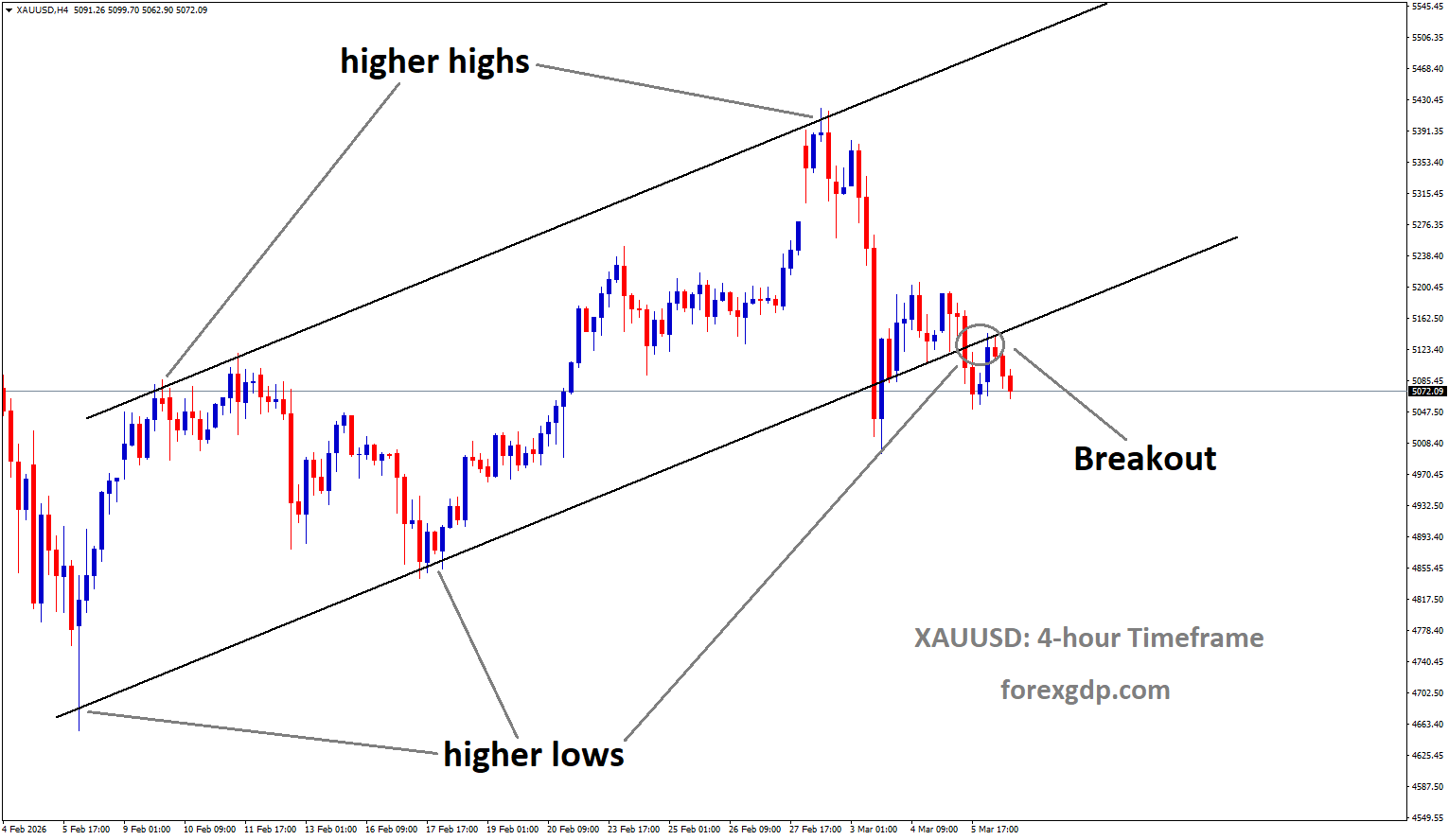
XAUUSD has broken the uptrend channel in downside
The United States plans to introduce a temporary global tariff of 15 percent. This new measure will replace a lower tariff rate that was previously introduced after the US Supreme Court struck down several earlier levies.
Treasury Secretary Scott Bessent indicated that the tariff adjustment may only be temporary. According to him, the rate could return to previous levels within about five months as new trade investigations move forward.
Trade policy shifts can have ripple effects across global markets. Tariffs can affect supply chains, trade relationships, and inflation levels. For investors, these developments add another layer of uncertainty when evaluating economic risks.
Such uncertainty often encourages diversification into assets like gold.
Summary
Gold prices have risen as investors seek safety amid rising geopolitical tensions and a weaker US Dollar. The ongoing conflict between Israel and Iran has increased demand for safe-haven assets, helping the precious metal move higher during the week.
However, gold still faces the possibility of ending the week with a loss. Rising oil prices linked to the conflict have raised concerns about inflation, which may reduce expectations for interest rate cuts by the US Federal Reserve.
At the same time, investors are waiting for important economic data, including US employment and consumer spending figures, which could shape the outlook for monetary policy. Changes in US trade policy and ongoing political uncertainty are also contributing to a complex market environment.
For now, gold remains caught between competing forces: strong safe-haven demand on one side and persistent inflation concerns on the other. How these factors evolve in the coming weeks will likely determine the metal’s direction in global markets.