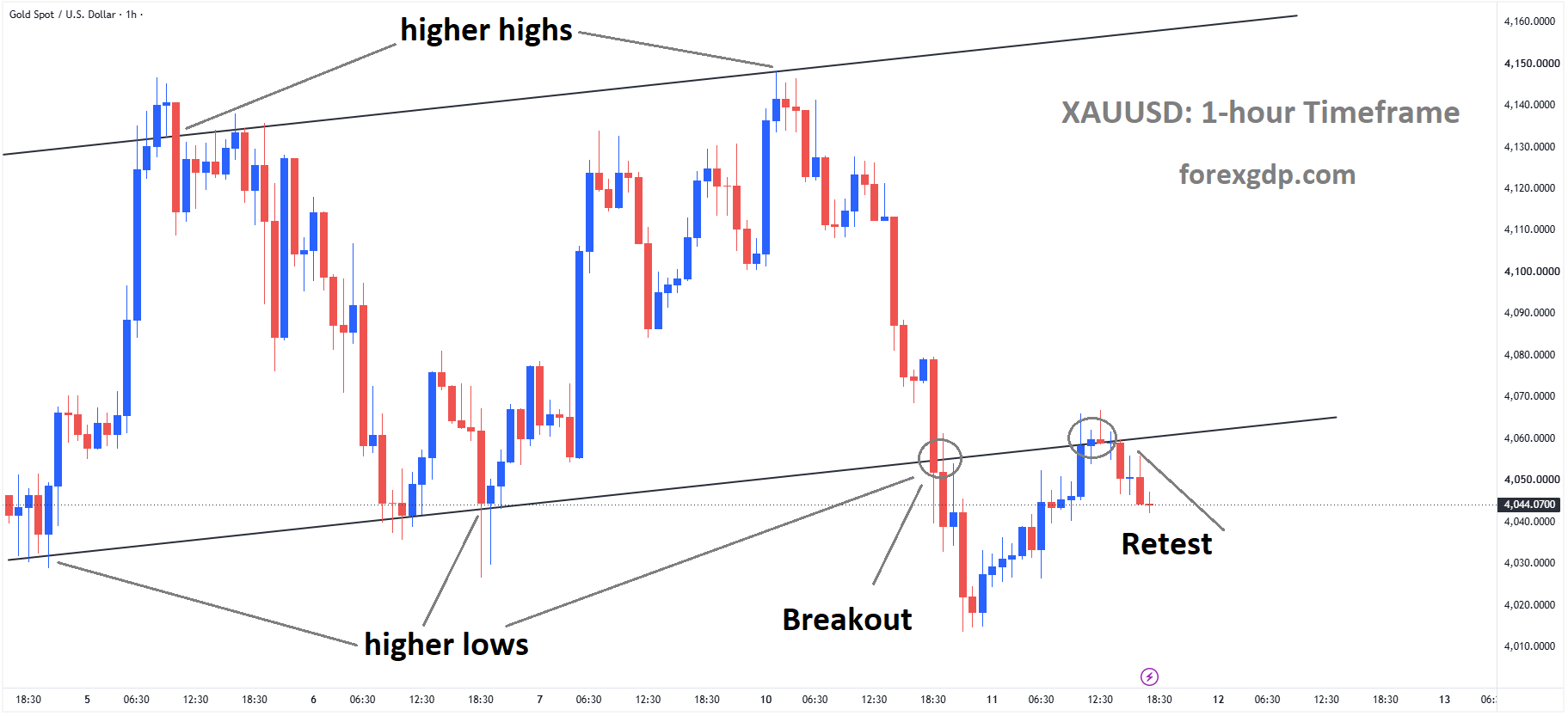
XAUUSD is falling from the retest area of the broken ascending channel
Gold continues to face an uncertain environment as investors prepare for the possibility of further interest rate increases by the US Federal Reserve (Fed). Although the precious metal has shown signs of recovery following a sharp decline, concerns about persistent inflation and tighter monetary policy continue to influence market sentiment.
Recent US inflation figures have strengthened expectations that the Federal Reserve may need to maintain an aggressive approach to controlling consumer prices. Several Fed officials have also expressed support for additional interest rate increases, raising questions about how long restrictive monetary conditions could remain in place.
For gold investors, the situation presents a difficult balance. Gold is widely considered a safe-haven asset during periods of economic uncertainty, but higher interest rates can reduce its appeal compared with investments that offer regular interest income.
Gold Struggles as US Inflation Remains a Major Concern
Gold has faced renewed pressure following the release of stronger-than-expected US consumer inflation data. The latest figures suggest that inflation remains a challenge for the American economy, despite earlier efforts by the Federal Reserve to slow rising prices.
According to the US Consumer Price Index (CPI) report, consumer prices increased by 0.4% in October compared with the previous month. Economists had expected a smaller increase of 0.3%. However, the October reading was lower than September’s 0.6% increase.
While the slowdown from September offers some encouragement, the higher-than-expected October figure suggests that inflationary pressures have not disappeared.
Core inflation, which excludes the often-volatile food and energy categories, also remained elevated. The core CPI increased by 0.3% in October, matching September’s reading and exceeding the expected 0.2% rise.
This matters because core inflation is one of the important measures policymakers use to understand underlying price pressures across the economy.
When core inflation remains stubbornly high, the Federal Reserve may find it difficult to justify easing monetary conditions.
For gold, this creates a challenging environment because investors must consider the possibility that borrowing costs will remain elevated for longer than previously expected.
Federal Reserve Officials Support Further Interest Rate Increases
Recent comments from Federal Reserve policymakers have added to expectations of additional monetary tightening.
Fed Governor Christopher Waller indicated that a larger interest rate increase could be necessary at the December policy meeting if October’s core inflation reading reached approximately 0.3% or higher.
With the inflation report meeting that condition, investors have become more attentive to the possibility of a half-percentage-point increase.
A move of this size would represent a stronger policy response than a standard quarter-percentage-point adjustment.
Other Federal Reserve officials have also expressed concern about persistent inflation.
Dallas Fed President Lorie Logan and Philadelphia Fed President Anna Paulson supported the need for further monetary tightening. Meanwhile, Fed Vice Chair for Supervision Michelle Bowman emphasized the importance of bringing inflation under control.
Together, these statements suggest that policymakers remain focused on restoring price stability, even if doing so requires maintaining restrictive financial conditions.
The Federal Reserve’s main challenge is to reduce inflation without causing unnecessary damage to economic activity.
Higher interest rates can help slow inflation by making borrowing more expensive for households and businesses. However, they can also discourage spending, reduce investment, and weaken economic growth.
This difficult balance remains central to the outlook for US monetary policy and gold.
December Fed Meeting Becomes a Key Focus for Investors
The upcoming December Federal Reserve meeting has become an important event for financial markets.
According to the CME FedWatch Tool figures cited in the latest market assessment, investors were fully expecting an interest rate increase at the meeting.
The probability of a 25-basis-point increase stood at 88.5%, while the likelihood of a larger 50-basis-point increase was estimated at 11.5%.
These expectations indicate that investors considered further monetary tightening highly likely, although the size of the adjustment remained uncertain.
Market participants were also anticipating additional interest rate increases beyond December, with expectations pointing toward three more quarter-percentage-point increases by the middle of 2027.
Such expectations reflect growing concern that inflation could take longer to return to the Federal Reserve’s desired level.
However, interest rate expectations are not guaranteed outcomes. They can change as new economic reports become available or policymakers provide further guidance.
Employment figures, consumer spending, wage growth, and future inflation readings could all influence the Federal Reserve’s decisions.
For gold investors, the December meeting is important not only because of the immediate policy decision but also because of what officials may communicate about future interest rates.
Why Higher Interest Rates Can Weigh on Gold Demand

Gold behaves differently from many traditional financial assets because it does not generate interest or dividend payments.
When interest rates rise, interest-bearing investments such as government bonds can become more attractive to investors seeking income.
As a result, holding gold may involve a greater opportunity cost during periods of monetary tightening.
Higher US interest rates can also support the US dollar by attracting investors toward dollar-denominated assets.
Because gold is commonly traded internationally in US dollars, changes in the dollar’s strength can influence demand from buyers using other currencies.
A stronger dollar can make gold more expensive for international buyers, potentially reducing demand.
Nevertheless, the relationship between gold and interest rates is not always straightforward.
Gold can continue attracting investment during periods of geopolitical uncertainty, financial instability, or concerns about long-term inflation.
This means that even when Federal Reserve policy creates pressure, other economic and political developments may provide support for the precious metal.
Investors therefore need to consider several factors rather than focusing exclusively on interest rate expectations.
Strong US Economy and Middle East Tensions Complicate Inflation Outlook
The broader economic environment is another important factor shaping expectations for gold and Federal Reserve policy.
Economists at Commerzbank have warned that consumer prices continue to increase too quickly, even though the overall pace of inflation slowed compared with September.
They also noted that core inflation remains elevated and has not shown a clear downward trend.
A resilient US economy could make inflation more difficult to control if consumer demand and business activity remain strong.
When households continue spending and companies maintain investment, demand for goods and services can remain elevated, potentially keeping upward pressure on prices.
Geopolitical tensions in the Middle East add another layer of uncertainty.
Regional conflicts can affect energy supplies, transportation routes, production costs, and global business confidence.
Disruptions in energy markets may increase costs for businesses and households, making it harder for inflation to decline consistently.
At the same time, geopolitical instability can encourage investors to seek assets traditionally associated with financial security, including gold.
These competing influences help explain why the outlook for the precious metal remains complex.
What Investors Should Watch in the Coming Months
The direction of Federal Reserve policy will likely remain one of the most important influences on gold sentiment.
Future inflation reports will help determine whether price pressures are easing or remaining persistent.
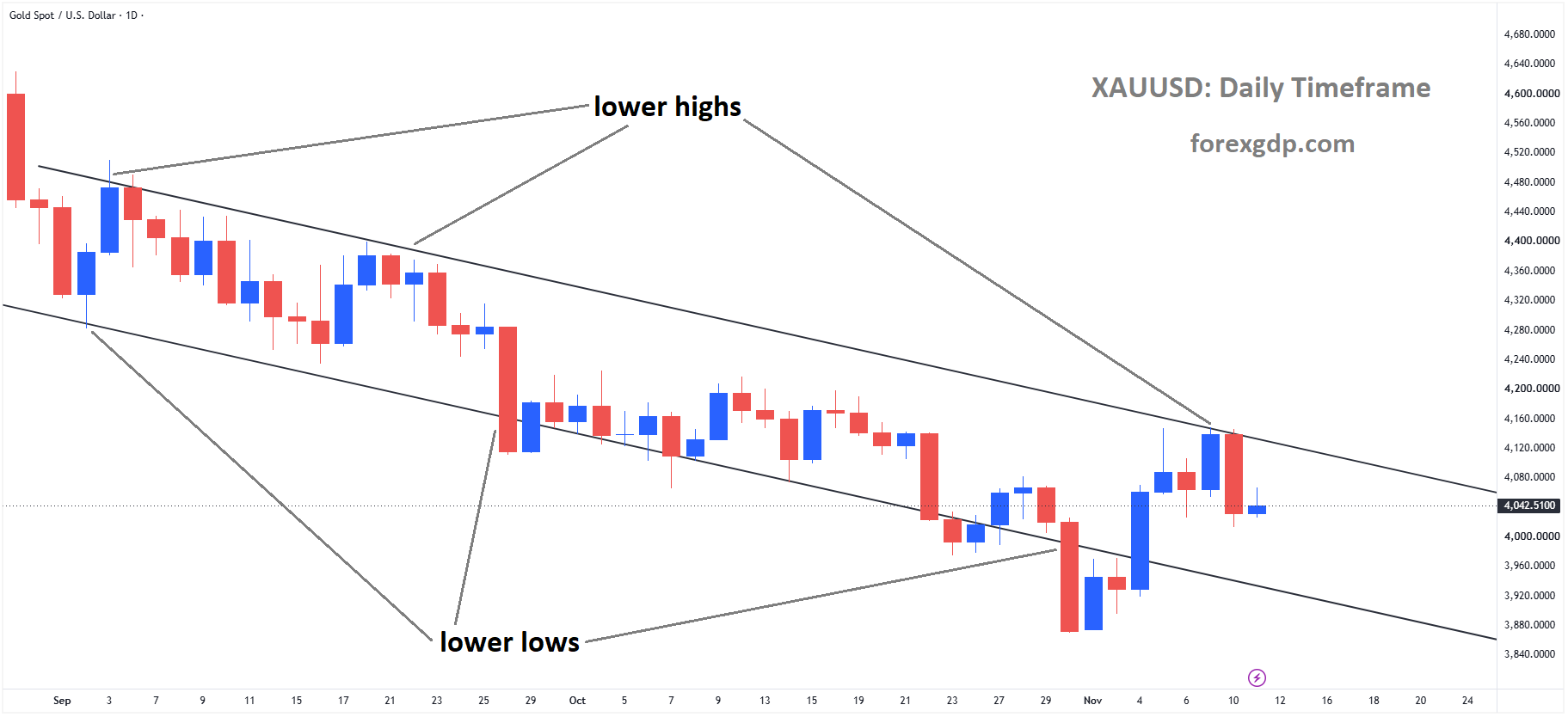
XAUUSD is falling from the lower high area of the descending channel
If inflation continues to exceed expectations, policymakers may feel greater pressure to maintain higher interest rates or introduce additional increases.
Alternatively, evidence of slowing inflation could reduce the need for aggressive monetary tightening.
Investors will also pay close attention to employment conditions and overall economic growth.
A weakening labor market could encourage policymakers to reconsider the pace of interest rate increases, particularly if inflation begins moving toward the central bank’s target.
Meanwhile, developments in the Middle East and changes in global economic confidence may influence demand for safe-haven assets.
For anyone following gold, understanding these broader economic developments is essential because monetary policy, inflation, and geopolitical risks can affect investor behavior in different ways.
Final Summary
Gold remains under pressure as stronger-than-expected US inflation data and hawkish Federal Reserve comments reinforce expectations of further interest rate increases.
The October inflation report showed that consumer prices are still rising faster than economists anticipated, while underlying inflation remains stubbornly elevated.
Federal Reserve officials have signaled that additional tightening may be necessary, with investors focusing on the possibility of a larger interest rate increase at the December meeting.
Higher borrowing costs and potentially stronger demand for interest-bearing assets could continue to challenge gold’s appeal. However, geopolitical uncertainty and concerns about persistent inflation may also encourage safe-haven demand.
Ultimately, the outlook for gold will depend heavily on upcoming US economic data, Federal Reserve policy decisions, and developments in the global economy. Investors will be watching closely for clearer evidence that inflation is easing and for signs of how policymakers intend to respond.