Wed, Jul 22, 2026

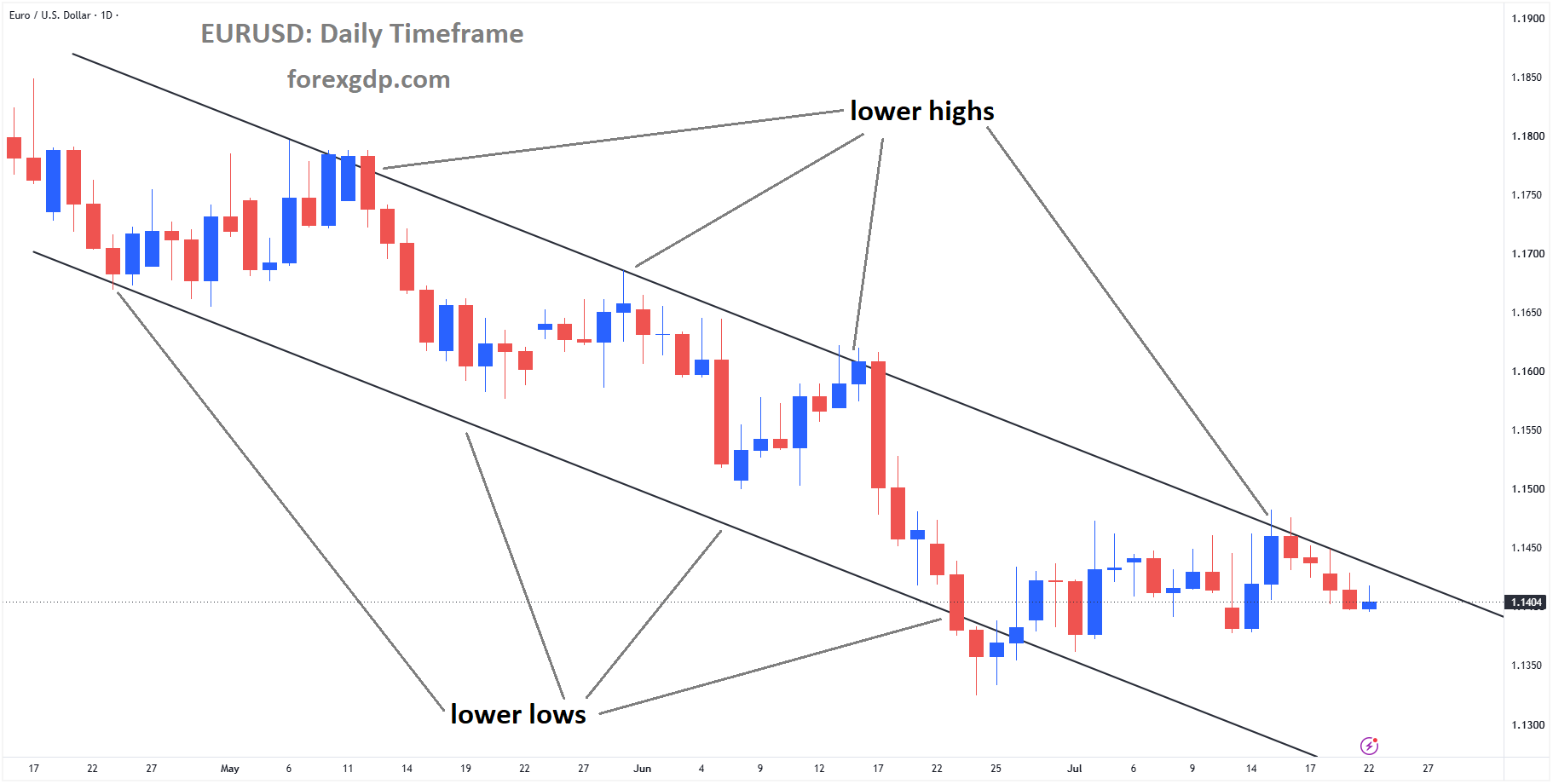
EURUSD is moving in a descending channel, and the market has reached the lower high area of the channel

EURUSD Stays Under Pressure as Oil Surge and Global Uncertainty Weigh on Euro

The EUR/USD currency pair continues to trade under pressure as investors remain cautious amid rising geopolitical tensions and growing uncertainty in global financial markets. Although the Euro has shown signs of resilience, its recovery has struggled to gain momentum, allowing the US Dollar to maintain its strength.

The market remains focused on developments in the Middle East, central bank decisions, and changing investor sentiment. These factors continue to shape the direction of both currencies, creating a cautious environment for traders.

Global Tensions Increase Demand for the US Dollar

The US Dollar has benefited from a wave of safe-haven demand as geopolitical tensions continue to escalate. Ongoing conflict involving Iran has raised concerns about regional stability, prompting investors to move their money into assets that are generally viewed as safer during uncertain times.

Whenever global uncertainty increases, the US Dollar often becomes one of the preferred choices for investors. This trend has once again helped support the Greenback, limiting the Euro’s ability to recover despite occasional buying interest.

Rising Oil Prices Add Pressure on the Euro

One of the biggest consequences of the current geopolitical situation has been the sharp rise in oil prices. Concerns about disruptions to global energy supplies have pushed energy costs higher, creating fresh challenges for economies that rely heavily on imported energy.

The Eurozone falls into this category, making the Euro more vulnerable whenever energy prices rise significantly. Higher energy costs can increase inflation, reduce consumer spending, and place additional pressure on economic growth. These concerns continue to weigh on investor confidence toward the common currency.

ECB Policy Expectations Continue to Support the Euro

Despite the challenges facing the Euro, expectations surrounding the European Central Bank (ECB) have helped prevent a much larger decline.

Many investors believe the ECB could continue maintaining a firm stance on inflation if price pressures remain elevated. This expectation has provided some support for the Euro, helping offset part of the pressure created by global uncertainty and rising energy costs.

However, market participants remain cautious ahead of the ECB’s upcoming policy announcement, as any change in the central bank’s outlook could quickly influence investor sentiment.

Analysts Believe ECB Support May Be Limited

According to analysts at ING, the Euro has remained relatively stable despite rising energy prices because markets have expected the ECB to respond more aggressively than the US Federal Reserve when dealing with inflation.

This belief has helped support the Euro over recent weeks. However, ING also suggests that there may be limited room for investors to expect even tighter ECB policy going forward.

If market expectations have already fully priced in future ECB actions, additional support for the Euro from monetary policy could gradually weaken. Investors will therefore pay close attention to the tone of the ECB’s latest communications.

The US Dollar Remains Firm Despite Fed Uncertainty

While expectations for the US Federal Reserve have shifted in recent weeks, the US Dollar has continued to attract buyers.

Recent inflation data reduced expectations that the Federal Reserve would move quickly toward additional policy tightening. Normally, this might weaken the Dollar, but strong demand for safe-haven assets has largely offset that effect.

As long as geopolitical uncertainty remains elevated, investors may continue favoring the US Dollar regardless of changing expectations surrounding future Federal Reserve decisions.

Market Sentiment Is Driving Currency Movements

At the moment, investor sentiment is playing a larger role than many traditional economic factors.

Periods of uncertainty often encourage traders to reduce exposure to riskier assets and move toward currencies considered more stable during times of global stress. This shift in sentiment has benefited the US Dollar while limiting the Euro’s upside potential.

Future headlines related to geopolitical developments could continue influencing market direction as much as economic reports or central bank statements.

Investors Watch Upcoming Central Bank Decisions

Investors on Edge

Attention is now turning toward the European Central Bank’s upcoming policy meeting. Investors will closely examine not only any policy decisions but also the language used by policymakers regarding inflation, economic growth, and future monetary policy.

Any signals suggesting a change in the ECB’s outlook could influence confidence in the Euro. At the same time, investors will continue monitoring comments from Federal Reserve officials for clues about the future direction of US monetary policy.

These central bank updates may help determine whether current market trends continue or begin to shift.

Energy Markets Remain an Important Factor

Energy prices are likely to remain a major influence on the Euro in the coming weeks. Continued uncertainty surrounding global oil supplies could maintain pressure on the Eurozone economy if energy costs remain elevated.

At the same time, any signs of easing geopolitical tensions could help stabilize energy markets, improving the overall outlook for the Euro and reducing demand for the US Dollar as a safe-haven asset.

Because of this connection, investors are watching developments in both financial markets and global politics very closely.

Final Summary

EUR/USD continues to face pressure as global uncertainty supports demand for the US Dollar. Rising geopolitical tensions and higher energy prices have created challenges for the Euro, particularly because of the Eurozone’s sensitivity to energy costs.

Even so, expectations surrounding the European Central Bank have helped prevent a sharper decline in the common currency. Investors now await fresh guidance from central banks while closely following geopolitical developments that could influence market sentiment. Until greater clarity emerges, caution is likely to remain the dominant theme for both the Euro and the US Dollar.

GBPUSD Under Pressure as Slowing UK Inflation Boosts US Dollar Demand

The British Pound remained under pressure against the US Dollar on Wednesday after fresh UK inflation data came in weaker than expected. The latest figures strengthened expectations that the Bank of England may not feel any urgency to adjust its monetary policy in the coming months. At the same time, growing concerns over the UK government’s spending plans and continued demand for the US Dollar added further pressure on the Pound.
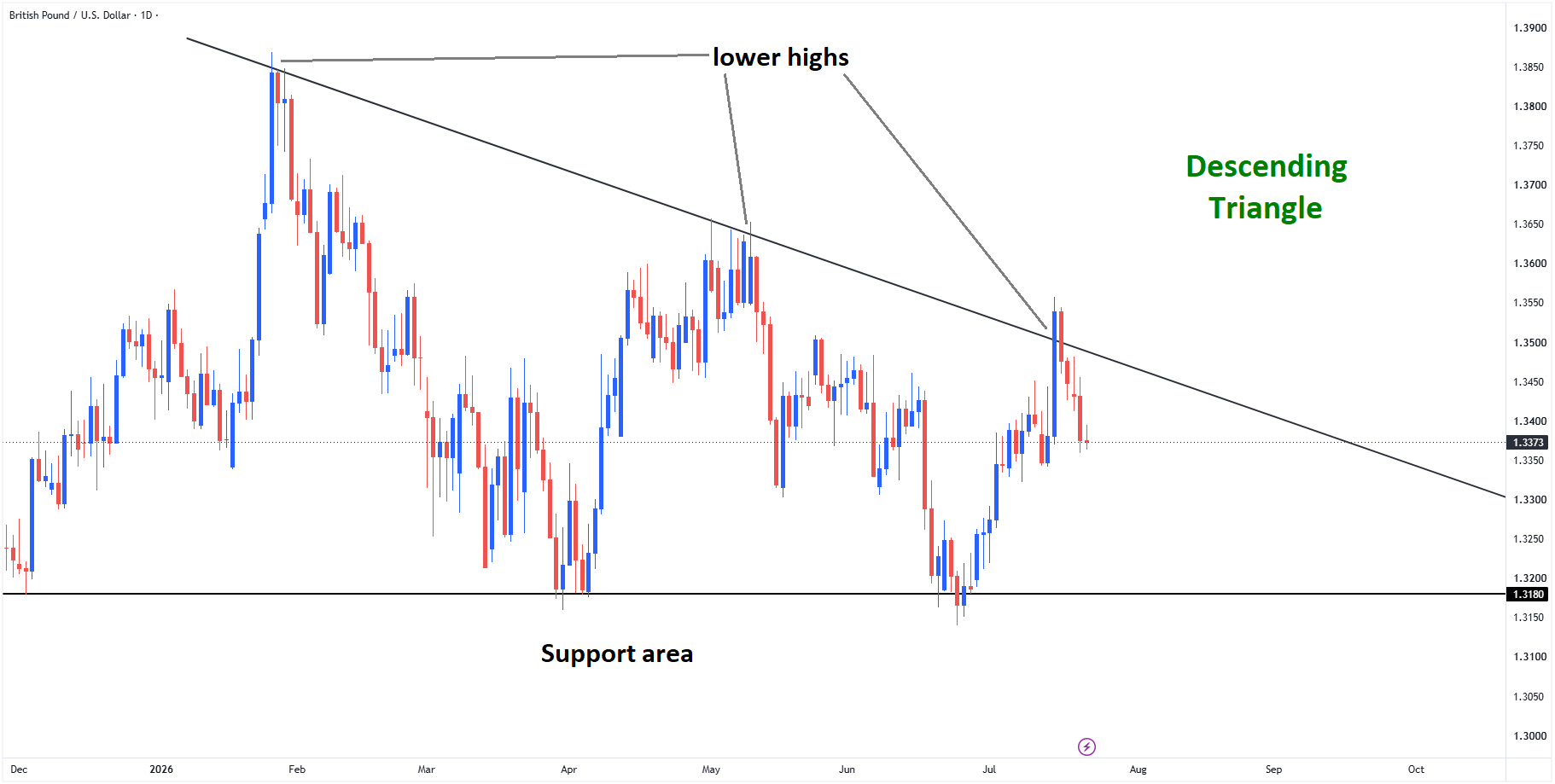
GBPUSD is moving in a descending triangle pattern, and the market has fallen from the lower high area of the pattern

GBPUSD is moving in a descending triangle pattern, and the market has fallen from the lower high area of the pattern

The currency pair has now recorded several days of losses, reflecting a combination of domestic economic uncertainty in the UK and stronger demand for the US Dollar as global risks remain elevated.

UK Inflation Slows More Than Expected

Fresh data released by the UK’s Office for National Statistics showed that inflation continued to ease in June. Consumer prices rose at a slower annual pace than they did in May, coming in below economists’ expectations. This suggests that inflationary pressures are gradually cooling, giving policymakers more room to wait before making any significant changes to interest rates.

While the headline inflation figure softened, core inflation, which excludes more volatile items, remained largely unchanged. This indicates that although overall price growth is slowing, some underlying inflation pressures are still present within the economy.

The latest inflation figures reinforce the view that the Bank of England may continue monitoring incoming data rather than rushing into any immediate policy decisions.

Producer Prices Show Signs of Weak Business Demand

Alongside consumer inflation, producer price data also pointed to weaker pricing pressures across the UK economy.

Input prices, which measure the cost of raw materials purchased by manufacturers, recorded their sharpest monthly decline in more than six years. Output prices, reflecting the prices manufacturers charge for finished goods, remained unchanged despite expectations for an increase.

Annual producer price growth also slowed compared to the previous month. These figures suggest that businesses are experiencing lower cost pressures, which could eventually help keep consumer inflation under control.

However, softer producer prices may also reflect slowing business activity and weaker demand, raising questions about the strength of the UK’s economic recovery.

Bank of England Gains More Time

With inflation easing and producer prices cooling, financial markets believe the Bank of England has more flexibility to maintain its current policy approach.

Instead of acting quickly, policymakers may choose to wait for additional economic data before deciding on any future interest rate moves. A cautious approach allows the central bank to evaluate whether inflation continues to slow while monitoring overall economic growth.

For the British Pound, this outlook offers limited support because investors generally prefer currencies backed by stronger expectations of higher interest rates.

Political Uncertainty Adds Pressure on the Pound

Economic data was not the only factor affecting the British Pound. Investors also reacted cautiously to the early policy direction of Prime Minister Andy Burnham’s new government.

Although many members of the new cabinet are experienced politicians, markets remain uncertain about how the government’s spending plans will affect public finances.

Analysts noted that investors are paying close attention to the government’s upcoming fiscal announcements. Any increase in spending without a clear funding strategy could raise concerns about the UK’s long-term financial outlook.

This uncertainty has contributed to weaker investor confidence, making the Pound one of the weaker-performing major currencies in recent trading sessions.

Cost-of-Living Measures Raise Questions

One of the government’s first major announcements was a plan to reduce Value Added Tax (VAT) on household electricity bills beginning in October.

The move is designed to help families cope with the cost of living by lowering household energy expenses. While consumers may welcome this support, financial markets are focusing on a different question: how these measures will be financed.

Investors are now waiting for additional policy announcements to better understand the government’s overall fiscal strategy. The balance between supporting households and maintaining healthy public finances will likely remain an important issue in the months ahead.

US Dollar Continues to Benefit from Global Uncertainty

US Dollar Surges

While the Pound struggled with domestic challenges, the US Dollar remained well supported.

There have been relatively few major economic reports from the United States this week, but the Dollar has continued attracting demand due to rising geopolitical tensions and stronger government bond yields.

Ongoing conflict in the Middle East has increased global uncertainty, encouraging investors to seek safer assets. Reports of continued military action involving Iran, along with warnings of possible further escalation from US President Donald Trump, have kept geopolitical risks elevated.

Periods of heightened uncertainty often increase demand for the US Dollar because it is widely viewed as one of the world’s safest currencies during times of global stress.

Global Events Continue to Shape Currency Markets

Currency movements are rarely driven by domestic data alone. International developments frequently influence investor decisions, and this week has been another example of that reality.

The combination of softer UK inflation, concerns over government spending, and ongoing geopolitical uncertainty has created a difficult environment for the British Pound.

Meanwhile, the US Dollar has continued benefiting from its traditional safe-haven status as investors remain cautious about global risks.

Until political uncertainty eases and economic confidence improves, these broader global themes are likely to remain important drivers of currency market sentiment.

What Investors Will Be Watching Next

Attention will now shift toward upcoming economic releases and government policy announcements from both the UK and the United States.

Investors will closely monitor whether UK inflation continues to ease, how the Bank of England responds in future meetings, and whether the government’s fiscal plans can reassure financial markets.

At the same time, developments in the Middle East and any changes in global risk sentiment will remain key factors supporting or weakening demand for the US Dollar.

With several major uncertainties still unresolved, market participants are expected to remain cautious while evaluating new economic and political developments.

Summary

The British Pound remained under pressure after weaker-than-expected UK inflation data strengthened expectations that the Bank of England may keep its cautious policy stance. Softer producer price figures also suggested easing inflation pressures across the economy.

Political uncertainty surrounding the new UK government’s spending plans has further reduced confidence in the Pound, while the US Dollar has continued to benefit from global geopolitical tensions and strong investor demand for safe-haven assets.

As markets await further economic data and government policy announcements, both domestic developments in the UK and international events are expected to play a major role in shaping the direction of the GBP/USD currency pair.

USDJPY Weakens as Investors Back the Yen Ahead of Key Bank of Japan Decisions

The Japanese Yen strengthened sharply against major global currencies on Wednesday after reports suggested that the Bank of Japan (BoJ) could move more quickly with interest rate increases than many investors had expected. The renewed optimism around Japan’s monetary policy helped improve demand for the Yen, reversing some of its recent weakness.

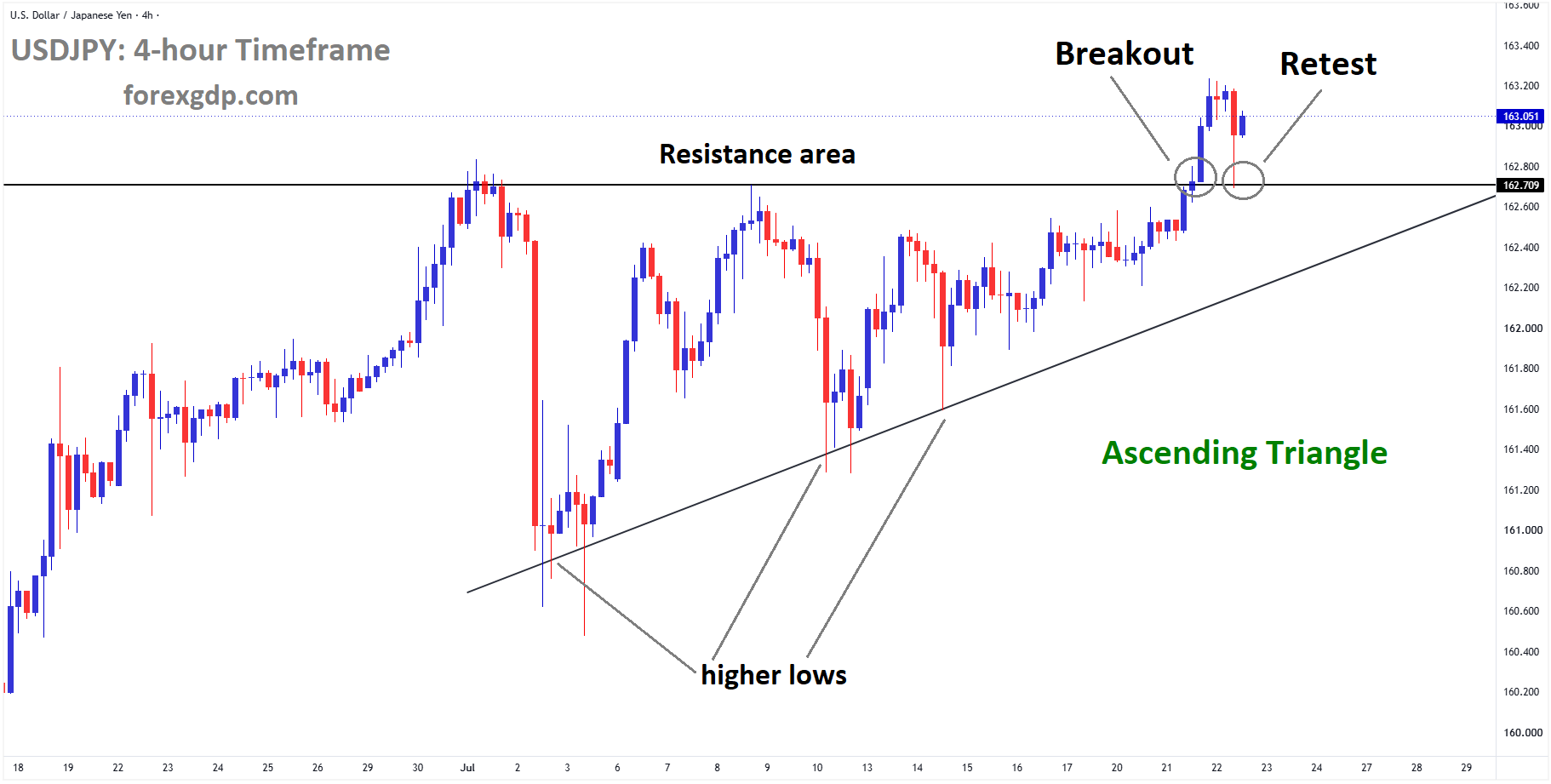
USDJPY reached the retest area of the broken ascending triangle pattern

USDJPY reached the retest area of the broken ascending triangle pattern

The move comes as policymakers continue to monitor rising inflation risks and the impact of a weaker domestic currency on the economy. Investors are also closely watching upcoming inflation data from Japan, which could provide fresh clues about the central bank’s next policy decisions.

Reports Point to a More Hawkish Bank of Japan

The Japanese Yen received a strong boost after a Bloomberg report indicated that Bank of Japan officials are becoming more open to raising interest rates at a faster pace. According to people familiar with the matter, policymakers are increasingly concerned that the prolonged weakness of the Yen could push inflation higher than expected.

This shift in thinking has encouraged traders to believe that the central bank may become more aggressive in tightening monetary policy if inflation pressures continue to build. As expectations changed, investors quickly increased their demand for the Japanese currency.

The report also highlighted that officials are paying close attention to how the weaker Yen affects import costs and consumer prices, making inflation a key factor in future policy decisions.

Weak Yen Raises Inflation Concerns

Over the past several weeks, the Japanese Yen has remained under pressure against many of its global counterparts. While a weaker currency can help exporters by making Japanese goods more competitive overseas, it also increases the cost of imported products such as food, fuel, and raw materials.

Higher import costs often feed into consumer prices, making everyday goods more expensive for households. This has increased concerns among policymakers that inflation could remain elevated if the currency continues to weaken.

As a result, the Bank of Japan appears to be considering whether quicker interest rate increases could help stabilize the currency and reduce inflation risks over the medium term.

Interest Rate Expectations Drive Currency Demand

Interest rate expectations play an important role in currency markets. When investors believe a country’s central bank is likely to raise rates, that country’s currency often becomes more attractive because higher interest rates generally offer better returns for investors.

If the Bank of Japan continues raising borrowing costs, the gap between Japanese interest rates and those of other major central banks could narrow. A smaller interest rate difference may encourage investors to shift more money into Japanese assets, providing additional support for the Yen.

Although expectations have become more positive for the Japanese currency, market participants understand that future policy decisions will depend on incoming economic data and inflation trends.

Focus Shifts to Next Week’s Bank of Japan Meeting

japan bank

Attention is now turning toward the Bank of Japan’s upcoming monetary policy meeting next week. While many economists still expect the central bank to leave interest rates unchanged for now, investors will carefully examine the policy statement and comments from officials for any hints about future plans.

Even if rates remain steady at the upcoming meeting, any indication that the Bank is preparing for additional tightening later this year could continue supporting the Japanese Yen.

Central banks often use their policy guidance to shape market expectations, making every statement closely watched by global investors.

Government Keeps Currency Intervention on the Table

Another factor supporting the Japanese Yen is the possibility of government intervention in the foreign exchange market.

Japan’s Finance Minister, Satsuki Katayama, stated earlier on Wednesday that authorities are prepared to take appropriate action if necessary to address excessive currency movements. While she avoided commenting on specific exchange rate levels, her remarks reinforced the government’s willingness to respond if market conditions become too volatile.

In the past, Japanese authorities have stepped into currency markets to limit rapid declines in the Yen. Even the possibility of such intervention can influence investor behavior, as traders become more cautious about betting against the Japanese currency.

Government intervention remains a tool that officials may consider if they believe market movements are becoming disorderly or harmful to the economy.

Inflation Data Could Shape the Next Move

Before the Bank of Japan announces its next policy decision, investors will receive another important piece of economic information: Japan’s National Consumer Price Index (CPI) for June.

The report will provide an updated view of inflation across the country and may influence expectations about future interest rate decisions. Economists expect the core measure, which excludes fresh food prices, to show stronger annual growth compared with the previous month.

If inflation continues to rise, it would strengthen the argument for the Bank of Japan to continue tightening monetary policy. On the other hand, weaker inflation could reduce pressure on the central bank to act quickly.

Because inflation has become one of the Bank’s primary concerns, the CPI report is expected to attract significant attention from investors around the world.

Global Investors Watch Japan Closely

Japan’s monetary policy has become increasingly important for global financial markets. For many years, the Bank of Japan maintained one of the world’s most accommodative policy approaches, keeping interest rates extremely low.

However, changing inflation conditions have forced policymakers to gradually adjust their strategy. Any further shift toward tighter monetary policy could have wide-ranging effects not only on the Japanese economy but also on global investment flows and currency markets.

Investors are therefore paying close attention to every economic report and every statement from Japanese officials as they try to anticipate the next stage of the Bank of Japan’s policy path.

Summary

The Japanese Yen strengthened after reports suggested that the Bank of Japan may be prepared to speed up its interest rate increases as concerns over inflation continue to grow. Expectations of a more hawkish central bank, combined with the possibility of government intervention to support the currency, encouraged fresh buying of the Yen.

Looking ahead, all eyes will be on Japan’s June inflation data and next week’s Bank of Japan policy meeting. Together, these events could provide valuable insight into whether the central bank is ready to move more aggressively in its efforts to control inflation and support the Japanese economy.

AUDUSD Pushes Higher Beyond 0.7000 on Growing RBA Tightening Expectations

The Australian Dollar is gaining strength against the US Dollar during Wednesday’s early Asian trading session as investors become more confident that the Reserve Bank of Australia (RBA) could raise interest rates again later this year. Growing concerns over inflation, driven by rising energy costs linked to the ongoing conflict between the United States and Iran, have increased expectations that Australian policymakers may need to tighten monetary policy further.

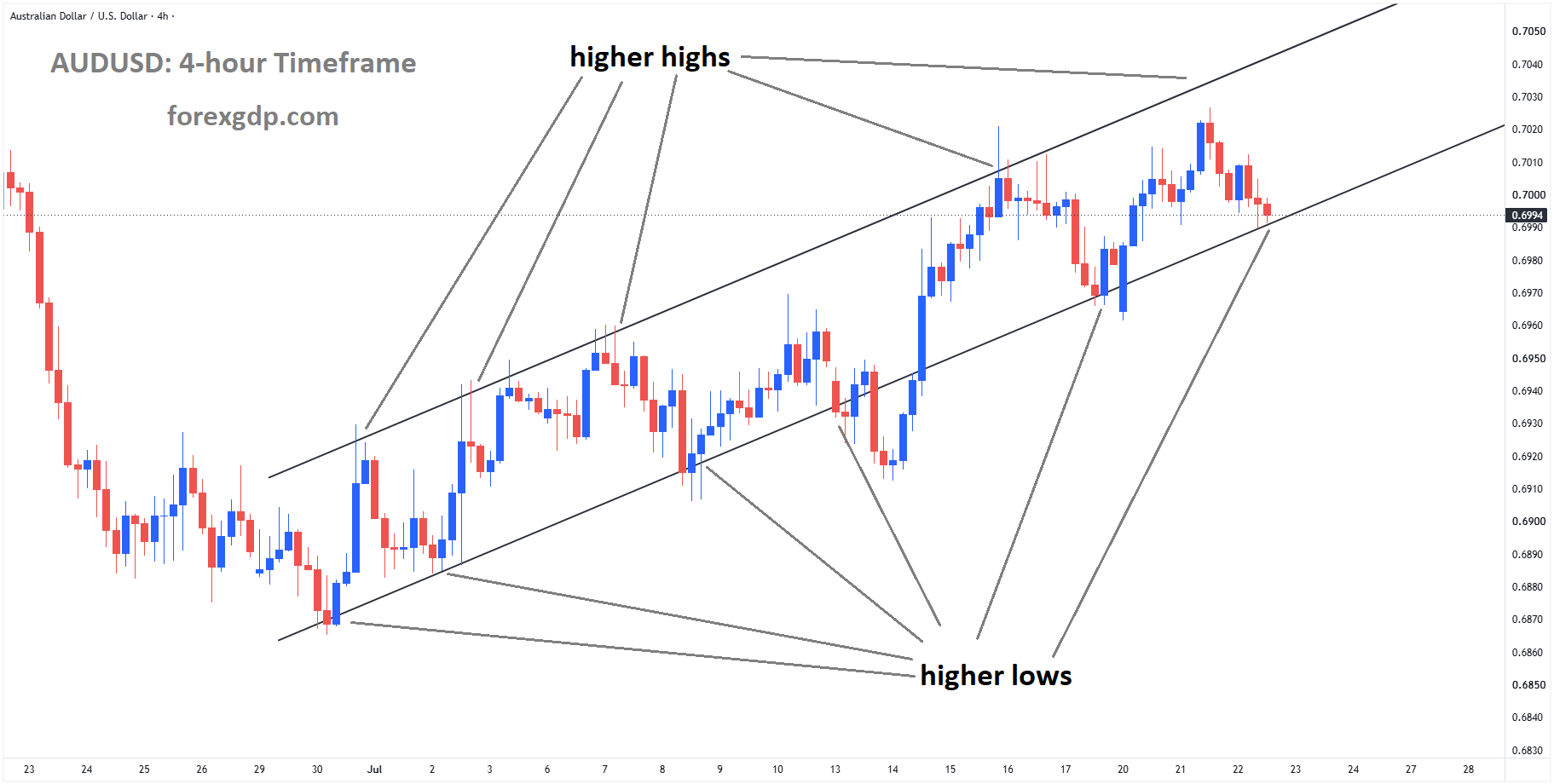
AUDUSD reached a higher low area of the ascending channel

AUDUSD reached a higher low area of the ascending channel

At the same time, traders are preparing for Australia’s upcoming employment report, which could play an important role in shaping expectations for the country’s economic outlook and future interest rate decisions.

Australian Dollar Finds Support from Rate Hike Expectations

The Australian Dollar has received fresh support as financial markets increasingly expect the Reserve Bank of Australia to consider another interest rate increase. While the central bank paused its tightening cycle at its latest meeting, officials have continued to monitor inflation risks closely.

Earlier this year, the RBA raised interest rates three times in a row in an effort to control inflation. Although policymakers chose to leave rates unchanged at their June meeting, the latest developments in global energy markets have created new concerns about future price pressures.

If inflation remains stubborn due to higher fuel and energy costs, the central bank may decide that additional policy tightening is necessary. This expectation has helped improve confidence in the Australian Dollar.

Middle East Conflict Fuels Inflation Concerns

One of the biggest factors influencing market sentiment is the ongoing conflict between the United States and Iran. As military tensions continue to escalate, investors worry that disruptions to global energy supplies could push oil prices higher.

Higher energy prices often increase transportation, manufacturing, and household costs, making inflation more difficult for central banks to control. This possibility has encouraged traders to believe that the Reserve Bank of Australia may have to keep borrowing costs higher for longer or even introduce another rate increase.

As geopolitical uncertainty grows, global markets are carefully watching every development from the Middle East, knowing that any further escalation could have widespread economic consequences.

Markets Increase Bets on Another RBA Move

Investor expectations for another RBA interest rate hike have strengthened over recent weeks. Following renewed military action in the Middle East, market participants have become more convinced that inflation risks are rising again.

Current market pricing suggests that the probability of another rate increase has improved, with investors expecting the possibility of further tightening before the end of the year. These changing expectations have provided additional support for the Australian Dollar against the US Dollar.

However, future policy decisions will still depend heavily on incoming economic data, particularly inflation, employment, and consumer spending.

Australian Employment Report Takes Center Stage

Australian Dollar Gains

The next major event for the Australian economy will be the release of the June employment report. This data is closely watched because it provides valuable insight into the strength of the country’s labor market.

Economists expect moderate job growth during the month, while the unemployment rate is forecast to remain unchanged. If employment growth exceeds expectations and unemployment remains stable or improves, it would reinforce confidence that Australia’s economy continues to perform well despite global uncertainties.

A stronger labor market could also strengthen the argument for the Reserve Bank of Australia to consider another interest rate increase if inflation remains elevated.

On the other hand, weaker-than-expected employment figures may reduce expectations for immediate policy tightening and limit further gains for the Australian Dollar.

Safe-Haven Demand Continues to Support the US Dollar

While the Australian Dollar has benefited from rising expectations of higher interest rates, the US Dollar continues to receive support from its traditional role as a safe-haven currency.

Whenever geopolitical tensions increase, investors often move their money into assets considered more stable during periods of uncertainty. The US Dollar remains one of the world’s most trusted safe-haven currencies, attracting demand whenever global risks intensify.

This creates competing forces for the AUD/USD pair. On one side, expectations of tighter Australian monetary policy support the Australian Dollar. On the other, growing geopolitical uncertainty encourages investors to buy the US Dollar for safety.

Military Tensions Continue to Rise

The conflict between the United States and Iran has shown little sign of easing. Reports indicate that the US military has carried out another consecutive round of strikes targeting locations inside Iran, while Iranian officials have warned that they are prepared to expand their response if further attacks occur.

These developments have increased fears of a broader regional conflict involving additional countries. Such uncertainty has raised concerns across global financial markets, particularly regarding energy supplies, inflation, and overall economic stability.

As long as diplomatic efforts remain unsuccessful, markets are likely to remain highly sensitive to headlines related to the conflict.

Investors Balance Economic Data and Global Risks

Financial markets are currently balancing two major themes. The first is the outlook for central bank policy, especially whether higher inflation will force the Reserve Bank of Australia to raise interest rates again. The second is the growing geopolitical uncertainty surrounding the Middle East.

Economic reports, particularly Australia’s employment figures, will provide important clues about the health of the domestic economy. At the same time, every update regarding the US-Iran conflict has the potential to quickly shift investor sentiment.

This combination of economic data and geopolitical developments is expected to keep currency markets active over the coming days.

Summary

The Australian Dollar has gained momentum as investors increasingly expect the Reserve Bank of Australia could resume raising interest rates if inflation remains elevated. Rising energy costs linked to the ongoing US-Iran conflict have strengthened those expectations by increasing concerns about future price pressures.

Attention now turns to Australia’s June employment report, which could significantly influence expectations for future RBA policy decisions. Meanwhile, continued military tensions in the Middle East are supporting demand for the US Dollar as a safe-haven asset. With both economic data and geopolitical developments driving market sentiment, the AUD/USD pair is likely to remain influenced by these competing forces in the near term.

NZDUSD Under Pressure as Investors Favor the US Dollar Over the Kiwi

The New Zealand Dollar has remained under pressure against the US Dollar in recent trading, marking several consecutive sessions of weakness. While investors have continued to favor the US Dollar during periods of uncertainty, stronger-than-expected inflation data from New Zealand has provided an important source of support for the Kiwi.

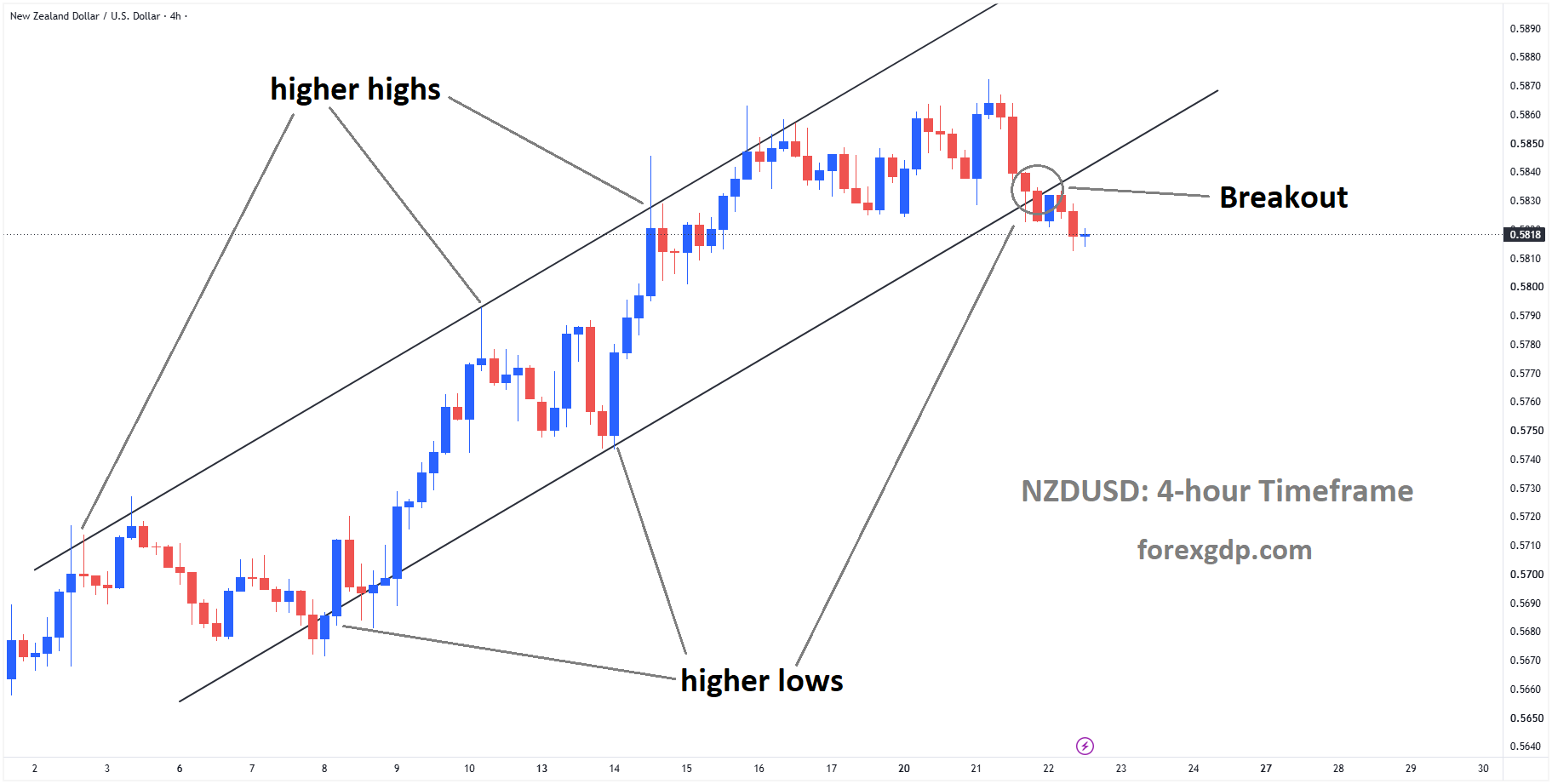
NZDUSD has broken the ascending channel on the downside

NZDUSD has broken the ascending channel on the downside

The latest inflation figures have strengthened expectations that the Reserve Bank of New Zealand (RBNZ) could continue raising interest rates later this year. At the same time, rising geopolitical tensions involving the United States and Iran have encouraged investors to seek safer assets, increasing demand for the US Dollar and creating additional challenges for the New Zealand currency.

Strong Inflation Keeps Pressure on the RBNZ

One of the biggest developments supporting the New Zealand Dollar is the country’s latest inflation report. Annual inflation accelerated during the second quarter, rising above both market forecasts and the RBNZ’s own expectations. The increase also pushed inflation to its highest level since the end of 2023.

Although inflation has eased from the extremely high levels seen in previous years, it still remains comfortably above the Reserve Bank’s target range of 1% to 3%. This suggests that price pressures continue to be stronger than policymakers would like.

For the central bank, persistent inflation creates a difficult challenge. Keeping inflation under control remains a priority, and stronger price growth increases the possibility that additional policy tightening may be needed in the months ahead.

September Rate Hike Expectations Gain Strength

The latest inflation figures have reinforced market expectations that the RBNZ could deliver another interest rate increase at its September meeting.

Earlier this month, the central bank raised interest rates for the first time in three years, signaling that policymakers remain focused on controlling inflation despite concerns about economic growth. That decision surprised some market participants and highlighted the bank’s determination to prevent inflation from becoming deeply rooted in the economy.

Recent comments from RBNZ Chief Economist Paul Conway have also supported this outlook. He has warned that inflation remains stubborn and may take longer to return to the desired range than previously expected.

With inflation continuing to surprise on the upside, investors now believe there is a stronger chance that the central bank will continue tightening monetary policy if economic conditions require it.

Higher Interest Rates Could Benefit the New Zealand Dollar

Interest rate expectations often play an important role in currency movements. When investors believe a central bank may continue raising rates, the country’s currency can receive additional support because higher rates generally make financial assets more attractive.

The stronger inflation report has therefore helped improve confidence in the New Zealand Dollar, even though broader market conditions have limited its gains.

Much will depend on future economic data. If inflation remains elevated and other indicators continue to show resilience, expectations for additional policy tightening could remain firm throughout the coming months.

Safe-Haven Demand Supports the US Dollar

Despite positive developments for New Zealand, the US Dollar has continued to attract buyers as geopolitical uncertainty increases.

Growing tensions between the United States and Iran have made investors more cautious. During periods of political uncertainty or global conflict, financial markets often shift toward assets that are considered relatively safer. The US Dollar has traditionally benefited from this type of risk-averse environment.

As investors reduce exposure to riskier assets, demand for the US Dollar tends to increase. This has created additional pressure on currencies like the New Zealand Dollar, even when domestic economic news has been encouraging.

The combination of geopolitical uncertainty and cautious investor sentiment has therefore helped keep the US Dollar supported.

Federal Reserve Expectations Remain in Focus

fed and Usa flag

Another important factor influencing currency markets is the outlook for US monetary policy.

Although many investors expect the Federal Reserve to keep interest rates unchanged at its upcoming policy meeting, expectations for future tightening have not disappeared completely.

Market pricing continues to suggest that there is a meaningful possibility of another interest rate increase later this year if inflation remains persistent or the US economy continues to show strength.

This outlook has helped maintain support for the US Dollar. Even without an immediate rate hike, investors remain attentive to every piece of economic data and every statement from Federal Reserve officials for clues about the future direction of policy.

As long as expectations for tighter monetary policy remain alive, the US Dollar is likely to retain an important source of strength.

Competing Forces Drive NZD/USD Movement

The New Zealand Dollar is currently being influenced by two powerful but opposing forces.

On one side, stronger domestic inflation supports expectations for further RBNZ policy tightening, which could provide ongoing support for the Kiwi.

On the other side, increased demand for safe-haven assets and expectations that the Federal Reserve could maintain a relatively firm policy stance continue to strengthen the US Dollar.

This creates a balanced environment where positive domestic developments in New Zealand compete with broader global market concerns.

Investors will continue monitoring incoming economic reports from both countries, along with any changes in geopolitical conditions, as these factors are likely to determine the pair’s next major direction.

Inflation and Global Risks Will Remain Key Drivers

Looking ahead, both inflation trends and global political developments are expected to remain at the center of market attention.

For New Zealand, future inflation readings, employment data, and comments from RBNZ officials will influence expectations regarding additional interest rate decisions.

Meanwhile, developments involving the United States, including Federal Reserve policy expectations and geopolitical events, will continue to shape overall investor sentiment.

If inflation remains stubborn in New Zealand while global tensions begin to ease, the Kiwi could receive stronger support. However, if uncertainty continues to dominate financial markets, demand for the US Dollar may remain elevated.

Summary

The New Zealand Dollar has faced continued pressure against the US Dollar despite stronger-than-expected inflation data at home. Rising inflation has strengthened expectations that the Reserve Bank of New Zealand could raise interest rates again in September, supporting the outlook for the Kiwi. However, growing geopolitical tensions between the United States and Iran have increased demand for safe-haven assets, helping the US Dollar remain resilient. At the same time, investors continue to watch the Federal Reserve closely, as expectations for future policy tightening remain an important influence on global currency markets.


Don’t trade all the time, trade forex only at the confirmed trade setups

Get more confirmed trade signals at premium or supreme – Click here to get more signals, 2200%, 800% growth in Real Live USD trading account of our users – click here to see , or If you want to get FREE Trial signals, You can Join FREE Signals Now!

Also read