
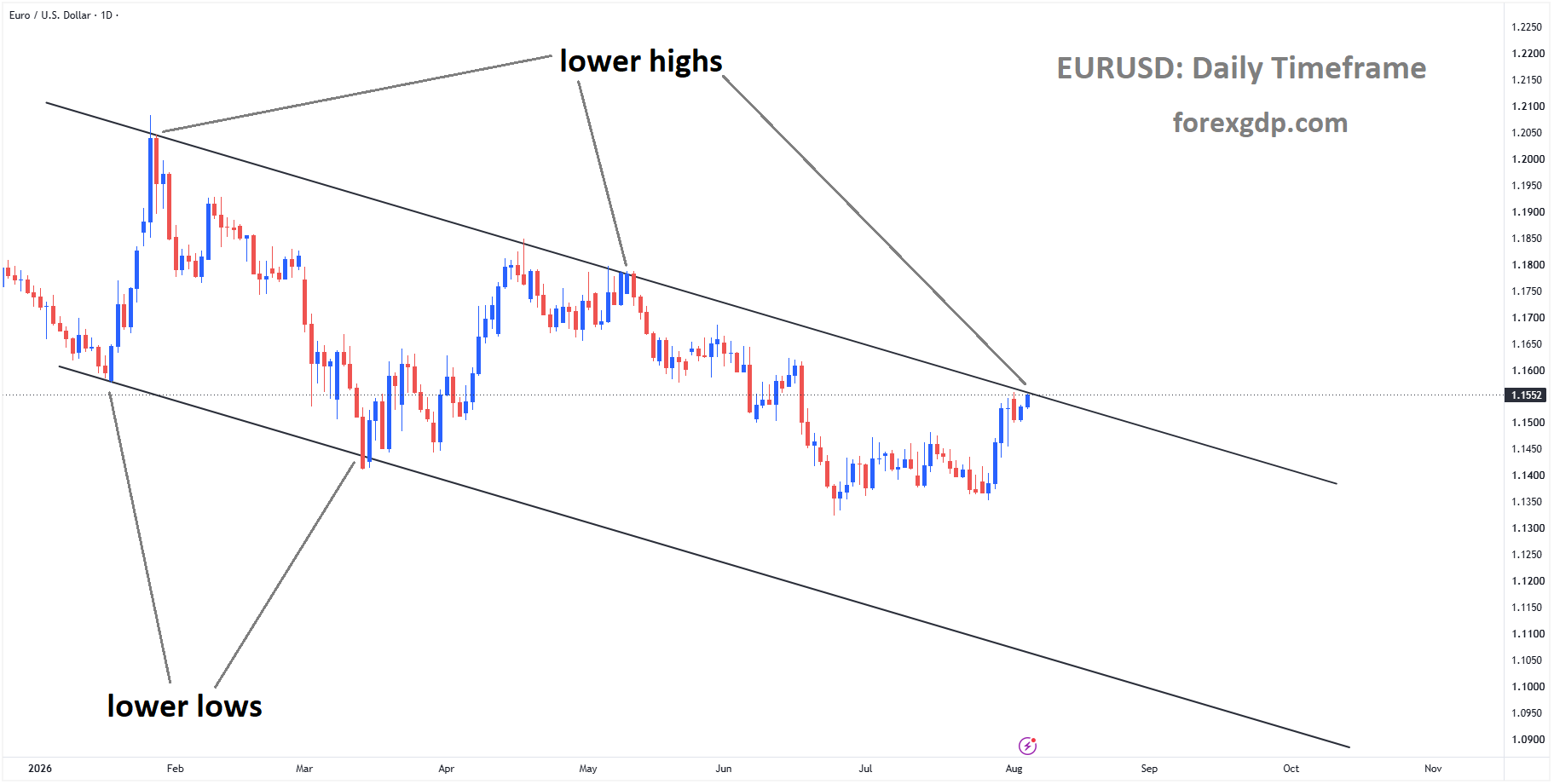
EURUSD reached the lower high area of the descending channel
EURUSD Strengthens as Revised Services Report Boosts Euro Sentiment
The Euro maintained a slightly stronger position against the US Dollar on Wednesday as improving Eurozone services data and a more positive global mood supported demand for the common currency. Investors welcomed signs that business activity in the region is beginning to recover after several difficult months.
A better-than-expected final reading for the Eurozone services sector offered fresh evidence that economic conditions may be stabilizing. At the same time, hopes for a diplomatic solution involving Iran helped calm concerns about a wider conflict in the Middle East.
Falling oil costs also improved the outlook for European economies, many of which depend heavily on imported energy. This combination of encouraging regional data, lower energy pressure, and stronger risk appetite allowed the Euro to hold on to modest gains.
The US Dollar, meanwhile, faced pressure following disappointing economic reports from the United States. Weaker job openings and a contraction in factory orders raised further questions about the strength of the American economy and the Federal Reserve’s next policy move.
Eurozone Services Sector Returns to Growth
The final HCOB Eurozone Services Purchasing Managers’ Index was revised slightly higher in July. More importantly, the index moved back above the level that separates expansion from contraction.
The result confirmed that the services sector returned to growth after shrinking for three consecutive months. It also marked a clear improvement from June, when activity remained under pressure.
Services play a major role in the Eurozone economy. The sector includes industries such as banking, tourism, transportation, hospitality, insurance, healthcare, and professional services. When services activity expands, it can support employment, consumer spending, and overall economic confidence.
The July improvement does not mean that every weakness has disappeared. Growth remains limited, and businesses across the region are still dealing with uncertain demand, high operating costs, and global trade risks. However, the return to expansion is an encouraging development after the disappointing performance recorded during the previous quarter.
The upward revision also suggests that the regional economy may be showing greater resilience than earlier estimates indicated. Although the improvement was small, it helped strengthen the view that the Eurozone is gradually moving away from a period of stagnation.
Germany Improves While France Remains Under Pressure
Economic conditions were mixed across the Eurozone’s largest member states.
Germany’s final services reading was revised higher than the initial estimate. Activity remained slightly below the expansion point, but the result showed a meaningful improvement compared with June.
This matters because Germany has struggled with weak growth, falling industrial demand, and cautious consumer spending. The country’s service industries have also faced pressure from high costs and reduced business confidence. A move closer to stabilization may therefore provide some reassurance that the slowdown is becoming less severe.
France delivered a less positive result. Its services reading was revised lower from the preliminary estimate and remained in contraction. Even so, the July figure was considerably better than the weak result reported in June.
France’s services sector has faced challenges linked to political uncertainty, softer demand, and cautious business activity. The latest data show that the sector is still shrinking, but the pace of decline appears to be slowing.
Italy and Spain provided a stronger contribution to the regional picture. Services activity in both countries remained in expansion territory, helping lift the overall Eurozone result. Their continued growth highlights the uneven nature of the European recovery, with southern economies performing better than some of the region’s larger northern members.
Lower Oil Costs Offer Relief to European Economies
Declining oil costs are another important source of support for the Eurozone. The region imports a large share of the crude oil and energy products it consumes, making its economy sensitive to changes in global energy markets.
When oil becomes less expensive, transportation, manufacturing, and logistics companies often face lower operating costs. Households may also experience less pressure from fuel and energy expenses, leaving them with more money for other purchases.
Lower energy costs can also help reduce inflation. This is especially important for the Eurozone because the sharp rise in energy expenses during recent years placed heavy pressure on consumers and businesses. Although inflation has eased from its earlier highs, policymakers continue to watch energy developments closely.
Cheaper oil does not solve all of Europe’s economic problems, but it can provide valuable breathing room. It may support company profit margins, improve household confidence, and reduce the cost of imported goods.
Countries with limited domestic energy supplies stand to benefit the most. For the wider Eurozone, a sustained reduction in oil expenses could improve the trade balance and strengthen the outlook for economic activity.
Diplomatic Hopes Improve Global Risk Sentiment
Investor confidence also received support from hopes that tensions involving the United States and Iran could be resolved through negotiations.
The possibility of a diplomatic breakthrough reduced immediate fears of a larger Middle East conflict. Such conflicts can disrupt energy supplies, damage international trade routes, and increase demand for traditional safe-haven assets.
When geopolitical fears begin to ease, investors are often more willing to hold currencies and assets linked to global growth. This shift can benefit the Euro while reducing demand for the US Dollar as a defensive currency.
However, the situation remains uncertain. Diplomatic discussions can change quickly, and any renewed escalation could reverse the improvement in market sentiment. For now, the possibility of a negotiated outcome has encouraged a moderately positive mood.
The resulting decline in oil costs has been particularly helpful for Europe. It gives the Eurozone both a direct economic benefit through cheaper energy imports and an indirect benefit through stronger global confidence.
Weak US Data Limits Support for the Dollar
The US Dollar struggled to gain momentum after economic reports pointed to softer conditions in the United States.
Job openings fell by more than economists had expected, suggesting that demand for workers may be cooling. A decline in available positions can indicate that employers are becoming more cautious about hiring as they respond to slower demand and an uncertain economic outlook.
Factory orders also contracted despite expectations for a better result. Weak orders can signal reduced demand for manufactured products and may lead businesses to limit production or delay investment.
Together, these reports added to concerns that parts of the US economy are losing strength. They also influenced expectations surrounding the Federal Reserve’s future interest-rate decisions.
Investors became less confident that the central bank would deliver another rate increase at its September meeting. Reduced expectations for tighter monetary policy can weigh on the Dollar because higher interest rates normally make a currency more attractive to international investors.
The Federal Reserve will still consider a wide range of information before making its decision. Inflation, employment, consumer spending, and economic growth will all remain important. Nevertheless, Wednesday’s weaker reports provided little support for those expecting a more aggressive policy approach.
Summary
The Euro held modest gains as several developments improved its near-term outlook. Eurozone services activity returned to expansion in July, supported by stronger performances in countries such as Italy and Spain. Germany moved closer to stabilization, while France continued to contract at a slower rate than in June.
Lower oil costs offered additional relief to energy-dependent European economies by reducing pressure on businesses, consumers, and inflation. Hopes for a diplomatic settlement involving Iran also encouraged a more positive global mood.
At the same time, disappointing US job openings and factory orders weakened support for the Dollar and reduced confidence in another Federal Reserve rate increase. Although the economic picture remains uneven, improving services activity and easing energy pressure have given the Eurozone some welcome signs of resilience.
GBPUSD Retreats While Renewed US Currency Demand Weighs on Sterling
The British Pound lost ground against the US Dollar after recording a modest improvement in the previous session. Renewed demand for the Greenback emerged as US Treasury yields recovered, while investors continued to assess diplomatic developments in the Middle East and the latest policy signals from the Bank of England.
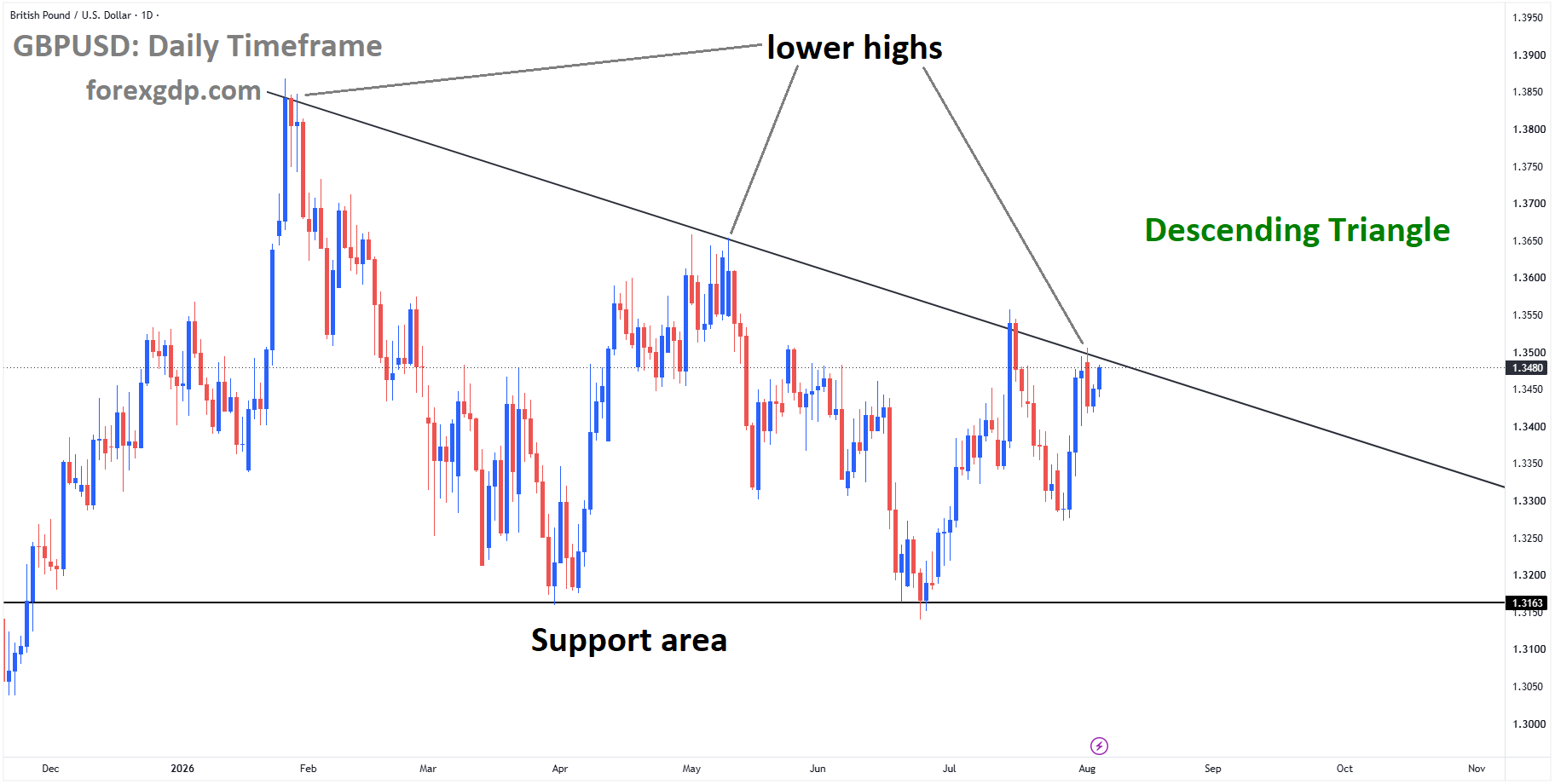
GBPUSD reached the lower high area of the descending triangle pattern
Sterling trading remained relatively quiet due to a limited UK economic calendar. Without major domestic reports to guide sentiment, investors focused on global bond markets, central bank expectations, energy conditions, and negotiations surrounding the Strait of Hormuz.
The wider picture remains mixed. The US Dollar has received near-term support from stronger Treasury yields, but progress in talks between Washington and Tehran has reduced some of the demand for traditional safe-haven assets. Meanwhile, the Pound faces its own challenges after the Bank of England indicated that it is not eager to tighten monetary policy.
Treasury Yield Recovery Lifts the US Dollar
A rebound in the benchmark 10-year US Treasury yield helped strengthen the US Dollar. Government bond yields can influence currency demand because higher yields may make Dollar-denominated assets more attractive to international investors.
The recovery followed an earlier decline in Treasury yields caused partly by falling energy costs. Lower energy prices can reduce concerns about inflation because fuel and transportation expenses affect businesses and households across the economy. When energy becomes less expensive, markets may expect inflation pressures to ease more quickly.
That possibility had reduced expectations that the Federal Reserve would need to take a more aggressive policy position. Investors generally become less confident about the Dollar when they believe US interest rates may not stay elevated for as long as previously expected.
However, the later recovery in Treasury yields gave the Greenback fresh momentum. This created selling pressure for GBP/USD, even though the overall market mood remained cautious.
The future direction of the US Dollar will depend partly on how investors balance inflation risks against signs of slower price growth. Federal Reserve expectations are likely to remain sensitive to energy developments, government bond movements, and incoming US economic information.
Hormuz Negotiations Reduce Safe-Haven Demand
Diplomatic progress involving the United States and Iran has introduced another important factor for currency markets. Officials from Qatar announced that an interim proposal had been prepared to support the reopening of the Strait of Hormuz.
Both Washington and Tehran reportedly signaled that meaningful progress had been made. The development raised hopes that access to the strategically important maritime route could be restored without a wider military confrontation.
The Strait of Hormuz plays a major role in international trade, particularly in the transportation of energy supplies. Disruption in the area can increase fears about shipping delays, supply shortages, and higher business costs. It can also encourage investors to move money into assets viewed as safer during periods of uncertainty.
The US Dollar often benefits from this kind of defensive demand. However, signs of diplomatic improvement can reverse part of that movement as investors become more willing to hold other currencies and risk-sensitive assets.
US President Donald Trump’s decision to pause planned military strikes against Iran also helped create room for negotiations. Although the administration continued to call for the immediate reopening of the waterway, the suspension of military action lowered fears of an imminent escalation.
If discussions continue to move forward, safe-haven demand for the Dollar could weaken further. On the other hand, any breakdown in negotiations may quickly revive concerns about regional security and global energy supplies.
Quiet UK Trading Limits Sterling Momentum
The British Pound showed only limited movement during a session with little major UK economic news. Scotiabank strategists said Sterling was slightly stronger at one stage, but they also noted that the absence of fresh British data restricted volatility.
UK government bonds also performed less strongly than some European bonds. Even so, the Pound remained broadly stable against the Euro, highlighting the calm mood across British markets.
When the economic calendar is quiet, Sterling often becomes more sensitive to developments outside the United Kingdom. Changes in US Treasury yields, global risk appetite, energy markets, and expectations surrounding the Federal Reserve can all have a stronger influence.
This environment left the Pound without a clear domestic reason to extend its earlier gains. Investors instead continued to examine the message from the Bank of England and what it could mean for future borrowing costs.
Bank of England Signals Patience on Interest Rates
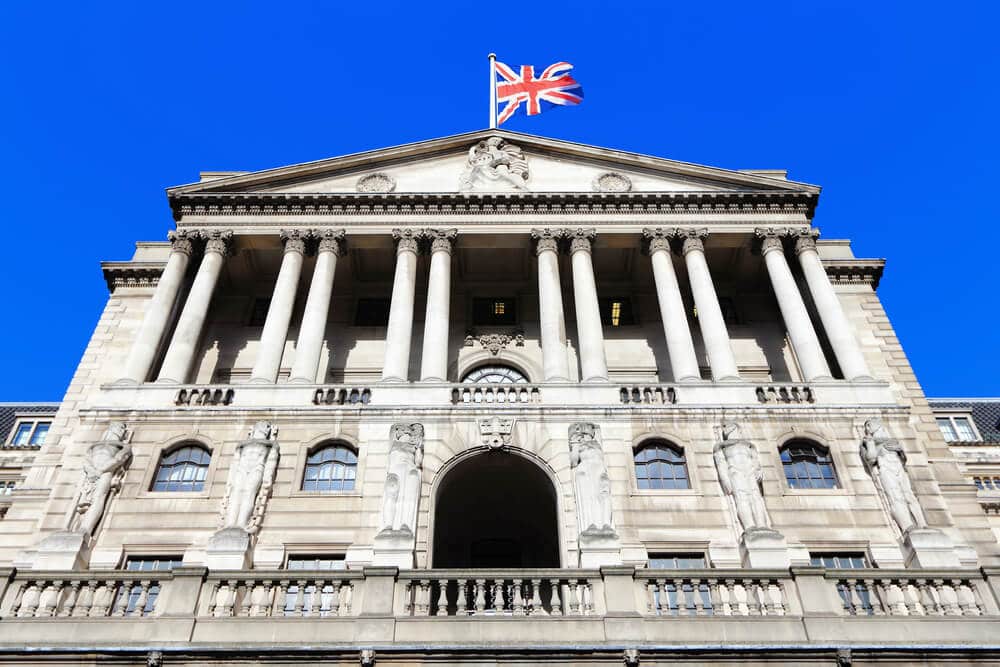
The Bank of England’s latest policy meeting encouraged markets to reduce expectations for interest rate increases in 2026. Policymakers made it clear that they were not in a hurry to tighten monetary conditions.
The Monetary Policy Committee voted by six members to three to keep interest rates unchanged. Three officials supported an increase, which was a larger minority than many observers had expected. Despite that split, the wider message from the meeting was cautious rather than strongly supportive of higher rates.
Governor Andrew Bailey said the process of bringing inflation down remained on course. His comments suggested that the central bank did not see an immediate need to raise borrowing costs.
Some policymakers also indicated that interest rate cuts could return to the discussion if tensions in the Middle East continued to ease. A calmer regional environment could lower the risk of energy supply disruption and reduce the danger of another inflation surge.
This matters for Sterling because interest rate expectations are a major influence on currency demand. Investors may find a currency more attractive when they expect its central bank to offer relatively higher returns. When the possibility of future rate increases declines, that source of support can weaken.
The Bank of England must still remain careful. Inflation may be moving in the desired direction, but geopolitical events, energy costs, wage growth, and domestic demand could all change the outlook. For now, policymakers appear willing to wait for clearer evidence before making another significant decision.
Mixed Forces Shape the Pound’s Outlook
The outlook for GBP/USD is being shaped by competing influences. Stronger US Treasury yields are supporting the Dollar, while reduced expectations for Bank of England rate increases are limiting demand for the Pound.
At the same time, diplomatic progress over the Strait of Hormuz could weaken the Greenback by reducing the need for safe-haven assets. Falling energy risks may also support the wider global economy and ease inflation concerns in both the United States and the United Kingdom.
Scotiabank’s broader view of Sterling remained cautiously positive, although the bank also highlighted the lack of a decisive direction in recent months. With few immediate UK data releases available to change sentiment, the Pound may continue to react mainly to global developments and shifting central bank expectations.
Summary
GBP/USD moved lower as recovering US Treasury yields strengthened the US Dollar. However, progress in negotiations between the United States and Iran may limit further Dollar demand by easing concerns about the Strait of Hormuz and reducing investor interest in safe-haven assets.
Sterling remains under pressure from the Bank of England’s patient policy stance. Markets have lowered expectations for interest rate increases in 2026 after officials indicated that inflation was continuing to cool and that future cuts could be reconsidered if Middle East tensions ease. With UK trading conditions subdued, global bond movements, diplomacy, energy risks, and central bank signals are likely to remain the main drivers of the currency pair.
USDJPY Gains Momentum as Traders Await US Jobs Report
The Japanese Yen gave up its earlier advance against the US Dollar during Wednesday’s European trading session. The currency had performed strongly over the previous few days, but investors became more cautious about whether that recovery could continue without broader changes in the Japanese and US economies.
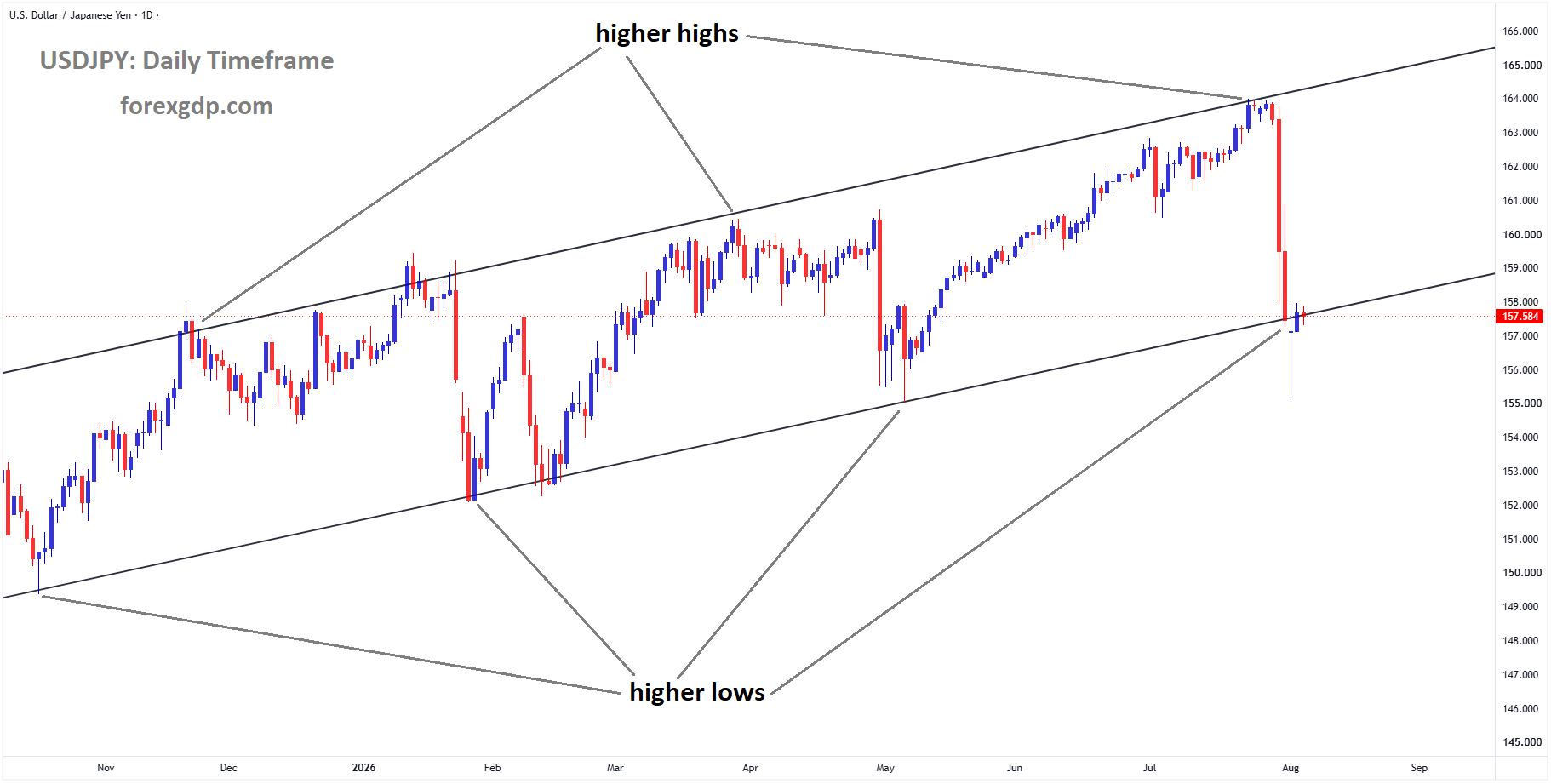
USDJPY reached the higher low area of the ascending channel
Recent official action by Japan and the United States helped the Yen regain some ground. Japan’s Ministry of Finance said the coordinated effort was intended to address excessive volatility and disorderly movements that had affected the currency in recent months.
The involvement of both countries gave the intervention greater importance. It also sent a clear message that officials were uncomfortable with the speed and scale of the Yen’s decline. However, the immediate effect began to weaken as attention returned to the economic forces that had placed the Japanese currency under pressure in the first place.
Many analysts believe intervention can influence currency movements for a limited period, particularly when it is coordinated by major governments. Even so, official buying alone may not be enough to produce a lasting recovery.
Joint Intervention Offers Short-Term Support
Currency intervention usually involves authorities entering the foreign exchange market to influence the value of a currency. In this case, the goal was to support the Yen and reduce unstable trading conditions.
Coordinated intervention can be more effective than action taken by Japan alone. Support from the United States adds credibility and may encourage investors to reduce bets against the Yen. It can also create uncertainty among traders who expect the Japanese currency to continue weakening.
Analysts at MUFG believe the recent measures could provide useful near-term support. However, they expect the scale of US involvement to remain relatively limited. In their view, intervention may slow the Yen’s decline and discourage aggressive market positions, but it cannot permanently change the direction of the currency.
The central issue is that intervention does not remove the economic reasons behind long-term Yen weakness. It can calm the market, reduce speculation and create breathing room for policymakers. For the recovery to become sustainable, Japan’s economic fundamentals would also need to improve in a way that increases demand for Yen-based investments.
This means the authorities may have succeeded in buying time, but the next steps taken by Japan’s government and central bank will be more important for the currency’s longer-term outlook.
Economic Fundamentals Remain the Main Challenge
The Yen has faced years of pressure partly because of the large difference between Japanese and US interest rates. Higher borrowing costs in the United States have generally made Dollar-based assets more attractive to global investors.
Japan has started moving away from the extremely loose monetary policy that shaped its economy for many years. Still, the Bank of Japan has followed a cautious approach because rapid rate increases could create new difficulties for households, companies and the government.
TD Securities also views the intervention as an attempt to create more time for domestic policies to influence the market. According to the firm’s analysts, Japanese officials may be hoping that fiscal measures will eventually strengthen global demand for assets denominated in Yen.
The success of that strategy could depend on whether Japan can attract more international investment and generate stronger economic growth. A meaningful improvement in wages, consumer spending and inflation quality could help the Bank of Japan continue normalizing monetary policy.
At the same time, developments in the United States will remain highly influential. If the US economy weakens and the Federal Reserve becomes more willing to lower interest rates, the gap between American and Japanese monetary policy could begin to narrow. That would reduce one of the main disadvantages facing the Yen.
Without such a change, analysts warn that official intervention may only interrupt the broader trend rather than reverse it.
Bank of Japan Policy Faces Growing Attention

Investors are now watching the Bank of Japan for signs that it could raise interest rates more consistently. A faster series of increases would make Japanese assets more attractive and could provide stronger support for the currency.
However, the central bank must balance currency concerns against conditions in the domestic economy. Raising rates too quickly could increase financing costs and place pressure on sectors that have become used to very low borrowing costs.
The Bank of Japan therefore faces a difficult choice. A slow approach may not be enough to support the Yen, while an aggressive policy shift could create economic risks at home.
Government spending and other fiscal measures may also play a role. Policies that encourage investment, improve productivity and strengthen economic demand could help build a more durable foundation for the currency. These changes would take time, which explains why intervention is often described as a temporary bridge rather than a complete solution.
US Employment Reports Move Into Focus
While Japan’s policies remain central to the Yen’s outlook, investors are also preparing for important US labor market figures.
The ADP Employment Change report for July is expected to offer an early indication of hiring conditions in the private sector. Economists at Deutsche Bank anticipate a modest improvement from the previous month, suggesting that private employers continued to add workers despite signs of slower economic activity.
The ADP report can influence expectations for Federal Reserve policy, although it does not always predict the government’s official employment figures accurately. A stronger reading could suggest that the US labor market remains resilient, potentially giving the Fed more reason to be patient before reducing borrowing costs.
A weaker result could have the opposite effect. Evidence of a sharper slowdown in hiring may strengthen expectations that the central bank will take a more supportive policy approach.
The main event of the week will be the US Nonfarm Payrolls report for July. The data will provide a broader view of job creation, unemployment and wage conditions across the American economy.
Federal Reserve officials closely monitor employment because their responsibilities include supporting maximum employment while maintaining stable inflation. Any major change in labor market conditions could affect the timing and pace of future interest-rate decisions.
Dollar Direction Could Shape the Yen’s Next Move
The Yen’s future will not depend only on decisions made in Tokyo. The direction of the US Dollar will also play a major role.
Signs of weaker US growth, softer hiring or cooling inflation could reduce expectations that American interest rates will remain elevated. Such a development may ease pressure on the Yen without requiring repeated intervention.
On the other hand, continued strength in US economic data could keep the Dollar well supported. That would make it harder for the Japanese currency to maintain its recent recovery, especially if the Bank of Japan continues to move gradually.
Investors are therefore assessing two connected stories: whether Japanese officials can create stronger domestic support for the Yen and whether US economic conditions will weaken enough to change the Federal Reserve’s policy outlook.
Summary
The Japanese Yen has lost some of the momentum created by coordinated US-Japan intervention as investors question whether official action can deliver lasting support. Analysts generally agree that intervention can reduce volatility and discourage speculative pressure, but it cannot replace improvements in economic fundamentals.
A sustainable Yen recovery may require firmer Japanese growth, stronger demand for domestic assets and a clearer shift in Bank of Japan policy. Developments in the United States are equally important, with the ADP employment report and Nonfarm Payrolls data expected to influence Federal Reserve expectations and the broader direction of the US Dollar.
USDCAD Under Pressure as Energy Rebound Boosts Canadian Currency
The Canadian Dollar strengthened against the US Dollar on Wednesday as recovering crude oil prices improved demand for the commodity-linked currency. At the same time, another disappointing US economic report placed additional pressure on the greenback.
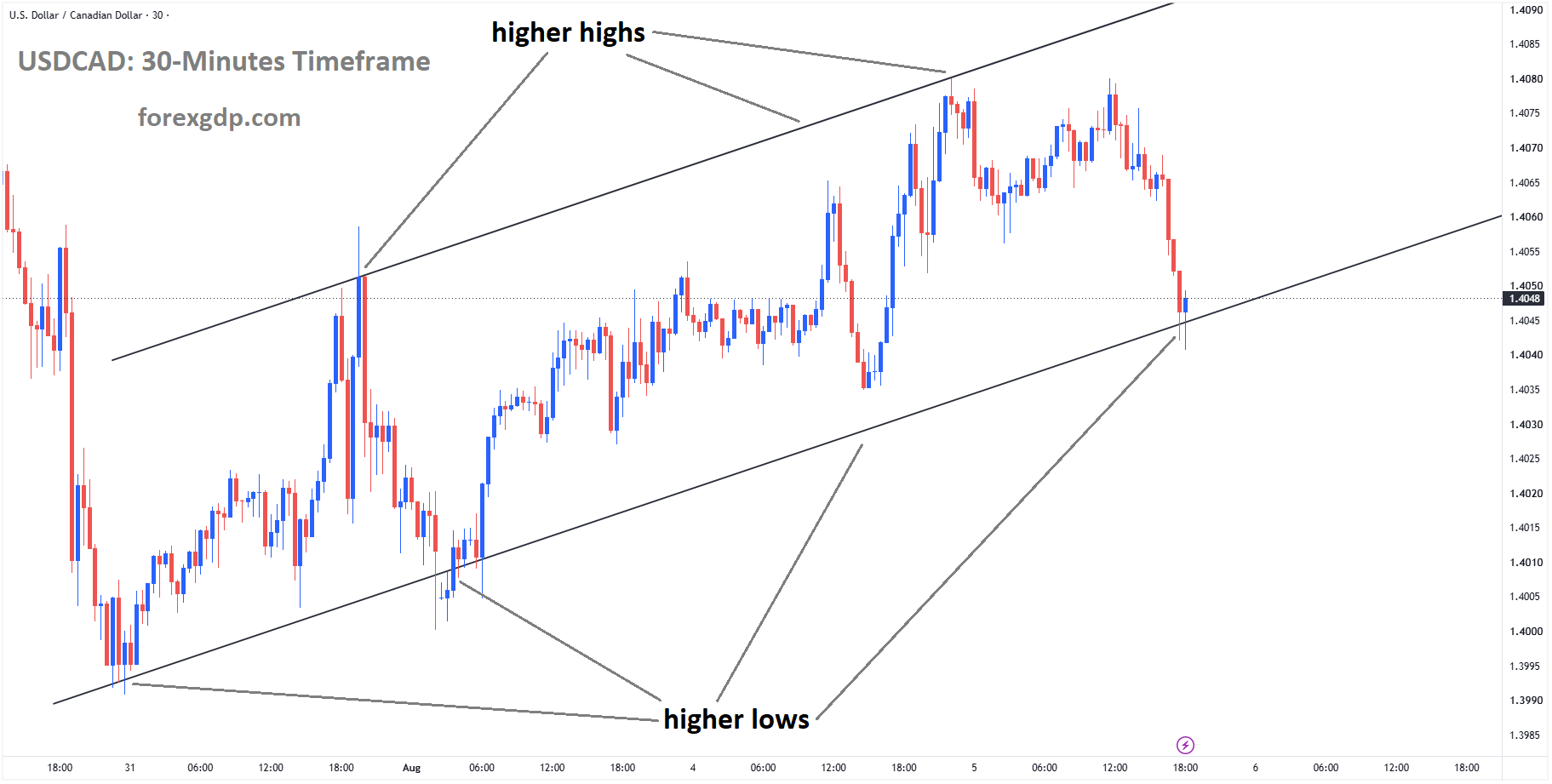
USDCAD reached the higher low area of the ascending channel
Fresh concerns about shipping security in the Red Sea helped lift oil after Yemen’s Houthi movement claimed responsibility for an attack involving a Saudi vessel. The incident reminded energy markets that important trade routes in the Middle East remain exposed to military and political risks.
However, oil’s recovery remained controlled rather than dramatic. Reports of progress toward an interim agreement involving the United States, Iran, and Oman encouraged hopes that the Strait of Hormuz could reopen under a temporary arrangement. A successful deal could reduce fears of a major disruption to global energy supplies.
The US Dollar, meanwhile, struggled after private-sector employment growth fell short of expectations. The weak result followed other signs of slowing momentum in the American economy, increasing speculation that the Federal Reserve may eventually move toward a more supportive policy position.
Canadian Dollar Benefits From Stronger Oil Demand
Oil prices have an important influence on the Canadian economy because Canada is one of the world’s major energy producers and exporters. When crude oil demand improves, the Canadian Dollar often receives support because stronger energy activity can benefit Canadian companies, government revenue, investment, and exports.
Wednesday’s rebound in oil therefore provided a positive backdrop for the currency. Energy markets reacted to renewed security concerns after the Houthis said they were responsible for an attack on a Saudi vessel in the Red Sea.
The Red Sea is a critical route for international shipping. Commercial vessels moving between Asia, Europe, and other regions regularly travel through the area. Any attack on ships can create concerns about delivery delays, higher transportation costs, insurance expenses, and possible changes to shipping routes.
These risks can become especially important for the energy market. If companies decide that the usual routes are too dangerous, vessels may need to take longer journeys. This can slow deliveries and make the movement of fuel more expensive.
For Canada, stronger oil sentiment can offer short-term support to the national currency. However, the relationship is not always automatic. The Canadian Dollar is also influenced by domestic economic conditions, interest-rate expectations, global risk appetite, and developments in the United States, Canada’s largest trading partner.
Strait of Hormuz Talks Limit Energy Supply Fears
Although Red Sea tensions supported oil, optimism surrounding the Strait of Hormuz prevented concerns from becoming more severe.
Axios reported that the United States, Iran, and Oman were moving closer to an interim agreement aimed at reopening the strategic waterway. The proposed framework would reportedly introduce a temporary arrangement lasting 60 days.
The Strait of Hormuz is one of the most important energy routes in the world. A significant share of global oil and other energy supplies passes through the narrow waterway. Because of this, any restriction or closure can quickly raise concerns about supply availability, shipping safety, and the ability of producers to reach international customers.
A temporary reopening would not solve every political disagreement in the region. It could, however, reduce the immediate danger of a large-scale supply interruption. That possibility has helped balance the worries caused by continued instability in the Red Sea.
US Treasury Secretary Scott Bessent added to the optimism by suggesting that an announcement could arrive soon. His comments encouraged expectations that the situation may gradually become more stable.
The competing developments created a mixed environment for oil. Security threats supported energy demand, while diplomatic progress reduced the need for a much larger risk premium. For the Canadian Dollar, even a limited oil recovery was enough to provide some assistance while the US Dollar faced pressure from weaker economic figures.
Weak US Hiring Data Pressures the Dollar
The latest US private employment report raised fresh concerns about the strength of the labor market. Data from Automatic Data Processing showed that private employers added 44,000 jobs in July. Economists had expected an increase of 70,000.
The lower-than-forecast reading suggested that American businesses may be becoming more cautious about hiring. One report does not provide a complete picture of the labor market, but the result attracted attention because it followed other disappointing indicators.
Earlier releases showed weaker job openings through the Job Openings and Labor Turnover Survey. Factory Orders also declined, adding to evidence that parts of the economy may be losing momentum.
When several economic reports weaken within a short period, investors often reconsider their expectations for Federal Reserve policy. A softer labor market can reduce wage pressure and slow consumer spending. Over time, those changes may help bring inflation under control, but they can also increase the risk of weaker economic growth.
This combination has encouraged expectations that the central bank could take a more accommodative approach. A supportive policy direction may include keeping borrowing conditions from becoming tighter or considering future reductions in interest rates if the economy slows significantly.
Such expectations can weigh on the US Dollar because interest-rate advantages are an important part of currency demand. Still, the Federal Reserve must balance employment concerns with the continuing challenge of inflation.
Federal Reserve Officials Remain Focused on Inflation
Investors have reduced expectations that the Federal Reserve will tighten monetary policy at its September meeting. However, policymakers have not declared victory over inflation.
Kansas City Federal Reserve President Jeff Schmid and Philadelphia Federal Reserve President Anna Paulson have continued to emphasize inflation risks. Their comments show why the central bank may remain cautious even as some economic indicators weaken.
The Fed’s challenge is to support employment without allowing price pressures to become persistent. Acting too aggressively in response to weaker data could stimulate demand and make inflation harder to control. Waiting too long, however, could place additional pressure on businesses and workers if economic activity continues to slow.
This uncertainty may prevent the US Dollar from experiencing a much deeper decline. Traders are likely to study each major report and every statement from Fed officials for evidence about the central bank’s next steps.
Different policymakers may also focus on different risks. Some may be more concerned about declining employment growth, while others may place greater importance on preventing another rise in inflation. These differences can create uncertainty around the timing and direction of policy decisions.
Services Data and Employment Reports Take Center Stage
Attention is now turning to the Institute for Supply Management Services Purchasing Managers Index. The report provides information about business conditions in the services sector, which represents a large part of the US economy.
Investors will examine activity, employment, and demand within service industries. A weak reading could reinforce concerns that the American economy is slowing. A stronger result may ease some of those worries and provide support for the US Dollar.
Comments from members of the Federal Open Market Committee will also remain important. Investors will listen for any change in the balance between concerns about inflation and the labor market.
The next major focus will be the US and Canadian employment reports due on Friday. These releases may offer a broader view of hiring conditions in both countries.
Strong Canadian employment data could support confidence in the domestic economy. Weak results, on the other hand, may reduce some of the Canadian Dollar’s recent support. In the United States, another disappointing labor report could strengthen expectations of easier Federal Reserve policy, while a resilient result might challenge the recent pessimism.
Summary
The Canadian Dollar found support as oil recovered following renewed security concerns in the Red Sea. An attack claimed by Yemen’s Houthis increased worries about shipping and energy supplies, but hopes for an interim agreement to reopen the Strait of Hormuz limited the wider impact.
At the same time, the US Dollar remained under pressure after private employment growth missed expectations. The result followed weaker job openings and falling factory orders, adding to concerns about slowing US economic activity.
Federal Reserve officials continue to warn about inflation, which may limit major changes in policy expectations. Upcoming US services data, central bank comments, and employment reports from both the United States and Canada will provide the next important signals for the two currencies.
AUDUSD Holds Steady as Markets Await US Private Jobs Report
The Australian Dollar remained steady against the US Dollar on Wednesday as investors waited for important economic reports from the United States. With several major data releases and a Reserve Bank of Australia policy meeting approaching, traders were reluctant to make strong decisions.
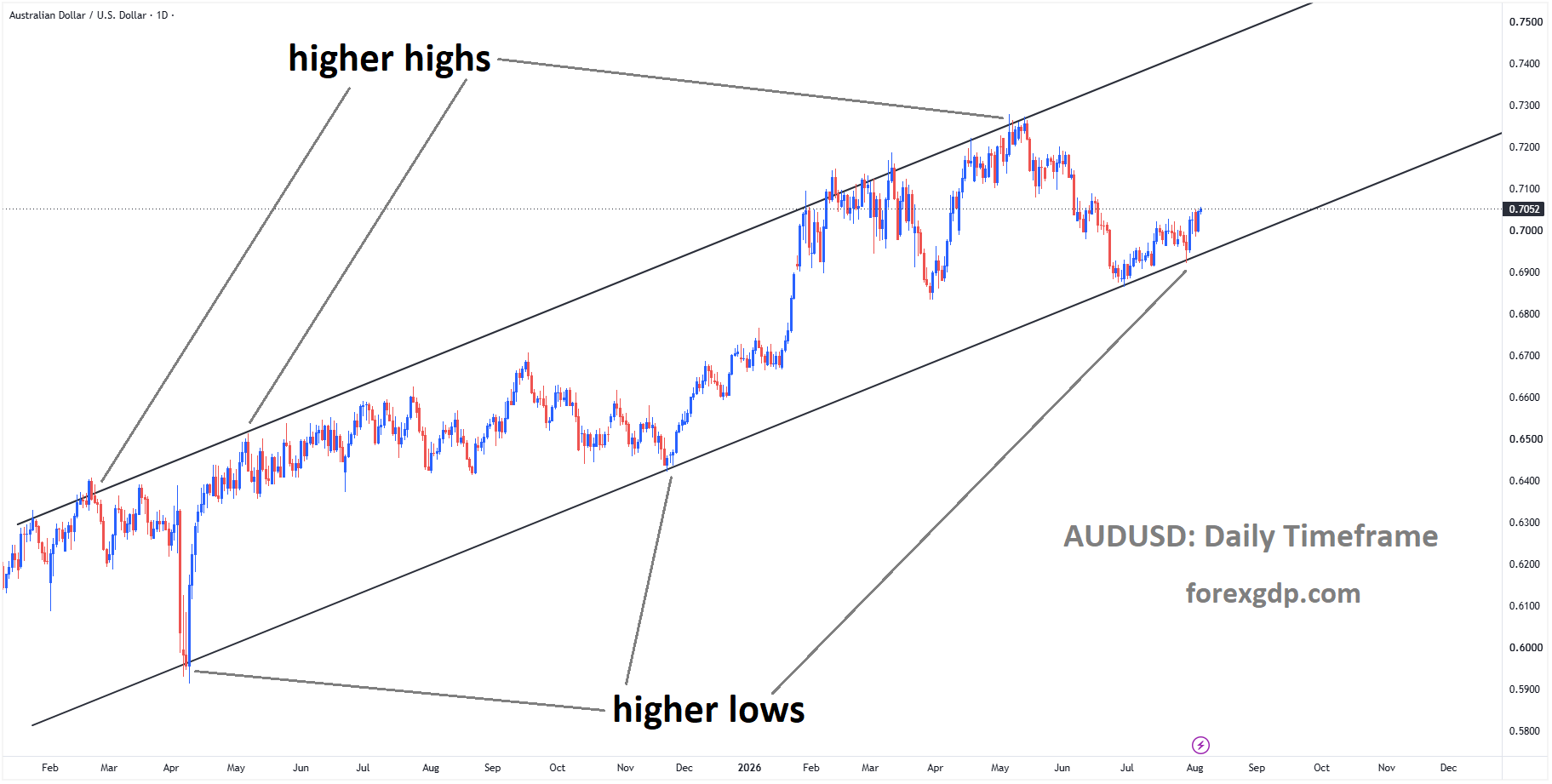
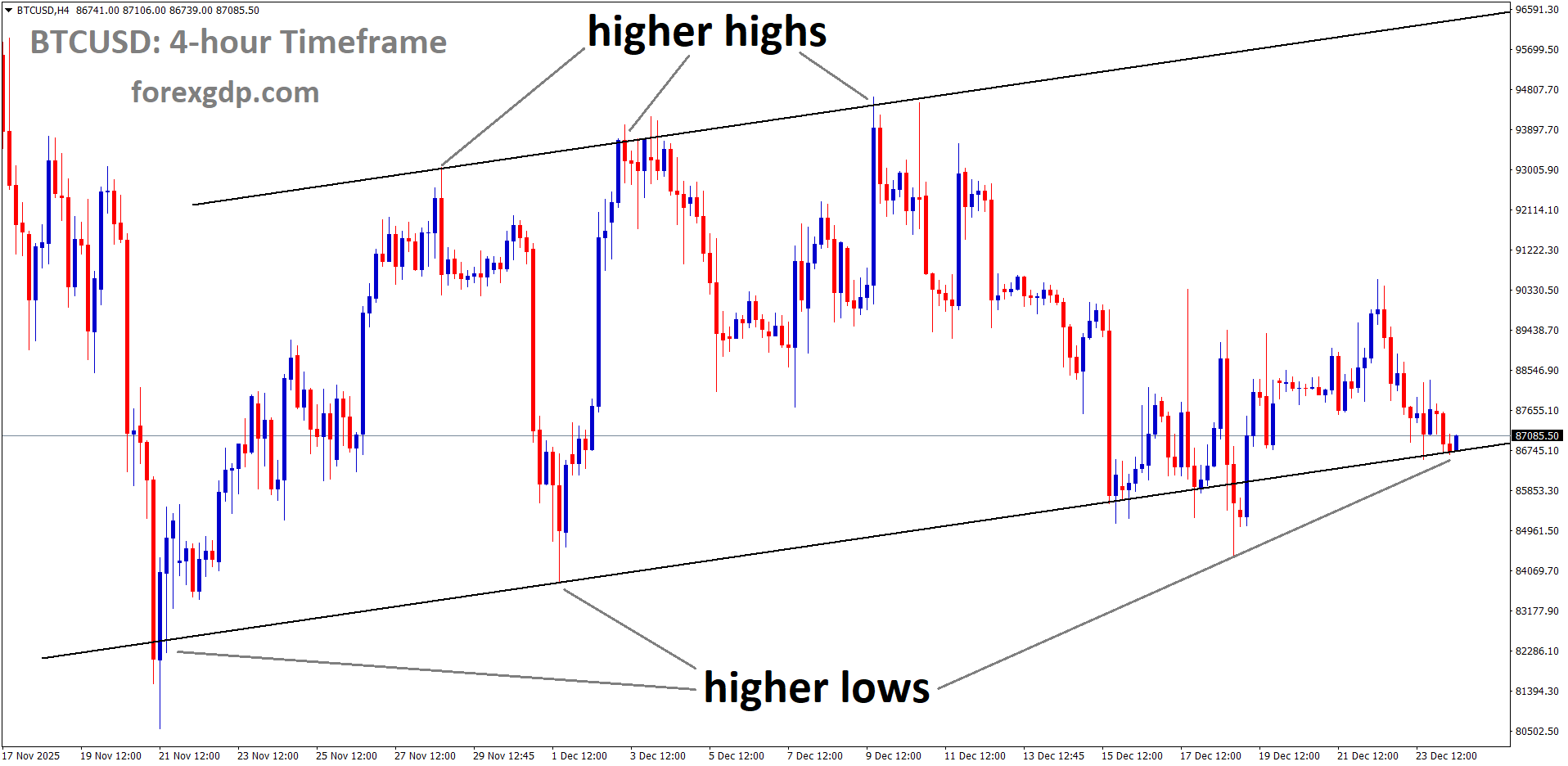
AUDUSD is moving in an ascending channel, and the market has rebounded from the higher low area of the channel
The first major event in focus is the US ADP Employment Change report for July. This report measures changes in private-sector employment and can provide an early indication of conditions in the American labor market.
Attention will then turn to the ISM Services Purchasing Managers’ Index, which offers insight into activity across the largest part of the US economy. However, the most important release of the week will be Friday’s official Nonfarm Payrolls report.
In Australia, expectations surrounding the Reserve Bank of Australia’s August 11 meeting are likely to remain a major influence on the local currency. Recent inflation figures have reduced the pressure on policymakers to raise interest rates again in the near term.
Private Employment Report Takes Center Stage
The ADP Employment Change report is expected to show that American private companies added 70,000 workers in July. That would represent a slowdown from the 98,000 jobs created in June.
Although the ADP figures do not always match the official government employment report, investors still watch them closely. A weaker reading could suggest that businesses are becoming more cautious about hiring. This may happen when companies face softer demand, higher operating costs, or uncertainty about future economic conditions.
A stronger-than-expected result would point to continued resilience in the US labor market. It could also indicate that employers remain confident enough to expand their workforces despite restrictive borrowing conditions.
Employment data matter because the Federal Reserve is paying close attention to the health of the labor market. Strong hiring can support household spending and economic growth, but it may also contribute to ongoing inflation pressure if wage growth remains elevated.
Federal Reserve Relies More Heavily on Economic Data
The Federal Reserve has moved away from giving firm signals about its future interest-rate decisions. Instead, officials have emphasized that each policy meeting will be guided by the latest economic evidence.
This approach has made individual data releases more important for financial markets. Employment, inflation, consumer spending, and business activity reports can all influence expectations about the central bank’s next move.
If US employment growth slows significantly, investors may believe that the Federal Reserve has less reason to maintain a restrictive policy stance for an extended period. On the other hand, continued strength in hiring and services activity could encourage officials to remain cautious about changing policy too quickly.
The absence of clear forward guidance also creates greater uncertainty. Markets must constantly reassess the outlook as fresh information becomes available. This can leave currency pairs moving within a narrow range before major reports and reacting more strongly after the figures are published.
US Services Sector Expected to Show Improvement
Investors are also preparing for the July ISM Services PMI report. Economists expect the index to rise to 54.5 from 54.0 in June.
A reading above 50 generally indicates that the services sector is expanding. Because services account for a large share of the US economy, the report provides valuable information about overall business conditions.
The survey covers areas such as new orders, employment, business activity, and input costs. These details can help investors understand whether companies are seeing stronger demand and whether inflationary pressure is building within the sector.
An improvement in the headline index would suggest that the US services economy continued to grow during July. However, investors will also examine the report’s underlying components. A rise driven by stronger new orders may be viewed differently from an increase caused mainly by higher prices.
The employment component will be particularly relevant because it arrives during a week dominated by labor-market data. If services companies report stronger hiring, it could support expectations for a healthy official jobs report later in the week.
Nonfarm Payrolls Remain the Week’s Main Event

Friday’s Nonfarm Payrolls report is expected to be the most influential US release of the week. It provides a broader picture of employment conditions than the ADP survey and includes hiring across most sectors of the economy.
Investors will examine several parts of the report, including job creation, unemployment, workforce participation, and wage growth. Together, these figures can reveal whether the labor market is expanding at a sustainable pace or beginning to lose momentum.
Wage data will be especially important for the Federal Reserve. Rapid pay growth can support consumer demand, but it may also make inflation harder to control. Slower wage growth could ease some of those concerns, particularly if employment remains stable.
The Australian Dollar may remain sensitive to changes in US monetary policy expectations surrounding the report. Strong American labor data could encourage a more cautious Federal Reserve outlook, while clear signs of weakness may increase expectations for a less restrictive approach.
RBA Expected to Keep Interest Rates Unchanged
Domestic monetary policy is another major consideration for the Australian Dollar. The Reserve Bank of Australia is widely expected to leave its policy rate unchanged at its August 11 meeting.
Recent inflation figures have reduced the urgency for another increase. Annual core inflation moved slightly higher from 3.5% to 3.6%, but the result remained below the 3.7% level expected by economists.
Deutsche Bank analysts said the softer reading had eased pressure on the RBA to tighten policy further. The central bank has already increased interest rates three times this year, and the latest inflation report suggests that officials may have room to pause and assess the effect of those earlier decisions.
Interest-rate changes usually take time to influence households and businesses. Higher borrowing costs can weaken consumer spending, reduce demand for credit, and slow investment. Waiting allows policymakers to study whether previous increases are doing enough to bring inflation under control.
Softer Inflation Creates a Challenge for the Aussie
Expectations of steady Australian interest rates may limit support for the local currency. Currencies can benefit when investors expect a central bank to raise rates, as higher returns may attract overseas capital. When those expectations fade, some of that support can also weaken.
However, the RBA’s decision will depend on more than one inflation report. Policymakers will continue to monitor employment, household demand, wage growth, and broader economic conditions.
The language used in the RBA’s policy statement could therefore be as important as the decision itself. Officials may keep future options open, especially if they believe inflation remains too high or could rise again.
For now, the softer core inflation result has encouraged investors to reconsider the likelihood of additional near-term tightening. That reassessment has created another obstacle for the Australian Dollar while markets wait for clearer signals from both the RBA and the Federal Reserve.
Summary
The Australian Dollar is struggling to find direction as investors prepare for several important economic events. The US ADP employment report and ISM Services PMI will offer early clues about labor demand and business activity, while Friday’s Nonfarm Payrolls report is likely to shape expectations for Federal Reserve policy.
In Australia, softer-than-expected core inflation has reduced the immediate pressure on the Reserve Bank of Australia to raise interest rates again. With the RBA expected to keep policy unchanged at its August 11 meeting, the central bank’s comments about inflation and future decisions will be closely watched.
Don’t trade all the time, trade forex only at the confirmed trade setups
Get more confirmed trade signals at premium or supreme – Click here to get more signals, 2200%, 800% growth in Real Live USD trading account of our users – click here to see , or If you want to get FREE Trial signals, You can Join FREE Signals Now!