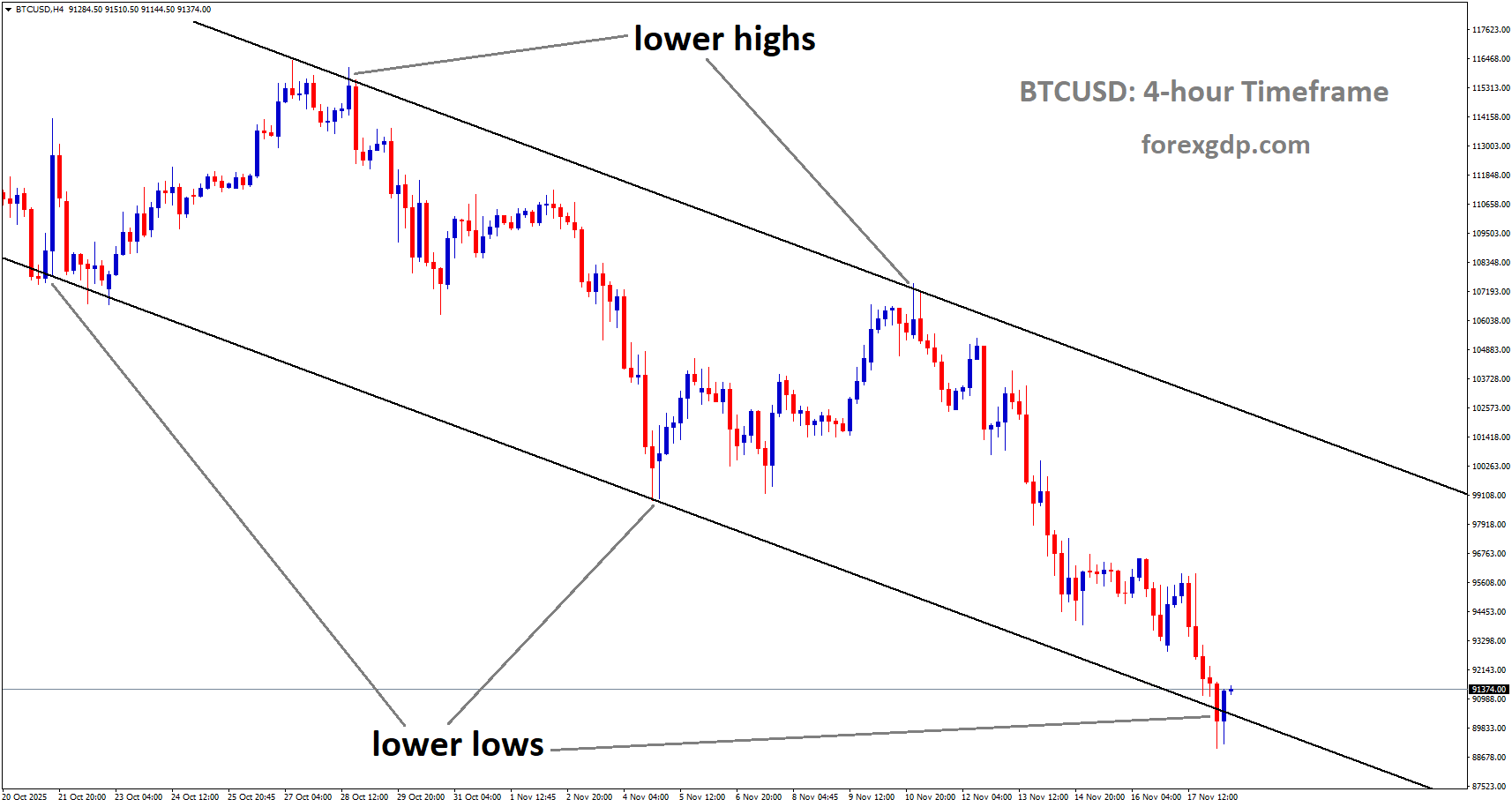
BTCUSD is moving in a downtrend channel, and the market has reached the lower low area of the channel
BTCUSD Weakness Puts ETF Investors at Risk as Sentiment Turns Bearish
When Bitcoin began its impressive run earlier this year, many investors rushed into newly approved Bitcoin ETFs in the United States. For months, these products attracted steady inflows and helped bring traditional investors into the crypto market. But with Bitcoin dipping below $89,600, the overall picture has shifted. According to data gathered by market research firms, investors in U.S. spot Bitcoin ETFs are now, on average, holding positions that are worth less than what they originally paid.
This doesn’t mean every investor is in the red. Some early buyers who entered the market when Bitcoin ranged from $40,000 to $70,000 are still comfortably up. But when all investors are considered together, the average purchase price has now been overtaken by the recent market drop. Let’s explore what’s happening, why the market is reacting this way, and what it could mean as the economic backdrop continues to shift.
What’s Behind the Decline in Bitcoin ETF Performance?
The recent slide in Bitcoin’s price has put ETF investors in a difficult position. Although many early adopters remain profitable, the surge of buyers who flooded the market during the past few months are now facing unrealized losses. This is the first time since these products launched that the collective investor base has slipped underwater.

Long-Term Holders Stay Calm
Even with the downturn, long-term investors are generally staying patient. Many of them view Bitcoin as a long-term asset rather than a short-term trade. Their strategy focuses on holding through market cycles rather than reacting to short-term volatility. This type of mindset is common among investors who see digital assets as part of a broader, long-term portfolio approach.
Wave of Withdrawals Hits Bitcoin and Ethereum Funds
One of the biggest developments this week has been the large outflows from major crypto ETF providers. Monday alone saw over $254 million exit Bitcoin ETF products. BlackRock experienced the largest outflow, losing $145.6 million in one day. Fidelity also saw several of its Bitcoin funds experience withdrawals.
This marks the fifth day in a row that Bitcoin ETFs have seen investors pulling money out, a trend that began in mid-November. Earlier in the month, withdrawals reached over $866 million in a single day, which stands as one of the largest outflow totals since Bitcoin ETFs began trading. These consistent outflows show that the recent market decline has shaken confidence among a portion of ETF investors.
Ethereum funds have also been affected. Combined Ethereum ETFs saw over $180 million in net outflows. Even BlackRock’s Ethereum product, which held strong for a while, saw nearly $200 million exit. This suggests that investors are not just pulling back from Bitcoin but from the broader digital asset ETF market as well.
Why Are Investors Pulling Out?
Analysts point to overall economic conditions rather than crypto-specific events. Recently, liquidity has tightened across global markets. When conditions feel uncertain, investors tend to favor safer assets. Digital assets, known for their volatility, often see withdrawals during these periods. Until inflation cools further and monetary policy becomes more flexible, riskier assets may continue to face pressure.
Solana ETFs Stand Strong Despite the Market Slump
While Bitcoin and Ethereum ETFs struggle with outflows, Solana ETFs are telling a very different story. Since launching in late October, Solana-based funds have maintained a perfect streak of inflows. On Monday alone, the Bitwise Solana ETF gained $7.3 million, while the Grayscale Solana product added nearly $1 million.
Across all providers, Solana ETFs have now attracted around $390 million in total inflows. This steady interest signals that some investors still see strong potential in certain alternative digital assets even when the broader market shows weakness.
Why Solana Is Defying the Trend
Solana has attracted attention for its strong ecosystem growth, active developer community, and increasing real-world use cases. Investors interested in diversification or in emerging crypto networks may be viewing this dip as an opportunity to increase exposure to a growing ecosystem. While the market remains uncertain overall, Solana ETFs appear to be benefiting from continued optimism among supporters of the network.
What This Means for the Crypto Market
The recent outflows and market downturn raise the question: What comes next? While near-term conditions remain cautious, several indicators suggest that investors are waiting for key economic shifts before re-entering the market.
A Shift in Economic Conditions Could Trigger a Turnaround
Many analysts believe that digital assets could see renewed growth once inflation shows clearer signs of easing and central banks adopt more supportive monetary policies. When borrowing becomes cheaper and economic uncertainty fades, investors often turn back to assets with higher growth potential, including cryptocurrencies.
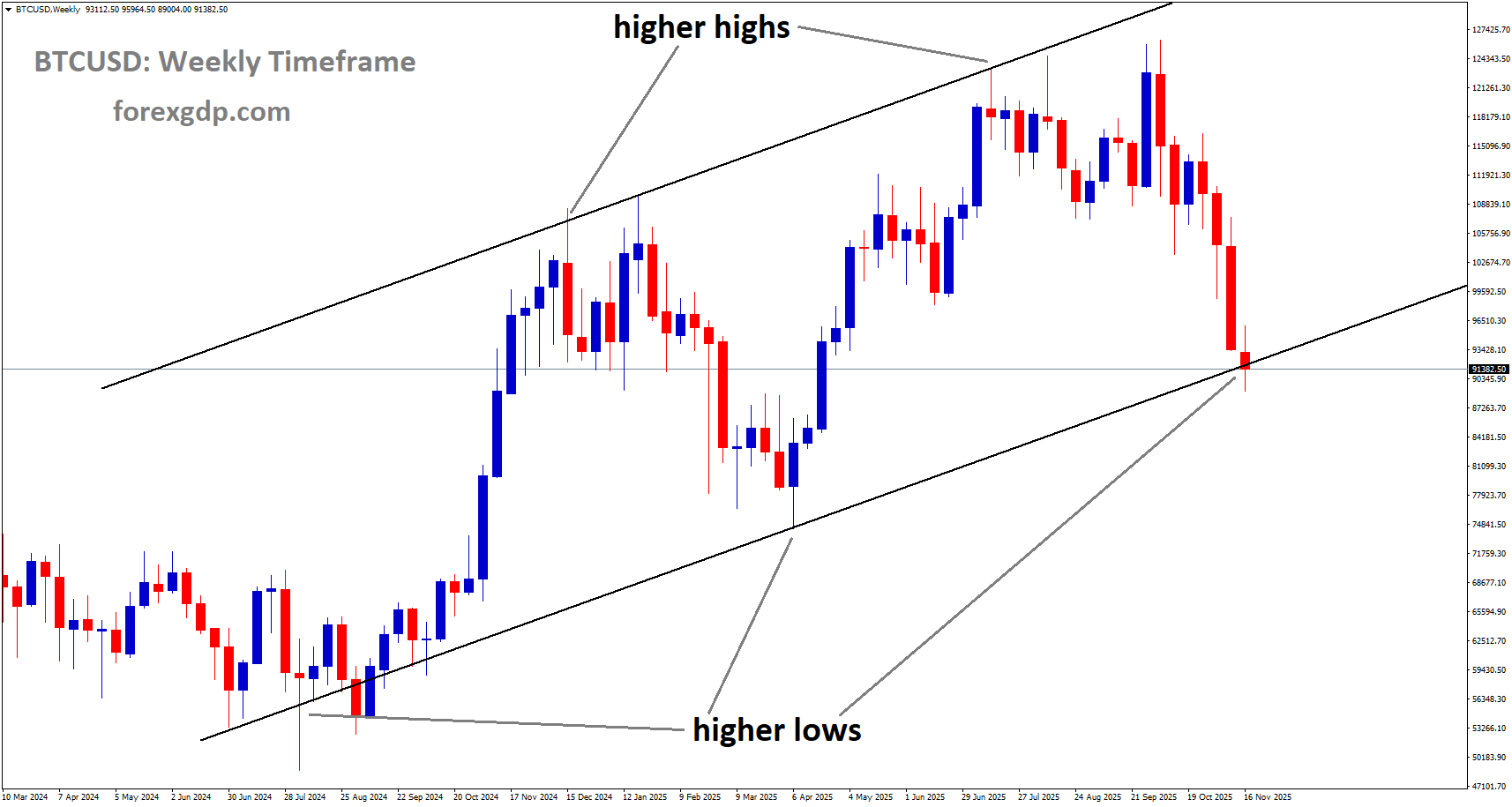
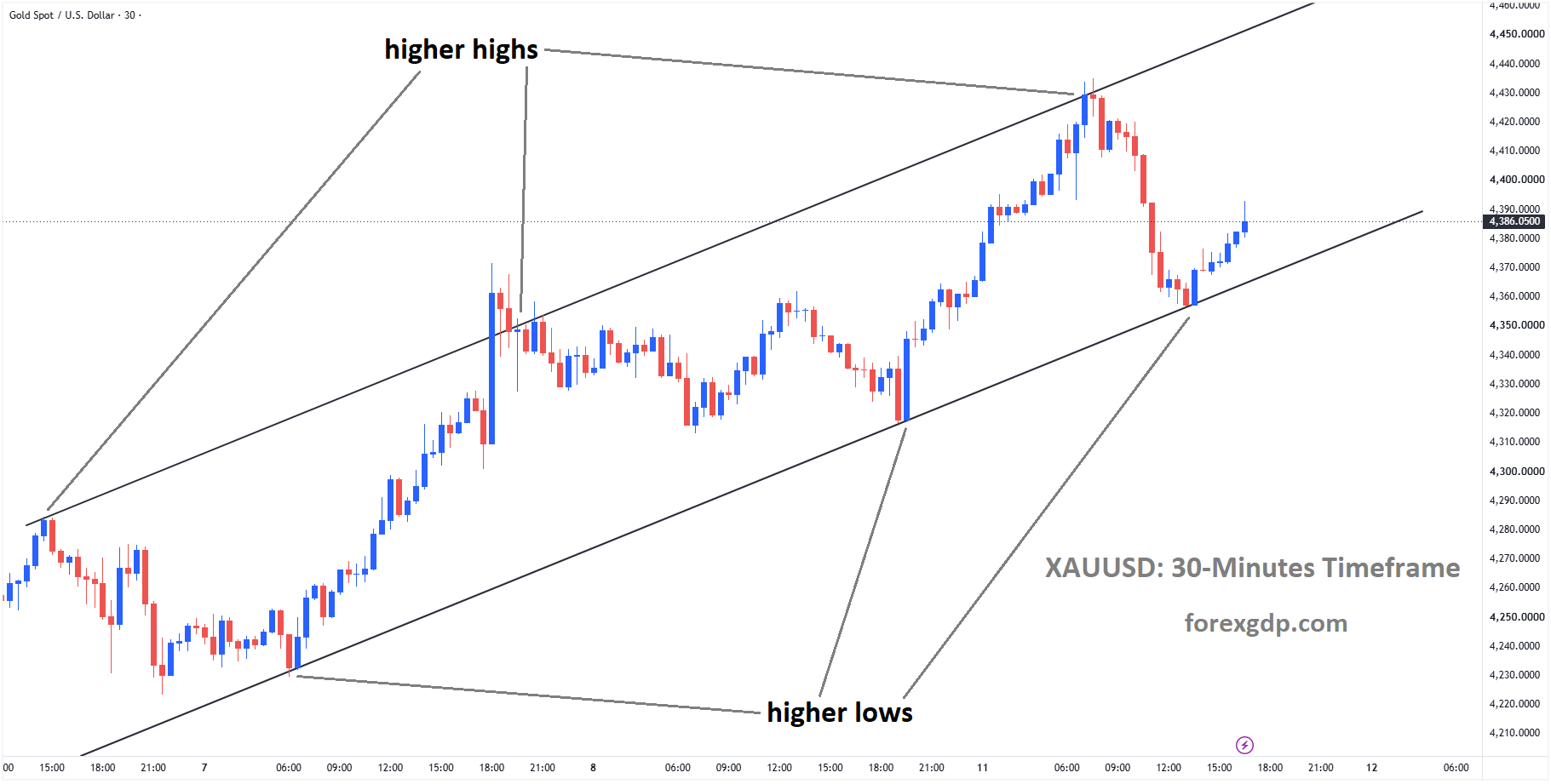
BTCUSD is moving in an uptrend channel, and the market has reached the higher low area of the channel
Investor Sentiment Remains Mixed
For now, sentiment is divided. Long-term believers continue to hold onto their positions, while more short-term focused investors are reducing exposure. ETF markets are often seen as the clearest window into mainstream investor behavior, and the recent data shows renewed caution.
Final Summary
Bitcoin’s drop below $89,600 has pushed the average price of U.S. spot Bitcoin ETF investments into loss territory for the first time since these funds launched. Major providers like BlackRock and Fidelity saw significant withdrawals, contributing to a five-day streak of outflows. Ethereum ETFs also felt the pressure with sizable redemptions. Much of this trend appears tied to the broader economic environment, where tight liquidity and uncertain market conditions have pushed investors toward safer assets.
Despite the challenging market, Solana ETFs continue to gain momentum, attracting consistent inflows since their debut. This signals that some investors are still optimistic about certain sectors within the digital asset market.
As the economic landscape evolves, many investors are watching for signs of easing inflation and more flexible monetary policy, which could spark renewed interest in cryptocurrency ETFs. For now, the market sits in a cautious phase, balancing long-term confidence with short-term uncertainty.
EURUSD Retreats as Renewed Dollar Demand Pressures the Pair
The Euro continues to face pressure, holding below the 1.1600 mark after briefly touching 1.1655 last week. Although the pair has not broken lower, it remains stuck inside Monday’s trading range, reflecting a cautious market mood. With several important U.S. economic reports scheduled this week, traders are avoiding big directional bets and waiting for clearer signals about the strength of the U.S. economy and the Federal Reserve’s next moves.
Investors opened the week digesting a mixture of upbeat U.S. data and cautious comments from Federal Reserve officials. This combination has kept currency markets steady but undecided, especially as more labor-related figures and factory data are expected soon.
Strong Start to the Week but Limited Market Reaction
The EUR/USD pair attempted to recover but stalled before pushing back above 1.1600. Even though it trades slightly above Monday’s low, the lack of strong momentum clearly shows hesitation across financial markets.
Recent economic updates from the United States added some support for the U.S. Dollar. The New York manufacturing index, released Monday, jumped to its best level in nearly a year. This improvement suggests stronger activity in the sector, surprising analysts who had expected a slowdown. Construction spending also grew, going against earlier predictions of a decline. The fact that July’s figures were revised upward added more confidence to the report.
Despite the solid economic numbers, traders remain cautious. Investors know that markets often react more strongly to larger, more influential reports—especially those connected to the labor market. With more data releases on the way, many prefer to wait rather than make early moves.
Fed Comments Bring Fresh Uncertainty
A key element affecting the Euro and U.S. Dollar this week was commentary from Federal Reserve Governor Christopher Waller. He spoke about how increasing use of Artificial Intelligence (AI) could influence employment trends in the United States. According to him, AI may reduce the need for hiring across various industries. If this shift becomes significant, the Federal Reserve might eventually have to react by adjusting interest rates.

Although these ideas point to potential long-term changes, they also create short-term uncertainty. Markets remain sensitive to anything that could influence the Fed’s next rate decision. At the moment, expectations for a possible Federal Reserve rate cut in December remain below the halfway mark. Traders want more evidence before assuming the Fed will ease policy.
Europe, meanwhile, has very little new data on the calendar this week. This means the Euro is more likely to move in reaction to U.S. developments rather than European economic news.
What Traders Are Watching This Week
The main focus now shifts to the upcoming U.S. employment and factory data. These reports will help shape the broader narrative about the strength of the U.S. economy. Since the Dollar tends to react strongly to labor-related numbers, this week could still hold significant movement for currency markets.
ADP Employment Report
This weekly update offers an early look at hiring conditions in the private sector. While not always perfectly aligned with the official Nonfarm Payrolls report, traders still watch it closely for clues about job market strength.
U.S. Factory Orders
Factory Orders are expected to show a recovery after the previous decline. Because this release was delayed during the government shutdown, markets are especially interested in how production and demand have been performing in recent months.
Speeches from Fed Officials
Additional comments from Federal Reserve Governor Michael Barr and Richmond Fed President Thomas Barkin are also on the schedule. Investors will pay close attention to their tone, as any hint regarding future rate decisions could influence short-term volatility.
Nonfarm Payrolls – The Week’s Main Event
All eyes will be on Thursday’s Nonfarm Payrolls report. This release often shapes expectations for Federal Reserve policy more than any other monthly indicator. Strong job growth could lift the Dollar, while weaker-than-expected data might raise the chances of future rate cuts.
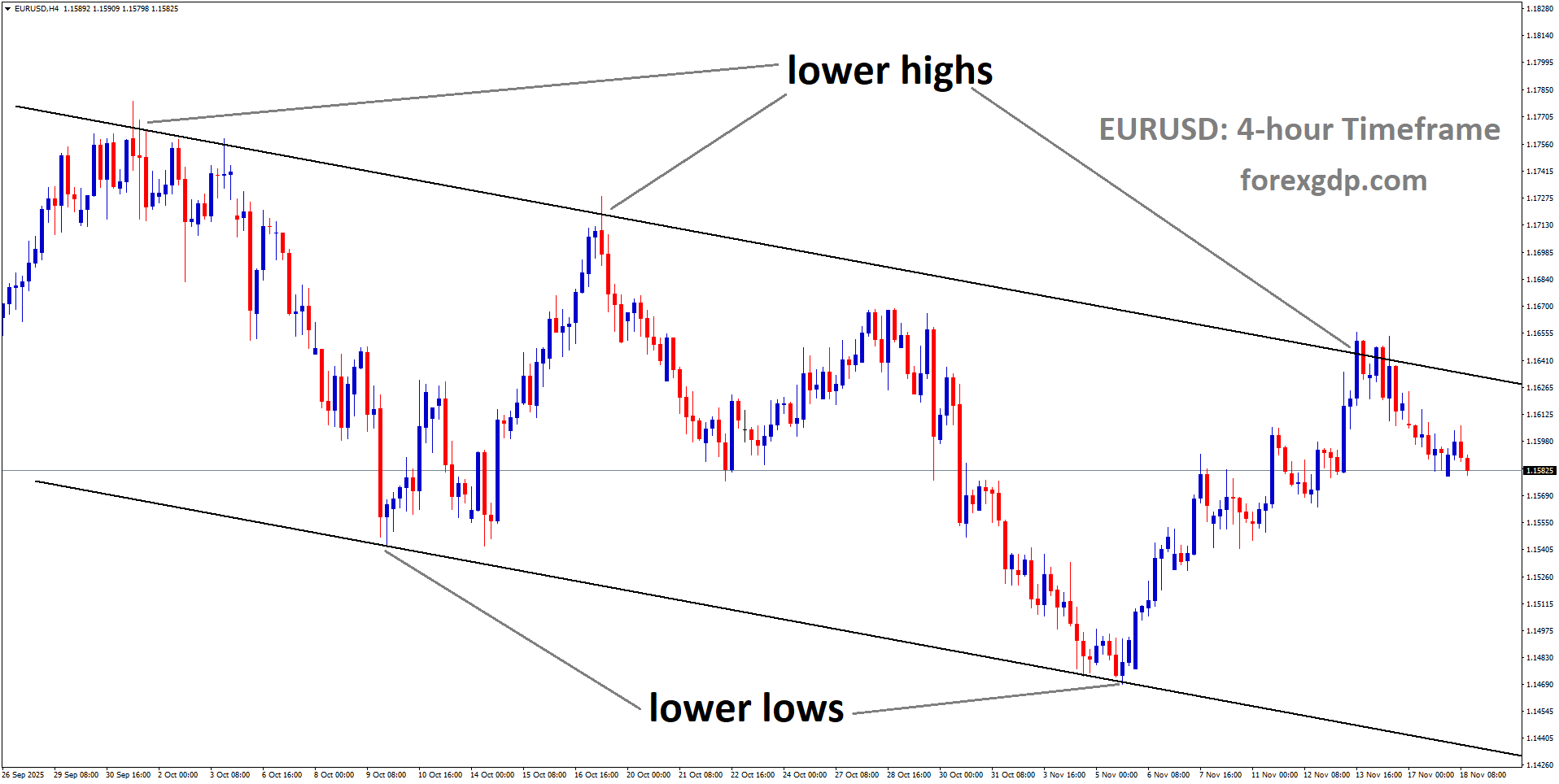
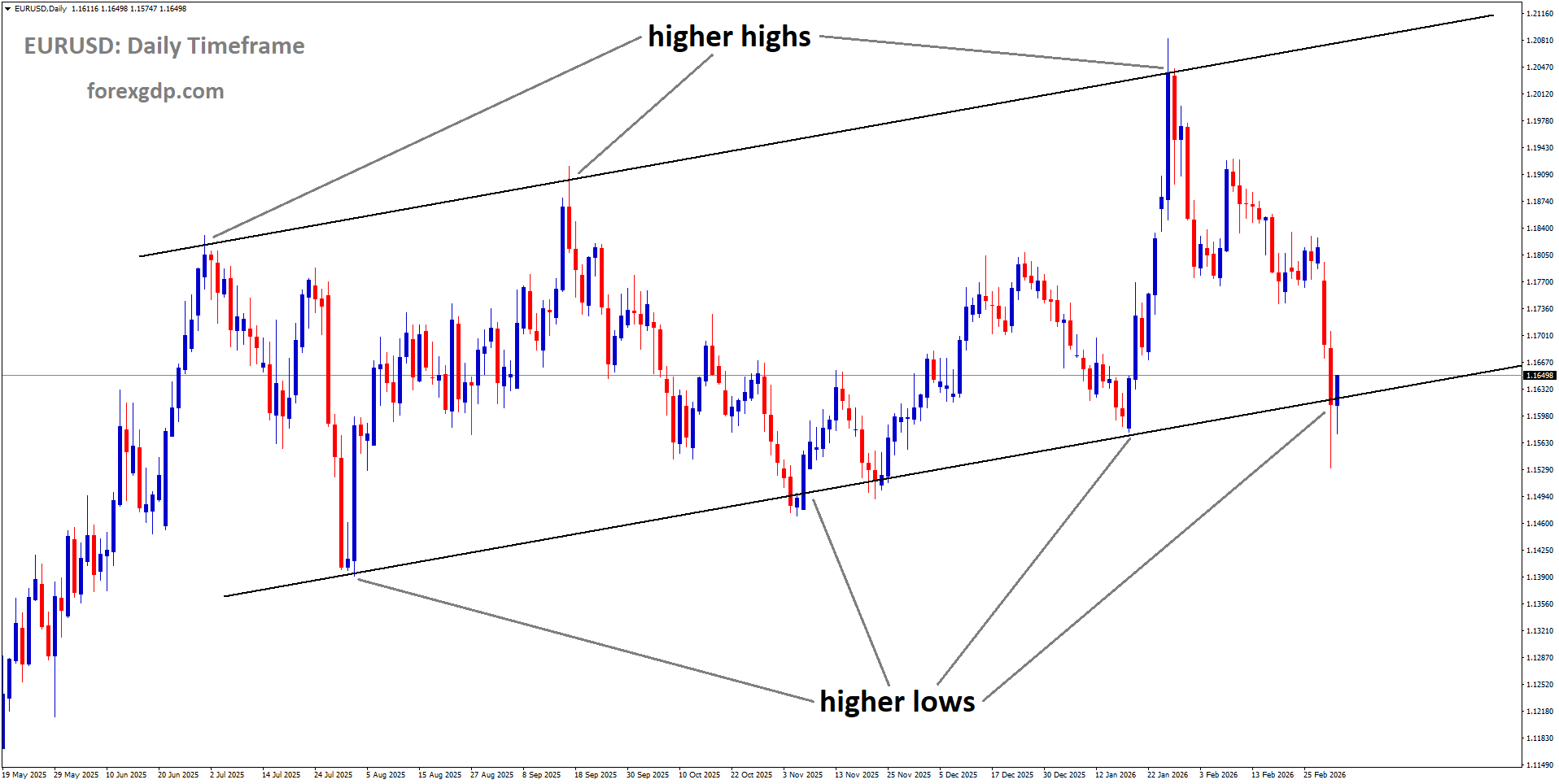
EURUSD is moving in a descending channel, and the market has reached the lower high area of the channel
A Market Caught Between Hope and Caution
At the moment, the Euro shows mild recovery but remains trapped in a tight trading band. The lack of fresh European data leaves the currency without strong direction of its own. Meanwhile, the U.S. Dollar benefits from stronger economic releases but also faces uncertainty due to shifting expectations about Federal Reserve policy.
Traders are waiting for more clarity before committing to bigger positions. Even small surprises in this week’s data could influence market sentiment, especially given the absence of major European news.
This cautious environment is likely to continue until the labor market numbers are released. Once the Nonfarm Payrolls report becomes available, the broader picture may become clearer, helping both currencies establish stronger trends.
Final Summary
The EUR/USD pair is struggling to break out of a narrow range as traders stay wary ahead of several major U.S. economic releases. Monday’s stronger-than-expected U.S. data offered support to the Dollar, but comments from Federal Reserve officials added a layer of uncertainty. With little new information coming from Europe, markets are heavily focused on American data, especially the upcoming ADP employment report, Factory Orders, and the highly anticipated Nonfarm Payrolls release. Until these reports provide clearer direction, the Euro and Dollar are likely to continue moving cautiously within familiar levels.
GBPUSD wavers while investors await crucial UK inflation figures
The Pound Sterling has been moving with a softer tone lately, and there’s a clear reason behind it. With the UK preparing to release fresh inflation data, traders across the market are stepping back and waiting for more clarity. The currency isn’t collapsing by any means, but it’s definitely showing signs of hesitation as investors focus on what the upcoming numbers might suggest about the country’s economic direction.
What’s Causing the Pound’s Recent Pullback?
The Pound has been facing mild selling pressure as investors turn cautious ahead of new inflation data. When these reports approach, markets tend to slow down because inflation directly influences how central banks shape their policy decisions. Everyone wants to know whether the cost of living in the UK is still easing or holding firm.
The upcoming Consumer Price Index for October is expected to show that inflation may have cooled slightly from the previous month. Even a small shift matters because it affects expectations around monetary policy. Traders are especially curious to see how both headline inflation and core inflation have behaved.
What Economists Expect from the Report
Forecasts suggest that headline inflation likely dipped a little, while core inflation—an important measure because it excludes the more volatile items—may have eased as well. Even slight moderation can influence how soon the Bank of England might consider adjusting its stance.
Inflation has been high for a long period, and although it has gradually come down, the speed of that decline is something policymakers monitor closely.
Why UK Inflation Matters So Much This Week
Inflation plays a central role in shaping the Bank of England’s decisions. With the economy showing signs of cooling, markets are watching to see if the central bank might be ready to shift toward easing policy sooner rather than later.
Could the Bank of England Move Toward Easing?
If the inflation figures confirm a cooling trend, the possibility of a policy adjustment in December becomes more realistic. Investors have already been speculating about a potential move, given the broader signs of a slowing economy.
The job market has been weakening, too. Recent labour figures showed unemployment climbing to 5%, which signals that businesses may be pulling back on hiring. A softening job market often leads to slower consumer spending, naturally helping inflation ease over time.
Because of these factors—soft labour data and slowing economic growth—markets may still anticipate a potential rate adjustment even if inflation remains only slightly lower.
More Important UK Data on the Horizon
While inflation is the headline event, the economic calendar has more to offer this week. Investors are also preparing for the release of UK Retail Sales for October. Retail activity often gives a clear picture of how comfortable consumers feel spending money, especially when economic pressures are high.

In addition, the preliminary PMI readings for November will offer a closer look at how businesses are performing across different sectors. These surveys provide early insight into whether companies are expanding, contracting, or holding steady.
Together, these reports will help shape expectations for the final stretch of the year and offer a clearer picture of whether the economy is slowing, stabilizing, or turning upward.
The US Dollar’s Role in the Pound’s Movement
The Pound’s performance doesn’t exist in isolation. The US Dollar has also been gaining some support, adding extra pressure. Traders are waiting for the upcoming US Nonfarm Payrolls report, which tends to influence global currency trends.
The last major jobs report showed a noticeable slowdown in hiring, which pushed expectations toward more interest rate cuts from the Federal Reserve. Since then, the Fed has cut rates, but now officials are sounding more cautious. They’ve been warning that inflation risks remain, and that message has shifted trader expectations.
Why Traders Are Scaling Back Fed Rate-Cut Hopes
A recent comment from Federal Reserve Vice Chair Philip Jefferson highlighted the need for caution. He noted that while the policy stance has moved closer to a neutral level, the central bank still needs to keep inflation in check. Cutting rates too quickly, he suggested, could weaken progress on price control.
Remarks like this tend to support the US Dollar because they reduce the likelihood of aggressive policy easing. A stronger Dollar naturally weighs on currencies like the Pound.
A Market Waiting for Direction
With both UK and US economic data approaching, currency markets are quiet and steady. The Pound’s movement has been limited as traders wait for the next round of figures before committing to any strong positions.
This kind of calm isn’t unusual. When major reports line up back-to-back, the market seems to hold its breath. Once the inflation data and the US labour report come out, we’re likely to see more decisive movement.
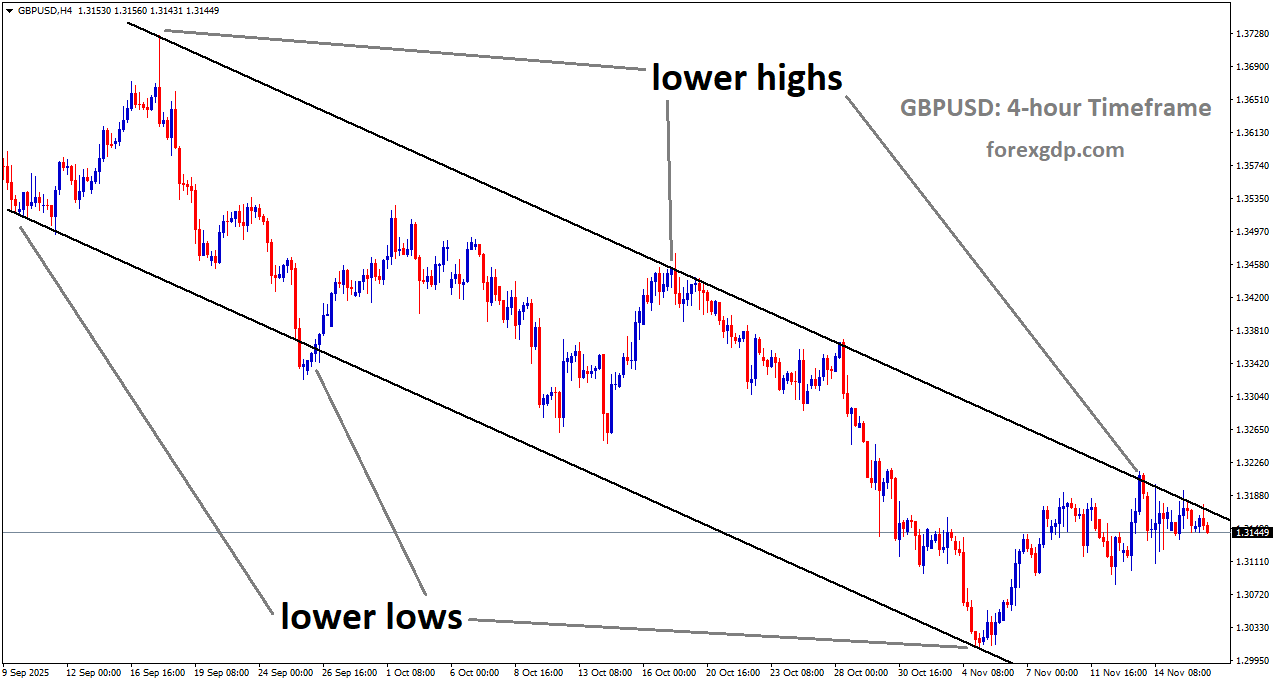
GBPUSD is moving in a descending channel, and the market has reached the lower high area of the channel
What to Watch Over the Next Few Days
UK Inflation Data
Expected to show whether price pressures continue easing.
UK Retail Sales
Helpful for understanding consumer behavior and spending strength.
PMI Figures for November
A good indicator of business momentum and economic stability.
US Nonfarm Payrolls

A globally watched report that could influence currency movements in a big way.
Final Summary
The Pound Sterling is showing mild weakness as traders wait for fresh UK inflation figures. Expectations point toward a small cooling in both headline and core inflation, which could open the door for the Bank of England to consider easing policy in the coming months. At the same time, cautious signals from US Federal Reserve officials and the upcoming US jobs report are keeping the Dollar supported, adding extra pressure on the Pound.
With more key economic reports from the UK scheduled later this week, including retail sales and business activity surveys, the market is holding a balanced tone. Once these numbers are released, investors will have a clearer sense of where the Pound could be headed next.
USDJPY retreats while Yen shows mild strength, though buying interest stays limited
When financial markets become shaky, the Japanese Yen often turns into a safe place for investors. That familiar pattern has returned, helping the Yen gain some ground after recently slipping to levels not seen since early this year. While the recovery remains modest, a mix of intervention fears, risk-off sentiment, and political developments in Japan has kept traders alert and prevented the USD/JPY pair from climbing further.
Despite this improvement, the Yen still faces several challenges that could limit how much it strengthens. Fiscal worries, questions surrounding Japan’s central bank, and shifting expectations for US interest rates all continue to shape the currency’s path. Let’s break down what’s happening and why the Yen is getting so much attention right now.
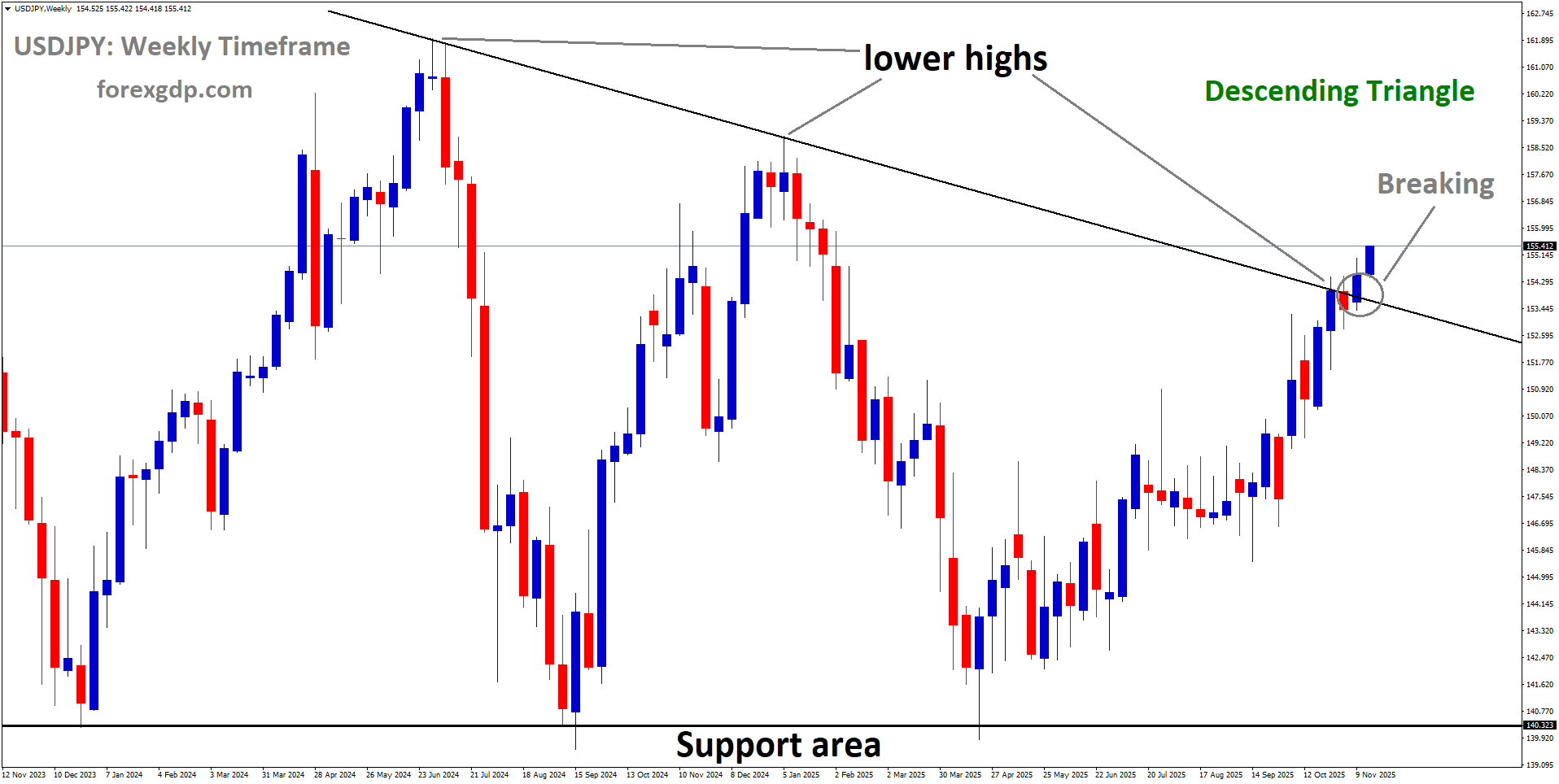
USDJPY is breaking the lower high area of the descending triangle pattern
The Yen Gets a Boost as Traders Turn Cautious
One of the biggest drivers behind the Yen’s recent lift is the growing sense of unease across global markets. Whenever investors grow nervous, they tend to move their money into assets seen as safer, and the Japanese Yen is always high on that list. This shift alone has been enough to support the currency and pull the USD/JPY pair away from recent highs.
But there’s more behind the move than just risk sentiment. Japan’s Finance Minister Satsuki Katayama recently made comments that hinted at the possibility of watching the foreign exchange market more closely. Even though no direct action was announced, such remarks often make traders think twice about pushing the Yen lower. The idea of potential intervention—even if only verbal—creates just enough doubt to keep aggressive sellers away.
Interestingly, the US Dollar has not shown much fresh strength, which has also helped the Yen stabilize. With investors waiting for key economic data and central bank updates from the US, the Dollar’s momentum has been softer than expected, preventing the USD/JPY pair from gaining additional traction.
Japan’s Domestic Concerns Add Complexity
While the Yen is benefiting from global caution and government comments, Japan’s own economic challenges are working in the opposite direction. Recent reports indicate that Prime Minister Sanae Takaichi is preparing tax changes aimed at boosting consumer spending and investment. While these kinds of changes might be helpful for the economy in the short term, they also raise bigger questions about Japan’s financial stability.
One major concern is the government’s long-term fiscal position. Cutting taxes without replacing that revenue puts pressure on the national budget. A recent analysis suggested that removing certain fuel surcharges alone may create a significant revenue gap. These types of fiscal strains tend to weigh on the Yen because they introduce uncertainty about future economic conditions.
Adding to the mix is Japan’s weak economic performance in the third quarter. Government data showed that the economy contracted for the first time in six quarters. This slowdown makes it harder for the Bank of Japan to take steps toward normalizing monetary policy. In other words, the central bank may have to keep interest rates low for longer, which generally works against a stronger Yen.
With political resistance growing and economic data softening, expectations for a policy shift from the Bank of Japan have faded. This leaves the Yen caught between the temporary lift from intervention fears and the longer-term pressure created by monetary policy differences with other major central banks.
US Interest Rate Expectations Still Influence the Pair
Even though the Yen is gaining support from Japan’s side of the equation, the US Dollar remains a major factor driving the USD/JPY pair. Recently, several Federal Reserve officials have hinted that it might be too soon to start cutting interest rates. With the US economy still showing resilience, many investors have lowered their expectations for near-term rate reductions.

This shift matters because higher US interest rates tend to favor the Dollar. When US rates remain high relative to Japanese rates, investors are more inclined to hold Dollars, which makes the USD/JPY pair more likely to rise.
However, Dollar buyers have been surprisingly hesitant this week. Instead of pushing the currency higher, many traders are sitting on the sidelines, waiting for key upcoming data releases. The Federal Reserve’s meeting minutes and the delayed US Nonfarm Payrolls report are both scheduled for later this week, and these could significantly influence market expectations.
There’s also a lineup of speeches from influential Fed members coming up. These comments could offer clues about how the central bank is thinking about inflation, employment, and future policy changes. With so many important events approaching, traders are avoiding big bets until they have more clarity.
What Traders Are Watching Next
Right now, the Yen’s movements are tied to a delicate balance of global risk sentiment, domestic policy uncertainty, and expectations for the US Federal Reserve. Any shift in these areas could quickly change the currency’s trajectory.
In the short term, investors are paying special attention to:
-
Any new statements from Japan’s government about currency stability
-
Updates on Japan’s economic health, especially regarding fiscal policy
-
Comments from the US Federal Reserve
-
Key US economic reports, particularly employment data
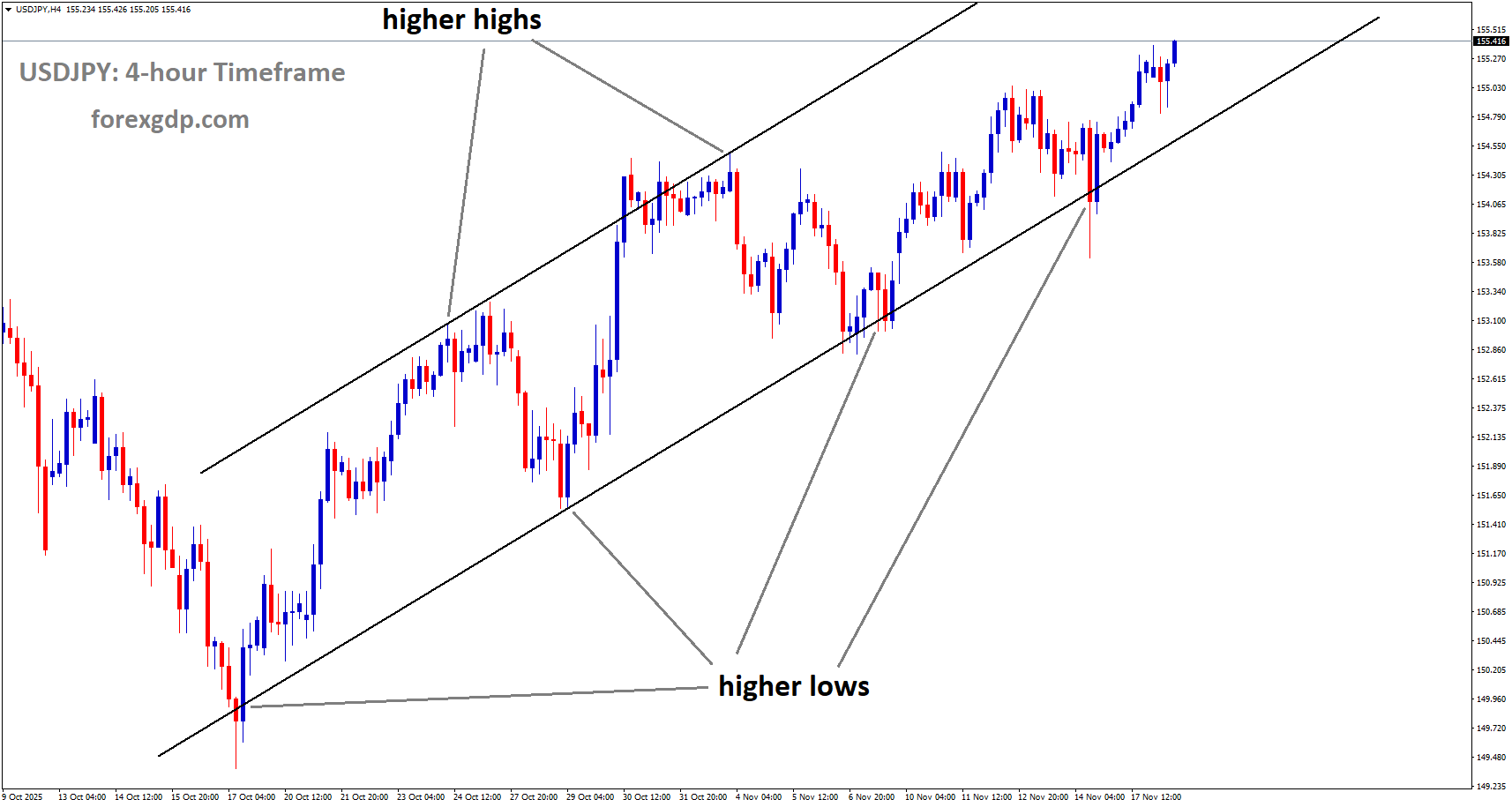
USDJPY is moving in an uptrend channel, and the market has rebounded from the higher low area of the channel
Even without technical analysis or price levels, it’s clear that the Yen’s recovery is supported more by caution than confidence. The underlying challenges in Japan’s economy and uncertainty around monetary policy are still very much in the picture.
Final Summary
The Japanese Yen has managed to regain some strength thanks to a risk-off environment and signals from Japan’s government about watching currency movements more closely. These factors have prevented the USD/JPY pair from climbing higher, especially as traders wait for important US economic updates. Still, the Yen faces major headwinds, such as concerns about Japan’s fiscal stability and doubts about when the Bank of Japan might consider raising rates. At the same time, shifting expectations about US interest rates continue to influence the Dollar’s direction. As a result, the coming days—filled with speeches, reports, and market reactions—are likely to play a big role in determining the Yen’s next significant move.
USDCHF Moves Lower as Swiss Tariff Win Enhances CHF Appeal
The USD/CHF pair has been under pressure recently, and the latest pullback reflects a shift in sentiment toward the Swiss Franc. With Switzerland securing a tariff agreement with the United States and expectations rising for steady monetary policy from the Swiss National Bank (SNB), traders have started favoring the CHF over the USD. At the same time, changing expectations around Federal Reserve actions are adding an interesting twist to the currency landscape.
A Fresh Boost for the Swiss Franc After the Tariff Deal

Switzerland’s economy received a positive push after securing a deal with the United States to significantly lower US tariffs. This move cuts tariffs down to 15%, a notable improvement from the considerably higher rate previously imposed. For Switzerland—a highly developed and export-driven economy—this development brings welcome relief.
The earlier tariff burden had been one of the heaviest placed on any advanced nation, limiting trade flow and increasing costs for Swiss exporters. With the reduction now in place, Swiss goods regain competitiveness in the American market. This renewed stability immediately translated into support for the Swiss Franc, helping it strengthen against the US Dollar.
Why This Matters to the Currency Market
When a country secures improved trade conditions, investors often view its currency more favorably. Better trade terms can support economic activity, reduce uncertainty, and strengthen confidence among global investors. As a result, the Swiss Franc gained traction, contributing to USD/CHF drifting lower during the Asian session.
Expectations Rise for SNB to Keep Rates Steady
Another factor adding support to the Swiss Franc is the growing belief that the Swiss National Bank will maintain its policy rate at 0% in December. Forecasts suggesting slightly higher inflation are reinforcing the idea that the SNB does not need to make dramatic policy adjustments at this time.
SNB Vice President Antoine Martin recently emphasized that inflation is expected to rise modestly. This outlook gives the central bank room to keep monetary policy stable. A steady interest rate environment in Switzerland can help anchor the currency, especially when the wider economic picture appears predictable.
The Appeal of Stability
In uncertain global conditions, investors often gravitate toward currencies supported by strong institutions and stable policies. The Swiss Franc has long been seen as a safe and reliable asset. With the SNB signaling no urgent need for policy changes, the CHF gains another layer of support in the current market environment.
The US Dollar Finds Resistance as Fed Expectations Shift
While the Swiss Franc is gaining strength, the US Dollar is facing mixed signals, largely because of changing expectations surrounding the Federal Reserve’s December meeting. Earlier, market participants were confident that the Fed might cut interest rates soon. However, that sentiment has become less certain.
According to the CME FedWatch Tool, financial markets now estimate a roughly 43% chance of a 25-basis-point rate cut in December. This marks a decline from last week’s expectations, when the probability stood at a stronger 62%. As the likelihood of aggressive easing diminishes, USD momentum has weakened.
Mixed Messages from Federal Reserve Officials
Comments from Federal Reserve policymakers have added another layer of unpredictability.
-
Fed Vice Chair Philip Jefferson noted that risks associated with the labor market now outweigh the risks of inflation. He also suggested that any future policy adjustments should be approached cautiously.
-
Fed Governor Christopher Waller, however, indicated that he supports cutting interest rates when the Federal Open Market Committee meets in December. His concern centers on the slowing US job market and the notable decline in hiring.
These contrasting views highlight the ongoing debate within the Fed, which in turn feeds into market uncertainty. When markets lack clear guidance, the USD often struggles to maintain strong upside momentum.
USD/CHF Reacts to the Shifting Landscape
As these factors unfold, the USD/CHF pair has begun retracing the gains made in the previous session. The pair drifted around the mid-0.79 region during Asian trading, reflecting renewed demand for the Swiss Franc.
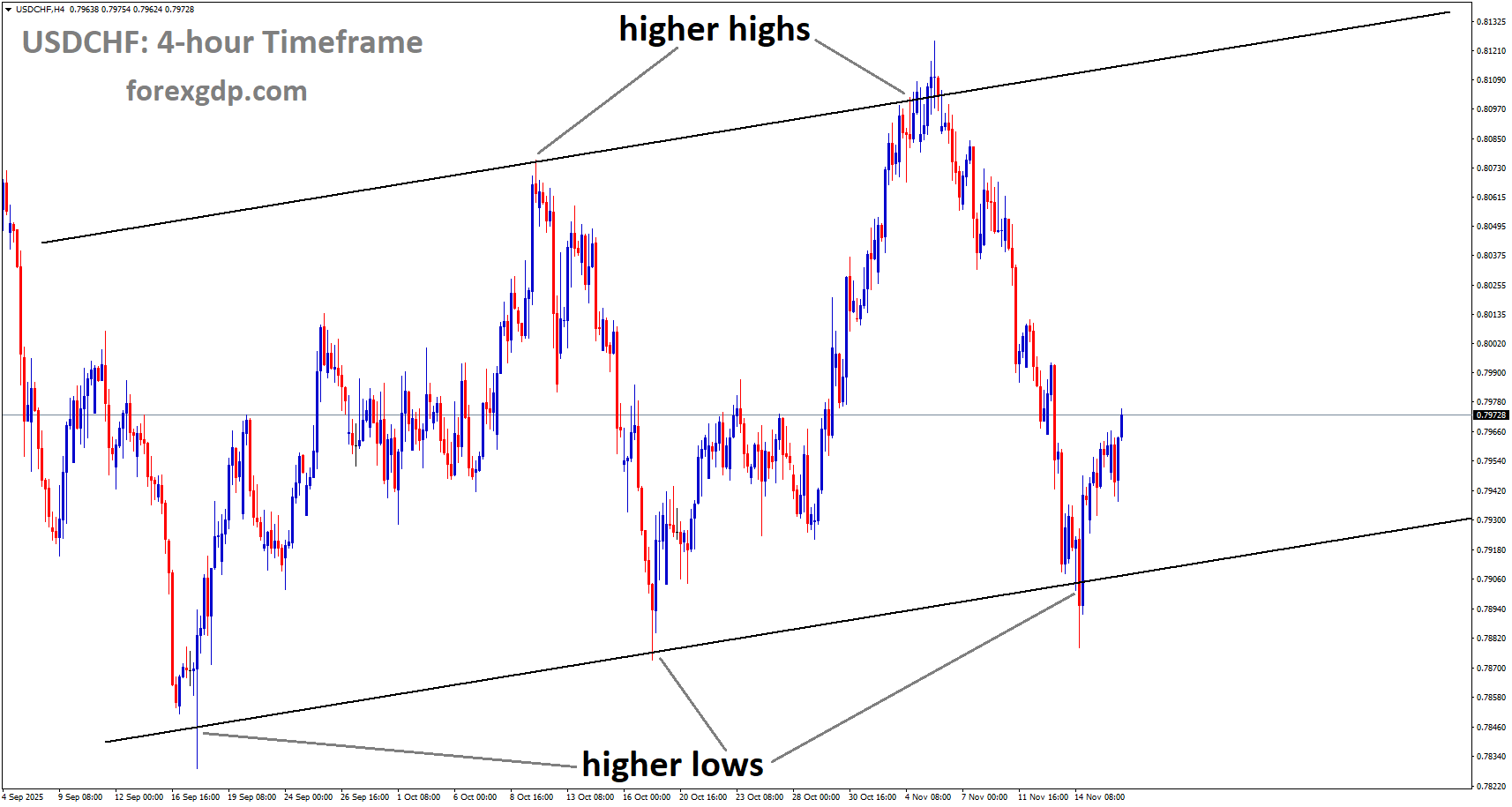
USDCHF is moving in an uptrend channel, and the market has reached the higher low area of the channel
On one side, Switzerland’s improved trade position and stable policy expectations are uplifting the CHF. On the other, the US Dollar is seeing its earlier support weaken as traders reassess the likelihood of upcoming rate cuts. Together, these developments create the conditions for USD/CHF to soften.
Broader Market Sentiment at Play
Market behavior often reflects how traders balance expectations between two major economies.
-
With Switzerland showing stability and securing better trade conditions, the CHF becomes more attractive.
-
With the US facing uncertainty around policy direction and labor market signals, the USD experiences hesitation.
This push and pull dynamic explains the current downward pressure on USD/CHF.
Final Summary
USD/CHF has slipped as the Swiss Franc gains renewed support from positive trade developments and rising expectations that the SNB will hold its interest rate steady. Switzerland’s successful tariff negotiations with the US provide economic relief, boosting confidence in the CHF. At the same time, shifting expectations around Federal Reserve policy are weighing on the US Dollar. Conflicting comments from Fed officials and reduced market conviction about a December rate cut have created uncertainty, which limits USD strength. Together, these forces have driven the pair lower as traders lean more toward the stability and support surrounding the Swiss Franc.