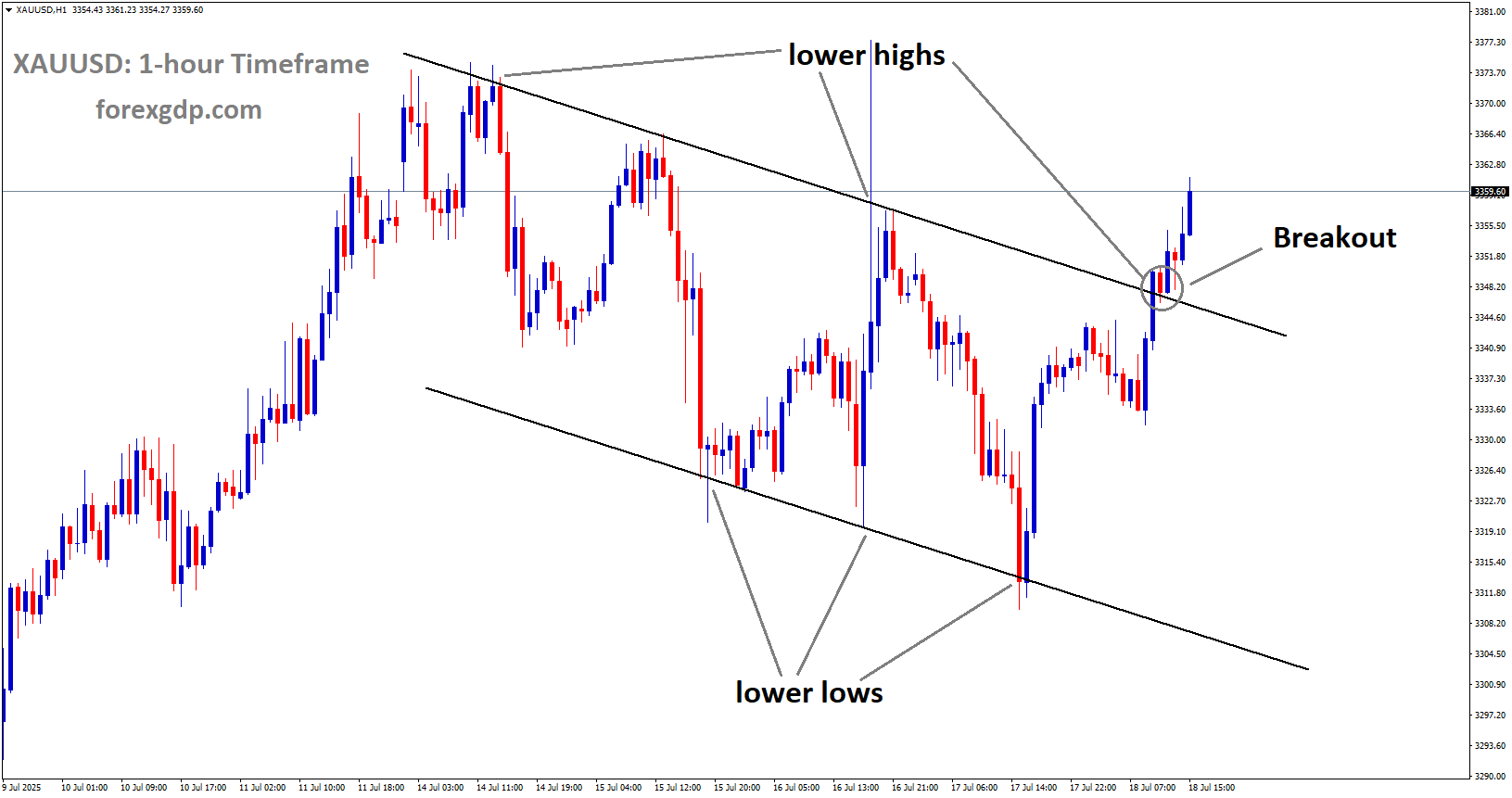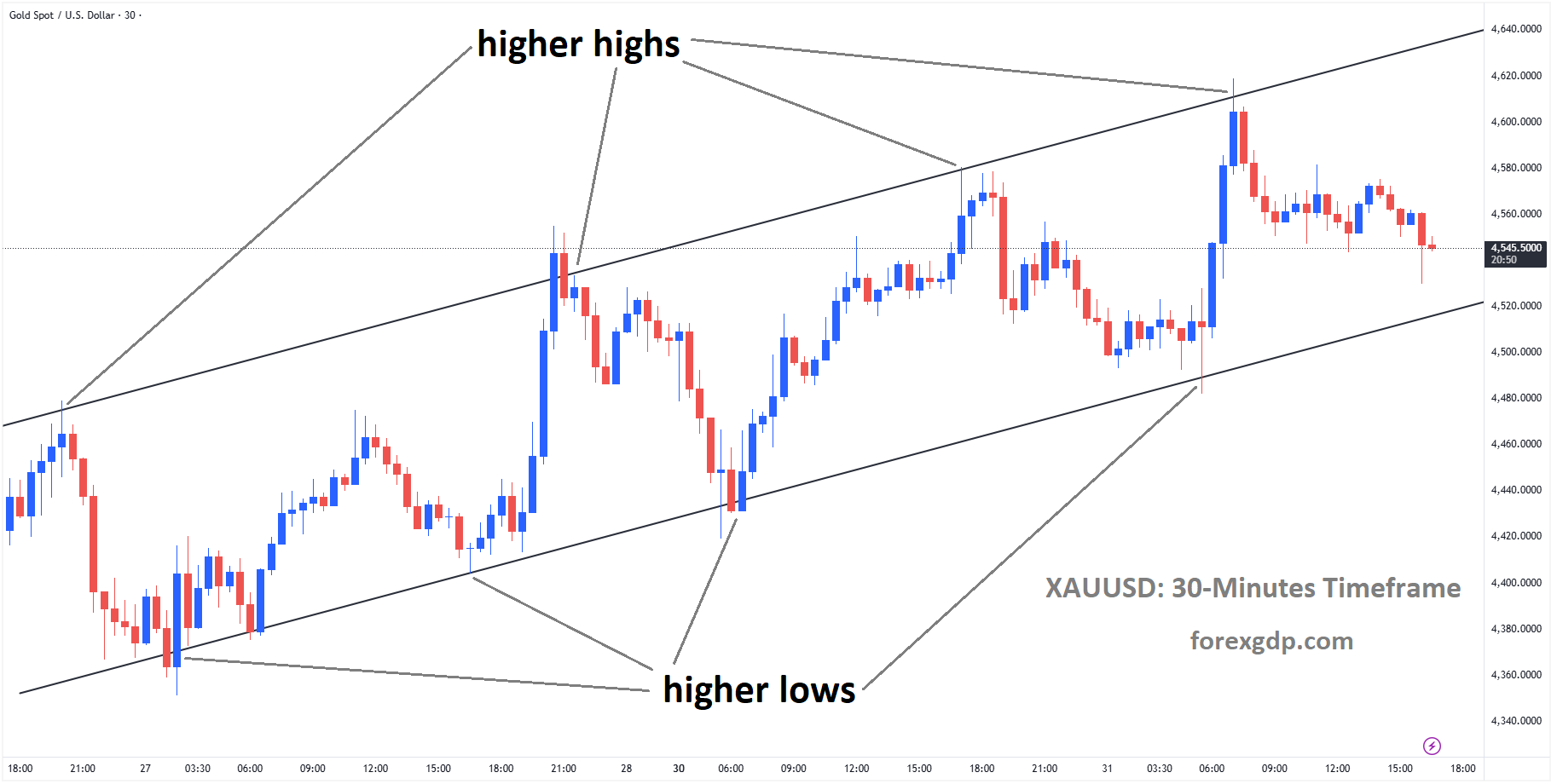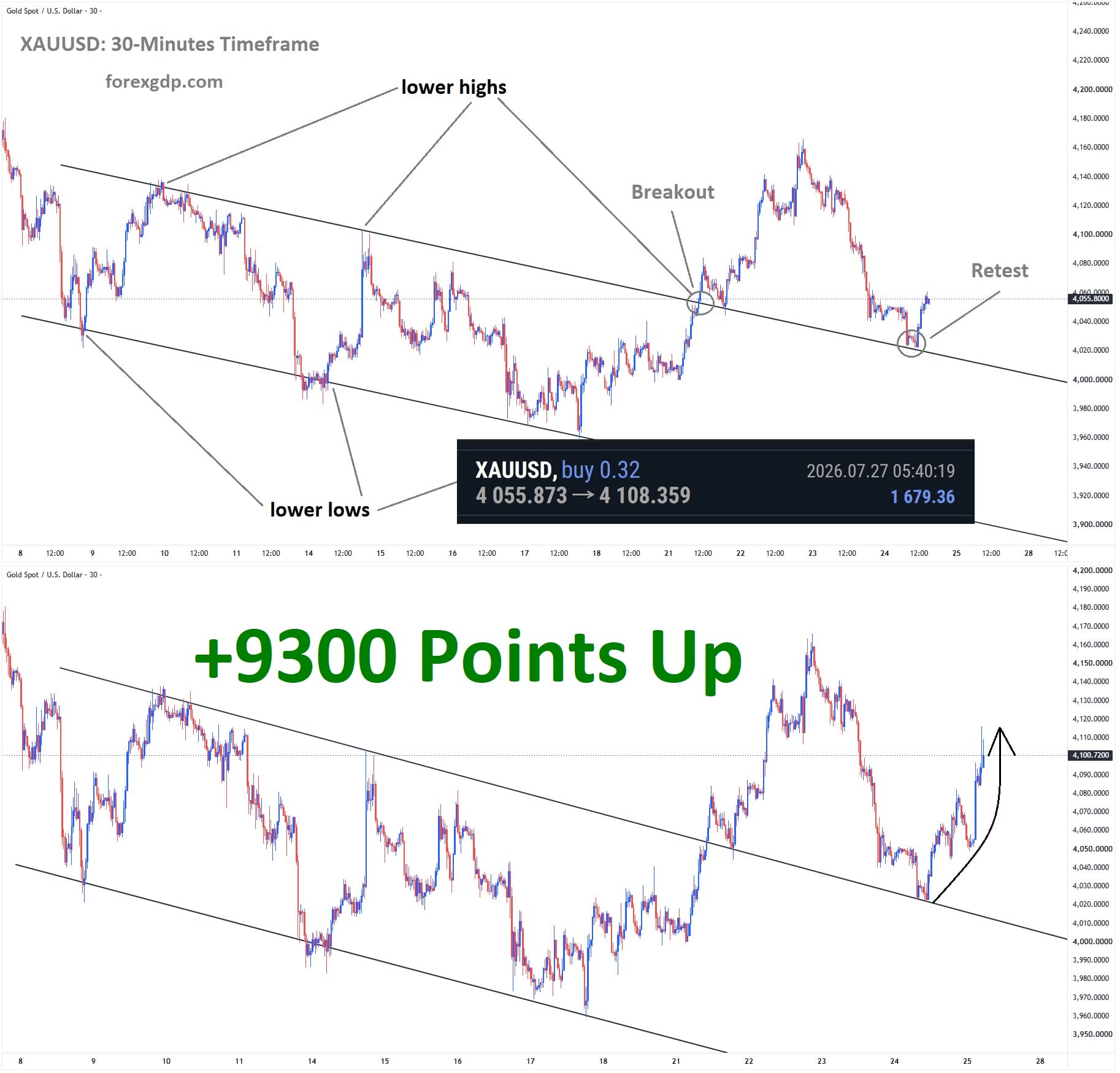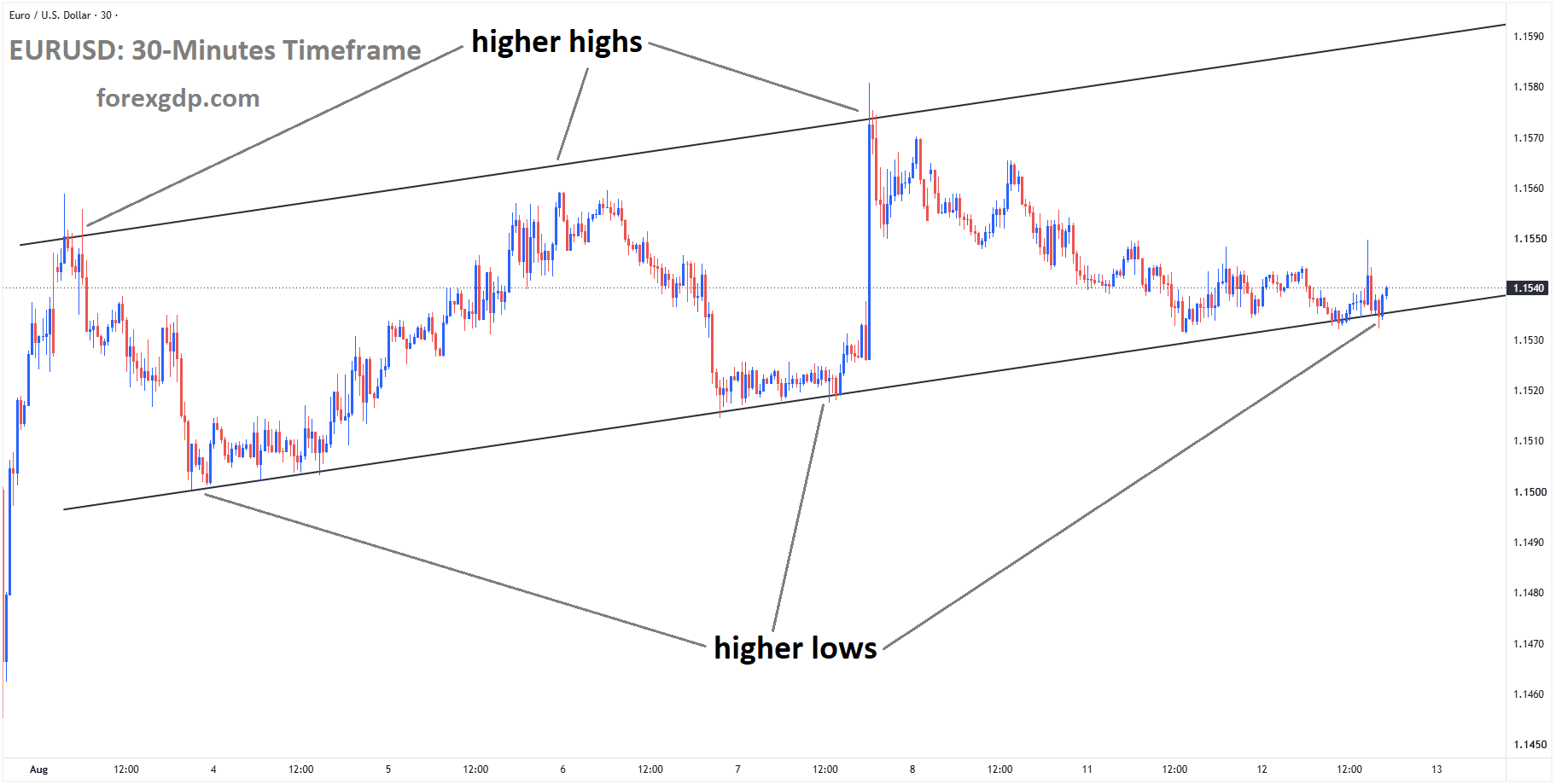
EURUSD is moving in an ascending channel, and the market has reached the higher low area of the channel
EURUSD Struggles as Germany’s Inflation Report Fails to Lift Sentiment
The Euro remained under pressure against the US Dollar during European trading on Wednesday, extending its decline for a third consecutive session. Germany’s latest inflation figures failed to provide meaningful support for the common currency, while demand for safer assets strengthened the US Dollar.
Investors are assessing a complicated economic picture. German inflation accelerated sharply in July, mainly because of rising energy costs. At the same time, stronger-than-expected Eurozone growth offered some reassurance about the region’s ability to withstand economic challenges.
The US Dollar benefited from renewed uncertainty surrounding Middle East peace negotiations. Conflicting reports about diplomatic progress encouraged traders to remain cautious, increasing interest in currencies and assets often considered safer during periods of political tension.
Attention is also turning toward upcoming US inflation data, which could influence expectations for the Federal Reserve’s next policy move.
German Inflation Accelerates in July
Germany’s Harmonized Index of Consumer Prices rose by 2.8% year over year in July. This marked a clear reversal from the slowdown recorded in June, when annual inflation eased to 2.3%.
The latest increase interrupted several months of declining inflation. Consumer price growth had previously slowed from 2.9% in April to 2.6% in May before falling further in June. July’s result showed that inflationary pressures can return quickly, especially when energy costs rise.
Ruth Brand, President of Germany’s Federal Statistical Office, identified energy prices as the main reason for the renewed increase. Energy costs advanced at a faster-than-average rate and had a strong effect on the overall inflation figure.
This development creates a difficult situation for households and businesses. Higher energy bills can reduce the amount of money consumers have available for other purchases. Companies may also face rising operating and transportation expenses, particularly in industries that depend heavily on fuel, electricity or imported materials.
Businesses sometimes pass these additional costs on to customers. If that happens across a wide range of products and services, energy-driven inflation can spread into other parts of the economy.
Inflation Data Offers Little Support to the Euro
Higher inflation does not always strengthen a currency. Although persistent price growth can encourage expectations of tighter monetary policy, investors also consider what is causing inflation and how it may affect the wider economy.
In Germany’s case, the July increase was heavily connected to energy costs rather than a broad improvement in domestic demand. Rising energy expenses can weaken economic activity by placing pressure on household budgets and business profit margins.
Germany is the Eurozone’s largest economy, so changes in its inflation outlook are closely watched across the region. A strong and healthy rise in demand could be viewed as a positive economic signal. However, inflation caused by more expensive energy may create additional risks without delivering the same benefits for growth.
This helps explain why the Euro did not receive a meaningful boost from the latest report. Investors appeared more concerned about the economic consequences of higher costs than the possibility that the data might influence future monetary policy.
The figures may also complicate the European Central Bank’s decisions. Policymakers must balance the need to control inflation with the risk of limiting economic growth. If inflation stays elevated because of energy shocks, the central bank may have fewer comfortable policy options.
Eurozone Growth Provides a Brighter Signal
While German inflation raised concerns, recent Eurozone growth figures offered a more encouraging view of the regional economy. Gross domestic product expanded by 0.4% during the second quarter compared with the previous three months. Economists had generally expected growth of 0.2%.
The stronger result suggests that the currency bloc has shown more resilience than many investors anticipated. It also indicates that economic activity continued to expand despite expensive energy, supply disruptions and uncertainty over interest rates.
Rabobank noted that the Eurozone’s recent growth performance was firmer than expected. This surprise may help provide some near-term support for confidence in the European economy, even if it has not been enough to reverse the Euro’s current weakness.
The growth data matters because the region has faced several obstacles in recent years. Manufacturing activity has been uneven, energy security remains an important concern, and businesses continue to deal with changes in global trade and supply networks.
A better-than-expected expansion does not remove these problems. However, it shows that the Eurozone is not entirely dependent on ideal economic conditions to produce growth. Consumer activity, services and investment may be helping the region absorb some of the pressure.
Safe-Haven Demand Strengthens the US Dollar
The US Dollar gained support as investors responded to uncertainty surrounding Middle East peace efforts. Markets had received signs that diplomatic discussions were moving forward, but later comments created doubts about whether an agreement could be reached smoothly.
Pakistan’s defence minister indicated that Washington and Tehran were moving closer to an understanding related to the Strait of Hormuz. Separate reports also suggested that negotiations involving Iran and Oman had reached an advanced stage.
The Strait of Hormuz is one of the world’s most important energy transport routes. Any tension affecting the area can raise concerns about shipping, oil supplies and global trade. As a result, diplomatic developments involving the waterway can have a broad influence on investor sentiment.
Optimism weakened after US President Donald Trump said Tehran must pay reparations to victims of attacks linked to the Islamic Republic. His comments introduced another potential obstacle and reminded markets that major disagreements remain unresolved.
When geopolitical risks increase, investors often reduce their exposure to currencies and assets viewed as more sensitive to uncertainty. The US Dollar can benefit during these periods because it is widely used in global trade, finance and international reserves.
US Inflation Report Moves Into Focus

Investors are now waiting for the next US inflation report, which could play an important role in shaping expectations for the Federal Reserve’s September meeting.
The central bank kept interest rates unchanged in July, but its future direction remains uncertain. Policymakers must consider whether inflation is under control while also monitoring growth, employment and the impact of global events.
Rising crude oil costs have added another layer of difficulty. More expensive oil can increase transportation and production expenses, potentially keeping consumer inflation elevated. This may encourage some Federal Reserve officials to support a stricter approach.
However, expectations remain divided. The possibility of a quarter-percentage-point increase in September has weakened slightly, showing that investors are not fully convinced the central bank will raise borrowing costs.
The upcoming inflation figures could provide greater clarity. A stronger report may increase concern that price pressures are becoming persistent. A softer result could reduce the need for immediate policy action and shift attention toward economic growth risks.
Summary
The Euro remained weak against the US Dollar as German inflation accelerated in July without improving confidence in the currency. The increase was mainly driven by rapidly rising energy costs, raising concerns about pressure on households, businesses and the wider German economy.
Stronger-than-expected Eurozone growth showed that the region retains a degree of resilience, but it was not enough to overcome near-term concerns. Meanwhile, uncertainty surrounding Middle East peace negotiations encouraged safe-haven demand and supported the US Dollar.
The next major focus is US inflation data. Its outcome could reshape expectations for the Federal Reserve and determine whether policymakers are more likely to keep interest rates steady or consider another increase at their September meeting.
GBPUSD Remains Supported Ahead of Key Inflation and Economic Updates
The British Pound remained largely stable against the US Dollar on Wednesday as investors prepared for several important economic reports from the United States and the United Kingdom. The currency pair showed little clear direction during the first half of European trading, reflecting caution across the foreign exchange market.
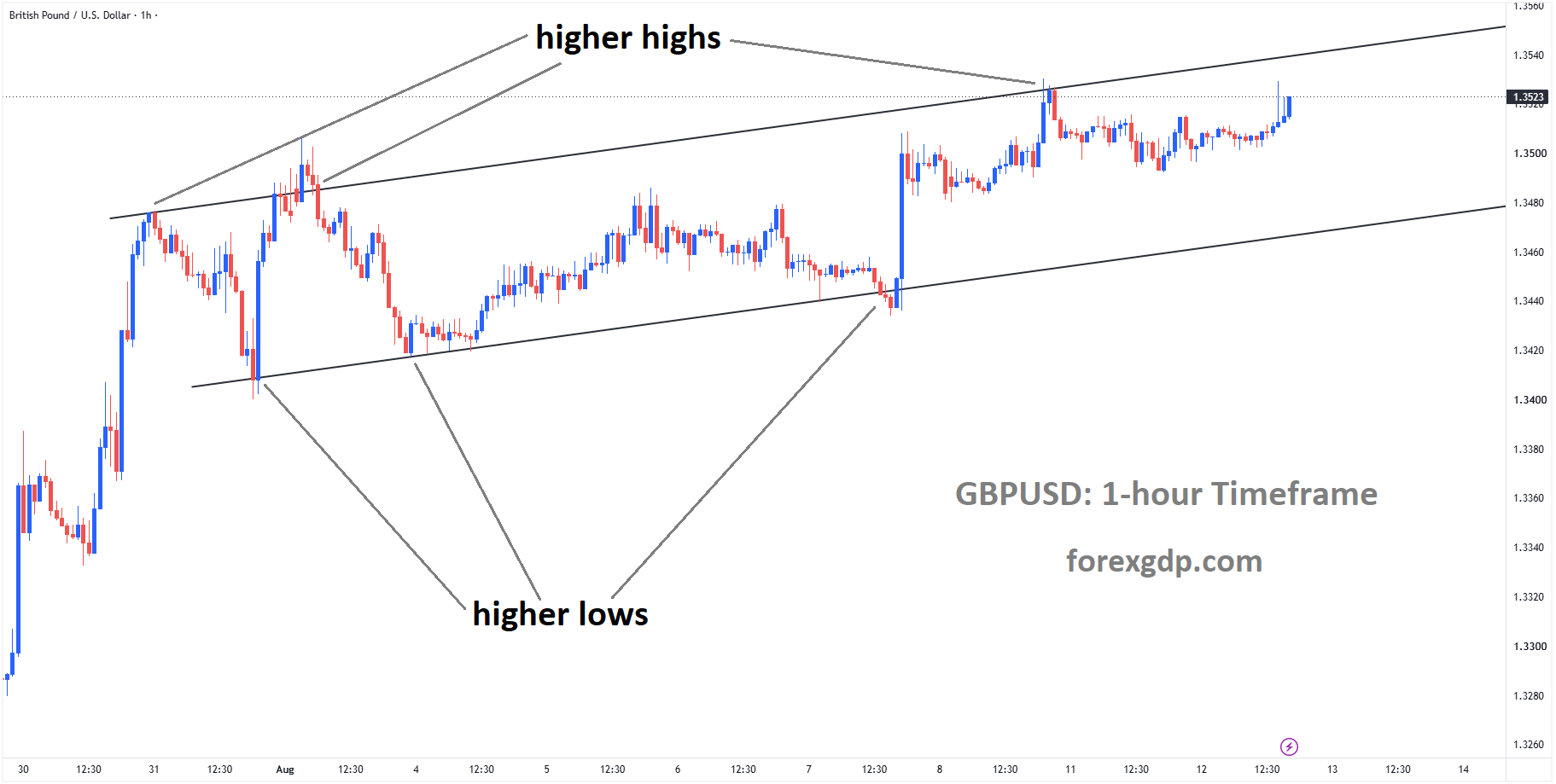
GBPUSD is moving in an ascending channel
Traders are closely watching upcoming inflation and economic growth figures because they could influence expectations for monetary policy in both countries. The US Consumer Price Index is the first major release on the calendar, followed by preliminary UK growth data and the US Producer Price Index on Thursday.
Until these reports provide greater clarity, many market participants appear unwilling to make large commitments. The uncertain economic outlook, combined with rising geopolitical risks, has encouraged a more defensive approach.
US Inflation Report Takes Center Stage
The latest US Consumer Price Index report is expected to play a major role in shaping the near-term direction of the US Dollar. Consumer inflation remains one of the Federal Reserve’s most important considerations when deciding whether interest rates should be raised, lowered, or left unchanged.
Although inflation has eased from previous highs, policymakers remain concerned that price pressures could return. Energy costs are a particular source of uncertainty because geopolitical tensions have created instability in global oil markets.
A stronger-than-expected inflation report could increase expectations that the Federal Reserve will maintain a restrictive policy stance. It may also strengthen the argument for another interest-rate increase before the end of the year. Such an outcome would likely support demand for the US Dollar.
On the other hand, weaker inflation figures could reduce the pressure on the Fed to tighten policy further. That could limit demand for the Dollar and give the British Pound more room to recover.
The situation remains finely balanced. Deutsche Bank strategists have noted that expectations surrounding the Federal Reserve could move sharply in response to an inflation surprise. With investors divided over the possibility of further policy tightening, even a relatively small difference between the reported figures and market forecasts may influence sentiment.
Federal Reserve Expectations Support the US Dollar
The US Dollar continues to benefit from speculation that the Federal Reserve may raise borrowing costs again. Investors remain concerned that inflation could prove more persistent than policymakers would like, especially if oil supplies are disrupted or energy prices remain unstable.
Higher interest rates generally make a currency more attractive because investors can earn better returns from assets denominated in that currency. As a result, expectations of tighter Federal Reserve policy have helped protect the Dollar from significant selling pressure.
However, the Fed’s next decision will depend heavily on incoming information. Policymakers are likely to study consumer inflation, producer costs, employment conditions, wage growth, and household spending before choosing their next step.
The Producer Price Index due on Thursday will offer another useful view of inflation. Unlike consumer inflation, the PPI measures changes in the prices received by domestic producers. Rising production costs can eventually reach consumers if businesses pass those expenses on through higher retail prices.
If both consumer and producer inflation remain elevated, expectations of another Fed move could strengthen. If the reports show that price pressures are cooling, investors may become less confident that additional tightening is necessary.
UK GDP Data Could Shape the Pound’s Outlook
The British Pound will also face an important domestic test when the United Kingdom publishes its preliminary economic growth figures for the second quarter.
The GDP report will show whether the UK economy expanded, slowed, or contracted during the period. The results could influence expectations for the Bank of England, particularly as officials try to control inflation without placing unnecessary pressure on businesses and households.
Stronger economic growth could support the Pound by suggesting that the UK is coping with restrictive borrowing conditions. It could also give the Bank of England more flexibility to keep monetary policy tight if inflation remains a concern.
Weak growth, however, would create a more difficult situation. The central bank may be reluctant to maintain high borrowing costs if economic activity is losing momentum. A disappointing GDP report could therefore weigh on confidence in the British currency.
Investors will pay attention not only to the main growth figure but also to the underlying details. Consumer spending, business investment, industrial output, and service-sector activity can provide a broader picture of economic health.
The UK economy depends heavily on services, making that part of the report especially important. Any sign that household demand is weakening could raise concerns about the effect of expensive borrowing and continued pressure on living costs.
Geopolitical Tensions Increase Safe-Haven Demand

Developments in the Middle East are adding another layer of uncertainty to the currency market. The continuing dispute between the United States and Iran over the Strait of Hormuz has increased fears of disruption to global energy supplies.
An adviser to Iran’s Supreme Leader, Mojtaba Khamenei, said that the Strait would remain closed until Washington meets Tehran’s demands. The waterway is extremely important for international oil shipments, so any extended disruption could affect transportation costs, energy supplies, and inflation around the world.
Tensions have also increased in the Red Sea and around the Bab el-Mandeb Strait. Iran-backed Houthi forces in Yemen have stepped up attacks on commercial vessels, including ships connected to Saudi Arabia. These incidents have pushed shipping companies and insurers to consider higher security and war-related risks.
When geopolitical uncertainty rises, investors often move money into assets viewed as relatively safe. The US Dollar frequently benefits from this behavior because of its central role in global trade, finance, and international reserves.
This safe-haven demand is currently providing additional support for the Dollar. It is also making it harder for the Pound to build lasting momentum, even when sentiment toward the UK currency improves.
Energy Risks Could Complicate the Inflation Picture
The geopolitical situation matters for currency markets because it could directly affect inflation. If shipping routes remain disrupted or oil supplies become less reliable, businesses may face higher transportation and production expenses.
Those costs can spread through the wider economy. Airlines, manufacturers, logistics companies, and retailers may all experience rising expenses, which could eventually be passed on to consumers.
This possibility creates a difficult challenge for central banks. Higher energy costs can lift inflation even when underlying economic demand is slowing. Policymakers must then decide whether tighter monetary policy is needed or whether further interest-rate increases would place too much strain on growth.
For the Federal Reserve, persistent energy-related inflation could support the case for keeping borrowing costs elevated. For the Bank of England, similar pressures could complicate efforts to balance weak economic growth against the need to control prices.
Investors Remain Cautious Before Key Releases
The limited movement in GBP/USD reflects a broader unwillingness to take strong positions before the upcoming reports. The US inflation data may influence Federal Reserve expectations, while the UK GDP release could reshape the outlook for the British economy and the Bank of England.
At the same time, geopolitical tensions are encouraging demand for the US Dollar as a defensive asset. This combination has prevented the Pound from making a decisive advance.
The direction of the pair will likely depend on how the data compares with expectations. Strong US inflation combined with weak UK growth would favor the Dollar. Softer US inflation and encouraging British economic figures could improve the outlook for the Pound.
Summary
GBP/USD is trading cautiously as investors wait for major economic releases from the United States and the United Kingdom. US consumer inflation, UK quarterly GDP, and US producer inflation will provide important evidence about growth and future monetary policy.
Expectations of further Federal Reserve tightening are supporting the US Dollar, while tensions involving Iran, the Strait of Hormuz, and Red Sea shipping routes are increasing safe-haven demand. The Pound may struggle to establish a clear direction until the upcoming reports give investors a better understanding of inflation, economic growth, and the likely next steps from both central banks.
USDJPY Pulls Back as Yen Strengthens Ahead of US CPI
The Japanese Yen strengthened against the US Dollar on Wednesday as investors prepared for the latest United States inflation report. Trading remained unusually quiet across the currency market, but the Yen still emerged as one of the stronger major currencies during the session.
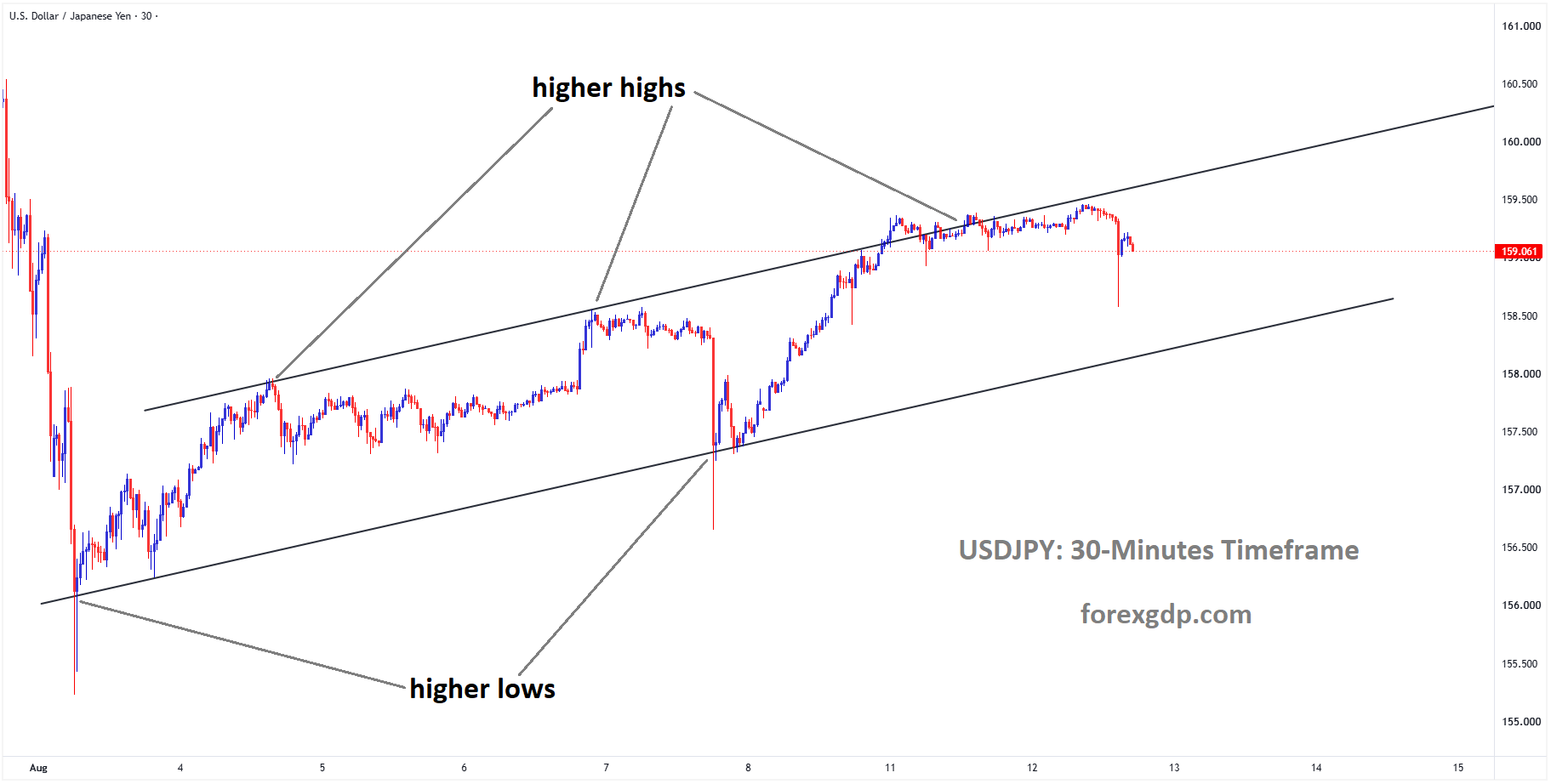
USDJPY is moving in an ascending channel, and the market has fallen from the higher high area of the channel
Demand for the Japanese currency improved after the Bank of Japan released a policy summary that showed growing concern about inflation. However, the Yen’s recovery remained cautious because traders were reluctant to make large moves before the publication of the US Consumer Price Index report.
The inflation figures could influence expectations for the Federal Reserve’s next interest-rate decision. They may also shape broader sentiment across global currency, bond, and equity markets.
Although the Yen attracted buyers during periods of Dollar weakness, the US currency continued to receive demand whenever it declined. This cautious two-way trading reflected uncertainty over whether American inflation is cooling quickly enough to reduce the need for further monetary tightening.
US Consumer Inflation Expected to Ease in July
Economists expect the July inflation report to show a modest reduction in consumer price pressures. The annual headline CPI rate is forecast to slow to 3.4%, compared with 3.5% in June.
Core CPI, which excludes more volatile food and energy costs, is also expected to move slightly lower. The annual core inflation rate is projected to ease to 2.5% from 2.6% in the previous month.
A gradual slowdown would suggest that inflation is continuing to move in the right direction. However, the expected change is relatively small, meaning investors will closely examine the details of the report instead of focusing only on the main figures.
Monthly changes in the cost of housing, services, food, transportation, and other major categories could offer a clearer picture of underlying inflation. Persistent increases in service costs would remain a concern for Federal Reserve officials, even if the headline number shows some improvement.
The data will therefore help investors decide whether inflation is weakening in a sustainable way or simply moving lower at an uneven pace.
Inflation Report Could Reshape Federal Reserve Expectations
The US CPI release is likely to play an important role in determining expectations for Federal Reserve policy. Before the report, financial markets were assigning roughly equal chances to a quarter-point interest-rate increase in September.
A softer inflation reading could reduce expectations for an immediate rate increase. If consumer prices rise less than anticipated, investors may conclude that the Federal Reserve has more time to observe economic conditions before taking further action.
That outcome could weaken demand for the US Dollar. It might also improve interest in risk-sensitive assets because the possibility of higher borrowing costs would become less pressing.
A stronger-than-expected report would create a different reaction. Evidence that inflation remains stubborn could increase expectations that the Federal Reserve will raise rates again. The Dollar could receive an initial boost as investors prepare for US interest rates to remain elevated.
However, the room for a major shift toward more aggressive policy expectations may be limited. Federal Reserve policy is already restrictive, meaning current borrowing costs are designed to slow demand and bring inflation under control.
Because of this, even an unexpectedly strong CPI report may not convince investors that a long series of additional rate increases is coming. The central bank must balance the need to control inflation with the risk that excessive tightening could weaken economic activity.
Why the CPI Details Matter for the US Dollar
The main inflation figures will attract immediate attention, but the composition of the report may be equally important. Investors will want to know whether price pressures are concentrated in a few categories or remain widespread throughout the economy.
A broad decline in inflation would strengthen confidence that the Federal Reserve’s policies are working. It would also support the argument for a more patient approach at upcoming policy meetings.
On the other hand, continued strength in important service categories could keep officials cautious. Service inflation can be difficult to control because it is often connected to wages, housing expenses, and domestic demand.
The Federal Reserve is unlikely to base its decision on one report alone. Policymakers will also consider employment figures, wage growth, consumer spending, and business activity. Even so, the July CPI data will provide one of the clearest updates on the inflation outlook before the September meeting.
As a result, currency traders may respond quickly if the figures differ significantly from expectations.
Bank of Japan Outlook Offers Support to the Yen

The Yen is also benefiting from a more policy-focused development in Japan. The Bank of Japan’s latest Summary of Opinions showed that members of its monetary policy committee are becoming more concerned about the possibility of stronger inflation.
These concerns have increased speculation that the central bank could raise interest rates by a quarter percentage point in September. One committee member also suggested that the Bank of Japan may need to speed up the pace of monetary tightening if inflation risks continue to rise.
This represents an important change in tone. Japan spent many years dealing with weak inflation and extremely loose monetary policy. The Bank of Japan maintained low borrowing costs in an effort to support demand and encourage sustainable price growth.
More recently, officials have had to consider whether inflation is becoming established enough to justify further policy normalization. Rising wages, changes in business pricing behavior, and persistent cost pressures have all become important parts of that discussion.
A stronger willingness to raise rates can support the Yen because higher Japanese interest rates may make the currency more attractive. It can also reduce the large policy difference between Japan and countries where borrowing costs have already risen considerably.
The Yen Remains Caught Between Two Central Banks
The direction of the Yen will depend heavily on the changing policy outlooks in both Japan and the United States.
In the US, softer inflation could encourage expectations that the Federal Reserve will avoid immediate tightening. In Japan, concerns about rising inflation could strengthen the case for another Bank of Japan rate increase.
If both developments occur together, the policy gap between the two countries could narrow. That would provide a more supportive environment for the Japanese currency.
The opposite outcome is also possible. Strong US inflation could keep the Federal Reserve focused on tighter policy, while any hesitation from the Bank of Japan could limit demand for the Yen.
For now, investors appear unwilling to take a strong position. The encouraging signals from the Bank of Japan are helping the Yen, but the US inflation report remains the more immediate market event.
Summary
The Japanese Yen has gained support in a quiet currency market as investors consider the possibility of further Bank of Japan tightening. The central bank’s latest policy opinions revealed greater concern about inflation and left the door open to a September rate increase.
Attention is now centered on the US CPI report. Economists expect both headline and core inflation to ease slightly in July. A softer result could reduce expectations for an immediate Federal Reserve rate increase and place pressure on the US Dollar. A stronger reading may support the Dollar initially, although the restrictive level of current US policy could limit expectations for much more aggressive tightening.
The interaction between softer US inflation and a more cautious but potentially firmer Bank of Japan will remain the central force shaping the Yen’s direction.
AUDUSD Advances Even as RBA’s Firm Rate Outlook Loses Impact
The Australian Dollar gained ground against several major currencies as investors continued to assess the Reserve Bank of Australia’s latest policy decision. The currency performed well even though financial markets appeared uncertain about whether the central bank would follow through with another interest rate increase.
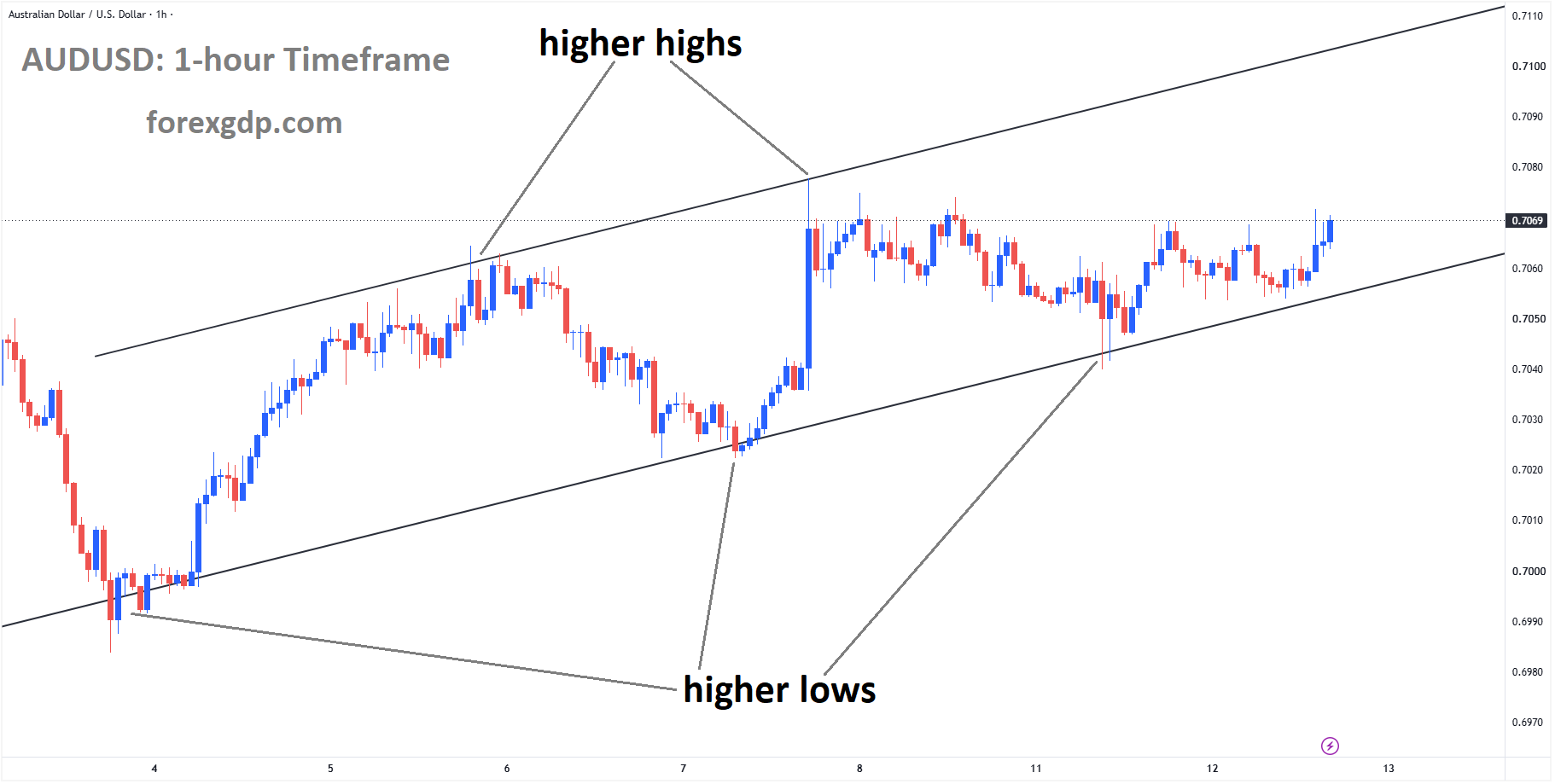
AUDUSD is moving in an ascending channel, and the market has rebounded from the higher low area of the channel
The Reserve Bank of Australia left its Official Cash Rate unchanged at 4.35% during Tuesday’s meeting. This was the second consecutive meeting in which policymakers decided to keep borrowing costs steady. Although the decision was widely expected, the central bank maintained that another increase could still be considered if inflation remained difficult to control.
RBA Governor Michele Bullock said the central bank’s board remained focused on slowing demand and reducing inflationary pressure. She also made it clear that policymakers were prepared to act again if economic conditions required a stronger response.
However, economists are divided over what the RBA will do next. Some believe another rate increase remains possible later in the year, while others expect the central bank’s next major move to be a rate cut.
RBA Keeps Its Policy Options Open
The Reserve Bank of Australia chose not to raise interest rates at its latest meeting, but its communication remained cautious. Policymakers are still concerned that inflation could stay above the central bank’s preferred range for longer than expected.
Governor Bullock highlighted the uncertainty surrounding the Australian economy and the RBA’s forecasts. While the central bank wants inflation to move lower, it must also avoid placing unnecessary pressure on households, businesses, and the broader economy.
Higher borrowing costs have already affected mortgage holders and consumers. Many households are spending more of their income on loan repayments, leaving less money available for goods and services. This slowdown in spending is part of the RBA’s effort to bring inflation under control.
At the same time, the central bank cannot declare victory too early. If demand remains stronger than expected or if important costs such as energy rise sharply, inflation could become more persistent. For that reason, the RBA is unwilling to completely rule out another increase.
The central bank’s message suggests that future decisions will depend heavily on incoming economic reports. Inflation, employment, wage growth, household spending, and business activity are likely to play an important role in determining whether rates remain unchanged.
Standard Chartered Sees Rates Staying on Hold
Analysts at Standard Chartered believe the RBA is maintaining a flexible position rather than preparing the market for an immediate policy change. They noted that Governor Bullock placed considerable emphasis on the uncertainty surrounding the central bank’s main economic forecasts.
Her comments left open the possibility of additional tightening if inflation developed in an unfavorable direction. Even so, Standard Chartered’s central expectation is that the RBA will not raise interest rates again in the foreseeable future.
The bank believes another increase could become more likely during the fourth quarter if demand fails to weaken sufficiently. A renewed rise in energy costs could also create problems by increasing expenses for households and businesses. That could place fresh pressure on consumer prices and make the RBA’s inflation goal more difficult to achieve.
However, conditions in the labor market may reduce the need for further action. If employment growth continues to cool and the demand for workers becomes less intense, wage pressures could gradually ease. Slower wage growth would make it easier for businesses to manage costs without passing large increases on to customers.
This development would strengthen the argument for keeping rates unchanged. It would allow the RBA to observe the delayed impact of earlier increases while giving inflation more time to move lower.
Commerzbank Expects a Rate Cut to Come Next
Commerzbank takes a different view of the Australian interest-rate outlook. Its analysts believe the RBA’s latest statement was less hawkish than it initially appeared.
Although policymakers continued to discuss the possibility of further rate increases, the central bank also made changes to its economic projections. The expected unemployment rate was revised higher, while near-term inflation forecasts were lowered.
These updates suggest that the RBA sees some signs of weaker economic conditions and softer inflation pressure in the short run. A higher unemployment forecast may indicate that the labor market is expected to lose momentum as elevated borrowing costs continue to affect economic activity.
The RBA did raise some of its medium-term inflation projections. According to Commerzbank, this adjustment may explain why policymakers continued to warn about inflation risks and refused to remove another increase from consideration.
Still, the bank believes the overall decision was broadly consistent with what investors had expected. It also maintains that the RBA’s next policy move is more likely to be a rate cut than another increase.
A future reduction would depend on convincing evidence that inflation is moving sustainably lower. The RBA would also need to feel confident that easing monetary policy would not cause demand and price growth to accelerate again.
Australian Dollar Rises Despite Policy Doubts

The Australian Dollar managed to outperform many of its major peers following the policy announcement. Its strength came despite the market’s limited confidence in the RBA’s warnings about another possible increase.
One reason for the currency’s resilience may be that Australian interest rates remain relatively high. The RBA’s decision to keep the possibility of further tightening alive can also offer some support, even if investors do not consider another increase the most likely outcome.
However, the longer-term outlook remains uncertain. If markets become more convinced that the central bank has finished raising rates, expectations may gradually shift toward when policy easing could begin.
The Australian Dollar is also influenced by developments outside Australia. Changes in global risk appetite, commodity demand, China’s economic performance, and the direction of US monetary policy can all affect the currency.
This means the RBA’s decisions are only one part of the wider picture. Even a cautious central bank message may have a limited impact if major global developments push investors in a different direction.
US Inflation Report Moves Into Focus
Attention is now turning to the latest United States Consumer Price Index report for July. The US Dollar remained largely steady as investors waited for the inflation figures.
The report could influence expectations for the Federal Reserve’s next policy decision. Stronger-than-expected inflation may encourage the Fed to maintain restrictive borrowing conditions for longer. Softer inflation, on the other hand, could strengthen expectations that policymakers will have more room to adopt a less aggressive approach.
Any major shift in the US interest-rate outlook could affect the Australian Dollar. A more cautious Federal Reserve may reduce support for the US currency, while persistent American inflation could keep it firm against its global counterparts.
For that reason, the US inflation release may become the next important driver for the Australian Dollar after the RBA meeting.
Summary
The Australian Dollar gained against several major currencies even as investors questioned whether the Reserve Bank of Australia would raise interest rates again. The RBA kept its cash rate unchanged but warned that further action remained possible if inflation risks increased.
Standard Chartered expects rates to remain steady, although it sees a chance of another increase if demand or energy costs rise. Commerzbank believes the central bank’s message was not especially hawkish and expects the next policy move to be a rate cut.
With opinions divided over Australia’s policy direction, investors are now focusing on US inflation data. The report could reshape expectations for the Federal Reserve and influence the Australian Dollar’s performance in global currency markets.
NZDUSD Faces Pressure While Global Risks Lift the US Currency
The New Zealand Dollar has remained under pressure against the US Dollar, extending its decline for a third consecutive trading session. Growing uncertainty surrounding Middle East peace negotiations has encouraged investors to seek safer assets, strengthening demand for the US currency.
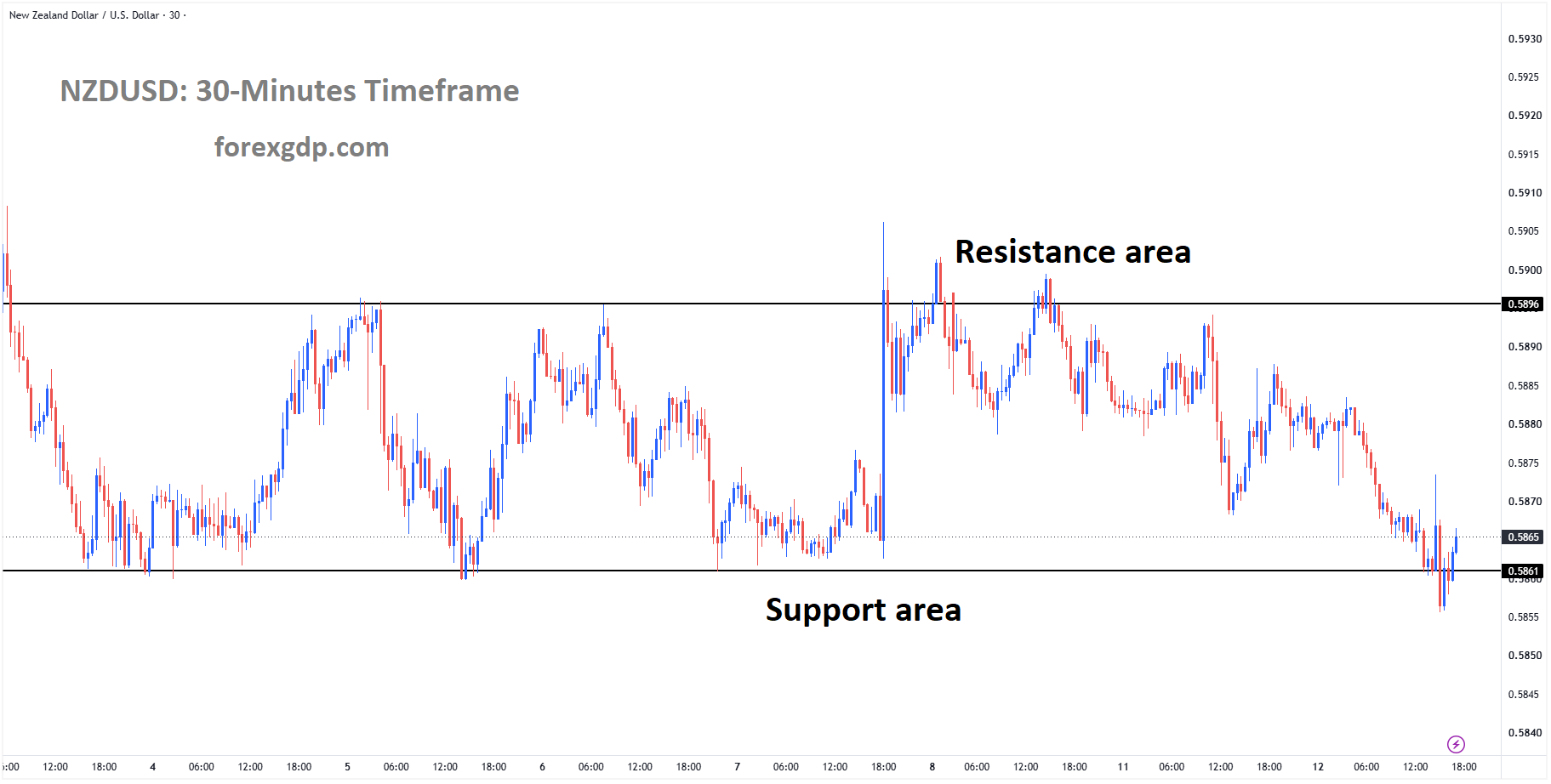
NZDUSD is moving in a box pattern, and the market has reached the support area of the pattern
The latest movement reflects a cautious mood across global financial markets. Investors are closely following diplomatic efforts involving the United States, Iran, Oman, and Pakistan. Although there have been signs of progress, several important disagreements remain unresolved.
At the same time, monetary policy expectations in both the United States and New Zealand are influencing the currency pair. Traders are waiting for key US inflation figures that could shape the Federal Reserve’s next interest rate decision. In New Zealand, investors continue to expect another rate increase from the Reserve Bank of New Zealand as officials focus on controlling inflation.
Political developments have also attracted attention after New Zealand Prime Minister Christopher Luxon survived another leadership challenge ahead of the general election.
Middle East Peace Talks Create a Cautious Market Mood
The US Dollar has benefited from renewed safe-haven demand as investors assess conflicting reports about diplomatic negotiations in the Middle East. Safe-haven currencies often receive stronger demand during periods of political tension because investors view them as more reliable when the outlook becomes uncertain.
Pakistan’s defence minister suggested that Washington and Tehran were moving closer to an agreement concerning the Strait of Hormuz. This waterway is one of the world’s most important routes for global energy transportation, making any political or military tension in the area a major concern for international markets.
Separate reports also indicated that negotiations involving Iran and Oman had reached an advanced stage. Oman has frequently played a diplomatic role in discussions between Iran and Western governments, and signs of progress initially raised hopes that tensions could ease.
However, those hopes were weakened by comments from US President Donald Trump. He insisted that Tehran should compensate victims of attacks linked to the Islamic Republic. His demand introduced another difficult issue into the negotiations and reminded investors that a final agreement was far from certain.
The mixed signals have created an uncomfortable environment for financial markets. Reports of progress suggest that a peaceful settlement may be possible, but tougher political demands increase the risk of delays or a breakdown in talks. Until there is clearer evidence of an agreement, investors may continue to favor the US Dollar over currencies considered more sensitive to global risk.
US Inflation Report Could Shape the Federal Reserve’s Next Move
Attention is now turning toward the latest US inflation report. The data is expected to play an important role in determining whether the Federal Reserve changes interest rates at its September meeting.
The Fed kept borrowing costs unchanged in July, but policymakers continue to face a difficult balance. They must ensure that inflation is moving toward a sustainable level without placing unnecessary pressure on economic activity.
Economists at Commerzbank have emphasized that the Dollar’s medium-term direction may depend on whether inflation is slowing quickly enough to prevent another Fed rate increase. The same issue could also influence US government bond yields and broader investor demand for American assets.
Financial markets remain divided over the likely outcome of the September meeting. Some traders believe inflation risks could persuade the central bank to tighten policy again. Others expect the Fed to remain patient, especially if the latest economic reports show that price pressures are easing.
This disagreement means the incoming inflation figures could produce a significant change in expectations. A stronger-than-expected report may support the argument for higher interest rates, while softer inflation could reduce the need for further action.
The Federal Reserve will probably consider more than one report before making its decision. Employment conditions, consumer demand, wage growth, and wider economic activity will also matter. Even so, inflation remains one of the most closely watched parts of the policy debate because it directly affects the central bank’s goal of maintaining stable prices.
Reserve Bank of New Zealand Expected to Tighten Policy
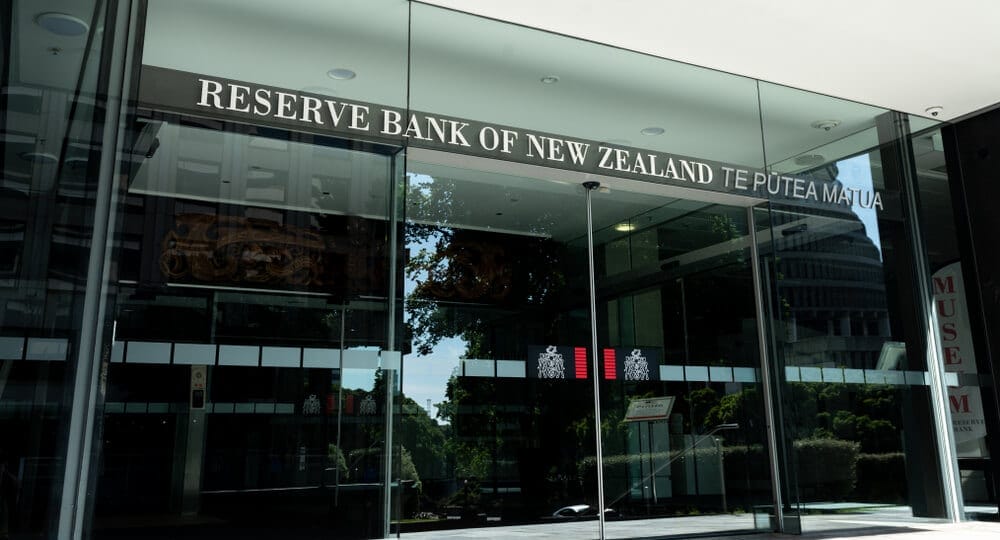
While the Federal Reserve’s next step remains uncertain, markets appear more confident about the direction of monetary policy in New Zealand. Traders widely expect the Reserve Bank of New Zealand to raise interest rates in September.
New Zealand policymakers have signaled that additional tightening may be necessary to remove monetary support from the economy and prevent inflation from remaining too high. Higher interest rates can help slow demand by making borrowing more expensive, but they can also create difficulties for households and businesses.
The RBNZ must therefore manage a careful trade-off. Acting too slowly could allow inflation to become more deeply established. Moving too aggressively could weaken economic activity and increase financial pressure on borrowers.
Normally, expectations of higher interest rates can support a country’s currency. However, the New Zealand Dollar has struggled to benefit because global uncertainty has encouraged stronger demand for the US Dollar. This shows how international risk sentiment can sometimes outweigh domestic monetary policy expectations.
The New Zealand Dollar is often sensitive to changes in the global outlook because the country depends heavily on trade. When investors become more confident, demand for risk-sensitive currencies can improve. During periods of geopolitical concern, however, money often moves toward assets viewed as safer.
Christopher Luxon Survives Another Leadership Challenge
Domestic politics have added another layer of uncertainty in New Zealand. Prime Minister Christopher Luxon has survived his second leadership challenge in four months as the country moves closer to a general election.
The challenge was discussed during a three-hour party meeting in Wellington. Afterward, Luxon said he continued to have the full support of his members of Parliament.
Surviving the challenge allows the prime minister to remain in charge of the party’s election campaign. However, repeated questions about his leadership could become a distraction at a time when voters are focusing on economic conditions, household expenses, public services, and the government’s overall performance.
With fewer than three months remaining before the election, political stability will be important for Luxon and his party. Internal divisions could weaken the campaign, while a united party may give the prime minister more room to focus on national issues.
Currency traders generally react most strongly to political events when they could change economic policy, government stability, or the direction of fiscal spending. Luxon’s survival removes an immediate leadership risk, but investors may continue monitoring opinion polls and developments within his party.
Summary
The New Zealand Dollar remains under pressure as uncertainty surrounding Middle East negotiations strengthens safe-haven demand for the US Dollar. Reports of diplomatic progress involving the United States, Iran, Pakistan, and Oman have been offset by tougher demands from President Donald Trump, leaving investors cautious.
US inflation data is now a major focus because it could influence whether the Federal Reserve raises interest rates in September. Market expectations remain divided, making upcoming economic reports especially important.
In New Zealand, traders continue to anticipate tighter monetary policy from the Reserve Bank as officials work to control inflation. Prime Minister Christopher Luxon has also survived another leadership challenge, giving him an opportunity to lead his party into the approaching general election despite continuing political pressure.
Don’t trade all the time, trade forex only at the confirmed trade setups
Get more confirmed trade signals at premium or supreme – Click here to get more signals, 2200%, 800% growth in Real Live USD trading account of our users – click here to see , or If you want to get FREE Trial signals, You can Join FREE Signals Now!