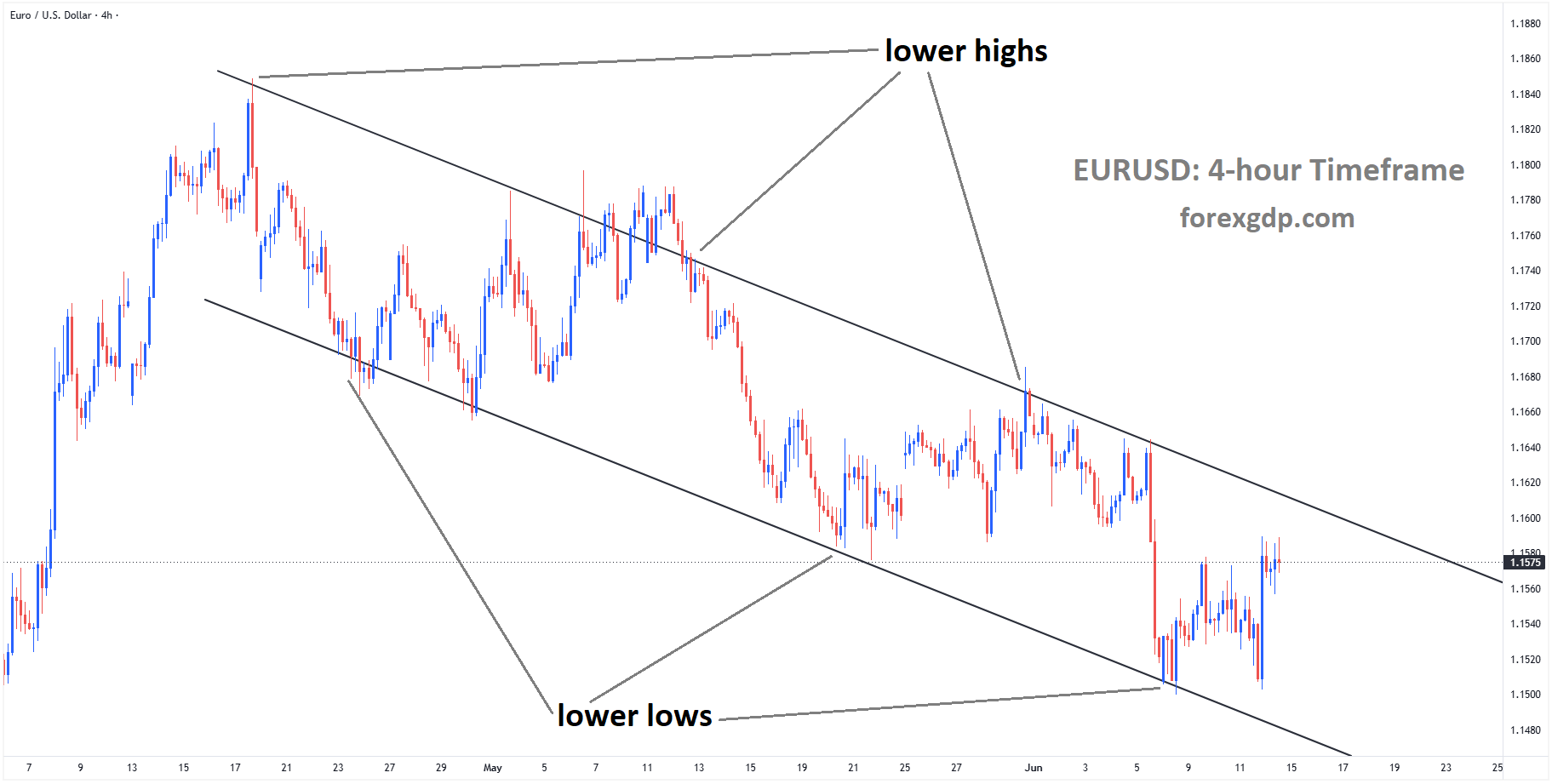
EURUSD is moving in a descending channel, and the market has rebounded from the lower low area of the channel
EURUSD Eases After Strong Rally While Markets Eye Progress in US-Iran Negotiations
The Euro eased slightly against the US Dollar on Friday after reaching its strongest level of the week a day earlier. Although the common currency retreated from recent highs, it remained on course for a solid weekly gain, supported by the European Central Bank’s latest policy decision and improving global risk sentiment.
Investors continued to assess the impact of the ECB’s interest rate increase, while developments surrounding diplomatic negotiations involving Iran also helped boost confidence in financial markets. At the same time, fresh economic data from the United States reduced expectations of additional monetary tightening by the Federal Reserve, limiting support for the US Dollar.
ECB Rate Increase Strengthens Euro Outlook
One of the main drivers behind the Euro’s recent strength has been the European Central Bank’s decision to raise interest rates for the first time in nearly three years.
The ECB increased its key benchmark rate by a quarter percentage point, signaling confidence in the resilience of the Eurozone economy and its commitment to controlling inflation. While policymakers stopped short of providing a clear roadmap for future rate moves, the central bank’s updated economic projections suggested that inflation risks remain elevated.
Market participants interpreted the revised inflation outlook as a sign that policymakers may not yet be finished with their efforts to tighten monetary conditions. As a result, expectations for additional policy action in the coming months provided support for the Euro across currency markets.
The currency reacted positively following the announcement, with traders viewing the decision as evidence that the ECB remains focused on maintaining price stability despite ongoing economic uncertainties.
Hopes for Diplomatic Progress Improve Market Sentiment
Beyond central bank policy, geopolitical developments also played a role in shaping investor sentiment during the week.
Financial markets responded positively to comments from US President Donald Trump regarding negotiations involving Iran. According to Trump, significant progress had been made in discussions, leading to the cancellation of a planned third day of military strikes.
The prospect of a diplomatic breakthrough reduced concerns about escalating tensions in the region and encouraged a more optimistic mood among investors.
However, officials in Tehran adopted a more cautious tone. Iranian representatives confirmed that a proposed agreement was still under review, though they acknowledged that approval appeared closer than at any previous stage of the negotiations.
Even with some uncertainty remaining, the possibility of a peaceful resolution helped support risk-sensitive assets and reduced demand for traditional safe-haven investments.
Eurozone Inflation Data Matches Expectations
Economic releases from key Eurozone economies provided additional insight into the region’s inflation environment.
In Germany, final inflation figures confirmed earlier estimates, showing annual consumer price growth remained stable. Monthly data pointed to a slight decline in prices during May, reflecting a moderation in inflationary pressures compared to previous periods.
France reported a similar outcome, with final inflation readings matching preliminary estimates. Consumer prices recorded modest monthly growth while maintaining a steady annual increase.
The lack of surprises in the data reinforced the broader market view that inflation remains elevated enough to justify the ECB’s cautious and vigilant stance. Since the figures aligned closely with expectations, they had a limited immediate impact on currency markets but helped support the narrative that inflation remains a central concern for policymakers.
US Producer Price Data Sends Mixed Signals
Across the Atlantic, investors closely watched the latest inflation-related data from the United States.
Producer Price Index (PPI) figures showed that overall producer prices increased faster than analysts had anticipated during May. Normally, stronger inflation data can boost expectations that the Federal Reserve may need to maintain a restrictive monetary policy stance.
However, a closer look at the report revealed a more nuanced picture.
Core PPI, which excludes some of the more volatile components of inflation, rose at the same annual pace as the previous month. Economists had expected a stronger acceleration. The softer-than-expected core reading suggested that inflation pressures may not be spreading as broadly throughout the economy as some had feared.
This outcome reassured investors that earlier energy-related price shocks may not be feeding into wider inflation trends.
Federal Reserve Expectations Shift
The softer core inflation figures had an important impact on expectations for future Federal Reserve policy.
In recent months, markets have been highly sensitive to any economic data that could influence the Fed’s decisions. Strong inflation numbers tend to strengthen the case for tighter monetary policy, while signs of easing price pressures often have the opposite effect.
Because the core producer inflation data came in below expectations, investors reduced their bets on additional policy tightening by the Federal Reserve. As a result, demand for the US Dollar weakened somewhat.
Currency markets often react quickly to shifts in interest rate expectations, and Friday’s data encouraged traders to reassess the likelihood of future Fed action.
The reduced expectation of further tightening helped offset support for the Dollar and allowed the Euro to maintain much of its recent gains despite Friday’s pullback.
What Investors Are Watching Next
Looking ahead, market participants will continue monitoring several key themes.
First, investors will be paying close attention to future comments from ECB officials for clues about whether additional rate increases remain likely. Any indication that policymakers are becoming more concerned about inflation could provide further support for the Euro.
Second, developments in US inflation and employment data will remain critical for shaping Federal Reserve expectations. Signs that price pressures are easing could continue to weigh on the Dollar, while stronger economic indicators may revive speculation about tighter policy.
Finally, geopolitical developments, particularly those involving Iran and broader Middle East stability, are likely to remain an important factor influencing market sentiment and risk appetite.
Summary
The Euro retreated slightly from its weekly highs on Friday but remained positioned for a strong weekly advance against the US Dollar. Support for the European currency came from the European Central Bank’s recent interest rate increase, expectations that inflation could keep policymakers on a tightening path, and improving market confidence linked to diplomatic progress involving Iran.
Meanwhile, US economic data delivered mixed signals. Although producer prices increased, softer core inflation readings reduced expectations of additional Federal Reserve tightening. This weakened support for the Dollar and helped the Euro preserve most of its gains.
As investors look ahead, central bank policy decisions, inflation trends, and geopolitical developments will continue to shape the direction of major currency markets.
GBPUSD Gains Ground Despite Unexpected Weakness in UK Economic Growth
The British Pound regained some strength against major global currencies after the latest economic data showed that the United Kingdom’s economy contracted in April, matching expectations. While the figures highlighted ongoing economic challenges, investors appeared encouraged by stronger-than-expected manufacturing activity and are now turning their attention to a series of major economic events scheduled for the coming days.
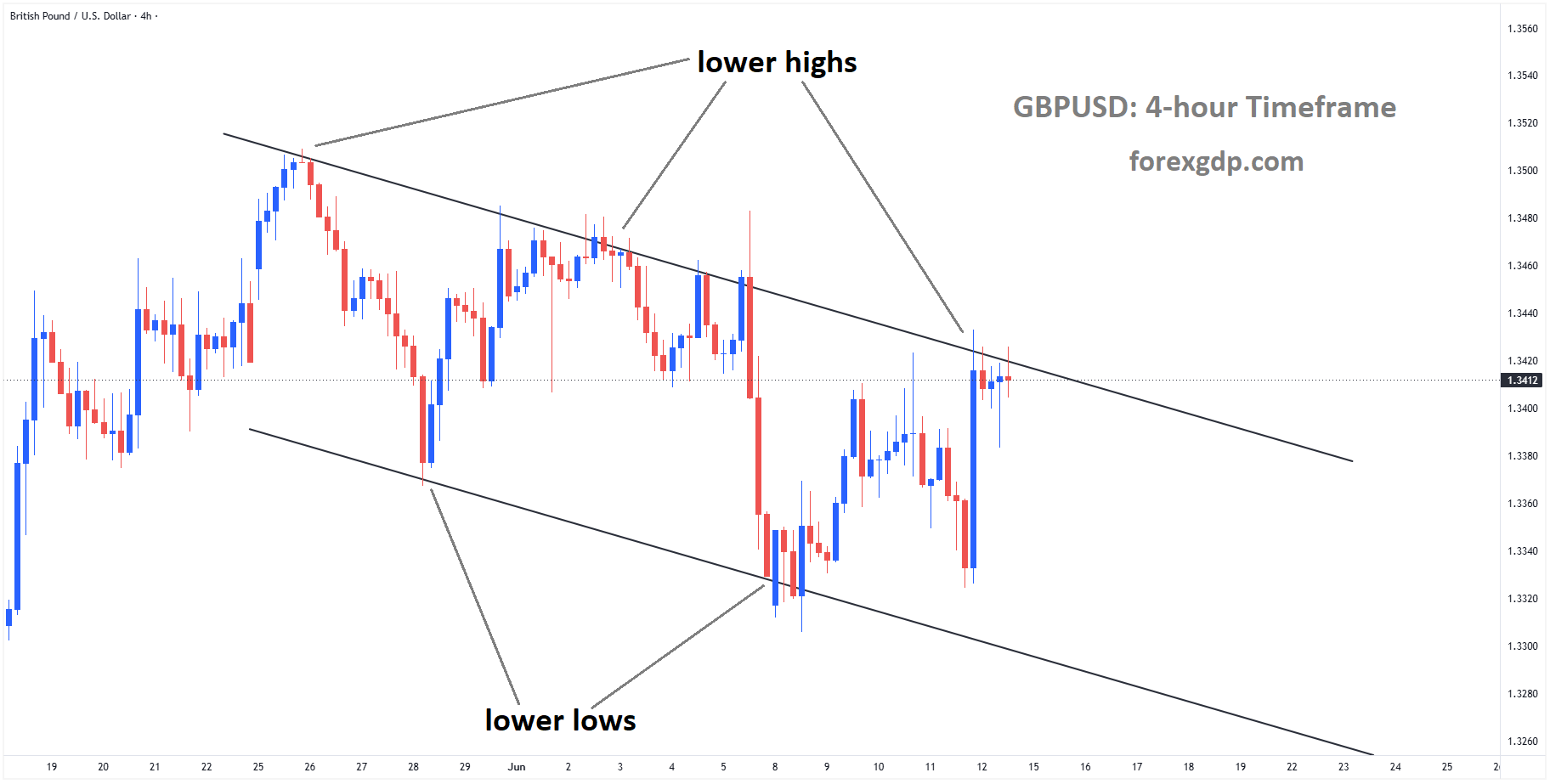
GBPUSD is moving in a descending channel, and the market has reached the lower high area of the channel
Market participants are particularly focused on the upcoming Bank of England (BoE) policy decision, as well as fresh inflation and labor market data that could influence the UK’s economic outlook for the remainder of the year.
UK Economy Shrinks Slightly in April
According to data released by the Office for National Statistics (ONS), the UK economy contracted by 0.1% in April on a monthly basis. The figure was in line with economists’ forecasts and followed a stronger performance in March, when the economy expanded by 0.3%.
The decline was largely attributed to consumers and businesses bringing forward purchases earlier in the year. Many companies and households accelerated spending during March amid concerns that geopolitical tensions in the Middle East could contribute to higher costs and future price pressures.
Although the April contraction reflects a slowdown in economic activity, the fact that the result matched expectations helped limit negative reactions among investors.
Manufacturing Sector Delivers Positive Surprise
While the headline GDP figure showed a modest contraction, other economic indicators painted a more mixed picture.
Industrial Production remained unchanged in April after declining in March. Analysts had expected a small increase, making the flat reading slightly weaker than anticipated.
However, Manufacturing Production provided a positive surprise. Output from the manufacturing sector increased by 0.4% during the month, significantly outperforming expectations. Economists had predicted a decline, making the growth figure an encouraging sign for a sector that has faced persistent challenges from weak demand, global uncertainty, and higher operating costs.
The stronger manufacturing performance suggested that parts of the UK economy remain resilient despite broader economic headwinds.
British Pound Finds Support
Following the release of the economic data, the British Pound recovered from earlier losses and attracted renewed buying interest.
Investors appeared to focus on the fact that the GDP contraction was already anticipated and therefore largely priced into market expectations. The stronger manufacturing data also helped improve sentiment toward the UK economy.
As a result, the Pound rebounded against several major currencies, recovering much of the weakness seen earlier in the trading session.
The currency’s performance reflects a broader trend in financial markets where investors often react not only to economic figures themselves but also to how those figures compare with expectations.
Attention Turns to Bank of England Decision
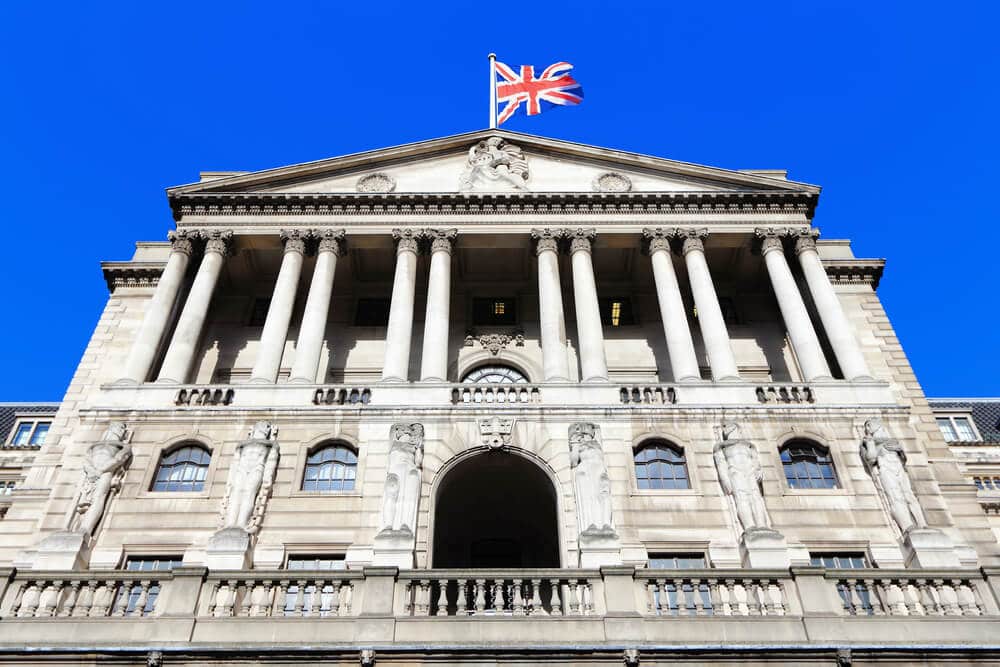
The next major event for the British Pound will be the Bank of England’s monetary policy announcement.
Central bank decisions remain one of the most important drivers of currency movements because they influence borrowing costs, economic growth expectations, and investor sentiment.
Policymakers at the Bank of England continue to face a delicate balancing act. On one hand, economic growth has shown signs of slowing, as highlighted by April’s GDP contraction. On the other hand, inflation pressures remain an important concern.
Investors will closely examine the central bank’s comments for clues about the future direction of monetary policy and how officials view the current state of the economy.
Any changes in expectations regarding future interest rate decisions could have a significant impact on the Pound.
Inflation and Employment Data Could Trigger Volatility
Alongside the Bank of England meeting, traders are preparing for two other key economic reports next week.
The first is the latest labor market update, which will provide insight into employment conditions during the three months ending in April. Economists will be watching wage growth, unemployment levels, and hiring trends for signs of strength or weakness in the job market.
The second major release will be the Consumer Price Index (CPI) report for May. Inflation data remains one of the most closely monitored indicators because it plays a critical role in shaping central bank policy decisions.
Stronger-than-expected inflation could increase pressure on policymakers to maintain a cautious approach, while softer inflation figures could strengthen expectations for more supportive monetary policies in the future.
Given the importance of these reports, analysts expect heightened volatility in the British Pound throughout the week.
US Dollar Recovers Amid Geopolitical Uncertainty
While the British Pound was responding to domestic economic developments, the US Dollar also experienced notable movement.
The Dollar recovered after earlier weakness as traders became increasingly uncertain about the prospects for a diplomatic agreement between the United States and Iran.
Recent comments from US President Donald Trump suggested that discussions had progressed significantly and that key details had received approval from all parties involved. He also indicated that an official signing announcement could come soon.
Despite these optimistic remarks, investors remain cautious about the likelihood of a near-term agreement. Ongoing uncertainty surrounding geopolitical developments has helped support demand for the US Dollar.
The recovery in the Dollar reflects how geopolitical risks continue to influence global financial markets alongside economic data and central bank policy expectations.
Global Markets Await Fresh Direction
Investors now face a packed calendar of economic events that could shape currency markets in the weeks ahead.
For the UK, attention will remain firmly on inflation, employment trends, and signals from the Bank of England regarding future policy plans. These developments will provide valuable insight into whether the recent slowdown in economic activity is temporary or part of a broader trend.
At the same time, geopolitical developments and economic conditions in the United States continue to influence global market sentiment, contributing to fluctuations in major currencies.
Summary
The British Pound strengthened after UK data showed a modest economic contraction in April that matched expectations. While overall growth slipped slightly, stronger-than-forecast manufacturing output helped improve confidence in parts of the economy.
Looking ahead, traders are preparing for a crucial week featuring the Bank of England’s policy decision, labor market figures, and inflation data. These reports are expected to play a major role in determining the Pound’s direction and could lead to increased market volatility. Meanwhile, the US Dollar has regained support as investors remain cautious about geopolitical developments involving the United States and Iran.
USDJPY Surges as Japanese Yen Retreats Ahead of Key Developments in Iran Conflict
The Japanese Yen continued to lose ground against the US Dollar on Friday, pushing the USD/JPY currency pair back above the closely watched 160 level. After briefly recovering from the mid-159 range a day earlier, the Yen once again came under pressure as investors shifted their focus back to the strength of the US Dollar.
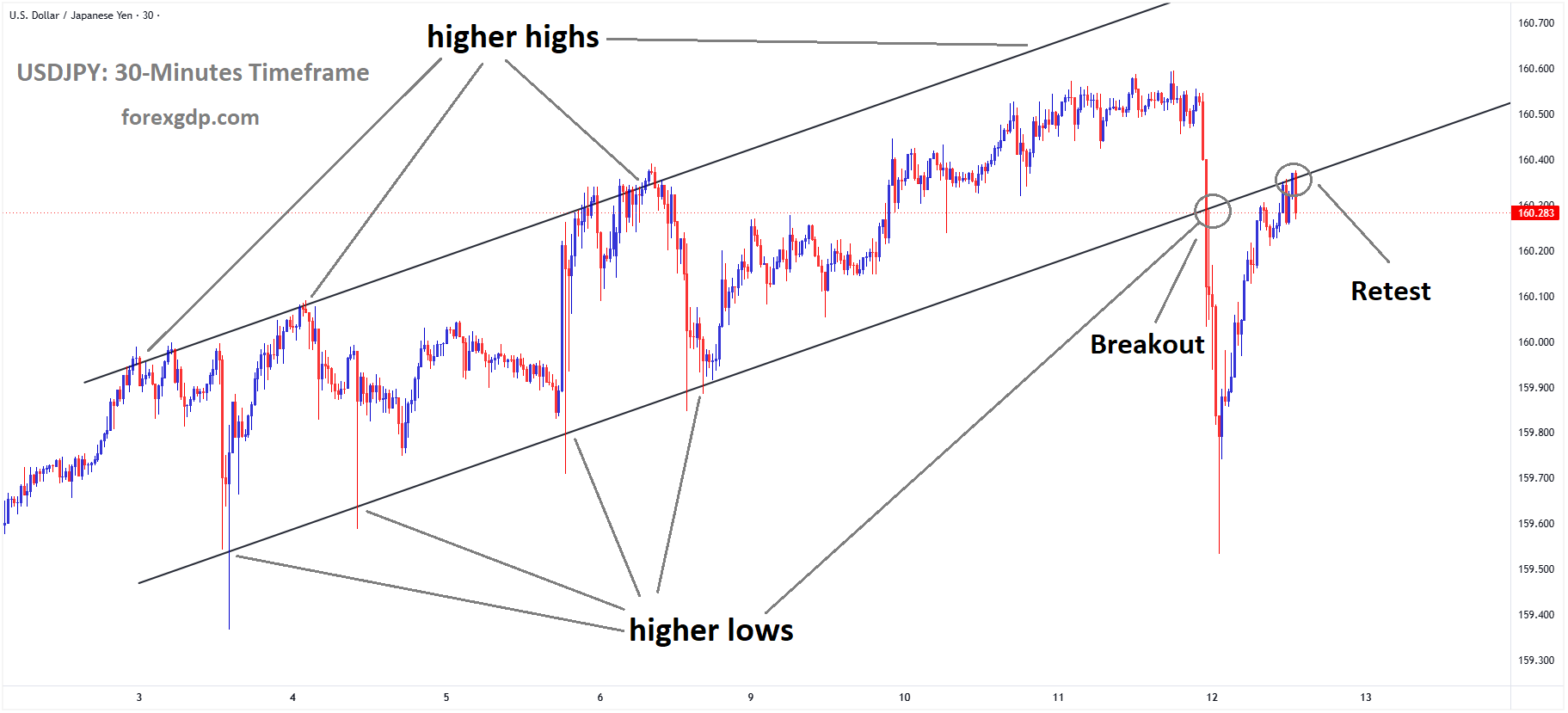
USDJPY reached the retest area of the broken ascending channel
The move highlights the ongoing challenges facing Japan’s currency, even as government officials continue to warn about excessive weakness and the Bank of Japan signals the possibility of further interest rate increases.
US Dollar Gains Strength as Market Optimism Fades
Earlier in the week, financial markets reacted positively to news suggesting progress in negotiations between the United States and Iran. The developments raised hopes that tensions in the Middle East could ease and that trade routes, including the strategically important Strait of Hormuz, could return to normal operations.
US President Donald Trump stated that a breakthrough in talks had been achieved and suggested that an agreement might be reached within days. The announcement initially boosted investor confidence and supported risk-taking across markets.
However, that early optimism began to cool as investors assessed the situation more carefully. Iranian officials responded with a more measured tone, indicating that while discussions were advancing, final approval had not yet been secured.
As uncertainty returned, investors moved back toward the US Dollar, helping it regain strength against several major currencies, including the Japanese Yen.
Iran Signals Progress but Stops Short of Full Approval
Fresh comments from Tehran kept hopes alive for a diplomatic solution while also reminding markets that negotiations remain ongoing.
Iranian Foreign Ministry spokesperson Esmail Baghaei confirmed that officials are currently reviewing a proposed agreement. He noted that the proposal appears closer to approval than at any previous stage, suggesting that meaningful progress has been made.
While these remarks encouraged expectations that a peaceful resolution could still be achieved, the absence of a final commitment prevented markets from fully embracing risk-sensitive assets. As a result, the US Dollar continued to attract support.
Japanese Authorities Face Renewed Pressure
The return of USD/JPY above 160 has once again placed Japan’s policymakers in a difficult position.
Historically, Japanese authorities have viewed rapid Yen weakness as a threat to economic stability because it raises the cost of imports, including energy and raw materials. When the currency falls too quickly, officials often step up verbal warnings and, in some cases, intervene directly in currency markets.
Recent trading levels are approaching the zone where Japan previously took action to support the Yen. This has led to increased attention on statements from government officials.
Japanese Finance Minister Satsuki Katayama recently reiterated that authorities remain prepared to respond if currency movements become excessive. Her comments were part of a broader series of warnings delivered over recent weeks as the Yen continued to weaken.
Despite these repeated messages, investors have shown little sign of changing their outlook.
Intervention Threats Have Limited Impact
One of the most notable aspects of the Yen’s recent decline is how resistant the market has been to official warnings.
Currency traders generally pay close attention to intervention signals from Japan because the country has a long history of stepping into markets when volatility becomes extreme. However, many investors appear to believe that underlying economic factors continue to favor the US Dollar.
The gap between US and Japanese interest rates remains a major influence on currency markets. Higher returns available in US assets continue to attract international capital, creating steady demand for the Dollar.
As long as this imbalance persists, verbal intervention alone may struggle to generate a lasting recovery in the Yen.
Bank of Japan Faces Growing Expectations

Another important factor influencing the Yen is the outlook for Japanese monetary policy.
The Bank of Japan has gradually shifted away from the ultra-loose policies that defined its approach for many years. Investors currently expect the central bank to continue raising interest rates, with forecasts suggesting rates could eventually reach 1%, a level not seen in roughly three decades.
Such expectations would normally support the national currency. Higher interest rates tend to make a currency more attractive because they increase returns on investments denominated in that currency.
However, traders appear to want stronger evidence that the Bank of Japan is committed to a sustained tightening cycle before significantly increasing their exposure to the Yen.
Governor Ueda’s Absence Draws Attention
Adding another layer of uncertainty, Bank of Japan Governor Kazuo Ueda was hospitalized this week and is expected to miss the upcoming monetary policy meeting.
While the news attracted attention, market participants do not currently view it as a major obstacle to future policy decisions. Expectations for additional rate increases remain largely unchanged.
Instead, investors are focusing on whether policymakers will provide clearer guidance regarding future tightening measures. Any stronger commitment to raising rates could help ease some of the pressure on the Japanese currency.
For now, however, those expectations have not been enough to reverse the Yen’s downward trend.
Why the Yen Remains Under Pressure
Several forces are combining to keep the Yen weak despite support efforts from policymakers:
- Continued demand for the US Dollar during periods of uncertainty.
- Investor expectations that US interest rates will remain relatively attractive.
- Limited confidence that Japan’s policy tightening will be aggressive enough to close the interest-rate gap.
- Market skepticism regarding the effectiveness of verbal intervention warnings.
These factors have outweighed the potential benefits of future Bank of Japan rate hikes and continued government monitoring of currency markets.
Summary
The Japanese Yen weakened again on Friday, allowing USD/JPY to climb back above the important 160 mark. While hopes for a US-Iran agreement remain alive, fading enthusiasm surrounding the negotiations helped strengthen the US Dollar and reduce demand for risk-sensitive assets.
At the same time, repeated warnings from Japanese officials and expectations of further Bank of Japan rate increases have failed to provide meaningful support for the Yen. Investors remain focused on broader economic fundamentals, particularly the interest-rate advantage enjoyed by the United States.
With USD/JPY approaching levels that previously triggered official action, markets will be watching closely for any stronger signals from Japanese authorities or the Bank of Japan in the days ahead.
USDCAD Rallies as Inflation Pressures Support Greenback and Iran Peace Prospects Fade
The USD/CAD currency pair moved higher on Friday, gaining momentum as investors reacted to stronger-than-expected US inflation data and continued geopolitical uncertainty in the Middle East. The US dollar found support after fresh economic figures showed inflation pressures remain elevated, while the Canadian dollar faced pressure despite the Bank of Canada’s recent decision to keep interest rates unchanged.
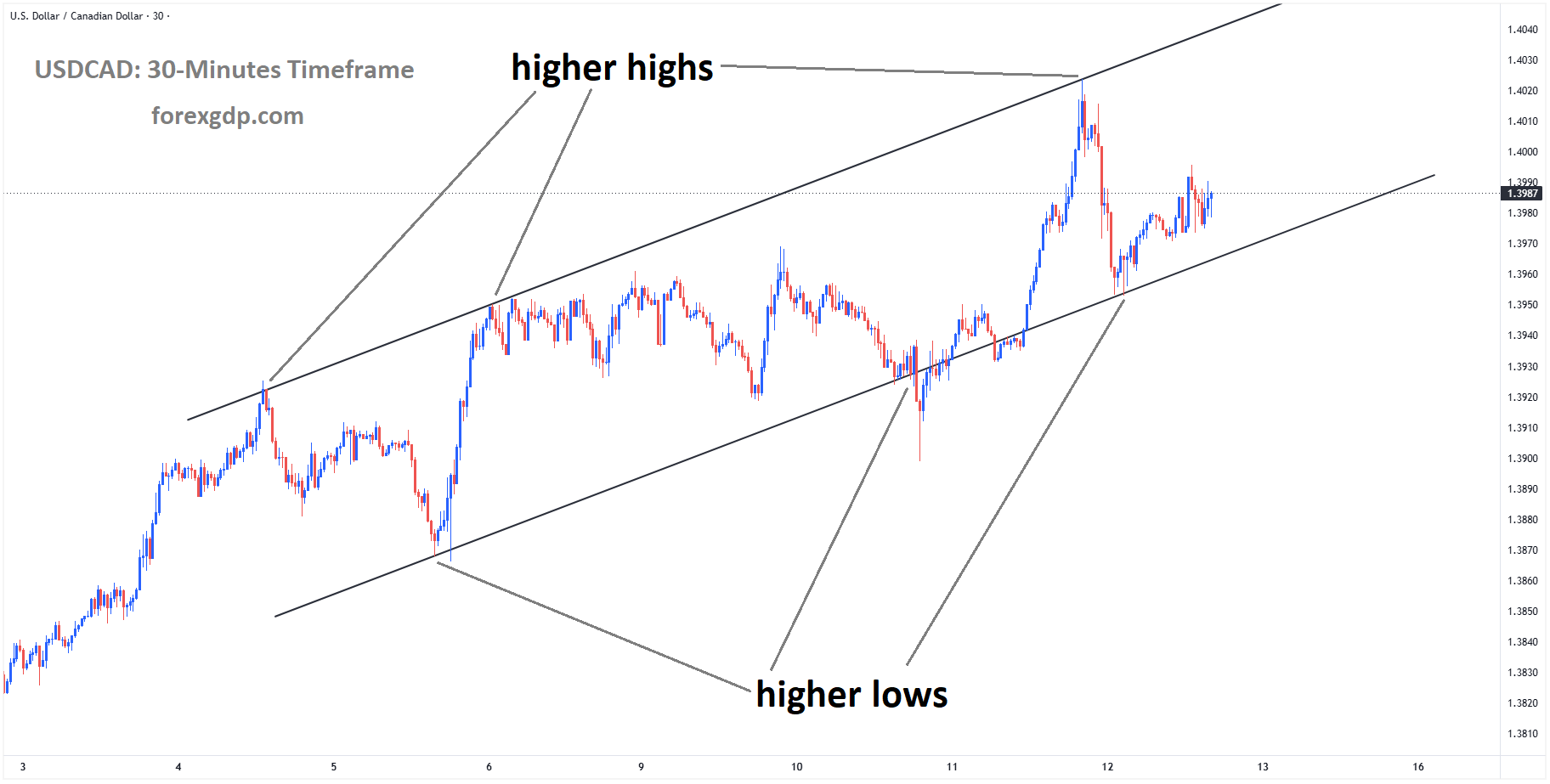
USDCAD is moving in an ascending channel, and the market has rebounded from the higher low area of the channel
Market participants are also closely watching developments involving the United States and Iran, as any progress or setbacks in diplomatic negotiations could have a significant impact on global markets and energy supplies.
Strong US Inflation Data Boosts the Dollar
The latest economic reports from the United States provided fresh evidence that inflation remains a challenge for policymakers.
Data released on Thursday showed that the Producer Price Index (PPI), which measures changes in prices received by producers for their goods and services, increased more than economists had expected in May. On an annual basis, producer inflation reached its highest level since November 2022.
The increase was largely linked to higher energy costs, which have been influenced by ongoing tensions in the Middle East. Rising energy prices often affect production and transportation expenses, creating broader inflationary pressures throughout the economy.
The stronger inflation figures have reinforced expectations that the Federal Reserve may need to maintain a cautious approach toward monetary policy. While investors had been looking for signs that inflation was cooling, the latest report suggests price pressures remain persistent.
Federal Reserve Faces Ongoing Inflation Challenge
The inflation data has fueled discussion about the Federal Reserve’s next policy moves.
John Ryding, Chief Economic Advisor at Brean Capital, noted that inflation remains a more significant concern for the Fed than employment conditions at the moment. According to his assessment, the latest producer inflation report could strengthen the position of policymakers who believe additional action may be necessary if inflation continues to exceed targets.
Although the Federal Open Market Committee (FOMC) has worked aggressively in recent years to bring inflation under control, recent economic indicators suggest that the battle may not yet be over.
Investors are now paying close attention to upcoming economic releases, including consumer sentiment data, which could offer additional clues about the strength of the US economy and future policy decisions.
US-Iran Negotiations Remain in Focus
Alongside economic developments, geopolitical events are playing a major role in shaping market sentiment.
US President Donald Trump stated on Thursday that a peace agreement between the United States and Iran could potentially be reached as early as this weekend. Such a deal could help stabilize conditions in the region and reopen important shipping routes, including the Strait of Hormuz.
The Strait of Hormuz is one of the world’s most critical energy transportation corridors, carrying a significant portion of global oil shipments. Any disruption to traffic through the waterway can have widespread consequences for energy markets and global trade.
However, Iranian officials pushed back against suggestions that an agreement is imminent, indicating that no final decision has been reached. This has left investors uncertain about the likelihood of a breakthrough.
Rising Military Tensions Add to Uncertainty
Despite discussions surrounding a possible diplomatic solution, tensions in the region remain elevated.
Reports indicated that US military forces intercepted and destroyed two Iranian attack drones near the Strait of Hormuz after attempts were allegedly made to target commercial vessels passing through the area.
The situation further intensified after Iran’s Islamic Revolutionary Guard Corps (IRGC) issued a strong warning, stating that the country is prepared to respond swiftly and forcefully to any hostile actions.
These developments have contributed to ongoing concerns about regional stability. Whenever geopolitical risks rise, investors often seek the perceived safety of the US dollar, which can increase demand for the currency.
As a result, uncertainty surrounding the Middle East has become another factor supporting the dollar’s strength against other major currencies, including the Canadian dollar.
Bank of Canada Holds Interest Rates Steady
In Canada, attention remains focused on the Bank of Canada’s latest policy decision.
At its June meeting, the central bank chose to leave its key interest rate unchanged, a move that was widely anticipated by economists and investors.
The Bank of Canada indicated that it sees only limited signs that higher energy prices are creating widespread inflation across the Canadian economy. This assessment helped justify its decision to maintain current policy settings.
However, policymakers also emphasized that they remain vigilant regarding inflation risks.
Governor Macklem Signals Readiness to Act
Bank of Canada Governor Tiff Macklem reiterated that the central bank is prepared to take additional action if inflation begins to show signs of becoming more persistent.
According to the bank’s statement, policymakers are looking beyond the short-term effects of geopolitical conflicts on headline inflation figures. At the same time, they remain committed to ensuring that temporary increases in energy prices do not evolve into broader and longer-lasting inflationary pressures.
This balanced approach reflects the central bank’s effort to support economic stability while maintaining its commitment to price control.
For now, the Bank of Canada appears comfortable waiting for more evidence before making any significant policy adjustments. Nevertheless, officials have made it clear that they are prepared to respond if inflation trends become more concerning.
Investors Await Fresh Economic Signals

Looking ahead, traders are expected to focus on upcoming economic indicators, particularly the preliminary reading of the Michigan Consumer Sentiment Index.
Consumer confidence data can provide valuable insight into household spending behavior and broader economic conditions. Stronger-than-expected results could further support the US dollar, while weaker readings may temper some of the recent optimism.
At the same time, markets will continue monitoring headlines related to US-Iran relations and developments in the Middle East. Any major diplomatic progress or escalation could quickly influence investor sentiment and currency movements.
Summary
The USD/CAD pair moved higher as stronger US producer inflation data reinforced expectations that inflation remains a challenge for the Federal Reserve. Elevated energy costs and persistent price pressures have strengthened support for the US dollar.
Meanwhile, uncertainty surrounding negotiations between the United States and Iran, along with rising military tensions near the Strait of Hormuz, has increased demand for safe-haven assets. On the Canadian side, the Bank of Canada kept interest rates unchanged while maintaining a cautious stance on inflation risks.
As investors await new economic data and further geopolitical developments, both inflation trends and Middle East events are likely to remain key drivers of market sentiment in the days ahead.
USDCHF Advances While Safe-Haven Flows Strengthen the Greenback
The USD/CHF currency pair moved higher on Friday after suffering notable losses in the previous trading session. The rebound came as investors shifted toward safer assets, giving fresh support to the US Dollar amid renewed geopolitical concerns in the Middle East.
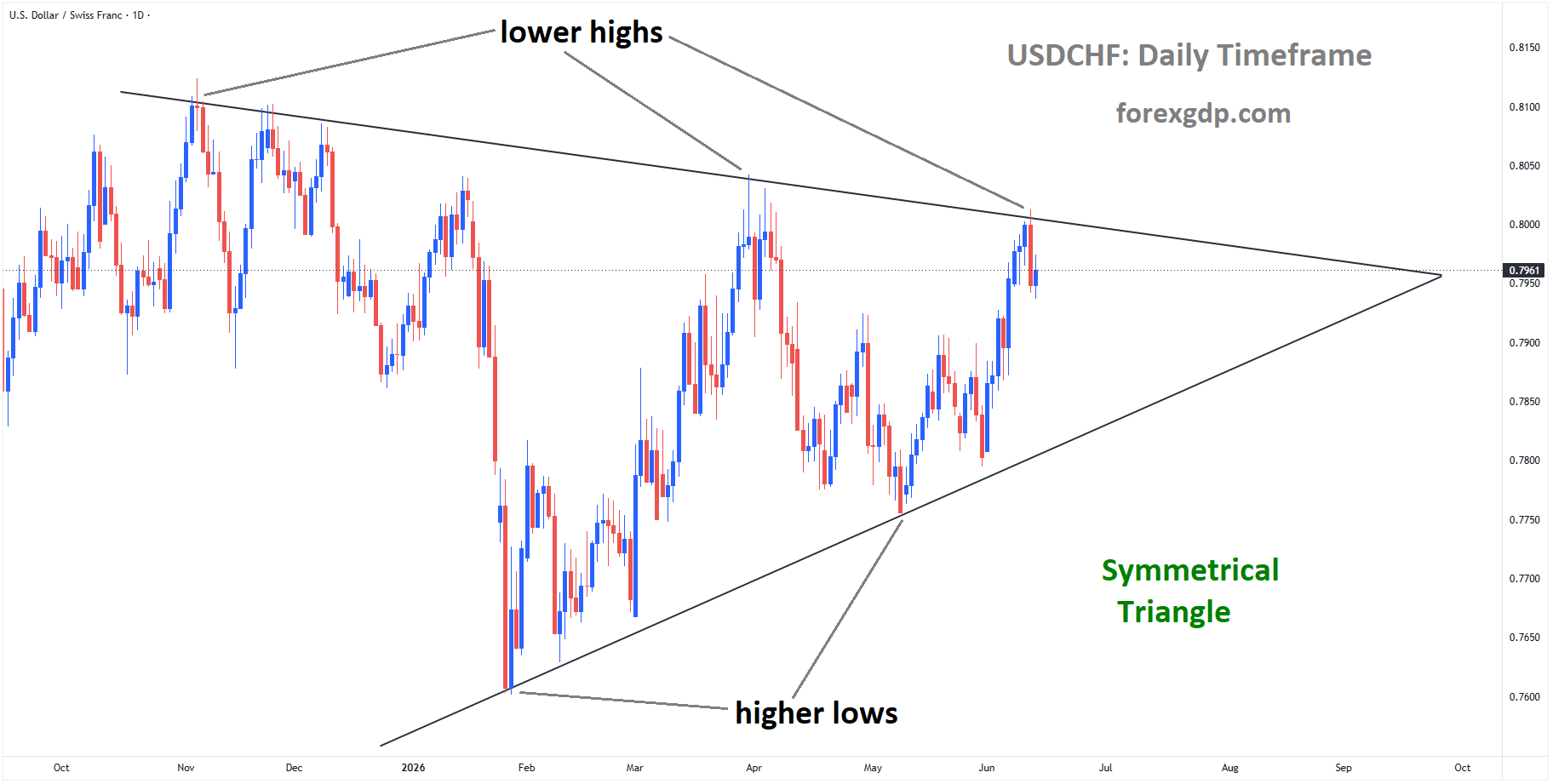
USDCHF is moving in a symmetrical triangle pattern, and the market has reached the lower high area of the pattern
Although optimism had recently grown around diplomatic efforts involving the United States and Iran, new security incidents in the strategically important Strait of Hormuz reminded markets that regional tensions remain far from resolved. As uncertainty returned, demand for the US Dollar strengthened, helping the pair recover.
Middle East Security Incident Revives Market Caution
Fresh reports from the Gulf region triggered a renewed wave of caution among investors. According to media reports, US military forces intercepted and destroyed two Iranian attack drones that were allegedly targeting commercial ships near the Strait of Hormuz.
The Strait of Hormuz remains one of the world’s most important maritime routes, serving as a key passage for global energy shipments and international trade. Any military activity in the area often raises concerns about supply chain disruptions and regional instability.
Iranian state-linked media presented a different version of events. Officials claimed that sounds of explosions heard near the coastal city of Sirik were linked to an encounter involving a vessel that had violated regional maritime restrictions. Reports indicated that the Islamic Revolutionary Guard Corps (IRGC) issued warnings to an oil tanker and compelled it to follow local navigation rules.
The conflicting accounts highlighted the continuing tensions between Washington and Tehran, reinforcing uncertainty across global markets.
Safe-Haven Demand Supports the US Dollar
Whenever geopolitical risks increase, investors frequently seek assets viewed as more stable and secure. The US Dollar often benefits from this trend because of its role as the world’s primary reserve currency.
The latest developments in the Middle East encouraged a temporary move away from riskier investments. As a result, the Dollar gained support, helping USD/CHF reverse part of its previous decline.
The Swiss Franc is also traditionally considered a safe-haven currency. However, in this instance, the renewed strength of the US Dollar appeared to have a greater influence on market sentiment, allowing the pair to move higher.
Diplomatic Progress Offers Hope for De-escalation
Despite the security concerns, there were also signs that diplomatic efforts between the United States and Iran may be advancing.
US President Donald Trump stated that a broad peace agreement with Iran could potentially be finalized within days. The comments marked a significant shift from recent tensions and raised hopes that both countries could move toward a more stable relationship.
Reports suggested that the proposed agreement is aimed at reopening shipping routes through the Strait of Hormuz while securing commitments from Iran regarding its nuclear activities.
The deal has not yet received formal approval from both sides. However, Iranian media sources indicated that Tehran may be willing to accept the framework under discussion.
If finalized, such an agreement could reduce regional tensions and improve confidence in international shipping operations throughout the Gulf. For investors, this possibility provides a counterbalance to the recent military incidents, creating a mixed outlook for market sentiment.
Geneva Prepares for Massive Anti-G7 Demonstration
Away from the Middle East, Switzerland is also facing significant security challenges ahead of a major anti-G7 protest planned in Geneva.
Authorities expect approximately 50,000 demonstrators to participate in the event, making it one of the largest public gatherings in the region in recent years. The scale of the protest has prompted extensive preparations by local officials and security agencies.
Businesses across Geneva have already taken precautionary measures. Many shop owners have installed protective wooden barriers over storefronts to guard against potential vandalism and property damage during the demonstration.
The widespread preparations reflect concerns that large crowds could create disruptions across the city.
Swiss Military Deployed to Support Security Operations
To strengthen public safety efforts, Swiss authorities have launched a large-scale security operation.
Around 4,000 military personnel have been deployed to assist local law enforcement agencies. Their responsibilities include monitoring key infrastructure, supporting crowd management operations, and helping secure sensitive areas around the summit.
Officials are also focusing on border security as part of the broader strategy.
Border Controls Tightened Around Geneva

Swiss authorities announced that 27 border crossings between Switzerland and France will be temporarily closed during the summit period.
The closures are intended to help manage traffic flows and maintain tighter control over access to areas surrounding the event. The measures highlight the extensive planning required to host major international gatherings while addressing security concerns.
Local officials have acknowledged that the operation comes at a significant financial cost. Estimates suggest that security arrangements for the summit and related demonstrations will require expenditures totaling roughly 20 million Swiss Francs.
Global Uncertainty Continues to Shape Investor Sentiment
The combination of geopolitical tensions in the Middle East and heightened security concerns in Europe has contributed to a cautious atmosphere among investors.
While hopes for a diplomatic breakthrough between the United States and Iran offer a potentially positive development, recent military incidents demonstrate how quickly sentiment can change. At the same time, preparations for large-scale demonstrations in Geneva underscore broader concerns about political and social stability.
As a result, market participants remain focused on both diplomatic developments and security events that could influence risk appetite in the coming days.
Summary
USD/CHF moved higher as renewed geopolitical tensions increased demand for the US Dollar. Reports of US forces intercepting Iranian drones near the Strait of Hormuz revived concerns about regional stability and encouraged investors to seek safer assets. At the same time, optimism emerged after indications that a peace agreement between the United States and Iran could be nearing completion.
Meanwhile, Switzerland is preparing for a major anti-G7 protest in Geneva, with thousands of military personnel deployed and extensive security measures implemented across the city. Together, these developments are keeping global investors alert as they monitor political, diplomatic, and security risks around the world.
Don’t trade all the time, trade forex only at the confirmed trade setups
Get more confirmed trade signals at premium or supreme – Click here to get more signals, 2200%, 800% growth in Real Live USD trading account of our users – click here to see , or If you want to get FREE Trial signals, You can Join FREE Signals Now!