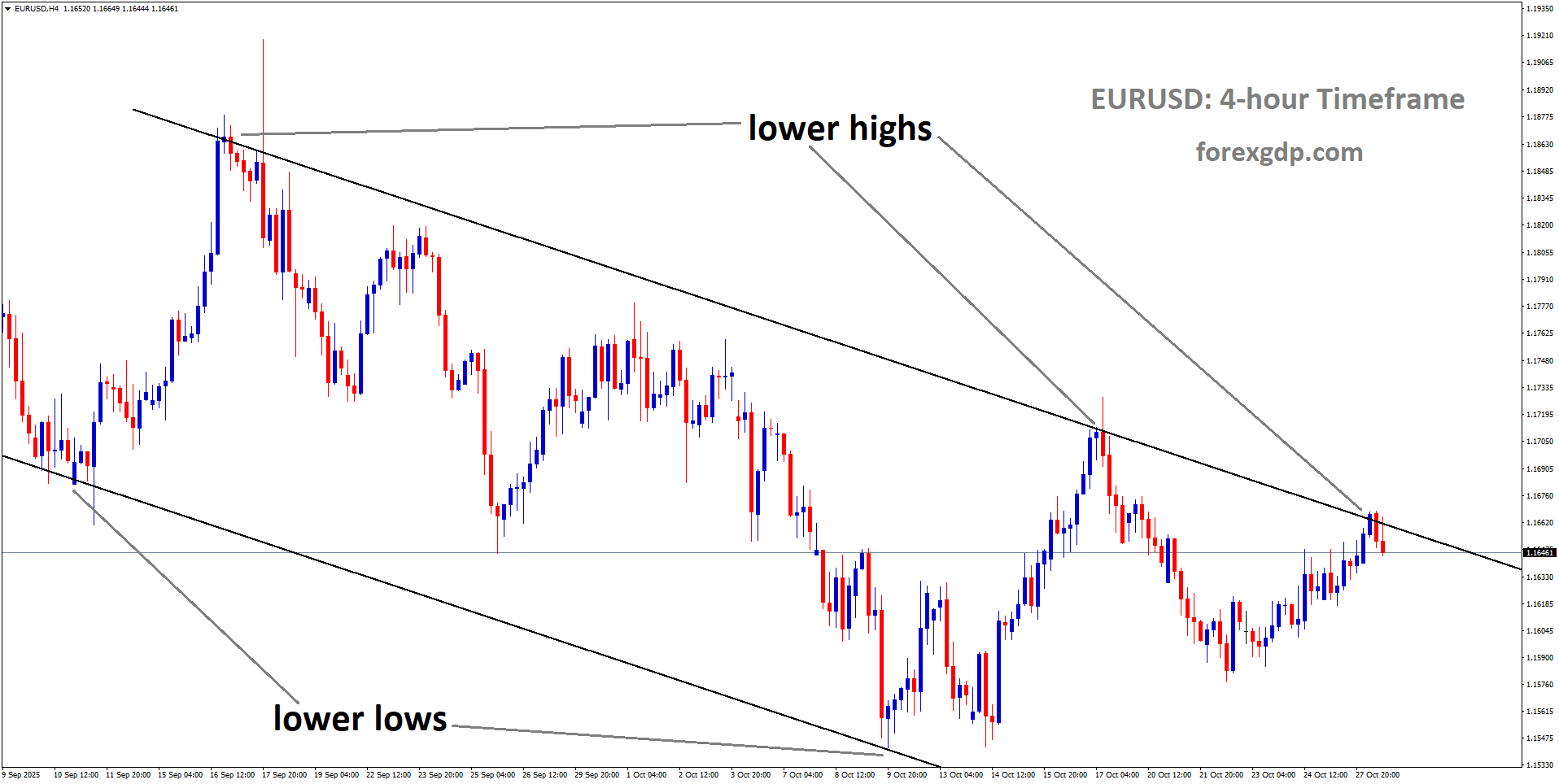

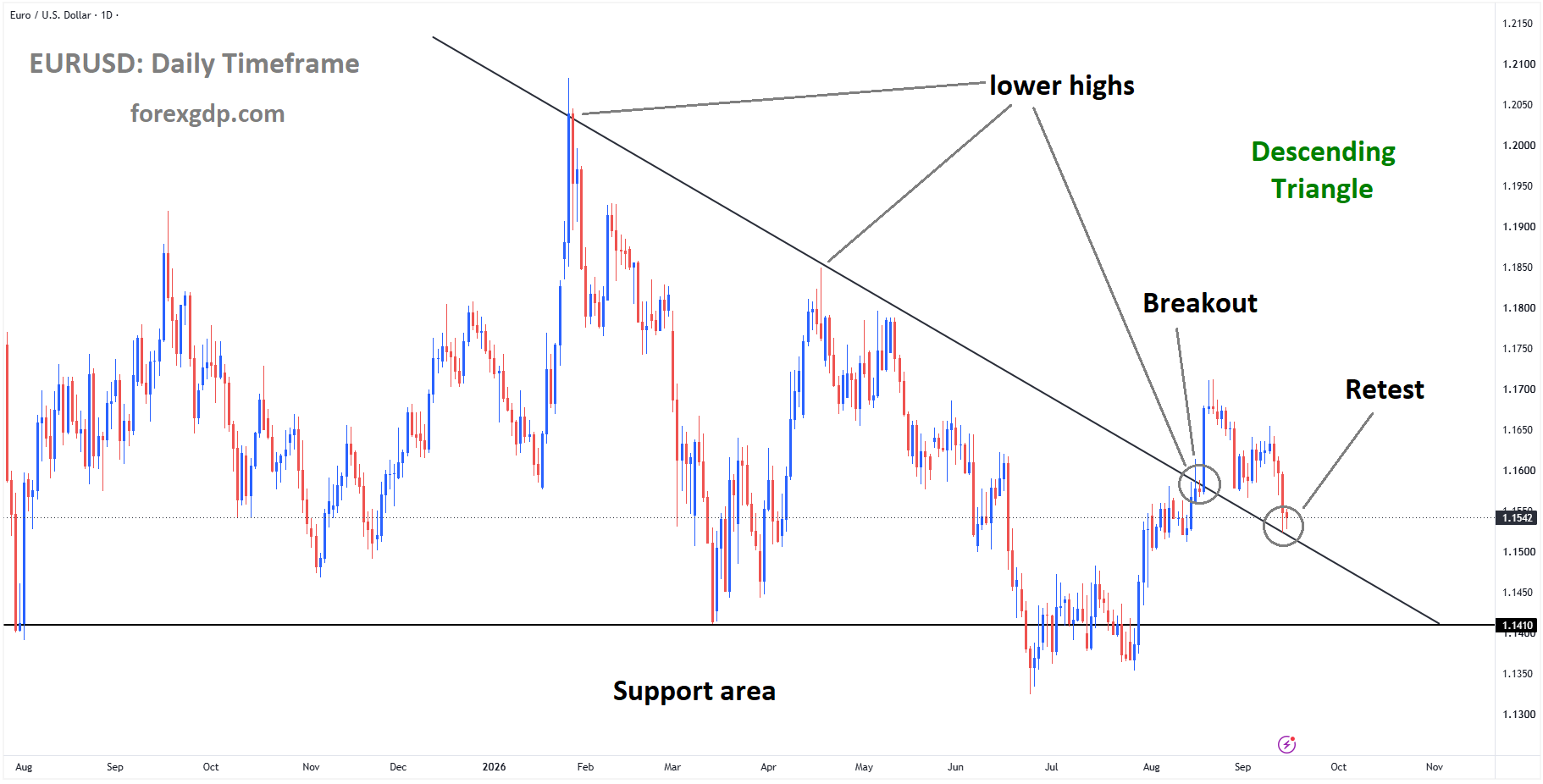
EURUSD reached the retest area of the broken descending triangle pattern
EURUSD Faces Fresh Pressure Despite Mixed Eurozone Data
The Euro remains under pressure against the US Dollar as investors prepare for an important interest rate decision from the US Federal Reserve. Expectations that the central bank will raise borrowing costs for the first time in three years have strengthened demand for the Dollar and made it difficult for the Euro to recover.
Economic reports from Europe have offered a mixed picture. German investor confidence showed only a small improvement, while the latest Eurozone trade data delivered a much stronger result. However, neither report provided enough encouragement to change the cautious mood surrounding the European currency.
The difference between the economic outlooks in Europe and the United States continues to influence investor behavior. While Germany is showing early signs of improvement, serious risks remain. At the same time, the possibility of tighter US monetary policy is keeping the Dollar in a strong position.
German Economic Confidence Shows Limited Progress
The latest report from the ZEW Institute revealed that German economic sentiment improved only slightly in September. The main confidence index rose by half a point to 34.7, falling short of forecasts that had called for a stronger increase to 37.
This result suggests that financial experts and institutional investors have become somewhat more hopeful about Germany’s economic prospects. However, the modest change also shows that confidence remains fragile. Businesses and investors are still waiting for clearer evidence that the recovery can become stronger and more sustainable.
The index measuring Germany’s current economic conditions produced a more noticeable improvement. It climbed to negative 47.1 from negative 61.1 in August and performed better than economists had predicted. Even so, the reading remained below zero, confirming that Germany’s present economic situation continues to be viewed negatively.
This gap between improving expectations and weak current conditions is important. It indicates that investors see the possibility of better economic activity in the months ahead, but they are not yet convinced that the recovery is firmly established.
Fiscal Support and Exports Offer Reasons for Optimism
The ZEW report pointed to government spending measures and strong export activity as two important sources of support for Germany. Fiscal programs can encourage investment, assist companies, and strengthen household demand. Meanwhile, healthy overseas demand can help German manufacturers increase production and improve revenues.
Exports are particularly significant for Germany because the country has a large industrial sector that depends heavily on international customers. Stronger global demand can therefore provide a meaningful boost to factories, suppliers, transport companies, and other parts of the economy.
Government support may also reduce some of the pressure facing businesses and consumers. If fiscal measures are implemented effectively, they could improve confidence and help economic activity regain momentum.
Still, cautious optimism does not mean the risks have disappeared. Germany continues to face several challenges that could limit the pace of the recovery.
Energy Costs and Security Concerns Remain Major Risks
Persistently high energy costs are among the biggest threats to Germany’s outlook. Expensive energy can raise operating costs for manufacturers, reduce company profits, and eventually lead to higher expenses for households. Energy-intensive industries are especially vulnerable because they need large amounts of electricity or fuel to maintain production.
If companies are unable to absorb those costs, they may reduce investment, slow hiring, or pass the additional expense on to customers. This can weaken domestic demand and make it more difficult for the wider economy to recover.
The ZEW Institute also highlighted uncertainty linked to hybrid attacks. Such threats can include cyberattacks, damage to infrastructure, digital disruption, and other forms of pressure that fall outside traditional military conflict. These incidents can affect supply networks, public services, financial systems, and business confidence.
The combination of costly energy and security concerns explains why investors remain careful despite signs of improvement. Germany may be moving toward better economic conditions, but the path ahead is still surrounded by uncertainty.
Eurozone Trade Surplus Delivers a Positive Surprise

Separate figures from Eurostat showed that the Eurozone recorded a trade surplus of €14.2 billion in July. This was far stronger than the €3.7 billion surplus expected by economists. It also represented an improvement from June, when the surplus was revised down to €7.2 billion.
A trade surplus occurs when the value of goods exported by a region is higher than the value of goods it imports. A larger surplus can support economic growth because it suggests that overseas demand for European products is healthy or that import spending has decreased.
The July data therefore offered an encouraging sign for the currency bloc. It showed that external trade was making a positive contribution and that European exporters were continuing to compete in international markets.
However, one strong report was not enough to provide broad support for the Euro. Investors were more focused on central bank policy and the prospect of higher US interest rates. The German confidence report also prevented the overall European economic picture from appearing clearly positive.
Federal Reserve Expectations Keep the Dollar Supported
The US Dollar remained firm as traders increased their expectations of a quarter-point interest rate increase from the Federal Reserve. The expected move would represent the central bank’s first rate hike in three years, making the upcoming announcement especially important for global financial markets.
Higher interest rates can make a currency more attractive because investors may receive better returns from assets linked to that currency. Expectations of tighter Federal Reserve policy have therefore increased demand for the Dollar.
ING analyst Francesco Pesole said the Dollar had begun responding to several supportive forces that had been building for weeks. These included elevated short-term interest rates, expensive oil, and a weaker appetite for risk among investors.
A cautious market environment often benefits the Dollar because it is widely used in global trade and finance. During periods of uncertainty, investors frequently prefer highly liquid assets and currencies that are considered relatively secure.
Investors Await Clear Guidance From the Fed
Attention is now centered on the Federal Open Market Committee and the details accompanying its decision. The actual rate move is important, but investors will also study the language used by Federal Reserve officials.
Markets want to know whether the central bank expects additional increases and how policymakers view inflation, employment, and economic growth. Any guidance about future decisions could have a major influence on the Dollar and wider market confidence.
Pesole suggested that the Dollar could move within a narrower range before the Fed announces its decision. This reflects the reluctance of many investors to make large commitments before receiving confirmation from the central bank.
Beyond the immediate meeting, the broader environment still appears supportive of the US currency. Short-term interest rates, oil costs, and cautious investor sentiment may continue to favor the Dollar unless the Federal Reserve delivers a more restrained message than expected.
Summary
The Euro remains under pressure as mixed European economic data fails to outweigh expectations of tighter US monetary policy. German economic sentiment improved only slightly, although the assessment of current conditions was better than forecast. Fiscal support and export strength offer hope, but high energy costs and hybrid security threats continue to cloud Germany’s outlook.
The Eurozone’s larger-than-expected trade surplus was a welcome development, showing strong support from external commerce. Nevertheless, investors remain focused on the Federal Reserve and the possibility of its first rate increase in three years.
With the Dollar benefiting from interest rate expectations, high oil costs, and cautious market sentiment, the Fed’s decision and future policy guidance are likely to remain the main drivers of the currency market.
GBPUSD Faces Uncertainty Ahead of Crucial British CPI Release
The British Pound delivered an uneven performance against major currencies after the United Kingdom published its latest labor market report. The figures covered the three months ending in July and showed that employment continued to grow, while the unemployment rate remained unchanged.
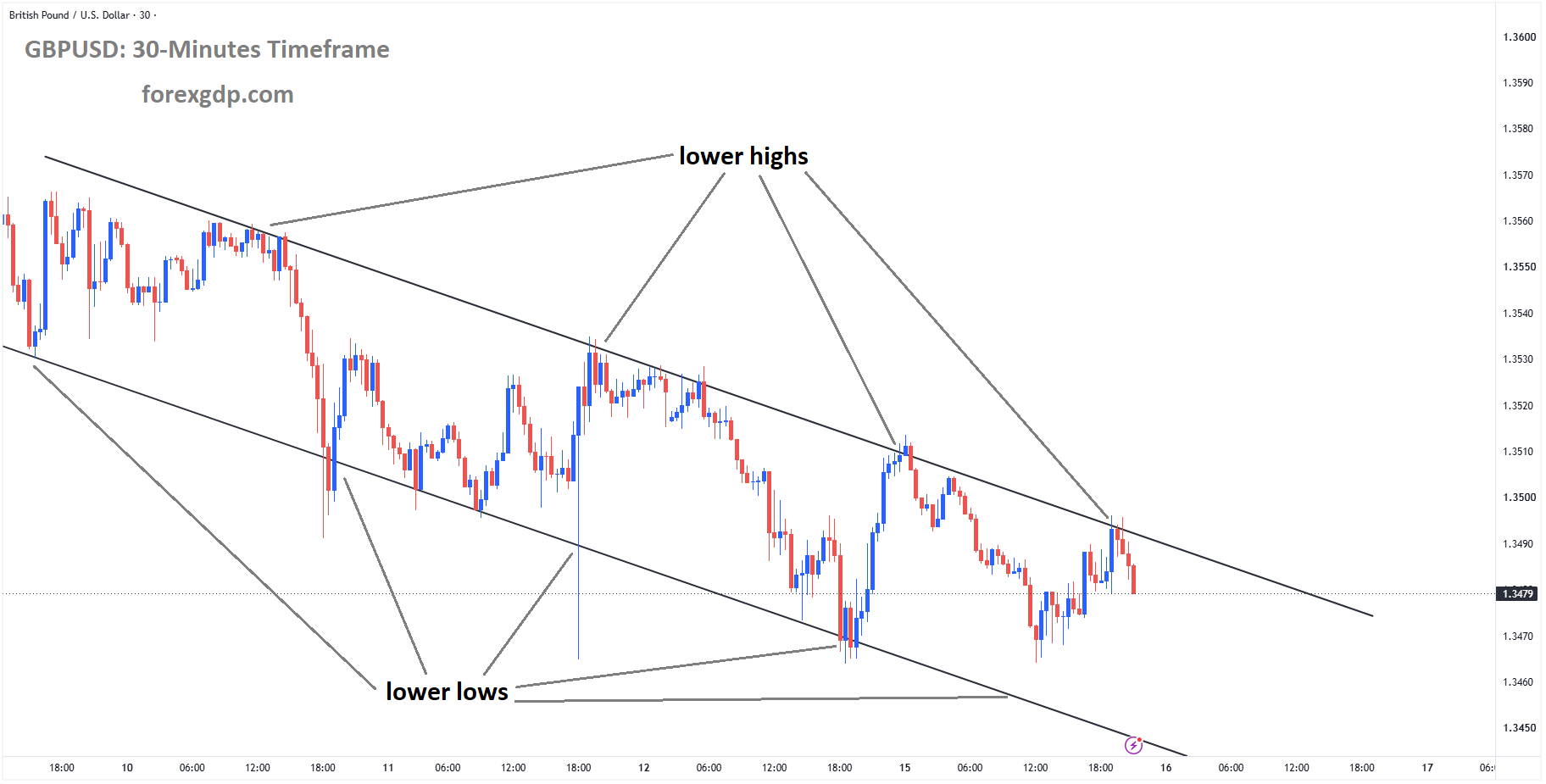
GBPUSD is moving in a descending channel, and the market has fallen from the lower high area of the channel
Although the report did not point to a serious decline in the jobs market, it also offered little evidence of strong momentum. Job creation slowed compared with the previous reporting period, and wage growth remained controlled. This combination left investors cautious ahead of two major events: the release of the UK Consumer Price Index and the Bank of England’s next interest rate decision.
The Pound also faced pressure from a stronger US Dollar as financial markets prepared for the Federal Reserve’s policy announcement. Expectations surrounding the US central bank added another layer of uncertainty for the British currency.
UK Employment Growth Slows but Remains Positive
Figures from the Office for National Statistics showed that the UK economy added 67,000 jobs during the three months ending in July. That was lower than the 83,000 positions created in the three months to June.
The slowdown suggests that British employers are becoming more careful about expanding their workforces. Companies continue to hire, but the pace of recruitment appears to have weakened. Businesses may be responding to higher operating costs, uncertain demand and the effect of restrictive borrowing conditions.
Despite the softer employment increase, the unemployment rate remained at 4.9%. Economists had expected it to rise slightly to 5%, so the unchanged reading was somewhat better than forecast.
A steady unemployment rate indicates that the labor market continues to show resilience. However, slower job creation could become more important if it continues in the coming months. Policymakers will want to determine whether the latest result represents a temporary loss of momentum or the beginning of a broader cooling trend.
The Bank of England pays close attention to employment conditions because a tight labor market can contribute to stronger wage demands. Rapid wage growth may encourage businesses to raise their charges, making inflation more difficult to control.
Wage Growth Offers the Bank of England Some Relief
Average earnings excluding bonuses increased by 3.5% from a year earlier, matching economists’ expectations. This measure is closely watched because it provides a clearer picture of underlying wage trends without the short-term impact of bonus payments.
Total earnings, including bonuses, rose by 3.9%. That result also matched forecasts but was lower than the revised 4.2% increase recorded previously.
The moderation in total pay growth may be encouraging for the Bank of England. Slower wage increases can reduce the risk that inflation remains high for an extended period. When earnings rise rapidly, households have more spending power, while companies often pass higher staffing costs on to consumers. A more controlled pace of pay growth can ease those pressures.
However, the central bank is unlikely to make its decision based on one labor market report. Officials will examine a wider range of information, including inflation, economic activity, consumer demand and price increases in the services sector.
The latest employment figures therefore support a cautious approach. They show that the labor market has not collapsed, but they also suggest that some of the pressure that previously worried policymakers may be fading.
UK Inflation Report Becomes the Next Major Focus
Attention is now shifting toward the UK Consumer Price Index report for August. The figures are due before the Bank of England announces its policy decision, making them especially important for expectations surrounding monetary policy.
Headline inflation is expected to rise to 3.1% on an annual basis, up from 2.9% in July. If that forecast proves correct, it would show that consumer price pressures strengthened during the month.
Core inflation is also expected to increase. This measure removes food, energy, alcohol and tobacco because their costs can change sharply and sometimes hide the broader direction of inflation. Core CPI is forecast to rise to 2.7%, compared with 2.6% previously.
An increase in both headline and core inflation would create a difficult situation for the Bank of England. The softer wage data could support keeping interest rates unchanged, while renewed consumer price growth may strengthen the case for tighter policy.
The details of the inflation report will matter as much as the main figures. Officials are likely to study services inflation carefully because it is often connected to domestic wages and demand. Persistent price increases in areas such as transport, hospitality and personal services could make the central bank more hesitant to signal an easier policy path.
Bank of England Expected to Leave Policy Unchanged

Strategists at Brown Brothers Harriman expect the Bank of England to keep its policy rate unchanged for a sixth consecutive meeting. They believe the Monetary Policy Committee could once again vote 6-3 in favor of holding steady.
Under that forecast, Megan Greene, Catherine L. Mann and Huw Pill would support an increase, while the majority of the committee would prefer no change. Such a split would show that officials remain divided over how much action is still needed to bring inflation under control.
The case for holding policy steady is supported by slower wage growth and easing inflation in the services sector. These developments give the central bank more room to wait and assess how earlier policy decisions are affecting the economy.
At the same time, an expected increase in August inflation could prevent officials from sounding relaxed. Even if rates remain unchanged, the Bank of England may continue to warn that inflation risks have not disappeared.
Investors will therefore focus on the vote, the official statement and any guidance about future decisions. A divided committee would underline the uncertainty surrounding the UK economy and the challenge of balancing inflation control with weaker growth.
Federal Reserve Expectations Support the US Dollar
The Pound’s performance against the US Dollar is also being shaped by expectations for the Federal Reserve. The American central bank is widely expected to raise interest rates at its Wednesday meeting.
ING economists changed their forecast following remarks by Federal Reserve Chair Kevin Warsh at the Jackson Hole symposium. They now expect a quarter-point increase and believe economic data released since that speech has supported the case for tighter policy.
Expectations of higher US interest rates have strengthened demand for the Dollar. This has created additional pressure on Sterling, even though the UK labor figures were broadly stable.
The contrast between the two central banks is important. The Federal Reserve is expected to tighten policy, while the Bank of England is viewed as more likely to remain on hold. That difference can influence international demand for both currencies as investors compare economic conditions and central bank plans.
Summary
The British Pound traded unevenly after the latest UK labor market report showed slower job creation, steady unemployment and moderate wage growth. The economy added 67,000 jobs in the three months ending in July, while unemployment remained at 4.9%.
Earnings growth excluding bonuses held at 3.5%, while total pay growth slowed to 3.9%. These figures may give the Bank of England room to keep interest rates unchanged, although the upcoming inflation report could complicate its decision.
Investors are now watching the August CPI release, the Bank of England meeting and the Federal Reserve announcement. Together, these events will provide a clearer view of inflation risks, labor market conditions and the future direction of monetary policy in both the United Kingdom and the United States.
USDJPY Advances While Investor Caution Pressures the Yen
The USD/JPY pair moved higher on Monday after recording limited losses during the previous trading session. Renewed demand for the US Dollar emerged as investors became more cautious about the global economic outlook.
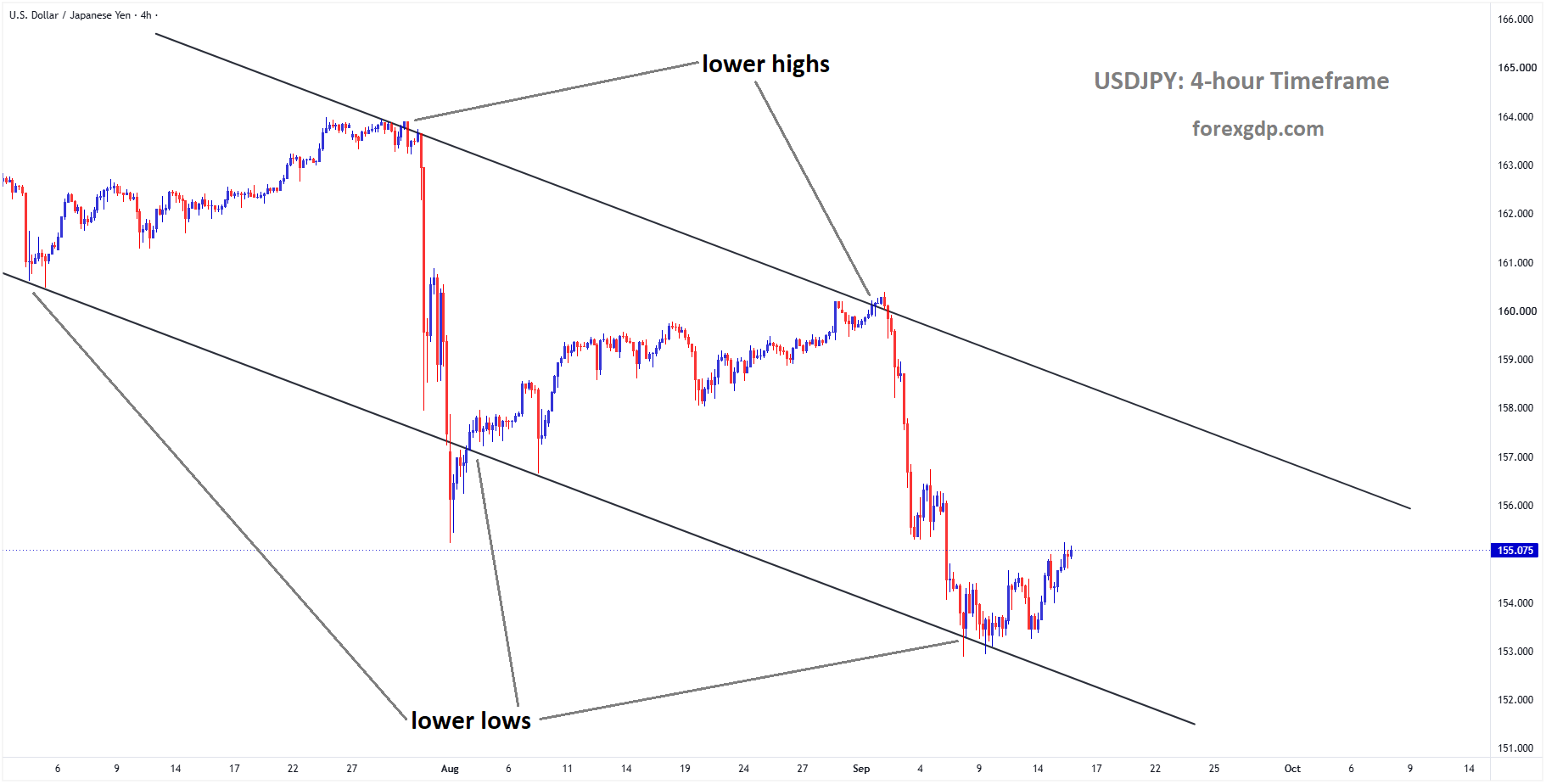
USDJPY is moving in a descending channel, and the market has rebounded from the lower low area of the channel
Several developments are influencing the currency pair. The worsening crisis in the Middle East has increased demand for safer assets, while rising energy costs have created fresh concerns about global inflation. At the same time, stronger-than-expected US consumer inflation data has raised the likelihood that the Federal Reserve will increase interest rates at its upcoming policy meeting.
The US Dollar is benefiting from these conditions because investors often turn to the currency during periods of economic or geopolitical uncertainty. However, the Japanese Yen may also receive support if the Bank of Japan moves more quickly to tighten monetary policy. This creates a complicated outlook for USD/JPY, with both currencies having reasons to attract demand.
Middle East Crisis Increases Market Caution
The conflict in the Middle East remains one of the main sources of uncertainty in global financial markets. Investors are increasingly worried that the crisis could continue for an extended period and cause further disruption to energy supplies.
Those concerns became more serious following a drone attack that forced Saudi Arabia to close a major crude oil pipeline. The route is important because it has traditionally allowed oil shipments to avoid the Strait of Hormuz, one of the most strategically important waterways for global energy trade.
Any disruption involving a major producer or transportation route can quickly affect expectations for oil supply. In this case, the pipeline shutdown added to fears that the conflict could interfere with the movement of energy products across the region.
A longer disruption could have consequences beyond the oil industry. Transportation, manufacturing, agriculture, and electricity production all depend heavily on energy. When oil becomes more expensive, businesses often face higher operating costs. Some companies may then pass those expenses on to customers through higher prices for goods and services.
This is why the Middle East situation is being viewed as a possible inflation shock for the wider global economy. Governments and central banks had already been working to bring inflation under control. A fresh rise in energy-related costs could make that task more difficult.
Rising Oil Costs Create New Inflation Pressure
Higher energy costs can influence inflation in several ways. The most direct effect is felt by consumers through fuel and household energy bills. The broader impact appears when companies pay more to transport materials, operate machinery, and deliver finished products.
These pressures can spread through the economy even when consumer demand is not particularly strong. Businesses facing larger energy bills may raise their selling prices to protect profit margins. Workers may also seek higher wages if everyday living costs continue to increase.
For the Federal Reserve, this development creates an uncomfortable policy environment. The central bank must consider whether energy-driven inflation will be temporary or whether it could become more deeply established across the US economy.
If officials believe inflation risks are growing, they may decide that tighter monetary policy is necessary. Expectations of higher US borrowing costs generally support the Dollar because investors can receive better returns from assets linked to the currency.
The Dollar is also benefiting from increased risk aversion. When global uncertainty rises, investors often reduce their exposure to more vulnerable markets and move funds toward highly liquid currencies and government securities. This defensive behavior has helped strengthen demand for the Greenback.
US Inflation Data Raises Federal Reserve Rate Hike Expectations

Recent figures from the US Bureau of Labor Statistics added to the pressure facing Federal Reserve officials. The Consumer Price Index increased by 0.4% in August compared with the previous month. On an annual basis, consumer inflation reached 3.4%.
Core inflation, which removes the more volatile food and energy categories, rose by 0.3% during the month. That increase was stronger than both the previous result and the expected 0.2% gain.
The core reading is closely watched because it can offer a clearer picture of underlying inflation across the economy. A stronger result suggests that price pressures are not limited to fuel or food. Instead, inflation may still be affecting a wider range of products and services.
Following the report, expectations for another Federal Reserve rate increase rose sharply. According to the CME FedWatch tool, markets assigned an 87% probability to a quarter-point increase at the next policy meeting. That was significantly higher than the 59% probability recorded one week earlier.
Such a major change shows how quickly expectations can shift when new economic information becomes available. Investors are now preparing for the possibility that the Federal Reserve will need to keep borrowing conditions restrictive for longer than previously expected.
Higher interest rates can slow economic activity by making loans more expensive for consumers and businesses. However, they can also make Dollar-based investments more attractive, especially when other major central banks maintain lower borrowing costs.
Japanese Yen Could Still Find Support
Although the US Dollar currently has strong support, the Japanese Yen should not be ignored. Changes in Japan’s monetary policy outlook could limit further gains in USD/JPY.
For many years, Japan maintained extremely low interest rates while other major economies increased borrowing costs. This difference encouraged carry trades, in which investors borrowed Yen at low rates and used those funds to purchase assets offering higher returns elsewhere.
That strategy works best when Japanese borrowing costs remain low and global markets are relatively stable. If the Bank of Japan raises rates more quickly, the cost of maintaining those positions increases. Investors may then close their carry trades by selling foreign assets and buying Yen to repay their Japanese loans.
A large-scale unwinding of these positions could strengthen the Yen. The effect may become more noticeable during periods of market stress, when investors are already trying to reduce risk.
Bank of Japan Tightening Could Change Currency Flows
Expectations are growing that the Bank of Japan may continue tightening policy to control persistent domestic inflation. Markets anticipate that the central bank could lift borrowing costs to 1.25%, which would represent the highest level in more than three decades.
Such a move would mark a significant change for an economy that has spent years dealing with weak inflation and very loose monetary policy. It could also narrow the interest-rate gap between Japan and the United States, reducing one of the main forces that has weighed on the Yen.
Domestic investors may also decide to bring more money back to Japan if local returns improve. Japanese institutions hold substantial investments overseas, partly because foreign markets have historically offered better yields. Higher returns at home could encourage pension funds, insurers, banks, and other investors to repatriate some of that capital.
Repatriation requires the purchase of Yen, which could provide additional support for the currency. This means that even if the Dollar remains firm, USD/JPY may face resistance from changing financial flows inside Japan.
Summary
USD/JPY is receiving support from a stronger US Dollar as geopolitical tension, higher oil costs, and renewed inflation concerns encourage cautious market behavior. Stronger US consumer inflation data has also increased expectations that the Federal Reserve will raise interest rates at its next meeting.
However, the Japanese Yen has its own potential sources of strength. Faster Bank of Japan tightening could reduce the appeal of carry trades, encourage investors to close existing positions, and bring more Japanese capital home. The direction of USD/JPY will therefore depend on the balance between US rate expectations, developments in the Middle East, global risk sentiment, and Japan’s changing monetary policy outlook.
EURJPY Extends Its Rise Ahead of German Investor Confidence Update
The Euro continues to strengthen against the Japanese Yen as energy concerns and different central bank policies shape demand for both currencies. Higher global oil costs are creating fresh challenges for Japan, while expectations of further monetary tightening in Europe are helping the Euro remain supported.
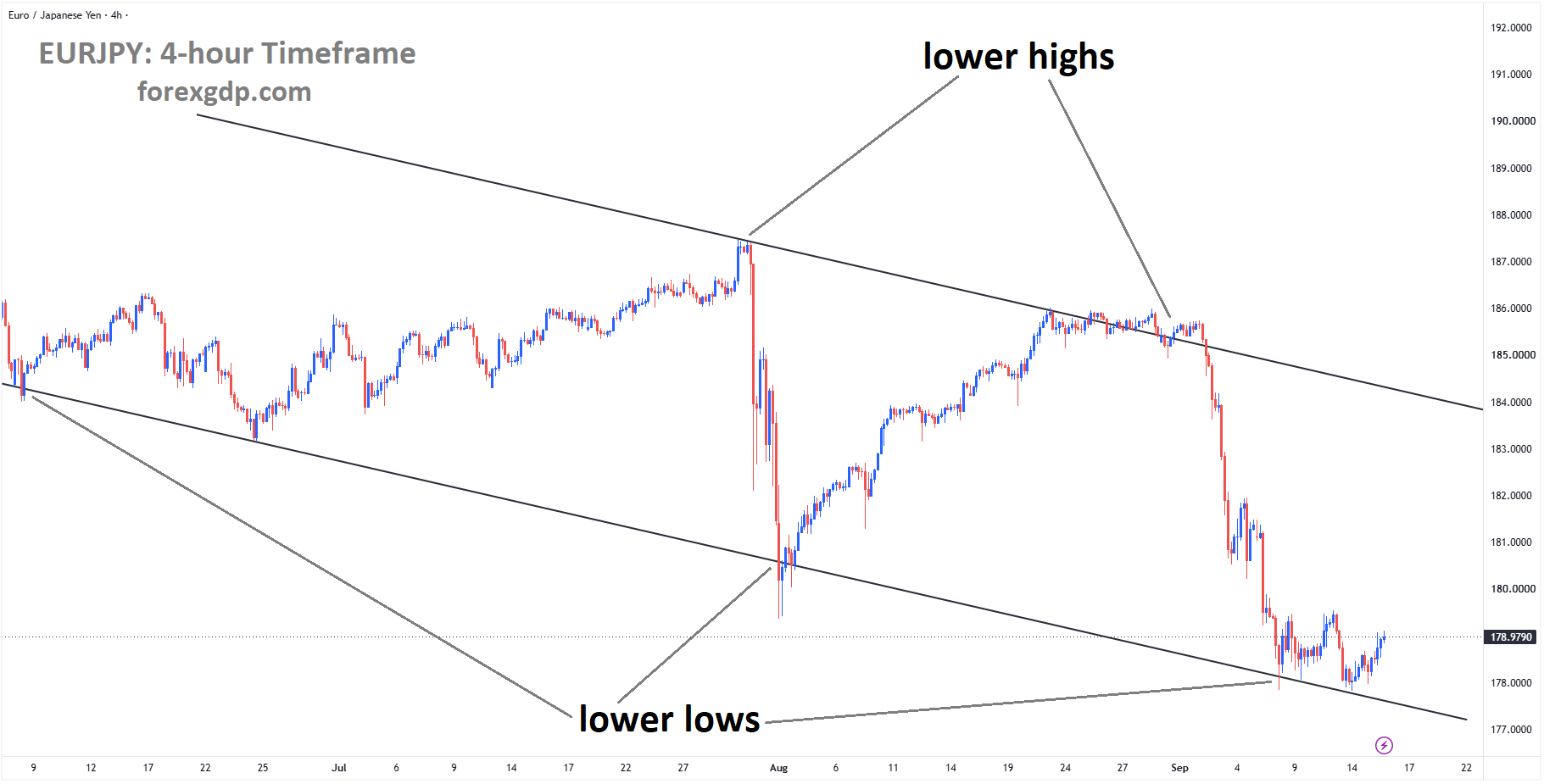
EURJPY is moving in a descending channel, and the market has rebounded from the lower low area of the channel
Japan depends heavily on imported energy, leaving its economy particularly exposed when oil becomes more expensive. Rising import costs can weaken the country’s trade position, increase pressure on businesses, and raise the cost of living for households. These conditions have created a difficult short-term environment for the Yen.
However, the Japanese currency is not without support. Expectations that the Bank of Japan could continue tightening monetary policy may prevent the Yen from falling too sharply. The reversal of carry trades and signs that Japanese investors are bringing money home could also strengthen demand for the currency.
At the same time, the European Central Bank is maintaining a firm position on inflation. Policymakers have warned that price pressures may remain stronger than previously expected, keeping the possibility of additional rate increases firmly in view.
Higher Oil Costs Create Problems for Japan
Japan imports most of the energy it consumes, including large amounts of oil and natural gas. This dependence makes the economy sensitive to changes in international energy costs.
When oil becomes more expensive, Japanese companies must spend more to secure fuel and raw materials from overseas. Transport providers, manufacturers, airlines, and electricity companies may all face higher operating expenses. Some businesses can pass these costs to customers, but others may have to accept lower profit margins.
The wider economy can also feel the effects. A more expensive energy import bill means that more money leaves Japan to pay foreign suppliers. This can reduce the strength of the country’s trade balance and create pressure on the Yen, particularly when demand for foreign currencies rises to settle international transactions.
Households may eventually face higher electricity, heating, and transportation expenses. If wages do not rise at the same pace, consumers could reduce spending on other products and services. That would create another challenge for an economy that relies on steady domestic demand.
These factors explain why rising oil costs are currently acting as a headwind for the Japanese currency.
Bank of Japan Policy May Support the Yen
Although energy imports are weighing on the Yen, expectations surrounding the Bank of Japan provide an important source of support.
For many years, Japan maintained extremely loose monetary conditions in an effort to encourage borrowing, investment, and inflation. That approach made the Yen a popular funding currency. Investors could borrow in Japan at a relatively low cost and move the money into countries offering higher returns.
This strategy is commonly known as a carry trade. It works best when Japanese borrowing costs stay low and currency markets remain stable. If the Bank of Japan raises rates or signals that more tightening is possible, these positions become less attractive.
Investors may then close their carry trades by selling overseas assets and buying Yen to repay Japanese loans. This process can increase demand for the currency, sometimes quickly.
The possibility of further Bank of Japan action therefore limits how far Yen weakness can extend. Even when immediate economic conditions are unfavorable, traders must consider the risk that Japanese policymakers could move toward a firmer policy stance.
Asset Repatriation Adds Another Layer of Support
Japanese institutions and households hold large amounts of money in overseas investments. These assets include foreign government bonds, company shares, investment funds, and other securities.
When global uncertainty rises or returns abroad become less attractive, Japanese investors may decide to move part of that capital back home. This process is known as repatriation.
Bringing foreign funds back to Japan generally requires investors to exchange overseas currencies for Yen. As a result, repatriation can create additional demand for the Japanese currency.
The process may happen gradually and can be difficult to observe in real time. Even so, early signs of returning capital can influence market expectations. Traders may become more cautious about betting heavily against the Yen if they believe Japanese investors are preparing to reduce their exposure to foreign assets.
The combination of possible Bank of Japan tightening, carry-trade reversals, and capital repatriation gives the Yen a stronger foundation than the energy situation alone might suggest.
ECB Inflation Concerns Keep the Euro Supported

The Euro is benefiting from a different set of forces. European Central Bank officials remain concerned that inflation could stay above the level they consider healthy for the economy.
The ECB recently increased its main policy rate and has continued to warn about risks that could keep inflation elevated. These risks may include strong wage growth, expensive energy, service-sector price increases, and supply disruptions.
When central bankers use firm language about inflation, investors often interpret it as a sign that additional tightening remains possible. Higher rates can support a currency because they may improve returns on deposits and other financial assets denominated in that currency.
Several leading financial institutions expect the ECB to take further action. Goldman Sachs, Citi, and Barclays have all forecast another rate increase in December. Data from the London Stock Exchange Group also shows that financial markets see a December move as highly likely.
Citi has taken an even longer view, suggesting that the tightening campaign could continue into March 2027. Such a prolonged cycle would indicate that European policymakers expect inflation to remain a serious concern for an extended period.
These expectations are helping the Euro hold firm, even as the regional economy faces slower growth and other challenges.
Economic Surveys Could Influence the European Outlook
Investors are also paying attention to economic confidence figures from Germany and the wider Eurozone. The ZEW surveys offer insight into how financial experts view current conditions and the months ahead.
Germany has special importance because it is Europe’s largest economy and a major center for manufacturing and exports. Weak confidence could renew concerns about economic activity, while stronger results may support the view that the region can handle tighter monetary policy.
The ECB must balance two competing risks. If it keeps rates elevated for too long, it could place further pressure on households, companies, and economic growth. If it stops tightening too early, inflation could remain persistent or begin rising again.
For now, officials appear more focused on controlling inflation. That approach continues to provide a supportive background for the Euro.
Different Pressures Shape the Currency Pair
The movement between the Euro and Yen reflects a clear contrast. Japan is dealing with the immediate burden of higher energy import costs, while Europe is being influenced by expectations of continued interest-rate increases.
Yet the picture is more balanced than it first appears. The Yen faces pressure from Japan’s expensive energy needs, but it may receive support from central bank policy changes and returning domestic capital. The Euro benefits from the ECB’s firm inflation stance, although disappointing economic data could test that strength.
Future direction will depend on how these forces develop. Oil costs, central bank communication, investor confidence, and international capital flows will all remain important.
Summary
The Euro has extended its advance against the Japanese Yen as rising oil costs increase the financial burden on Japan’s import-dependent economy. More expensive energy can weaken Japan’s trade position, raise business expenses, and reduce household spending power.
Still, expectations of tighter Bank of Japan policy may protect the Yen from deeper weakness. The unwinding of carry trades and the possible return of Japanese investment funds from overseas could also increase demand for the currency.
Meanwhile, the Euro remains supported by the European Central Bank’s continued focus on inflation. Major banks expect further monetary tightening, while broader market expectations strongly favor another policy move in December. With some forecasts suggesting that tightening could continue into 2027, the difference between European and Japanese policy expectations remains a major influence on the currency pair.
AUDJPY Finds Fresh Support as Energy Costs Trouble Japan
The Australian Dollar is gaining strength against the Japanese Yen as investors assess the economic effects of rising oil prices, changing interest-rate expectations, and new data from China. The currency pair has advanced for a second straight session, supported mainly by pressure on Japan’s energy-dependent economy and growing speculation that the Reserve Bank of Australia could raise interest rates.
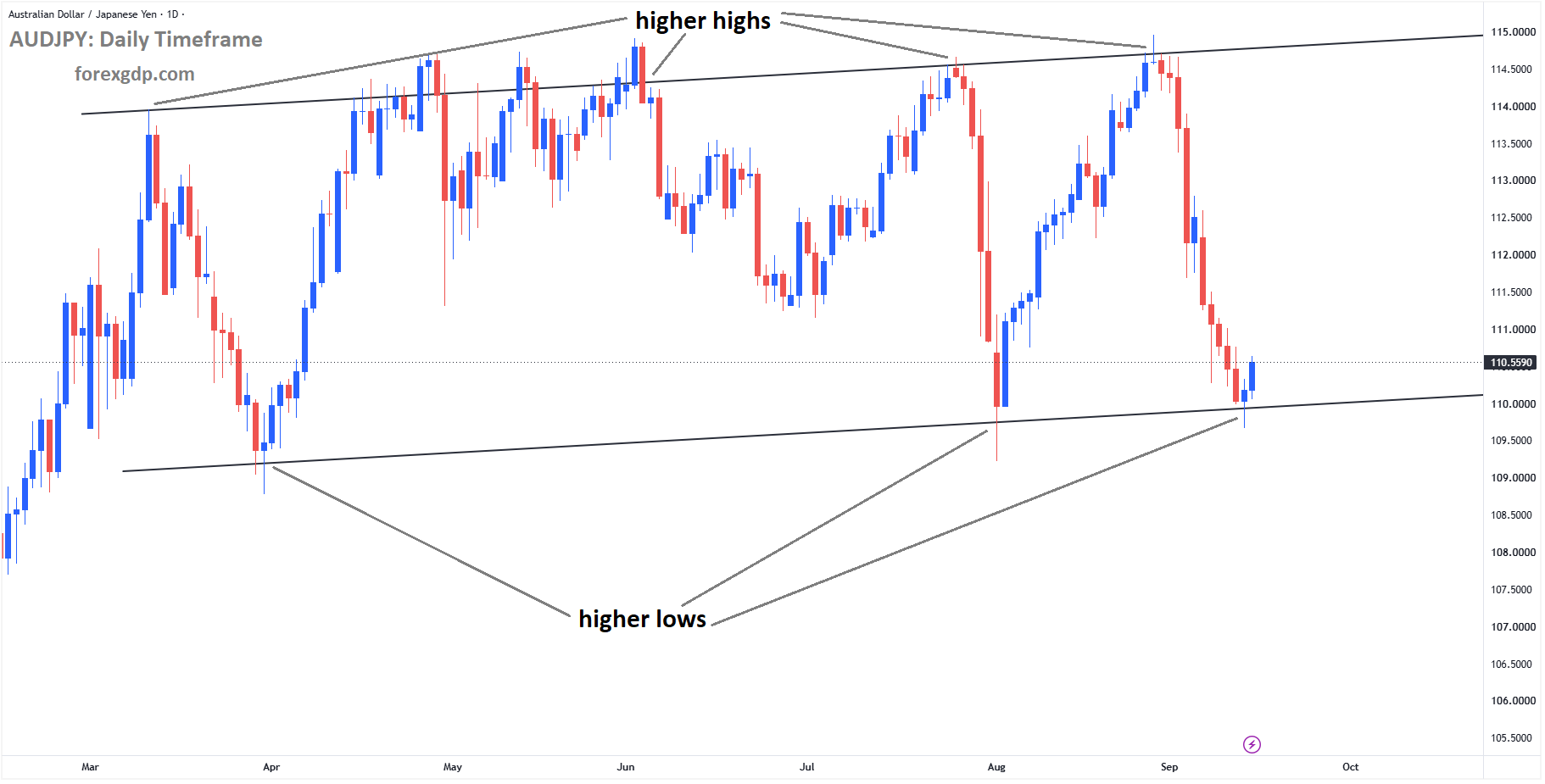
AUDJPY is moving in an ascending channel, and the market has rebounded from the higher low area of the channel
The Japanese Yen is facing challenges because Japan imports most of the energy it consumes. When global oil prices rise, Japanese companies must spend more money to secure fuel from overseas. This increases the country’s import bill and can weaken demand for the Yen.
However, the outlook is not entirely negative for the Japanese currency. Expectations of tighter policy from the Bank of Japan, the unwinding of carry trades, and signs that Japanese investors are bringing overseas assets back home could limit further losses. As a result, AUD/JPY is being influenced by several competing forces rather than a single economic development.
Higher Oil Prices Create Problems for Japan
Japan has few domestic energy resources and depends heavily on imported oil, natural gas, and coal. This dependence makes the economy especially sensitive to changes in global energy costs.
When oil becomes more expensive, Japanese importers need additional foreign currency to pay international suppliers. That can increase selling pressure on the Yen. Higher energy costs may also worsen Japan’s trade position because the total value of imports rises even if the country purchases the same amount of fuel.
The impact can spread across the wider economy. Businesses may face higher transportation, manufacturing, and electricity costs. Some companies can pass these expenses on to consumers, but others may have to accept lower profit margins. Households can also feel the pressure through more expensive fuel, utility bills, and everyday goods.
For the Bank of Japan, rising energy costs create a complicated situation. Imported inflation can push consumer prices higher, but it does not necessarily reflect strong domestic demand. Policymakers must decide whether inflation is becoming sustainable or is mainly the temporary result of external pressures.
Bank of Japan Expectations Could Protect the Yen
Although expensive oil is creating a difficult environment for the Japanese currency, expectations surrounding the Bank of Japan could provide support.
Investors are watching for signs that the central bank may continue moving away from the extremely loose monetary policy that shaped Japan’s economy for many years. If officials become more confident about wage growth and domestic inflation, they may consider additional tightening measures.
Higher Japanese interest rates would make Yen-denominated assets more attractive to some investors. They would also reduce the wide policy gap between Japan and economies where borrowing costs are already much higher.
Even the expectation of tighter policy can influence currency demand. Traders often adjust their positions before a central bank makes a formal decision. If confidence in further Bank of Japan action increases, some investors may reduce their bets against the Yen.
Still, policymakers must act carefully. Japan’s economic recovery remains uneven, and higher borrowing costs could create difficulties for businesses, households, and the government. The central bank therefore needs to balance inflation risks against the possibility of slowing domestic activity.
Carry Trade Unwinding Offers Additional Support
Changes in global carry trades may also help limit weakness in the Japanese Yen.
For years, investors have borrowed in currencies with low interest rates, including the Yen, and used those funds to purchase assets offering higher returns elsewhere. This approach can work when financial markets are calm and interest-rate differences remain wide.
The strategy becomes less attractive when market uncertainty rises or when Japanese rates are expected to increase. Investors may then close their positions by selling foreign assets and buying Yen to repay their loans. This process can create sudden demand for the Japanese currency.
Carry trade unwinding does not always happen in a steady or predictable way. It can accelerate quickly when investors become more cautious about global growth, central bank policy, or geopolitical risks. That means the Yen may receive support even while Japan continues to struggle with higher energy import costs.
Japanese Investors May Bring More Money Home

Another factor supporting the Yen is the possibility that Japanese investors are repatriating some of their overseas assets.
Japan’s banks, insurers, pension funds, and private investors hold large amounts of foreign investments. When they sell some of those holdings and return the money to Japan, they often need to convert foreign currencies into Yen.
Repatriation can happen for several reasons. Investors may want to reduce risk, respond to changing interest-rate conditions, prepare for domestic financial obligations, or take advantage of improving returns in Japan.
The recent signs of this activity appear limited rather than dramatic. Even so, a gradual return of capital could provide a steady source of demand for the Yen. Combined with possible Bank of Japan tightening and carry trade adjustments, this may prevent the currency from weakening without interruption.
Australian Dollar Benefits From RBA Rate Hike Expectations
The Australian Dollar is receiving support from growing expectations that the Reserve Bank of Australia may adopt a more restrictive approach.
Investors are paying close attention to comments from senior officials, including Deputy Governor Andrew Hauser. His recent remarks were widely interpreted as hawkish, encouraging speculation that the central bank could consider raising interest rates in the coming months.
A more restrictive policy outlook can support the Australian Dollar because higher interest rates may increase the appeal of Australian financial assets. It also signals that policymakers remain concerned about inflation and believe additional action may be necessary.
Rabobank analysts noted that markets are considering the possibility of rate increases after Hauser’s speech. They also suggested that stronger policy action outside the housing sector would be welcomed by the US Treasury.
Housing remains an important part of Australia’s economy, but policymakers must also consider consumer demand, public spending, services, business investment, and wage pressures. If inflation remains broad across several areas, the RBA may feel that tighter policy is needed to restore balance.
However, higher rates also create risks. Australian households carry significant mortgage debt, and additional increases in borrowing costs could weaken spending. The central bank must therefore decide whether inflation concerns are serious enough to justify placing more pressure on consumers and businesses.
China’s Economic Data Sends Mixed Signals
China remains central to the outlook for Australia because it is one of the country’s most important trading partners. Chinese demand influences Australian exports, business confidence, and the broader performance of the Australian Dollar.
The latest figures offered a mixed picture. Retail sales increased by 0.4% from a year earlier in August, slowing from July and falling short of expectations. The weak result suggests that Chinese consumers remain cautious, which could limit the strength of the country’s economic recovery.
Industrial production delivered a more encouraging signal. Output rose by 5.2% compared with the previous year, exceeding both the forecast and the earlier result. This indicates that China’s manufacturing and industrial sectors maintained stronger momentum despite challenges elsewhere in the economy.
Fixed asset investment remained a major concern. It declined by 7.2% from a year earlier, matching expectations but worsening from the previous month. Continued weakness in investment may reflect problems in property, infrastructure activity, or private-sector confidence.
For Australia, stronger Chinese industrial production can support demand for raw materials. However, weak retail spending and falling investment show that China’s recovery is still uneven. These conflicting results may prevent investors from forming a clear view of how much support the Chinese economy can provide to Australia.
Summary
AUD/JPY is being shaped by opposing economic forces. Rising oil prices are increasing Japan’s import costs and creating pressure on the Yen, while expectations of possible Reserve Bank of Australia rate increases are supporting the Australian Dollar.
At the same time, the Yen has several potential sources of protection. Possible Bank of Japan tightening, the unwinding of carry trades, and the return of overseas capital to Japan could restrict further weakness.
China’s latest data adds another layer of uncertainty. Stronger industrial production is positive for Australia, but softer retail sales and declining investment highlight continuing risks. The future direction of AUD/JPY will therefore depend on energy costs, central bank decisions, global investor behavior, and the strength of economic activity across the Asia-Pacific region.
Don’t trade all the time, trade forex only at the confirmed trade setups
Get more confirmed trade signals at premium or supreme – Click here to get more signals, 2200%, 800% growth in Real Live USD trading account of our users – click here to see , or If you want to get FREE Trial signals, You can Join FREE Signals Now!