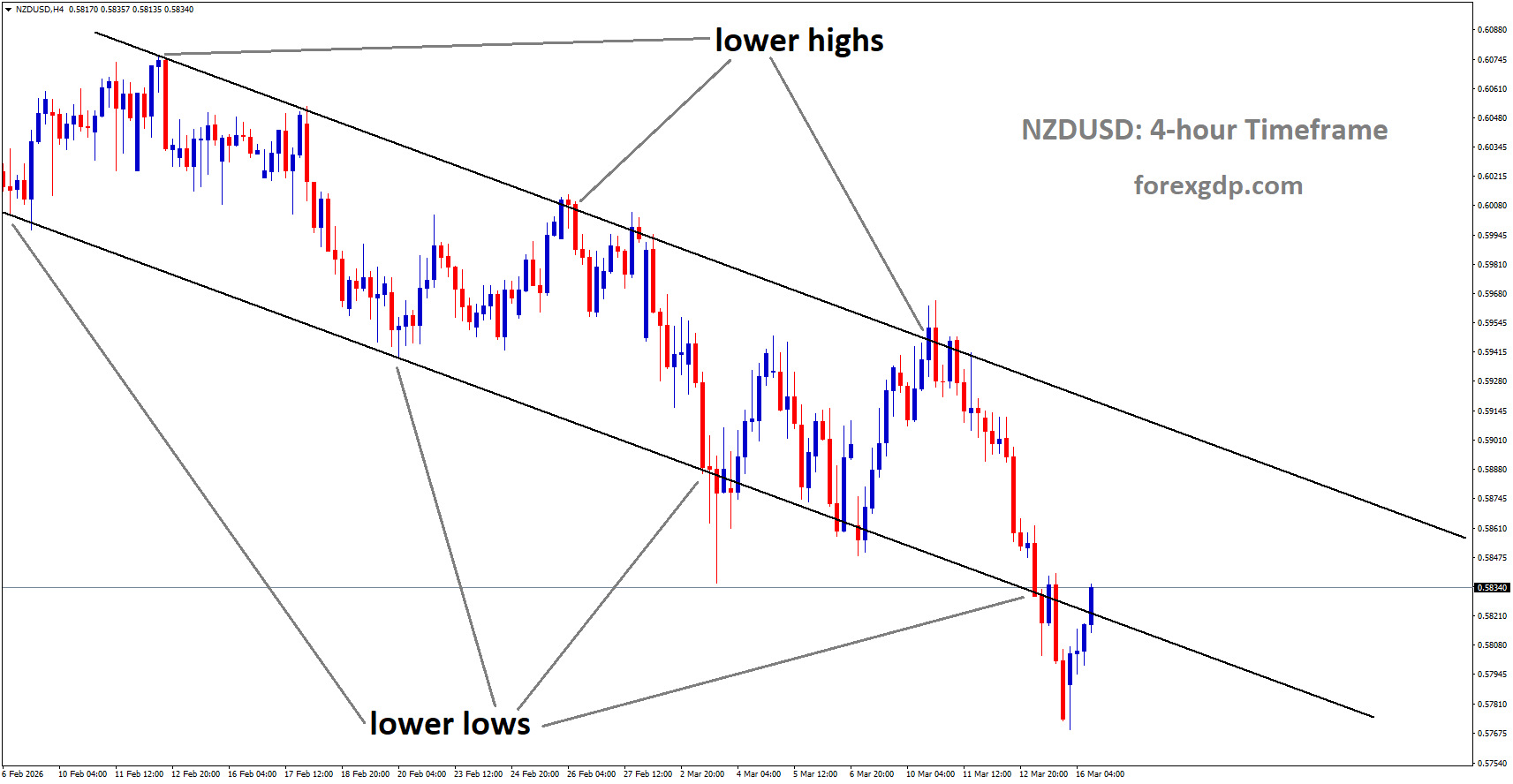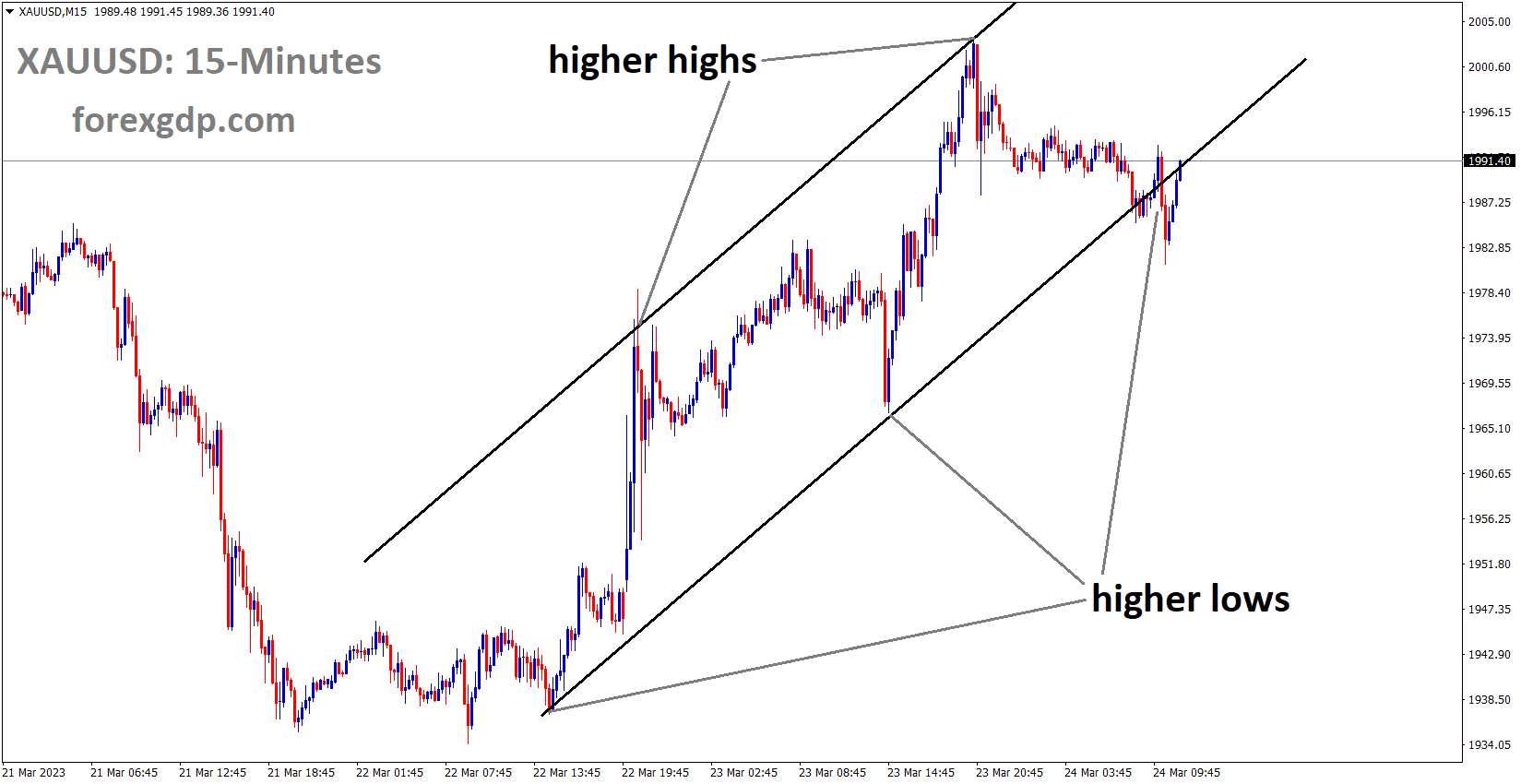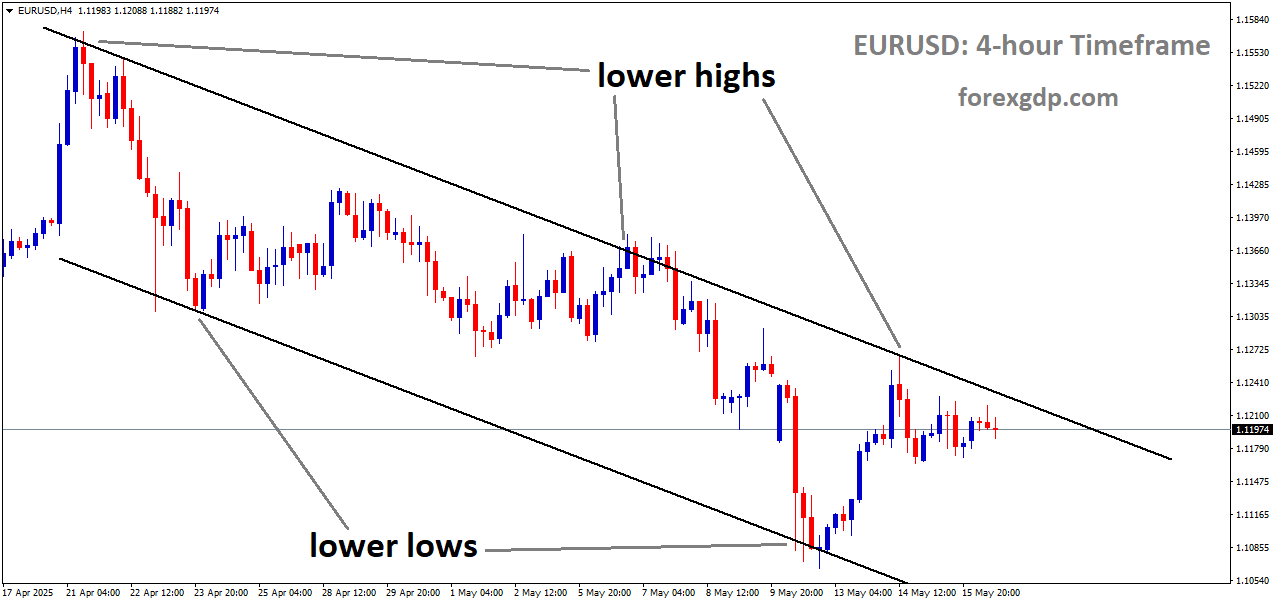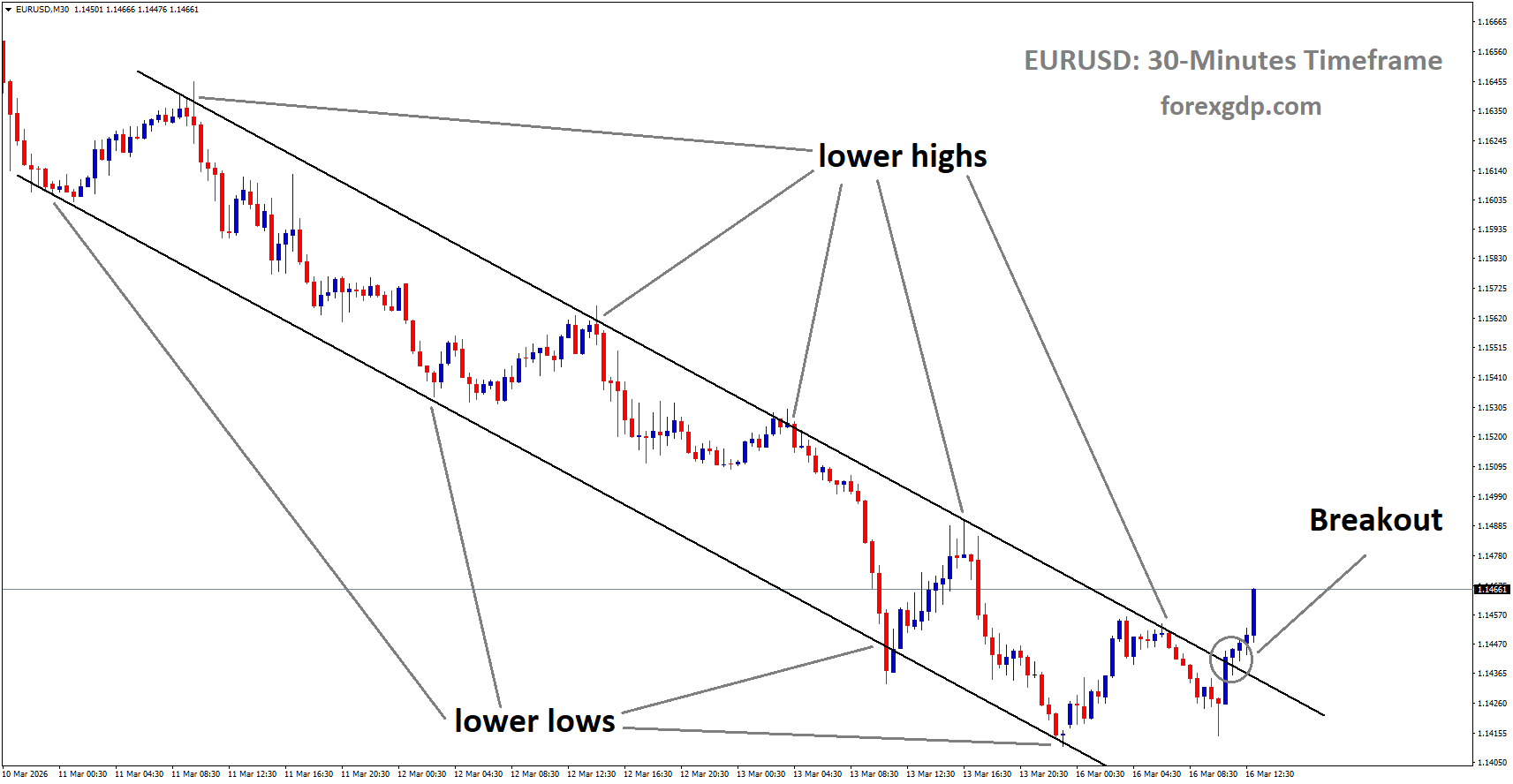
EURUSD has broken the Ascending channel on the upside
EURUSD Loses Momentum as Dollar Recovers and Markets Await Major Central Bank Updates
The EUR/USD currency pair started the week with a strong push higher but soon gave back most of those early gains. By Monday’s European trading session, the pair had flattened near the 1.1415 level as the US Dollar regained strength. Market participants are now turning their attention to two major events scheduled for the week: the monetary policy announcements from the Federal Reserve and the European Central Bank.
Both central banks are widely expected to keep their interest rates unchanged. However, investors are closely watching for signals about future policy direction, especially as global economic conditions continue to shift.
US Dollar Recovers After Early Weakness
The US Dollar initially weakened earlier in the day but quickly regained momentum. This recovery caused the EUR/USD pair to pull back after its early rally.
The US Dollar Index (DXY), which measures the value of the Dollar against a basket of six major global currencies, remained relatively strong. Although it was slightly lower on the day at around 100.35, the index stayed close to a nine-month high reached recently.
The resilience of the Dollar reflects the cautious mood across global financial markets. Investors often move toward the US Dollar when uncertainty increases, making it a widely viewed safe-haven currency.
In the current environment, several global developments are encouraging this cautious approach. Rising geopolitical tensions and changes in energy prices have both contributed to market volatility and uncertainty.
Rising Oil Prices Influence Global Sentiment
One of the most important factors affecting currency markets right now is the rise in oil prices. Energy prices have increased due to ongoing geopolitical tensions involving the United States, Israel, and Iran.
These tensions have raised concerns about supply disruptions, particularly around key shipping routes for oil. When oil prices climb sharply, it often pushes inflation expectations higher around the world. Higher inflation can influence how central banks set interest rates and manage economic policy.
As a result, currency traders are paying close attention to how energy markets evolve. A continued rise in oil prices could influence inflation outlooks and eventually affect decisions made by major central banks.
Higher inflation expectations tend to complicate policy decisions. Central banks must balance the need to control price increases while also supporting economic growth. This delicate balance is currently shaping expectations for both the Federal Reserve and the European Central Bank.
Investors Await Key Central Bank Meetings

The biggest focus for the financial markets this week is the upcoming policy meetings from two of the world’s most influential central banks.
The Federal Reserve is scheduled to announce its decision on Wednesday, followed by the European Central Bank on Thursday. These meetings are closely watched because they offer important clues about the direction of monetary policy in the United States and the Eurozone.
At the moment, the general expectation among investors is that both institutions will leave interest rates unchanged.
Federal Reserve Outlook
The Federal Reserve is widely expected to maintain its current policy stance for now. Policymakers are likely to take a cautious approach as they assess recent economic developments.
One of the major concerns is the recent rise in oil prices, which could push inflation higher. If energy costs remain elevated, inflation expectations may become less stable. Central banks usually try to prevent this from happening because rising inflation expectations can make it harder to keep prices under control.
Because of this uncertainty, the Fed is expected to take a wait-and-see approach rather than rushing into policy changes.
Market tools that track expectations for future policy decisions suggest that the Fed may continue holding interest rates steady for several more meetings. Investors will therefore listen carefully to comments from policymakers for hints about how long this pause might last.
Even small shifts in tone during the press conference or policy statement could influence currency markets.
European Central Bank Expectations
Similar expectations surround the European Central Bank. Analysts believe the ECB will also keep its interest rates unchanged during its upcoming meeting.
Inflation in the Eurozone has recently moved closer to the central bank’s long-term target of around 2%. Price pressures have remained relatively stable for an extended period, which gives policymakers more room to maintain their current stance.
For the ECB, the challenge is similar to that faced by the Federal Reserve: balancing economic stability with inflation control.
Although inflation has cooled compared to previous peaks, policymakers still want to ensure that price growth remains under control before considering major policy shifts.
Investors will therefore watch the ECB’s statements closely for guidance on how officials view the economic outlook for the coming months.
Risk-Off Mood Supports the Dollar
Another factor supporting the US Dollar is the cautious sentiment currently dominating financial markets.
When global tensions rise or economic uncertainty increases, investors tend to move funds into assets that are perceived as safer. The US Dollar is often one of the primary beneficiaries of this shift.
The current geopolitical environment has contributed to this risk-averse mood. Conflicts and tensions involving major countries have created uncertainty about global stability, trade routes, and energy supplies.
In such situations, traders often reduce exposure to riskier investments and instead move toward safer currencies and assets. This shift in demand can strengthen the US Dollar even when other economic indicators remain stable.
The rebound in the Dollar earlier in the day reflects this broader market behavior.
Why EUR/USD Reacts Strongly to Policy Signals
The EUR/USD pair is one of the most actively traded currency pairs in the world. Because it represents the two largest economic regions — the United States and the Eurozone — even small policy changes can have significant effects.
When investors believe the Federal Reserve may keep interest rates higher for longer than the ECB, the US Dollar tends to strengthen against the Euro. On the other hand, if expectations shift in favor of stronger European economic conditions or tighter ECB policy, the Euro can gain strength.
That is why the upcoming central bank meetings are so important. The policy statements and press conferences may offer clues about future decisions, economic outlooks, and inflation concerns.
Traders often react quickly to these signals, which can cause noticeable movement in the EUR/USD exchange rate.
What Market Participants Are Watching Next
As the week progresses, investors will closely monitor several key developments that could influence currency markets.
First, the Federal Reserve’s policy statement and press conference will be analyzed for any changes in tone. Even subtle hints about future interest rate decisions can impact expectations.
Second, the European Central Bank’s meeting will provide insight into how policymakers view inflation and economic conditions within the Eurozone.
Finally, global geopolitical developments and energy market movements will remain important factors. Changes in oil prices or geopolitical tensions could quickly influence market sentiment and currency demand.
These combined factors will shape the direction of the EUR/USD pair in the days ahead.
Summary
The EUR/USD pair initially moved higher but later lost most of its gains as the US Dollar regained strength. The recovery in the Dollar reflects cautious global market sentiment, rising oil prices, and ongoing geopolitical tensions.
At the same time, investors are focusing on the upcoming policy decisions from the Federal Reserve and the European Central Bank. Both institutions are expected to keep interest rates unchanged for now, but their statements could offer valuable clues about future economic policy.
Rising energy prices and shifting inflation expectations are adding complexity to the outlook for central banks. As a result, traders are closely watching economic signals, geopolitical developments, and policy guidance to better understand where the EUR/USD pair may move next.
GBPUSD Advances Beyond 1.3250 Ahead of Major Central Bank Meetings This Week
The British Pound showed signs of strength against the US Dollar at the start of the week, with the GBP/USD currency pair moving closer to 1.3255 during Monday’s early trading sessions. The movement largely reflects a softer US Dollar and growing caution among traders ahead of two important central bank meetings scheduled later in the week.
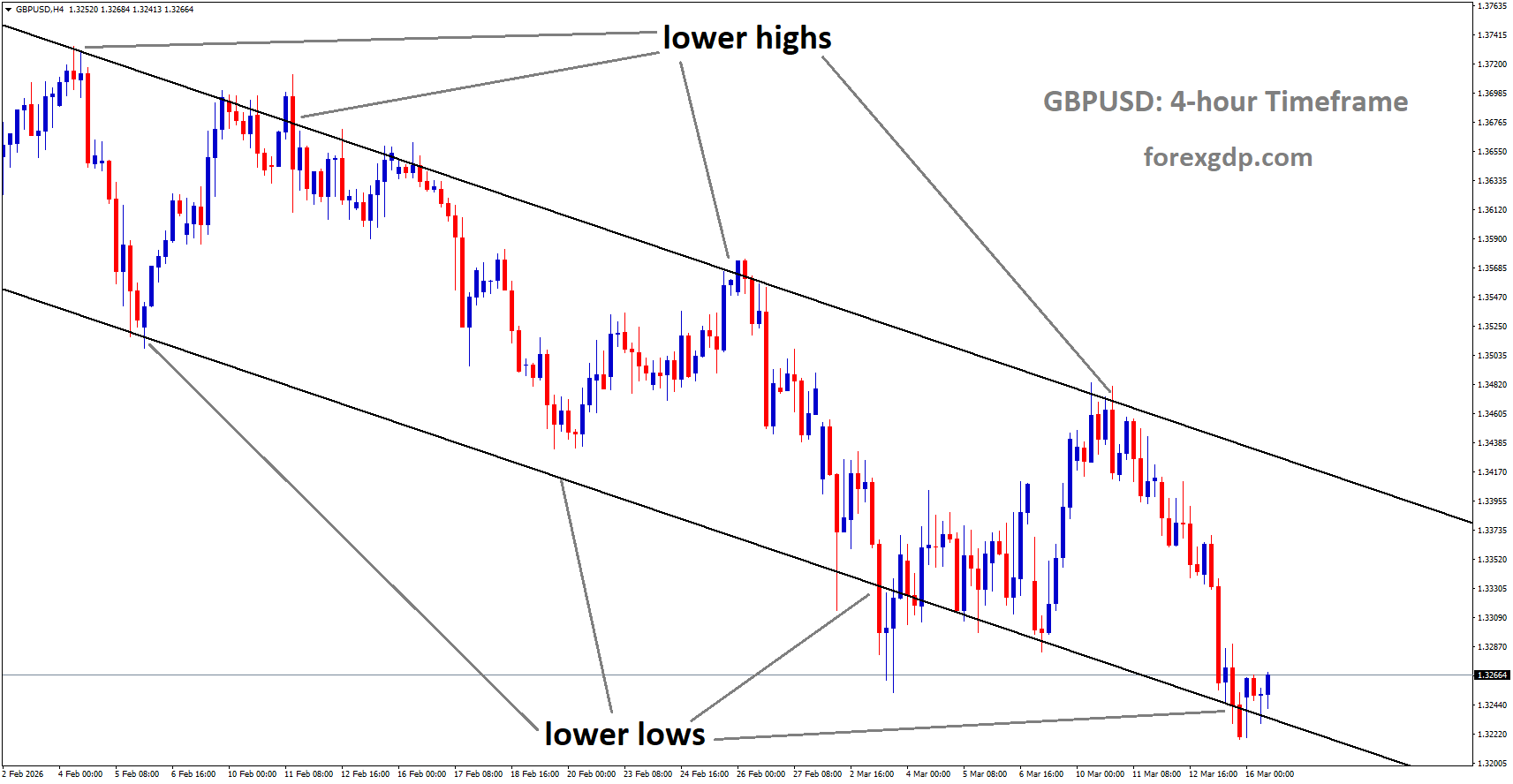
GBPUSD is moving in an uptrend channel, and the market has reached the lower low area of the channel
Both the US Federal Reserve and the Bank of England are expected to announce their latest interest rate decisions within days of each other. Because of this, investors are paying close attention to economic signals and policy guidance that could influence currency markets in the coming months.
GBP/USD Gains Support as the US Dollar Weakens
The GBP/USD pair began the week with positive momentum, climbing during early trading hours as the US Dollar struggled to maintain strength. This shift allowed the British Pound to regain some ground after recently trading near its lowest levels since December 2025.
Currency movements often react quickly to expectations around interest rates and economic outlooks. When traders believe that the US central bank may slow down or delay changes to monetary policy, the US Dollar can weaken. In this case, market sentiment suggests that the Federal Reserve may keep its current policy stance unchanged for now.
As a result, the Pound found an opportunity to strengthen slightly against the Dollar. However, the gains remain modest because investors are still waiting for official confirmation from both central banks.
Federal Reserve Expected to Maintain Current Policy
Attention is currently focused on the Federal Reserve’s upcoming policy meeting scheduled for Wednesday. Many economists and financial analysts believe the central bank will leave its benchmark interest rate unchanged.
At the moment, the federal funds rate is expected to remain within the range of 3.50% to 3.75%. Holding rates steady would signal that the Fed is still cautious about the path of inflation and the broader US economy.
Inflation has been a major concern for policymakers over the past few years. Even though price pressures have eased compared to earlier peaks, they have not completely disappeared. Because of this, the Federal Reserve appears willing to maintain a careful approach rather than move too quickly toward lower interest rates.
Some analysts had previously expected rate cuts to begin earlier in the year. However, recent economic data and inflation concerns have pushed those expectations further into the future. Many experts now believe that the first rate reduction could arrive later in the year, possibly around September.
This shift in expectations plays a key role in shaping the value of the US Dollar. When interest rates remain higher for longer, the Dollar can sometimes gain strength. But uncertainty around future policy moves can also cause temporary weakness, as seen in the current market environment.
Global Events Continue to Influence Inflation Risks
Beyond domestic economic conditions, global developments are also affecting central bank decisions. Geopolitical tensions and supply disruptions can influence energy prices, trade flows, and overall inflation.
Carol Kong, a currency strategist at Commonwealth Bank of Australia, highlighted how global conflicts can complicate monetary policy decisions. According to her, such events can create both risks to economic growth and upward pressure on inflation.
In situations like these, central banks must evaluate several factors at the same time. If inflation rises above target levels, policymakers may need to keep interest rates elevated to control price increases. At the same time, slowing economic growth could require a more supportive policy stance.
Because of these competing forces, central bank decisions often depend heavily on the most recent economic data and the broader global environment.
Bank of England Also Expected to Hold Rates
Just one day after the Federal Reserve meeting, the Bank of England will announce its own interest rate decision. Most economists expect the UK central bank to follow a similar approach and keep borrowing costs unchanged.
The current expectation is that the Bank of England will maintain its policy rate at 3.75%. Like the Federal Reserve, the UK central bank is balancing the need to control inflation while also supporting economic stability.
The UK economy has faced several challenges in recent years, including slow growth and persistent inflation pressures. Policymakers are therefore cautious about making rapid changes that could disrupt the fragile recovery.
By keeping rates steady, the Bank of England may signal that it wants more time to evaluate economic trends before making further adjustments.
Potential Risks to the UK Economy

Economic experts are also monitoring potential risks that could influence the UK’s inflation outlook. One major concern is the possibility of rising energy costs, which can quickly push consumer prices higher.
Economists from Oxford Economics have warned about a scenario in which oil prices rise sharply. In an extreme situation where oil prices reach very high levels, inflation in the UK could increase significantly.
Such a development could create additional pressure on households and businesses. Higher energy costs tend to raise transportation expenses, manufacturing costs, and overall living expenses. If these pressures persist, the broader economy could slow down.
Oxford economists have suggested that under such conditions, the UK might even experience a mild recession. While this represents a worst-case scenario rather than the most likely outcome, it highlights the importance of energy markets in shaping economic forecasts.
Why Central Bank Decisions Matter for Currency Markets
Interest rate decisions from major central banks are among the most influential factors in the global currency market. When interest rates rise in one country, its currency often becomes more attractive to international investors seeking higher returns.
On the other hand, if interest rates remain unchanged or move lower relative to other economies, the currency may weaken.
Because both the Federal Reserve and the Bank of England are expected to hold rates steady this week, traders are paying close attention to the tone of their policy statements. Even subtle hints about future rate changes can cause noticeable movements in currency pairs like GBP/USD.
Investors also look for signals about inflation expectations, economic growth, and employment trends. These factors help determine how central banks might adjust their policies in the months ahead.
Market Sentiment Ahead of Key Announcements
As the week progresses, traders are likely to remain cautious. Major policy announcements can create volatility in financial markets, particularly in currency trading.
Many investors prefer to wait for official statements and press conferences before making significant decisions. This cautious approach helps them avoid unexpected market swings.
For now, the modest rise in GBP/USD reflects a combination of a softer US Dollar and anticipation surrounding upcoming central bank decisions. Once the Federal Reserve and the Bank of England release their policy updates, markets will have clearer direction.
Summary
The British Pound strengthened slightly against the US Dollar at the start of the week, with GBP/USD moving toward 1.3255 as the Dollar softened. Traders remain cautious as two important central bank meetings approach.
The Federal Reserve is expected to keep its interest rate unchanged within the current range, reflecting ongoing concerns about inflation. Similarly, the Bank of England is widely expected to maintain its policy rate as it evaluates economic conditions in the United Kingdom.
Global factors such as geopolitical tensions and energy prices continue to influence inflation risks and economic outlooks. These developments play a key role in shaping central bank strategies.
As markets await official announcements from both institutions, investors are watching closely for clues about future monetary policy and the direction of the global economy.
USDJPY Stays Strong Over 159.50 with Buyers Maintaining Control
The USD/JPY currency pair has recently drawn strong attention in the global forex market as it climbed close to a level not seen since mid-2024. After several days of losses, the pair stabilized and began to show signs of renewed strength during Monday’s Asian trading session. The movement reflects ongoing market interest in the US dollar against the Japanese yen, with buyers continuing to support the pair during small pullbacks.
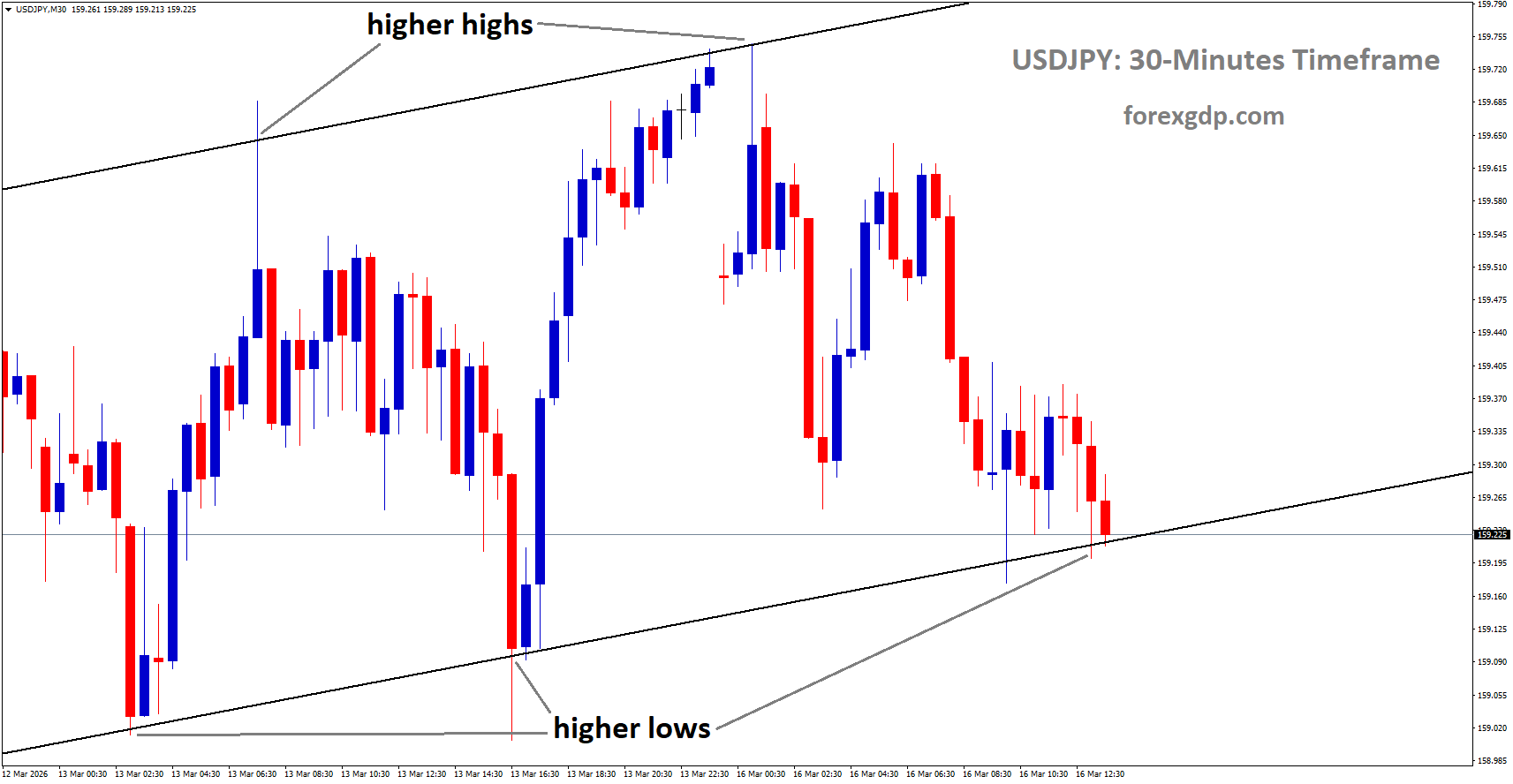
USDJPY is moving in an uptrend channel, and the market has reached the higher low area of the channel
Recent price behavior suggests that the overall trend remains positive. Even though the pair experienced short-term weakness, the broader outlook still points upward. Traders and investors are watching closely to see whether the pair can maintain its strength and possibly move toward new highs in the coming weeks.
USD/JPY Approaches Highest Level Since July 2024
The USD/JPY pair recently tested the 159.75 level, marking its highest point since July 2024. This move highlights the strong recovery the pair has experienced after a brief dip earlier in the month. Despite a short period of downward movement, the overall trend has remained upward, allowing the pair to regain lost ground quickly.
Reaching this level signals that buyers are still active in the market. Each time the pair drops slightly, interest appears to return, helping push prices back up. This pattern suggests that market participants remain confident in the dollar’s strength relative to the yen.
The move toward the 159.75 level also places the pair near an important technical boundary within its broader upward path. If the upward momentum continues, the pair could attempt to climb even higher in the near future.
Ongoing Uptrend Supported by Strong Market Momentum
The recent performance of USD/JPY reflects a market that continues to favor upward movement. After a temporary decline in the middle of the month, the pair quickly rebounded and resumed its upward direction.
This type of price action often indicates that buyers are willing to step in during minor dips. Rather than signaling a trend reversal, the brief decline appeared to be a pause before the next upward move.
Another sign of strength is the steady upward structure visible in the pair’s movement over time. Prices have been advancing within a rising channel, which is a pattern where the market gradually climbs while staying within defined boundaries. As long as the pair remains within this structure, the broader upward trend is considered intact.
Market momentum indicators also show that buying pressure remains strong. The Relative Strength Index currently sits in the upper range of its scale, indicating that the pair still has positive momentum behind it. Importantly, this level does not yet suggest that the market is excessively overheated, meaning there may still be room for further upward movement.
Buyers Continue to Support the Pair on Small Pullbacks

One of the key characteristics of the current USD/JPY trend is how the market reacts during small declines. Instead of triggering heavy selling, these dips have often attracted fresh buying interest.
This behavior suggests that traders view minor price drops as opportunities rather than warning signs. When prices slip slightly, buyers appear willing to enter the market and push the pair back upward.
The presence of consistent support during these pullbacks helps maintain the broader upward trend. It also shows that the overall sentiment toward the pair remains positive.
Another factor reinforcing this trend is the pair’s position above longer-term average price levels. Remaining above these levels typically indicates that the broader market direction is still upward.
Potential for a Break Toward Higher Levels
With USD/JPY trading near its highest level in months, the next question for market watchers is whether the pair can break beyond its current range.
The upper boundary of the rising channel sits around the 161.30 area. If the pair manages to move beyond this level, it could open the door for further gains.
A breakout above this boundary would likely draw even more attention from traders, as it would signal that the upward momentum remains strong. Such a move could push the pair toward the record high of 162.00 that was reached in July 2024.
Reaching that level again would represent a significant milestone. It would show that the dollar continues to maintain strong demand compared with the yen, especially during periods when investors are seeking stability or higher returns.
Key Support Levels to Watch
While the outlook remains positive, support areas below the current price still play an important role in maintaining the upward trend.
The first important support zone appears near 158.55. This level aligns with the lower boundary of the current rising channel and acts as a cushion during short-term declines. As long as the pair stays above this area, the broader upward momentum is likely to remain intact.
If prices fall below this zone, the market could experience a deeper pullback. Such a move might weaken the short-term bullish outlook and bring the next support area around 156.44 into focus.
However, it is important to note that occasional declines are normal even during strong trends. Markets rarely move in a straight line, and brief corrections can occur before the overall direction resumes.
Market Sentiment Remains Focused on Dollar Strength
The recent performance of USD/JPY reflects a broader trend that has been building over time. The US dollar has remained resilient against the Japanese yen, helping the pair maintain its upward trajectory.
Several factors can influence currency movements, including economic data, central bank policies, and global investor sentiment. When confidence in the US economy remains strong, the dollar often attracts increased demand.
At the same time, the Japanese yen is frequently viewed as a safe-haven currency. During times of uncertainty, investors may turn to the yen for stability. However, when global markets show confidence and risk appetite increases, the yen can weaken relative to other major currencies.
These dynamics help explain why the USD/JPY pair often experiences strong movements when global financial conditions shift.
Why the Current Trend Matters
The climb toward multi-month highs is significant because it highlights the strength of the ongoing trend. Currency markets are heavily influenced by momentum and investor sentiment, and sustained upward movement can attract even more market participation.
When traders see a pair consistently moving higher, it often builds confidence in the direction of the trend. This can lead to increased trading activity and further movement in the same direction.
At the same time, traders remain cautious about potential pullbacks. Even strong trends can experience sudden corrections, especially when markets approach important psychological levels.
For now, the key question is whether USD/JPY will continue its upward journey or pause before attempting another push higher.
Summary
The USD/JPY pair has recently approached its highest level since July 2024, reflecting strong upward momentum in the currency market. After a brief decline earlier in the month, the pair recovered quickly and resumed its climb, supported by steady buying interest.
Market momentum remains positive, with the pair trading within a rising channel that has guided its upward movement. Buyers have consistently stepped in during small pullbacks, helping maintain the broader bullish outlook.
If the pair breaks above the upper boundary of its current range, it could move toward the record high reached in mid-2024. At the same time, support levels below the current price continue to play an important role in maintaining stability during temporary declines.
As the market watches the next moves closely, the USD/JPY pair remains one of the most closely followed currency pairs in global forex trading due to its strong trend and potential for further movement.
USDCHF drops under 0.7900 as softer safe-haven demand pressures the US Dollar
The USD/CHF currency pair moved lower after several days of steady gains, reflecting a shift in global market sentiment. The decline comes as investors react to reports that the United States could soon announce a coalition aimed at protecting commercial ships traveling through the Strait of Hormuz. At the same time, ongoing geopolitical tensions in the Middle East continue to influence trader behavior, keeping markets cautious.
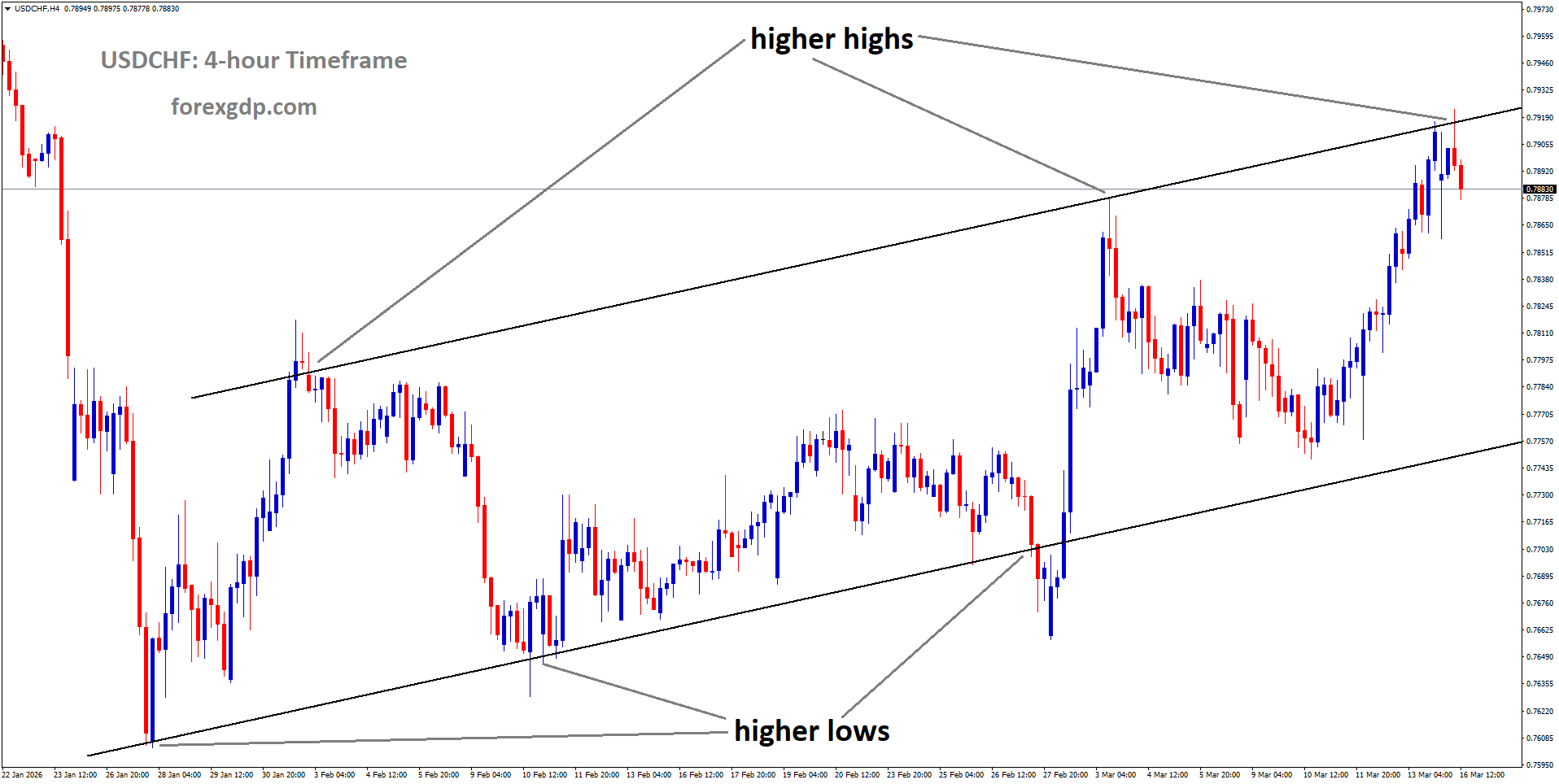
USDCHF is moving in an uptrend channel, and the market has fallen from the higher high area of the channel
While the US Dollar has weakened against several major currencies, the Swiss Franc has gained some support as investors still view it as a safe-haven asset during uncertain times. This delicate balance between improving risk sentiment and lingering geopolitical concerns is shaping the current direction of the USD/CHF pair.
Shifting Risk Sentiment Weakens the US Dollar
Global markets often respond quickly to changes in geopolitical risk. When tensions rise, investors usually move their money into safer assets such as the Swiss Franc. When risks appear to ease, however, demand for safe-haven currencies can decline.
Recent reports suggesting that the United States may organize an international coalition to escort ships through the Strait of Hormuz have slightly improved investor confidence. The Strait of Hormuz is one of the most important shipping routes in the world, especially for oil transportation. Any disruption in this narrow waterway can affect global energy supply and create economic uncertainty.
The possibility of coordinated protection for commercial ships has helped calm some fears about potential disruptions to oil shipments. As a result, risk appetite has improved modestly, which has put some pressure on the US Dollar and contributed to the USD/CHF pair moving lower.
Middle East Developments Continue to Influence Markets
Despite the slight improvement in risk sentiment, investors remain highly attentive to developments in the Middle East. Over the weekend, reports indicated that US forces targeted several military locations on Kharg Island, an area that plays a major role in Iran’s oil exports.
Kharg Island is a key hub for Iran’s energy sector, reportedly handling nearly 90 percent of the country’s oil shipments. Any military activity near such a strategic location can raise concerns about potential disruptions to global energy supply.
US President Donald Trump stated that oil infrastructure was not directly targeted during the operation. However, Iranian officials warned that they may respond if any oil facilities connected to the United States or its allies are attacked.
These warnings have kept traders cautious. Even when markets briefly calm down, the possibility of escalation remains in the background, influencing how investors manage risk and position their portfolios.
Potential Coalition to Secure the Strait of Hormuz
The Strait of Hormuz has once again become a central focus of global attention. This narrow passage between the Persian Gulf and the Gulf of Oman is responsible for transporting a large portion of the world’s oil supply. Because of its importance, any threat to shipping routes in this area can quickly affect global markets.
The United States has reportedly been discussing plans with several allied nations to create a coalition that would escort commercial vessels traveling through the Strait. Such a coalition would aim to protect ships from potential attacks and ensure that energy supplies continue to flow without disruption.
Countries that may participate in this initiative include the United Kingdom, France, China, and Japan. These nations rely heavily on stable energy supplies and have a strong interest in keeping shipping routes open and secure.
Meanwhile, foreign ministers from the European Union have gathered in Brussels to discuss possible naval responses. Their discussions are focused on how Europe might contribute to safeguarding maritime routes if tensions in the region continue.
Outlook for Energy Supply and Global Stability
Another important factor influencing market sentiment is the outlook for the broader conflict involving Israel, Iran, and the United States. According to US Energy Secretary Chris Wright, there is optimism that the current conflict could come to an end within the next few weeks.
If the situation stabilizes, global oil supplies could recover more easily. Reduced tensions would also likely help bring stability to energy markets, which have recently experienced volatility due to fears of supply disruptions.
Lower uncertainty around energy supply could benefit global economic confidence. When oil supply risks decline, inflation concerns linked to energy costs may also ease, which in turn influences central bank policies and currency movements.
Focus on the US Federal Reserve’s Policy Guidance
In addition to geopolitical developments, traders are closely watching the upcoming policy decision from the US Federal Reserve. The central bank is widely expected to keep interest rates unchanged at its upcoming meeting.
However, the most important aspect of the decision will be the guidance provided by policymakers regarding the rest of the year. Investors want to understand how the Fed views inflation risks, particularly those linked to recent fluctuations in energy prices.
If policymakers signal that rising energy costs could keep inflation elevated, the central bank may maintain a cautious approach to future policy adjustments. On the other hand, if energy prices stabilize and inflation risks ease, the Fed may have more flexibility in shaping future policy decisions.
For currency markets, these signals are important because they influence expectations for the US Dollar’s future direction.
Safe-Haven Demand Supports the Swiss Franc

Even though risk sentiment has improved slightly, the Swiss Franc continues to attract attention from investors looking for stability during uncertain times. Switzerland’s strong financial system and reputation for economic stability have long made the Franc a preferred safe-haven currency.
When geopolitical risks remain unresolved, demand for safe-haven assets often stays elevated. This continued demand can support the Swiss Franc even during periods when market anxiety temporarily declines.
However, there is also a factor that could limit the Franc’s strength. The Swiss National Bank has indicated that it is ready to intervene in foreign exchange markets if necessary. Such interventions are sometimes used to prevent the currency from strengthening too rapidly, which could harm Switzerland’s export-driven economy.
Because of this possibility, traders remain cautious about pushing the Swiss Franc too high.
Summary
The USD/CHF pair has recently moved lower as global risk sentiment improves slightly following reports of a potential coalition to protect shipping routes through the Strait of Hormuz. At the same time, ongoing geopolitical tensions in the Middle East continue to keep investors alert.
Developments involving Iran, Israel, and the United States remain a key factor shaping market behavior. Military activity near critical energy infrastructure and warnings of possible retaliation have added another layer of uncertainty.
Investors are also watching central bank decisions, particularly the upcoming policy announcement from the US Federal Reserve. Policymakers’ views on inflation and energy prices could influence expectations for future monetary policy and the direction of the US Dollar.
Meanwhile, the Swiss Franc continues to benefit from its reputation as a safe-haven currency, though potential intervention by the Swiss National Bank may limit further gains. With geopolitical developments, energy supply concerns, and central bank signals all interacting, the USD/CHF pair remains closely tied to global risk sentiment and economic stability.
AUDUSD Strengthens as Traders Anticipate Continued Rate Tightening from RBA
The Australian Dollar has shown renewed strength in global currency markets, pushing the AUD/USD pair higher during the early European trading session on Monday. The pair climbed to around 0.7015, recovering from losses seen over the previous two days. The rebound comes as investors grow increasingly confident that the Reserve Bank of Australia (RBA) may continue tightening monetary policy to manage rising inflation pressures.

AUDUSD has broken the descending channel on the upside
At the same time, market attention is also focused on the upcoming policy announcement from the United States Federal Reserve. While the Australian central bank is expected to take a more aggressive stance, the Fed is widely anticipated to keep its interest rates unchanged. This contrast in expectations has helped boost the appeal of the Australian Dollar in the near term.
Growing Expectations of an RBA Rate Hike
One of the main reasons behind the Australian Dollar’s recent strength is the growing belief that the Reserve Bank of Australia will raise interest rates again. Investors expect the central bank to increase its Official Cash Rate by 25 basis points at its policy meeting scheduled for Tuesday.
If this happens, the rate would move up to 4.1%. Such a move would mark another step in the RBA’s ongoing effort to control inflation and maintain price stability in the Australian economy.
During its previous policy meeting in February, the RBA had already raised interest rates by 25 basis points to 3.85%. At that time, policymakers indicated that further increases could still be necessary. They pointed to persistent inflation risks and the possibility that price pressures could remain elevated for longer than expected.
These signals have encouraged investors to believe that the central bank is prepared to continue tightening monetary policy if inflation remains a concern.
Rising Global Inflation Pressures
Global economic developments have also played an important role in shaping expectations around monetary policy. One major factor contributing to rising inflation concerns is the recent surge in oil prices.
In recent weeks, energy markets have experienced significant disruptions due to geopolitical tensions in the Middle East. Conflicts involving major regional players, along with the involvement of global powers such as the United States, have led to the temporary closure of the Strait of Hormuz, a critical route for global oil shipments.
Because a large portion of the world’s oil supply passes through this narrow waterway, any disruption quickly affects energy prices worldwide. As oil prices rise, the cost of transportation, manufacturing, and many everyday goods also tends to increase.
This chain reaction can lead to broader inflation across multiple sectors of the global economy. Central banks, including the RBA, closely monitor these developments because higher energy prices can push inflation above target levels.
For Australia, the situation creates additional pressure on policymakers to ensure that inflation expectations remain under control. As a result, the possibility of continued interest rate increases has become a major talking point among investors.
US Federal Reserve Expected to Hold Rates Steady
While Australia’s central bank may be preparing to raise rates again, the outlook in the United States appears somewhat different. The Federal Reserve is scheduled to announce its latest policy decision on Wednesday, just one day after the RBA meeting.
Market expectations suggest that the Fed will leave interest rates unchanged for now. The current range is between 3.50% and 3.75%, and policymakers are expected to maintain that level as they evaluate recent economic data.
In the months leading up to this meeting, the US Dollar had gained significant strength as investors anticipated a cautious but firm stance from the Fed. However, with the expectation that rates will remain unchanged, the currency has begun to lose some momentum.
This slight pullback in the US Dollar has provided additional support to the Australian Dollar. When the US currency weakens, it often allows other major currencies, including the Australian Dollar, to gain ground.
Diverging Policy Outlooks Support the Australian Dollar
The contrast between the policy outlooks of the RBA and the Federal Reserve is becoming an important factor in currency market movements. When one central bank is expected to raise interest rates while another pauses, investors often shift their attention toward the currency offering potentially higher returns.
Interest rates play a significant role in determining currency demand. Higher rates can attract foreign investment because investors seek better returns on assets such as government bonds and deposits.
If the RBA continues tightening policy while the Fed remains on hold, this difference could encourage more investors to favor the Australian Dollar over the US Dollar in the near term.
This expectation is one of the key reasons why the AUD/USD pair has recently moved higher.
Market Sentiment and Currency Movements
Currency markets are influenced not only by economic data but also by investor sentiment and expectations. Even before central banks officially announce their decisions, traders often position themselves based on what they believe will happen.
In this case, the belief that the RBA may deliver consecutive interest rate increases has helped improve sentiment toward the Australian Dollar.
At the same time, uncertainty surrounding global geopolitical events and energy markets continues to influence financial markets. Traders are closely monitoring developments in the Middle East because any further disruptions could have wide-reaching effects on inflation and global economic stability.
If oil prices remain elevated, central banks around the world may face additional pressure to keep monetary policy tight. This environment can lead to greater volatility in currency markets as investors react to changing economic signals.
What Investors Are Watching Next
The coming days are expected to be particularly important for global financial markets. Two major central bank meetings are scheduled within a short period, and both decisions could influence currency movements.
First, investors will focus on the Reserve Bank of Australia’s policy announcement. If the central bank raises rates as expected and signals the possibility of further increases, the Australian Dollar could continue to benefit.
Shortly afterward, attention will shift to the Federal Reserve’s policy statement. Even if the Fed holds interest rates steady, investors will carefully analyze the language used by policymakers. Any hints about future policy changes could affect the direction of the US Dollar.
In addition, traders will keep monitoring developments in energy markets and geopolitical tensions. Changes in oil supply or further disruptions in global shipping routes could quickly alter inflation expectations and influence central bank decisions.
Summary
The Australian Dollar has recently gained strength against the US Dollar, pushing the AUD/USD pair higher as investors anticipate another interest rate increase from the Reserve Bank of Australia. Expectations of tighter monetary policy in Australia have boosted confidence in the currency, particularly as inflation concerns remain elevated due to rising energy prices.
Meanwhile, the United States Federal Reserve is expected to maintain its current interest rate range, which has slightly reduced momentum for the US Dollar. The contrast between the two central banks’ policy outlooks has helped support the Australian currency.
With major policy announcements from both the RBA and the Fed scheduled this week, global financial markets are entering a critical period. Investors will closely examine the decisions and signals from policymakers to understand how inflation, energy prices, and economic conditions may shape the direction of currencies in the months ahead.