XAUUSD pushes higher near 4,400 as global uncertainty rises
Gold has regained momentum after a brief pullback earlier in the week, drawing renewed attention from investors looking for stability in uncertain times. The rebound came during a quiet trading session, as major Asian markets observed New Year holidays. Even with lighter participation, the move reflected deeper forces at work, including shifting expectations around interest rates and rising geopolitical pressure points.
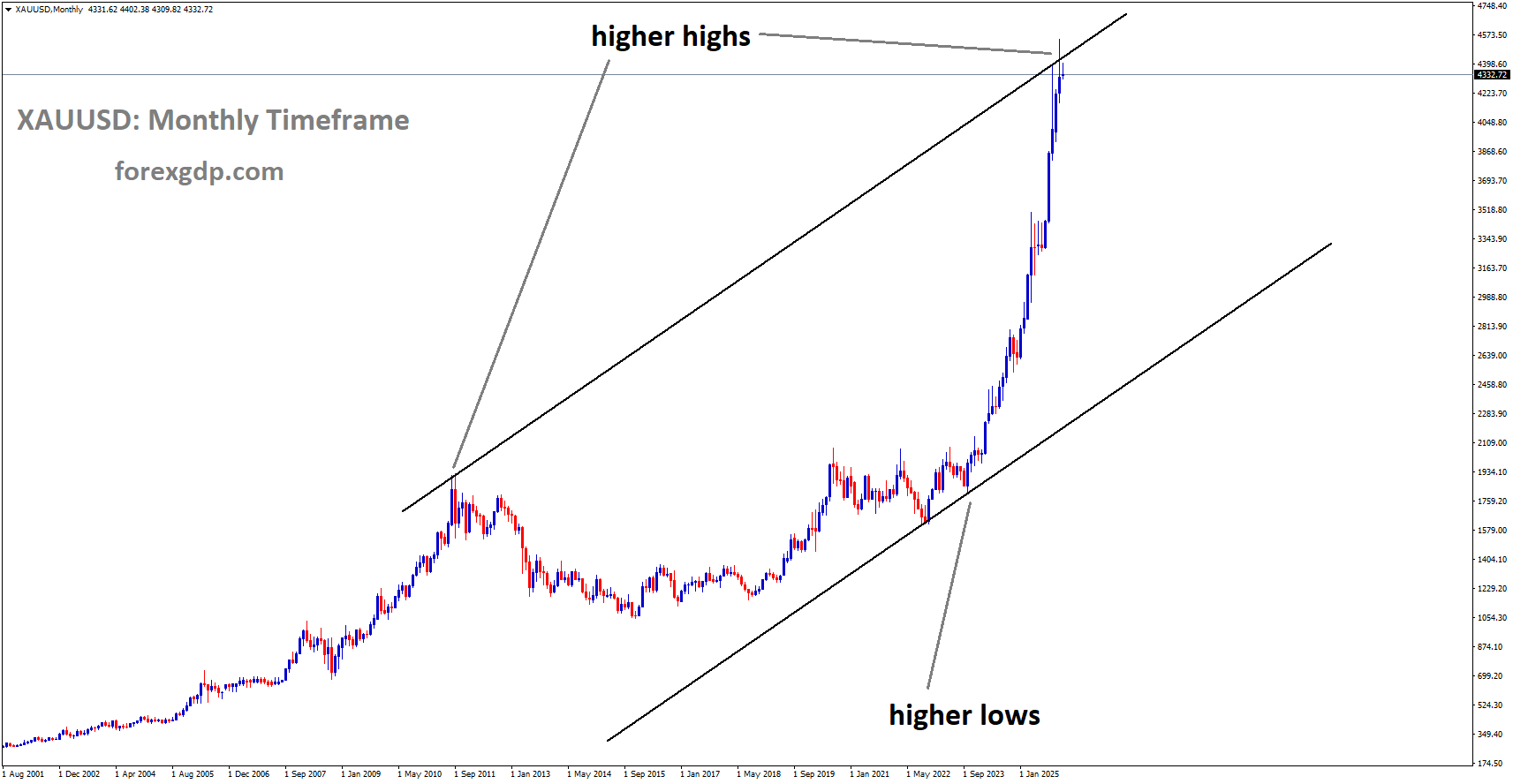
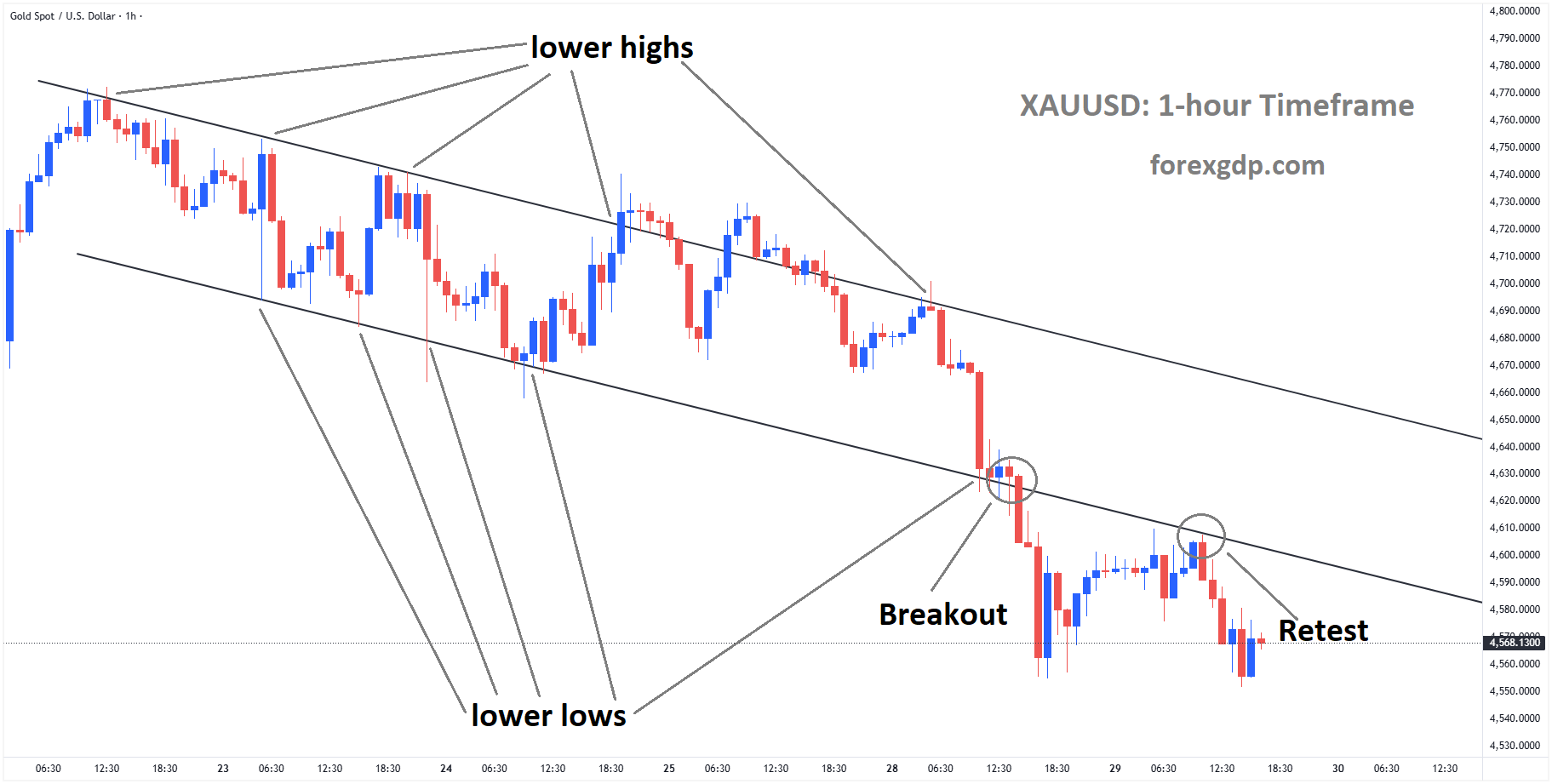
XAUUSD is moving in an uptrend channel, and the market has reached a higher low area of the channel
Rather than being driven by short-term speculation, gold’s recent strength appears tied to broader concerns about global security and economic direction. When uncertainty rises and confidence in traditional assets weakens, gold often becomes a natural place for investors to seek balance.
A Quiet Session with a Strong Message
The latest move higher took place during a session marked by reduced activity. With key financial centers in Asia closed for holiday celebrations, trading volumes were thinner than usual. In such conditions, price movements can appear more pronounced, but they still reveal important signals about investor sentiment.
Despite the lack of full market participation, gold attracted steady buying interest. This suggests that demand was not simply a result of short-term trading but reflected a broader desire for protection. When fewer traders are active and gold still advances, it often points to underlying confidence in its role as a safe-haven asset.
Lower liquidity can amplify moves, yet it can also highlight where market conviction lies. In this case, the direction favored gold, reinforcing the idea that uncertainty continues to dominate the global outlook.
Interest Rate Expectations and Their Impact
One of the main forces supporting gold has been changing expectations around interest rates in the United States. Many investors believe that borrowing costs may ease in the future as economic conditions evolve. When interest rates are expected to fall, assets like gold tend to benefit.
Gold does not generate income in the form of interest. As a result, it often becomes more attractive when returns on cash and bonds are expected to decline. Lower rates reduce the opportunity cost of holding gold, making it a more appealing option for long-term preservation of value.
In recent sessions, this belief has gained traction. Economic data and central bank commentary have encouraged markets to think ahead, focusing less on immediate tightening and more on the possibility of a more supportive monetary environment. This shift has helped lift precious metals broadly, with gold leading the way.
Geopolitical Frictions Add to Safe-Haven Demand
Alongside monetary expectations, global political tensions have played a significant role in strengthening gold’s appeal. Developments on the international stage have raised concerns about stability, prompting investors to reassess risk.
Russia’s announcement of a change in its position during peace discussions with Ukraine has unsettled markets. The shift reportedly followed a security incident involving a drone attack at one of the Russian president’s residences. Such events highlight how fragile diplomatic efforts remain and how quickly conditions can change.
At the same time, tensions in the Middle East have resurfaced. Stronger rhetoric from the United States toward Iran has added another layer of uncertainty. When major powers exchange sharp warnings or alter their diplomatic tone, markets often respond by moving toward assets perceived as safer.
Gold has long been seen as a hedge against political instability. When headlines point to escalating conflicts or strained relations, demand for gold often increases as investors seek protection from potential market shocks.
Why Gold Remains a Trusted Store of Value
Gold’s enduring appeal lies in its history and versatility. It has been used as a store of value for centuries, surviving wars, economic crises, and major shifts in financial systems. Unlike paper currencies, gold is not tied to the policy decisions of any single government.
In times of stress, investors often turn to assets that feel tangible and reliable. Gold fits this role well, offering a sense of security when confidence in other markets wavers. Its value is recognized globally, and it tends to hold its purchasing power over long periods.
The current environment, shaped by geopolitical risks and evolving economic policies, plays directly into these strengths. As uncertainty grows, so does the appeal of assets that can help preserve wealth.
The Role of Market Sentiment
Market sentiment has been a crucial driver behind gold’s recent movement. Confidence in riskier assets can shift quickly when new information emerges, especially during periods of low liquidity. News related to global politics or central bank intentions can prompt swift changes in positioning.
In recent days, sentiment has leaned toward caution. Investors appear less willing to take aggressive risks and more inclined to seek balance in their portfolios. This cautious mood has supported demand for precious metals, with gold benefiting the most.
Thin trading conditions can exaggerate sentiment-driven moves, but they can also reveal underlying preferences. The fact that gold advanced during a quieter session suggests that many participants remain comfortable holding it, even when broader market activity is limited.
What This Means for the Broader Precious Metals Space
Gold’s strength has also provided support to the wider precious metals complex. When gold performs well, it often lifts sentiment across related assets, as investors view the sector as a whole as a defensive play.
While each metal has its own supply and demand dynamics, gold often sets the tone. Its role as a benchmark safe haven means that its movements are closely watched. A steady recovery in gold can encourage broader interest in the sector, reinforcing the idea that caution remains a dominant theme in global markets.
This environment favors assets linked to stability rather than growth. As long as uncertainty persists, precious metals are likely to remain in focus.
Looking Ahead with a Balanced Perspective
The recent rebound in gold highlights how sensitive markets are to both economic expectations and geopolitical developments. While short-term moves can be influenced by thin trading conditions, the underlying drivers point to deeper concerns about the global outlook.
XAUUSD is moving in an uptrend channel, and the market has reached a higher high area of the channel
Investors will continue to watch signals from central banks, especially regarding future interest rate paths. At the same time, political developments will remain a key factor shaping sentiment. Any escalation or easing of tensions could quickly influence demand for safe-haven assets.
Gold’s role in this landscape remains clear. It serves as a counterbalance to uncertainty, offering reassurance when confidence in other areas fades.
Final Summary
Gold has shown renewed strength during a quiet trading period, supported by expectations of lower interest rates and rising geopolitical tensions. Reduced market participation did not prevent buying interest, suggesting firm underlying demand. Shifts in global politics, including developments involving Russia, Ukraine, and Iran, have added to investor caution. Combined with changing views on monetary policy, these factors have reinforced gold’s position as a trusted store of value. As uncertainty continues to shape the global environment, gold remains a key asset for those seeking stability and balance.
EURUSD Slips Lower Ahead of Key US Factory Activity Report
The euro has come under fresh pressure against the US dollar as new economic data points to deeper problems in Europe’s manufacturing sector. During the final trading sessions of the year, the common currency struggled to hold ground, with traders reacting to disappointing factory activity reports from across the Eurozone. The mood in the market has remained calm due to the holiday period, but the underlying message from the data has been clear: Europe’s industrial engine is still losing momentum.
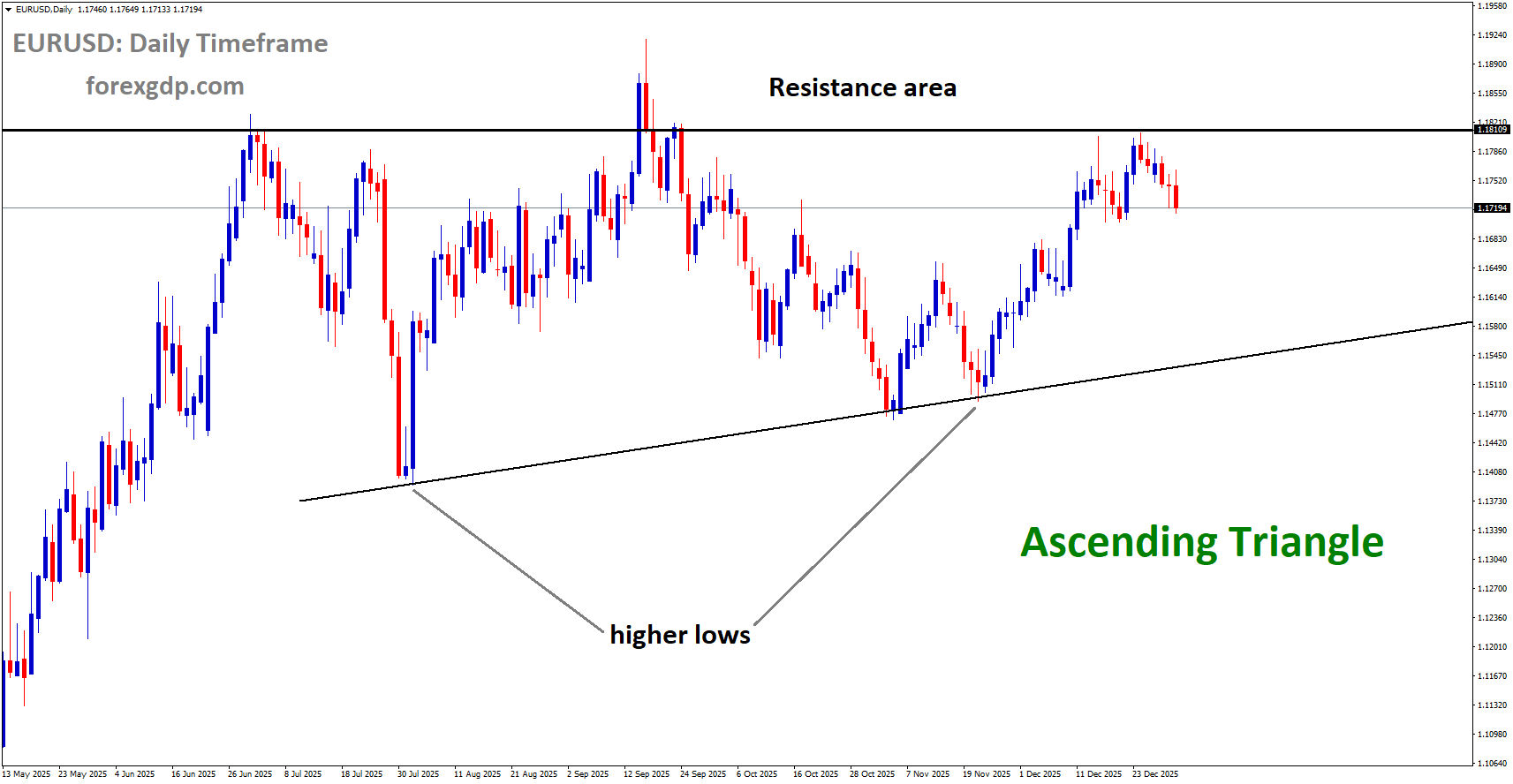
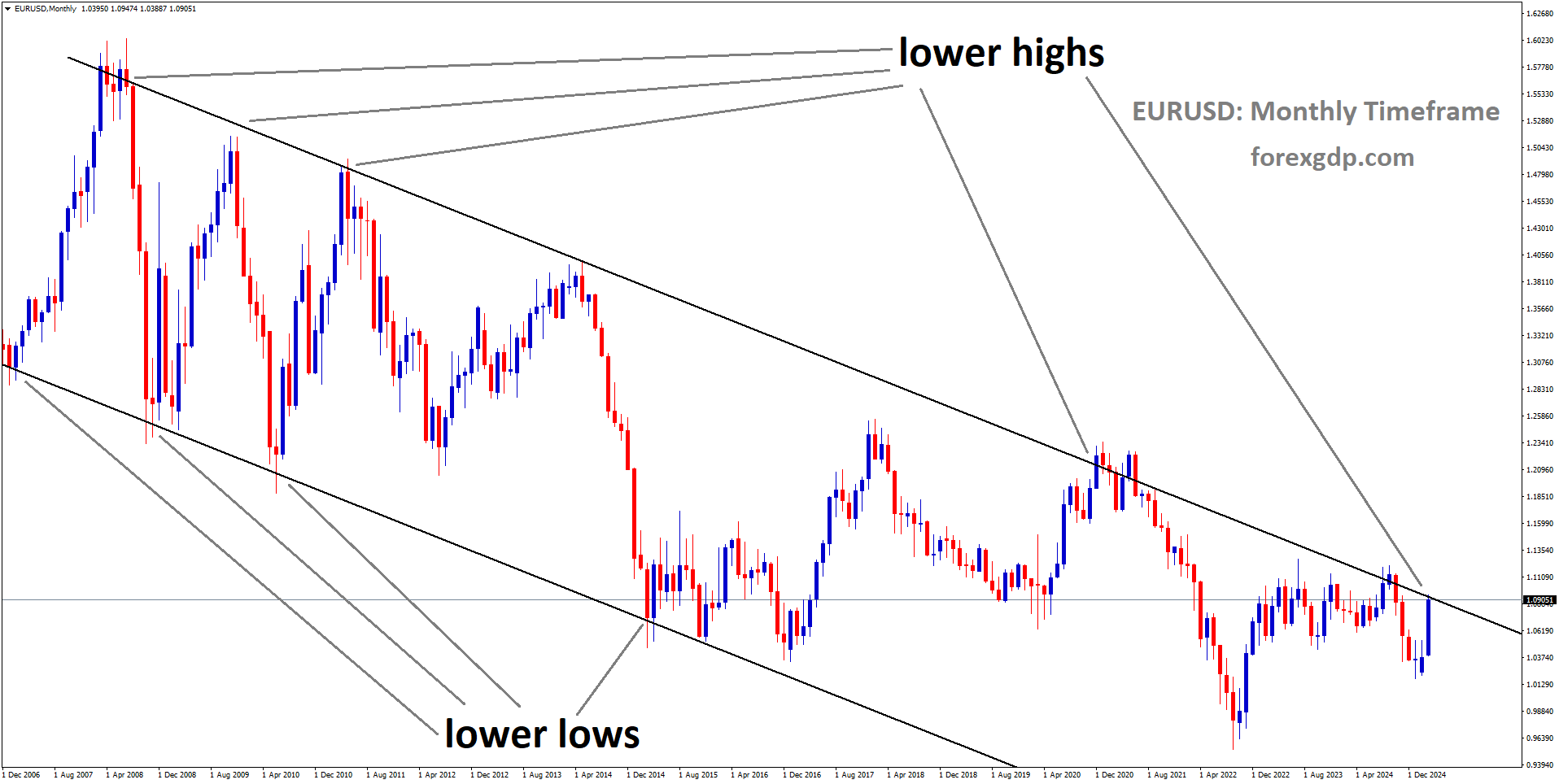
EURUSD is moving in an Ascending Triangle pattern, and the market has fallen from the resistance area of the pattern
At the same time, attention is slowly shifting toward the United States, where manufacturing activity appears to be holding up better. Investors are now balancing weak European data against expectations of moderate growth in the US, while also keeping an eye on broader policy and political developments that could shape currency movements in the months ahead.
Manufacturing Data Sends a Clear Warning from Europe
Recent manufacturing reports have highlighted ongoing weakness across much of the Eurozone. Factory activity has continued to shrink, and the pace of contraction has been stronger than economists initially expected. This trend matters because manufacturing plays a key role in exports, employment, and overall economic confidence across the region.
Germany, often described as the industrial backbone of Europe, has shown especially concerning signals. Its manufacturing sector recorded a deeper slowdown than earlier estimates suggested, reinforcing fears that Europe’s largest economy is struggling to regain momentum. When Germany slows, the effects tend to ripple across neighboring countries due to tightly linked supply chains.
Other major economies have not fared much better. Italy and Spain both reported declines in manufacturing activity, with Italy showing a sharp pullback compared to the previous month. Spain’s data also pointed to weaker demand, suggesting that businesses are seeing fewer new orders and remain cautious about the future.
France stood out as a rare bright spot. Its manufacturing activity edged slightly higher, managing to stay in expansion territory. However, this modest improvement was not enough to offset the broader weakness seen elsewhere in the Eurozone. Overall, the data painted a picture of an industrial sector that is still under pressure from high costs, soft demand, and global uncertainty.
Why Manufacturing Matters So Much for the Euro
Manufacturing trends carry significant weight for the euro because they directly affect economic growth. When factories cut back production, it often leads to slower hiring, reduced investment, and weaker exports. Over time, this can drag down overall economic performance and limit the ability of policymakers to support growth.
For the European Central Bank, persistent weakness in manufacturing complicates decision-making. Policymakers must balance the need to support economic activity with concerns about inflation and financial stability. If manufacturing continues to contract, pressure may grow for a more cautious policy approach, which can weigh on the currency.
Investors closely watch these signals because currencies often reflect expectations about future growth and policy direction. When data consistently underperforms, confidence in the currency tends to fade. That dynamic has been evident as traders react to each new set of disappointing figures from Europe’s factories.
US Manufacturing Offers a Contrast
While Europe struggles, the situation in the United States appears more stable. Recent survey data suggests that American manufacturing is still expanding, even if growth has slowed slightly compared to earlier months. This steady performance has helped support the US dollar, especially against currencies facing more serious economic headwinds.
US manufacturers continue to benefit from relatively resilient domestic demand and a labor market that remains firm. Although businesses are cautious, there are fewer signs of outright contraction compared to Europe. This contrast has become an important factor for currency traders assessing the outlook for both economies.
The final US manufacturing report is expected to confirm moderate growth rather than signal a major acceleration or slowdown. Even so, the confirmation of expansion alone is enough to highlight the gap between the two regions. As long as the US economy avoids a sharp downturn, the dollar is likely to retain support.
Policy Divergence Shapes Currency Sentiment
One of the most important themes influencing currency markets has been the difference in monetary policy outlooks between the European Central Bank and the US Federal Reserve. Over the past year, this divergence has played a key role in shaping investor behavior.
The Federal Reserve has maintained a firm stance as it monitors inflation and economic growth. Although there are signs of cooling in certain areas of the US economy, policymakers have remained cautious about making abrupt changes. This steady approach has helped preserve confidence in the dollar.
In contrast, the ECB faces a tougher environment. Sluggish growth, weak manufacturing, and uneven recovery across member states limit its flexibility. Even if inflation pressures ease, the central bank must consider the risk of tightening conditions too much in an already fragile economy. This difference in outlook has made the euro more vulnerable during periods of negative data.
Political and Economic Uncertainty Adds Another Layer
Beyond economic data, broader uncertainty continues to influence currency sentiment. In the United States, investors remain alert to political developments and leadership changes that could affect future policy decisions. These factors do not always move markets immediately, but they shape expectations over the longer term.
Trade policy remains another concern. Shifts in trade relations or unexpected policy announcements can quickly alter the outlook for global growth. In the past, uncertainty around trade has weighed on the US dollar, but more recently, relative economic strength has helped offset those worries.
In Europe, political challenges and fiscal debates within member states add complexity to the outlook. While these issues may not dominate daily trading, they contribute to a cautious tone among investors assessing the region’s long-term prospects.
What Investors Are Watching Next
Looking ahead, market participants are focusing on a few key events that could influence sentiment. In the near term, attention remains on US economic data, particularly labor market reports. Employment trends often provide valuable insight into the health of the broader economy and can shape expectations for future policy moves.
Investors are also watching closely for signals about leadership changes at the Federal Reserve. Any indication of a shift in policy direction or communication style could have meaningful implications for the dollar.
In Europe, upcoming data releases will be scrutinized for signs that manufacturing conditions are stabilizing. A sustained improvement would be needed to rebuild confidence in the euro and ease concerns about prolonged weakness.
Final Summary
The euro’s recent struggles reflect deeper challenges within the Eurozone’s manufacturing sector. Weaker-than-expected factory activity across major economies has raised concerns about growth and weighed on investor confidence. While France has shown some resilience, it has not been enough to change the broader picture.
At the same time, the United States continues to show moderate manufacturing growth, providing support for the US dollar. Differences in economic performance and monetary policy outlooks between the two regions have become a central theme shaping currency sentiment.
As the new year approaches, traders and investors will be watching closely for fresh data and policy signals. Whether Europe can stabilize its industrial sector and whether the US can maintain steady growth will play a major role in determining how this currency pair evolves in the months ahead.
GBPUSD Slides After UK Factory Report Comes in Weaker Than Expected
The GBP/USD pair moved lower after new economic data showed that the UK manufacturing sector is growing more slowly than earlier estimates suggested. While the slowdown was not dramatic, it was enough to cool confidence around the Pound in the short term and encourage some caution among market participants.
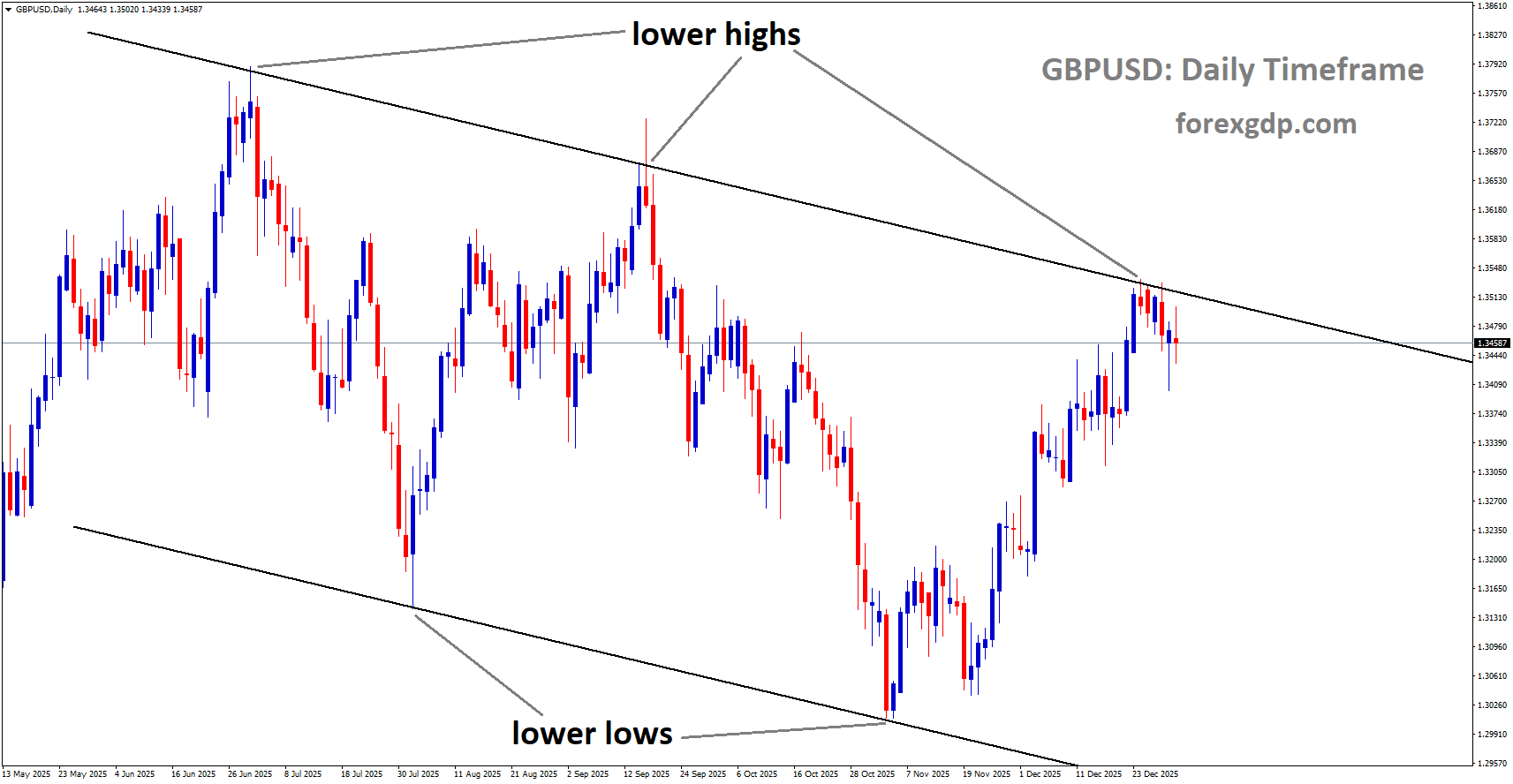
GBPUSD is moving in a descending channel, and the market has reached the lower high area of the channel
The latest update to the UK Manufacturing Purchasing Managers’ Index showed a downward revision from the earlier estimate. Although the reading still points to expansion rather than contraction, the weaker figure highlights that growth in the sector remains fragile. Manufacturing has faced ongoing pressure from high borrowing costs, weak global demand, and rising input expenses, all of which continue to shape sentiment around the British economy.
Despite the recent dip, the Pound remains relatively resilient when viewed over a broader time frame. Longer-term support comes from expectations around monetary policy, particularly the contrast between the Bank of England and the US Federal Reserve. This divergence has been one of the main forces influencing the GBP/USD pair and is likely to remain important in the months ahead.
UK Manufacturing Shows Growth, But Momentum Softens
The revised manufacturing data confirmed that activity in the sector continued to expand, but at a slower pace than initially thought. This suggests that while factories are still seeing new orders and output increase, the speed of recovery is losing some energy.
Manufacturers across the UK have been dealing with several challenges. High interest rates have made borrowing more expensive, limiting investment in new equipment and expansion plans. At the same time, global demand has been uneven, especially from key trading partners facing their own economic slowdowns. Supply chains are more stable than in recent years, but costs remain elevated, keeping pressure on profit margins.
Even so, the fact that manufacturing activity remains in growth territory is an encouraging sign. It shows that the sector is managing to stay afloat despite difficult conditions. For the Pound, this provides some reassurance, even if the latest revision reduced optimism slightly.
From an economic perspective, the manufacturing PMI is closely watched because it offers early insight into business confidence, employment trends, and future production levels. A softer reading does not automatically signal trouble, but it does underline that the UK economy is not yet on firm footing.
Limited Strength in the US Dollar
While the Pound has faced some pressure from domestic data, the US Dollar has struggled to mount a strong recovery of its own. Over the past year, the Greenback has been weighed down by a mix of political uncertainty, shifting trade policies, and signs that economic momentum in the United States may be cooling.
Concerns around trade policy have added to uncertainty for US businesses and investors alike. Sudden changes in direction and unpredictable announcements have made long-term planning more difficult, reducing confidence in the broader outlook. These factors have limited demand for the Dollar, even during periods of global uncertainty when it would normally benefit.
In addition, there has been growing discussion around the future direction of US monetary policy. Political pressure on the Federal Reserve to ease policy has increased, and markets are increasingly pricing in further interest rate cuts. This expectation reduces the appeal of the Dollar compared to currencies backed by central banks that are expected to remain cautious.
As a result, attempts by the US Dollar to regain lost ground have been modest. This has helped prevent sharper declines in GBP/USD, even when UK data has disappointed.
Monetary Policy Divergence Supports the Pound
One of the most important themes shaping the GBP/USD outlook is the growing difference between the policy paths of the Bank of England and the Federal Reserve. This divergence has provided underlying support for the Pound, even during periods of short-term weakness.
The Bank of England made a narrow decision to cut interest rates toward the end of last year. However, that move was far from unanimous, and resistance within the central bank remains strong. Persistent inflation pressures continue to worry policymakers, making further easing difficult to justify in the near future.
Price growth in the UK has proven stubborn, especially in services and wage-related sectors. This has forced the Bank of England to maintain a cautious stance, signaling that it is not in a hurry to lower rates again. For currency markets, this restraint is seen as supportive for the Pound.
In contrast, the Federal Reserve appears to be moving in a more accommodative direction. Slowing economic indicators and softer inflation trends have strengthened the case for additional rate cuts. There is also uncertainty around future leadership at the Fed, with the possibility of a more dovish chair adding to expectations of looser policy.
This contrast in outlook creates a favorable environment for the Pound relative to the Dollar. When investors expect higher rates to persist in one economy while easing continues in another, capital tends to flow toward the higher-yielding currency.
Broader Economic and Political Influences
Beyond data and central bank policy, broader economic and political factors continue to influence GBP/USD. In the UK, stability in fiscal policy and clearer communication from policymakers have helped reduce uncertainty compared to previous years. While challenges remain, especially around growth and productivity, the overall environment has become more predictable.
In the United States, political developments remain a key source of uncertainty. Debates around trade, fiscal spending, and the independence of the Federal Reserve all have the potential to influence investor confidence. Any perception that monetary policy decisions could become more politically driven may weigh on the Dollar over time.
Global risk sentiment also plays a role. When investors feel confident about global growth, currencies like the Pound often benefit, especially when backed by relatively firm monetary policy expectations. Conversely, periods of heightened risk aversion can shift flows back toward traditional safe havens, although this dynamic has been less consistent recently.
What to Watch Going Forward
Looking ahead, upcoming economic data from both the UK and the US will be closely watched. In the UK, inflation figures, employment data, and future PMI releases will help shape expectations around the Bank of England’s next steps. Any sign that inflation is easing faster than expected could reopen the door to further rate cuts.
In the US, growth indicators and inflation reports will influence how quickly the Federal Reserve moves to ease policy. Comments from policymakers and developments around Fed leadership will also remain important for Dollar sentiment.
For GBP/USD, the balance between these forces will continue to drive direction. Short-term moves may be influenced by individual data releases, but the broader trend will likely depend on whether the current policy divergence remains intact.
Final Summary
The recent pullback in GBP/USD reflects softer UK manufacturing data rather than a major shift in the broader outlook. While growth in the sector has slowed, it remains in expansion territory, offering some reassurance about underlying economic resilience.
At the same time, the US Dollar has struggled to regain strength amid political uncertainty and growing expectations of further monetary easing. This has limited downside pressure on the Pound.
The key driver remains the contrast between the Bank of England’s cautious stance and the Federal Reserve’s more dovish direction. As long as this divergence persists, it is likely to provide ongoing support for the Pound against the Dollar, even during periods of short-term volatility.
USDJPY strengthens near 157 as BoJ takes a measured approach to higher rates
The US dollar continues to show strength against the Japanese yen as global markets react to differences in monetary policy and political messaging. In recent sessions, the currency pair has extended its upward move, supported by a weaker yen and steady demand for the dollar. While short-term momentum favors the US currency, traders remain cautious as several important risks and events could change the direction in the days ahead.
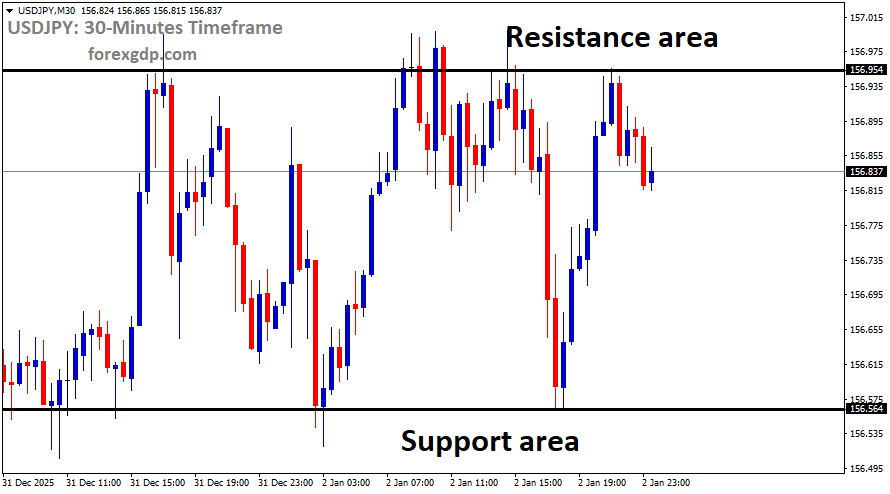
USDJPY is moving in a box pattern, and the market has fallen from the resistance area of the pattern
At the heart of the move is the growing gap between how the United States and Japan are handling interest rates, along with expectations for future policy decisions. These themes are shaping sentiment across currency markets and keeping USD/JPY in focus for investors worldwide.
Bank of Japan’s Careful Approach Pressures the Yen
The Japanese yen has struggled as the Bank of Japan continues to move slowly on tightening monetary policy. Although the central bank has taken steps to adjust its long-standing easy stance, markets were hoping for clearer guidance and a faster pace of change.
Japan’s policymakers have signaled that they remain cautious about making aggressive moves that could hurt economic growth. Inflation has shown signs of persistence, but officials appear unwilling to rush future rate increases. This careful tone has disappointed traders who expected stronger action, leading to renewed selling pressure on the yen.
For currency markets, this hesitation matters. When a central bank moves slowly while others remain firm, its currency often weakens. That dynamic has played out as the dollar benefits from relatively higher yields and stronger economic confidence compared to Japan.
As long as the Bank of Japan avoids committing to a clear and steady path of tightening, the yen may continue to face headwinds. Investors are watching closely for any signs that policymakers might change their message, but for now, caution remains the dominant theme.
Intervention Warnings Add a Layer of Uncertainty
Despite the yen’s weakness, Japanese officials have made it clear that they are not ignoring market moves. Government representatives have repeated that they are watching foreign exchange developments closely and are ready to respond if movements become excessive or one-sided.
These warnings serve as a reminder of past actions, when authorities stepped into markets to support the yen during periods of rapid decline. Even without direct intervention, strong verbal signals can influence trader behavior by increasing uncertainty.
This creates a natural limit to how far the yen might fall in the short term. While policy differences favor a stronger dollar, the risk of official action makes some traders hesitant to push the pair too aggressively. As a result, the market remains balanced between fundamental pressure on the yen and the potential for sudden policy-driven responses.
US Dollar Finds Support From Policy Expectations
On the other side of the pair, the US dollar continues to draw support from expectations that interest rates in the United States will stay relatively high for longer than in Japan. Even though markets are discussing possible rate cuts later in the year, the overall outlook still favors the dollar compared to currencies backed by more cautious central banks.
Economic data from the United States has remained solid, reinforcing confidence in the broader economy. This has helped keep the dollar attractive, especially against currencies like the yen that are tied to slower policy shifts.
At the same time, expectations around future rate cuts are evolving. Some traders believe the Federal Reserve may ease policy more than previously thought, while others expect a slower and more careful approach. This debate has introduced some uncertainty but has not been enough to reverse the dollar’s broader strength so far.
Political Comments Raise Questions About Fed Independence
Recent comments from US political leaders have added another layer of complexity to the outlook for the dollar. Statements suggesting a preference for low interest rates and closer alignment between the central bank and political leadership have sparked discussion about the Federal Reserve’s independence.
For financial markets, central bank independence is critical. Any perception that policy decisions could be influenced by politics may affect confidence in long-term stability. While these comments have not led to immediate market reactions, they have introduced a note of caution among investors.
If concerns about independence grow, they could place pressure on the dollar over time. For now, however, traders appear to be weighing these risks against the stronger economic backdrop and the lack of attractive alternatives in other major currencies.
Focus Shifts to Upcoming US Employment Data
Looking ahead, attention is turning to key economic data from the United States, particularly employment figures. Labor market reports are closely watched because they influence expectations around interest rates and overall economic health.
A strong jobs report could reinforce the idea that the US economy remains resilient, supporting the dollar further. On the other hand, signs of cooling in employment could strengthen expectations for rate cuts, which may reduce some of the dollar’s appeal.
For USD/JPY, this data could act as a short-term catalyst. Traders are likely to remain cautious until more clarity emerges, especially given the added uncertainty from central bank messaging and political headlines.
Balancing Forces Shape the Near-Term Outlook
The current environment for USD/JPY is defined by competing forces. A cautious Bank of Japan continues to weigh on the yen, while steady US economic performance supports the dollar. At the same time, intervention risks and political concerns in the United States prevent the market from moving in a straight line.
This balance explains why traders remain alert and responsive to new information. Small changes in tone from central banks or unexpected data outcomes can quickly shift sentiment.
For longer-term investors, the key question is whether Japan will eventually adopt a firmer tightening path and whether the Federal Reserve will begin easing policy more aggressively. Until those answers become clearer, volatility is likely to remain a feature of the market.
Summary
USD/JPY remains supported by a weaker yen and a relatively strong US dollar, driven largely by differences in monetary policy approaches. Japan’s slow and cautious tightening continues to pressure its currency, even as officials warn against excessive moves. Meanwhile, the dollar benefits from economic resilience, though political comments and expectations of future rate cuts add uncertainty. With important US employment data on the horizon, traders are preparing for potential shifts in direction while keeping a close eye on central bank signals and government actions.
USDCHF struggles to push higher, stuck below 0.7940 in thin holiday trade
The US Dollar has found it difficult to build on its recent rebound against the Swiss Franc. After recovering from late-December lows, the pair moved higher but lost momentum before the end of the week. Trading activity remained calm as investors held back ahead of key economic updates and the opening of the US trading session.
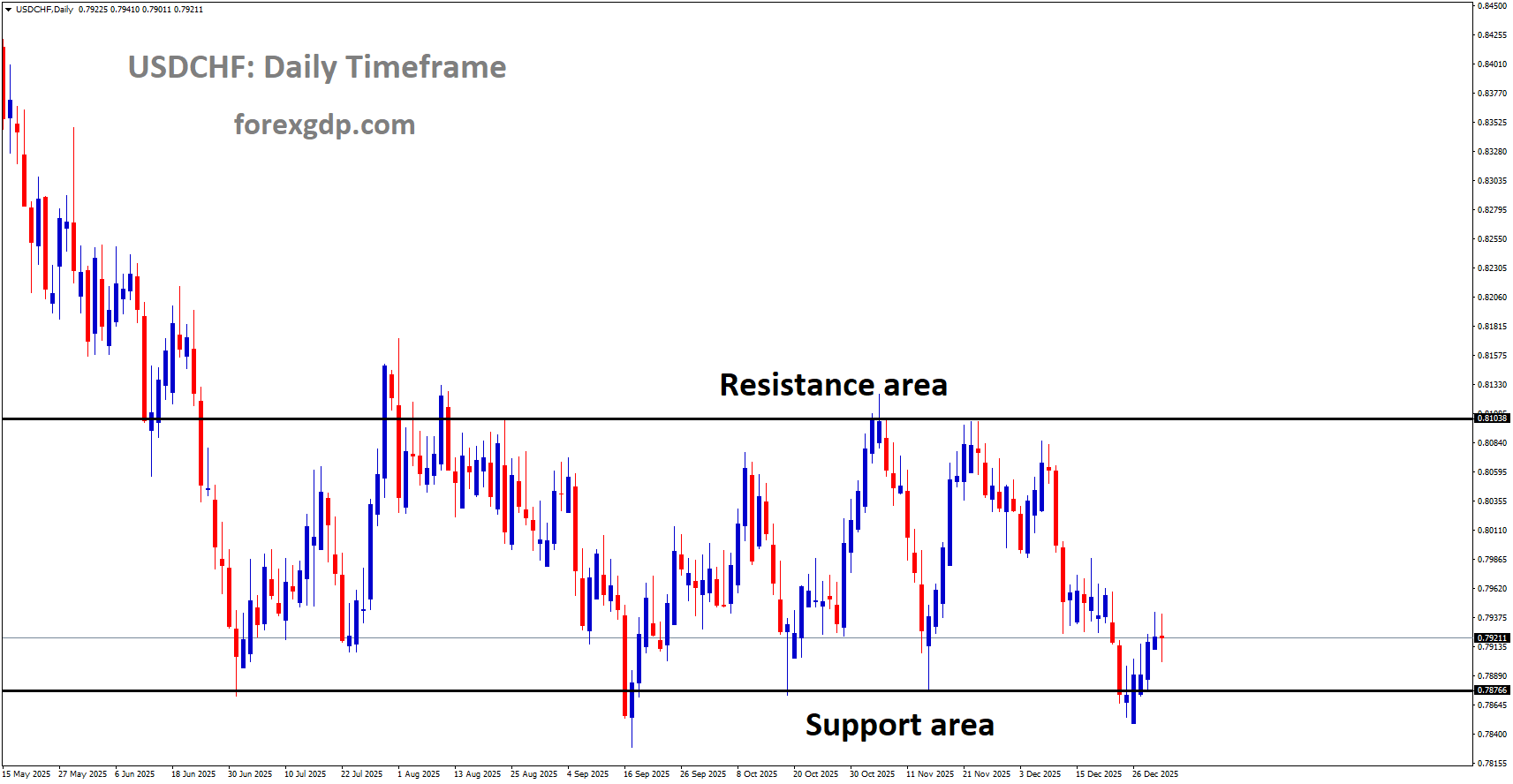
USDCHF is moving in a box pattern, and the market has rebounded from the support area of the pattern
While the Dollar managed to stabilize after weeks of weakness, confidence remains fragile. The broader trend still reflects a long period of underperformance, driven by political uncertainty, shifting monetary policy expectations, and mixed economic signals from the United States. On the other hand, Switzerland continues to show signs of resilience, adding pressure to the currency pair.
This balance between a hesitant US Dollar and a relatively stable Swiss Franc has created a cautious environment, where traders and investors are looking for clearer signals before committing to a stronger directional move.
Political and Economic Pressures Weigh on the US Dollar
The US Dollar has been under sustained pressure for several months, and much of this weakness can be traced back to political developments. Concerns around President Donald Trump’s trade policies have resurfaced, raising questions about future tariffs, global trade relationships, and their potential impact on economic growth.
At the same time, worries about slowing growth combined with stubborn inflation have added to the uncertainty. These concerns have been amplified by unprecedented public criticism of the Federal Reserve by President Trump. Such attacks have challenged the perception of central bank independence, making investors uneasy about the future direction of US monetary policy.
The result has been a cautious market stance toward the Dollar. Even when positive economic data is released, rallies tend to be short-lived as broader concerns continue to dominate sentiment.
Fed Policy Outlook Limits Dollar Strength
Expectations around the Federal Reserve’s next moves remain a key factor shaping the Dollar’s performance. The central bank has already lowered interest rates in its two most recent policy meetings and has signaled that further easing could be ahead in the coming years.
Adding to this outlook is the upcoming end of Federal Reserve Chair Jerome Powell’s term. His departure is expected to open the door for a new appointment by President Trump. Many investors believe this replacement could favor a more accommodative policy approach, reinforcing expectations for a longer period of lower interest rates.
These assumptions have kept confidence high that monetary policy will remain supportive of economic activity but have also limited the Dollar’s ability to gain traction. With markets already pricing in further easing, any signs of stability or strength in the economy have not been enough to shift expectations in a meaningful way.
Mixed Signals from US Economic Data
Despite the cautious tone surrounding the Dollar, recent US economic data has not been uniformly negative. Some indicators suggest that parts of the economy are holding up better than expected.
For example, job market data showed an unexpected decline in new unemployment claims toward the end of the year. This pointed to ongoing strength in employment conditions, which remain a key pillar of the US economy. Housing-related figures also surprised to the upside, with pending home sales recording their strongest growth in several years.
However, not all sectors are showing the same level of resilience. Manufacturing activity has shown signs of slowing, reflecting softer demand and ongoing cost pressures. Investors are closely watching the latest manufacturing surveys for confirmation of this trend.
Later economic releases are expected to shed more light on the pace of activity, but many market participants are choosing to wait for more comprehensive labor market data before adjusting their outlook on interest rates and the Dollar’s longer-term direction.
Focus Shifts to Upcoming US Data
The S&P Global Manufacturing PMI is one of the key data points drawing attention. This survey provides insight into business conditions across the manufacturing sector and is often seen as an early indicator of broader economic momentum.
Current expectations suggest a modest cooling in activity, which would align with recent signs of slowing growth. While this is unlikely to cause a major shift in market sentiment on its own, it could reinforce the idea that the economy is losing some steam.
Even more important for investors is the upcoming employment report, which has been delayed until next week. This data is widely viewed as critical for assessing the Federal Reserve’s next steps. A clearer picture of job growth and wage trends could either support the case for continued easing or prompt a reassessment of current expectations.
Until then, markets are likely to remain cautious, with limited appetite for strong moves in either direction.
Swiss Economy Shows Signs of Strength
While the US outlook remains mixed, Switzerland has delivered more encouraging signals. Recent data from the KOF Swiss Economic Institute pointed to an improvement in the country’s leading economic indicators, suggesting stronger growth prospects in the coming quarters.
The index reached its highest level in over a year, reflecting solid performance in key sectors such as manufacturing and construction. These areas have benefited from steady demand and favorable conditions, helping to support overall economic momentum.
However, the KOF Institute also noted some areas of concern. Demand-side indicators showed early signs of weakness, hinting that consumer and external demand could face challenges ahead. Despite this caution, the overall tone of the report was positive and reinforced confidence in Switzerland’s near-term outlook.
This relative strength has helped support the Swiss Franc, especially during periods of global uncertainty when investors tend to favor currencies linked to stable economies.
What This Means for USD/CHF
The interaction between US uncertainty and Swiss stability continues to shape the direction of the USD/CHF pair. On one side, the Dollar is struggling to regain investor confidence amid political tensions and expectations of prolonged monetary easing. On the other, the Swiss Franc is benefiting from signs of economic resilience and its traditional role as a safe haven.
Short-term movements are likely to remain sensitive to incoming data, particularly from the United States. Strong surprises could offer temporary support to the Dollar, but lasting gains may be difficult without a clearer shift in policy expectations or political tone.
Meanwhile, positive developments in Switzerland could continue to underpin the Franc, especially if global risk sentiment deteriorates or economic uncertainty increases elsewhere.
Final Summary
The recent pause in the USD/CHF recovery reflects a broader balance of forces shaping both currencies. The US Dollar remains under pressure from political uncertainty, expectations of continued monetary easing, and mixed economic signals. While some data points show resilience, they have not been enough to change the overall narrative.
In contrast, Switzerland’s improving economic indicators have strengthened confidence in its outlook, lending support to the Swiss Franc. As investors await more decisive data from the United States, particularly on employment, cautious trading conditions are likely to persist.
For now, the currency pair appears caught between competing influences, with future direction hinging on how economic trends and policy expectations evolve in the weeks ahead.
USDCAD slips toward 1.3700 as easing-rate outlook hits the Dollar and crude strengthens
The USD/CAD currency pair has been moving lower as several global forces reshape market sentiment. A softer US Dollar, growing expectations of future interest rate cuts in the United States, political uncertainty around the Federal Reserve, and rising oil prices have all played a role. At the same time, the Canadian Dollar has found support from energy markets and signals from Canada’s central bank that suggest a steady policy approach.
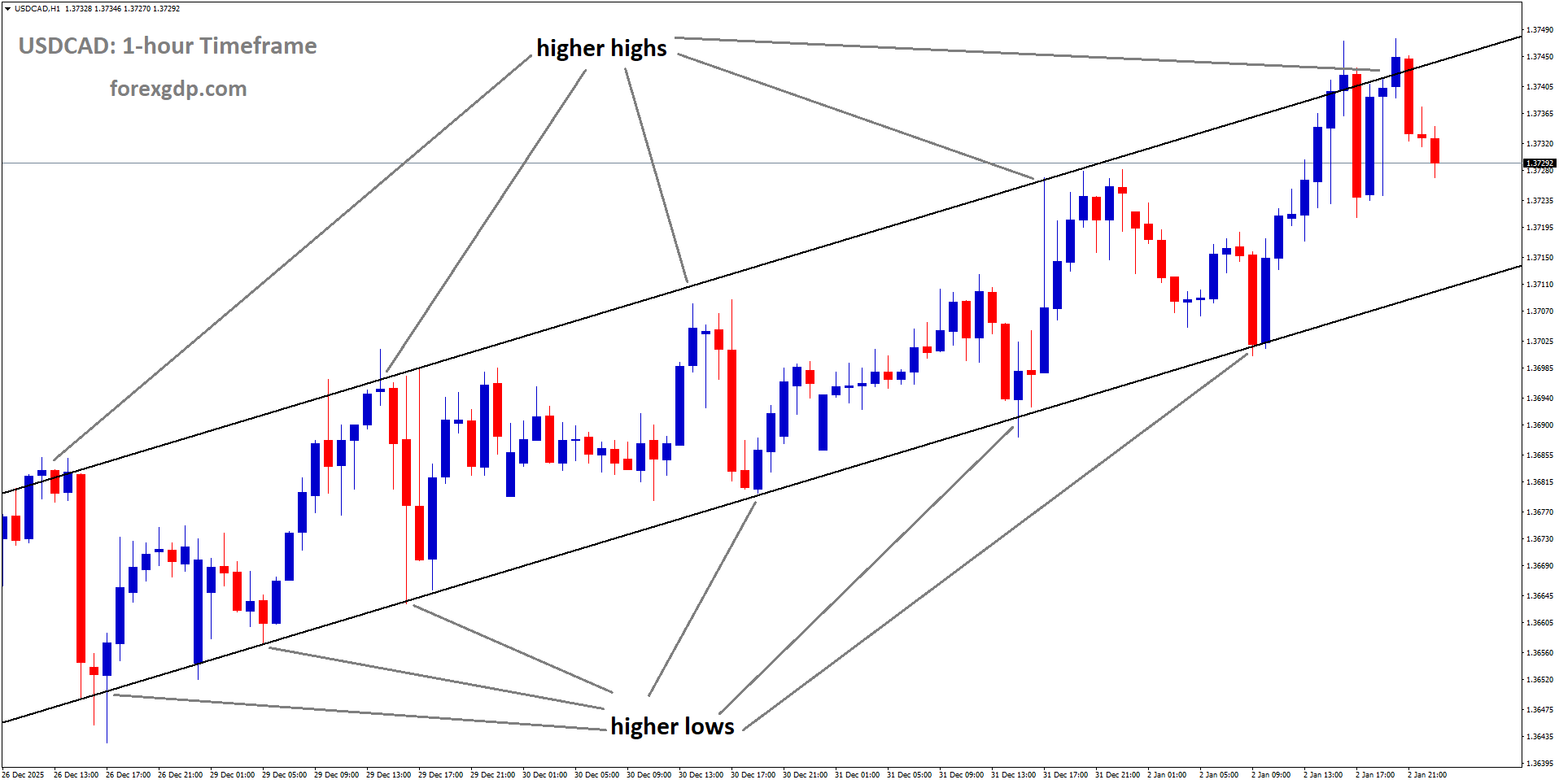
USDCAD is moving in an uptrend channel, and the market has fallen from the higher high area of the channel
This mix of economic signals and geopolitical developments has created a cautious but clear direction for the pair, with investors closely watching central bank guidance and global events that could affect growth and inflation.
US Dollar Faces Pressure from Rate Cut Expectations
The US Dollar has recently lost momentum as markets adjust their outlook for US monetary policy. Investors are increasingly expecting additional interest rate cuts in the coming years, which has reduced the appeal of holding the Dollar.
Minutes from recent Federal Reserve meetings showed that policymakers are becoming more comfortable with a wait-and-see approach. Many officials believe it makes sense to pause further changes if inflation continues to cool gradually. After a series of rate reductions aimed at supporting a weakening labor market, some members of the Federal Open Market Committee feel that holding rates steady for a while may help balance economic growth with price stability.
This shift in expectations has weighed on the US Dollar. Lower interest rate forecasts generally reduce demand for a currency because they offer lower returns compared to alternatives. As a result, the Dollar has struggled to maintain recent gains, especially against currencies tied to commodities and global growth.
Political Uncertainty Adds to Market Caution
Another factor influencing the US Dollar is uncertainty surrounding the leadership of the Federal Reserve. Markets are closely watching developments related to the potential nomination of a new Fed chair when the current term ends.
President Donald Trump is expected to name a successor who may favor a more growth-focused approach, potentially supporting lower interest rates. Even the possibility of such a change has made investors cautious, as leadership transitions at the Fed can influence long-term policy direction.
While the Federal Reserve operates independently, political expectations and public statements can still shape market sentiment. Traders often respond early to these signals, adjusting their positions before any official decisions are made. This anticipation has added further pressure to the US Dollar and increased volatility in currency markets.
Canadian Dollar Finds Support from Central Bank Signals
On the Canadian side, the outlook has been relatively stable. Recent communications from the Bank of Canada suggest that policymakers are not rushing toward further tightening. Instead, there appears to be a growing preference for holding interest rates steady while monitoring economic conditions.
Economic data from Canada has shown signs of slowing momentum, with recent figures confirming that growth cooled toward the end of the year. This softer performance has reduced the likelihood of additional rate hikes in the near term. However, the Bank of Canada has also avoided signaling any immediate need for rate cuts, which has helped keep the Canadian Dollar supported.
Investors are paying close attention to upcoming economic reports, including manufacturing activity data, to better understand how the Canadian economy is performing. These indicators can influence expectations for future policy moves and, in turn, affect the currency.
Oil Prices Boost the Commodity-Linked Loonie
One of the strongest sources of support for the Canadian Dollar has been the rise in oil prices. Canada is a major exporter of crude oil to the United States, and higher energy prices often translate into stronger demand for the Canadian Dollar.
Recent gains in oil have been driven by concerns about global supply. Geopolitical tensions have raised fears of disruptions, leading traders to price in potential shortages. When supply risks increase, energy markets tend to react quickly, which can benefit currencies linked to oil production.
For Canada, stronger oil prices improve export revenues and can have a positive effect on economic growth. This connection helps explain why the Canadian Dollar has held firm even as domestic growth data has shown some weakness.
Geopolitical Tensions Raise Supply Concerns
Global political developments have played a major role in shaping energy markets. Reports of attacks on oil facilities and renewed accusations between countries involved in ongoing conflicts have heightened concerns about supply stability.
Despite diplomatic efforts aimed at easing tensions, recent incidents have reminded markets that risks remain high. Any threat to energy infrastructure can have immediate effects on oil availability, especially when major producing regions are involved.
In addition, actions taken by governments to enforce sanctions have added another layer of uncertainty. Measures targeting oil traders accused of bypassing restrictions have highlighted the complexity of global energy flows. These efforts can limit supply channels and contribute to tighter market conditions.
All of these factors have helped keep oil prices supported, indirectly strengthening the Canadian Dollar against the US Dollar.
Market Focus Shifts to OPEC+ and Economic Signals
Looking ahead, investors are keeping a close eye on upcoming meetings among major oil-producing nations. Decisions related to production levels can significantly influence energy prices and, by extension, commodity-linked currencies like the Canadian Dollar.
At the same time, economic data from both the United States and Canada will remain important. Reports on inflation, employment, and business activity can shape expectations for central bank policy and drive currency movements.
For USD/CAD, the balance between a softer US Dollar and a supported Canadian Dollar will likely continue to depend on how these themes evolve. Changes in rate expectations, political developments, and energy markets all have the potential to shift sentiment quickly.
Final Summary
The recent decline in USD/CAD reflects a combination of weakening US Dollar sentiment and renewed strength in the Canadian Dollar. Expectations of future US interest rate cuts, uncertainty around Federal Reserve leadership, and cautious signals from policymakers have reduced demand for the Dollar. Meanwhile, rising oil prices and stable guidance from the Bank of Canada have supported Canada’s currency.
As markets navigate political changes, economic data, and geopolitical risks, USD/CAD remains sensitive to shifts in policy outlook and global energy trends. The coming weeks are likely to bring continued attention to central bank signals and developments in oil markets, both of which will play a key role in shaping the pair’s direction.
AUDUSD Pushes Over 0.6700 as Traders Favor Growth Currencies and Eye RBA Action
The Australian Dollar has started the year on a strong note, standing out as one of the top-performing major currencies. While global markets remain calm and trading activity is lighter than usual, the Aussie has managed to attract steady demand. This strength is being driven by growing confidence in Australia’s economic outlook and rising expectations that the Reserve Bank of Australia may tighten monetary policy in the future.
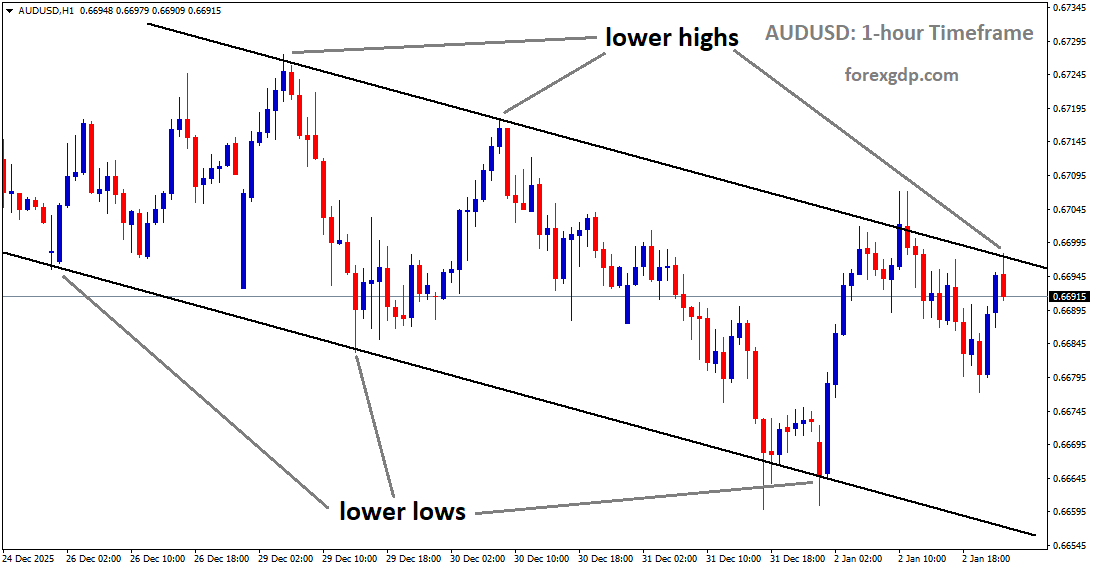
AUDUSD is moving in a downtrend channel, and the market has reached the lower high area of the channel
At the same time, the US Dollar is losing momentum. Investors are increasingly focused on the possibility of further monetary easing by the US Federal Reserve, which has reduced demand for the greenback. Together, these factors have created a favorable environment for the Australian Dollar to shine.
A Strong Start for the Australian Dollar
The Australian Dollar has outperformed many of its peers in early trading sessions this year. This performance comes despite the absence of major global catalysts, highlighting how domestic factors are playing a bigger role in shaping investor sentiment.
Market participants are reassessing the long-term direction of Australian interest rates. Instead of expecting prolonged policy stability or easing, more investors are now considering the possibility of higher borrowing costs in the years ahead. This shift has boosted confidence in the currency and encouraged fresh buying interest.
Positive risk sentiment across global markets has also helped. When investors feel comfortable taking on more risk, currencies linked to growth-oriented economies like Australia often benefit. This has added further support to the Aussie’s recent advance.
RBA Signals Keep Inflation in Focus
One of the main drivers behind the Australian Dollar’s strength is a noticeable change in tone from the Reserve Bank of Australia. Recent comments from central bank officials suggest that inflation remains a key concern, even as other major economies move toward looser monetary policy.
Following the latest policy meeting, RBA Governor Michelle Bullock emphasized that controlling inflation remains a priority. The meeting minutes revealed that policymakers actively discussed the possibility of raising interest rates, signaling that tighter policy is not off the table.
This message has not gone unnoticed. Investors now see the RBA as one of the few major central banks that could still move toward higher rates if inflation pressures persist. That perception alone has been enough to support the Australian Dollar, even without immediate policy changes.
Inflation Trends Add Pressure
Recent inflation data has reinforced these expectations. Consumer prices have been rising at a faster pace in recent months, reversing earlier signs of cooling. This upward trend has raised concerns that inflation may remain stubbornly high for longer than expected.
Wage growth figures have added to this narrative. Stronger wage increases can fuel consumer spending, which in turn may keep price pressures elevated. If upcoming inflation reports confirm this pattern, speculation around future rate hikes is likely to grow stronger.
For currency markets, this matters because higher interest rates generally make a currency more attractive to investors seeking better returns. As a result, even the expectation of tighter policy can lift a currency well before any official action takes place.
US Dollar Faces Headwinds from Policy Outlook
While the Australian Dollar gains support at home, the US Dollar is dealing with its own challenges. The Federal Reserve is still viewed as being in the middle of a broader easing cycle, despite some encouraging economic data.
Recent US indicators, including labor market figures, have shown resilience. Job conditions remain relatively healthy, and economic activity continues at a steady pace. Under normal circumstances, this would provide support for the US Dollar.
However, markets are looking beyond short-term data. The focus has shifted to the long-term direction of US monetary policy and political influence over the central bank.
Political Uncertainty Weighs on Confidence
Uncertainty surrounding future leadership at the Federal Reserve has added pressure to the US Dollar. There is growing speculation that the next Fed chair could take a more dovish stance, favoring lower interest rates to support economic growth.
This possibility has reduced confidence in the Dollar’s long-term appeal. Investors are factoring in a scenario where monetary policy remains accommodative for longer, limiting the currency’s upside potential.
As a result, even positive economic surprises have struggled to generate sustained demand for the US Dollar. This contrast with Australia’s policy outlook has widened the gap between the two currencies.
Thin Trading and Limited Data Shape Market Mood
Market conditions remain quiet due to holiday closures in several major economies. With financial markets in countries such as Japan and China closed for New Year celebrations, overall trading volumes are lower than usual.
In such an environment, currencies can move more easily on sentiment rather than hard data. This has worked in favor of the Australian Dollar, which is benefiting from a clear and positive narrative.
The main data release on investors’ radar is a US manufacturing activity report. Expectations point to a slight slowdown in factory output, though activity is still seen as expanding at a modest pace. Unless the data delivers a major surprise, it is unlikely to shift the broader market trend.
Why the Aussie Stands Out Right Now
The Australian Dollar’s recent strength is not based on a single event. Instead, it reflects a combination of factors working together:
A central bank that remains focused on inflation risks
Growing expectations of higher interest rates in the future
A US Dollar facing pressure from easing policy and political uncertainty
A generally positive global risk environment
Together, these elements have made the Aussie more attractive to investors looking for stability and yield potential.
Final Summary
The Australian Dollar has emerged as a clear winner in the early part of the year, supported by shifting expectations around monetary policy and persistent inflation concerns at home. Signals from the Reserve Bank of Australia suggest that policymakers are prepared to act if price pressures remain elevated, keeping the prospect of higher rates alive.
Meanwhile, the US Dollar continues to struggle as investors anticipate further easing by the Federal Reserve and weigh the impact of future leadership changes. With trading activity light and few major data releases on the horizon, market sentiment has played a central role in recent moves.
If upcoming inflation and wage data in Australia confirm ongoing price pressures, confidence in the Aussie could remain strong. For now, the currency is benefiting from a rare mix of domestic strength and external weakness, setting it apart from many of its global peers.
NZDUSD regains momentum over 0.5750 as investors price in more Fed reductions
The New Zealand Dollar has found fresh strength after several days of losses, helped by a softer US Dollar and shifting expectations around interest rates in both countries. Currency markets are reacting to a mix of political developments in the United States and improving economic signals from New Zealand. Together, these forces have changed the mood around the NZD/USD pair and encouraged traders to reassess what may come next.
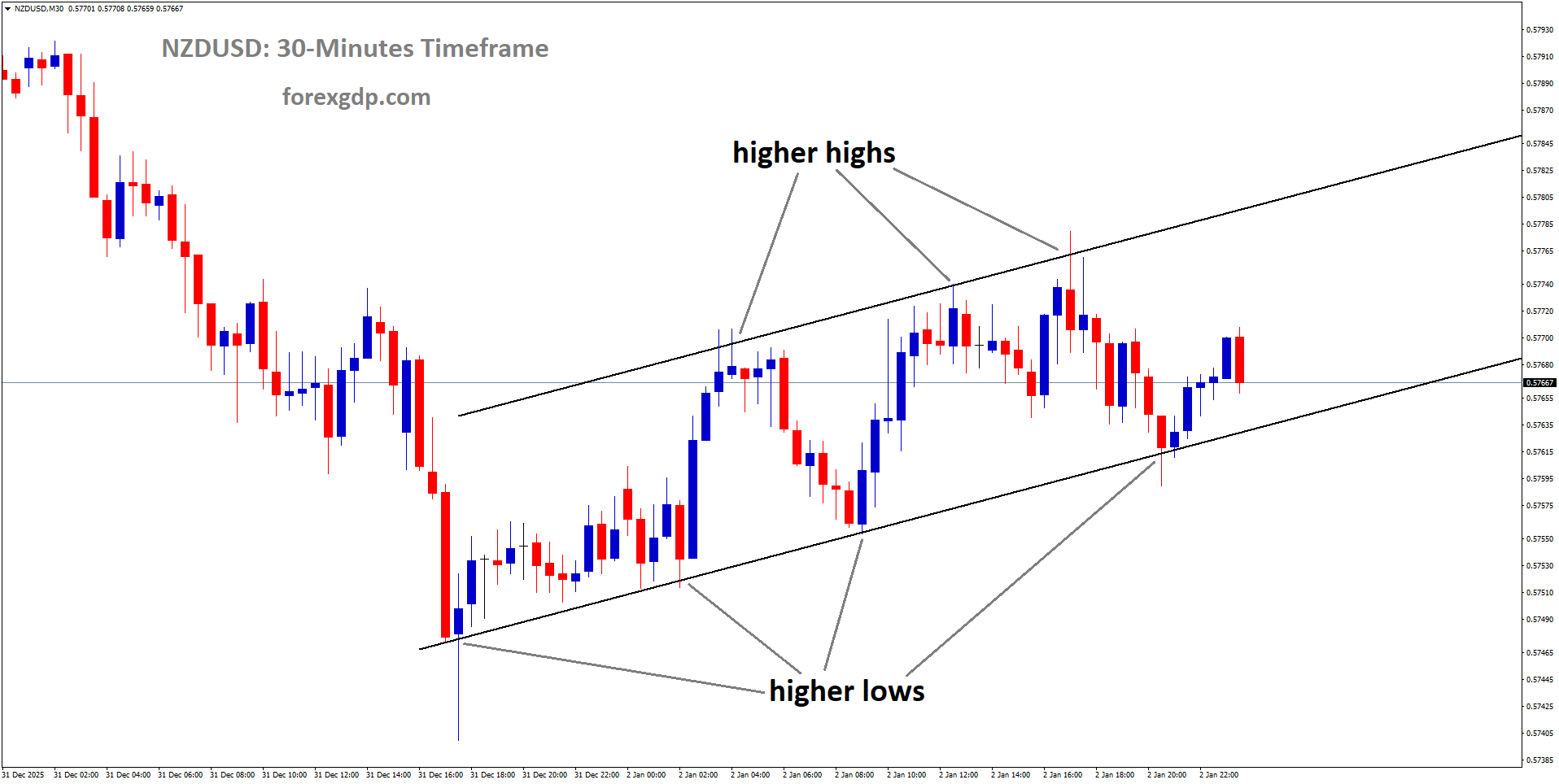
At the heart of the move is growing belief that US interest rates could fall further in the coming years, while New Zealand may eventually move in the opposite direction. This contrast in outlooks has played an important role in lifting the Kiwi Dollar and slowing the momentum of the Greenback.
Why the US Dollar Is Under Pressure
The US Dollar has recently lost some of its appeal as investors look ahead to a more flexible approach to monetary policy in the United States. Expectations are building that the Federal Reserve could deliver additional rate cuts in the future, especially if economic growth continues to cool and inflation keeps easing.
In recent months, the US central bank has already taken steps to lower borrowing costs. These moves were aimed at supporting the economy during a period of softer job growth and lingering price pressures. While inflation has not fully returned to the Fed’s preferred levels, there are signs that it is moving in the right direction.
As a result, the Dollar has struggled to maintain its earlier strength. When investors believe interest rates may fall further, the currency often becomes less attractive compared to those linked to tighter or more stable policies. This shift in expectations has weighed on the US Dollar and opened the door for other currencies, including the New Zealand Dollar, to recover.
Political Changes at the Federal Reserve
Adding another layer of uncertainty is the upcoming leadership change at the Federal Reserve. President Donald Trump is expected to nominate a new Fed chair when the current term ends later this year. Markets are closely watching this process, as the choice could influence the direction of US monetary policy for years to come.
There is speculation that the next chair may favor lower interest rates or be more willing to support economic growth through easier policy. Even the possibility of such a shift can influence market behavior well in advance. Investors often adjust their positions based on expectations, not just confirmed decisions.
This political backdrop has made some traders more cautious about holding the US Dollar. When leadership changes appear likely to bring a softer policy stance, confidence in higher long-term rates tends to fade. That perception has contributed to the Dollar’s recent weakness and supported currencies on the other side of the trade.
What the Fed’s Internal Debate Signals
Recent meeting minutes from the Federal Reserve have offered a glimpse into how divided policymakers remain. While many officials agree that inflation is easing, there is no clear consensus on how quickly or how far interest rates should move next.
Some members believe it may be wise to pause further rate cuts and observe how the economy responds to earlier decisions. They argue that moving too quickly could create new risks if inflation proves stubborn. Others, however, feel that holding rates steady for an extended period could slow progress in supporting the labor market.
This internal debate adds uncertainty to the outlook. Even though markets currently expect rates to remain unchanged in the near term, the longer-term picture is less clear. That uncertainty often reduces demand for a currency, especially when compared to one backed by a more stable or improving economic story.
New Zealand’s Economic Recovery and the Kiwi Dollar
While the US faces mixed signals, New Zealand has delivered some encouraging news of its own. Recent data showed that the country’s economy rebounded in the third quarter, marking a step forward after a long period of weakness. This improvement has helped restore confidence in the broader outlook.
The recovery may be modest, but it has been enough to change expectations around monetary policy. Investors are beginning to price in the possibility that the Reserve Bank of New Zealand could raise interest rates at some point if growth continues and inflation pressures return.
RBNZ Governor Anna Breman has noted that interest rates are likely to remain unchanged for now, suggesting a cautious approach. Still, the fact that a hike is even being discussed highlights how the balance of risks may be shifting. Compared to the US, where rate cuts remain part of the conversation, New Zealand’s stance appears relatively firm.
This contrast has given the New Zealand Dollar additional support. When a country shows signs of economic improvement and a central bank willing to act if needed, its currency often benefits from renewed interest.
How Rate Expectations Influence Currency Moves
Interest rate expectations play a major role in shaping currency trends. When investors believe a central bank may raise rates, the associated currency often gains because higher returns become more attractive. On the other hand, expectations of lower rates tend to weaken a currency.
In the case of NZD/USD, the story is increasingly about divergence. The Federal Reserve is seen as moving closer to the end of its easing cycle, with the possibility of further cuts down the road. Meanwhile, the Reserve Bank of New Zealand is viewed as more likely to hold firm or eventually tighten if economic conditions allow.
This difference in direction has encouraged buying interest in the New Zealand Dollar while limiting demand for the US Dollar. Even without immediate policy changes, expectations alone can drive meaningful moves in currency markets.
Broader Market Sentiment and Risk Appetite
Beyond central banks and politics, general market sentiment also plays a role. When investors feel more comfortable taking on risk, they often move away from safe-haven currencies like the US Dollar and toward higher-yielding or growth-linked currencies.
Improving economic data from New Zealand has helped place the Kiwi Dollar in a more favorable light. At the same time, uncertainty around US policy has reduced the Dollar’s safe-haven appeal, at least for now.
This shift in mood has supported the recent rebound in NZD/USD and suggests that sentiment may remain sensitive to incoming data and policy signals from both countries.
Final Summary
The recent recovery in NZD/USD reflects a changing balance between the US and New Zealand economic outlooks. The US Dollar has come under pressure as expectations grow for additional interest rate cuts and as political uncertainty surrounds future Federal Reserve leadership. At the same time, New Zealand’s economy has shown signs of improvement, leading investors to consider the possibility of tighter policy down the line.
While both central banks remain cautious, the contrast in expectations has been enough to support the New Zealand Dollar and halt its recent decline. Going forward, developments in US monetary policy, leadership changes at the Fed, and the strength of New Zealand’s recovery will continue to shape the direction of this currency pair.
EURGBP loses ground near 0.8700 as Eurozone production contracts and UK growth slows
The euro has come under renewed pressure after fresh data showed that manufacturing activity across the Eurozone weakened more than expected toward the end of the year. These disappointing figures have added to concerns about the region’s economic momentum and have weighed on sentiment toward the single currency.
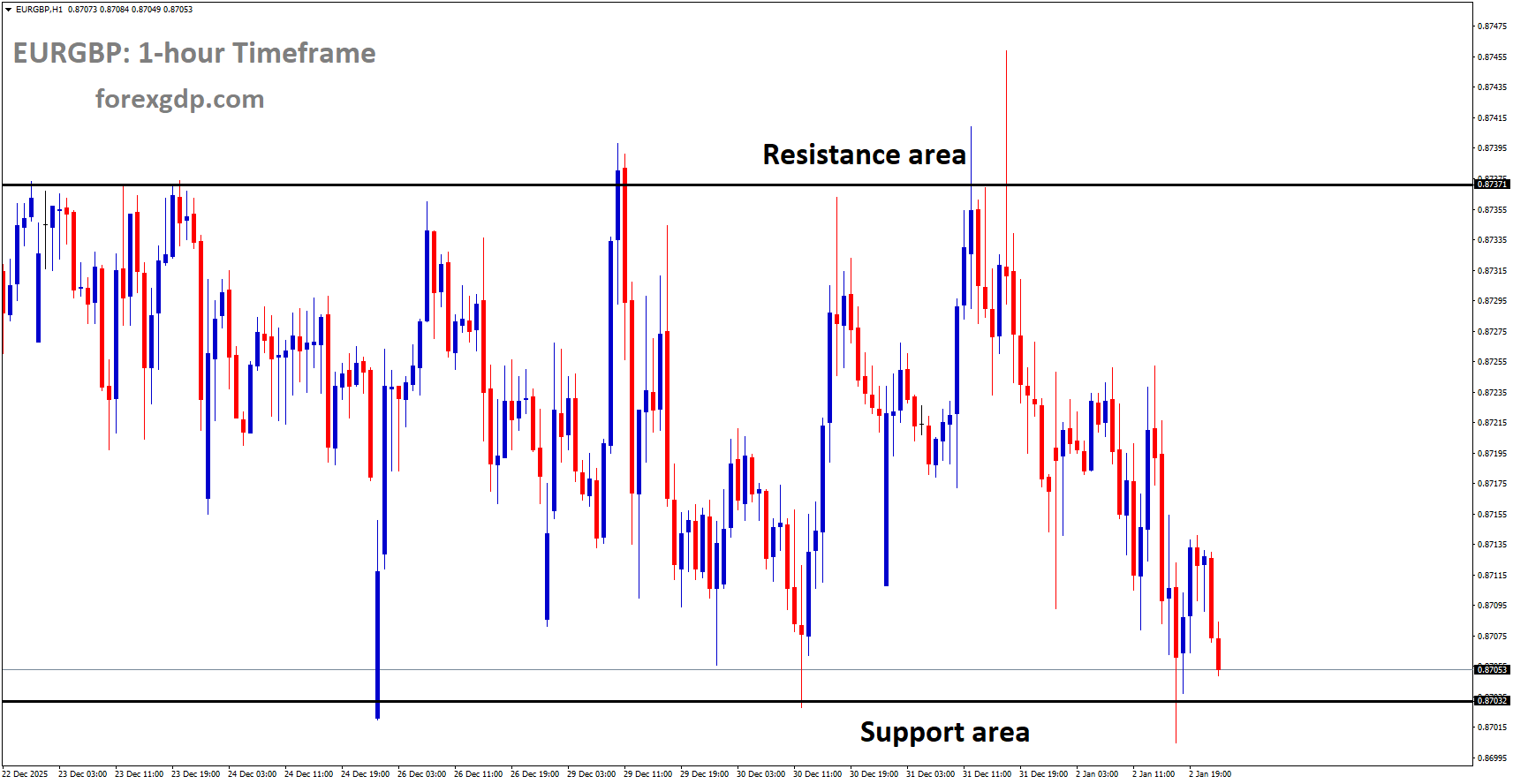
EURGBP is moving in a box pattern, and the market has reached the support area of the pattern
Recent data releases suggest that manufacturing, a key pillar of many European economies, is struggling to regain its footing. As a result, the euro has continued to lose ground against the British pound for several sessions in a row, reflecting a growing gap between economic performance in the Eurozone and the UK.
While currency movements have remained relatively contained, the broader message from the data is clear. Europe’s manufacturing sector is facing headwinds that are proving difficult to overcome, and this is shaping expectations for growth in the months ahead.
Eurozone Manufacturing Shows Broad-Based Weakness
The latest set of manufacturing surveys paints a challenging picture for the Eurozone as a whole. The final reading of the HCOB Manufacturing Purchasing Managers’ Index for December confirmed that factory activity contracted at a faster pace than earlier estimates suggested.
A reading below the neutral level of 50 indicates contraction, and the revised figure highlighted that manufacturing output, new orders, and overall business confidence remain under pressure. Compared to previous months, the downward trend has become more pronounced, reinforcing the idea that manufacturing is contributing less to overall economic growth in the region.
This slowdown is not limited to one or two countries. Instead, it reflects a broader pattern of weakness across several major Eurozone economies, raising questions about how quickly the sector can recover.
Germany: Continued Struggles in the Industrial Core
Germany, often described as the industrial engine of Europe, delivered another disappointing update. The final manufacturing PMI reading was revised lower, confirming that activity in the sector is contracting at a steady pace.
German manufacturers continue to face weak demand, both at home and abroad. High costs, cautious consumer spending, and subdued global trade have all played a role in limiting output. For an economy that relies heavily on exports and industrial production, this persistent softness is a significant concern.
The latest figures suggest that Germany’s manufacturing sector has yet to find a clear turning point, and its ongoing weakness is a major drag on the wider Eurozone outlook.
Italy and Spain Add to the Downbeat Tone
Italy’s manufacturing sector also showed a notable deterioration. After showing signs of strength in the previous month, activity slipped back into contraction territory in December. This reversal points to fragile conditions and highlights how quickly momentum can fade in the current environment.
Spain followed a similar path, with manufacturing activity falling into contraction after previously recording growth. The shift suggests that earlier optimism may have been premature and that Spanish manufacturers are now facing the same demand challenges seen elsewhere in the region.
Together, the data from Italy and Spain underline the lack of consistency in the Eurozone recovery and add to concerns that manufacturing weakness is becoming more entrenched.
France Offers a Rare Bright Spot
Among the major Eurozone economies, France stood out as the sole source of modest optimism. Manufacturing activity there edged slightly higher compared to the previous month and remained in expansion territory.
While the improvement was small, it was enough to distinguish France from its peers. However, even this positive reading does not fully offset the broader weakness seen across the region. The slight uptick suggests stability rather than strong growth, and it remains to be seen whether France can sustain this performance if conditions elsewhere continue to deteriorate.
UK Manufacturing Holds Up Better
In contrast to the Eurozone’s struggles, the UK manufacturing sector has shown more resilience. The final S&P Global Manufacturing PMI for December was revised lower compared to earlier estimates, but it still indicated mild expansion.
Although growth has slowed, the sector continues to operate at levels consistent with gradual improvement rather than outright contraction. This relative stability has helped support confidence in the UK economy, especially when compared with the more fragile picture emerging from continental Europe.
UK manufacturers are benefiting from steadier domestic demand and signs that supply chain pressures have eased. While challenges remain, including cost pressures and global uncertainty, the overall tone of the data suggests that the sector is holding up better than many of its European counterparts.
What the Data Means for Economic Confidence
Manufacturing PMIs are closely watched because they offer an early snapshot of economic activity. When these indicators weaken, they often signal slower growth ahead. The latest readings from the Eurozone suggest that manufacturing is becoming less of a growth driver and more of a concern for policymakers and businesses alike.
The UK data, while not strong, points to a more balanced situation. Mild expansion suggests that the sector is managing to adapt to challenging conditions, even if growth remains modest.
This divergence in manufacturing performance has important implications. Investors, businesses, and policymakers are likely to take note of the growing gap between the Eurozone and the UK, especially as they assess future growth prospects and economic strategies.
Broader Implications for the Months Ahead
Looking ahead, the key question is whether Eurozone manufacturing can stabilize or whether further contraction lies ahead. Much will depend on external demand, energy costs, and overall confidence among businesses and consumers.
For now, the data suggests that recovery will be uneven and fragile. Some countries may find pockets of strength, but without a broader improvement across the region, manufacturing is unlikely to provide a strong boost to growth in the near term.
In the UK, the outlook appears slightly more encouraging, though far from robust. Continued mild expansion could help support the wider economy, provided that conditions do not worsen significantly.
Final Summary
Recent manufacturing data has highlighted a clear contrast between the Eurozone and the UK. Across much of Europe, factory activity is contracting faster than expected, with major economies like Germany, Italy, and Spain showing notable weakness. France offers a small measure of stability, but it is not enough to change the overall picture.
The UK, meanwhile, continues to see modest growth in manufacturing, even after revisions lowered earlier estimates. This relative resilience has helped maintain confidence compared to the more downbeat mood in the Eurozone.
As the new year unfolds, manufacturing performance will remain a key indicator to watch. For now, the data suggests that the Eurozone faces a tougher road ahead, while the UK is navigating challenges with slightly firmer footing.
BTCUSD Holds Steady as ETF Demand Fades
Bitcoin has spent the past few weeks moving without a clear direction. Buyers and sellers appear evenly matched, and neither side has shown enough conviction to push the market decisively forward or backward. This kind of calm, sideways movement often reflects uncertainty rather than weakness or strength.
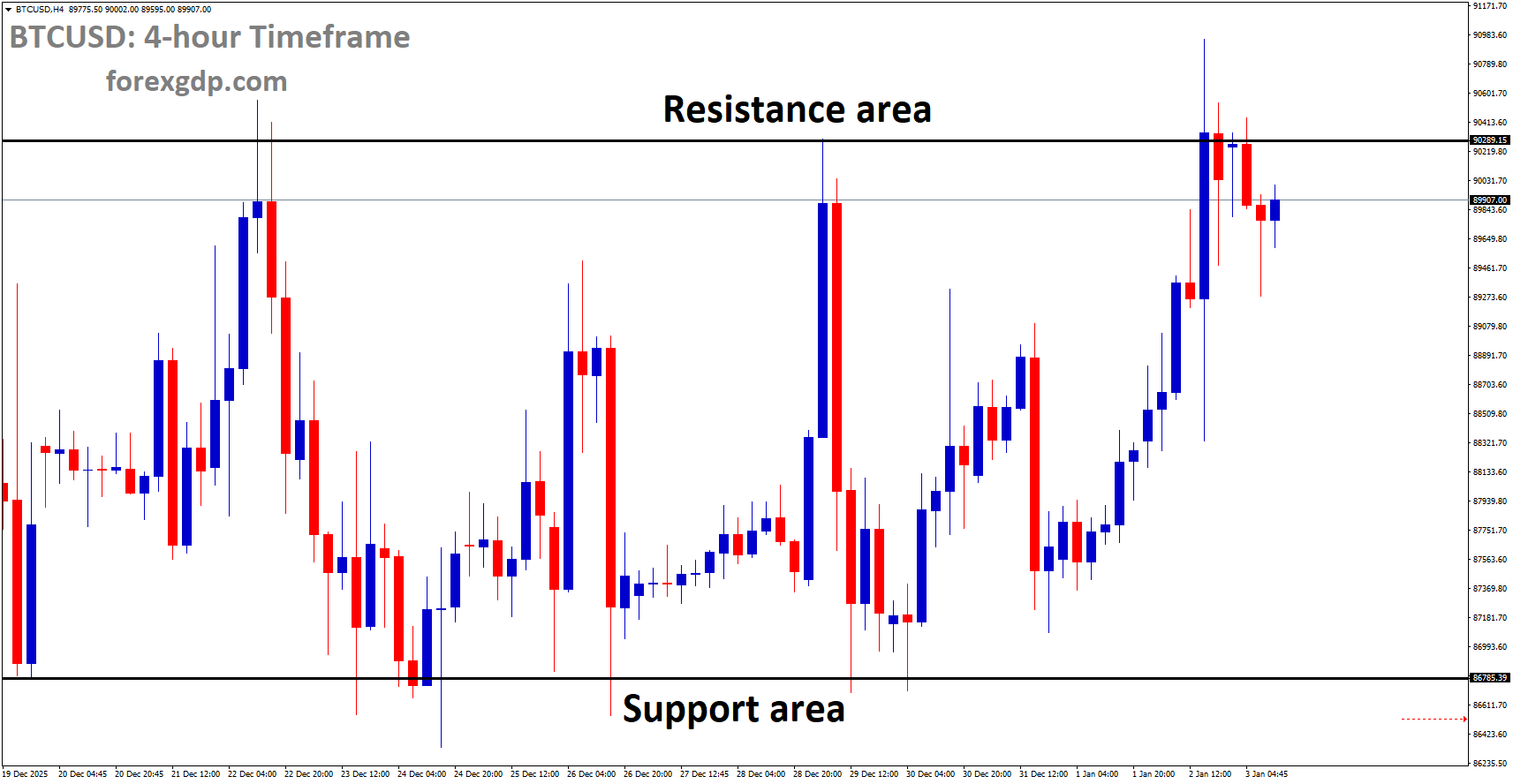
BTCUSD is moving in a box pattern, and the market has reached the resistance area of the pattern
Several forces are shaping this pause. Large investors are becoming more cautious, liquidity conditions are slowly improving, and broader financial markets are settling after year-end stress. Together, these factors are keeping Bitcoin steady while traders and institutions wait for clearer signals about what comes next.
A Market Defined by Indecision
Periods of sideways movement usually happen when investors are unsure how to react to mixed signals. In Bitcoin’s case, recent weeks have delivered both caution and quiet optimism.
On one hand, institutional participation has softened. On the other, actions from the US Federal Reserve have helped ease funding pressure in traditional markets. These opposing forces have created a balance, preventing major moves in either direction.
This type of environment can feel uneventful, but it often plays an important role in shaping the next phase of the market. Sideways periods allow traders to reassess expectations, digest new information, and reposition portfolios without panic.
Institutional Interest Shows Signs of Cooling
One of the most important trends influencing Bitcoin right now is the behavior of large investors. Over recent weeks, spot Bitcoin exchange-traded funds have recorded mild net withdrawals. While these outflows are not dramatic, they do mark a clear shift from the strong inflows seen earlier.
Institutional investors tend to be more sensitive to broader economic conditions. When uncertainty rises or returns look less predictable, they often reduce exposure to risk assets. This does not necessarily mean they have lost faith in Bitcoin’s long-term potential. Instead, it reflects a short-term preference for caution.
Sustained outflows can weigh on market sentiment, especially when retail traders take cues from institutional behavior. However, the current scale of withdrawals suggests hesitation rather than a rush for the exits.
Why ETF Flows Matter
Spot Bitcoin ETFs have become an important bridge between traditional finance and the crypto market. They allow institutions to gain exposure to Bitcoin without directly holding the asset. Because of this, ETF flows are often seen as a measure of institutional confidence.
When inflows slow or turn negative, it signals that large players are waiting for better clarity. This could relate to interest rate expectations, regulatory developments, or overall risk appetite across global markets.
At the same time, ETF outflows do not automatically translate into sharp market moves. Many long-term holders remain unfazed by short-term shifts in institutional demand, choosing instead to focus on the broader adoption story.
Signs of Support from Liquidity Conditions
While institutional demand has softened, the broader financial environment has shown some encouraging signs. Toward the end of the year, the Federal Reserve stepped in to ease short-term funding stress in the banking system.
The New York Federal Reserve’s Standing Repo Facility saw record borrowing as financial firms sought liquidity during the year-end period. At the same time, a large amount of cash was placed into the Fed’s reverse repo facility, a common move when lenders prefer safety over risk.
These actions are not unusual during year-end transitions, when banks and financial institutions often reduce lending activity. By providing liquidity, the Fed helps ensure that markets continue to function smoothly.
How Fed Actions Influence Bitcoin
Central bank liquidity does not flow directly into Bitcoin, but it plays an indirect role in shaping investor behavior. When borrowing becomes easier and funding stress declines, investors are generally more comfortable holding riskier assets.
In addition to its regular tools, the Federal Reserve has been purchasing Treasury bills to support short-term funding markets. This steady injection of liquidity helps keep financial conditions stable and can encourage a mild risk-on mood.
For assets like Bitcoin, this environment can act as a cushion. Even if demand weakens temporarily, improved liquidity can reduce the likelihood of sudden, sharp downturns driven by panic or forced selling.
A Delicate Balance Between Caution and Optimism
The current Bitcoin market sits at a crossroads. Institutional investors are stepping back slightly, while broader financial conditions are becoming more supportive. This balance explains why prices have remained confined within a narrow zone for several weeks.
Neither side has enough influence to dominate the market right now. Bulls see long-term value and improving liquidity. Bears point to fading momentum and cautious institutional behavior. Until one narrative becomes stronger, sideways movement is likely to continue.
This period of calm should not be mistaken for stagnation. Markets often pause before making meaningful moves, and consolidation phases can lay the groundwork for future trends.
What This Means for Investors
For long-term holders, the current environment may feel familiar. Bitcoin has gone through many phases of consolidation throughout its history. These periods often test patience but can also offer stability compared to more volatile stretches.
Short-term traders may find fewer opportunities as price swings remain limited. In contrast, investors with a longer horizon may see this as a time to focus on fundamentals rather than daily fluctuations.
The key takeaway is that the absence of dramatic movement does not signal a lack of interest in Bitcoin. Instead, it reflects a market waiting for stronger signals from both the crypto space and the global economy.
Final Summary
Bitcoin is currently moving sideways as the market digests mixed signals. Institutional demand has cooled, with spot Bitcoin ETFs recording modest outflows for several weeks. At the same time, actions by the Federal Reserve have eased short-term funding stress and supported a calmer, more stable financial environment.
These opposing forces have kept Bitcoin locked in a narrow range, reflecting indecision rather than weakness. Improved liquidity provides quiet support, while cautious investors wait for clearer direction. As the market balances patience and anticipation, this consolidation phase may play an important role in shaping Bitcoin’s next major move.
Don’t trade all the time, trade forex only at the confirmed trade setups