
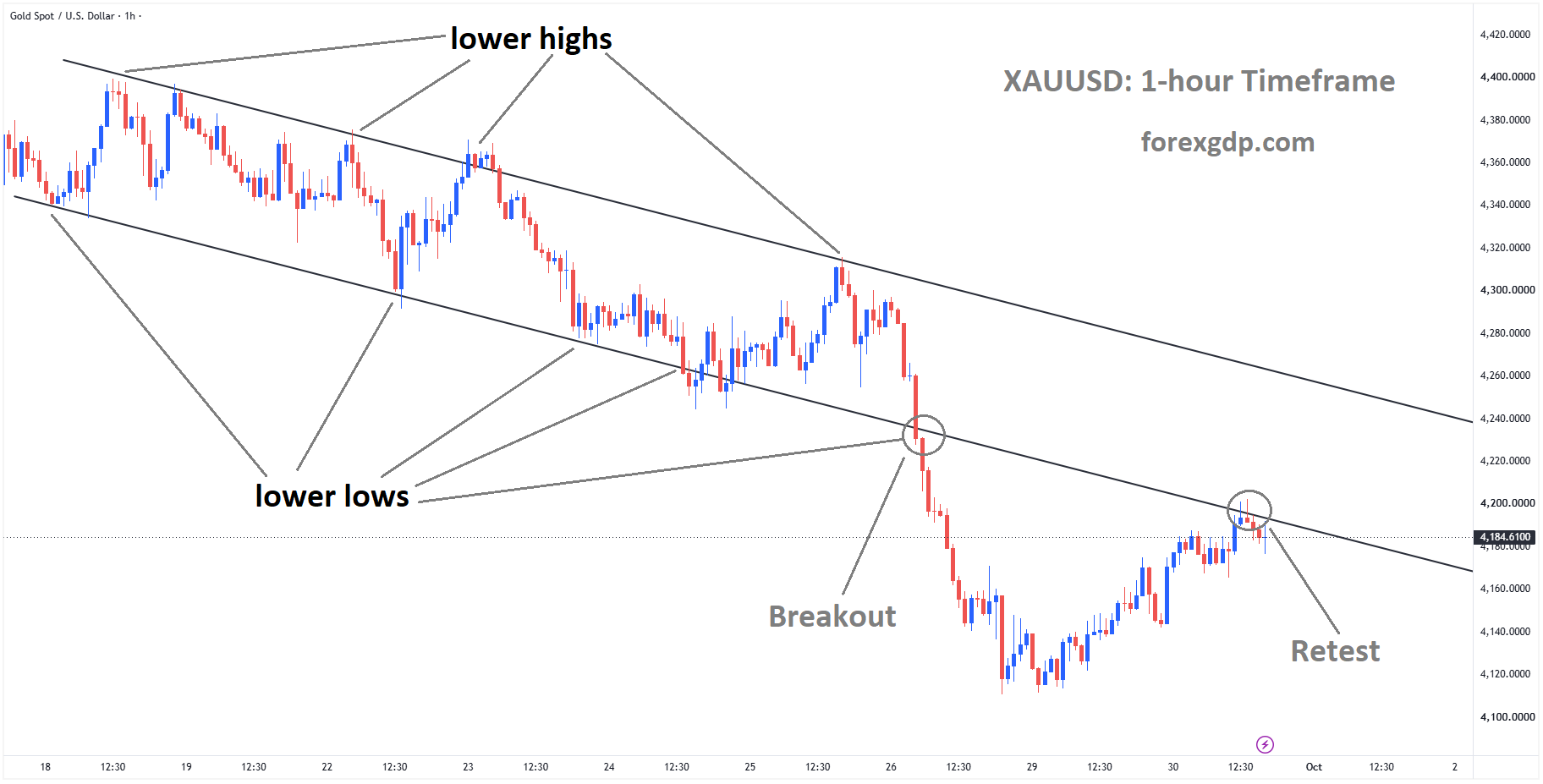
XAUUSD reached the retest area of the broken descending channel
Gold is holding on to its recent recovery as investors wait for fresh US inflation data. After a difficult start to the week, the precious metal has found some breathing room as the US Dollar and Treasury yields ease. Still, traders remain cautious because the next inflation report could quickly change expectations for Federal Reserve policy.
The main focus is the US Personal Consumption Expenditures Price Index, widely known as PCE. This report matters because it includes the inflation measure the Fed uses to assess progress toward its target. Its findings could influence whether policymakers raise interest rates again soon or allow more time for earlier policy changes to work.
At the same time, developments in the Middle East continue to affect the broader picture. Improving oil supplies have eased some inflation concerns, but unresolved tensions leave investors facing uncertainty.
Gold Finds Relief as Expectations for a Fed Hike Ease
Gold’s recovery has received support from a softer US Dollar and a retreat in Treasury yields. Both changes followed comments from New York Fed President John Williams, who suggested that another immediate interest rate increase may not be necessary.
Williams indicated that the Fed could take time to assess the economy after its September policy decision. He also left open the possibility of another increase later in the year if economic conditions develop as he expects.
That distinction matters. His remarks did not signal that the fight against inflation was over. Instead, they suggested that policymakers may have room to wait before making their next move.
Investors responded by reducing expectations for an October rate hike. The estimated probability fell to around 43%, compared with roughly 70% earlier in the week.
For gold, this shift offers some relief. Higher interest rates tend to make interest-paying investments more attractive. When expectations for further increases ease, gold can regain some appeal despite offering no regular income.
However, comments from one policymaker cannot settle the policy debate. The inflation report will give investors more evidence to judge whether a slower approach is realistic.
Why the US PCE Inflation Report Matters

The PCE report is likely to shape the next round of discussion about US interest rates. Investors will look at both headline inflation and the core measure, which excludes food and energy.
Economists expect core PCE inflation to rise by 0.3% in August compared with the previous month, following a 0.2% increase in July. Headline inflation is forecast to rise by 0.4%, also accelerating from July.
Annual inflation figures are expected to remain unchanged, with core inflation at 3.3% and headline inflation at 3.7%.
These forecasts suggest that inflation remains a concern even if annual readings show no further increase. Faster monthly growth could make policymakers less comfortable with waiting, especially if it points to persistent pressure across the economy.
The difference between the forecast and the actual result will be especially important. Markets often react to unexpected changes because investors have already adjusted their expectations around the predicted figures.
The report may therefore determine whether gold’s recent recovery gains broader support or faces renewed pressure.
How Inflation Could Shape Gold’s Next Move
A stronger-than-expected inflation reading could revive expectations for an October interest rate increase. Investors may interpret such a result as evidence that the Fed needs to act sooner to bring inflation under control.
That could support the US Dollar and push Treasury yields higher, creating a more difficult environment for gold.
A firmer dollar makes dollar-denominated gold more expensive for buyers using other currencies. Higher yields also increase the appeal of bonds relative to an asset that does not pay interest.
A softer inflation report could have the opposite effect. It may strengthen the argument for giving the economy more time to absorb the Fed’s recent policy action.
Even so, one report is unlikely to answer every question. Policymakers also consider employment, consumer spending, wage growth and wider financial conditions. Gold investors will need to assess the inflation figures alongside those broader developments.
Middle East Oil Supplies Bring Some Inflation Relief
Energy has become an important part of the interest rate debate. Disruption in the Middle East has raised concerns that more expensive oil could keep inflation elevated and complicate the Fed’s efforts.
Recent signs of improving supply have helped ease some of that pressure.
Saudi Arabia reportedly resumed tanker loadings at Yanbu after restarting its East-West pipeline. Estimates also suggested that Gulf oil exports had returned to their average level from the previous year.
Meanwhile, the US announced plans to offer up to 40 million barrels from its Strategic Petroleum Reserve.
Together, these developments reduced fears of an immediate supply shortage. More reliable energy supplies could help limit increases in transportation and production costs, reducing the pressure that eventually reaches consumers.
For gold, the effect is indirect. If energy concerns ease, investors may become less convinced that the Fed needs to raise rates quickly. That could reduce some of the pressure coming from the dollar and bond markets.
Unresolved Tensions Keep Investors Cautious
Despite the improvement in oil supplies, the dispute between Washington and Tehran remains unresolved. Efforts linked to reopening the Strait of Hormuz are still being watched closely because the waterway plays a major role in global energy trade.
Any progress toward a workable agreement could improve confidence in supply conditions. Further delays or renewed tensions could bring inflation concerns back into focus.
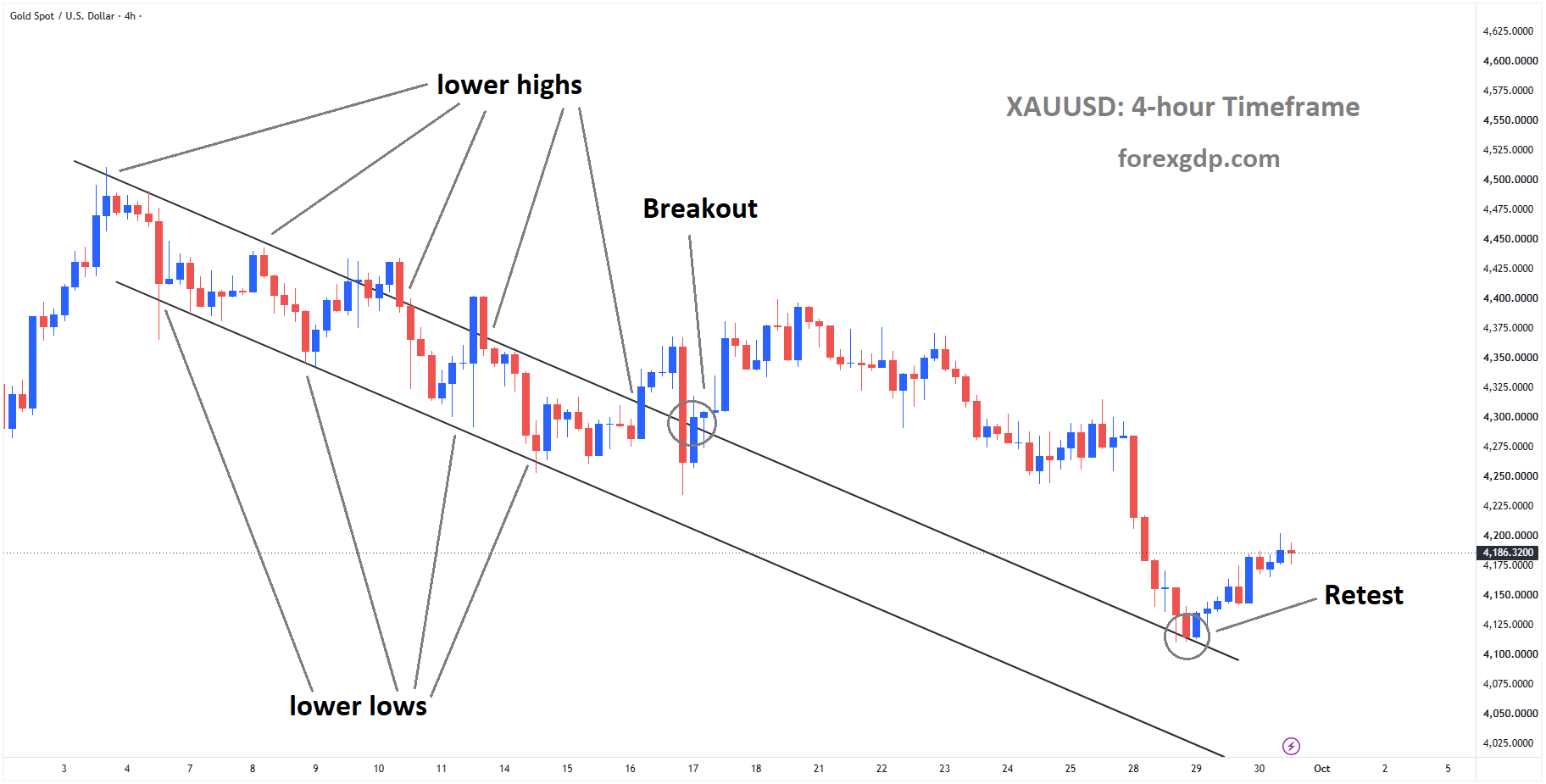
XAUUSD is rebounding from the retest area of the broken descending channel
Gold faces competing influences in this environment. Geopolitical uncertainty can increase demand for assets investors view as a store of value. However, if the same uncertainty raises energy costs and encourages tighter monetary policy, higher yields can weigh on gold.
This helps explain why gold can struggle even when global tensions remain elevated. Investors are weighing both the demand for security and the financial consequences of persistent inflation.
Summary
Gold has found support as the US Dollar and Treasury yields retreat following less urgent comments about further Fed tightening. Reduced expectations for an October rate hike have given the metal room to recover, although the broader pressures behind its difficult September have not disappeared.
The US PCE inflation report is now the key event. An unexpectedly strong reading could renew expectations for higher rates, while softer figures could support a more patient approach.
Improving Middle East oil supplies offer some relief on inflation, but unresolved diplomatic tensions keep the outlook uncertain. Gold’s direction will depend on how these inflation, policy and geopolitical developments unfold together.