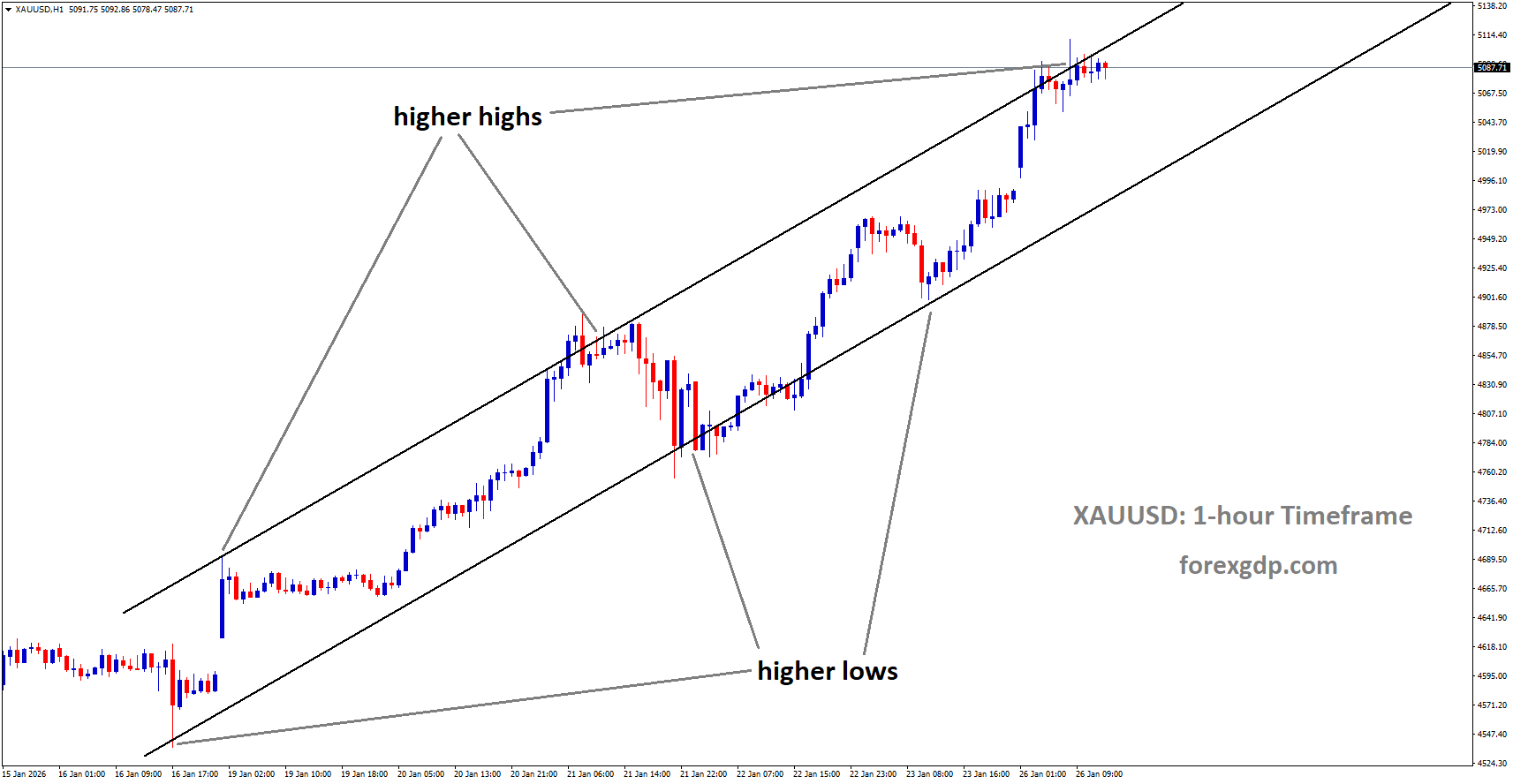
XAUUSD is moving in an uptrend channel, and the market has reached a higher high area of the channel
Gold has been on a strong run lately, rising for the sixth day in a row and reaching fresh record highs. Many investors are now watching closely to see if gold can hold above the $5,100 level, which could encourage even more buying in the days ahead.
This steady rise is not happening by accident. A mix of global uncertainty, shifting US economic expectations, and growing demand from both central banks and everyday investors is pushing gold higher. At the same time, the US Dollar has been losing strength, which often gives gold an extra boost.
With a major Federal Reserve meeting coming up, traders are also preparing for new signals on interest rates—something that can have a big impact on both the dollar and gold.
Why Gold Is Rising for a Sixth Straight Day
Gold is often seen as a “safe-haven” asset. That means when people feel nervous about the world economy or international politics, they often move money into gold as a way to protect themselves from surprises.
Right now, the list of worries is long. Investors are paying attention to ongoing geopolitical tensions, trade disputes, and uncertainty around global alliances. When confidence in stability drops, gold tends to attract more buyers.
Gold’s recent rally is being supported by several strong forces at once:
-
Rising safe-haven demand
-
A weaker US Dollar
-
Expectations that the Federal Reserve may cut rates in the future
-
Ongoing gold purchases by central banks
-
Strong investment inflows into gold exchange-traded funds (ETFs)
All of these factors together are creating the kind of environment where gold can keep moving higher, even after already setting new records.
Global Tensions Are Driving Safe-Haven Demand
One major reason gold is gaining attention is the continued uncertainty in global politics and international relations.
Recently, tensions between the United States and NATO flared up briefly over Greenland, raising new questions about trust and cooperation within the alliance. Even short-lived disagreements between major global partners can make markets uneasy, especially when they involve strategic territories or sensitive diplomatic topics.
At the same time, talks involving Ukraine and Russia remain a key issue. A second day of US-supported discussions in Abu Dhabi ended without an agreement, reminding investors that the situation is still far from resolved. When negotiations stall, uncertainty increases—and gold often benefits from that.
Trade Risks Are Back in Focus
Trade concerns are also heating up again. US President Donald Trump said he would impose a 100% tariff on Canada if Canada follows through on a trade deal with China. Statements like this can quickly shake investor confidence, because they raise the possibility of escalating trade conflict between major economies.
Even when tariffs are only threats and not yet official policy, markets tend to react. Businesses worry about higher costs, consumers worry about higher prices, and investors start looking for safer places to park their money.
Gold, in many cases, becomes the first choice.
The “Sell America” Mood Is Weighing on the US Dollar
Another major driver behind gold’s strength is the drop in the US Dollar. In fact, the dollar recently slid to its weakest level since September 2025.
When the dollar falls, gold often becomes more attractive for global buyers. That’s because gold is priced in dollars, and a weaker dollar can make gold cheaper for investors using other currencies.
But the story goes deeper than just currency math.
Lately, markets have been reacting to what some traders describe as a growing “Sell America” trade. This refers to a shift where investors reduce exposure to US assets—such as the dollar or US markets—because they feel uncertain about America’s economic direction, political decisions, or long-term financial outlook.
Several concerns have helped fuel this mood, including:
-
Disputes linked to tariffs and trade policy
-
Questions about the independence of the Federal Reserve
-
Ongoing worries about US government debt levels
When investors start doubting long-term stability, they often move toward assets seen as more dependable stores of value. Gold fits that role for many people, which is why it tends to rise when the dollar is under pressure.
Federal Reserve Expectations Are Helping Gold Shine
Gold does not pay interest, which means it can sometimes struggle when interest rates are high. When investors can earn strong returns from savings or bonds, gold may look less appealing.
But when interest rates are expected to fall, gold often becomes more competitive. That’s because lower rates reduce the advantage of interest-paying investments, making gold more attractive again.
Right now, many traders believe the Federal Reserve could cut rates more than once in the coming years. Some expectations point to two more rate cuts in 2026, and those views are helping to support gold’s rally today.
All Eyes on the Upcoming FOMC Meeting
The next big moment for markets is the two-day Federal Open Market Committee (FOMC) meeting, which begins Tuesday. The Fed is expected to announce its decision on Wednesday.
Even if the Fed does not change rates immediately, markets will be focused on the details surrounding the announcement. Investors will be looking closely at:
-
The Fed’s official policy statement
-
The tone and wording used by the committee
-
The press conference led by Fed Chair Jerome Powell
Why Jerome Powell’s Comments Matter
Fed Chair Jerome Powell’s remarks often shape market expectations. If he signals that rate cuts could come sooner—or that the economy is slowing—gold could receive another boost.
On the other hand, if Powell suggests rates may stay higher for longer, the dollar could regain strength, which might slow gold’s momentum.
In short, gold traders are watching the Fed because interest rate expectations directly influence the direction of the dollar and investor appetite for safe-haven assets.
Central Banks and ETFs Are Adding Fuel to Gold’s Rally
Gold is not rising only because of short-term fear. Long-term buying trends are also playing a big role, especially from central banks and large investment funds.
Central Banks Continue Buying Gold
China’s central bank has continued buying gold for a fourteenth straight month, showing ongoing commitment to building reserves. At the same time, other emerging market central banks have also been active buyers through early 2026, including:
-
The National Bank of Poland
-
The Reserve Bank of India
-
The Central Bank of Brazil
Central banks often buy gold to diversify reserves and reduce reliance on any single currency. When multiple major institutions keep purchasing gold month after month, it creates steady demand that can support prices even during market pullbacks.
ETF Demand Is Surging
Gold exchange-traded funds have also seen strong growth. Investment demand through ETFs rose sharply in 2025, with global holdings climbing to 4,025.4 tonnes, up from 3,224.2 tonnes in 2024.
At the same time, the total assets managed by gold ETFs reached $558.9 billion, showing how much money has flowed into gold-related investments.
ETF demand matters because it represents broad investor participation. It’s not just central banks and big institutions—regular investors and fund managers are also choosing gold as a way to protect wealth and reduce risk.
What Traders Are Watching Next
Gold’s trend remains strong, but markets are entering a key stretch of events that could influence what happens next.
Aside from the Fed meeting, traders will also keep an eye on economic data such as US Durable Goods Orders, which can give clues about business confidence and economic momentum.

XAUUSD is breaking the higher high area of the uptrend channel
If the data shows weakness, it may strengthen the case for future rate cuts, which could push gold even higher. If the data surprises to the upside, it could temporarily support the dollar and cool gold’s pace.
Either way, gold remains at the center of investor attention as uncertainty stays high and demand remains steady.
Final Summary
Gold has climbed for six straight days and continues setting new record highs as investors search for safety. Global tensions, trade concerns, and uncertainty around international relationships are encouraging safe-haven buying. At the same time, the US Dollar has weakened due to rising “Sell America” sentiment, adding extra support for gold. Expectations of future Federal Reserve rate cuts, ongoing central bank purchases, and strong inflows into gold ETFs are also helping drive demand. With the upcoming FOMC meeting and key US economic data ahead, traders are now waiting for fresh signals that could shape the next move for both the dollar and gold.