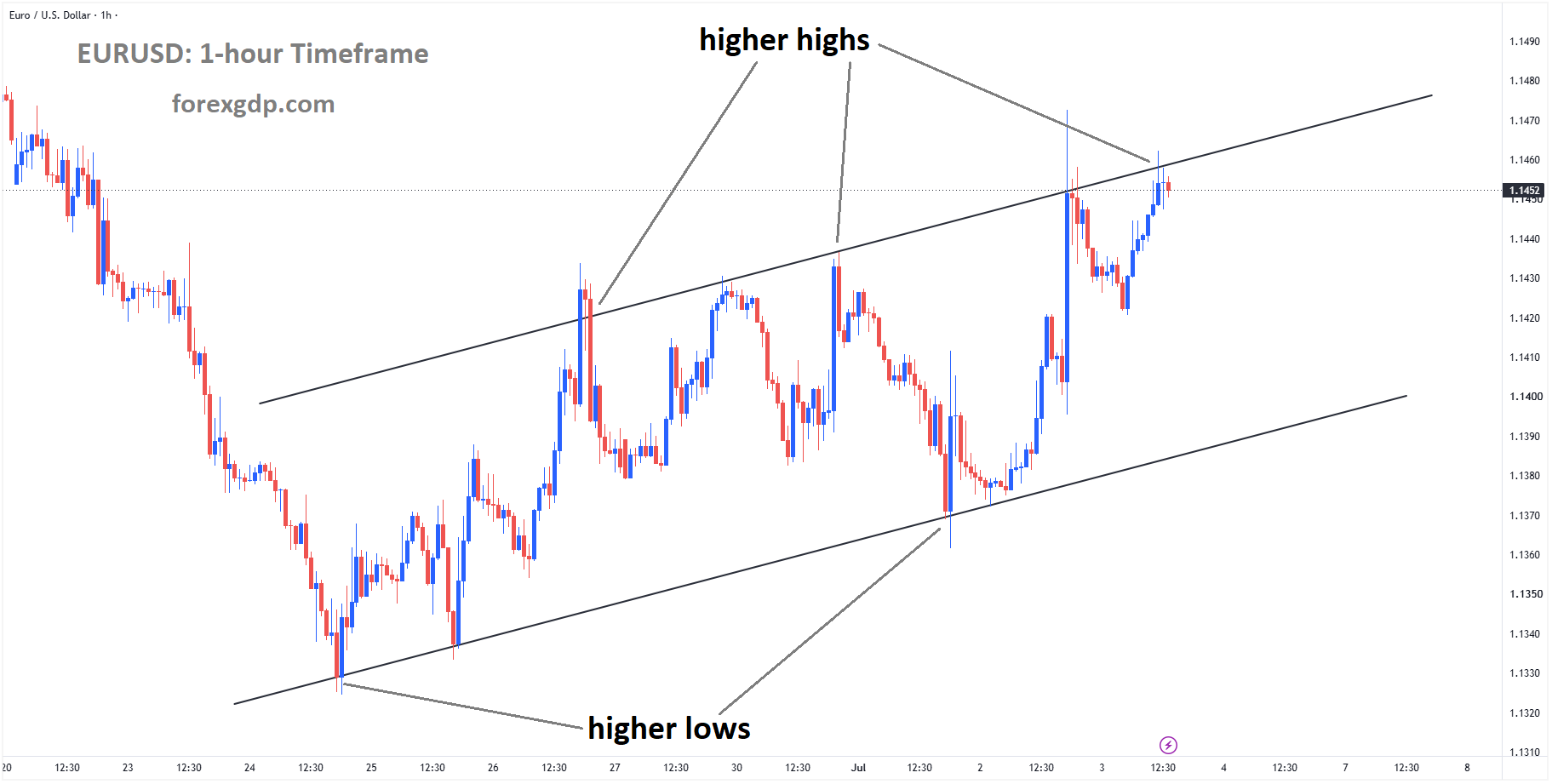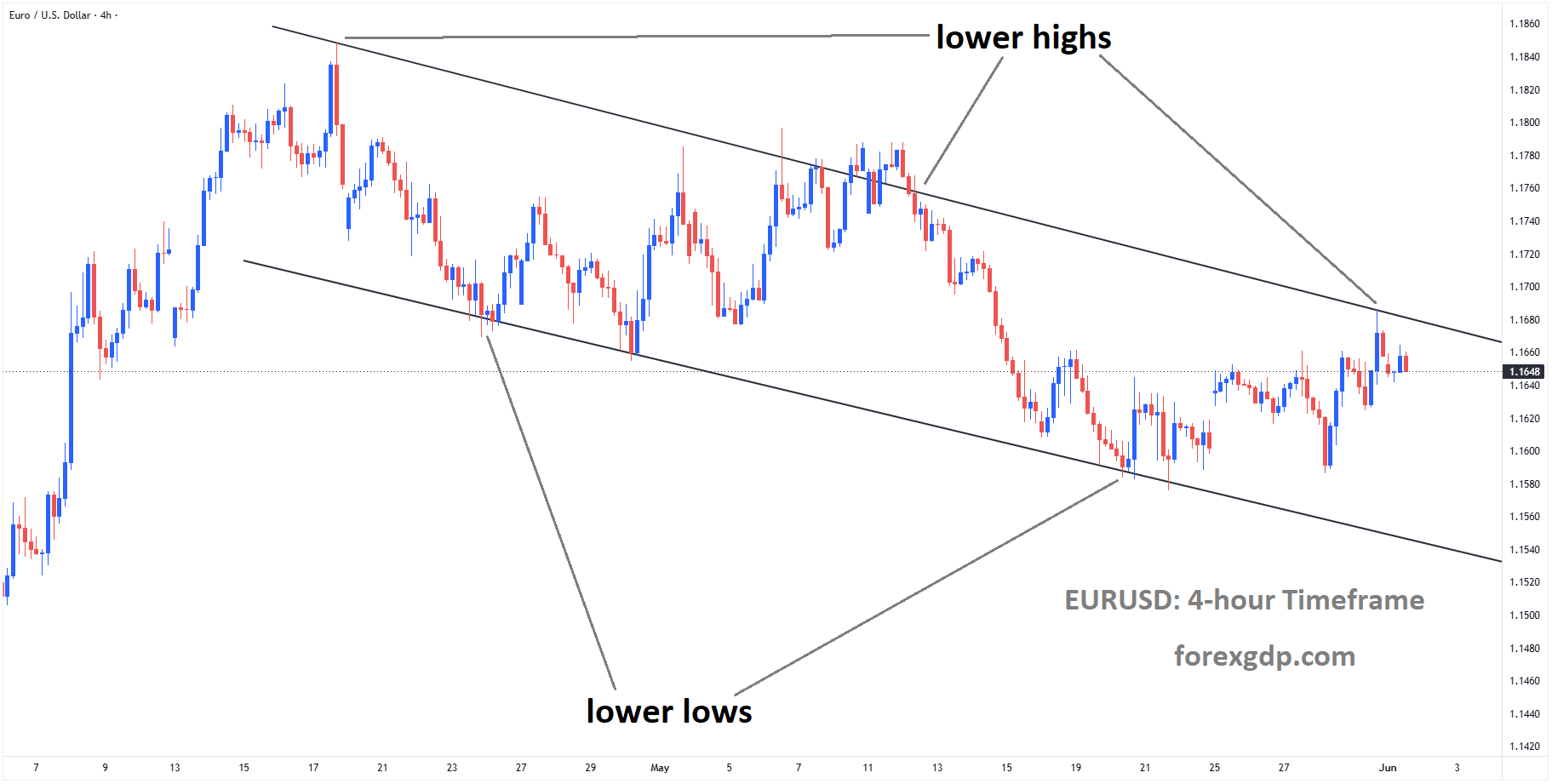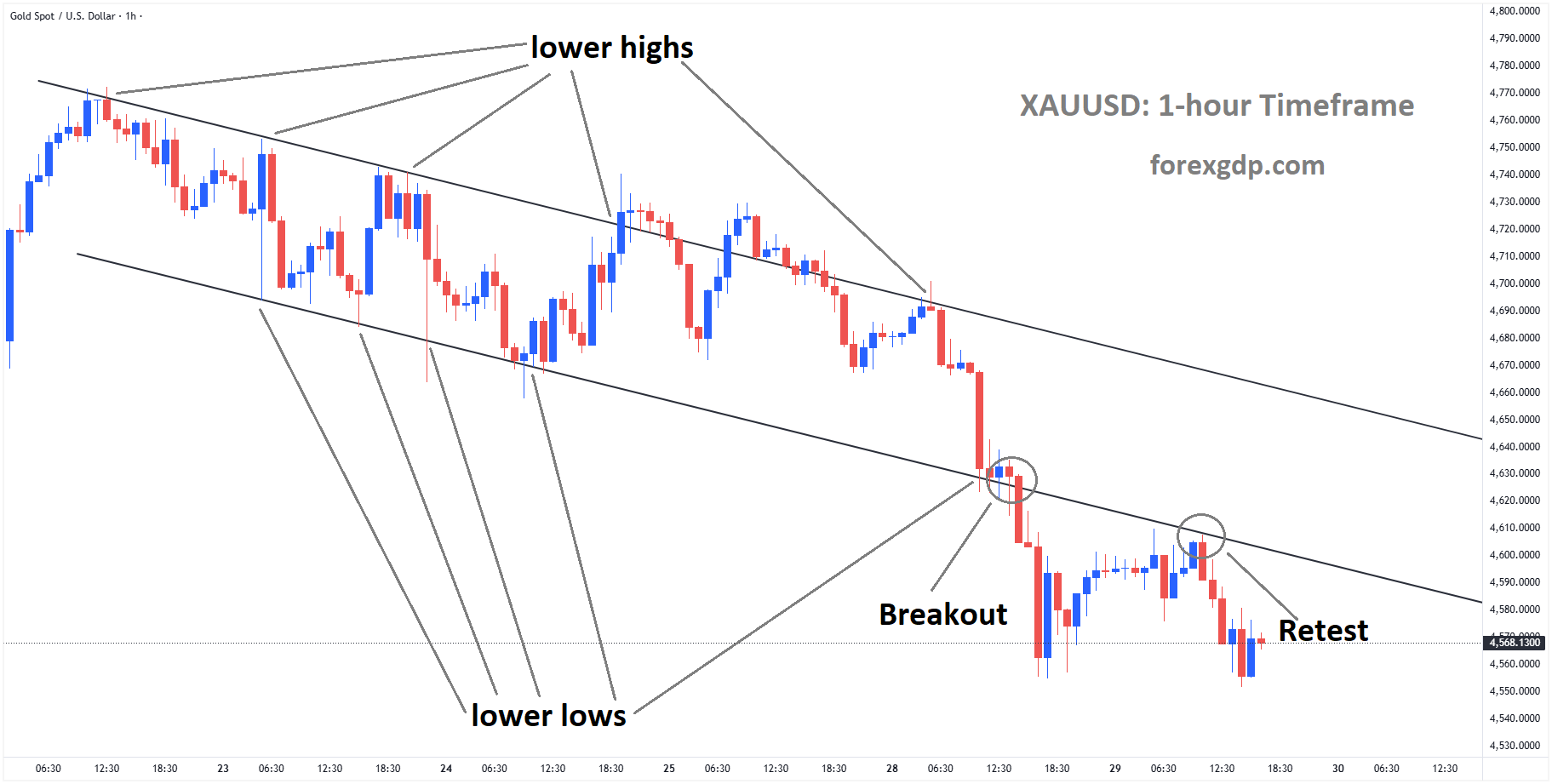


XAUUSD is moving in an ascending channel, and the market has reached a higher high area of the channel
Gold has taken a step back after reaching a fresh all-time high earlier on Friday. The move comes as many traders decide to lock in profits following several days of strong gains. When an asset rises quickly for multiple sessions in a row, it’s common to see some selling—even if the bigger picture still looks positive.
This pullback does not necessarily mean gold’s upward trend is over. Instead, it reflects a shift in short-term sentiment, driven by a calmer global mood, a slightly stronger US Dollar, and investors adjusting their positions ahead of major US central bank news.
At the same time, expectations that the US Federal Reserve could cut interest rates again in 2026 continue to support gold. Lower interest rates usually reduce the appeal of holding cash or interest-paying assets, which can make gold more attractive in comparison.
Why Gold Is Falling After Hitting a New High
Gold often climbs when investors feel uncertain about the economy or global politics. It also tends to benefit when the US Dollar weakens or when interest rates are expected to fall. Recently, gold had been rising steadily, supported by a combination of these factors.
But after four straight days of strong gains, some traders are choosing to take money off the table.
Profit-taking is a normal market reaction
Profit-taking simply means investors sell an asset after it has risen, securing gains rather than waiting to see if prices drop. This is especially common after a fast rally. Even long-term gold supporters may reduce their exposure temporarily when the market looks “overheated” in the short run.
That appears to be one of the main reasons gold eased back from its latest peak. The buying pressure that pushed gold higher earlier in the week slowed down, and more sellers stepped in once the record level was reached.
A steadier US Dollar adds pressure
Gold is priced in US Dollars, so the currency’s direction matters a lot. When the Dollar strengthens, gold can become more expensive for buyers using other currencies, which may reduce demand.
On Friday, the recent wave of US Dollar selling cooled off. That shift helped the Dollar regain some footing, which made it harder for gold to keep climbing at the same pace.
Reduced Safe-Haven Demand as US-EU Tensions Ease
Another key reason gold pulled back is that the overall “safe-haven” demand appears to be fading—at least for now.
Safe-haven demand refers to the tendency of investors to move into assets like gold when they feel nervous about geopolitical risks or major economic uncertainty. When tensions ease and markets feel more confident, money often flows away from gold and into riskier assets such as stocks.
Greenland headlines improve investor mood
Recent political news helped calm nerves. US President Donald Trump stepped back from tariff threats and said that the US had reached an agreement on a framework for a future deal on Greenland with NATO.
This update brought relief to markets, especially after earlier concerns that trade tensions could rise again. As the risk environment improved, Wall Street rallied, and that optimism spread into other global markets.
Asian equities also benefited from the positive momentum, showing that investors were feeling more comfortable taking on risk.
When stock markets rise and fear fades, gold often loses some of its shine in the short term—because fewer investors feel the need to park money in defensive assets.
Strong US Economic Data Sends Mixed Signals
Several key US economic reports were released recently, and they offered a mixed picture for markets. Some of the numbers were stronger than expected, which can support the US Dollar. But they also didn’t completely remove expectations that interest rates could eventually fall again, which helps gold.
US GDP growth comes in slightly better

The US Bureau of Economic Analysis released the final reading of third-quarter Gross Domestic Product (GDP). The report showed the economy expanded by 4.4%, slightly higher than the previous estimate of 4.3%. It also came in well above the 3.8% growth recorded in the prior quarter.
A strong GDP reading usually suggests the economy is holding up well. That can reduce the urgency for rate cuts in the near term and may support the Dollar. For gold, strong economic growth can sometimes be a headwind because it lowers recession fears and reduces the need for safe-haven assets.
Inflation remains sticky, but not accelerating sharply
Another important update came from the US Core Personal Consumption Expenditures (PCE) Price Index, which is the Federal Reserve’s preferred inflation measure.
The Core PCE reading rose 2.8% year-over-year in November, slightly higher than the 2.7% seen in the previous month. On a monthly basis, inflation increased by 0.2%, matching the steady pace investors have been watching.
This type of inflation data can create uncertainty. On one hand, it shows inflation is still above where the Fed wants it to be, which can justify keeping rates higher for longer. On the other hand, the pace isn’t surging, which keeps the door open for future rate cuts if the economy slows later.
For gold, inflation trends matter because gold is often seen as a store of value during times when purchasing power is under pressure.
Jobless claims stay low
The US Department of Labor also reported that initial unemployment claims rose slightly, increasing by 1,000 to 200,000 for the week ending January 17. That number was lower than the market expectation of 212,000.
Low jobless claims suggest the labor market remains stable. A strong job market can support consumer spending and economic growth, which tends to support the US Dollar.
However, the data didn’t trigger a major surge in the Dollar, showing that investors may already be focused on what comes next: the Fed’s policy direction.
Fed Rate Cut Expectations Could Still Support Gold
Even though gold pulled back, many investors are not ready to abandon it. One of the biggest reasons is the outlook for US interest rates.
Gold does not pay interest. That means it usually performs better when interest rates are low or expected to fall, because the “opportunity cost” of holding gold becomes smaller.
Markets still see rate cuts in 2026
Investors widely believe the Federal Reserve will keep interest rates unchanged through the end of this quarter, and possibly longer. Some even think rates may stay steady until Chair Jerome Powell’s tenure ends in May.
But despite that near-term pause, markets are still pricing in the possibility of at least two more interest rate cuts in 2026.
That expectation matters because it limits how much the US Dollar can rise. If traders believe rates will eventually move lower, they may be less willing to push the Dollar higher aggressively. And if the Dollar struggles to strengthen, gold often finds support.
The US Dollar is still under pressure overall
Even with a small rebound, the US Dollar Index—which measures the Dollar against a basket of major currencies—has been on track for a tough week. It has reversed a significant part of its gains from earlier in 2026.
This broader weakness has helped gold remain well-supported, even during short-term dips. It also strengthens the argument that gold’s longer-term momentum may still be intact.
What Traders Are Watching Next: The FOMC Meeting
The next major event on the calendar is the upcoming Federal Open Market Committee (FOMC) meeting, which begins next Tuesday and runs for two days.
This meeting is expected to be a key driver for both the US Dollar and gold.
Why this Fed meeting matters so much
Investors will be paying close attention to:
-
Any hints about when rate cuts could begin again
-
How the Fed views inflation trends going forward
-
Whether economic growth is strong enough to keep rates steady
-
The tone of the Fed’s communication and future guidance
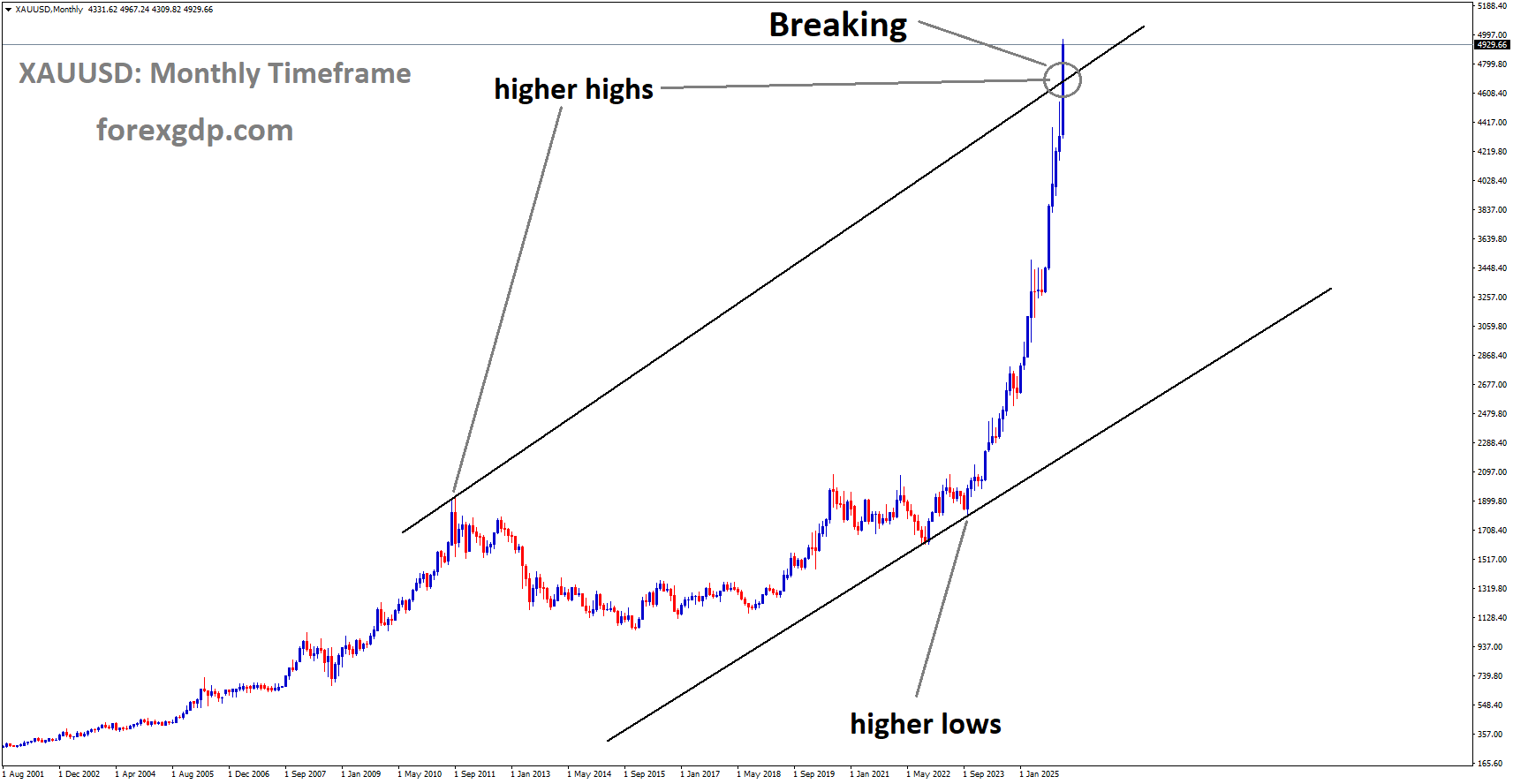
XAUUSD is breaking the higher high area of the uptrend channel
Even if the Fed keeps rates unchanged, the language it uses can move markets quickly. A more cautious tone could weaken the Dollar and support gold. A more confident tone could strengthen the Dollar and put pressure on gold in the short term.
Gold may need stronger selling to signal a real shift
For now, many traders believe it’s too early to say gold has topped out. A single pullback after a record high can simply be a pause, not a reversal.
Because gold has been supported by expectations of future rate cuts and a softer Dollar trend, traders may want to see stronger and more sustained selling before they start betting on a deeper decline.
Final Summary
Gold has eased back after touching a new all-time high, mainly due to profit-taking and a more optimistic market mood. Reduced geopolitical stress—especially easing US-EU tensions tied to Greenland—has weakened gold’s safe-haven appeal, while a steadier US Dollar has added some pressure.
Still, expectations for additional Federal Reserve rate cuts in 2026 may keep the Dollar from rising too far and continue to support gold over time. With the next FOMC meeting approaching, traders are staying alert for any signals that could shape the next major move in both the US Dollar and the gold market.
Don’t trade all the time, trade forex only at the confirmed trade setups
Get more confirmed trade signals at premium or supreme – Click here to get more signals, 2200%, 800% growth in Real Live USD trading account of our users – click here to see , or If you want to get FREE Trial signals, You can Join FREE Signals Now!