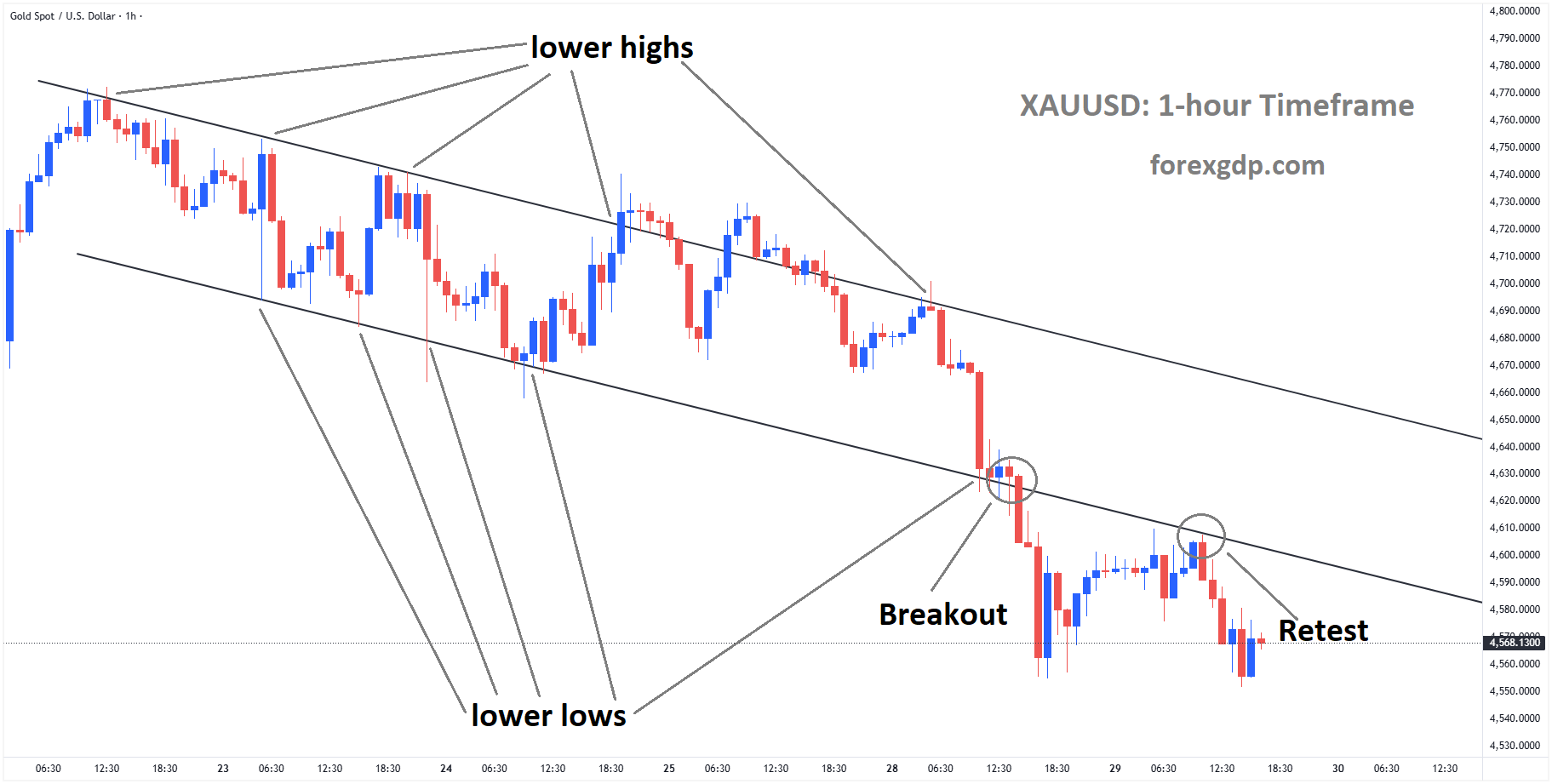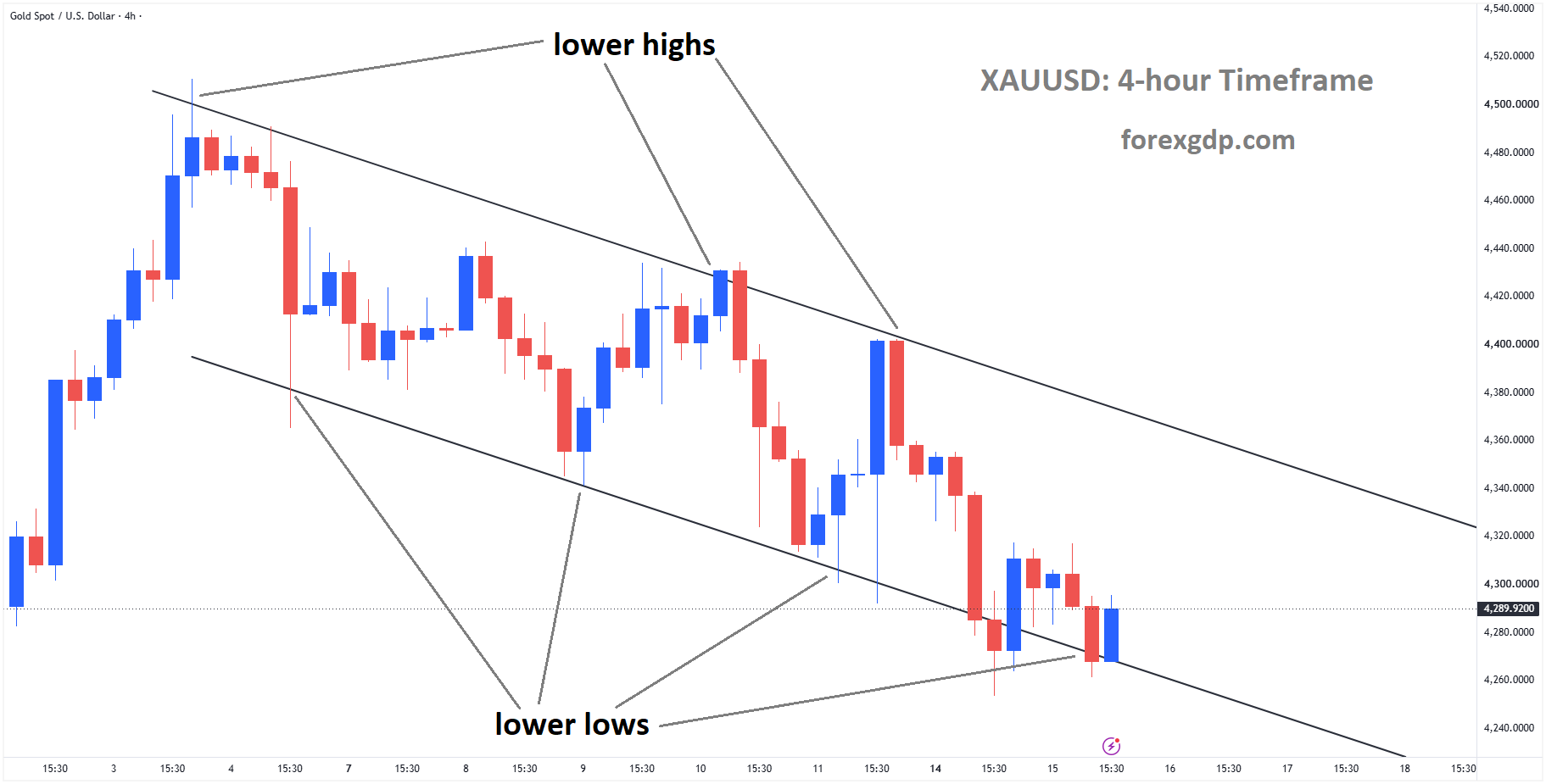
XAUUSD is moving in a descending channel, and the market has rebounded from the lower low area of the channel
Gold remains under pressure as rising government bond yields, a stronger US Dollar and expectations of tighter monetary policy reduce demand for the precious metal. However, investors are showing caution before the Federal Reserve announces its latest interest rate decision and publishes updated economic forecasts.
The metal has struggled to attract strong buying interest, but selling activity has also remained limited. Many traders appear unwilling to make large moves before they hear directly from Federal Reserve officials. The central bank’s guidance could shape expectations for interest rates, inflation and the wider economy over the coming months.
Rising Treasury Yields Create a Difficult Environment for Gold
One of the main challenges facing gold is the continued increase in US Treasury yields. Government bond yields have climbed as investors prepare for the possibility that interest rates will remain high or rise further.
Gold does not pay interest, so it often becomes less attractive when bond yields increase. Investors can earn a return from government debt while holding the precious metal provides no regular income. This difference can encourage some market participants to move money away from gold and into interest-bearing assets.
Higher Treasury yields have also supported the US Dollar. Since gold is generally traded in the American currency, a stronger Dollar can make the metal more expensive for buyers using other currencies. That may weaken international demand and add further pressure to the market.
The connection between gold, bond yields and the Dollar has become especially important ahead of the Federal Reserve meeting. Investors are watching the bond market closely for signs of how traders expect monetary policy to develop.
Federal Reserve Meeting Takes Centre Stage
The Federal Reserve’s upcoming decision is the most important event for gold investors this week. Markets widely expect policymakers to take a tougher position on inflation, with the possibility of an interest rate increase attracting significant attention.
The central bank has kept borrowing costs unchanged so far, but inflation remains above its official target. Recent economic figures suggest that price pressures are still present at both the consumer and producer levels.
Consumer inflation remained elevated in August, while producer prices increased more quickly than they had in the previous month. Rising producer costs can eventually affect households if companies pass their additional expenses on through higher prices.
Federal Reserve officials have repeatedly said that restoring price stability remains a priority. This message has strengthened expectations that policymakers may decide further action is necessary.
Investors will not focus only on the immediate rate announcement. The Federal Reserve’s updated economic projections could be even more important because they may reveal how officials expect inflation, employment, economic growth and interest rates to develop.
Comments from Fed Chairman Kevin Warsh will also receive close attention. Markets will look for clues about whether any policy tightening is likely to be a one-time response or the beginning of a longer cycle.
Energy Shock Adds to Inflation Concerns
The war in the Middle East has created a serious energy shock, adding another layer of uncertainty to the global economic outlook. High oil costs can affect transportation, manufacturing, agriculture and household energy bills. As those costs spread through the economy, inflation can become more difficult to control.
Gold is often viewed as a safe-haven asset during periods of military conflict and political instability. However, its recent behaviour shows that geopolitical risk does not always guarantee stronger demand.
Since the conflict began, the precious metal has reacted more sharply to changes in interest rate expectations than to developments in the war itself. Investors appear to be concentrating on how the energy shock may influence inflation and central bank policy.
If expensive oil keeps inflation elevated, the Federal Reserve may have less freedom to reduce borrowing costs. Policymakers could instead keep monetary conditions tight for longer or consider additional rate increases. Either outcome may continue to weigh on gold by supporting bond yields and the US Dollar.
This creates a complicated situation. Geopolitical tension can encourage safe-haven buying, but the inflationary effects of the conflict may also strengthen the case for tighter monetary policy. For now, concerns about interest rates appear to be having the greater influence.
Global Bond Sell-Off Extends Beyond the United States

The increase in borrowing costs is not limited to the American market. Bond yields across several leading economies have risen to levels not seen for many years.
Monetary policy expectations are part of the reason, but they do not explain the entire move. Investors are also becoming more concerned about heavy government borrowing and the long-term health of public finances.
Many governments have increased spending while continuing to issue large amounts of debt. When the supply of government bonds grows, investors may demand higher returns before agreeing to lend more money. Questions about fiscal sustainability can place additional pressure on bond markets.
This development may hurt gold in the short term because rising yields make interest-bearing investments more appealing. Over a longer period, however, concerns about government debt could work in gold’s favour.
If investors begin to view higher yields as a warning about weakening confidence in public finances, some may turn to gold as an alternative store of value. The metal has traditionally attracted interest when people become worried about currencies, debt burdens or the stability of the financial system.
Investors Prepare for Different Fed Outcomes
A more aggressive Federal Reserve message would probably create further challenges for gold. If officials suggest that tighter policy will continue beyond the current meeting, Treasury yields could remain elevated and the US Dollar may receive additional support.
The effect could be more limited if the central bank raises rates but avoids committing to another move. Many investors have already prepared for a hawkish decision, meaning part of the expected policy change may already be reflected in market positioning.
A softer message could reduce pressure on the precious metal. If officials express concern about economic growth or suggest that future decisions will depend heavily on new data, investors may reconsider expectations for an extended tightening campaign.
Uncertainty explains why trading has remained cautious. Market participants are waiting for a clearer view of the Federal Reserve’s plans before making major commitments.
Long-Term Sources of Gold Demand Remain in Place
Despite the difficult short-term environment, gold continues to receive support from several important areas of demand.
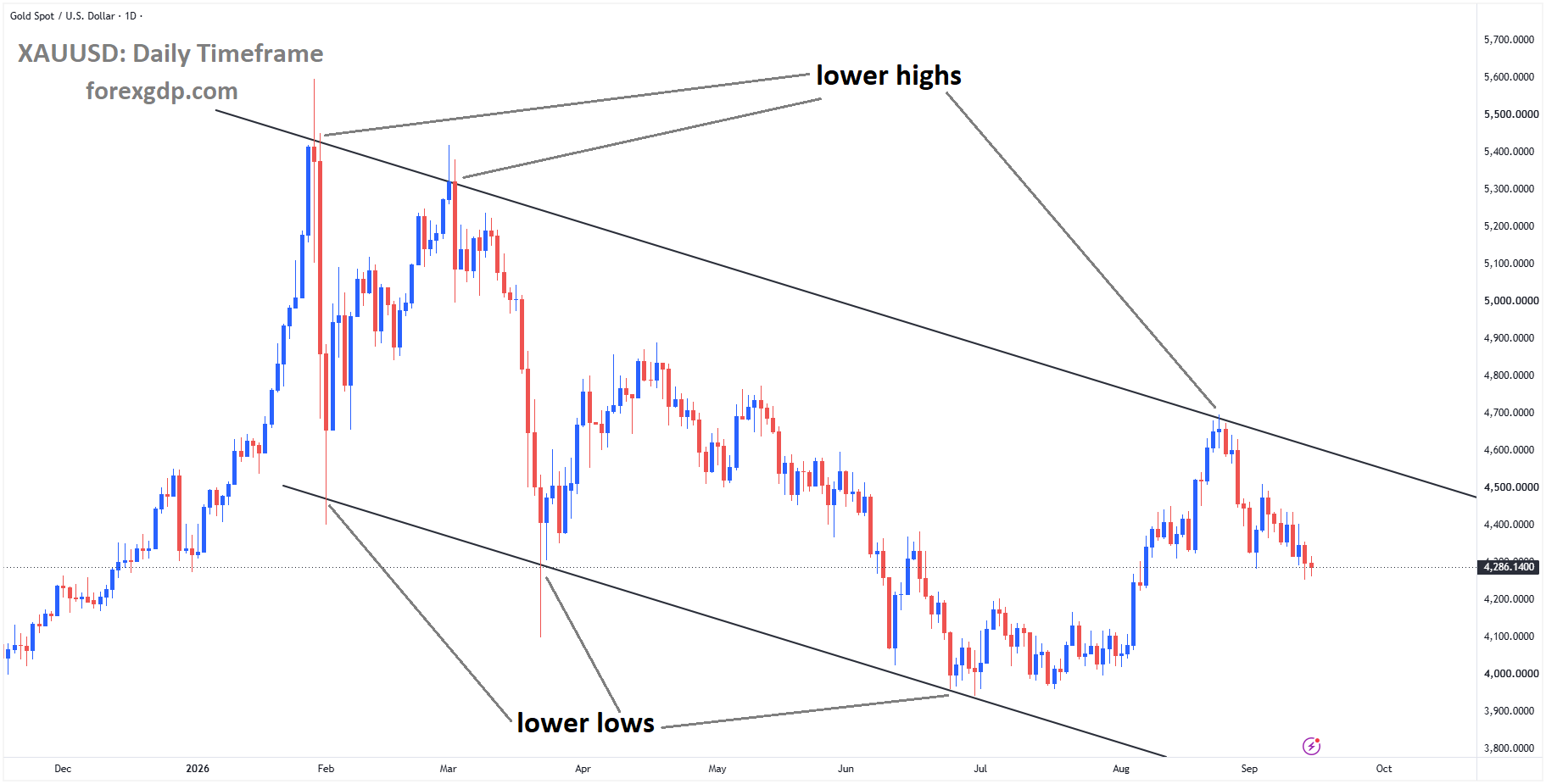
XAUUSD is moving in a descending channel, and the market has fallen from the lower high area of the channel
Central banks remain significant buyers as they diversify their reserves and reduce dependence on traditional foreign currencies. These purchases can provide a stable foundation for the market even when private investors become more cautious.
Retail demand also remains important. Individuals often buy physical gold as protection against inflation, financial uncertainty and currency weakness. Gold-backed exchange-traded funds offer another way for investors to gain exposure without directly owning bars or coins.
These longer-term sources of demand may help limit deeper weakness, particularly if concerns about government debt and geopolitical instability continue. Still, the immediate direction will depend heavily on the Federal Reserve’s message and the response in bond and currency markets.
Summary
Gold is facing pressure from rising Treasury yields, a stronger US Dollar and growing expectations of tighter Federal Reserve policy. Persistent inflation and the energy shock linked to the Middle East conflict have made the central bank’s task more difficult.
Investors are avoiding large positions before the Fed decision, updated economic forecasts and Kevin Warsh’s remarks. A signal that further tightening is likely could keep gold under pressure, while a more cautious policy message may offer some relief.
Beyond the immediate meeting, heavy government borrowing and concerns about fiscal stability could eventually strengthen gold’s appeal as a store of value. Central bank purchases, retail investment and gold-backed funds also continue to provide underlying support.