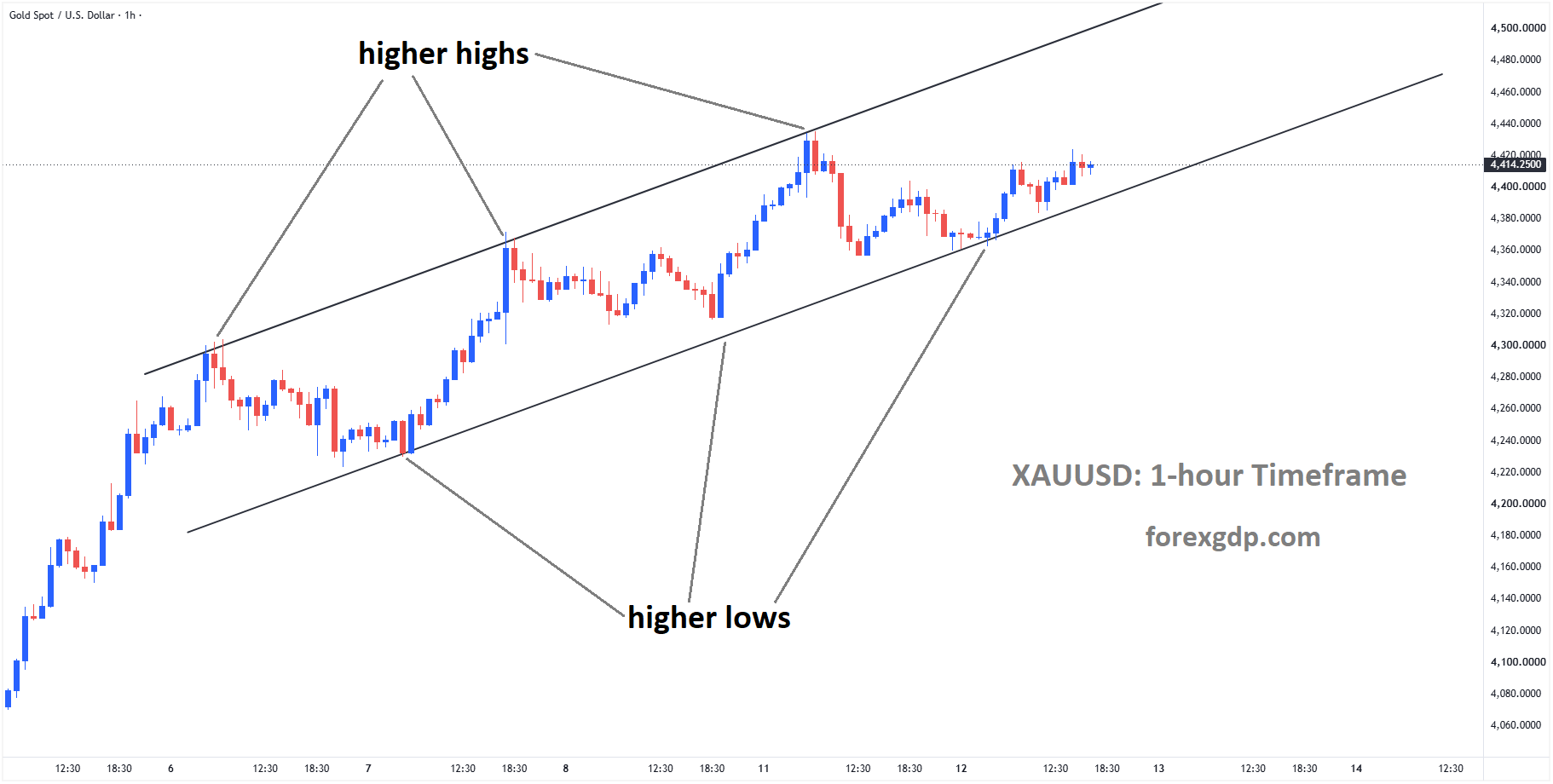
XAUUSD is moving in an ascending channel, and the market has rebounded from the higher low area of the channel
Gold recovered on Wednesday after suffering a rare decline in the previous session. Demand for the precious metal returned as traders prepared for the latest United States Consumer Price Index report and continued to monitor tensions surrounding the Strait of Hormuz.
The upcoming inflation figures are expected to play an important role in shaping expectations for the Federal Reserve’s September policy meeting. At the same time, elevated oil costs are creating fresh concerns about inflation, particularly because there is still no clear timetable for reopening the Strait of Hormuz.
These developments have left investors balancing several major risks. A stronger inflation report could support expectations for higher interest rates, while softer figures may strengthen the case for the Federal Reserve to leave borrowing costs unchanged. Gold’s next move is therefore likely to depend heavily on the economic data and any new developments in the Middle East.
Gold Recovers Ahead of Key US CPI Report
Gold moved higher on Wednesday after ending Tuesday’s session with losses. The previous decline was only the second negative close in six trading days, showing that demand for the metal has remained relatively strong despite short-term pressure.
Attention has now shifted to the July US inflation report. The Consumer Price Index is one of the most closely followed economic releases because it measures changes in the cost of goods and services paid by consumers.
Economists expect headline inflation to rise modestly from the previous month. Core inflation, which excludes the more volatile food and energy categories, is also forecast to record a small monthly increase.
On an annual basis, however, both headline and core inflation are expected to slow. If the forecasts are accurate, the figures could suggest that underlying price pressures are gradually easing, even though inflation remains above the Federal Reserve’s long-term target.
For gold traders, the details of the report will matter as much as the overall numbers. A broad increase across major categories could raise concerns that inflation is proving difficult to control. By contrast, weaker growth in housing, services, and other important areas could reassure investors that inflation is moving in a more favorable direction.
Oil Supply Concerns Keep Inflation Risks Elevated
The inflation report is arriving during a period of serious uncertainty in global energy markets. The Strait of Hormuz remains closed, and there has been no clear sign that an agreement to reopen the vital shipping route is close.
The strait is one of the world’s most important passages for oil and gas shipments. Any extended disruption can affect transportation costs, energy supplies, and business expenses across many countries.
Higher energy costs can spread through the economy in several ways. Consumers may pay more for fuel, while companies face increased expenses for transportation, manufacturing, and electricity. Businesses may then pass some of those costs on to customers, adding pressure to consumer inflation.
This creates a difficult backdrop for the Federal Reserve. Even if the July CPI report shows some improvement, continued disruption in energy supplies could slow future progress toward the central bank’s inflation goal.
The US Energy Information Administration has also raised its longer-term oil cost expectations. That revision reflects growing concern that geopolitical tensions and supply uncertainty may keep energy expenses elevated for an extended period.
As a result, traders are unlikely to focus only on the July data. They will also consider whether rising energy costs could produce stronger inflation readings in the coming months.
Strait of Hormuz Crisis Remains Unresolved

Geopolitical tensions continue to influence demand for gold, which is widely viewed as a defensive asset during periods of political and economic uncertainty.
The crisis has become more complicated following deadly attacks in the Red Sea and further military action in nearby waters. Rabobank’s global economics and markets research team warned that relatively calm inflation expectations are developing against a far more unstable international background.
Iran has indicated that the Strait of Hormuz will remain closed unless the United States accepts its conditions. This position suggests that a quick resolution may be difficult, especially while military and political tensions remain high.
Diplomatic efforts are still underway. Pakistan’s Interior Minister Mohsin Naqvi met Iranian President Masoud Pezeshkian and Foreign Minister Abbas Araghchi in Tehran. Islamabad is attempting to restart stalled peace discussions between Iran and the United States.
Pakistan could potentially serve as an important diplomatic bridge because of its regional relationships. However, meetings alone do not guarantee progress. There has been no confirmed breakthrough, and uncertainty over the shipping route remains a major concern for global markets.
Until there is a credible agreement, traders may continue to treat energy supply disruptions as a significant risk. That uncertainty could maintain demand for gold, particularly if the situation becomes more dangerous or begins to threaten the wider global economy.
Federal Reserve Policy Expectations in Focus
The Federal Reserve is trying to return inflation to its 2% target without causing unnecessary damage to economic growth. That task becomes more difficult when inflation is influenced by international events that monetary policy cannot directly control.
Higher interest rates can reduce demand by making borrowing more expensive. However, they cannot reopen shipping routes or restore disrupted energy supplies. If oil-related inflation rises, policymakers may have to decide whether to respond to those pressures or wait for them to fade.
Current market expectations show considerable uncertainty about the September meeting. According to the CME FedWatch Tool, traders see close to an even chance that the Federal Reserve will raise interest rates.
A stronger-than-expected CPI report could increase those expectations. It may suggest that inflation remains too persistent for policymakers to stay patient, especially if energy costs continue to climb.
A softer report would create a different picture. If both headline and core inflation show convincing improvement, investors may reduce expectations for another increase in borrowing costs. Such an outcome could help gold because the metal does not pay interest and often becomes more appealing when expectations for rates and bond returns decline.
The US Dollar Could Guide Gold’s Reaction
The relationship between gold, the US Dollar, and Treasury yields will also influence the market’s response to the inflation data.
When investors expect higher US interest rates, Treasury yields often rise and the Dollar may strengthen. That environment can make gold less attractive because investors can earn returns from government bonds and other interest-paying assets. A stronger Dollar can also make gold more expensive for buyers using other currencies.
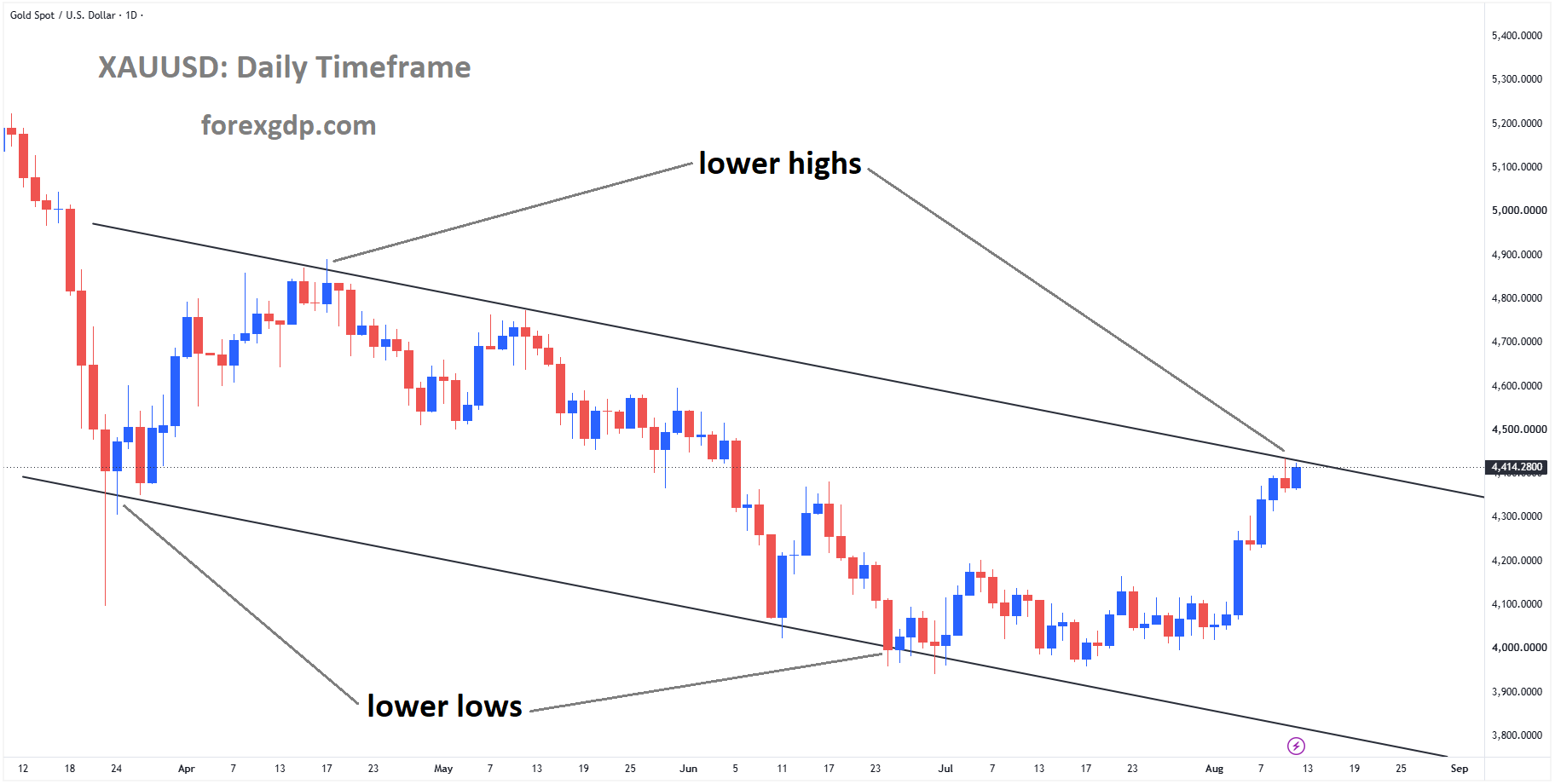
XAUUSD reached the lower high area of the descending channel
If inflation is weaker than expected, Treasury yields and the Dollar may come under pressure. That could improve demand for gold, especially if geopolitical risks remain elevated.
The initial reaction after the CPI release may be sharp, but traders will likely examine the full report before deciding whether the data meaningfully changes the Federal Reserve outlook. A single monthly reading may not settle the debate, particularly while the energy situation remains uncertain.
Summary
Gold has regained momentum as investors wait for the July US Consumer Price Index report and monitor the unresolved crisis surrounding the Strait of Hormuz. Inflation is expected to show modest monthly growth while easing on an annual basis, but elevated energy costs could complicate that improving picture.
A stronger inflation reading may increase expectations for a Federal Reserve rate hike, supporting the US Dollar and Treasury yields while creating pressure for gold. Softer data could reduce the likelihood of tighter policy and strengthen demand for the precious metal.
Meanwhile, diplomatic discussions involving Pakistan, Iran, and the United States have not yet produced an agreement to reopen the Strait of Hormuz. Until the energy supply threat is resolved, geopolitical uncertainty and inflation concerns are likely to remain central drivers of gold demand.