
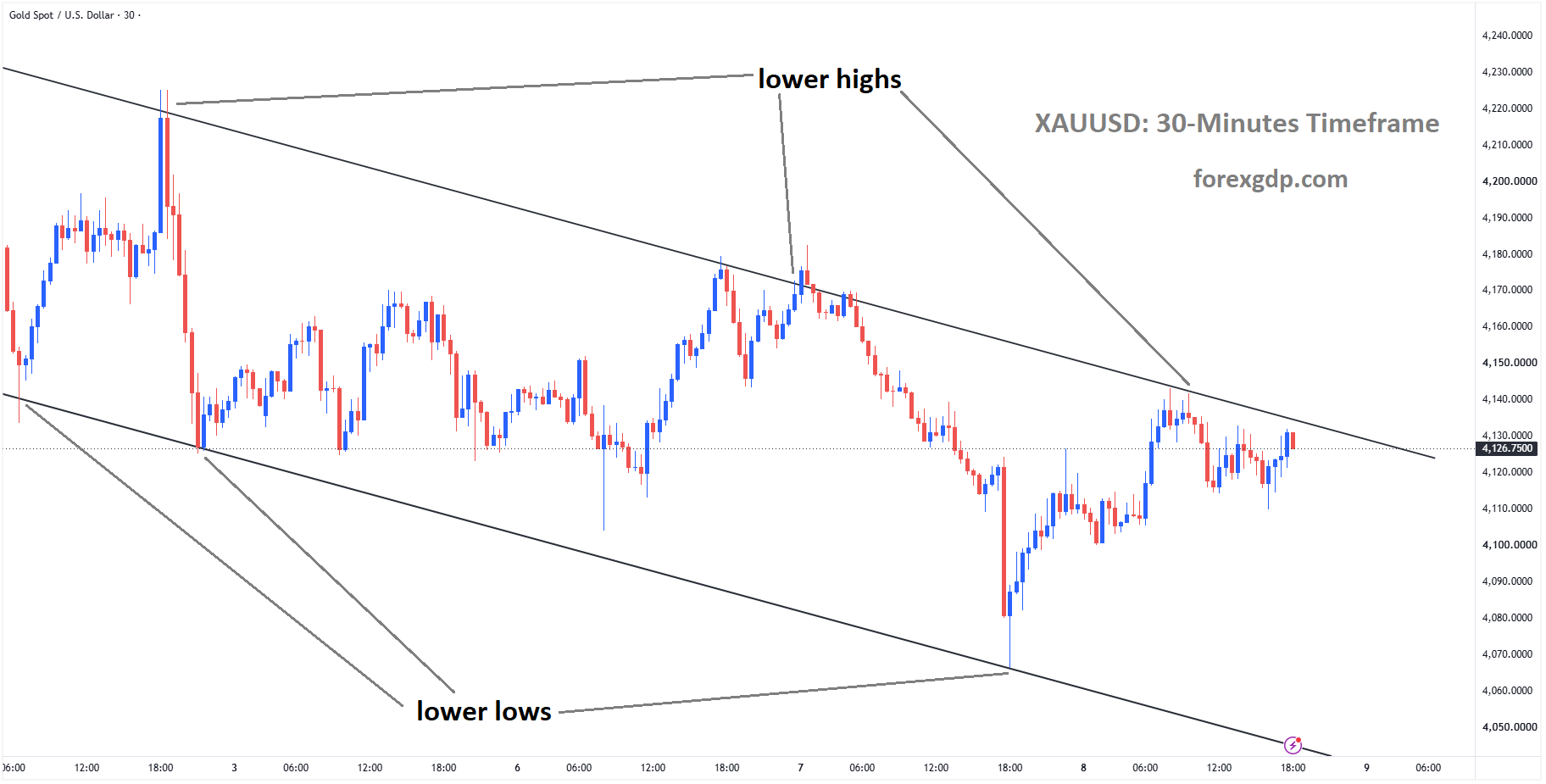
XAUUSD reached lower high area of the descending channel
Gold continues to face selling pressure as a stronger US Dollar, rising US Treasury yields, and growing expectations of further interest rate increases by the Federal Reserve reduce investor interest in the precious metal. Although Gold recently attempted to recover, the improvement proved short-lived as broader economic developments continued to favor the US Dollar.
Higher Oil prices have also added another challenge for Gold by increasing concerns about inflation. With energy costs rising and the Federal Reserve maintaining a cautious approach toward monetary policy, investors are increasingly considering the possibility that US interest rates could remain elevated for longer.
Despite these short-term difficulties, Gold continues to attract interest from central banks, institutional investors, and exchange-traded funds. This ongoing demand suggests that the precious metal could retain its importance as a long-term investment even while facing pressure from current economic conditions.
Strong US Dollar Reduces Demand for Gold
One of the main reasons behind Gold’s recent weakness is the continued strength of the US Dollar. The American currency has benefited from resilient economic activity, higher government bond yields, and expectations that the Federal Reserve may introduce additional monetary tightening.
Gold and the US Dollar often move in opposite directions because the precious metal is internationally traded in Dollars. When the Dollar strengthens, Gold becomes more expensive for investors holding other currencies, potentially reducing international demand.
The US economy has also demonstrated greater resilience than many investors previously expected. Continued economic activity and steady demand for American financial assets have encouraged global investors to maintain their exposure to the Dollar.
Foreign investment in US securities provides additional support for the currency. As international investors purchase American assets, demand for Dollars can increase, making it more difficult for Gold to attract fresh buying interest.
This combination of currency strength and economic resilience has created an unfavorable environment for Gold in the short term.
Rising US Treasury Yields Create Additional Challenges
Higher US Treasury yields are another important factor influencing Gold’s performance.
Unlike government bonds, Gold does not provide regular interest payments. When Treasury yields increase, investors can earn more income from interest-bearing assets, making them relatively attractive compared with non-yielding investments such as Gold.
The recent increase in yields reflects several economic concerns, including persistent inflation, growing government borrowing requirements, and uncertainty surrounding future Federal Reserve decisions.
The strength of the US economy has also contributed to expectations that borrowing costs could remain elevated for an extended period.
As long as Treasury yields remain high, some investors may prefer assets that generate income rather than holding Gold.
However, the relationship between Gold and bond yields is not always straightforward. During periods of significant economic uncertainty, investors may continue purchasing Gold for diversification and financial protection despite higher yields.
For now, the combination of elevated Treasury yields and a firm US Dollar remains a major obstacle for a sustained recovery in Gold demand.
Higher Oil Prices Increase Inflation Concerns
Rising Oil prices have introduced another layer of uncertainty into the global economic environment.
Energy costs influence transportation, manufacturing, electricity production, and many other essential business activities. When Oil becomes more expensive, companies often face higher operating expenses, which can eventually contribute to increased consumer prices.
Recent geopolitical developments involving the United States and Iran have raised concerns about potential disruptions to global energy supplies.
Reports of possible renewed American military action against Iran have increased uncertainty surrounding the Middle East, a region that plays a significant role in international Oil production and transportation.
Any major disruption to energy supplies could place further upward pressure on Oil prices and complicate efforts to control inflation.
For the Federal Reserve, higher energy costs present a difficult challenge. Even if inflation begins to moderate in other areas of the economy, sustained increases in fuel and transportation expenses could slow overall progress.
Although Gold traditionally benefits from inflation concerns, the immediate impact can be negative when higher inflation encourages expectations of additional interest rate increases.
This explains why rising Oil prices have recently supported the US Dollar and Treasury yields while creating difficulties for Gold.
Federal Reserve Maintains a Hawkish Monetary Policy Outlook
The Federal Reserve’s monetary policy remains one of the most influential factors affecting Gold.
Minutes from the central bank’s September meeting revealed that policymakers supported an interest rate increase as part of their continuing efforts to control inflation.
The discussions also indicated that many officials considered another increase potentially appropriate before the end of the year.
These developments suggest that the Federal Reserve remains concerned about persistent inflationary pressures despite signs of resilience in the broader economy.
Federal Reserve Governor Christopher Waller also emphasized the possibility of further monetary tightening while maintaining flexibility regarding the pace of future decisions.
His comments highlighted several inflationary challenges, including higher energy costs and increased investment associated with artificial intelligence infrastructure.
The rapid expansion of AI-related facilities requires significant spending on electricity, computing equipment, construction, and other resources. Such investment can support economic growth but may also increase demand for certain goods and services.
For Gold investors, the possibility of additional Federal Reserve tightening is important because higher interest rates generally strengthen the Dollar and increase the appeal of interest-bearing assets.
Nevertheless, the central bank has not committed to raising rates at every upcoming meeting. Future decisions will depend on economic developments, inflation trends, and employment conditions.
Central Bank Purchases Continue to Support Gold’s Long-Term Appeal
Despite the difficult short-term environment, Gold continues to benefit from demand among central banks around the world.
Many central banks hold Gold as part of their international reserves because it provides diversification and does not depend on the financial obligations of a single government.
Gold can also help countries manage currency uncertainty, geopolitical risks, and changes in the international financial system.
Over recent years, interest in reserve diversification has encouraged several central banks to increase their Gold holdings.
This demand is particularly important because central banks generally approach Gold ownership from a long-term perspective rather than reacting to every short-term market development.
As a result, continued official-sector purchases can provide an important source of underlying demand even when private investors become more cautious.
Gold’s role as a reserve asset remains valuable during periods of economic uncertainty, particularly when governments face growing debt burdens or international financial relationships become less predictable.
Gold ETF Demand Highlights Continued Investor Confidence

Gold-backed exchange-traded funds represent another important source of demand for the precious metal.
These investment products allow investors to gain exposure to Gold without directly purchasing and storing physical bullion.
Institutional investors and individual market participants often use Gold ETFs to diversify their portfolios and manage exposure to economic risks.
Strong investment flows into these funds can reflect confidence in Gold’s longer-term prospects, even during periods when rising interest rates create short-term challenges.
Analysts at TD Securities have highlighted the combined importance of central bank purchases, ETF investment, and demand from active market participants.
Their broader assessment suggests that continued interest from these groups could help Gold maintain its long-term investment appeal.
The institution also sees the possibility that Gold may become less sensitive to real interest rates over time, potentially allowing the precious metal to perform well even when traditional monetary conditions remain challenging.
Such a development would represent an important change in the relationship between Gold and the wider financial environment.
However, this remains a longer-term possibility rather than a guaranteed outcome.
What Could Influence Gold in the Coming Months?
Several major economic developments could determine how investors approach Gold over the remainder of the year.
The Federal Reserve’s upcoming policy decisions will remain particularly important. Any indication that policymakers are becoming less concerned about inflation could reduce expectations of further interest rate increases.
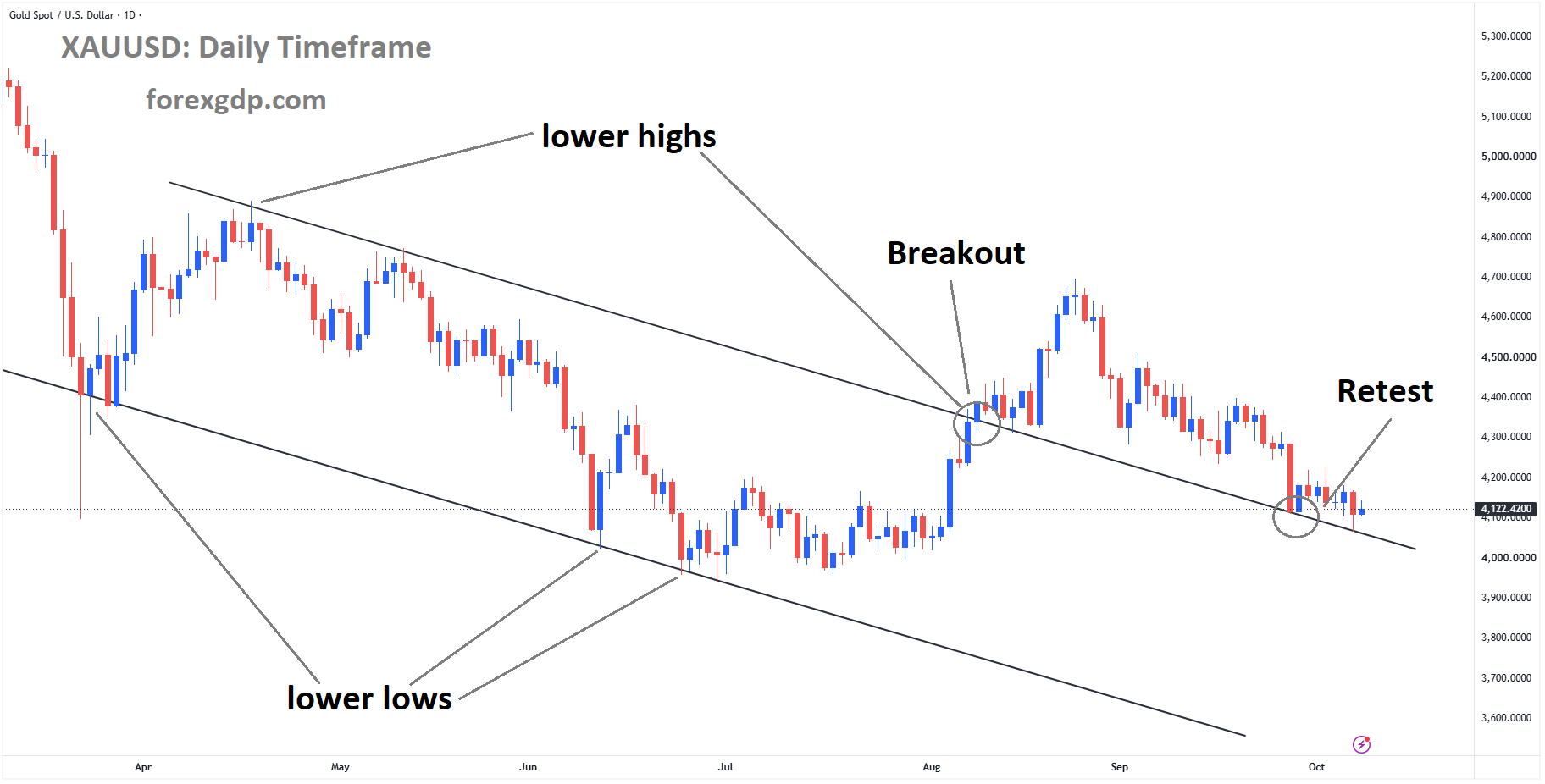
XAUUSD reached retest area of the broken descending channel
Changes in US Treasury yields and Dollar demand will also influence investor sentiment toward the precious metal.
Meanwhile, geopolitical developments involving the Middle East could affect both energy markets and demand for safe-haven investments.
If international tensions intensify, some investors may increase their Gold holdings as protection against uncertainty.
On the other hand, persistently high energy costs could keep inflation concerns elevated and encourage the Federal Reserve to maintain restrictive monetary conditions.
The direction of the US economy will also matter. Strong economic growth may continue supporting the Dollar, while signs of slowing activity could change expectations surrounding future monetary policy.
Ultimately, Gold’s prospects will depend on how these competing forces develop.
Final Summary
Gold remains under pressure as a strong US Dollar, elevated Treasury yields, and expectations of further Federal Reserve interest rate increases reduce its short-term attractiveness.
Rising Oil prices and geopolitical tensions have added to inflation concerns, creating further uncertainty about when US monetary policy might become less restrictive.
However, the longer-term outlook for Gold continues to receive support from central bank purchases, Gold ETF investment, and demand for portfolio diversification.
While current economic conditions favor the US Dollar and interest-bearing assets, Gold remains an important investment for institutions seeking protection against financial and geopolitical uncertainty.
The key question for Gold investors is whether persistent inflation and restrictive Federal Reserve policy will continue limiting demand, or whether strong central bank and institutional buying will eventually help the precious metal regain momentum.