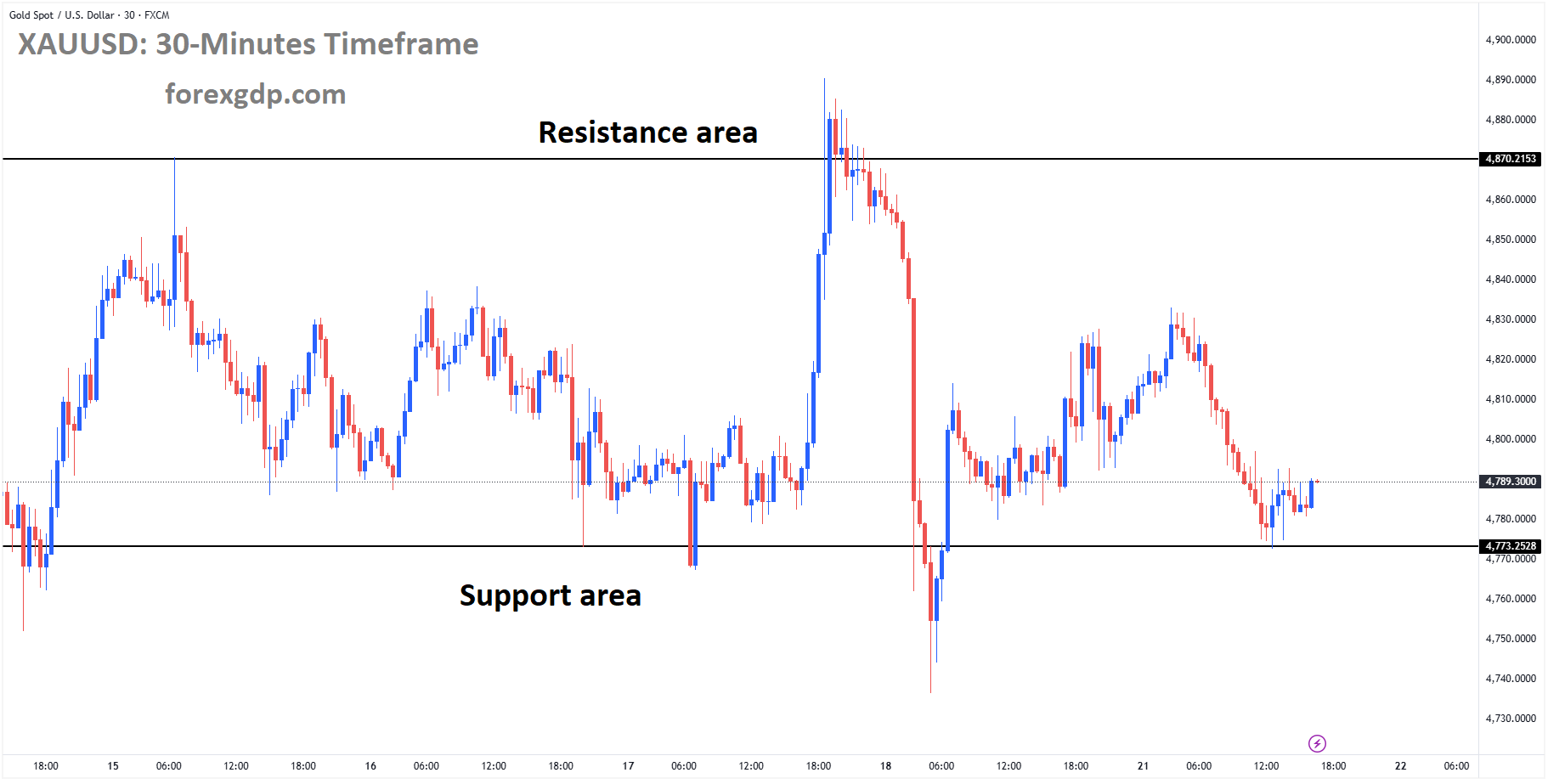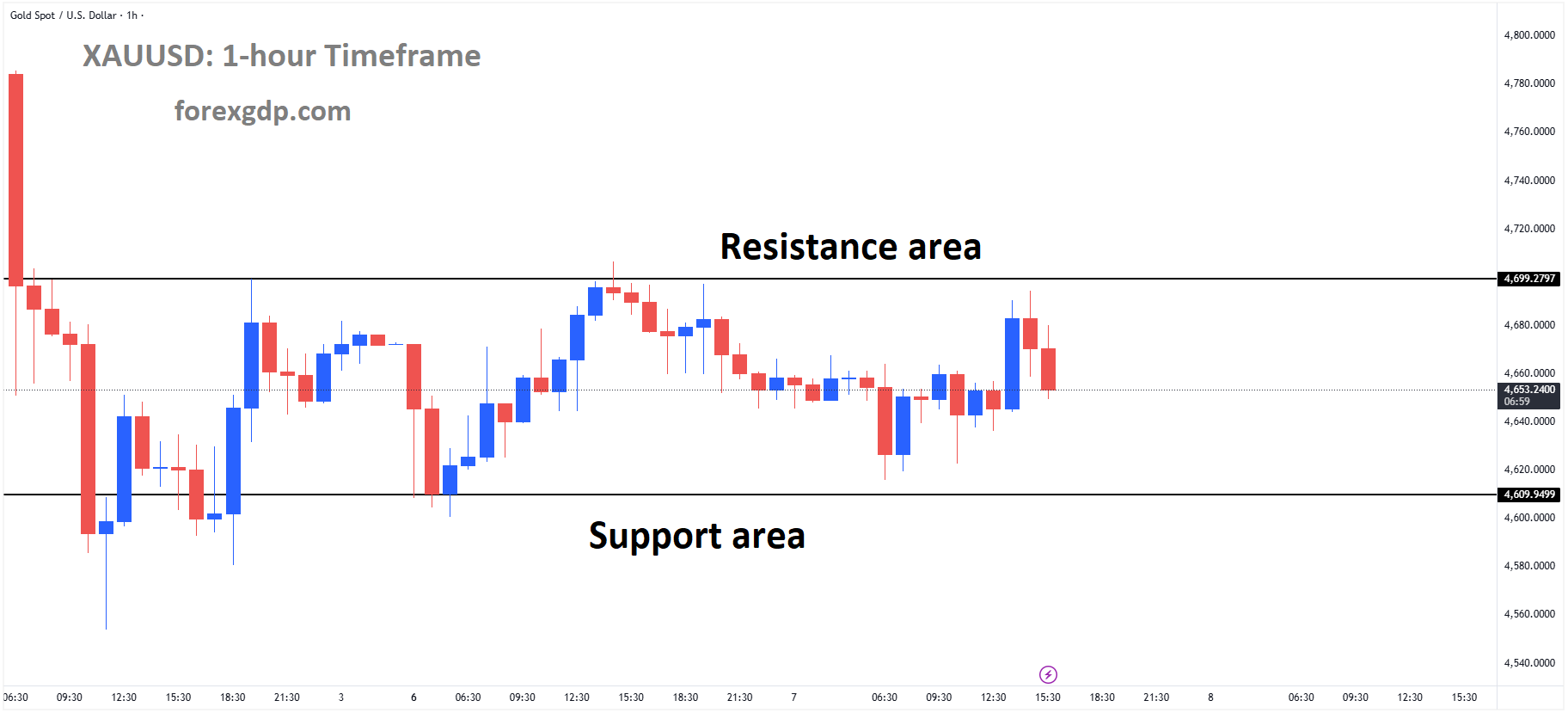
XAUUSD is moving in a box pattern, and the market has fallen from the resistance area of the pattern.
Gold prices are moving within a narrow range, reflecting a cautious mood across global markets. Investors are closely watching developments surrounding a potential agreement between the United States and Iran, while also keeping an eye on economic signals that could influence future interest rate decisions. This mix of uncertainty and anticipation has left gold trading without a clear direction.
At present, the metal is hovering below the $4,700 mark, with traders hesitant to make bold moves. Instead, many are waiting for clearer signals before taking positions, especially as key political and economic events unfold.
Geopolitical Uncertainty Keeps Traders on Edge
One of the biggest factors influencing gold right now is the ongoing tension between the United States and Iran. A deadline set by former US President Donald Trump has added urgency to the situation, with strong warnings issued to Iran to either agree to terms or take specific actions regarding the Strait of Hormuz.
This waterway is one of the most important global routes for oil transport, and any disruption could have serious consequences for energy markets and the global economy. Because of this, investors are watching closely for any updates or decisions.
Mixed Signals from Negotiations
Earlier hopes for a ceasefire or agreement brought some temporary optimism. However, that positive sentiment quickly faded after reports suggested that Iran rejected a proposal and instead presented its own set of conditions. These included demands such as lifting sanctions and ensuring safe passage through the Strait of Hormuz.
While the US acknowledged these proposals as a step forward, they were not considered sufficient. This has kept uncertainty high, with no clear resolution in sight.
Why Gold Isn’t Surging Despite Tensions
Normally, gold tends to rise during times of geopolitical stress because it is seen as a safe-haven asset. However, this time the reaction has been more muted. One key reason is the strength of the US dollar.
When the dollar is strong, gold often struggles because it becomes more expensive for buyers using other currencies. In addition, global demand for liquidity has pushed investors toward cash and dollar-based assets rather than gold.
As a result, even with rising tensions, gold has not seen a strong upward push.
Rising Oil Prices and Inflation Concerns Add Pressure
Another important factor influencing gold is the rise in oil prices. Higher energy costs can increase inflation, which affects both consumers and businesses. This creates a complex situation for central banks, especially the US Federal Reserve.
Impact on Interest Rate Expectations
When inflation rises, central banks often respond by keeping interest rates higher for longer. This is exactly what markets are starting to expect.
Previously, many investors believed that the Federal Reserve would cut interest rates multiple times this year. However, those expectations have changed significantly. Now, the market is leaning toward fewer or even no rate cuts in the near term.
Why Higher Rates Affect Gold
Gold does not pay interest or dividends, so it becomes less attractive when interest rates are high. Investors may prefer assets that offer returns, such as bonds or savings instruments.
Because of this, expectations of higher interest rates are acting as a headwind for gold prices. Even if demand remains steady, the lack of yield makes it harder for gold to gain strong momentum.
Inflation Data in Focus
Upcoming inflation data from the United States is expected to play a key role in shaping market sentiment. Economists are forecasting a noticeable increase in consumer prices compared to previous months.
If inflation comes in higher than expected, it could further strengthen the case for keeping interest rates elevated. This would likely continue to limit gold’s upside in the short term.
Strong Long-Term Demand Supports Gold
Despite the current hesitation in the market, gold’s long-term outlook remains positive. Several underlying factors continue to support demand and provide a solid foundation for future growth.
Central Banks Continue to Buy Gold
One of the strongest sources of demand comes from central banks around the world. Many countries are increasing their gold reserves as a way to diversify away from traditional currencies and reduce financial risks.
For example, China has been steadily adding to its gold holdings for over a year. This consistent buying reflects a broader trend among central banks seeking stability in uncertain times.
Growing Concerns Over Global Debt
Another factor supporting gold is the rising level of government debt across major economies. As debt levels increase, concerns about financial stability and currency value also grow.
Gold is often seen as a reliable store of value during such periods. This makes it an attractive option for both institutional and individual investors looking to protect their wealth.
Retail and ETF Demand Remains Strong
In addition to central banks, everyday investors are also playing a role in supporting gold prices. Exchange-traded funds (ETFs) that track gold have seen steady interest, providing an easy way for people to invest in the metal.
This broad-based demand helps keep gold prices supported, even during periods of short-term weakness.
Market Sentiment Remains Cautious
Overall, the gold market is currently in a wait-and-see mode. Traders are balancing multiple factors, including geopolitical developments, economic data, and central bank policies.
Lack of Clear Direction
Price movements have been uneven, with no strong trend forming. This reflects the uncertainty in the market, as investors wait for clearer signals before making decisions.

XAUUSD is moving in a box pattern, and the market has fallen from the resistance area of the pattern
Key Events to Watch
Several upcoming events could influence gold’s direction:
- Updates on US-Iran negotiations
- US inflation data releases
- Signals from the Federal Reserve regarding interest rates
Any significant developments in these areas could lead to increased volatility and potentially set the tone for the next major move in gold prices.
Summary
Gold is currently trading in a narrow range as global uncertainty keeps investors cautious. Geopolitical tensions, especially involving the United States and Iran, are creating a tense backdrop, but have not yet triggered a strong safe-haven rally.
At the same time, rising oil prices and inflation concerns are pushing expectations toward higher interest rates, which is limiting gold’s short-term appeal. However, strong long-term demand from central banks, growing global debt concerns, and steady retail investment continue to support the metal.
With key economic data and political developments on the horizon, gold’s next move will likely depend on how these factors unfold. Until then, the market is expected to remain cautious, with traders closely watching for any signs of clarity.
Don’t trade all the time, trade forex only at the confirmed trade setups
Get more confirmed trade signals at premium or supreme – Click here to get more signals, 2200%, 800% growth in Real Live USD trading account of our users – click here to see , or If you want to get FREE Trial signals, You can Join FREE Signals Now!