

Every trader wants to know what happens next. Will a currency pair rise? Will the market suddenly reverse? Is this the perfect moment to enter a trade? The temptation to search for certainty is understandable. Money is involved, emotions are running in the background, and nobody enjoys watching a confident decision turn into a loss. Yet the forex market rarely rewards people for pretending they can see the future.
A healthier way to approach trading begins with one simple idea: you trade probabilities, not certainties. That sentence may sound modest, but it changes almost everything. Instead of trying to predict every market move correctly, a trader starts thinking about possible outcomes, risk, consistency, and long-term performance. A single trade becomes one event among many rather than a personal test of intelligence.
Forex trading is full of uncertainty because currencies respond to countless forces at once. Economic expectations, interest-rate decisions, political developments, institutional flows, unexpected headlines, and changing market sentiment can all influence direction. Even when the available evidence strongly favors one outcome, something unexpected can still happen.
Understanding probability does not make trading easy. It does, however, make the uncertainty easier to handle. Rather than demanding perfection from the market or yourself, you can concentrate on making decisions that have a reasonable chance of working while accepting that some will inevitably fail.
Why Forex Trading Is a Game of Probability
Forex trading can feel like a puzzle that should have one correct answer. Traders study information, compare scenarios, and naturally assume enough research should reveal what comes next. The problem is that markets are not static puzzles. They are living environments shaped by millions of decisions happening at the same time.
That is why thinking in probabilities matters. A good trading decision does not guarantee a profitable outcome, just as a poor decision does not always produce an immediate loss. The quality of the decision and the outcome of one individual trade are related, but they are not identical.
No Forex Setup Can Guarantee the Next Move
Imagine a weather forecast showing a high chance of rain. You carry an umbrella because rain appears likely, not because the forecast has made rain inevitable. The sky may remain clear. That does not automatically mean carrying the umbrella was foolish. You simply acted according to the information available at the time.
Forex trading works in a similar way. A trader may identify several factors supporting a particular scenario, yet the market can still move in the opposite direction. Probability describes what appears more likely; certainty claims there is no meaningful alternative. The second idea is where traders often get themselves into trouble.
A Strong Trading Idea Can Still Lose
One of the hardest realities to accept is that a well-considered trade can fail. You can evaluate the situation carefully, follow your trading rules, control your exposure, and still end up with a losing position. The market does not owe a reward for effort or preparation.
This distinction matters because traders who expect every sensible decision to make money often start changing good habits after normal losses. They assume something must be broken. Sometimes nothing is broken at all. A loss may simply represent the unfavorable side of a probability that was always present.
Unexpected Events Can Change Market Sentiment
Currency markets can react quickly when new information enters the picture. A surprising economic development, an unexpected policy comment, geopolitical tension, or a sudden shift in broader sentiment may alter what participants are willing to buy or sell.
That uncertainty cannot be completely removed. Trying to eliminate every surprise is like trying to build a boat that guarantees the ocean will remain calm. A more realistic goal is to build a boat capable of surviving rough water. In trading, that means controlling risk before the unexpected arrives.
Probability Changes the Way Traders Make Decisions
When traders stop demanding certainty, the questions they ask begin to change. Instead of asking, “Will this trade win?” they may consider whether the opportunity fits their approach and whether the potential downside makes sense compared with the possible benefit.
This shift sounds small, but psychologically it is enormous. The trader no longer needs to prove that a prediction is correct. Decisions become less about ego and more about managing uncertainty repeatedly without allowing one outcome to dominate everything that follows.
Trading Becomes a Series of Outcomes
A casino does not panic because one customer wins a hand. An insurance company does not build its entire business around predicting one individual claim. Both rely on large sets of outcomes and carefully calculated exposure. Trading probability encourages a similar long-term perspective, although financial markets obviously behave differently and offer no guaranteed statistical edge.
When every trade is treated as part of a larger sequence, individual results lose some emotional power. A losing trade becomes disappointing rather than catastrophic. A winning trade becomes encouraging rather than proof of invincibility. That emotional balance can be surprisingly valuable.
The Psychology Behind Probabilistic Trading

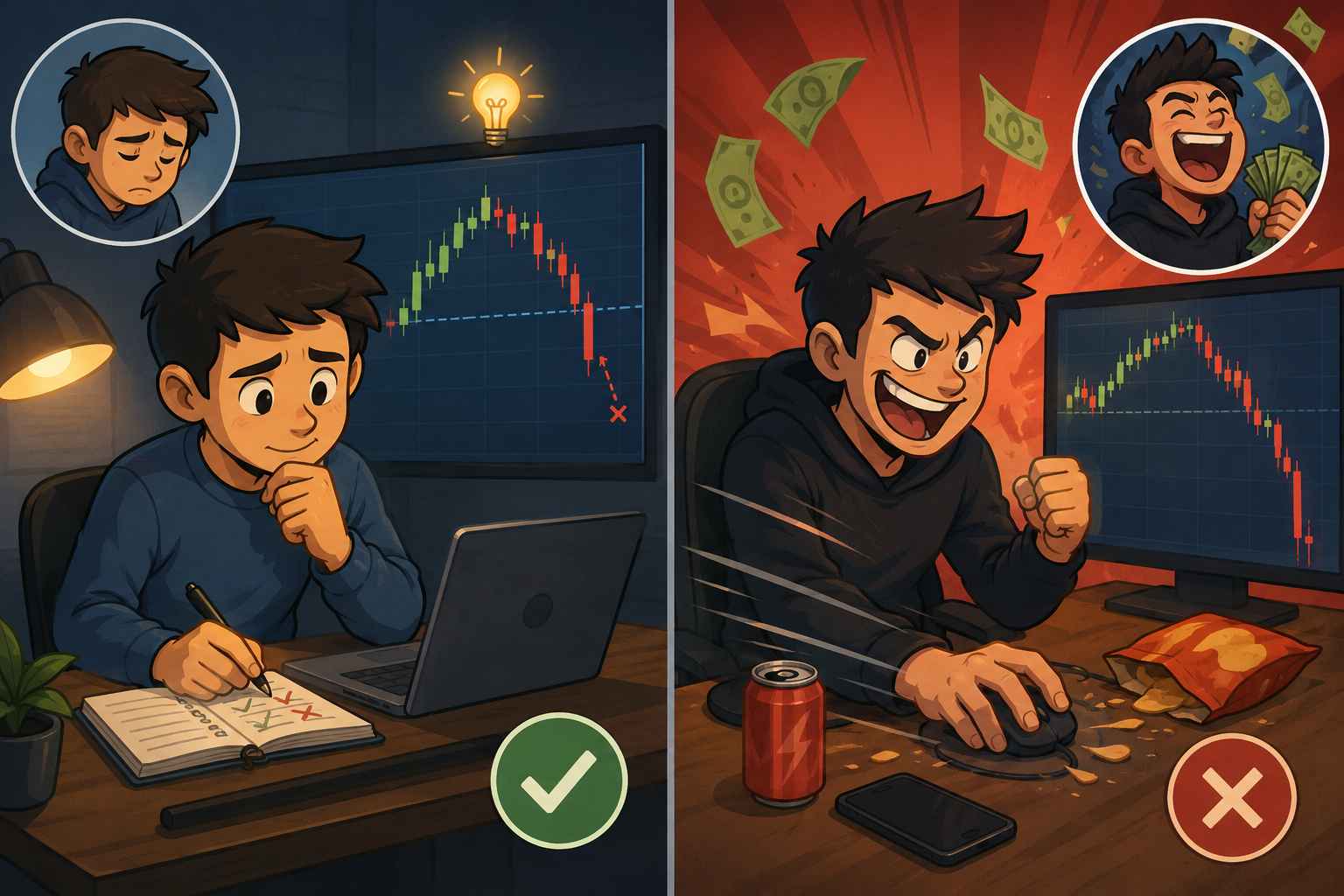
Markets challenge the mind as much as the wallet. Traders often know intellectually that losses happen, yet emotionally they may still experience every loss as evidence that they made a terrible decision. That gap between knowledge and reaction can create destructive behavior.
Probability-based thinking helps close that gap. It gives uncertainty a legitimate place in the trading process. Instead of viewing uncertainty as an enemy that must be defeated, traders begin treating it as a permanent feature of the environment.
The Need to Be Right Can Become Expensive
People naturally enjoy being correct. In everyday life, being right often feels rewarding. In trading, however, the desire to prove a prediction can become a trap. A trader may hold onto a bad position simply because closing it would mean admitting the original idea did not work.
Markets have no interest in protecting anyone’s pride. A currency pair will not reverse because somebody desperately wants to recover a loss. Once ego becomes attached to a position, rational judgment can quietly leave through the back door.
Confidence Is Useful Until It Becomes Certainty
Confidence can help a trader follow a well-developed process without constantly second-guessing every decision. But confidence and certainty are very different creatures. Confidence says, “I have a reason for taking this opportunity.” Certainty says, “There is no way I can be wrong.”
That second attitude can encourage excessive exposure, stubbornness, and careless decision-making. The more convinced someone becomes that failure is impossible, the easier it is to justify taking risks that would normally look unreasonable. Markets have a rather unpleasant habit of exposing that kind of confidence.
Accepting Losses Protects Clear Thinking
A loss does not feel good, and pretending otherwise serves little purpose. The goal is not to enjoy losing. It is to prevent a normal negative outcome from hijacking the next decision.
Once losses are recognized as an unavoidable possibility, traders may find it easier to evaluate them calmly. Instead of immediately trying to win the money back, they can ask whether the decision followed their established process. That question is far more useful than emotionally chasing compensation from the market.
Emotional Trading Distorts Probability
Fear and greed can make the same market look completely different from one hour to the next. After several losses, a reasonable opportunity may suddenly seem terrifying. After several wins, a mediocre opportunity may look irresistible. Neither reaction necessarily reflects what is actually happening.
Probability-based thinking creates a mental anchor. It reminds traders that recent results do not magically rewrite the nature of uncertainty. A short winning streak does not make the next trade guaranteed, and a short losing streak does not automatically mean the next opportunity is doomed.
Winning Streaks Can Create Dangerous Overconfidence
A run of profitable trades can feel like everything has finally clicked. Confidence rises, hesitation disappears, and risk can quietly expand. This is often when traders become vulnerable because success begins to look like evidence of certainty rather than one favorable sequence of outcomes.
A coin landing on heads several times does not remove tails from the next toss. Markets are far more complex than coins, but the lesson still has value. Recent success should not become an excuse to abandon discipline or assume that uncertainty has temporarily disappeared.
Risk Management Gives Probability Room to Work


Probability means very little if one bad outcome can cause overwhelming damage. A trader might have a sensible approach over many trades, but excessive exposure on a single position can prevent that long-term advantage from ever having a chance to appear.
Risk management therefore sits at the heart of probabilistic trading. It is not glamorous. It will rarely produce the excitement of catching a major market move. Yet it helps keep individual outcomes within boundaries that a trader can realistically tolerate.
Survival Matters More Than One Perfect Trade
Many beginners dream about finding a spectacular opportunity that transforms their results overnight. That fantasy can make ordinary risk control feel boring. Unfortunately, chasing one heroic trade can also turn a manageable mistake into a devastating setback.
Trading longevity comes from remaining capable of participating tomorrow, next week, and beyond. The objective is not to squeeze everything from one prediction. It is to avoid allowing any single prediction to become so important that the entire trading journey depends on it.
Position Exposure Shapes the Impact of Uncertainty
Every trade contains uncertainty, but traders influence how much that uncertainty can hurt them. The market determines where prices move; the trader decides how much exposure to place behind an idea.
This is an important difference. You cannot command the market to behave, but you can control how heavily you commit to a particular scenario. Sensible exposure turns an incorrect idea into a manageable event rather than a financial earthquake.
Small Losses Can Preserve Future Opportunities
Taking a controlled loss may feel frustrating because nobody enters a trade hoping to lose. Still, protecting capital leaves room for future opportunities. That matters because no trader knows which future setup will become profitable.
A large unnecessary loss does more than reduce an account. It can also damage confidence and encourage emotional decisions. Small, controlled setbacks are rarely exciting, but they can act like fire doors in a building: inconvenient when triggered, yet valuable when something genuinely goes wrong.
Consistency Matters More Than Prediction
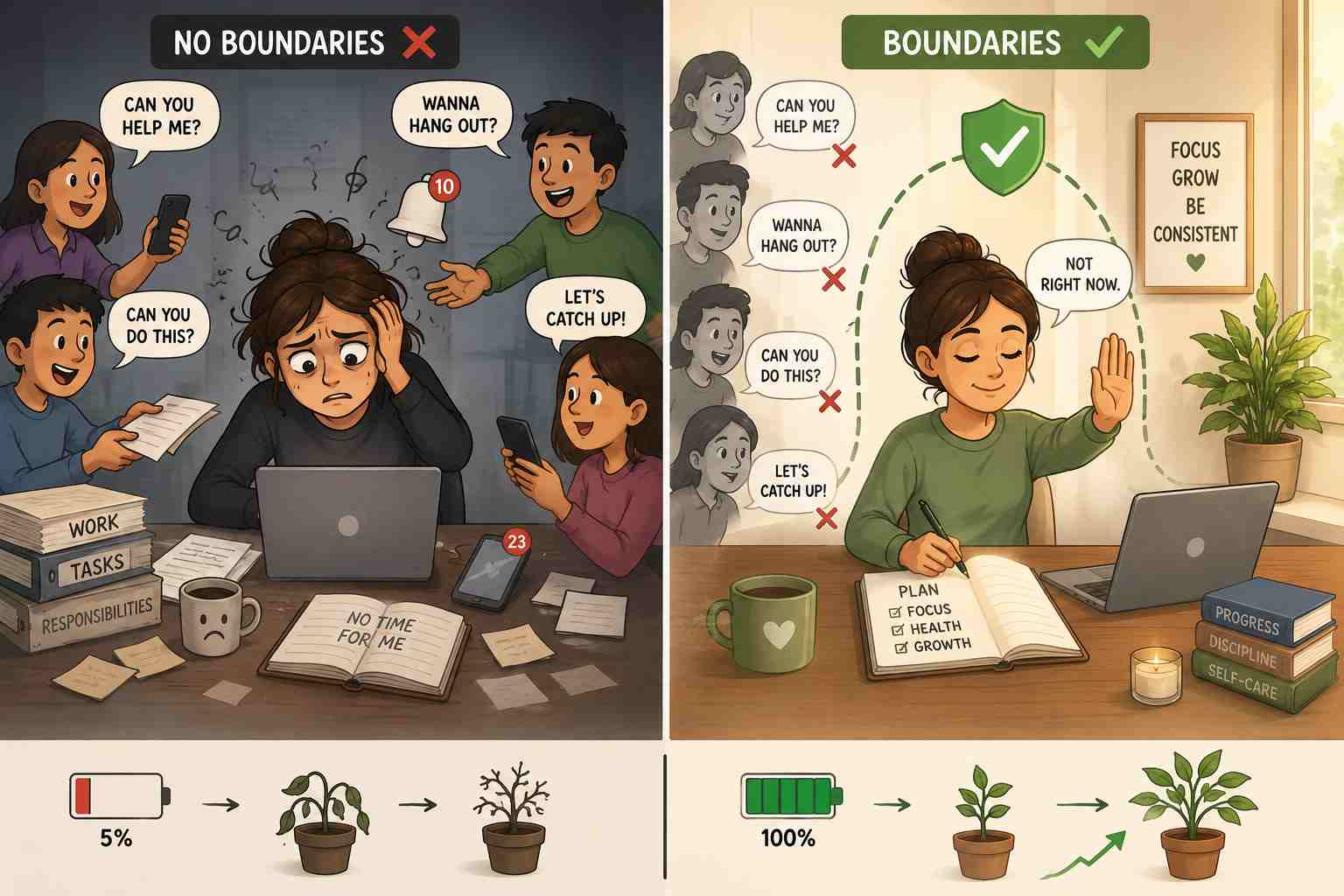
The obsession with forecasting can distract traders from something more practical: consistency. Even a talented analyst cannot control every outcome. What can be controlled more reliably is how decisions are made, how risk is approached, and whether the same standards are applied repeatedly.
Consistency does not mean taking identical trades forever. Markets evolve, and circumstances change. It means maintaining a stable decision-making framework instead of allowing excitement, fear, frustration, or recent results to rewrite the rules every few hours.
A Repeatable Process Reduces Random Decisions
Without a defined process, trading can become a collection of impulses disguised as analysis. One trade is taken because of fear of missing out. Another is avoided because the previous position lost. Soon the trader is reacting to emotions rather than evaluating opportunities consistently.
A repeatable process creates structure. It provides a reference point for judging decisions independently of their immediate outcomes. That does not guarantee profitability, but it can reduce the chaotic behavior that often appears when uncertainty meets money.
Patience Helps Traders Avoid Forced Opportunities
Markets do not provide equally attractive conditions every minute. Sometimes the sensible decision is simply to wait. Yet waiting can feel unbearable when charts are moving and other people appear to be making money.
Probability-based thinking makes patience easier because it removes the assumption that every movement must be captured. Missing a move is not the same as losing money. Forcing a trade merely to participate can turn boredom into an expensive emotion.
Building a Healthier Long-Term Trading Mindset
A sustainable trading mindset does not depend on knowing exactly what tomorrow will bring. It depends on being comfortable enough with uncertainty to make measured decisions while protecting yourself from outcomes that go against expectations.
This perspective can feel less exciting than the promise of flawless predictions. That is precisely why it is useful. Real markets are messy. Any philosophy built around certainty will eventually collide with reality, and reality tends to win that argument.
Judge Decisions Separately From Individual Results
Suppose a trader ignores every personal rule, takes an impulsive position, and makes money. Was that automatically a good decision? Not necessarily. A fortunate result can come from a poor process, just as an unfavorable result can follow a sensible one.
Separating decisions from outcomes encourages more meaningful self-evaluation. Instead of worshipping every winner and condemning every loser, traders can examine whether their choices were reasonable based on the information and rules available when the trade was taken.
Good Process Can Produce Bad Short-Term Results
Randomness creates uncomfortable periods. Even a process that appears effective over time can experience a sequence of losses. Expecting smooth results creates unrealistic pressure and may push traders to abandon their approach at exactly the wrong moment.
This does not mean every losing streak should be ignored. A strategy can deteriorate, assumptions can become outdated, and mistakes should be examined. The key is avoiding the opposite extreme: assuming a handful of losses automatically proves that everything has failed.
Trading Journals Can Reveal Decision Patterns
A trading journal can help separate memory from reality. Human memory is selective, especially when money and emotion are involved. Traders may vividly remember painful losses while overlooking repeated small mistakes that created them.
Recording the reasoning behind decisions, emotional state, and eventual outcome can reveal patterns over time. The purpose is not to create a perfect diary. It is to develop a clearer picture of how decisions are actually being made rather than relying entirely on hindsight.
Uncertainty Can Become Easier to Live With


Experienced probability-based thinking does not eliminate nervousness. It changes the relationship with it. A trader can recognize that an outcome is unknown without feeling compelled to predict it with absolute confidence.
That mental shift can make trading less dramatic. There is less need to celebrate every win like a championship and less reason to treat every loss like a disaster. The market remains uncertain, but uncertainty stops feeling like an emergency.
Flexibility Is Stronger Than Stubbornness
Markets change, narratives change, and information changes. A trader who becomes emotionally married to one view may continue defending it long after the original reasoning has weakened.
Flexibility allows new evidence to matter. Changing your mind is not automatically a weakness. Sometimes it is evidence that you are paying attention. Probability-based thinking naturally supports this flexibility because no scenario was supposed to be guaranteed in the first place.
Summary
Forex trading becomes easier to understand when certainty is removed from the equation. The market is not a machine that produces guaranteed outcomes whenever the correct combination of information is entered. It is a constantly changing environment where traders make decisions with incomplete knowledge.
Thinking in probabilities shifts attention toward what can actually be controlled: decision quality, emotional discipline, exposure, patience, consistency, and risk. A good trade may lose, and a bad trade may occasionally win. Over time, judging the process rather than worshipping individual outcomes can provide a much clearer perspective.
The phrase “you trade probabilities, not certainties” is therefore more than a catchy forex quote. It is a reminder of the market’s basic nature. Nobody receives certainty as part of the deal. Traders operate in a world of possibilities, and accepting that reality may help them approach both winning and losing periods with greater balance.
Perhaps the most important lesson is also the least exciting: you do not need to know the future to make a thoughtful decision. You need to understand that several futures are possible and make sure one unfavorable outcome does not destroy your ability to face the next opportunity.
Frequently Asked Questions About Trading Probabilities
Forex traders often have questions when they first encounter probability-based thinking. The idea sounds straightforward, yet it challenges many assumptions about prediction, winning rates, losses, and confidence.
These questions address some of the most common misunderstandings surrounding forex trading probabilities and the mindset behind them.
1.What does “trade probabilities, not certainties” mean?
It means accepting that no individual forex trade has a guaranteed outcome. A trader may have strong reasons to expect one scenario, but another outcome remains possible because markets react to changing information and participant behavior.
The practical mindset is to make decisions based on reasonable expectations while preparing for the possibility of being wrong. The goal is not perfect prediction. It is handling uncertainty consistently without allowing one trade to carry excessive importance.
2.Can a good forex trade still lose money?
Yes. A thoughtfully selected trade can still produce a loss because decision quality cannot control market outcomes. New information or an unexpected shift in sentiment can change conditions quickly.
That is why evaluating a trading process solely by one result can be misleading. A loss does not automatically prove that the original decision was foolish, just as a profitable trade does not automatically prove that the decision behind it was sensible.
3.Why is risk management important in probability-based trading?
Probability only becomes useful across repeated opportunities if a trader remains capable of participating. Excessive exposure can allow one unfavorable event to cause disproportionate damage before any longer-term pattern has time to develop.
Risk management acknowledges uncertainty rather than pretending it does not exist. It creates boundaries around potential damage and helps prevent one incorrect expectation from becoming far more important than it deserves to be.
4.Does thinking in probabilities remove emotions from forex trading?
Not completely. Traders are human, and money naturally produces emotional reactions. Wins can create excitement, while losses can trigger disappointment, frustration, or fear.
Probability thinking can, however, put those emotions into perspective. When losses are recognized as possible outcomes rather than shocking failures, they may become easier to process without immediately making impulsive decisions.
5.Is being right less important than being consistent in forex trading?
Being correct obviously matters, but constantly proving yourself right should not become the central goal. Trading involves repeated decisions, so the way those decisions are managed over time can matter more than the emotional satisfaction of correctly predicting one market move.
Consistency encourages traders to focus on process, controlled risk, patience, and realistic expectations. The forex market offers possibilities rather than promises. Treating those possibilities with respect is far more sustainable than demanding certainty from a place where certainty simply does not exist.